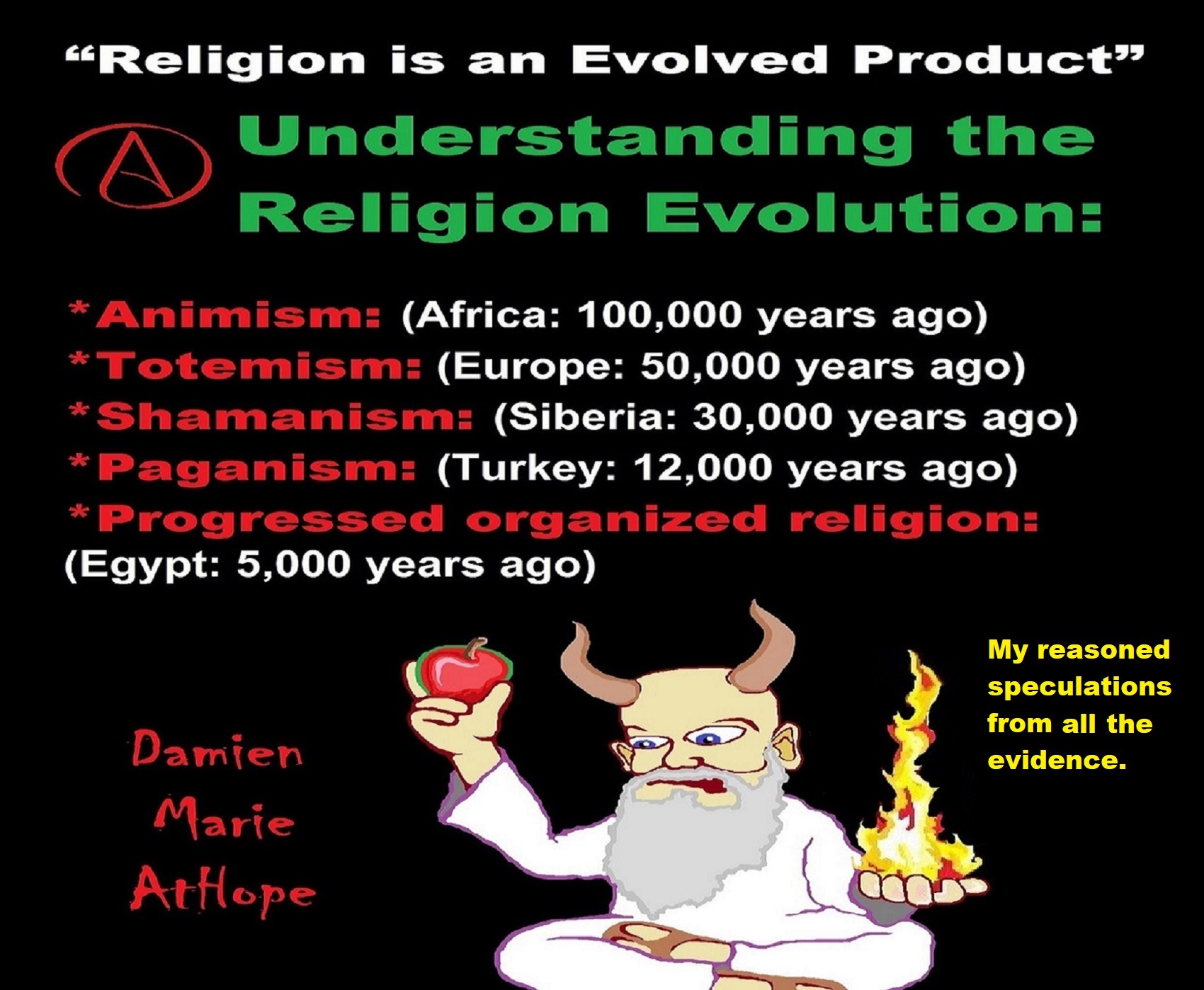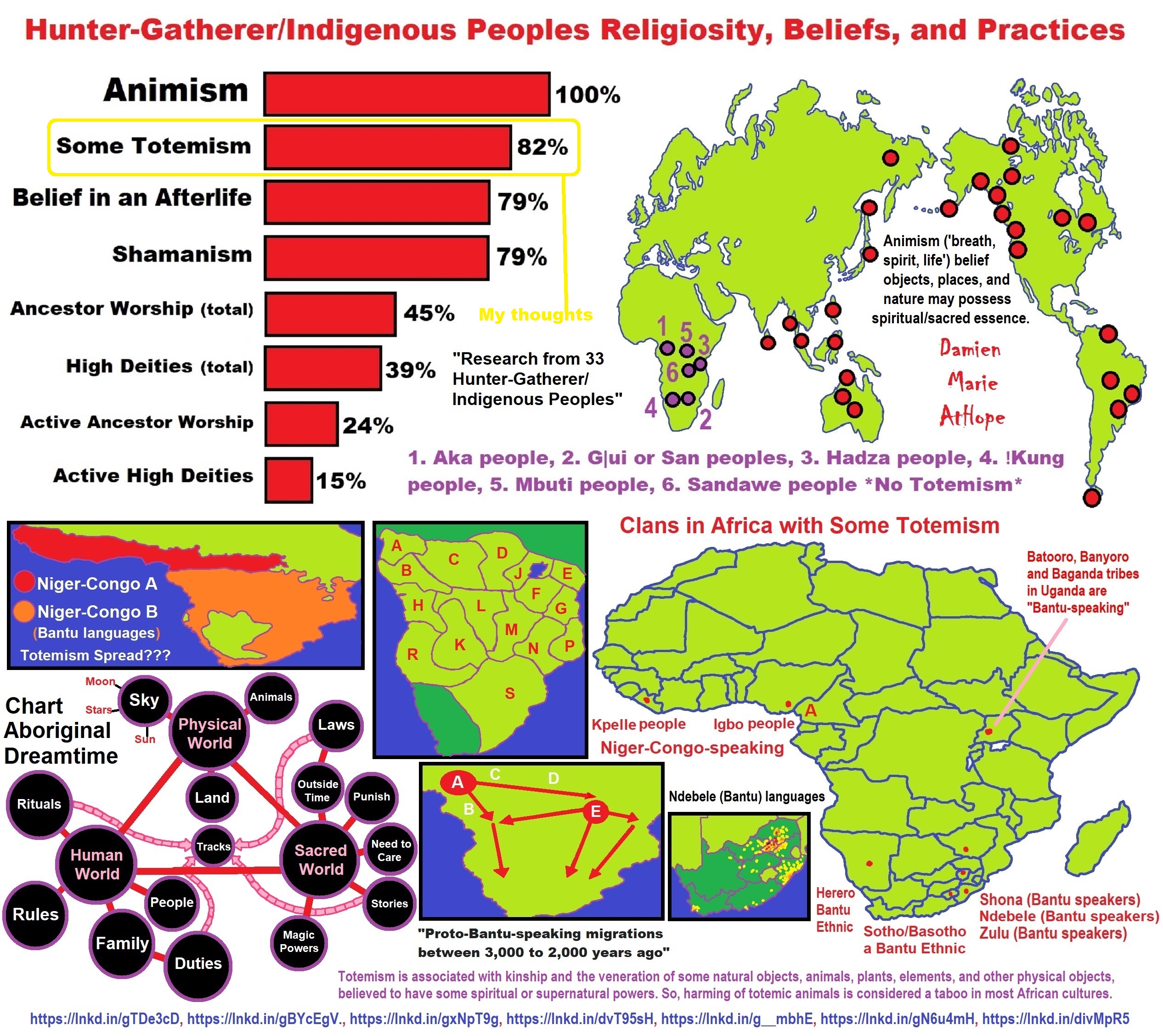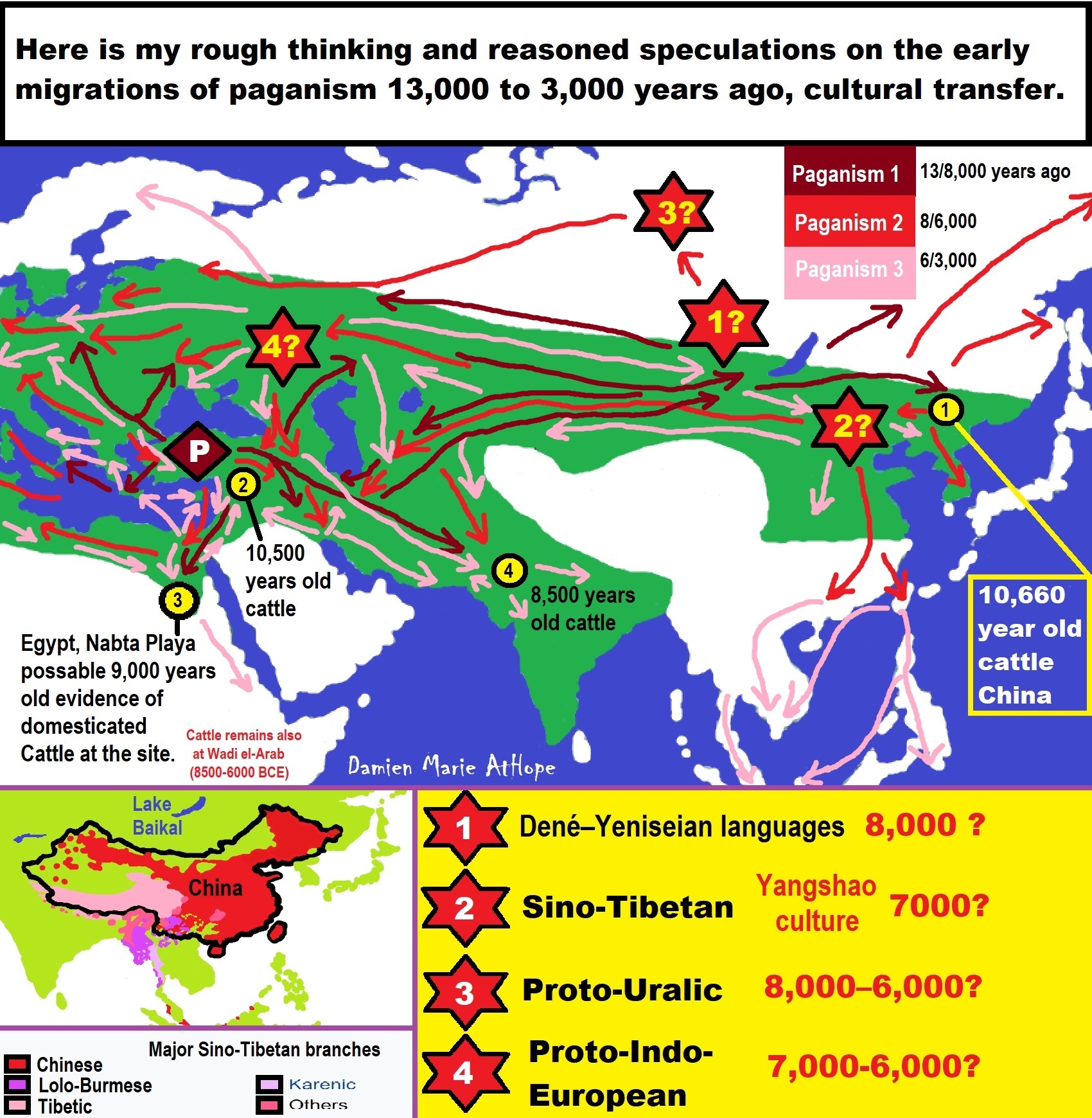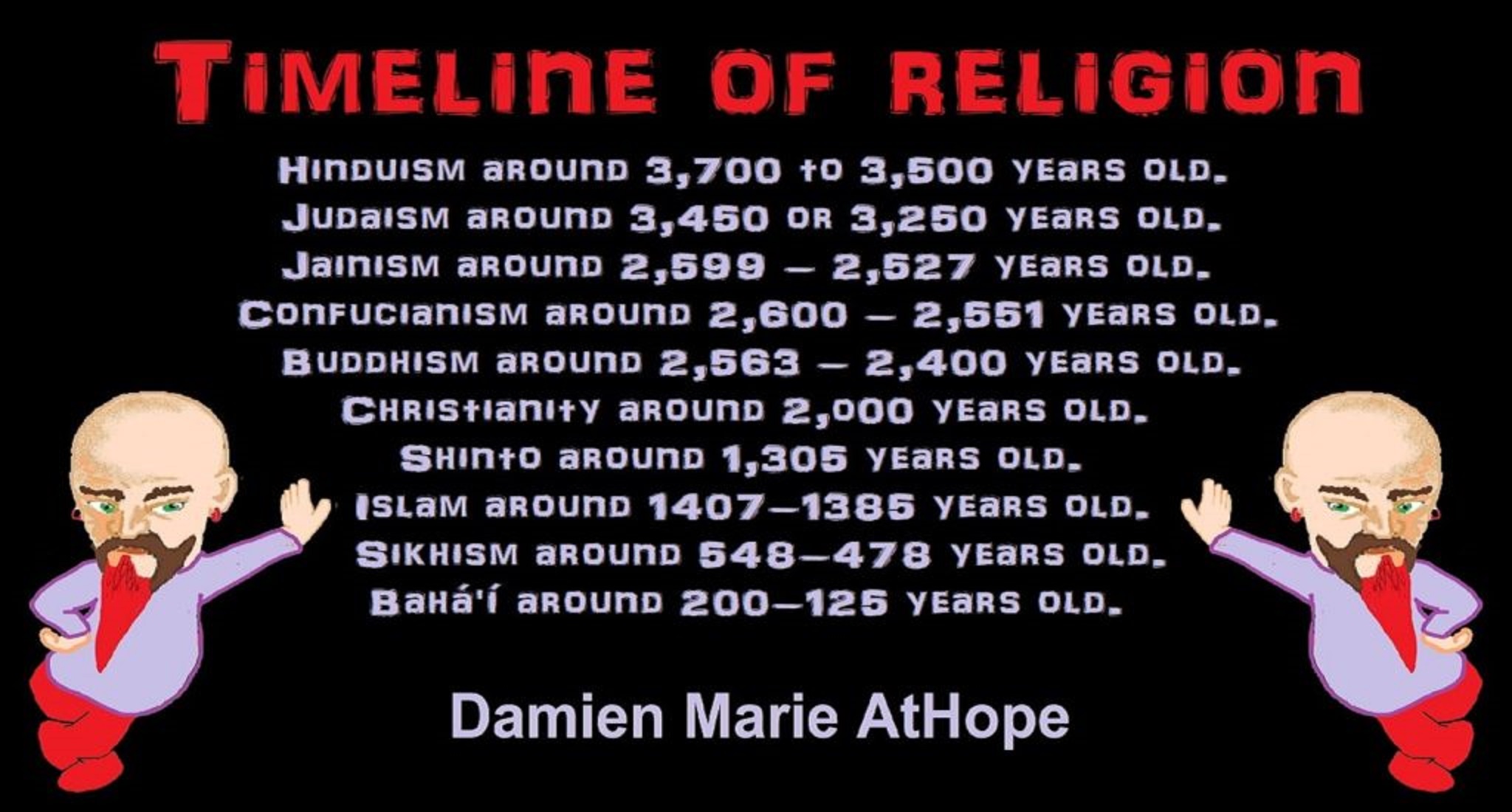
ref

Damien Marie AtHope’s Art

“There are a total of 204 war deities listed, with 58 goddesses and 146 gods.” ref

Many people think there has always been war. But that is not true. “Some sources claim that most Middle and Upper Paleolithic societies were possibly fundamentally egalitarian and may have rarely or never engaged in organized violence between groups (i.e. war). Evidence of violent conflict appears to increase during the Mesolithic period, from around 10,000 years ago onwards. But generally, indications of agriculture are taken as marking the transition into the Neolithic.”  ref

Prevalence of cranial trauma in Eurasian Upper Paleolithic humans

This study characterizes patterns of cranial trauma prevalence in a large sample of Upper Paleolithic fossil specimens (40,000–10,000 years ago). The sample comprised 234 individual crania (specimens), representing 1,28 cranial bones (skeletal elements), from 101 Eurasian Upper Paleolithic sites. We used generalized linear mixed models to assess trauma prevalence in relation to age-at-death, sex, anatomical distribution, and between pre- and post-Last Glacial Maximum samples, while accounting for skeletal preservation.” ref

“Models predicted a mean cranial trauma prevalence of 0.07 at the level of skeletal elements, and of 0.26 at the level of specimens, each when 76–100% complete. Trauma prevalence increased with skeletal preservation. Across specimen and skeletal element datasets, trauma prevalence tended to be higher for males, and was consistently higher in the old age group. We found no time-specific trauma prevalence patterns for the two sexes or age cohorts when comparing samples from before and after the Last Glacial Maximum. Samples showed higher trauma prevalence in the vault than in the face, with vault remains being affected predominantly in males.” ref

“Cranial trauma prevalence in Upper Paleolithic humans falls within the variation described for Mesolithic and Neolithic samples. According to our current dataset, Upper Paleolithic males and females were exposed to slightly different injury risks and trauma distributions, potentially due to different activities or behaviors, yet both sexes exhibit more trauma among the old. Environmental stressors associated with climatic changes of the Last Glacial Maximum are not reflected in cranial trauma prevalence. To analyze trauma in incomplete skeletal remains, we propose generalized linear mixed models as an informative alternative to crude frequency calculations.” ref

It has been suggested that marked climatic and environmental fluctuations over the course of several millennia exposed anatomically modern humans to climate change-induced stresses, which prompted biocultural adaptations of survival strategies regarding subsistence, technology, and social life, buffering against environmental stressors. Frequent marked climate oscillations and a gradual temperature decline changed vegetation and habitats of prey mammals, the main subsistence resource of Paleolithic hunter-gatherers, thus affecting habitat suitability. At around 26,500–19,000 years ago, climate deteriorations culminated in the Last Glacial Maximum (26,500 and 19,000 years ago), when ice sheets reached their maximum extent and covered most of Northern and Central Europe. As a consequence, human populations in northern latitudes may have gone extinct or retreated to environmentally more favorable regions in southern glacial refugia. Local population extinctions, the fragmentation and reduction of suitable habitats, and limitations to maintain social networks, likely entailed high levels of demographic and environmental stress.ref

“These scenarios of stress and adaptation mainly rest on archaeological evidence, such as site distributions, animal bone assemblages, and material culture. Another line of evidence derives directly from human fossil remains. For example, a variety of dental and skeletal stress markers (e.g., dental hypoplasia, Harris lines, periostitis, arthritis, and trauma) indicate some support for health deterioration from pre-Last Glacial Maximum to post-Last Glacial Maximum populations. Human groups before and after the Last Glacial Maximum differ markedly in their morphology in terms of body height, robusticity, and craniofacial and dental dimensions. These morphological features can result from changing levels of stress, but may also be associated with a large-scale population turnover during recolonization after the Last Glacial Maximum, as suggested by genetic evidence.ref

“Trauma patterns can serve as an important measure of the lifestyle, organization, and stresses of past human populations, since traumatic injuries are directly linked to violent encounters, accidents, impairments, and care for the injured, and reflect the various injury risks resulting from occupational, environmental, or social conditions. Nevertheless, population-wide trauma patterns in Upper Paleolithic humans have barely been researched and analyzed trauma in larger samples of UP fossils from Eurasia. They compared their findings to those of Neanderthals and found similar distribution patterns and trauma prevalence in the two groups. However, these studies focused on the between-taxa comparison and not on a comprehensive characterization of the Upper Paleolithic period, neglecting large numbers of later Upper Paleolithic fossils postdating 20,000 years ago.ref

“The Wounded Man figure has been pierced by several spears. It is not certain what this is meant to represent, most likely – the ritual killing of a wrongdoer from the tribe (maybe one who violated a taboo) or, less likely, the result of a fight between neighbouring tribes?” ref

Projectile weapon injuries in the Riparo Tagliente burial (Veneto, Italy) provide early evidence of Late Upper Paleolithic intergroup conflict

Evidence of interpersonal violence in the Paleolithic is rare but can shed light on the presence of ancient conflict in prehistoric hunter-gatherer societies. Projectile injuries suggest confrontations between groups and have primarily been identified through lithic elements embedded in bones. Recently, the study of projectile impact marks has allowed for the recognition of projectile injuries in the absence of embedded elements. We report here the discovery and study of one of the earliest evidence of projectile impact marks in the human paleobiological record, found in the burial from Riparo Tagliente (individual Tagliente 1, Veneto, Italy), directly dated to ca. 17,000–15,500 years ago. Analyses through SEM and 3D microscopy demonstrate that the femur and the tibia show clear evidence of projectile impact marks impacting the bone from different directions. This could be due to the presence of multiple attackers, or to the victim turning between impacts. No trace of healing is present; one projectile impact marks is close to the femoral artery, which can cause a rapid death if pierced. Evidence at Riparo Tagliente could be attributed to conflict between different groups of hunter-gatherers expanding in newly opened Alpine territories during climatic amelioration after the Last Glacial Maximum.” ref

Prehistoric skeletal signs of interpersonal violence constitute the most direct evidence for our understanding of the nature of conflict in the past. Some scholars suggest that in certain prehistoric periods, such as in southern Europe around 11,700–8,000 years ago, or in southern Europe around 8,000-6,000 years ago, it is possible to detect an increase in the frequency or scale of conflict in the human bioarchaeological record, while others point out similar trauma prevalence since the Upper Paleolithic (between 50,000 and 12,000 years ago). In general, diachronic evaluations are likely to be biased by the skeletal record becoming increasingly fragmentary with greater temporal depth. Furthermore, the study of bony lesions is challenging due to technical and interpretative problems: evidence of trauma, when recognized, does not necessarily imply interpersonal violence, and even more difficult is demonstrating conflict between different groups.ref

“Despite these challenges, certain occurrences allow evidence of violence to be more confidently attributed to external attacks, such as multiple contemporary burials resulting from massacres (e.g., wounds caused by projectile weapons – especially when multiple – are strongly suggestive of intergroup conflict. In fact, in small-scale, traditional societies, projectile weapons are most often used in raiding and formal warfare, with melee weapons usually employed to dispatch a wounded enemy. Traditionally, lesions found in the bioarchaeological record were unequivocally attributed to killing at a distance when the projectile remained embedded in the bone.ref

“Examples of injuries of this kind in the Paleolithic human skeletal record are extremely rare, with the oldest cases dating to the end of the period, such as Grotte des Enfants 2 (ca. 13,200–12,800 years ago) and San Teodoro 4 (15,300–14,200 cal. years ago), both from the Late Epigravettian of Italy, Vasilyevka and Voloshskoye from the Epipaleolithic of Ukraine (ca. 12,000 years ago, although radiocarbon dates for these sites are strongly affected by freshwater reservoir effects and might in fact date considerably younger), and several individuals from the Epipaleolithic cemetery of Jebel Sahaba in Sudan (13,727–7,981 years ago). Earlier weapon injuries tentatively attributed to projectiles lack embedded elements, as seen in the wound on the first thoracic vertebra of Sunghir 1 from the Gravettian (Russia; 27,700–26,500 years ago), and in a rib of the Neanderthal Shanidar 3 (Iraq, 47,000–40,000 years ago).ref

“Jebel Sahaba, a 13,000-year-old cemetery in Sudan, provides evidence of the earliest known instances of warfare among human groupsLocated on the east bank of the Nile, the site contains the remains of 61 individuals, many of whom bear signs of violent trauma, including wounds from projectiles like arrows. These findings suggest a long-lasting, possibly climate-change driven, conflict among these early hunter-gatherers. While the new paper states that although it’s not the oldest case of interpersonal violence in the Nile valley – that’s a partial male skeleton from roughly 20,000 years ago from Wadi Kubbaniya – the Jebel Sahaba cemetery is “the most emblematic and widely cited example of early widespread violence.” The researchers also note that with radiocarbon dates ranging from 13,400-18,200 years old, the cemetery is “the earliest funerary complex from the Nile Valley.” ref

“By using the latest anthropological and forensic methods the team has shown that there was repeated, brutal armed conflict taking place at the site 13,400 years ago. Evidence for the recurring violence at Jebel Sahaba primarily comes in the form of healed trauma found on the remains of several of the skeletons excavated at the site. The researchers write in their paper that they completed a “full reanalysis of the timing, nature, and extent of the violence” by using new microscopy techniques. Here’s a summary of what they found:

  • 106 previously undocumented lesions and traumas on various individuals, regardless of their age or sex – including signs of injuries on children as young as 4 years old
  • different injury types – injuries created by projectiles from arrows and spears, wounds caused by close combat, and damage to the remains that were caused by natural decay
  • several lithic artifacts which were located “where the soft tissues would have once been, or directly embedded in the bones
  • 41 of the 61 people (67% of the individuals) buried at Jebel Sahaba died with at least one type of healed or unhealed injury
  • of those 41 individuals, 92% had been harmed by projectiles and close combat trauma.ref

“The researchers write that their findings “confirm for the first time the repetitive nature of the interpersonal acts of violence” at Jebel Sahaba and suggest that such conflicts “could occur several times during the life of an individual.” The study authors also write in their paper that the discovery of healed wounds in the remains of people buried at the Jebel Sahaba cemetery suggests that there were recurrent, but not always lethal, conflicts occurring between Nile valley groups. They think that different groups were likely raiding each other’s lands, ambushing each other, and skirmishing. The high number of puncture wounds, likely caused by spears and arrows, also suggests that the attacks came from a distance and were not domestic conflicts.” ref

“According to the researchers, the violence was “probably triggered by major climatic and environmental changes.” They believe that the people living in the area may have faced significant “environmental pressures and geographical constraints,” which incited the repeated conflicts against the people around them. Previous research has suggested that many of the victims of violence at Jebel Sahaba were phenotypically part of sub-Saharan populations, the ancestors of modern black Africans. Those researchers also found evidence of a group with a North African/ Levantine/European population phenotype nearby. The new research has shed important light on what happened at a site so significantly linked to early widespread violence, but the researchers still can’t say for certain if this is a burial ground for a specific set of people who were victims of violence or anyone who died in the community. They think that funerary rituals were also involved, at least in some cases. For example, while the team could identify cutmarks resulting from projectiles penetrating bone, they couldn’t say for certain if some cuts may have been deliberate acts taken after death – as some sort of “mortuary treatments.” ref

12,000 years of climate changes that coincided/influenced culture impacts: periods and events in climate history; affecting seeming changes in places, people movements/behaviors, and culture persuasions

* “12,800–11,500 years ago Younger Dryas sudden cold and dry period in Northern Hemisphere ref

The Younger Dryas (YD) was a period in Earth’s geologic history that occurred circa 12,900 to 11,700 years ago. The two earlier geologic periods where this flower was abundant in Europe are the Oldest Dryas (approx. 18,500-14,000 years ago) and Older Dryas (~14,050–13,900 years ago), respectively. Younger Dryas ended when the entire globe had warmed consistently, which marks the beginning of the current Holocene epoch. The Younger Dryas was globally synchronous or very nearly so. However, the magnitude of the drop in global mean surface temperature was modest; the Younger Dryas was not a global relapse into peak glacial conditions. A decline in evidence for Natufian hunter-gatherer permanent settlements in the Levant, suggesting a reversion to a more mobile way of life.” ref 

“Pre-Pottery Neolithic A (PPNA) denotes the first stage of the Pre-Pottery Neolithic, in early Levantine and Anatolian Neolithic culture, dating to c. 12,000 – c. 10,800 years ago, that is, 10,000–8800 BCE. Archaeological remains are located in the Levantine and Upper Mesopotamian regions of the Fertile Crescent. Granaries were positioned in places between other buildings early on c. 11,500 years ago; however, beginning around 10,500 years ago, they were moved inside houses, and by 9,500 years ago, storage occurred in special rooms. This change might reflect changing systems of ownership and property as granaries shifted from communal use and ownership to becoming under the control of households or individuals.” ref

“As of 2013 Gesher, modern Israel, became the earliest known of all known Neolithic sites (PPNA), with a calibrated Carbon 14 date of 10,459 BCE or 12,459 years ago, analysis suggesting that it may have been the starting point of a Neolithic Revolution. A contemporary site is Mureybet in modern SyriaWith more sites becoming known, archaeologists have defined a number of regional variants of Pre-Pottery Neolithic A:

  • Mureybetian in the Northern Levant, defined by the finds from Mureybet IIIA, IIIB, typical: Helwan points, sickle-blades with base amenagée or short stem and terminal retouch. Other sites include Sheyk Hasan and Jerf el Ahmar.
  • Sites in “Upper Mesopotamia” include Çayönü and Göbekli Tepe, with the latter possibly being the oldest ritual complex yet discovered.” ref

“11,500 years ago, agricultural development.”

“While humans started gathering grains at least 105,000 years ago, nascent farmers only began planting them around 11,500 years ago in the Fertile Crescent. Sheep, goats, pigs, and cattle were domesticated around 10,000 years ago. Sheep were domesticated in Mesopotamia between 13,000 and 11,000 years ago. Rice was domesticated in China between 11,500 years ago. Sheep, goats, pigs, and cattle were domesticated by around 10,000 years ago.” ref

“Agriculture is defined with varying scopes, in its broadest sense using natural resources to “produce commodities which maintain life, including food, fiber, forest products, horticultural crops, and their related services.” Thus defined, it includes arable farming, horticulture, animal husbandry, and forestry, but horticulture and forestry are, in practice, often excluded. It may also be broadly decomposed into plant agriculture, which concerns the cultivation of useful plants, and animal agriculture, the production of agricultural animals.” ref

Slavery and power are connected, and predate written records and have existed in many cultures. Slavery is rare among hunter-gatherer populations because it requires economic surpluses and a substantial population density. Slavery became widespread only with the invention of agriculture during the Neolithic Revolution about 11,000 years ago. Slavery was practiced in almost every ancient civilization.” ref

Mace heads and the rise of power: archaeological evidence available so far has revealed that the earliest mace heads first appeared in the Near East about 10,000 years ago. along with the early development and spread of agriculture. After that, mace heads began to spread throughout the ancient world: southward to the Ancient Egypt Kingdom in North Africa, northwest to Europe, and then to the Eurasian steppe of central Asia and Siberia. Eventually, this movement gradually arrived in the Northwestern region of China. The earliest mace head examples come from the Near East during the PPNA period. An early example is the stone mace head from the site of Hallan Cemi in Turkey, dated to 9500–8500 BCE or 11,500 to 10,500 years ago. Another contemporary example is the stone mace-head from Körtik Tepe, also a Pre-Pottery Neolithic A site in Turkey. In Mesopotamia, the earliest mace-heads can also be traced back to around this time, or equivalent to the PPN period (8300–6000 BCE or 10,300 to 8,000 years ago). They are mostly ball-shaped or pear-shaped.” ref

“Human violence is rooted in the rivalry that stems from imitation and archaeologists working at the Neolithic sites of Çatalhöyük and Göbekli Tepe in Turkey. At both sites there is evidence of religious practices that center on wild animals, often large and dangerous in form. Is it possible that these wild animals were ritually killed in the ways suggested by Girardian theorists? Were violence and the sacred intimately entwined, and were these the processes that made possible and even stimulated the origins of farming in the ancient Near East? Offering a perspective from Göbekli Tepe and related sites, our team contributed a paper (by Lee Clare, Oliver Dietrich, Julia Gresky, Jens Notroff, Joris Peters, Nadja Pöllath) on “Ritual Practices and Conflict Mitigation at Early Neolithic Körtik Tepe and Göbekli Tepe, Upper Mesopotamia” (pp. 96-128):

“The cognitive principles of the social brain have remained unaltered since their appearance in anatomically modern humans in Africa some 200,000 years ago. However, by the Early Holocene these capacities, were being challenged by the outcomes of newly emerging lifeways , commonly referred to as ‘Neolithic’. Growing levels of sedentism and new and expanding social networks, were prompting a unique series of behavioural and cultural responses. In recent years, research at the early Neolithic (PPNA) occupation site of Körtik Tepe has provided evidence for heightened levels of interpersonal violence and homicide; yet, at the same time, there are no indications in the present archaeological record for between-group fighting (‘warfare’). In this study, we investigate whether this scenario, at a time when we might expect to see a rise in inter community frictions in the wake of adjusting subsistence strategies and socio-political boundaries, can be at least partially explained by René Girard’s mimetic theory. To this end we consult the pictorial repertoire from the contemporaneous and extraordinary site of Göbekli Tepe.” ref

“From 10,000 years ago Holocene glacial retreat, the present Holocene or Postglacial period begins.” ref

Damien Marie AtHope’s Art

ref, ref, ref

“There were 21 adults and six children. Some still had stone weapons lodged in their bones. Their skulls were fractured by blunt force trauma. A pregnant woman appears to have been bound, her hands and feet tied together, and left to die. Another woman’s knees were broken, one of her feet fractured, and her hands bound. Her skeleton was surrounded by fish, as if her attackers decided to cover her in garbage.” ref

Damien Marie AtHope’s Art

ref, ref

Cave painting of a battle between archers, Cueva del Roure, Morella la Vella, Castellón, Valencia, Spain.” ref

The earliest, limited evidence for war in Mesolithic Europe likewise dates to c. 10,000 years ago, and episodes of warfare appear to remain “localized and temporarily restricted” during the Late Mesolithic to Early Neolithic period in Europe. Iberian cave art of the Mesolithic shows explicit scenes of battle between groups of archers. Early war was influenced by the development of bows, maces, and slings. The bow seems to have been the most important weapon in early warfare, in that it enabled attacks to be launched with far less risk to the attacker when compared to the risk involved in melee combat. While there are no cave paintings of battles between men armed with clubs, the development of the bow is concurrent with the first known depictions of organized warfare, consisting of clear illustrations of two or more groups of men attacking each other.” ref

“Earliest Evidence of War in Southern Levant/Israel: (The collections, found at ‘En Esur and ‘En Tzippori, but also at two other sites, are the earliest evidence of “formal” slingstones in the southern Levant) Israeli Archaeologists Find Earliest Evidence of War in Southern Levant. Industrial production of aerodynamically efficient slingstones almost 8,000 years ago in what is today’s Israel wasn’t done to hunt animals. Almost 8,000 years ago, people in the Galilee and Sharon plain were preparing for war. This postulation is based on the mass production of shaped slingstones at four sites in Israel, starting in the Late Pottery Neolithic – though who they were attacking, or defending against, and why the production of these stone bullets ceased after about a thousand years is anybody’s guess. The current thinking is they were fighting against other local peoples, not invading hordes. That would come later.” ref

“The oldest representation of a slinger in art may be from Çatalhöyük, from c. 9,000 years ago, though it is the only such depiction at the site, despite numerous depictions of archers. Modified stones suggested to represent ammunition for slings (slingstones) have been reported from the Near East at least as early as the 6th millennium BCE (8,000 to 7,000 years ago), during the Pottery Neolithic, from cultures such as the Wadi Rabah culture in the southern Levant. The oldest-known surviving slings—radiocarbon dated to c. 2500 BCE (4,500 years ago)—were recovered from South American archaeological sites on the coast of Peru. The oldest-known surviving North American sling—radiocarbon dated to c. 1200 BCE (3,200 years ago)—was recovered from Lovelock Cave, Nevada. One of the oldest slings in the Near East is the “Manchester Sling” from the Twelfth Dynasty of ancient Egypt, c. 2000-1800 BCE (4,000 to 3,800 years ago), a completely preserved sling constructed entirely of plant fibre.” ref

I think the “Kurgan Origin” is found in “Stratified Ritual Mounds”
“From the later seventh-millennium cal BCE, in west Siberia, a new site type emerged in this period, the large, stratified mound (Russian kholm), with examples reaching 50m in diameter and up to 6m in height. These Mounds are characterized by unusual features such as groups of human skulls, clay figurines, bone and antler, hearths, and post-row structures, and are interpreted as ritual or sacrificial sites.”  ref
“A kurgan is a type of tumulus constructed over a grave, often characterized by containing a single human body along with grave vessels, weapons, and horses. Some scepter graves could have been covered with a tumulus, placing the first kurgans as early as the 5th millennium BCE in Eastern Europe. Within the burial chamber at the heart of the kurgan, elite individuals were buried with grave goods and sacrificial offerings, sometimes including horses and chariots. These structures are of the earlier Neolithic period from the 4th to the 3rd millenniums BCE.” ref

I think the “kurgan Origin” is found in “Stratified Ritual Mounds”

“From the later seventh-millennium cal BCE, in west Siberia, a new site type emerged in this period, the large, stratified mound (Russian kholm), with examples reaching 50m in diameter and up to 6m in height. These Mounds are characterized by unusual features such as groups of human skulls, clay figurines, bone and antler, hearths, and post-row structures, and are interpreted as ritual or sacrificial sites.” ref

“A kurgan is a type of tumulus constructed over a grave, often characterized by containing a single human body along with grave vessels, weapons, and horses. Some scepter graves could have been covered with a tumulus, placing the first kurgans as early as the 5th millennium BCE in Eastern Europe. Within the burial chamber at the heart of the kurgan, elite individuals were buried with grave goods and sacrificial offerings, sometimes including horses and chariots. These structures are of the earlier Neolithic period from the 4th to the 3rd millenniums BCE.” ref

Ritual Mound Migrations: Kurgans, Dolmens, and later Pyramids likely all trace back to Siberia, helping show how Yeniseian languages, may have influenced Proto-Indo-European languages

ref

Ancient Fortifications in Western Siberia and Large Stratified Mounds in the 7th-millennium cal BCE

The innovations of the hunter-gatherer populations occupying the Siberian taiga 8000 years ago, including the construction of some of the oldest-known fortified sites in the world. 8000 years ago, that hunter-gatherers built fortified settlements, many centuries before comparable enclosures first appeared in Europe. The building of fortifications by forager groups has been observed sporadically elsewhere around the world in various—mainly coastal—regions from later prehistory onwards, but the very early onset of this phenomenon in inland western Siberia is unparalleled. Pit-house settlements with enclosures consisting of banks, ditches, and/or palisades appear on promontories and other topographical peaks across the West Siberian Plain from the end of the seventh-millennium cal BCE onwards. These complex settlements are part of a broader set of socio-economic and technological innovations and transformations in western Siberia and thus demarcate a phase of accelerated social change that is only partially understood. The sudden and unprecedented emergence of diversified hunter-gatherer life worlds in the west Siberian taiga 8000 years ago. As manifestations of social inequality, fortifications can also be related to (heritable) property rights, labor obligations, and the restriction of access to resources. Increasing political differentiation is not necessarily accompanied by greater wealth inequality; however, defensive architecture can also be coordinated without a centralized authority.” ref

The context of ancient fortifications in western Siberia

“Western Siberia, between the Ural Mountains and the River Yenisei, represents a particularly rich ecosystem from a hunter-gatherer-fisher perspective. Fish, aquatic birds, forest fowl, and large game such as elk and reindeer have predictable seasonal behaviors, and this abundance may have contributed to a rise in population and socio-political differentiation once the mass-harvesting strategies of such as ‘naturally stored’ resources developed. Storable and transportable goods made from these natural resources could include fish oil, fish meal, dried/smoked fish, dried birds and frozen meat—goods made and used by Indigenous groups in western Siberia to the present-day. These ‘front-loaded resources’, that is, goods that are labour-intensive to acquire and process but which can be stored and are subsequently easy to transport and prepare, would have been a target for raiders.” ref

“Early Holocene pre-pottery hunter-gatherer sites (termed ‘Mesolithic’) in the regional periodization, are concentrated in the Urals region and more sparsely distributed in the low-lying expanses further east. This latter area became occupied more intensively only from the later seventh-millennium cal BCE (regionally termed ‘Neolithic’) but referred to as the pottery Mesolithic in Western terminology. Among these pioneering sites are the earliest fortified settlements in northern Eurasia, with evidence of hierarchical organization indicated by pit houses of differing sizes; eight Stone Age examples are currently known. Another new site type that emerged in this period is the large, stratified mound (Russian kholm), with examples reaching 50m in diameter and up to 6m in height. These mounds are characterized by unusual features such as groups of human skulls, clay figurines, bone and antler, hearths, and post-row structures, and are interpreted as ritual or sacrificial sites. The adoption of pottery technology by the local hunter-gatherer communities is another novel feature of this period of change in the seventh millennium BCE.” ref

7th millennium BCE

Neolithic culture and technology were established in the Near East by 7000 BCE and there is increasing evidence through the millennium of its spread or introduction to Europe and the Far East. In most of the world, however, including north and western Europe, people still lived in scattered Palaeolithic hunter-gatherer communities. The Mehrgarh chalcolithic civilization began around 7000 BCE. The world population is believed to have been stable and slowly increasing. It has been estimated that there were perhaps ten million people worldwide at the end of this millennium, growing to forty million by 5000 BCE and 100 million by 1600 BCE.” ref

“Neolithic culture and technology reached modern Turkey and Greece c. 7000 BCE; and Crete about the same time. The innovations, including the introduction of farming, spread from the Middle East through Turkey and Egypt. There is evidence of domesticated sheep or goats, pigs, and cattle, together with grains of cultivated bread wheat. The domestication of pigs in Eastern Europe is believed to have begun c. 6800 BCE. The pigs may have descended from European wild boar or were probably introduced by farmers migrating from the Middle East. There is evidence, c. 6200 BCE, of farmers from the Middle East reaching the Danube and moving into Romania and Serbia. Farming gradually spread westward and northward over the next four millennia, finally reaching Great Britain and Scandinavia c. 3000 BCE to complete the transition of Europe from the Mesolithic to the Neolithic.” ref

“The Ubaid period (c. 6500–3800 BCE) began in Mesopotamia, its name derived from Tell al-‘Ubaid where the first significant excavation took place. By the end of this millennium, Jericho had become a large agricultural settlement with some eight to ten acres within its walls. Kathleen Kenyon reckoned that it was home to about three thousand people. Construction was done using stone implements to mould clay into bricks. The main crop was wheat. “Sheep and goats were domesticated in South West Asia, probably in the region of eastern Anatolia and northern Syria between 8000 and 7500 BCE, and were part of the agricultural package that was transmitted to Greece and the Balkans during the pioneering movements in the seventh millennium. From there the herding of domesticated sheep and goats was gradually taken up by foraging communities in the Pontic-Caspian steppe during the sixth and fifth millennia and became an essential part of the herder economy.” ref

“In the geologic time scale, the “Northgrippian” succeeded the “Greenlandian” c. 6236 BCE (to c. 2250 BCE). The starting point for the Northgrippian is the so-called 8.2 kiloyear event, which was an abrupt climate change lasting some four centuries in which there was a marked decrease in global temperatures, possibly caused by an influx of glacial meltwater into the North Atlantic Ocean.” ref

The Amnya Archaeological Complex

“Amnya I is regarded as the northernmost known Stone Age fortification in Eurasia and, based on current evidence, also one of the oldest fortified habitation sites worldwide. Located in the northern taiga of the Lower Ob’ region, the settlement occupies a sandy spit above a marshy river floodplain. Extant surface features include banks and ditches, which enclose the tip of the promontory, and 10 house pit depressions. Ten further house pits, located approximately 50m to the east, comprise the open settlement of Amnya II.” ref

“Excavations at Amnya I identified wooden palisades, confirming the defensive interpretation of two fortification lines (ditches II and III and associated features). A further, inner ditch across the tip of the promontory (ditch I) was also discovered. The pit houses are rectangular in plan and range from approximately 13 to 41m2 in size, with depths of up to 1.8m. The largest of these pit houses occupies the tip of the promontory. Construction features, including the presence of central elevated fireplaces, have led to the interpretation of these structures as long-term dwellings. Stratigraphic evidence from the house pits points to the repeated destruction of the settlement by fire, a phenomenon also observed at other early enclosed sites in the region and thought to be connected to violent conflict.” ref

“The remains of approximately 45 pottery vessels have been recovered from the Amnya complex. Both pointed, and flat-based forms are represented, reflecting two distinct typological traditions: one, potentially slightly older, type is broadly characterized by pricked/incised ornament, and the other by comb stamp decoration. On some of the house floors, both types of pottery were found together, indicating at least partial contemporaneity. Both pottery types belong to the initial phase of the early expansion of ceramic use along the riverine corridors of western Siberia. The lithic inventory largely consists of quartz but also includes flint artifacts such as microblades and ground slate tools and weapons, including among them numerous slate projectile heads. Bone fragments were preserved only in a calcined state, among which elk, reindeer, and beaver have been identified.” ref

Four radiometric radiocarbon dates from the initial excavations were interpreted as evidence for an earlier, Mesolithic phase in the eighth millennium cal BCE and a main settlement phase in the early sixth millennium cal BCE. Evidence for re-occupation during the Eneolithic period in the fourth-millennium cal BCE was also identified in some of the Amnya I house pits. Based on ceramic typology, the excavators attributed Amnya II to the Eneolithic, although earlier activity was also considered possiblere-assessment of the spatial distribution of the pottery and other material remains led to a re-interpretation of the site’s development, suggesting house 9 to be the oldest structure (containing pottery with pricked/incised decoration only), followed by houses 1 and 4 (with mixed assemblages of pottery), and finally building structures 2 and 3 (with only comb ware and unornamented pottery). The original radiocarbon dates do not exclude either interpretation.” ref

“The sequence of building activities at Amnya I and provide the first absolute dates for Amnya II, (indicates two phases of activity: 1) an initial phase of fortification at Amnya I in the final century of the seventh millennium BCE (based on charcoal from ditch I and palisade 1 and organic matter from the associated cultural layer); and 2) the main occupation phase at the beginning of the sixth millennium BCE (based on charcoal from houses 1, 2 and 8 at Amnya I and from house 2 at Amnya II). This indicates that the Early Neolithic complex comprised both a fortified settlement on the Amnya promontory (Amnya I) and a broadly contemporaneous open pit house complex 50m away (Amnya II). An Eneolithic re-occupation in the fourth-millennium cal BCE featuring pit houses and associated material culture is attested at both Amnya I and II but was not subject to new dating work.” ref

 “The results of sediment coring in the marshland at the foot of the Amnya promontory suggest that during its occupation from C. 6000 cal BCE onwards in the Atlantic period, there was a lake to the south of the site and a river on its northern side. Three radiocarbon dates indicate that lake mud deposits (gyttja) began to form in the eighth to seventh millennium cal BCE; peat started to form c. 5000 cal BCE, expanding to replace the lake during the fourth-millennium cal BCE.” ref

“What happened in western Siberia during the Early Holocene that led to the emergence of diversified hunter-gatherer life worlds featuring novel enclosed and structured settlements, as exemplified by the Amnya complex? Did a rise in intergroup conflict and persistent raiding necessitate defensive constructions? Did communal or ritual drivers, or technical innovations lead to new ways of appropriating space and landscape? And what role did climatic fluctuations and environmental change play in these developments? To approach these questions, the wider environmental and socio-cultural setting of the phenomenon must be examined.” ref

Climatic and environmental change: the framework of the 8.2 ka event

“Early fortified sites in western Siberia first appeared shortly after the 8,200 years ago cooling event, one of the most pronounced global climatic changes of the Holocene that lasted from c. 6200–6050 cal BCE. This event coincided with manifestations of increased territoriality among hunter-gatherer groups in other parts of northern Eurasia, for example, the emergence of formal cemeteries in Russian Karelia. Across Europe and Southwest Asia, adaptations of socio-economic systems have been linked to the 8.2 ka event; in north Asia, however, potential connections between climate change and human adaptation are still poorly understood. In arctic western Siberia, a rapid onset of the Holocene Thermal Maximum in the mid-seventh millennium cal BCE has been postulated, which may mask the 8.2 ka event. Further south, in the western Siberian basin, peatbogs began to develop much later, only 6000–5000 years ago, a scenario consistent with results from our pilot study of sediment cores from Amnya.” ref

“Understanding of palaeoenvironmental developments in Early Holocene western Siberia, however, remains patchy. Pottery, in particular, is seen as an important technical development, enabling new processing and storage strategies for long-lasting, high-calorie foods such as fish oil. In the study region, both the adoption of pottery and the construction of fortified sites might be seen to reflect these socio-economic developments. New dating results show that houses 2, 8 and 9 at Amnya I and house 2 at Amnya II were broadly contemporaneous. Parts of the fortification architecture (palisade 1 and ditch I) seem to be approximately 100–200 years earlier than these dwellings, whereas palisade 2 is stratigraphically later than house 8. The new dates therefore support the suggestion that the complex may have been structured as a fortified ‘citadel’ with a type of outer ‘bailey’. Such hierarchical layouts can also be observed at several other early enclosed sites in the region, including Kayukovo 1 & 2 and Imnegan 2.1.” ref

Territoriality, Social structure, and Inter-group conflict

“As territorial markers on riverbanks and lake shores, the early fortified sites in western Siberia would have ensured access to economically important places with a reliable seasonal abundance of aquatic resources. The autochthonous emergence of monumental constructions, such as ritual mounds, pit-houses, and fortifications, may mark a rearrangement of the social order towards ownership and territoriality through increased differentiation in the organization of labor and resources. By securing access to resources, by enhancing social memories and histories and by creating social relationships, monumental constructions would have embodied individual and collective objectives. Alternatively, it has been suggested that the early fortified sites in the taiga are an adaptation to increasing inter-group conflict. In this scenario, the sites would have been built either by incoming people, presumably from the south, to secure their occupation of the region, or by the local populations defending themselves against such immigrant groups.” ref

Explaining the west Siberian pathway

“Based on the current situation, we propose a model of economic intensification, possibly combined with an influx of people from beyond the region, to explain the concurrent changes observed in western Siberia c. 8000 years ago: population growth, the emergence of fortified sites, an increase in the numbers of pit house settlements, the rise of ritual monumentality—as exemplified by the kholmy mounds—and the adoption of pottery. Three possible scenarios concerning the potential role of environmental change in these developments, perhaps connected to the 8.2 ka climatic event, can be considered.” ref

“Scenario 1 assumes that the package of innovations described above developed in response to economic stress induced by climatic fluctuation (e.g. through changing oxygen regimes in water bodies, negatively affecting fish populations), and that this triggered the adjustment of economic and social systems through technological innovation. In contrast, scenario 2 proposes that environmental changes in the wake of the 8.2 ka event led to an increased abundance and/or accessibility of certain seasonal resources.” ref

“This triggered the development of new mass-harvesting strategies and improved storage practices that, in turn, enabled the accumulation of resource surplus. Management of these surpluses then led to changes in the socio-political structuring of populations and the emergence not only of wealth inequality and exclusive property rights, but also of increased community cohesion, for example through collective work on, and use of, monumental constructions.” ref

“Finally, scenario 3 rejects a deeper connection between the package of socio-economic innovations and environmental change suggesting, instead, that developments such as new fishing, fowling, processing and storage technologies were driven by other factors. These might include incoming groups, either bringing innovations with them, or triggering the development of such innovations though interactions with local populations. “The enclosed hunter-gatherer settlement of Amnya in the west Siberian taiga is one of the oldest-known fortified habitation sites in the world. Building on the results of earlier excavation, new fieldwork and a related programme of radiocarbon dating have now clarified the date of activity at the site, including the ditches, banks, palisades and the substantial pit houses, at Amnya I at c. 6000 cal BCE. For the first time, the broad contemporaneity of the adjacent open pit-house settlement Amnya II has also been demonstrated, indicating a complex hierarchical structure to the site, with an enclosed promontory and an associated undefended outer section, that mirrors the arrangements observed at contemporaneous settlements in the region.” ref

“Amnya and the, approximately eight, other known Stone Age hunter-gatherer forts in the region represent evidence of an unprecedented, autochthonous pathway towards socio-political differentiation in an unexpected part of the world. Coinciding with a sharp increase in population, these sites emerge as part of a broader package of change that took hold in the taiga c. 6000 cal BCE. This package encompassed innovations in technology (including pottery), subsistence, ritual practice and socio-political organisation, broadly resembling the main pillars of the ‘Neolithic package’ typically linked with the expansion of early farming.” ref

“This horizon of innovation suggests stark transformations in the socio-political structures of Early Holocene hunter-gatherer populations living in the taiga, including greater group cohesion, increased sedentism and territoriality, and a rise in inter-group social tensions and conflict. Within this suite of developments, fortified sites, while being functionally defensive, also signaled a new and more persistent attachment of communities to places. Working towards the creation and defense of fortified settlements would have enabled the development of stronger group unity and internal cohesion. Such developments are also inherent in the kholmy mounds as large-scale ritual structures in the landscape. The role of climatic fluctuations during the 8.2 ka event, and possible socio-economic adaptations in response to the associated environmental changes, remains unclear.” ref

“The Amnya settlement complex marks the beginning of a unique, long-term phenomenon of hunter-gatherer defensive sites in the north of Eurasia, an almost unbroken tradition that continued for almost eight millennia into the Early Modern period. This phenomenon distinguishes western Siberia from adjacent regions such as the Baikal area and north-eastern Europe where increasing territoriality was, instead, manifested in the emergence of large cemeteries. Explaining this specific cultural, economic and political pathway in a palaeoecological and cultural setting that was not markedly different from other regions at that date, such as the north-eastern European plain, is currently difficult. However, a better understanding of the west Siberian pathway is essential for the development of broader insights into early social differentiation, territoriality and conflict in non-agricultural societies and may, in turn, act as a lens through which social change in prehistory may be viewed more generally.” ref

7,000-year-old Siberian warrior, buried in a pre-kurgan,

in the Vengerovsky District of Novosibirsk region

“Novosibirsk Oblast, in southwestern Siberia, located in the south of the West Siberian Plain, at the foothills of low Salair ridge, between the Ob and Irtysh Rivers. The oblast borders Omsk Oblast in the west, Kazakhstan (Pavlodar Province) in the southwest, Tomsk Oblast in the north, Kemerovo Oblast in the east, and Altai Krai in the south. Average temperature is −19 °C (−2 °F) in January and +19 °C (66 °F) in July. Annual precipitation is 300–500 millimeters (12–20 in).” ref

“The burial mound that we have found most probably dates back to the Late Stone Age, 5-4 millennia BCE. It was previously thought that burial mounds appear at the end of the fourth to the beginning of the third millennium.’ Buried with stone axe and horn-tipped arrow, ancient human remains have archaeologists reshaping their assumptions. In a first for Siberia, a burial mound dating to the ‘New Stone Age’ has been unearthed in Novosibirsk region. In the mound were nine people, including women and children. ‘In the lower layer, they discovered a man with a stone axe and a horn-tipped arrow. ‘As this fact proves, that the burial mounds emerged much earlier than the Bronze Age, in Neolithic times.” ref

Dwellings of ancient people were also found close to the mound which may have contained a family grouping. At least in Siberia, it was thought until now that such burial mounds – signalling a new stage of development for early man – came later. It means there had been major changes in the socio-economic structure of the society. It is safe to assume that the process of destruction of collectivism, on which early tribal societies were based, began in Neolithic times. For the most part, the events that took place in the area that we now call Western Siberia were much more interesting and thought-provoking than previously thought.” ref

“In recent decades, the idea that warfare has been part of human reality from the Palaeolithic onwards has been put forward in various studies. Rosenberg (2003) has argued that the large settlements found in the early Neolithic of the Near East, including sites such as Aşıklı Höyük and Çatalhöyuk in central Anatolia, are best explained as a defensive strategy, arguing: first, that there is safety in numbers; and, second, that the clustered neighborhoods in Aşıklı Höyük and at Çatalhöyük are best explained as defence strategy. The idea that warfare is ubiquitous in human history and that fortifications can be documented from the earliest Neolithic onwards is popular among scholars working on Anatolian Prehistory. In this paper the focus will be on a limited number of sites that will serve to bring out the key issues for understanding Prehistoric fortifications.” ref 

“At Aşıklı Höyük, the earliest well-documented Neolithic site of Asia Minor dated to ca. 8500-7400 BCE, the excavators reconstruct a fortification wall surrounding the settlement. A stretch of a heavy stone wall in the east was interpreted as evidence for a perimeter wall surrounding the settlement. However, the perimeter wall extends over a small area only. It has been argued that its trajectory was one of ‘s-shaped’ curvatures (ibid.), but this interpretation is unconvincing. Thus, the evidence for a perimeter wall is problematic. Instead, the wall concerned is better interpreted as one associated with a monumental complex that was similar to the better preserved complex ‘HV’ in the west of the site. Complex ‘HV’ also has a heavy double wall along one of its sides bordering on a broad paved street, while on the interior there is a large courtyard.” ref

“The wall associated with complex ‘HV’ has been interpreted as a ‘casemate walls’ and a predecessor of later Hittite fortification technologies.  The idea that we are dealing with a casemate wall at Aşıklı Höyük can be discounted for two reasons. First, the Aşıklı Höyük example is separated by some five millennia from those of the Hittite period, and there are no examples from the intervening periods. Second, and more importantly, there are differences in the construction of the walls from both periods, and the manner in which they functioned. In particular, there is no evidence that the wall north of HV served a defensive purpose: the (relatively soft) loam wall faces outwards to street GA, whereas the (more durable) stone walls face the internal court HV.” ref
“Thus, it seems highly unlikely that we are dealing with a ‘casemate wall.’ For both Aşıklı Höyük and Çatalhöyük, the relevant levels of which are to be dated between ca. 7000-6400 BCE, it has been argued that the spatial layout of the settlement served a defensive purpose: in which contiguous blocks of houses constituted a defensive wall. This interpretation rests, however, on the flawed assumption that these settlements were built up throughout. Instead, the evidence from Aşıklı Höyük and Çatalhöyük for streets that separated neighborhoods from each other is unequivocal, and it is also clear that many of these neighborhoods could be accessed relatively easily.” ref
“For defensive purposes it would have sufficed to simply fortify the outer edge, something for which there is no convincing evidence at either site. Instead, it is plausible that the clustered neighborhoods at Aşıklı Höyük, Çatalhöyük, and other central Anatolian Neolithic sites served as the spatial manifestation of social group boundaries, a system in which interaction within groups was intense, whereas intrusions from outsiders could be easily controlled. Thus, while the clustered neighborhoods of the central Anatolian Neolithic did serve to control access, this control was socio-symbolic and operated at the level of the neighborhood rather than having a military function and serving the settlement at large.” ref

“This shift from a military to a social explanation of a spatial demarcation in the settlement is one that can be proposed for many other examples in the Prehistory of Asia Minor. This idea rests on the fact that most of these spatial boundaries make little sense as defensive structures. For example, in Ilıpınar levels 6 and 5A, to be dated between ca. 5700-5500 BCE, the settlement consisted of buildings constructed on top of a circular embankment, which was raised about a meter on the mound surface. This embankment constituted the outer boundary of the settlement, beyond which the mound sloped down steeply. A number of alleys provided access to the settlement. On the outer side of the embankment there seem to have been blank walls, with buildings entrances facing the interior of the settlement. The central space in the settlement might have been used for keeping livestock (Gerard 2001), and it is plausible that the Ilıpınar spring was also located at the center.” ref

“At Hoca Çeşme, ca. 6500-6000 BCE, a massive stone wall was found that has been interpreted as a defensive perimeter wall. However, the wall is only about a metre high, and in many parts it has a smooth surface on top suggesting that this was the intended upper surface. Further, this wall could be traced over a restricted distance only. While the wall could have demarcated a boundary, a defensive function cannot be established. The data from the Lake District Neolithic are often presented as providing uncontroversial evidence for defensive fortifications. At Kuruçay in level 11 a feature that was interpreted as a city wall with towers was found. Likewise, at Hacılar a small fortified settlement was found in level 2B, and what has been interpreted as a large fortification wall in level 1.” ref

“Recently, these fortifications have been interpreted as evidence for endemic warfare, and this has been linked to stresses caused by the climatic fluctuation known as the 8.2-kiloyear event. There are several reasons why this reconstruction is problematic. First, in the numerous local climate proxy records from Lake Beyşehir, Gölhısar Gölü, and Söğüt, no effects of the 8.2 KA event are visible, and it remains to be seen whether there were any effects of this climatic oscillation in the Lake District. Second, the fortified settlements of Hacılar 2 and 1, and Kuruçay 11 all postdate 6000 BCE, by which time the possible effects of the 8.2 KA event would have been several centuries in the past. Third, the defensive character of the Lake District fortifications can be questioned.” ref

“For example, the towers in the Kuruçay 11 ‘city wall’ had an entrance both on their exterior and interior, which would make them ill-suited for defensive purposes. Further, a very similar ‘tower’ structure was found in level 12 at Kuruçay adjacent to a building and contained a hearth and numerous grinding stones, suggesting a domestic use of this structure. It is conceivable that the Kuruçay 11 ‘fortification wall’, found over a short stretch only, encircled a compound or neighbourhood rather than the settlement at large, and that the ‘towers’ were entrance and work areas rather than defensive structures. At Hacılar 2B the fortifications appear massive. Here, a complex of structures built around a central court was found. This complex is surrounded by a perimeter wall of up to 3 meters wide and has a narrow entrance to the north.” ref

“This wall constitutes the back wall of the level 2B structures, which typically have a back room separated by two buttresses from a smaller front room. The level 2B remains have been interpreted by Mellaart as representing the complete Hacılar settlement. However, the incompletely preserved fortification wall as found only surrounds some nine buildings. Even if we double this to eighteen buildings, the scale of the settlement remains tiny. Thus, it is possible, if not proven, that we are simply dealing with a walled neighborhood or compound. One recently excavated parallel for such a multi-household compound arranged around a central court has been found recently at Ege Gübre, dating to about 6200-5900 BCE, near modern Izmir. Surrounding the courtyard, a number of stone foundations for rectangular buildings were found, measuring approximately seven by six meters.” ref

“Further, a number of round structures were found, with diameters of about three metres, all of which are located near the corners of the rectangular buildings. To the east of the compound a massive stone wall was found, which has been interpreted both as a protective measure against floods and a perimeter wall, but too little of the wall has been exposed to evaluate these interpretations. In the Hacılar 1 settlement, two room complexes were found, which were built on an area leveled for the purpose and on top of a layer of stone rubble. The complexes had formidable walls, averaging about two meters in thickness but ranging up to four. Apart from a number of narrow spaces the rooms in the complexes are mostly square, and measure about six by six metres. They generally have a number of buttresses, and most buildings lack entrances.” ref

“Mellaart (1970) reconstructed a series of settlement blocks in a defensive perimeter arrangement for Hacılar 1. This reconstruction is highly conjectural and based on very little evidence. The underlying assumption seems to be that the massive building effort at Hacılar 1 must have served a defensive purpose. However, the buildings of Hacılar 1 are not dissimilar to those of Canhasan 2A/2B and those of level 7 at Kuruçay, and in both cases, we are dealing with domestic structures, and there is no evidence of perimeter walls or other defensive features. In many of the Neolithic examples discussed so far archaeologists confronted with monumental wall features have been quick to argue that we are dealing with fortifications serving a defensive purpose.” ref

“However, in all cases discussed here, the evidence for a defensive perimeter wall surrounding the settlement is questionable. Instead we appear to be dealing with features that surround settlements or neighbourhoods and are mostly unconvincing as defensive structures. Thus, these features appear to have been symbolically and socially important and may also have served practical needs, such as keeping livestock in.” ref

Chalcolithic fortified settlements in Asia Minor, 5500-3000 BCE or 7,500 to 5,000 years ago

“What evidence for fortifications do we have for the Chalcolithic of Asia Minor? Chalcolithic Asia Minor, between about 5500 and 3000 BCE, is much less well investigated than the preceding Neolithic. Evidence for possible fortifications is available only for a few sites. Here, I will discuss Mersin-Yumuktepe, Güvercınkayası, Çadır Höyük, and Kuruçay level 6. A large plan was obtained at Mersin-Yumuktepe in the Garstang excavations for level 16, which can be dated to the early fifth millennium BCE. Level 16 was interpreted by Garstang (1953) as a fortified settlement surrounded by a massive city wall measuring about a meter across, which was offset at regular distances, had slit windows at regular intervals from which enemies could be shot at, and was complete with a city gate flanked by two towers. To the east of the city gate a series of domestic residences were built up against the city wall, each consisting of a front and a back room.” ref

“The latter seems to have been most intensively in use for domestic purposes, as manifested in a wealth of features and finds present in the rooms including bins, grinding equipment, hearths, and ceramic vessels. Garstang suggested that these back rooms might have served as living rooms of nuclear households and that they were inhabited by soldiers with their families. To the west of the city gate stood a large building with a central hall measuring about ten by four metres with a number of side rooms. This building was interpreted as an elite residence by Garstang. According to Garstang then, level 16 at Mersin-Yumuktepe consists of a small fortified community complete with a palace of sorts. Level 16 at Mersin-Yumuktepe has further been linked with the Ubaid horizon in the northern Fertile Crescent, mainly on the basis of the ceramics which have some Ubaidian features, although we are dealing with a predominantly local assemblage.” ref

“It has also been postulated that the large ‘chiefly’ building originally had a west wing now lost to erosion and would originally have resembled the tripartite buildings common in Ubaid sites across Syro-Mesopotamia (Breniquet 1995). In this Ubaid context, Garstangs interpretation of Mersin 16 does not appear implausible, given the existence of monumental buildings at various sites in Mesopotamia and the presence of fortifications at the site of Tell es-Sawwan. Recent excavations at Mersin-Yumuktepe have thrown new light on the nature of the level 16 settlement at the site, however. In ‘Area K’, at some distance south of the gate, fragmented remains were found of buildings similar to the wall-houses east of the gate.” ref

“They also had a massive stone terrace wall on the slope, with slit windows in the back wall, a back room with domestic equipment, such as a hearth, a basin, and grinding equipment, and a less sturdy front room. This find now makes it possible to estimate the interior of the ‘citadel’ of Yumuktepe at about 35 by 40 metres, which would mean we are dealing with a tiny settlement. Even more revealing was the find of a cobble-paved road down the slope from the citadel, which was flanked by terrace walls, and against which building were constructed that are very similar to the wall-houses found by Garstang. terraces, against which terraced buildings were constructed! Thus the interpretation of level 16 at Mersin-Yumuktepe as small fortified urban settlement now seems problematic. The site of Güvercinkayası, radiocarbon dated to 5210-4810 BC, is located in the western reaches of the volcanic landscape of Cappadocia (Gülçür 1997; Gülçür, Firat 2005). The settlement is placed on top of a steep rock formation which measured approximately 40 by 60 metres. On the basis of this setting it has been suggested that defence was of key importance in the Middle Chalcolithic more generally (Gülçür, Fırat 2005: 41). This interpretation can be problematised, however.” ref

“Domestic buildings at Güvercinkayası are more or less standardized in their organization of space and limited in their size range. At Köşk Höyük, about 60 kilometers from Güvercinkayası as the crow flies, a series of buildings were found on level 1 that are nearly identical to those found at Güvercinkayası and are dated contemporaneously. Whereas at Güvercinkayası, we are dealing with a small, densely built-up settlement on top of a rock outcrop, Köşk Höyük is in a much more accessible location, and there is much more open space in the settlement. Köşk Höyük does not appear to be a fortified settlement. There is no reason to assume that Güvercinkayası is the more representative site of the two, and the argument that warfare was important in the Middle Chalcolithic now seems less plausible on the basis of the Köşk Höyük data. In the Late Chalcolithic, between 4000-3000 BCE, possible evidence for fortified settlements has been found at the sites of Çadır Höyük and at Kuruçay level 6.” ref

“At Çadır Höyük Late Chalcolithic levels, radiocarbon dated to about 3600-3100 BCE, have been excavated over a substantial area. A massive wall with a stone foundation and a mudbrick superstructure of about 1.5 meters thick was encountered. According to the excavators, this wall had a gateway originally over two meters wide and extended some 1.5 meters into the settlement. Further, they identify two small rooms of ca. two by two metres on either side of the gate, and argue that these were guard rooms. However, the walls presented as evidence for a perimeter wall and gate at Çadır Höyük have been exposed over a short stretch only, are poorly preserved, and can be interpreted in many ways.” ref

In the researcher’s view, the interpretation of these features as fortifications is open to doubt. A similar situation pertains to the postulated fortifications at Kuruçay level 6, to be dated to about 3500 BCE, a substantial part of which has been excavated, including some 23 buildings. These mostly consisted of single-roomed rectangular buildings, measuring about four by seven metres. In some cases, buildings had two rooms, or a small room was added to the exterior of the rectangular structure. According to Refik Duru, the excavator of the site, there were a number of central buildings in the Kuruçay 6 settlement. These included a ‘shrine’ but also houses for postulated dignitaries, which were surrounded by a series of domestic buildings. The rear walls of these outer buildings would have constituted a ‘saw-toothed’ defense wall, with various small alleys acting as ‘gates.” ref

“This interpretation of Kuruçay 6 as a kind of small urban center is problematic, however. It is based on a very particular and unconvincing reading of the evidence, and requires some manipulation of the data. The postulated central shrine and houses for dignitaries do not differ from the other buildings in the settlement, except for the fact that building 8, ‘the shrine’, was exceptionally well preserved. Further, much of the ‘defence wall’ consists of domestic buildings walls of various phases presented as one feature. Even if the defense wall as reconstructed is accepted, many ‘ungated’ entrances to the settlement remain. Summarising the evidence for fortifications in Chalcolithic Asia Minor it appears that there is little substantial evidence for defensive fortifications in this period.” ref

“At some sites, such as Çadır Höyük and Kuruçay, the interpretations of defensive perimeter walls are based on limited or problematic data. In the case of Güvercıkayası, the location of the settlement on top of a rock outcrop could be interpreted as a defensive measure, but the nearby unfortified contemporary site of Köşk Höyük suggests that we should be careful in arguing that war played a prominent role in this period. Finally, the famous fortified citadel of Mersin-Yumuktepe 16, now appears to consist of terraced houses situated along the mound slope rather than a fortified community.” ref

CONSTRUCTING KURGANS: BURIAL MOUNDS AND FUNERARY CUSTOMS IN THE CAUCASUS, NORTHWESTERN IRAN, AND EASTERN ANATOLIA DURING THE BRONZE AS WELL AS IRON AGE

The tradition of burying the dead in burial mounds (kurgans), usually consisting of a funerary chamber limited by stone or brick slabs and covered by dirt and gravel, started in the fourth millennium BCE in the northern Caucasus and then spread south to the rest of the Caucasus regions, eastern Anatolia and northwestern Iran during the Bronze Age and Iron Age. The spread of the kurgan tradition, as well as the territorial, political, social, and cultural values embedded in their construction and their symbolic relation to the surrounding landscape are under debate. The workshop aims to examine chronological issues, cultural dynamics at inter-regional scale, rituals and burial patterns related to these funerary structures. The beliefs and ideologies that possibly connected the “kurgan people” over such a wide geographical area, as well as past and present theoretical frameworks, will also be discussed.” ref

“This 8000-year-old skeleton of a hunter-gatherer, found in a Spanish cave, is genetically similar to skeletons found in central and Eastern Europe. Europe’s first farmers carried out brutal acts against their neighbors. A mass grave in Germany underscores what some archaeologists have long suspected: The first farmers were far from peaceful tillers of the soil. In a newly discovered form of Neolithic violence, attackers 7000 years ago systematically broke the shinbones of their 26 victims, many of them children, before dumping their bodies in a pit. The first farmers, who spread west from Anatolia (modern-day Turkey) to arrive in central Europe 7500 years ago, lived more settled lives than the nomadic fishing and foraging peoples they displaced.” ref

“They built houses, cultivated plants, and decorated pottery. However, researchers have long debated whether these Neolithic farming communities also engaged in warfare and other types of systemized violence. The discovery of two Neolithic mass graves in Germany and Austria led many archaeologists to discount peaceful accounts of these early European farmers. The graves contained more than 100 bodies that bore the marks of a violent attack. Other researchers, however, continued to hold that violence among Neolithic people was rare, and they dismissed these massacre sites as peculiarities. The skulls showed signs of lethal blows, and more than 50% of the shin bones recovered from the grave were broken. “The fractures we found here were clearly fresh.” ref

“Torture focuses on the parts of the body with the most nerve cells—feet, [genitals], hands, and head.” He suspects instead that the assailants smashed the shins of the villagers after they’d killed them to disable their ghosts, preventing them from pursuing their killers. Aside from the trauma to the lower leg bones, the newest site closely resembles the two known mass graves from this period. In all three cases, whole villages—which usually numbered only 30 to 40 people—were apparently wiped out. Most of the inhabitants were killed, except young women, who were probably kidnapped. Once may be an accident, twice may be a coincidence, but thrice is a pattern. These newest findings are “another nail in the coffin” of those who have claimed that war was rare among Neolithic farming communities.” ref

Damien Marie AtHope’s Art

refrefrefrefrefrefrefrefrefrefrefrefrefrefrefrefrefrefrefrefrefrefrefrefrefrefrefrefrefrefrefrefrefrefrefrefrefrefrefrefrefrefrefrefrefrefrefrefrefrefrefrefrefrefrefrefrefrefrefrefrefrefrefrefrefrefrefrefrefrefrefrefrefrefrefrefrefrefrefrefrefrefrefrefrefrefrefrefrefref

Elite Power Accumulation: Ancient Trade, Tokens, Writing, Wealth, Merchants, and Priest-Kings

5,500 Years old birth of the State, the rise of Hierarchy, and the fall of Women’s status

7,000 to 5,000 years ago, because of violence genetics dropped to 1 man for every 17 women

An abrupt population bottleneck specific to human males has been inferred across several Old World (Africa, Europe, Asia) populations 5000–7000 years ago. Previous studies also show trauma marks present on skulls clearly indicate the fighters used axes, clubs, and arrows to kill each other. Scientists from Stanford used mathematical models and computer simulations, in which men fought and died – allowing them to test their theory on the ‘Neolithic Y-chromosome bottleneck’. According to genetic patterns, researchers found the decline was only noticed in men – particularly on the Y chromosome, which is passed on from father to son. The war was so severe that it caused the male population to plummet to extremely low levels, reaching an astonishing one-twentieth of its original level. This results in the loss of Y chromosomes as they slowly deteriorate over time and eventually may get wiped out from the genome.” ref

“Once upon a time, 4,000 to 8,000 years after humanity invented agriculture, something very strange happened to human reproduction. Across the globe, for every 17 women who were reproducing, passing on genes that are still around today—only one man did the same. Another member of the research team, a biological anthropologist, hypothesizes that somehow, only a few men accumulated lots of wealth and power, leaving nothing for others. These men could then pass their wealth on to their sons, perpetuating this pattern of elitist reproductive success. Then, as more thousands of years passed, the numbers of men reproducing, compared to women, rose again. In more recent history, as a global average, about four or five women reproduced for every one man.” ref

“Violence in the ancient Middle East spiked with the formation of states and empires, battered skulls reveal.” ref

“Systemic warfare appears to have been a direct consequence of the sedentism as it developed in the wake of the Neolithic Revolution. An important example is the massacre of Talheim Death Pit (near HeilbronnGermany), dated right on the cusp of the beginning European Neolithic, at 5500 BCE or 7,000 years ago. Investigation of the Neolithic skeletons found in the Talheim Death pit in Germany suggests that prehistoric men from neighboring tribes were prepared to brutally fight and kill each other in order to capture and secure women. Researchers discovered that there were women among the immigrant skeletons, but within the local group of skeletons there were only men and children. They concluded that the absence of women among the local skeletons meant that they were regarded as somehow special, thus they were spared execution and captured instead. The capture of women may have indeed been the primary motive for the fierce conflict between the men.” ref

“Other speculations about the reasons for violence among Linear Pottery Culture settlements in Neolithic Europe include vengeance, conflicts over land and resources, and kidnapping of slaves. Some of these theories related to the lack of resources are supported by the discovery that various fortifications bordering indigenously inhabited areas appear to have not been in use for very long. A mass burial site at Schletz was also fortified, which serves as evidence of violent conflict among tribes and means that these fortifications were built as a form of defense against aggressors. The massacre of Schletz occurred at the same time as the massacre at Talheim and several other massacres. More than 200 Neolithic people were killed during the massacre in the Linear Pottery settlement area of Schletz 7,000 years ago.ref

“More recently, a similar site was discovered at Schöneck-Kilianstädten, with the remains of the victims showing “a pattern of intentional mutilation”. While the presence of such massacre sites in the context of Early Neolithic Europe is undisputed, diverging definitions of “warfare proper” (i.e. planned campaigns sanctioned by society as opposed to spontaneous massacres) has led to scholarly debate on the existence of warfare in the narrow sense prior to the development of city states in 20th-century archaeology. In the summary of Heath (2017), accumulating archaeology has made it “increasingly harder” to argue for the absence of organised warfare in Neolithic Europe.ref

“Bioarchaeologists have found from the skeletal remains of more than 2,300 early farmers from 180 sites in northwestern Europe between 8,000 and 4,000 years ago that more than one in ten suffered weapon injuries. During the period of expansion of hunter-gatherer groups associated with the Pitted Ware culture in southern Scandinavia, the Funnelbeaker farmers constructed a number of defensive palisades, which may mean that the two peoples were in conflict with each other. There is archaeological evidence of high levels of violence among the people of the Pitted Ware culture. The 8500-year-old Kennewick Man, a prehistoric Paleoamerican man, and Ötzi, who lived and died in the European Alps some 5,200 years ago, were probably killed in warfare.ref

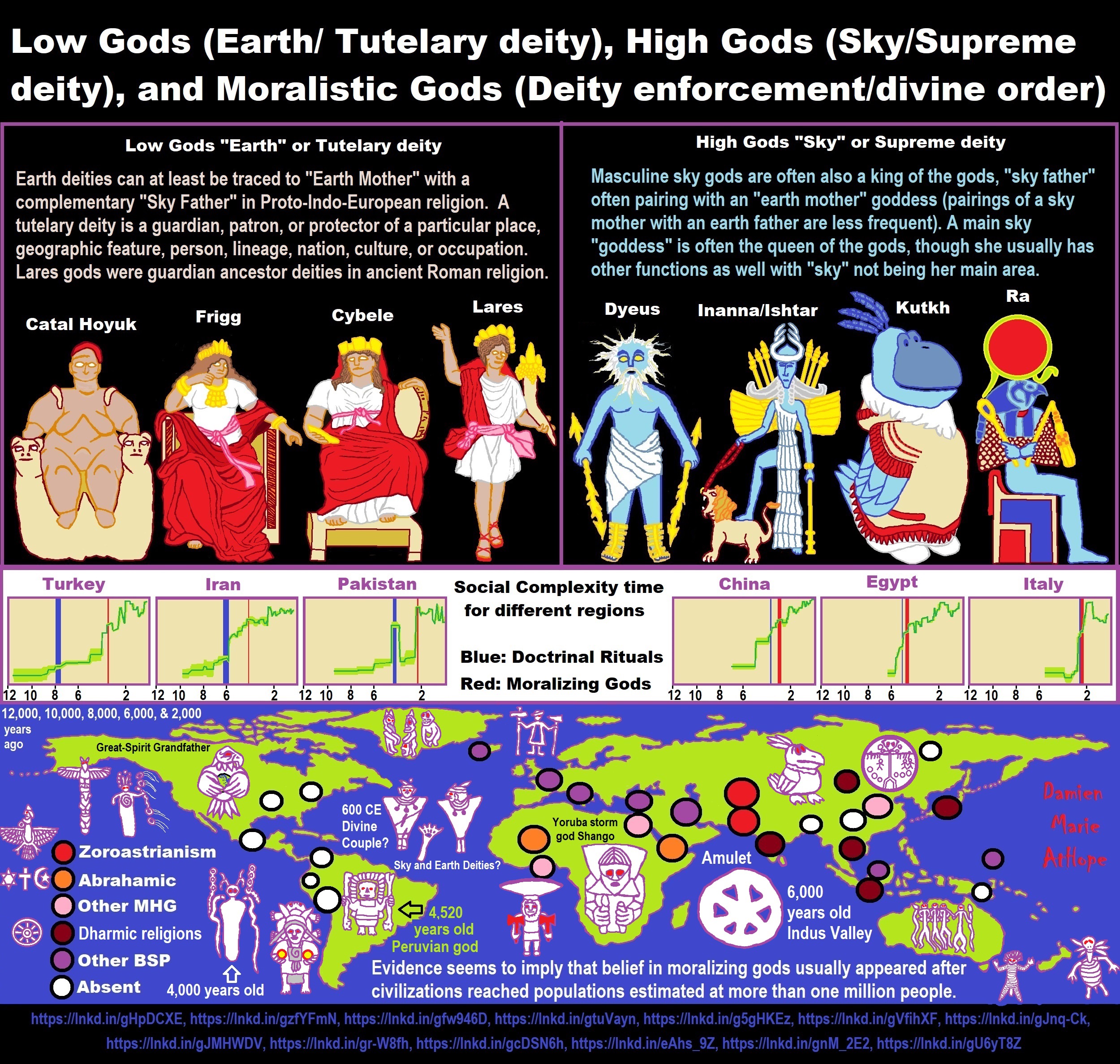
The worship of the Sumerian goddess Inanna is believed to have begun around 6,000 years ago, according to some historical interpretations. This timeframe aligns with the early Uruk period (c. 4000 – 3100 BCE or 6,000 to 5,100 years ago) in Mesopotamia, where Inanna’s worship is thought to have originated. 

Priest-Kings (at least by 6,000 to 5,000 they emerge)

“A sacred king, a monarch with prominent religious attributes. theocrat, a sovereign high priest.” ref

Mesopotamian king as Master of Animals on the Gebel el-Arak Knife, dated circa 3300-3200 BCE, AbydosEgypt. This work of art suggests early Egypt-Mesopotamia relations, showing the influence of Mesopotamia on Egypt at an early date, and the state of Mesopotamian royal iconography during the Uruk period. A similar portrait of a probable Uruk King-Priest with a brimmed round hat and large beard, excavated in Uruk and dated to 3300 BCE or 5,300 years ago.” ref 

ref

Inanna/Ishtar

Inanna is the ancient Mesopotamian goddess of war, love, and fertility. She is also associated with political power, divine law, sensuality, and procreation. Originally worshipped in Sumer, she was known by the Akkadians, Babylonians, and Assyrians as Ishtar (and occasionally the logogram 𒌋𒁯). Her primary title is “the Queen of Heaven”. She was the patron goddess of the Eanna temple at the city of Uruk, her early main religious center. In archaic Uruk, she was worshipped in three forms: morning Inanna (Inana-UD/hud), evening Inanna (Inanna sig), and princely Inanna (Inanna NUN), the former two reflecting the phases of her associated planet Venus. Her most prominent symbols include the lion and the eight-pointed star. Her husband is the god Dumuzid (later known as Tammuz), and her sukkal (attendant) is the goddess Ninshubur, later conflated with the male deities Ilabrat and Papsukkal.” ref

The Sumerians worshipped Inanna as the goddess of both warfare and love. Unlike other gods, whose roles were static and whose domains were limited, the stories of Inanna describe her as moving from conquest to conquest. She is portrayed as young and impetuous, constantly striving for more power than had been allotted to her. Inanna was also worshipped as one of the Sumerian war deities. One of the hymns dedicated to her declares: “She stirs confusion and chaos against those who are disobedient to her, speeding carnage and inciting the devastating flood, clothed in terrifying radiance. It is her game to speed conflict and battle, untiring, strapping on her sandals.” Battle itself was occasionally referred to as the “Dance of Inanna”. Epithets related to lions in particular were meant to highlight this aspect of her character. As a war goddess she was sometimes referred to with the name Irnina (“victory”), though this epithet could be applied to other deities as well, in addition to functioning as a distinct goddess linked to Ningishzida rather than to Ishtar. Another epithet highlighting this aspect of Ishtar’s nature was Anunitu (“the martial one”). Like Irnina, Anunitu could also be a separate deity, and as such she is first attested in documents from the Ur III period.” ref

Assyrian royal curse-formulas invoked both of Ishtar’s primary functions at once, invoking her to remove potency and martial valor alike. Mesopotamian texts indicate that traits perceived as heroic (such as a king’s ability to lead his troops and to triumph over enemies) and sexual prowess were regarded as interconnected. While generally classified as a goddess, Inanna/Ishtar could seem at times to have ambiguous gender. Gary Beckman states that “ambiguous gender identification” was a characteristic not just of Ishtar herself but of a category of deities he refers to as “Ishtar type” goddesses (such as Shaushka, Pinikir or Ninsianna). A late hymn contains the phrase “she [Ishtar] is Enlil, she is Ninil” which might be a reference to occasionally “dimorphic” character of Ishtar, in addition to serving as an exaltation. A hymn to Nanaya alludes to a male aspect of Ishtar from Babylon alongside a variety of more standard descriptions. However, Ilona Zsolnay only describes Ishtar as a “feminine figure who performed a masculine role” in certain contexts, for example as a war deity.” ref

“Inanna was worshipped in Sumer as early as the Uruk period (c. 4000 – 3100 BCE or around 6,000 to 5,100 years ago), and her worship was relatively localized before the conquest of Sargon of Akkad. During the post-Sargonic era, she became one of the most widely venerated deities in the Sumerian pantheon, with temples across Mesopotamia. Adoration of Inanna/Ishtar was continued by the East Semitic-speaking peoples (Akkadians, Assyrians, and Babylonians) who succeeded and absorbed the Sumerians in the region. She was especially beloved by the Assyrians, who elevated her to become the highest deity in their pantheon, ranking above their own national god Ashur. Inanna/Ishtar is alluded to in the Hebrew Bible, and she greatly influenced the Ugaritic goddess Ashtart and later the Phoenician goddess Astarte, who in turn possibly influenced the development of the Greek goddess Aphrodite. Her worship continued to flourish until its gradual decline between the first and sixth centuries CE in the wake of Christianity. Inanna appears in more myths than any other Sumerian deity. She also has a uniquely high number of epithets and alternate names, comparable only to Nergal.” ref

“Many of her myths involve her taking over the domains of other deities. She is believed to have been given the mes, which represent all positive and negative aspects of civilization, by Enki, the god of wisdom. She is also believed to have taken over the Eanna temple from An, the god of the sky. Alongside her twin brother Utu (later known as Shamash), Inanna is the enforcer of divine justice; she destroyed Mount Ebih for having challenged her authority, unleashed her fury upon the gardener Shukaletuda after he raped her in her sleep, and tracked down the bandit woman Bilulu and killed her in divine retribution for having murdered Dumuzid. In the standard Akkadian version of the Epic of Gilgamesh, Ishtar asks Gilgamesh to become her consort. When he disdainfully refuses, she unleashes the Bull of Heaven, resulting in the death of Enkidu and Gilgamesh’s subsequent grapple with his own mortality. Inanna’s most famous myth is the story of her descent into and return from the ancient Mesopotamian underworld, ruled by her older sister Ereshkigal. After she reaches Ereshkigal’s throne room, the seven judges of the underworld deem her guilty and strike her dead. Three days later, Ninshubur pleads with all the gods to bring Inanna back. All of them refuse her, except Enki, who sends two sexless beings to rescue Inanna. They escort Inanna out of the underworld but the galla, the guardians of the underworld, drag her husband Dumuzid down to the underworld as her replacement. Dumuzid is eventually permitted to return to heaven for half the year, while his sister Geshtinanna remains in the underworld for the other half, resulting in the cycle of the seasons.” ref

“Scholars believe that Inanna and Ishtar were originally separate, unrelated deities, but were conflated with one another during the reign of Sargon of Akkad and came to be regarded as effectively the same goddess under two different names. Inanna’s name may derive from the Sumerian phrase nin-an-ak, meaning “Lady of Heaven”, but the cuneiform sign for Inanna (𒈹) is not a ligature of the signs lady (Sumerian: nin; cuneiform: 𒊩𒌆 SAL.TUG2) and sky (Sumerian: an; cuneiform: 𒀭 AN). These difficulties led some early Assyriologists to suggest that Inanna may have originally been a Proto-Euphratean goddess, who was only later accepted into the Sumerian pantheon. This idea was supported by Inanna’s youthfulness, as well as the fact that, unlike the other Sumerian divinities, she seems to have initially lacked a distinct sphere of responsibilities. The view that there was a Proto-Euphratean substrate language in Southern Iraq before Sumerian is not widely accepted by modern Assyriologists.” ref

“The name Ishtar occurs as an element in personal names from both the pre-Sargonic and post-Sargonic eras in Akkad, Assyria, and Babylonia. It is of Semitic derivation and is probably etymologically related to the name of the West Semitic god Attar, who is mentioned in later inscriptions from Ugarit and southern Arabia. The morning star may have been conceived as a male deity who presided over the arts of war, and the evening star may have been conceived as a female deity who presided over the arts of love. Among the Akkadians, Assyrians, and Babylonians, the name of the male god eventually supplanted the name of his female counterpart, but, due to extensive syncretism with Inanna, the deity remained as female, although her name was in the masculine form.” ref

“Inanna has posed a problem for many scholars of ancient Sumer due to the fact that her sphere of power contained more distinct and contradictory aspects than that of any other deity. Two major theories regarding her origins have been proposed. The first explanation holds that Inanna is the result of a syncretism between several previously unrelated Sumerian deities with totally different domains. The second explanation holds that Inanna was originally a Semitic deity who entered the Sumerian pantheon after it was already fully structured, and who took on all the roles that had not yet been assigned to other deities. As early as the Uruk period (c. 4000–3100 BCE or around 6,000 to 5,100 years ago), Inanna was already associated with the city of Uruk. During this period, the symbol of a ring-headed doorpost was closely associated with Inanna.” ref 

“The famous Uruk Vase (found in a deposit of cult objects of the Uruk III period) depicts a row of naked men carrying various objects, including bowls, vessels, and baskets of farm products, and bringing sheep and goats to a female figure facing the ruler. The female stands in front of Inanna’s symbol of the two twisted reeds of the doorpost, while the male figure holds a box and stack of bowls, the later cuneiform sign signifying the En, or high priest of the temple. Seal impressions from the Jemdet Nasr period (c. 3100–2900 BCE or around 5,100 to 4,900 years ago) show a fixed sequence of symbols representing various cities, including those of Ur, Larsa, Zabalam, Urum, Arina, and probably Kesh. This list probably reflects the report of contributions to Inanna at Uruk from cities supporting her cult. A large number of similar seals have been discovered from phase I of the Early Dynastic period (c. 2900–2350 BCE or around 4,900 to 4,350 years ago) at Ur, in a slightly different order, combined with the rosette symbol of Inanna. These seals were used to lock storerooms to preserve materials set aside for her cult.” ref

During the Akkadian period (c.  2334–2154 BCE or around 4,334 to 5,154 years ago), following the conquests of Sargon of Akkad, Inanna and originally independent Ishtar became so extensively syncretized that they became regarded as effectively the same. The Akkadian poet Enheduanna, the daughter of Sargon, wrote numerous hymns to Inanna, identifying her with Ishtar. As a result of this, the popularity of Inanna/Ishtar’s cult skyrocketed. Alfonso Archi, who was involved in early excavations of Ebla, assumes Ishtar was originally a goddess venerated in the Euphrates valley, pointing out that an association between her and the desert poplar is attested in the most ancient texts from both Ebla and Mari. He considers her, a moon god (e.g., Sin) and a sun deity of varying gender (Shamash/Shapash) to be the only deities shared between various early Semitic peoples of Mesopotamia and ancient Syria, who otherwise had different not necessarily overlapping pantheons.” ref

ref, ref, ref, ref, ref, ref, ref, ref

“Thumbing one’s nose, also known as cocking a snook, is a sign of derision, disrespect, contempt, or defiance, made by putting the thumb on the nose, holding the palm open and perpendicular to the face, and wiggling the remaining fingers.” ref

“The Assyrian created an enormous empire. They mastered the early art of war. Unfortunately for their enemies, the Assyrians also mastered torture techniques. And they bragged about it! The Assyrians depicted the torture in great detail on the walls of the imperial palaces. They created tablets containing every single punishment the Assyrian army carried out. They cut off the limbs, gouged out the eyes, and then left those poor victims to roam around. Those poor people serve as a living reminder of the Assyrians’ cruelty.” ref

Hammurabi is best known for having issued the Code of Hammurabi, which he claimed to have received from Shamash, the Babylonian god of justice. Unlike earlier Sumerian law codes, such as the Code of Ur-Nammu, which had focused on compensating the victim of the crime, the Law of Hammurabi was one of the first law codes to place greater emphasis on the physical punishment of the perpetrator. It prescribed specific penalties for each crime and is among the first codes to establish the presumption of innocence. They were intended to limit what a wronged person was permitted to do in retribution. The Code of Hammurabi and the Law of Moses in the Torah contain numerous similarities.” ref

Noses Broken on So Many Ancient Egyptian Statues

“Striking Power’: the truth behind the broken noses of Ancient Egyptian sculptures. Numerous pieces, including headless statues of nobles and goddesses and busts of Egyptian kings with broken noses, are on display in the Striking Power.” ref

“Archaeologists continue to discover in situ statues that are missing their noses, indicating that this damage occurred centuries ago. Ancient texts give us clues about what may have happened. First, we know that the ancient Egyptians believed that a soul or a spirit could inhabit an image or object. An inscription about the goddess Hathor, found in the Dendera Temple complex—one of the most important religious sites in ancient times and home to an exquisitely preserved Temple of Hathor today—says, “She flies down into her body, she joins with her form.” Another inscription at the complex reads, “Osiris . . . comes as a spirit . . . He sees his mysterious form depicted in its place, his figure engraved on the wall; he enters into his mysterious form, alights on his image.” When the spirits of these deities entered their drawings and sculptures, they activated the objects (and the temple) as conduits for the living to communicate with the gods. It wasn’t only deities who could inhabit images. Statues of deceased people in tombs and temples were treated as if they were alive; they were given offerings of food, drink, clothing, and anything else that the soul might need to survive in the afterlife.” ref

Commentary on Isaiah 37:29

I will put my hook in your nose and my bit in your mouth: These two parallel lines begin to describe Yahweh’s control and punishment of Sennacherib. He will lead him by force in the same way that someone leads an animal. I will put my hook in your nose pictures the custom of leading certain animals, such as bulls and camels, by hooks in their noses. It may also be an allusion to the way the Assyrians treated their defeated enemies, as is known from Assyrian texts and monuments. They would place a metal hook through a captive’s nose or lip, tie a rope through the hook, and lead the captive away by the rope.” ref

Rod-and-ring symbol

The rod-and-ring symbol is a symbol that is depicted on Mesopotamian stelascylinder seals, and reliefs. It is held by a god or goddess and in most cases is being offered to a king who is standing, often making a sacrifice, or otherwise showing respect. The symbol dates from the Third Dynasty of Ur to the Neo-Assyrian period, and is commonly explained as a coil of measuring string and a yardstick. Other theories are that they are a shepherd’s crook and a nose rope, or that the ring is no rope at all. The best known example of the symbol is seen on the Code of Hammurabi stela. The symbol is also illustrated in the “Investiture Scene” painted at the palace of Mari. The most elaborate depiction is found on the Ur-Nammu-stela, where the winding of the cords has been detailed by the sculptor. This has also been described as a “staff and a chaplet of beads”. There is discussion whether the Ur-Nammu-stela is showing the same thing.” ref

The myth of Inanna‘s descent to the nether world describes how the goddess dresses and prepares herself: “She held the lapis-lazuli measuring rod and measuring line in her hand.” In tablet IV of the Enuma Elish, the rod and ring symbol is referenced as: “They rejoiced, and they did homage unto him, saying, “Marduk is King!” They bestowed upon him the scepter, and the throne, and the ring. They gave him an invincible weaponry which overwhelmeth the foe.ref

Rod-and-ring symbol that appears similar in other cultures

“The Egyptian shen ring has a close resemblance.  The Egyptian Ankh has a vaguely similar form and is also depicted in hands of gods. The Greek goddess Nike uses a different type of investiture symbol for the victor in the sporting races, a wreath of laurel, or a wreath of olive branches, but she is depicted with a ring, a rigid circle. The Faravahar, the symbol of Zoroastrianism, also holds a ring.ref

ref

A falcon, representing Horus, perched above a set of papyrus flowers, the symbol of Lower Egypt. In his talons, he holds a rope-like object which appears to be attached to the nose of a man’s head that also emerges from the papyrus flowers.” ref

Horus

“Horus, also known as Heru, Har, Her, or Hor in Ancient Egyptian, is one of the most significant ancient Egyptian deities who served many functions, most notably as the god of kingship, healing, protection, the sun, and the sky. He was worshipped from at least the late prehistoric Egypt until the Ptolemaic Kingdom and Roman Egypt. Different forms of Horus are recorded in history, and these are treated as distinct gods by Egyptologists. These various forms may be different manifestations of the same multi-layered deity in which certain attributes or syncretic relationships are emphasized, not necessarily in opposition but complementary to one another, consistent with how the Ancient Egyptians viewed the multiple facets of reality. He was most often depicted as a falcon, most likely a lanner falcon or peregrine falcon, or as a man with a falcon head.” ref

“The earliest recorded form of Horus is the tutelary deity of Nekhen in Upper Egypt, who is the first known national god, specifically related to the ruling pharaoh who in time came to be regarded as a manifestation of Horus in life and Osiris in death. The most commonly encountered family relationship describes Horus as the son of Isis and Osiris, and he plays a key role in the Osiris myth as Osiris’s heir and the rival to Set, the murderer and brother of Osiris. In another tradition, Hathor is regarded as his mother and sometimes as his wife. Claudius Aelianus wrote that Egyptians called the god Apollo “Horus” in their own language. However, Plutarch, elaborating further on the same tradition reported by the Greeks, specified that the one “Horus” whom the Egyptians equated with the Greek Apollo was in fact “Horus the Elder”, a primordial form of Horus whom Plutarch distinguishes from both Horus and Harpocrates.” ref

The pharaoh was associated with many specific deities. He was identified directly with Horus, who represented kingship itself and was seen as a protector of the pharaoh, and he was seen as the son of Ra, who ruled and regulated nature as the pharaoh ruled and regulated society. The Pyramid Texts (c. 2400–2300 BCE) describe the nature of the pharaoh in different characters as both Horus and Osiris. The pharaoh as Horus in life became the pharaoh as Osiris in death, where he was united with the other gods. New incarnations of Horus succeeded the deceased pharaoh on earth in the form of new pharaohs. The lineage of Horus, the eventual product of unions between the children of Atum, may have been a means to explain and justify pharaonic power. The gods produced by Atum were all representative of cosmic and terrestrial forces in Egyptian life. By identifying Horus as the offspring of these forces, then identifying him with Atum himself, and finally identifying the Pharaoh with Horus, the Pharaoh theologically had dominion over all the world.” ref

Kutkh

Kutkh (also KutkhaKootkhaKutq, Kutcha, and other variants, RussianКутх) is a Raven spirit traditionally revered in various forms by various indigenous peoples of the Russian Far East. Kutkh appears in many legends: as a key figure in creation, as a fertile ancestor of mankind, as a mighty shaman, and as a trickster. He is a popular subject of the animist stories of the Chukchi people and plays a central role in the mythology of the Koryaks and Itelmens of Kamchatka. Many of the stories regarding Kutkh are similar to those of the Raven among the indigenous peoples of the Pacific Northwest Coast, suggesting a long history of indirect cultural contact between Asian and North American peoples. Kutkh is known widely among the people that share a common Chukotko-Kamchatkan language family.” ref

“Regionally, he is known as Kúrkil among the Chukchi; as Kutq among the Itelmens; and as KútqI, KútqIy, or KúsqIy among the southeastern Koryaks and KúykIy or QúykIy among the northwestern Koryaks. In Koryak, the name is employed commonly in its augmentative form, (KutqÍnnaku, KusqÍnnaku, KuyÍnnaku) all meaning “Big Kutkh” and often translated simply as “God. Although Kutkh is supposed to have given mankind variously light, fire, language, fresh water and skills such as net-weaving and copulation, he is also often portrayed as a laughing-stock, hungry, thieving and selfish. In its contradictions, his character is similar that of other trickster gods, such as Coyote.” ref

Damien Marie AtHope’s Art

ref, ref, ref, ref, ref, ref, ref, ref, ref, ref, ref, ref, ref, ref, ref, ref, ref, ref, ref, ref, ref

Low Gods “Earth” or Tutelary deity and High Gods “Sky” or Supreme deity

“An Earth goddess is a deification of the Earth. Earth goddesses are often associated with the “chthonic” deities of the underworldKi and Ninhursag are Mesopotamian earth goddesses. In Greek mythology, the Earth is personified as Gaia, corresponding to Roman Terra, Indic Prithvi/Bhūmi, etc. traced to an “Earth Mother” complementary to the “Sky Father” in Proto-Indo-European religionEgyptian mythology exceptionally has a sky goddess and an Earth god.” ref

“A mother goddess is a goddess who represents or is a personification of naturemotherhoodfertilitycreationdestruction or who embodies the bounty of the Earth. When equated with the Earth or the natural world, such goddesses are sometimes referred to as Mother Earth or as the Earth Mother. In some religious traditions or movements, Heavenly Mother (also referred to as Mother in Heaven or Sky Mother) is the wife or feminine counterpart of the Sky father or God the Father.” ref

Any masculine sky god is often also king of the gods, taking the position of patriarch within a pantheon. Such king gods are collectively categorized as “sky father” deities, with a polarity between sky and earth often being expressed by pairing a “sky father” god with an “earth mother” goddess (pairings of a sky mother with an earth father are less frequent). A main sky goddess is often the queen of the gods and may be an air/sky goddess in her own right, though she usually has other functions as well with “sky” not being her main. In antiquity, several sky goddesses in ancient Egypt, Mesopotamia, and the Near East were called Queen of Heaven. Neopagans often apply it with impunity to sky goddesses from other regions who were never associated with the term historically. The sky often has important religious significance. Many religions, both polytheistic and monotheistic, have deities associated with the sky.” ref

“In comparative mythology, sky father is a term for a recurring concept in polytheistic religions of a sky god who is addressed as a “father”, often the father of a pantheon and is often either a reigning or former King of the Gods. The concept of “sky father” may also be taken to include Sun gods with similar characteristics, such as Ra. The concept is complementary to an “earth mother“. “Sky Father” is a direct translation of the Vedic Dyaus Pita, etymologically descended from the same Proto-Indo-European deity name as the Greek Zeûs Pater and Roman Jupiter and Germanic Týr, Tir or Tiwaz, all of which are reflexes of the same Proto-Indo-European deity’s name, *Dyēus Ph₂tḗr. While there are numerous parallels adduced from outside of Indo-European mythology, there are exceptions (e.g. In Egyptian mythology, Nut is the sky mother and Geb is the earth father).” ref

Tutelary deity

“A tutelary (also tutelar) is a deity or spirit who is a guardian, patron, or protector of a particular place, geographic feature, person, lineage, nation, culture, or occupation. The etymology of “tutelary” expresses the concept of safety and thus of guardianship. In late Greek and Roman religion, one type of tutelary deity, the genius, functions as the personal deity or daimon of an individual from birth to death. Another form of personal tutelary spirit is the familiar spirit of European folklore.” ref

“A tutelary (also tutelar) iKorean shamanismjangseung and sotdae were placed at the edge of villages to frighten off demons. They were also worshiped as deities. Seonangshin is the patron deity of the village in Korean tradition and was believed to embody the SeonangdangIn Philippine animism, Diwata or Lambana are deities or spirits that inhabit sacred places like mountains and mounds and serve as guardians. Such as: Maria Makiling is the deity who guards Mt. Makiling and Maria Cacao and Maria Sinukuan. In Shinto, the spirits, or kami, which give life to human bodies come from nature and return to it after death. Ancestors are therefore themselves tutelaries to be worshiped. And similarly, Native American beliefs such as Tonás, tutelary animal spirit among the Zapotec and Totems, familial or clan spirits among the Ojibwe, can be animals.” ref

“A tutelary (also tutelar) in Austronesian beliefs such as: Atua (gods and spirits of the Polynesian peoples such as the Māori or the Hawaiians), Hanitu (Bunun of Taiwan‘s term for spirit), Hyang (KawiSundaneseJavanese, and Balinese Supreme Being, in ancient Java and Bali mythology and this spiritual entity, can be either divine or ancestral), Kaitiaki (New Zealand Māori term used for the concept of guardianship, for the sky, the sea, and the land), Kawas (mythology) (divided into 6 groups: gods, ancestors, souls of the living, spirits of living things, spirits of lifeless objects, and ghosts), Tiki (Māori mythologyTiki is the first man created by either Tūmatauenga or Tāne and represents deified ancestors found in most Polynesian cultures). ” ref, ref, ref, ref, ref, ref, ref

Mesopotamian Tutelary Deities can be seen as ones related to City-States 

“Historical city-states included Sumerian cities such as Uruk and UrAncient Egyptian city-states, such as Thebes and Memphis; the Phoenician cities (such as Tyre and Sidon); the five Philistine city-states; the Berber city-states of the Garamantes; the city-states of ancient Greece (the poleis such as AthensSpartaThebes, and Corinth); the Roman Republic (which grew from a city-state into a vast empire); the Italian city-states from the Middle Ages to the early modern period, such as FlorenceSienaFerraraMilan (which as they grew in power began to dominate neighboring cities) and Genoa and Venice, which became powerful thalassocracies; the Mayan and other cultures of pre-Columbian Mesoamerica (including cities such as Chichen ItzaTikalCopán and Monte Albán); the central Asian cities along the Silk Road; the city-states of the Swahili coastRagusa; states of the medieval Russian lands such as Novgorod and Pskov; and many others.” ref

“The Uruk period (ca. 4000 to 3100 BCE; also known as Protoliterate period) of Mesopotamia, named after the Sumerian city of Uruk, this period saw the emergence of urban life in Mesopotamia and the Sumerian civilization. City-States like Uruk and others had a patron tutelary City Deity along with a Priest-King.” ref

Chinese folk religion, both past, and present, includes myriad tutelary deities. Exceptional individuals, highly cultivated sages, and prominent ancestors can be deified and honored after death. Lord Guan is the patron of military personnel and police, while Mazu is the patron of fishermen and sailors. Such as Tu Di Gong (Earth Deity) is the tutelary deity of a locality, and each individual locality has its own Earth Deity and Cheng Huang Gong (City God) is the guardian deity of an individual city, worshipped by local officials and locals since imperial times.” ref

“A tutelary (also tutelar) in Hinduism, personal tutelary deities are known as ishta-devata, while family tutelary deities are known as Kuladevata. Gramadevata are guardian deities of villages. Devas can also be seen as tutelary. Shiva is the patron of yogis and renunciants. City goddesses include: Mumbadevi (Mumbai), Sachchika (Osian); Kuladevis include: Ambika (Porwad), and Mahalakshmi. In NorthEast India Meitei mythology and religion (Sanamahism) of Manipur, there are various types of tutelary deities, among which Lam Lais are the most predominant ones. Tibetan Buddhism has Yidam as a tutelary deity. Dakini is the patron of those who seek knowledge.” ref

“A tutelary (also tutelar) The Greeks also thought deities guarded specific places: for instance, Athena was the patron goddess of the city of Athens. Socrates spoke of hearing the voice of his personal spirit or daimonion:

You have often heard me speak of an oracle or sign which comes to me … . This sign I have had ever since I was a child. The sign is a voice which comes to me and always forbids me to do something which I am going to do, but never commands me to do anything, and this is what stands in the way of my being a politician.” ref

“Tutelary deities who guard and preserve a place or a person are fundamental to ancient Roman religion. The tutelary deity of a man was his Genius, that of a woman her Juno. In the Imperial era, the Genius of the Emperor was a focus of Imperial cult. An emperor might also adopt a major deity as his personal patron or tutelary, as Augustus did Apollo. Precedents for claiming the personal protection of a deity were established in the Republican era, when for instance the Roman dictator Sulla advertised the goddess Victory as his tutelary by holding public games (ludi) in her honor.” ref

“Each town or city had one or more tutelary deities, whose protection was considered particularly vital in time of war and siege. Rome itself was protected by a goddess whose name was to be kept ritually secret on pain of death (for a supposed case, see Quintus Valerius Soranus). The Capitoline Triad of Juno, Jupiter, and Minerva were also tutelaries of Rome. The Italic towns had their own tutelary deities. Juno often had this function, as at the Latin town of Lanuvium and the Etruscan city of Veii, and was often housed in an especially grand temple on the arx (citadel) or other prominent or central location. The tutelary deity of Praeneste was Fortuna, whose oracle was renowned.” ref

“The Roman ritual of evocatio was premised on the belief that a town could be made vulnerable to military defeat if the power of its tutelary deity were diverted outside the city, perhaps by the offer of superior cult at Rome. The depiction of some goddesses such as the Magna Mater (Great Mother, or Cybele) as “tower-crowned” represents their capacity to preserve the city. A town in the provinces might adopt a deity from within the Roman religious sphere to serve as its guardian, or syncretize its own tutelary with such; for instance, a community within the civitas of the Remi in Gaul adopted Apollo as its tutelary, and at the capital of the Remi (present-day Rheims), the tutelary was Mars Camulus.” ref

Household deity (a kind of or related to a Tutelary deity)

“A household deity is a deity or spirit that protects the home, looking after the entire household or certain key members. It has been a common belief in paganism as well as in folklore across many parts of the world. Household deities fit into two types; firstly, a specific deity – typically a goddess – often referred to as a hearth goddess or domestic goddess who is associated with the home and hearth, such as the ancient Greek Hestia.” ref

“The second type of household deities are those that are not one singular deity, but a type, or species of animistic deity, who usually have lesser powers than major deities. This type was common in the religions of antiquity, such as the Lares of ancient Roman religion, the Gashin of Korean shamanism, and Cofgodas of Anglo-Saxon paganism. These survived Christianisation as fairy-like creatures existing in folklore, such as the Anglo-Scottish Brownie and Slavic Domovoy.” ref

“Household deities were usually worshipped not in temples but in the home, where they would be represented by small idols (such as the teraphim of the Bible, often translated as “household gods” in Genesis 31:19 for example), amulets, paintings, or reliefs. They could also be found on domestic objects, such as cosmetic articles in the case of Tawaret. The more prosperous houses might have a small shrine to the household god(s); the lararium served this purpose in the case of the Romans. The gods would be treated as members of the family and invited to join in meals, or be given offerings of food and drink.” ref

“In many religions, both ancient and modern, a god would preside over the home. Certain species, or types, of household deities, existed. An example of this was the Roman Lares. Many European cultures retained house spirits into the modern period. Some examples of these include:

“Although the cosmic status of household deities was not as lofty as that of the Twelve Olympians or the Aesir, they were also jealous of their dignity and also had to be appeased with shrines and offerings, however humble. Because of their immediacy they had arguably more influence on the day-to-day affairs of men than the remote gods did. Vestiges of their worship persisted long after Christianity and other major religions extirpated nearly every trace of the major pagan pantheons. Elements of the practice can be seen even today, with Christian accretions, where statues to various saints (such as St. Francis) protect gardens and grottos. Even the gargoyles found on older churches, could be viewed as guardians partitioning a sacred space.” ref

“For centuries, Christianity fought a mop-up war against these lingering minor pagan deities, but they proved tenacious. For example, Martin Luther‘s Tischreden have numerous – quite serious – references to dealing with kobolds. Eventually, rationalism and the Industrial Revolution threatened to erase most of these minor deities, until the advent of romantic nationalism rehabilitated them and embellished them into objects of literary curiosity in the 19th century. Since the 20th century this literature has been mined for characters for role-playing games, video games, and other fantasy personae, not infrequently invested with invented traits and hierarchies somewhat different from their mythological and folkloric roots.” ref

“In contradistinction to both Herbert Spencer and Edward Burnett Tylor, who defended theories of animistic origins of ancestor worship, Émile Durkheim saw its origin in totemism. In reality, this distinction is somewhat academic, since totemism may be regarded as a particularized manifestation of animism, and something of a synthesis of the two positions was attempted by Sigmund Freud. In Freud’s Totem and Taboo, both totem and taboo are outward expressions or manifestations of the same psychological tendency, a concept which is complementary to, or which rather reconciles, the apparent conflict. Freud preferred to emphasize the psychoanalytic implications of the reification of metaphysical forces, but with particular emphasis on its familial nature. This emphasis underscores, rather than weakens, the ancestral component.” ref

William Edward Hearn, a noted classicist, and jurist, traced the origin of domestic deities from the earliest stages as an expression of animism, a belief system thought to have existed also in the neolithic, and the forerunner of Indo-European religion. In his analysis of the Indo-European household, in Chapter II “The House Spirit”, Section 1, he states:

The belief which guided the conduct of our forefathers was … the spirit rule of dead ancestors.” ref

“In Section 2 he proceeds to elaborate:

It is thus certain that the worship of deceased ancestors is a vera causa, and not a mere hypothesis. …

In the other European nations, the Slavs, the Teutons, and the Kelts, the House Spirit appears with no less distinctness. … [T]he existence of that worship does not admit of doubt. … The House Spirits had a multitude of other names which it is needless here to enumerate, but all of which are more or less expressive of their friendly relations with man. … In [England] … [h]e is the Brownie. … In Scotland this same Brownie is well known. He is usually described as attached to particular families, with whom he has been known to reside for centuries, threshing the corn, cleaning the house, and performing similar household tasks. His favorite gratification was milk and honey.” ref

Gods?

“Animism” is needed to begin supernatural thinking. “Totemism” is needed for supernatural thinking connecting human actions & related to clan/tribe. “Shamanism” is needed for supernatural thinking to be controllable/changeable by special persons. Together = Gods/paganism

Here is a Twitter conversation that inspired this blog: Link

Atheist commenter – “Bring back the Female gods” 

My response, I hear you, often better than the bigoty of male gods. lol

I see many of the women as gods as tutelary, “having the guardianship of a person or a thing.” ref

Atheist commenter – “They in my opinion are less likely to encourage neighbor conquest, probably why they died out.” 

My response, Yes. “A tutelary is a deity or a spirit who is a guardian, patron, or protector of a particular place, geographic feature, person, lineage, nation, culture, or occupation. “Tutelary” expresses the concept of safety and thus of guardianship.” ref

Atheist commenter – “Thanks, I am not all that versed in history and only play on my personal experience/intuition.”

My response, There are some violent women goddesses but that is not the norm. Even the ones that have violent features are almost never limited to violence or war and have many other aspects of nonviolence. Such as “Inanna/Ishtar: goddess of love, war, fertility, beauty, sex, justice, & political power.” ref

Atheist commenter – “She seemed to mold to the current elite/ruling class. Like any god since to be fair.”

My response, All gods and goddesses can and were used to justify all kinds of violence just as now I say go godless and support real equality in deity-free atheism. 🙂

Atheist commenter – “I followed you for a while, I would be a hard atheist if I could prove a negative.”

My response, Logically you can prove a negative, but I think you mean evidentially prove a negative.

You Can Prove a Negative

List of War Deities

“A war god in mythology associated with war, combat, or bloodshed. They occur commonly in both monotheistic and polytheistic religions. Unlike most gods and goddesses in polytheistic religions, monotheistic deities have traditionally been portrayed in their mythologies as commanding war in order to spread religion. (The intimate connection between “holy war” and the “one true god” belief of monotheism has been noted by many scholars, including Jonathan Kirsch in his book God Against The Gods: The History of the War Between Monotheism and Polytheism and Joseph Campbell in The Masks of God, Vol. 3: Occidental Mythology.)” ref

There are a total of 204 war deities listed with 58 goddesses and 146 gods.

I am making the 58 goddesses pink to better see them among the 146 gods.

Africa

North Africa

Berber

  • Gurzil, bull-headed warrior god.
  • Ifri, war goddess
  • Sinifere, war god

Egyptian

  • Anhur, god of war, not a native god
  • Bast, cat-headed goddess associated with war, protection of Lower Egypt and the pharaoh, the sun, perfumes, ointments, and embalming
  • Horus, god of the king, the sky, war, and protection
  • Maahes, lion-headed god of war
  • Menhit, goddess of war, “she who massacres”
  • Montu, falcon-headed god of war, valor, and the Sun
  • Neith, goddess of war, hunting, and wisdom
  • Pakhet, goddess of war
  • Satis, deification of the floods of the Nile River and an early war, hunting, and fertility goddess
  • Sekhmet, goddess of warfare, pestilence, and the desert
  • Set, god of the desert and storms, associated with war
  • Sobek, god of the Nile, the army, military, fertility, and crocodiles
  • Sopdu, god of the scorching heat of the summer sun, associated with war
  • Wepwawet, wolf-god of war and death who later became associated with Anubis and the afterlife

Sub-Sahara Africa

Nubian

Western African-Congo

Yoruba

Eastern African-Congo

Igbo

Ethiopian

Kenya

Kalenjin

  • Boryet, Kipsigis Death-wielding god of war. Boryet (also luket) is the act of war. Death (Me’et) is observed as a consequence of war. War is thus personified as such.

Europe

Balto-Slavic

Baltic

  • Kara Māte, Latvian goddess of war
  • Kauriraris, Lithuanian god of war and war steeds
  • Junda, Lithuanian goddess of war

Slavic

  • Jarovit, god of vegetation, fertility, and spring, also associated with war and harvest
  • Perun, god of thunder and lightning, associated with war
  • Svetovid, god of war, fertility, and abundance
  • Zorya Utrennyaya, goddess of the morning star, sometimes depicted as a warrior goddess who protected men in battle

Celtic

  • Agrona, reconstructed Proto-Celtic name for the river Aeron in Wales, and possibly the name of an associated war goddess
  • Alaisiagae, a pair of goddesses worshiped in Roman Britain, with parallel Celtic and Germanic titles
  • Andarta, Brittonic goddess theorized to be associated with victory, overcoming enemies, war
  • AndrasteGaulish warrior goddess
  • AnannIrish goddess of war, death, predicting death in battle, cattle, prosperity, and fertility
  • Badb, Irish goddess of war who took the form of a crow; member of the Morrígan
  • Bandua, Gallaecian God of War
  • Belatucadros, war god worshipped by soldiers and equated with the Roman war god Mars
  • Camulus, god of war of the Belgic Remi and British Trinovantes
  • Catubodua, Gaulish goddess assumed to be associated with victory
  • Cicolluis, Gaulish and Irish god associated with war
  • Cocidius, Romano-British god associated with war, hunting and forests
  • Macha, Irish goddess associated with war, horses, and sovereignty; member of the Morrígan
  • The Morrígan, Irish triple goddess associated with sovereignty, prophecy, war, and death on the battlefield
  • Neit, Irish god of war, husband of Nemain of Badb
  • Nemain, Irish goddess of the frenzied havoc of war; member of the Morrígan
  • Rudianos, Gaulish god of war
  • Segomo, Gaulish god of war
  • Teutates, British and Gaulish god of war and the tribe

Lusitanian

  • Neto, god believed to be associated with war, death, and weaponry

Norse-Germanic

Continental Germanic

  • Baduhenna, a western Frisii goddess of warfare
  • Idis (Germanic)/itis/ides, female being, the West Germanic cognates of North Germanic dís, they are connected with battle magic and fettering enemy armies
  • Sandraudiga, goddess whose name may mean “she who dyes the sand red”, suggesting she is a war deity or at least has a warrior aspect
  • Týr, god of war, single combat, law, justice, and the thing, who later lost much of his religious importance and mythical role to the god Wōden
  • Wōden, god associated with wisdom, poetry, war, victory, and death

Norse

  • Dís, a group of lesser goddesses who are sometimes connected with battle magic; valkyrie may be a kenning for them
  • Freyja, goddess associated with love, beauty, fertility, gold, seiðr, war, and death
  • Odin, god associated with wisdom, war, battle, and death
  • Týr, god associated with law, justice, victory, and heroic glory
  • Ullr, god associated with archery, skiing, bows, hunting, single combat, and glory
  • Valkyries, choosers of the slain and connected to Odin, ruler of Valhalla; they may be the same as the dís above

Graeco-Roman

Greek / Hellenic

  • Alala, spirit of the war cry
  • Alke, spirit of courage and battle-strength
  • Amphillogiai, goddesses of disputes
  • Androktasiai, spirits of battlefield slaughter
  • Ares, the main Greek god of war, despised by all the city-states except Sparta
  • Athena, goddess of wisdom, war strategy, and weaving, more beloved by ancient Greeks than Ares and tutelary deity of Athens, Sparta’s rival
  • Bia, spirit of force and compulsion
  • Deimos, personification of terror
  • Enyalius, god of war; in early periods apparently an epithet of Ares, they were differentiated later
  • Enyo, goddess of war, sometimes appears to be identical to Eris
  • Eris, goddess of discord and strife
  • Hera, in the Illiad she has a martial character and fights (and wins) against Artemis; however, this warlike aspect of her appears nowhere else in the surviving corpus, suggesting it was dropped early on
  • Homados, spirit of the din of battle
  • Hysminai, female spirits of fighting and combat
  • Ioke, spirit of onslaught, battle-tumult, and pursuit
  • Keres, female spirits of violent or cruel death, including death in battle, by accident, murder, or ravaging disease
  • Kratos, personification of strength and power
  • Kydoimos, spirit of the din of battle
  • Makhai, male spirits of fighting and combat
  • Nike, spirit of victory
  • Palioxis, spirit of backrush, flight, and retreat from battle
  • Pallas, Titan god of war-craft and of the springtime campaign season
  • Perses, the Titan of destruction
  • Phobos, spirit of panic, fear, flight, and battlefield rout
  • Phonoi, spirits of murder, killing, and slaughter
  • Polemos, spirit of war
  • Proioxis, spirit of onrush and battlefield pursuit

Roman

  • Bellona, goddess of war
  • Honos, god of chivalry, honor, and military justice
  • Juno, has a consistent martial character and the patron goddess of Rome, the mother of Mars and Bellona
  • Mars, god of war and agriculture, equivalent to Ares as far as being war gods; aside from this they have very little in common
  • Minerva, goddess of wisdom, medicine, music, crafts, and war, while somewhat equivalent to the Greek Athena, the Romans did not emphasize her war aspect like the Greeks did
  • Nerio, warrior goddess and personification of valor
  • Victoria, personification of victory, equivalent to the Greek goddess Nike
  • Virtus, god of bravery and military strength

Etruscan

  • Laran, god of war.
  • Menrva, goddess of war, art, wisdom, and health

Balkan

Uralic

Hungarian

  • Hadúr, god of war and the metalsmith of the gods

Asia

Turkic

Mongolian

East Asia

Chinese

  • Chiyou, god of war
  • Di Qing, Star of Military Fortune, God of Valor
  • Erlang Shen, a three-eyed warrior
  • Guan Yu, Han dynasty general. God of loyalty, righteousness, and valor.
  • Jinzha, marshal of the center altar
  • Jiutian Xuannü, goddess of war, sex, and longevity
  • Li Jing, Guardian of Celestial Palace
  • Muzha, marshal of the center altar
  • Nezha
  • Wang Shan, Song dynasty general. Primordial Lord-General of Heaven. Guardian of Celestial Palace
  • Wen Qiong 
  • Yue Fei
  • Zhao Lang (Zhao Gongming), God of Military Fortune, Guardian of Celestial Palace, Protector of Households
  • Xue Rengui, Tang dynasty general.

Japanese

  • Futsunushi, god of swords, martial arts, and conquest; god of the Mononobe clan
  • Hachiman Daimyōjin, Shinto god of war (on land) and agriculture, divine protector of the Minamoto clan; mostly worshiped by samurai
  • Sarutahiko, god of war and misogi; the deity who stands at the junction of Heaven and Earth; one of the main Kunitsukami; actively worshipped by Ueshiba Morihei
  • Takemikazuchi, god of war, conquest, martial arts, sumo, and lightning; general of the Amatsukami; god of Kashima and Ujigami of Nakatomi clan
  • Suwa Myōjin (Takeminakata-no-kami), god of valor and duty, protector of the Japanese religion
  • Bishamonten, Buddhist god of war

Korean

Southeast Asia

Filipino

  • Chacha’: the Bontok god of warriors
  • Hipag: the Ifugao spirits of war that give soldiers courage on the field of war but are ferocious and cannibalistic
  • Apolaqui: the Pangasinense war god
  • Aring Sinukûan: the Kapampangan solar deity governing war and death. He taught early humans metallurgy, woodcutting, rice cultivation, and warfare
  • Apolake: the Tagalog god of the sun and warriors
  • Sidapa: another Tagalog god of war, he specifically settles conflicts among mortals
  • Doce Pares: From the Spanish “Twelve Pairs”, they are a group of twelve young Tagalog men who went on a quest to retrieve the Golden Calf of Mount Banahaw, together with José Rizal as a culture hero. They are said to return as giants, bearing the Golden Calf, to aid mankind in war.
  • Balangaw: a Hiligaynon and Bisaya god of the rainbow and war
  • Inaginid: a Hiligaynon and Bisaya god of war.
  • Makanduk: a Hiligaynon and Bisaya god of war.
  • Lumalayag: the Tagbanwa spirits who challenge and fight the Salakap, spirits of plague and sickness.
  • Talagbusao: the bloodthirsty Bukidnon god of war.
  • Pamdiya: the Manobo gods who initiate and preside over war.
  • Darago: the Bagobo god of warriors, whose consort is Mandarangan.
  • Mandarangan: the Bagobo war deity married to Darago and resides at the top of Mount Apo. Human sacrifices made to him are rewarded with health, valour in war, and success in the pursuit of wealth.

Vietnamese

  • Cao Lỗ, god of military innovations
  • Độc Cước, the protector of coastal settlements. Legend has it that he split himself in two with his axe, each half guards coastal villages against sea ogres.
  • Thần Đồng Cổ, the armored protector of the Lý dynasty
  • Thánh Gióng, god of triumph over foreign invaders

South Asia

Hindu-Vedic-and-non-Vedic

  • Kartikeya, god of war and victory
  • Mangala, god of war and Mars
  • Nirrti, goddess of strife
  • Parvati, her forms Durga and Kali are known for fighting demons
  • Shiva, god of destruction, time, and arts. several of his avatars are gods of destroying evil and avenging
  • Vishnu, god of protection. Several of his avatars are associated with fighting and vanquishing evil.
  • Indra, god of the weather, kingship, thunder, rains, electricity and the senses. He is also the king of Heaven.

Manipuri

  • Marjing, god of war, polo, horse and sports.
  • Panthoibi, goddess of war, love, courage and longevity.

West Asia

Armenian

  • Anahit, goddess of healing, fertility, wisdom, and water; in early periods associated with war

Canaanite

  • Anat, goddess of war
  • Astarte, goddess of sex and war, western Semitic version of the Mesopotamian Ishtar and Inanna
  • Resheph, god of plague and war
  • Tanit, main Carthaginian goddess whose functions included war and the moon

Hebrew

  • Yahweh, originally a warrior god

Hittite

Hurrian

  • Aštabi, a war god of Eblaite origin
  • Nupatik, a god assumed to have warlike character
  • Shaushka, goddess of love, war, and healing
  • Ugur, a war god of Mesopotamian origin

Mesopotamian

  • Adad, a weather god often portrayed as a warrior
  • Erra, a god of war associated with Nergal, later syncretised with him
  • InannaSumerian goddess of love, sex and war
  • IshtarAssyrian, Akkadian, and Babylonian counterpart of Inanna
  • Nergal, god of war, the underworld, and pestilence
  • Ninazu, a god of the underworld who could also be portrayed as a war deity
  • Ningishzida, a god of the underworld who like his father Ninazu could be portrayed as a warrior
  • Ninurta, warrior god
  • Pabilsag, warrior god and husband of Ninisina
  • Pap-nigin-gara, a war god syncretised with Ninurta
  • Sebitti, group of minor Akkadian and Babylonian war gods
  • Shara, minor Sumerian god of war
  • Tishpak, a warrior god from Eshnunna
  • Zababa, tutelary god of Kish and a war god

Nuristani

Oceania

Polynesia

Hawaiian

  • , god of war and birds
  • Pele, goddess of fire, lightning, dance, volcanoes, and violence

Māori

  • Maru, god of war and fresh water
  • Tūmatauenga, god of war and human activities

Americas

North America

Great Plains

  • Morning Star, O-pi-ri-kus by one spelling; the god of war in Pawnee mythology

Pacific Northwest

Central American and the Caribbean

Aztec

  • Patterns of War
  • Huitzilopochtli, god of will, patron of war, fire, and sun; lord of the south
    • Mixcoatl, god of war and hunting
    • Tlaloc, god of thunder, rain, and earthquakes
    • Xipe-Totec, god of force, patron of war, agriculture, vegetation, diseases, seasons, rebirth, hunting, trades, and spring; lord of the east
    • Xiuhtecuhtli, god of fire

Mayan

  • Tohil, god associated with fire, the sun, rain, mountains, and war

Voodoo

  • Ogoun, loa who presides over fire, iron, hunting, politics, and war

ref

I fully enjoy the value (axiology) of archaeology (empirical evidence from fact or artifacts at a site) is knowledge (epistemology) of the past, adding to our anthropology (evidence from cultures both the present and past) intellectual (rational) assumptions of the likely reality of actual events from time past.

I like learning prehistory!

I also hate: “Pseudo-science, Pseudo-history, and Pseudo-morality.”

So yeah, history is fun, but one must weed through the sometimes added mythology, half-truths, or outright lies. This is even more important when reading religion-related information.

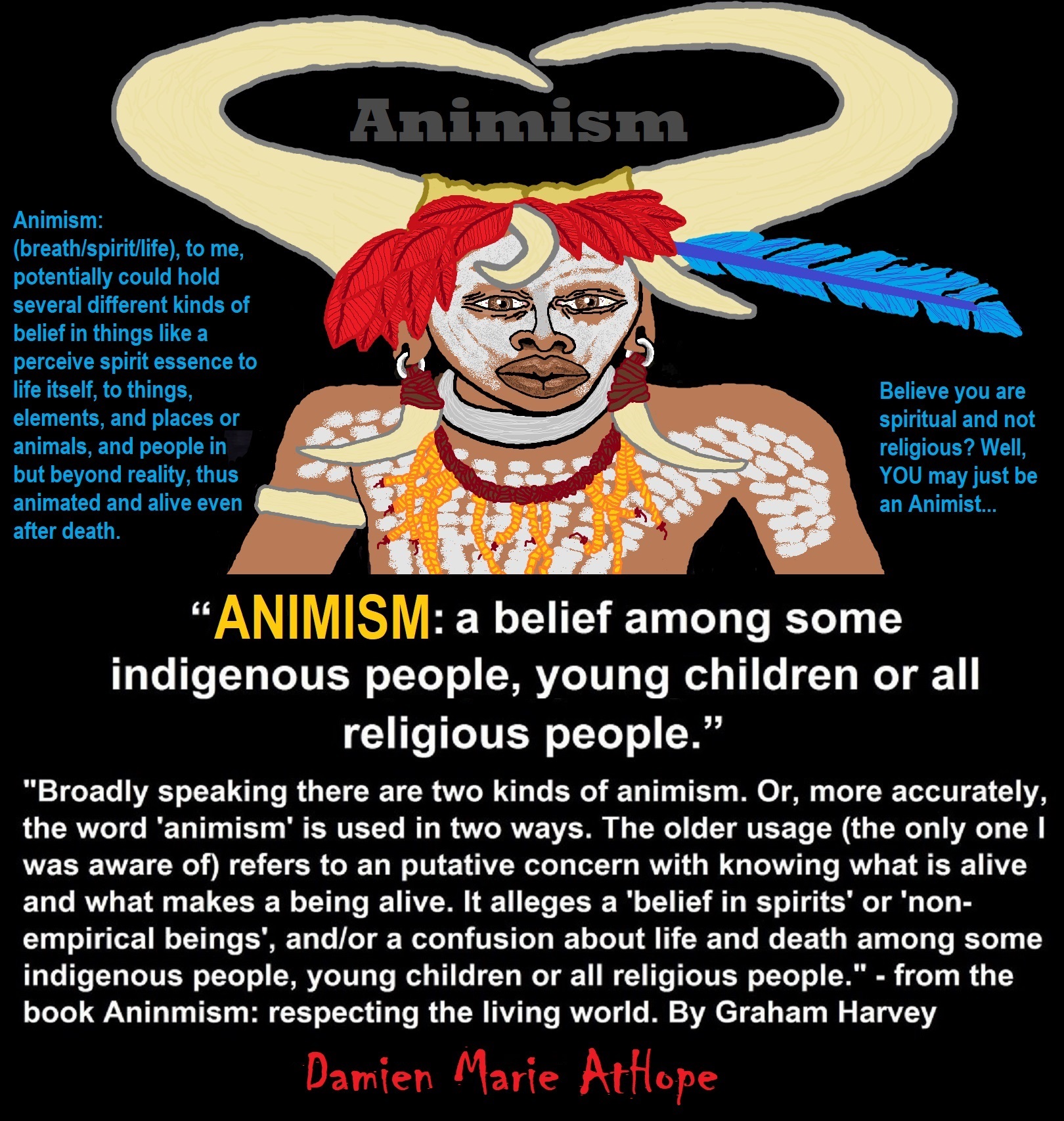
But is Atlantis real?

No. Atlantis (an allegory: “fake story” interpreted to reveal a hidden meaning) can’t be found any more than one can locate the Jolly Green Giant that is said to watch over frozen vegetables. Lol

ref

May Reason Set You Free

There are a lot of truly great things said by anarchists in history, and also some deeply vile things, too, from not supporting Women’s rights to Anti-Semitism. There are those who also reject those supporting women’s rights as well as fight anti-Semitism. This is why I push reason as my only master, not anarchist thinking, though anarchism, to me, should see all humans everywhere as equal in dignity and rights.

We—Cory and Damien—are following the greatness that can be found in anarchist thinking.

As an Anarchist Educator, Damien strives to teach the plain truth. Damien does not support violence as my method to change. Rather, I choose education that builds Enlightenment and Empowerment. I champion Dignity and Equality. We rise by helping each other. What is the price of a tear? What is the cost of a smile? How can we see clearly when others pay the cost of our indifference and fear? We should help people in need. Why is that so hard for some people? Rich Ghouls must End. Damien wants “billionaires” to stop being a thing. Tax then into equality. To Damien, there is no debate, Capitalism is unethical. Moreover, as an Anarchist Educator, Damien knows violence is not the way to inspire lasting positive change. But we are not limited to violence, we have education, one of the most lasting and powerful ways to improve the world. We empower the world by championing Truth and its supporters.

Anarchism and Education

“Various alternatives to education and their problems have been proposed by anarchists which have gone from alternative education systems and environments, self-education, advocacy of youth and children rights, and freethought activism.” ref

“Historical accounts of anarchist educational experiments to explore how their pedagogical practices, organization, and content constituted a radical alternative to mainstream forms of educational provision in different historical periods.” ref

“The Ferrer school was an early 20th century libertarian school inspired by the anarchist pedagogy of Francisco Ferrer. He was a proponent of rationalist, secular education that emphasized reason, dignity, self-reliance, and scientific observation. The Ferrer movement’s philosophy had two distinct tendencies: non-didactic freedom from dogma and the more didactic fostering of counter-hegemonic beliefs. Towards non-didactic freedom from dogma, and fulfilled the child-centered tradition.” ref

Teach Real History: all our lives depend on it.

#SupportRealArchaeology

#RejectPseudoarchaeology

Damien sees lies about history as crimes against humanity. And we all must help humanity by addressing “any and all” who make harmful lies about history.

Damien Marie AtHope’s Art

ref

My favorite “Graham Hancock” Quote?

“In what archaeologists have studied, yes, we can say there is NO Evidence of an advanced civilization.” – (Time 1:27) Joe Rogan Experience #2136 – Graham Hancock & Flint Dibble

Help the Valentine fight against pseudoarchaeology!!!
 
In a world of “Hancocks” supporting evidence lacking claims, be a “John Hoopes” supporting what evidence explains.
 
#SupportEvidenceNotWishfullThinking
 
Graham Hancock: @Graham__Hancock
John Hoopes: @KUHoopes

Damien Marie AtHope’s Art

People don’t commonly teach religious history, even that of their own claimed religion. No, rather they teach a limited “pro their religion” history of their religion from a religious perspective favorable to the religion of choice. 

Damien Marie AtHope’s Art

Do you truly think “Religious Belief” is only a matter of some personal choice?

Do you not see how coercive one’s world of choice is limited to the obvious hereditary belief, in most religious choices available to the child of religious parents or caregivers? Religion is more commonly like a family, culture, society, etc. available belief that limits the belief choices of the child and that is when “Religious Belief” is not only a matter of some personal choice and when it becomes hereditary faith, not because of the quality of its alleged facts or proposed truths but because everyone else important to the child believes similarly so they do as well simply mimicking authority beliefs handed to them. Because children are raised in religion rather than being presented all possible choices but rather one limited dogmatic brand of “Religious Belief” where children only have a choice of following the belief as instructed, and then personally claim the faith hereditary belief seen in the confirming to the belief they have held themselves all their lives. This is obvious in statements asked and answered by children claiming a faith they barely understand but they do understand that their family believes “this or that” faith, so they feel obligated to believe it too. While I do agree that “Religious Belief” should only be a matter of some personal choice, it rarely is… End Hereditary Religion!

Opposition to Imposed Hereditary Religion

Damien Marie AtHope’s Art

refrefrefref

Animism: Respecting the Living World by Graham Harvey 

“How have human cultures engaged with and thought about animals, plants, rocks, clouds, and other elements in their natural surroundings? Do animals and other natural objects have a spirit or soul? What is their relationship to humans? In this new study, Graham Harvey explores current and past animistic beliefs and practices of Native Americans, Maori, Aboriginal Australians, and eco-pagans. He considers the varieties of animism found in these cultures as well as their shared desire to live respectfully within larger natural communities. Drawing on his extensive casework, Harvey also considers the linguistic, performative, ecological, and activist implications of these different animisms.” ref
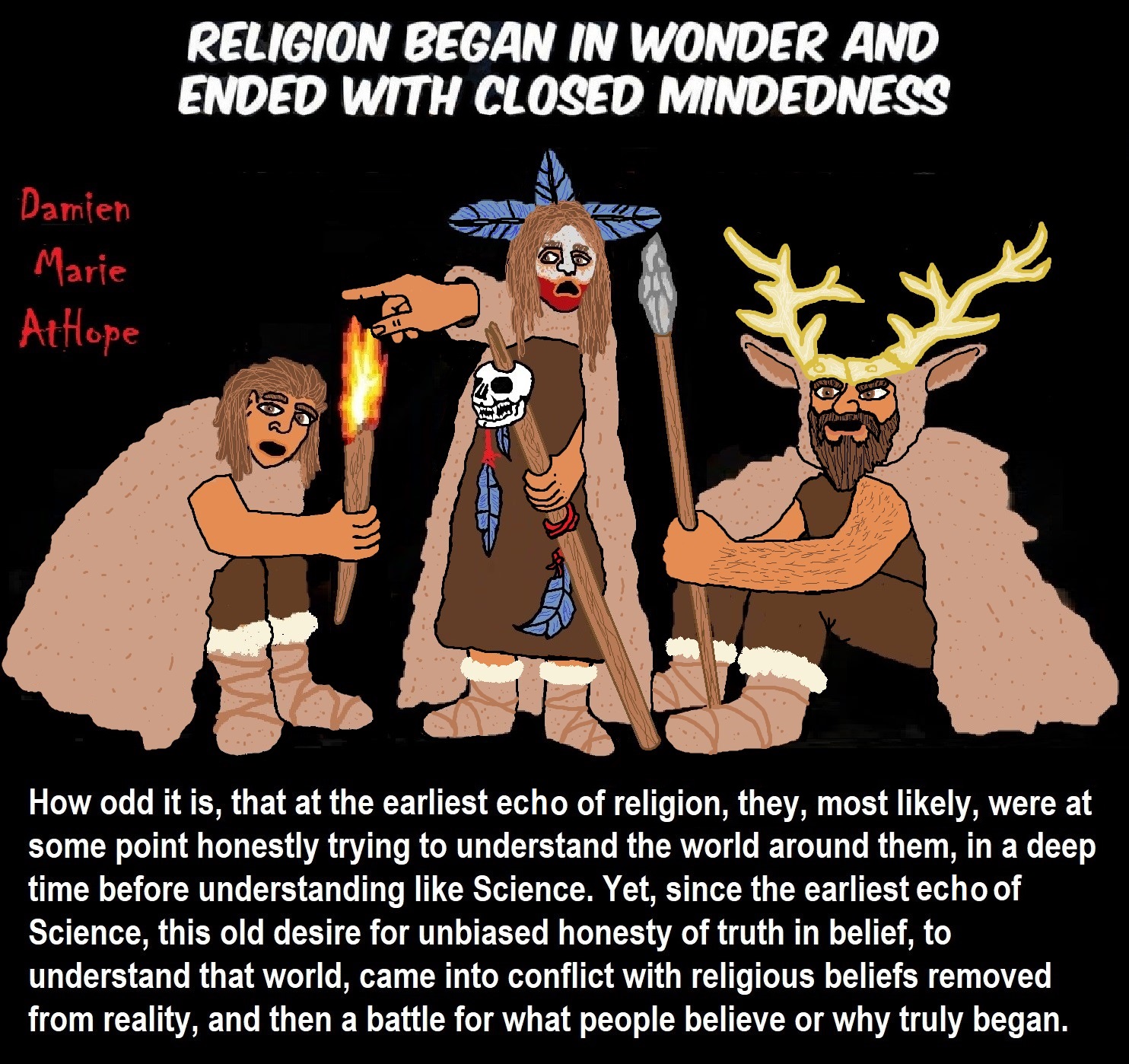
Damien Marie AtHope’s Art

We are like believing machines we vacuum up ideas, like Velcro sticks to almost everything. We accumulate beliefs that we allow to negatively influence our lives, often without realizing it. Our willingness must be to alter skewed beliefs that impend our balance or reason, which allows us to achieve new positive thinking and accurate outcomes.

My thoughts on Religion Evolution with external links for more info:

“Religion is an Evolved Product” and Yes, Religion is Like Fear Given Wings…

Atheists talk about gods and religions for the same reason doctors talk about cancer, they are looking for a cure, or a firefighter talks about fires because they burn people and they care to stop them. We atheists too often feel a need to help the victims of mental slavery, held in the bondage that is the false beliefs of gods and the conspiracy theories of reality found in religions.

“Understanding Religion Evolution: Animism, Totemism, Shamanism, Paganism & Progressed organized religion”

Understanding Religion Evolution:

“An Archaeological/Anthropological Understanding of Religion Evolution”

It seems ancient peoples had to survived amazing threats in a “dangerous universe (by superstition perceived as good and evil),” and human “immorality or imperfection of the soul” which was thought to affect the still living, leading to ancestor worship. This ancestor worship presumably led to the belief in supernatural beings, and then some of these were turned into the belief in gods. This feeble myth called gods were just a human conceived “made from nothing into something over and over, changing, again and again, taking on more as they evolve, all the while they are thought to be special,” but it is just supernatural animistic spirit-belief perceived as sacred. 

Quick Evolution of Religion?

Pre-Animism (at least 300,000 years ago) pre-religion is a beginning that evolves into later Animism. So, Religion as we think of it, to me, all starts in a general way with Animism (Africa: 100,000 years ago) (theoretical belief in supernatural powers/spirits), then this is physically expressed in or with Totemism (Europe: 50,000 years ago) (theoretical belief in mythical relationship with powers/spirits through a totem item), which then enlists a full-time specific person to do this worship and believed interacting Shamanism (Siberia/Russia: 30,000 years ago) (theoretical belief in access and influence with spirits through ritual), and then there is the further employment of myths and gods added to all the above giving you Paganism (Turkey: 12,000 years ago) (often a lot more nature-based than most current top world religions, thus hinting to their close link to more ancient religious thinking it stems from). My hypothesis is expressed with an explanation of the building of a theatrical house (modern religions development). Progressed organized religion (Egypt: 5,000 years ago)  with CURRENT “World” RELIGIONS (after 4,000 years ago).

Historically, in large city-state societies (such as Egypt or Iraq) starting around 5,000 years ago culminated to make religion something kind of new, a sociocultural-governmental-religious monarchy, where all or at least many of the people of such large city-state societies seem familiar with and committed to the existence of “religion” as the integrated life identity package of control dynamics with a fixed closed magical doctrine, but this juggernaut integrated religion identity package of Dogmatic-Propaganda certainly did not exist or if developed to an extent it was highly limited in most smaller prehistoric societies as they seem to lack most of the strong control dynamics with a fixed closed magical doctrine (magical beliefs could be at times be added or removed). Many people just want to see developed religious dynamics everywhere even if it is not. Instead, all that is found is largely fragments until the domestication of religion.

Religions, as we think of them today, are a new fad, even if they go back to around 6,000 years in the timeline of human existence, this amounts to almost nothing when seen in the long slow evolution of religion at least around 70,000 years ago with one of the oldest ritual worship. Stone Snake of South Africa: “first human worship” 70,000 years ago. This message of how religion and gods among them are clearly a man-made thing that was developed slowly as it was invented and then implemented peace by peace discrediting them all. Which seems to be a simple point some are just not grasping how devastating to any claims of truth when we can see the lie clearly in the archeological sites.

I wish people fought as hard for the actual values as they fight for the group/clan names political or otherwise they think support values. Every amount spent on war is theft to children in need of food or the homeless kept from shelter.

Here are several of my blog posts on history:

I am not an academic. I am a revolutionary that teaches in public, in places like social media, and in the streets. I am not a leader by some title given but from my commanding leadership style of simply to start teaching everywhere to everyone, all manner of positive education.

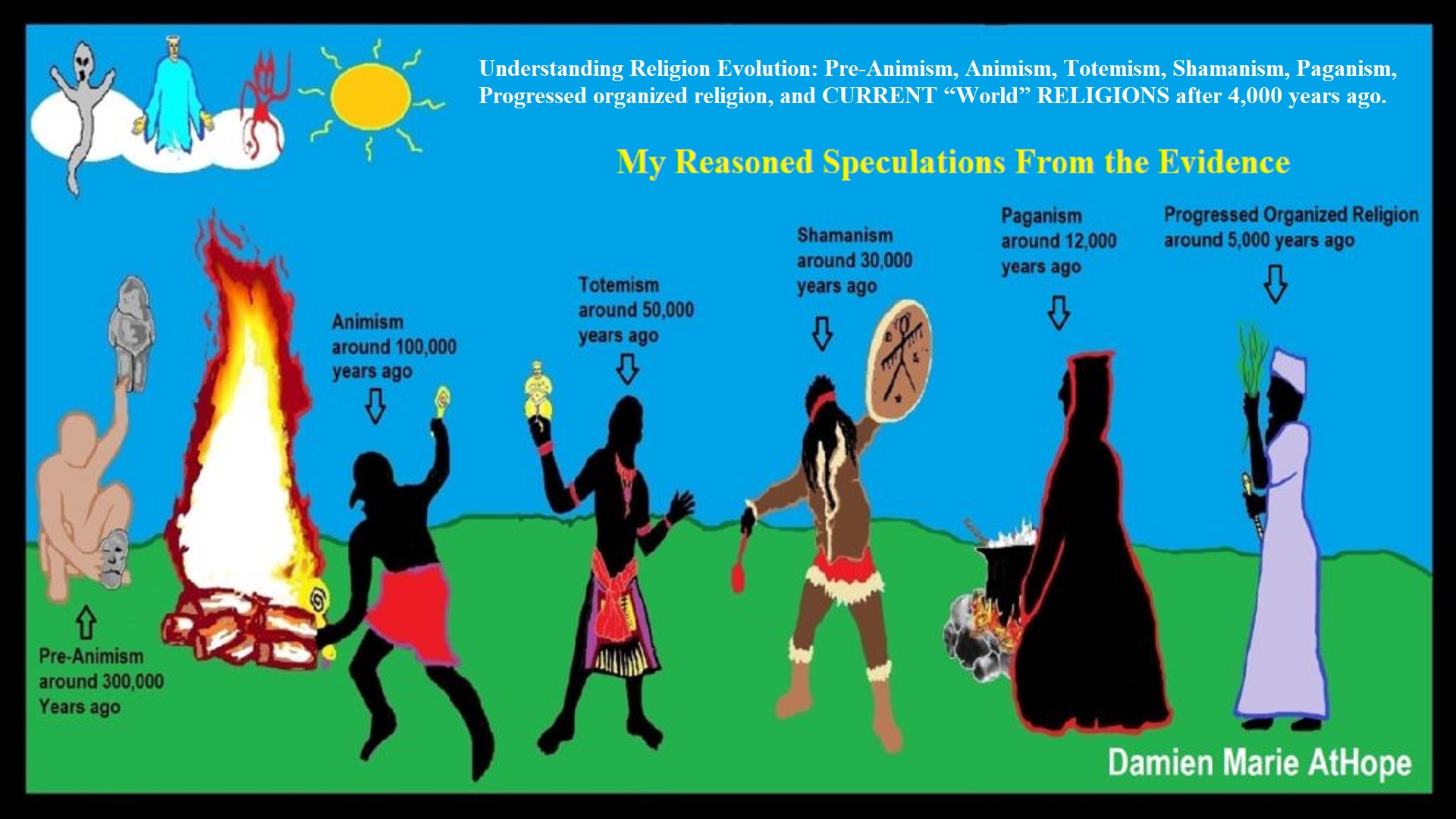
Damien Marie AtHope’s Art

To me, Animism starts in Southern Africa, then to West Europe, and becomes Totemism. Another split goes near the Russia and Siberia border becoming Shamanism, which heads into Central Europe meeting up with Totemism, which also had moved there, mixing the two which then heads to Lake Baikal in Siberia. From there this Shamanism-Totemism heads to Turkey where it becomes Paganism.

Not all “Religions” or “Religious Persuasions” have a god(s) but

All can be said to believe in some imaginary beings or imaginary things like spirits, afterlives, etc.

Damien Marie AtHope’s Art

ref, ref, ref, ref, ref, ref, ref, ref, ref, ref, ref, ref, ref, ref, ref, ref, ref, ref

Damien Marie AtHope’s Art

ref, ref, ref, ref, ref, ref, ref, ref, ref, ref, ref, ref, ref, ref, ref, ref, ref, ref, ref, ref, ref

Low Gods “Earth” or Tutelary deity and High Gods “Sky” or Supreme deity

“An Earth goddess is a deification of the Earth. Earth goddesses are often associated with the “chthonic” deities of the underworldKi and Ninhursag are Mesopotamian earth goddesses. In Greek mythology, the Earth is personified as Gaia, corresponding to Roman Terra, Indic Prithvi/Bhūmi, etc. traced to an “Earth Mother” complementary to the “Sky Father” in Proto-Indo-European religionEgyptian mythology exceptionally has a sky goddess and an Earth god.” ref

“A mother goddess is a goddess who represents or is a personification of naturemotherhoodfertilitycreationdestruction or who embodies the bounty of the Earth. When equated with the Earth or the natural world, such goddesses are sometimes referred to as Mother Earth or as the Earth Mother. In some religious traditions or movements, Heavenly Mother (also referred to as Mother in Heaven or Sky Mother) is the wife or feminine counterpart of the Sky father or God the Father.” ref

Any masculine sky god is often also king of the gods, taking the position of patriarch within a pantheon. Such king gods are collectively categorized as “sky father” deities, with a polarity between sky and earth often being expressed by pairing a “sky father” god with an “earth mother” goddess (pairings of a sky mother with an earth father are less frequent). A main sky goddess is often the queen of the gods and may be an air/sky goddess in her own right, though she usually has other functions as well with “sky” not being her main. In antiquity, several sky goddesses in ancient Egypt, Mesopotamia, and the Near East were called Queen of Heaven. Neopagans often apply it with impunity to sky goddesses from other regions who were never associated with the term historically. The sky often has important religious significance. Many religions, both polytheistic and monotheistic, have deities associated with the sky.” ref

“In comparative mythology, sky father is a term for a recurring concept in polytheistic religions of a sky god who is addressed as a “father”, often the father of a pantheon and is often either a reigning or former King of the Gods. The concept of “sky father” may also be taken to include Sun gods with similar characteristics, such as Ra. The concept is complementary to an “earth mother“. “Sky Father” is a direct translation of the Vedic Dyaus Pita, etymologically descended from the same Proto-Indo-European deity name as the Greek Zeûs Pater and Roman Jupiter and Germanic Týr, Tir or Tiwaz, all of which are reflexes of the same Proto-Indo-European deity’s name, *Dyēus Ph₂tḗr. While there are numerous parallels adduced from outside of Indo-European mythology, there are exceptions (e.g. In Egyptian mythology, Nut is the sky mother and Geb is the earth father).” ref

Tutelary deity

“A tutelary (also tutelar) is a deity or spirit who is a guardian, patron, or protector of a particular place, geographic feature, person, lineage, nation, culture, or occupation. The etymology of “tutelary” expresses the concept of safety and thus of guardianship. In late Greek and Roman religion, one type of tutelary deity, the genius, functions as the personal deity or daimon of an individual from birth to death. Another form of personal tutelary spirit is the familiar spirit of European folklore.” ref

“A tutelary (also tutelar) iKorean shamanismjangseung and sotdae were placed at the edge of villages to frighten off demons. They were also worshiped as deities. Seonangshin is the patron deity of the village in Korean tradition and was believed to embody the SeonangdangIn Philippine animism, Diwata or Lambana are deities or spirits that inhabit sacred places like mountains and mounds and serve as guardians. Such as: Maria Makiling is the deity who guards Mt. Makiling and Maria Cacao and Maria Sinukuan. In Shinto, the spirits, or kami, which give life to human bodies come from nature and return to it after death. Ancestors are therefore themselves tutelaries to be worshiped. And similarly, Native American beliefs such as Tonás, tutelary animal spirit among the Zapotec and Totems, familial or clan spirits among the Ojibwe, can be animals.” ref

“A tutelary (also tutelar) in Austronesian beliefs such as: Atua (gods and spirits of the Polynesian peoples such as the Māori or the Hawaiians), Hanitu (Bunun of Taiwan‘s term for spirit), Hyang (KawiSundaneseJavanese, and Balinese Supreme Being, in ancient Java and Bali mythology and this spiritual entity, can be either divine or ancestral), Kaitiaki (New Zealand Māori term used for the concept of guardianship, for the sky, the sea, and the land), Kawas (mythology) (divided into 6 groups: gods, ancestors, souls of the living, spirits of living things, spirits of lifeless objects, and ghosts), Tiki (Māori mythologyTiki is the first man created by either Tūmatauenga or Tāne and represents deified ancestors found in most Polynesian cultures). ” ref, ref, ref, ref, ref, ref, ref

Mesopotamian Tutelary Deities can be seen as ones related to City-States 

“Historical city-states included Sumerian cities such as Uruk and UrAncient Egyptian city-states, such as Thebes and Memphis; the Phoenician cities (such as Tyre and Sidon); the five Philistine city-states; the Berber city-states of the Garamantes; the city-states of ancient Greece (the poleis such as AthensSpartaThebes, and Corinth); the Roman Republic (which grew from a city-state into a vast empire); the Italian city-states from the Middle Ages to the early modern period, such as FlorenceSienaFerraraMilan (which as they grew in power began to dominate neighboring cities) and Genoa and Venice, which became powerful thalassocracies; the Mayan and other cultures of pre-Columbian Mesoamerica (including cities such as Chichen ItzaTikalCopán and Monte Albán); the central Asian cities along the Silk Road; the city-states of the Swahili coastRagusa; states of the medieval Russian lands such as Novgorod and Pskov; and many others.” ref

“The Uruk period (ca. 4000 to 3100 BCE; also known as Protoliterate period) of Mesopotamia, named after the Sumerian city of Uruk, this period saw the emergence of urban life in Mesopotamia and the Sumerian civilization. City-States like Uruk and others had a patron tutelary City Deity along with a Priest-King.” ref

Chinese folk religion, both past, and present, includes myriad tutelary deities. Exceptional individuals, highly cultivated sages, and prominent ancestors can be deified and honored after death. Lord Guan is the patron of military personnel and police, while Mazu is the patron of fishermen and sailors. Such as Tu Di Gong (Earth Deity) is the tutelary deity of a locality, and each individual locality has its own Earth Deity and Cheng Huang Gong (City God) is the guardian deity of an individual city, worshipped by local officials and locals since imperial times.” ref

“A tutelary (also tutelar) in Hinduism, personal tutelary deities are known as ishta-devata, while family tutelary deities are known as Kuladevata. Gramadevata are guardian deities of villages. Devas can also be seen as tutelary. Shiva is the patron of yogis and renunciants. City goddesses include: Mumbadevi (Mumbai), Sachchika (Osian); Kuladevis include: Ambika (Porwad), and Mahalakshmi. In NorthEast India Meitei mythology and religion (Sanamahism) of Manipur, there are various types of tutelary deities, among which Lam Lais are the most predominant ones. Tibetan Buddhism has Yidam as a tutelary deity. Dakini is the patron of those who seek knowledge.” ref

“A tutelary (also tutelar) The Greeks also thought deities guarded specific places: for instance, Athena was the patron goddess of the city of Athens. Socrates spoke of hearing the voice of his personal spirit or daimonion:

You have often heard me speak of an oracle or sign which comes to me … . This sign I have had ever since I was a child. The sign is a voice which comes to me and always forbids me to do something which I am going to do, but never commands me to do anything, and this is what stands in the way of my being a politician.” ref

“Tutelary deities who guard and preserve a place or a person are fundamental to ancient Roman religion. The tutelary deity of a man was his Genius, that of a woman her Juno. In the Imperial era, the Genius of the Emperor was a focus of Imperial cult. An emperor might also adopt a major deity as his personal patron or tutelary, as Augustus did Apollo. Precedents for claiming the personal protection of a deity were established in the Republican era, when for instance the Roman dictator Sulla advertised the goddess Victory as his tutelary by holding public games (ludi) in her honor.” ref

“Each town or city had one or more tutelary deities, whose protection was considered particularly vital in time of war and siege. Rome itself was protected by a goddess whose name was to be kept ritually secret on pain of death (for a supposed case, see Quintus Valerius Soranus). The Capitoline Triad of Juno, Jupiter, and Minerva were also tutelaries of Rome. The Italic towns had their own tutelary deities. Juno often had this function, as at the Latin town of Lanuvium and the Etruscan city of Veii, and was often housed in an especially grand temple on the arx (citadel) or other prominent or central location. The tutelary deity of Praeneste was Fortuna, whose oracle was renowned.” ref

“The Roman ritual of evocatio was premised on the belief that a town could be made vulnerable to military defeat if the power of its tutelary deity were diverted outside the city, perhaps by the offer of superior cult at Rome. The depiction of some goddesses such as the Magna Mater (Great Mother, or Cybele) as “tower-crowned” represents their capacity to preserve the city. A town in the provinces might adopt a deity from within the Roman religious sphere to serve as its guardian, or syncretize its own tutelary with such; for instance, a community within the civitas of the Remi in Gaul adopted Apollo as its tutelary, and at the capital of the Remi (present-day Rheims), the tutelary was Mars Camulus.” ref

Household deity (a kind of or related to a Tutelary deity)

“A household deity is a deity or spirit that protects the home, looking after the entire household or certain key members. It has been a common belief in paganism as well as in folklore across many parts of the world. Household deities fit into two types; firstly, a specific deity – typically a goddess – often referred to as a hearth goddess or domestic goddess who is associated with the home and hearth, such as the ancient Greek Hestia.” ref

“The second type of household deities are those that are not one singular deity, but a type, or species of animistic deity, who usually have lesser powers than major deities. This type was common in the religions of antiquity, such as the Lares of ancient Roman religion, the Gashin of Korean shamanism, and Cofgodas of Anglo-Saxon paganism. These survived Christianisation as fairy-like creatures existing in folklore, such as the Anglo-Scottish Brownie and Slavic Domovoy.” ref

“Household deities were usually worshipped not in temples but in the home, where they would be represented by small idols (such as the teraphim of the Bible, often translated as “household gods” in Genesis 31:19 for example), amulets, paintings, or reliefs. They could also be found on domestic objects, such as cosmetic articles in the case of Tawaret. The more prosperous houses might have a small shrine to the household god(s); the lararium served this purpose in the case of the Romans. The gods would be treated as members of the family and invited to join in meals, or be given offerings of food and drink.” ref

“In many religions, both ancient and modern, a god would preside over the home. Certain species, or types, of household deities, existed. An example of this was the Roman Lares. Many European cultures retained house spirits into the modern period. Some examples of these include:

“Although the cosmic status of household deities was not as lofty as that of the Twelve Olympians or the Aesir, they were also jealous of their dignity and also had to be appeased with shrines and offerings, however humble. Because of their immediacy they had arguably more influence on the day-to-day affairs of men than the remote gods did. Vestiges of their worship persisted long after Christianity and other major religions extirpated nearly every trace of the major pagan pantheons. Elements of the practice can be seen even today, with Christian accretions, where statues to various saints (such as St. Francis) protect gardens and grottos. Even the gargoyles found on older churches, could be viewed as guardians partitioning a sacred space.” ref

“For centuries, Christianity fought a mop-up war against these lingering minor pagan deities, but they proved tenacious. For example, Martin Luther‘s Tischreden have numerous – quite serious – references to dealing with kobolds. Eventually, rationalism and the Industrial Revolution threatened to erase most of these minor deities, until the advent of romantic nationalism rehabilitated them and embellished them into objects of literary curiosity in the 19th century. Since the 20th century this literature has been mined for characters for role-playing games, video games, and other fantasy personae, not infrequently invested with invented traits and hierarchies somewhat different from their mythological and folkloric roots.” ref

“In contradistinction to both Herbert Spencer and Edward Burnett Tylor, who defended theories of animistic origins of ancestor worship, Émile Durkheim saw its origin in totemism. In reality, this distinction is somewhat academic, since totemism may be regarded as a particularized manifestation of animism, and something of a synthesis of the two positions was attempted by Sigmund Freud. In Freud’s Totem and Taboo, both totem and taboo are outward expressions or manifestations of the same psychological tendency, a concept which is complementary to, or which rather reconciles, the apparent conflict. Freud preferred to emphasize the psychoanalytic implications of the reification of metaphysical forces, but with particular emphasis on its familial nature. This emphasis underscores, rather than weakens, the ancestral component.” ref

William Edward Hearn, a noted classicist, and jurist, traced the origin of domestic deities from the earliest stages as an expression of animism, a belief system thought to have existed also in the neolithic, and the forerunner of Indo-European religion. In his analysis of the Indo-European household, in Chapter II “The House Spirit”, Section 1, he states:

The belief which guided the conduct of our forefathers was … the spirit rule of dead ancestors.” ref

“In Section 2 he proceeds to elaborate:

It is thus certain that the worship of deceased ancestors is a vera causa, and not a mere hypothesis. …

In the other European nations, the Slavs, the Teutons, and the Kelts, the House Spirit appears with no less distinctness. … [T]he existence of that worship does not admit of doubt. … The House Spirits had a multitude of other names which it is needless here to enumerate, but all of which are more or less expressive of their friendly relations with man. … In [England] … [h]e is the Brownie. … In Scotland this same Brownie is well known. He is usually described as attached to particular families, with whom he has been known to reside for centuries, threshing the corn, cleaning the house, and performing similar household tasks. His favorite gratification was milk and honey.” ref

Damien Marie AtHope’s Art

refrefrefrefrefrefrefrefrefrefrefrefrefrefrefrefref

“These ideas are my speculations from the evidence.”

I am still researching the “god‘s origins” all over the world. So you know, it is very complicated but I am smart and willing to look, DEEP, if necessary, which going very deep does seem to be needed here, when trying to actually understand the evolution of gods and goddesses. I am sure of a few things and less sure of others, but even in stuff I am not fully grasping I still am slowly figuring it out, to explain it to others. But as I research more I am understanding things a little better, though I am still working on understanding it all or something close and thus always figuring out more.

Sky Father/Sky God?

“Egyptian: (Nut) Sky Mother and (Geb) Earth Father” (Egypt is different but similar)

Turkic/Mongolic: (Tengri/Tenger Etseg) Sky Father and (Eje/Gazar Eej) Earth Mother *Transeurasian*

Hawaiian: (Wākea) Sky Father and (Papahānaumoku) Earth Mother *Austronesian*

New Zealand/ Māori: (Ranginui) Sky Father and (Papatūānuku) Earth Mother *Austronesian*

Proto-Indo-European: (Dyus/Dyus phtr) Sky Father and (Dʰéǵʰōm/Plethwih) Earth Mother

Indo-Aryan: (Dyaus Pita) Sky Father and (Prithvi Mata) Earth Mother *Indo-European*

Italic: (Jupiter) Sky Father and (Juno) Sky Mother *Indo-European*

Etruscan: (Tinia) Sky Father and (Uni) Sky Mother *Tyrsenian/Italy Pre–Indo-European*

Hellenic/Greek: (Zeus) Sky Father and (Hera) Sky Mother who started as an “Earth Goddess” *Indo-European*

Nordic: (Dagr) Sky Father and (Nótt) Sky Mother *Indo-European*

Slavic: (Perun) Sky Father and (Mokosh) Earth Mother *Indo-European*

Illyrian: (Deipaturos) Sky Father and (Messapic Damatura’s “earth-mother” maybe) Earth Mother *Indo-European*

Albanian: (Zojz) Sky Father and (?) *Indo-European*

Baltic: (Perkūnas) Sky Father and (Saulė) Sky Mother *Indo-European*

Germanic: (Týr) Sky Father and (?) *Indo-European*

Colombian-Muisca: (Bochica) Sky Father and (Huythaca) Sky Mother *Chibchan*

Aztec: (Quetzalcoatl) Sky Father and (Xochiquetzal) Sky Mother *Uto-Aztecan*

Incan: (Viracocha) Sky Father and (Mama Runtucaya) Sky Mother *Quechuan*

China: (Tian/Shangdi) Sky Father and (Dì) Earth Mother *Sino-Tibetan*

Sumerian, Assyrian and Babylonian: (An/Anu) Sky Father and (Ki) Earth Mother

Finnish: (Ukko) Sky Father and (Akka) Earth Mother *Finno-Ugric*

Sami: (Horagalles) Sky Father and (Ravdna) Earth Mother *Finno-Ugric*

Puebloan-Zuni: (Ápoyan Ta’chu) Sky Father and (Áwitelin Tsíta) Earth Mother

Puebloan-Hopi: (Tawa) Sky Father and (Kokyangwuti/Spider Woman/Grandmother) Earth Mother *Uto-Aztecan*

Puebloan-Navajo: (Tsohanoai) Sky Father and (Estsanatlehi) Earth Mother *Na-Dene*

refrefrefrefrefrefrefrefrefrefrefrefrefrefrefrefrefrefrefrefrefrefrefrefrefrefref

Sky Father/Sky Mother “High Gods” or similar gods/goddesses of the sky more loosely connected, seeming arcane mythology across the earth seen in Siberia, China, Europe, Native Americans/First Nations People and Mesopotamia, etc.

Damien Marie AtHope’s Art

ref, ref

Hinduism around 3,700 to 3,500 years old. ref

Judaism around 3,450 or 3,250 years old. (The first writing in the bible was “Paleo-Hebrew” dated to around 3,000 years ago Khirbet Qeiyafa is the site of an ancient fortress city overlooking the Elah Valley. And many believe the religious Jewish texts were completed around 2,500) ref, ref

Judaism is around 3,450 or 3,250 years old. (“Paleo-Hebrew” 3,000 years ago and Torah 2,500 years ago)

“Judaism is an Abrahamic, its roots as an organized religion in the Middle East during the Bronze Age. Some scholars argue that modern Judaism evolved from Yahwism, the religion of ancient Israel and Judah, by the late 6th century BCE, and is thus considered to be one of the oldest monotheistic religions.” ref

“Yahwism is the name given by modern scholars to the religion of ancient Israel, essentially polytheistic, with a plethora of gods and goddesses. Heading the pantheon was Yahweh, the national god of the Israelite kingdoms of Israel and Judah, with his consort, the goddess Asherah; below them were second-tier gods and goddesses such as Baal, Shamash, Yarikh, Mot, and Astarte, all of whom had their own priests and prophets and numbered royalty among their devotees, and a third and fourth tier of minor divine beings, including the mal’ak, the messengers of the higher gods, who in later times became the angels of Judaism, Christianity and Islam. Yahweh, however, was not the ‘original’ god of Israel “Isra-El”; it is El, the head of the Canaanite pantheon, whose name forms the basis of the name “Israel”, and none of the Old Testament patriarchs, the tribes of Israel, the Judges, or the earliest monarchs, have a Yahwistic theophoric name (i.e., one incorporating the name of Yahweh).” ref

“El is a Northwest Semitic word meaning “god” or “deity“, or referring (as a proper name) to any one of multiple major ancient Near Eastern deities. A rarer form, ‘ila, represents the predicate form in Old Akkadian and in Amorite. The word is derived from the Proto-Semitic *ʔil-, meaning “god”. Specific deities known as ‘El or ‘Il include the supreme god of the ancient Canaanite religion and the supreme god of East Semitic speakers in Mesopotamia’s Early Dynastic Period. ʼĒl is listed at the head of many pantheons. In some Canaanite and Ugaritic sources, ʼĒl played a role as father of the gods, of creation, or both. For example, in the Ugaritic texts, ʾil mlk is understood to mean “ʼĒl the King” but ʾil hd as “the god Hadad“. The Semitic root ʾlh (Arabic ʾilāh, Aramaic ʾAlāh, ʾElāh, Hebrew ʾelōah) may be ʾl with a parasitic h, and ʾl may be an abbreviated form of ʾlh. In Ugaritic the plural form meaning “gods” is ʾilhm, equivalent to Hebrew ʾelōhîm “powers”. In the Hebrew texts this word is interpreted as being semantically singular for “god” by biblical commentators. However the documentary hypothesis for the Old Testament (corresponds to the Jewish Torah) developed originally in the 1870s, identifies these that different authors – the Jahwist, Elohist, Deuteronomist, and the Priestly source – were responsible for editing stories from a polytheistic religion into those of a monotheistic religion. Inconsistencies that arise between monotheism and polytheism in the texts are reflective of this hypothesis.” ref


Jainism around 2,599 – 2,527 years old. ref

Confucianism around 2,600 – 2,551 years old. ref

Buddhism around 2,563/2,480 – 2,483/2,400 years old. ref

Christianity around 2,o00 years old. ref

Shinto around 1,305 years old. ref

Islam around 1407–1385 years old. ref
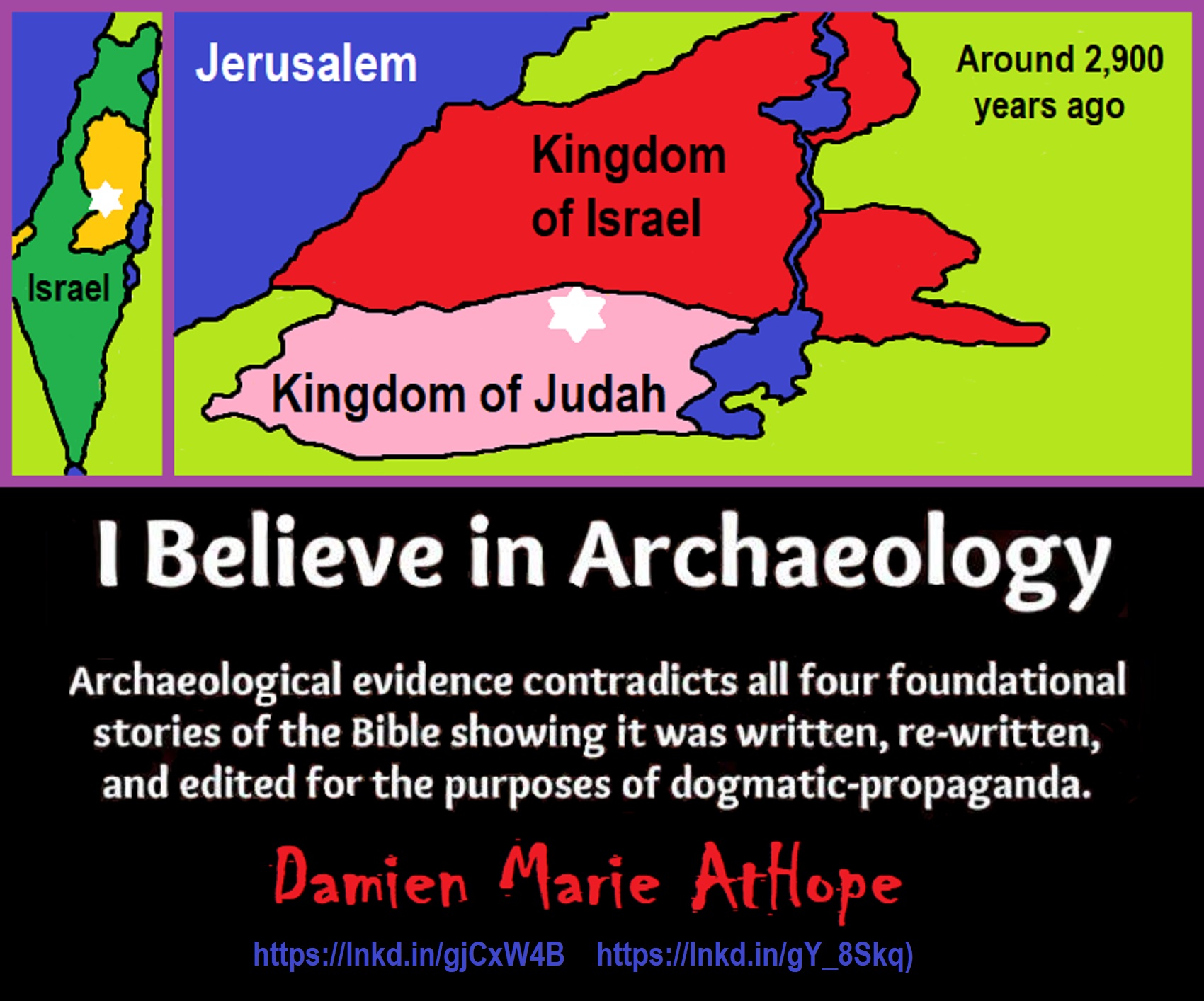
Sikhism around 548–478 years old. ref

Bahá’í around 200–125 years old. ref

Knowledge to Ponder: 

Stars/Astrology:

  • Possibly, around 30,000 years ago (in simpler form) to 6,000 years ago, Stars/Astrology are connected to Ancestors, Spirit Animals, and Deities.
  • The star also seems to be a possible proto-star for Star of Ishtar, Star of Inanna, or Star of Venus.
  • Around 7,000 to 6,000 years ago, Star Constellations/Astrology have connections to the “Kurgan phenomenon” of below-ground “mound” stone/wood burial structures and “Dolmen phenomenon” of above-ground stone burial structures.
  • Around 6,500–5,800 years ago, The Northern Levant migrations into Jordon and Israel in the Southern Levant brought new cultural and religious transfer from Turkey and Iran.
  • “The Ghassulian Star,” a mysterious 6,000-year-old mural from Jordan may have connections to the European paganstic kurgan/dolmens phenomenon.

“Astrology is a range of divinatory practices, recognized as pseudoscientific since the 18th century, that claim to discern information about human affairs and terrestrial events by studying the apparent positions of celestial objects. Different cultures have employed forms of astrology since at least the 2nd millennium BCE, these practices having originated in calendrical systems used to predict seasonal shifts and to interpret celestial cycles as signs of divine communications. Most, if not all, cultures have attached importance to what they observed in the sky, and some—such as the HindusChinese, and the Maya—developed elaborate systems for predicting terrestrial events from celestial observations. Western astrology, one of the oldest astrological systems still in use, can trace its roots to 19th–17th century BCE Mesopotamia, from where it spread to Ancient GreeceRome, the Islamicate world and eventually Central and Western Europe. Contemporary Western astrology is often associated with systems of horoscopes that purport to explain aspects of a person’s personality and predict significant events in their lives based on the positions of celestial objects; the majority of professional astrologers rely on such systems.” ref 

Around 5,500 years ago, Science evolves, The first evidence of science was 5,500 years ago and was demonstrated by a body of empirical, theoretical, and practical knowledge about the natural world. ref

Around 5,000 years ago, Origin of Logics is a Naturalistic Observation (principles of valid reasoning, inference, & demonstration) ref

Around 4,150 to 4,000 years ago: The earliest surviving versions of the Sumerian Epic of Gilgamesh, which was originally titled “He who Saw the Deep” (Sha naqba īmuru) or “Surpassing All Other Kings” (Shūtur eli sharrī) were written. ref

Hinduism:

  • 3,700 years ago or so, the oldest of the Hindu Vedas (scriptures), the Rig Veda was composed.
  • 3,500 years ago or so, the Vedic Age began in India after the collapse of the Indus Valley Civilization.

Judaism:

  • around 3,000 years ago, the first writing in the bible was “Paleo-Hebrew”
  • around 2,500 years ago, many believe the religious Jewish texts were completed

Myths: The bible inspired religion is not just one religion or one myth but a grouping of several religions and myths

  • Around 3,450 or 3,250 years ago, according to legend, is the traditionally accepted period in which the Israelite lawgiver, Moses, provided the Ten Commandments.
  • Around 2,500 to 2,400 years ago, a collection of ancient religious writings by the Israelites based primarily upon the Hebrew Bible, Tanakh, or Old Testament is the first part of Christianity’s bible.
  • Around 2,400 years ago, the most accepted hypothesis is that the canon was formed in stages, first the Pentateuch (Torah).
  • Around 2,140 to 2,116 years ago, the Prophets was written during the Hasmonean dynasty, and finally the remaining books.
  • Christians traditionally divide the Old Testament into four sections:
  • The first five books or Pentateuch (Torah).
  • The proposed history books telling the history of the Israelites from their conquest of Canaan to their defeat and exile in Babylon.
  • The poetic and proposed “Wisdom books” dealing, in various forms, with questions of good and evil in the world.
  • The books of the biblical prophets, warning of the consequences of turning away from God:
  • Henotheism:
  • Exodus 20:23 “You shall not make other gods besides Me (not saying there are no other gods just not to worship them); gods of silver or gods of gold, you shall not make for yourselves.”
  • Polytheism:
  • Judges 10:6 “Then the sons of Israel again did evil in the sight of the LORD, served the Baals and the Ashtaroth, the gods of Aram, the gods of Sidon, the gods of Moab, the gods of the sons of Ammon, and the gods of the Philistines; thus they forsook the LORD and did not serve Him.”
  • 1 Corinthians 8:5 “For even if there are so-called gods whether in heaven or on earth, as indeed there are many gods and many lords.”
  • Monotheism:
  • Isaiah 43:10 “You are my witnesses,” declares the LORD, “and my servant whom I have chosen, so that you may know and believe me and understand that I am he. Before me no god was formed, nor will there be one after me.

Around 2,570 to 2,270 Years Ago, there is a confirmation of atheistic doubting as well as atheistic thinking, mainly by Greek philosophers. However, doubting gods is likely as old as the invention of gods and should destroy the thinking that belief in god(s) is the “default belief”. The Greek word is apistos (a “not” and pistos “faithful,”), thus not faithful or faithless because one is unpersuaded and unconvinced by a god(s) claim. Short Definition: unbelieving, unbeliever, or unbelief.

Damien Marie AtHope’s Art

Expressions of Atheistic Thinking:

  • Around 2,600 years ago, Ajita Kesakambali, ancient Indian philosopher, who is the first known proponent of Indian materialism. ref
  • Around 2,535 to 2,475 years ago, Heraclitus, Greek pre-Socratic philosopher, a native of the Greek city Ephesus, Ionia, on the coast of Anatolia, also known as Asia Minor or modern Turkey. ref
  • Around 2,500 to 2,400 years ago, according to The Story of Civilization book series certain African pygmy tribes have no identifiable gods, spirits, or religious beliefs or rituals, and even what burials accrue are without ceremony. ref
  • Around 2,490 to 2,430 years ago, Empedocles, Greek pre-Socratic philosopher and a citizen of Agrigentum, a Greek city in Sicily. ref
  • Around 2,460 to 2,370 years ago, Democritus, Greek pre-Socratic philosopher considered to be the “father of modern science” possibly had some disbelief amounting to atheism. ref
  • Around 2,399 years ago or so, Socrates, a famous Greek philosopher was tried for sinfulness by teaching doubt of state gods. ref
  • Around 2,341 to 2,270 years ago, Epicurus, a Greek philosopher known for composing atheistic critics and famously stated, “Is God willing to prevent evil, but not able? Then he is not omnipotent. Is he able, but not willing? Then he is malevolent. Is he both able and willing? Then whence cometh evil? Is he neither able nor willing? Then why call him god?” ref

This last expression by Epicurus, seems to be an expression of Axiological Atheism. To understand and utilize value or actually possess “Value Conscious/Consciousness” to both give a strong moral “axiological” argument (the problem of evil) as well as use it to fortify humanism and positive ethical persuasion of human helping and care responsibilities. Because value-blindness gives rise to sociopathic/psychopathic evil.
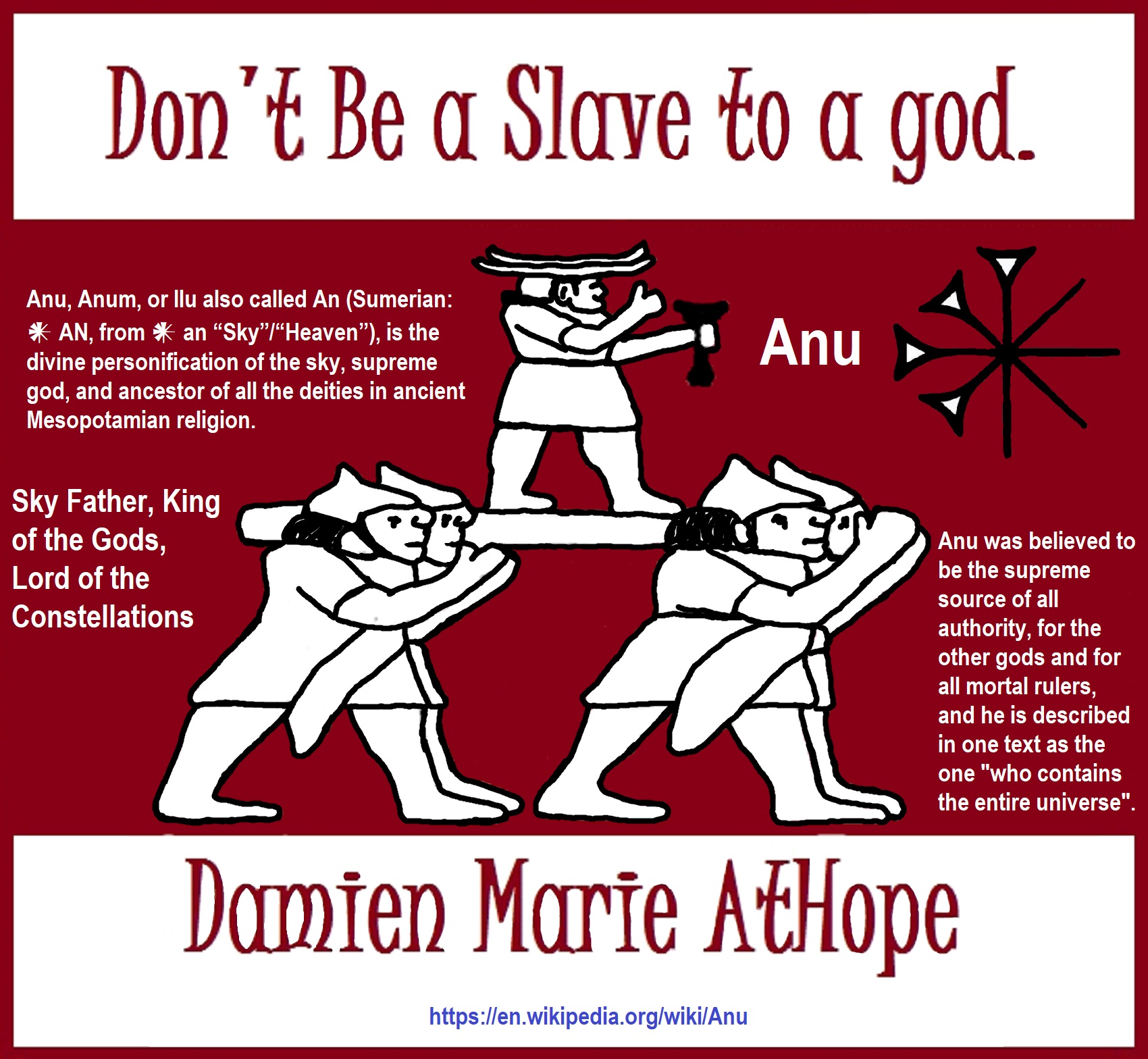
“Theists, there has to be a god, as something can not come from nothing.”

Well, thus something (unknown) happened and then there was something. This does not tell us what the something that may have been involved with something coming from nothing. A supposed first cause, thus something (unknown) happened and then there was something is not an open invitation to claim it as known, neither is it justified to call or label such an unknown as anything, especially an unsubstantiated magical thinking belief born of mythology and religious storytelling.

How do they even know if there was nothing as a start outside our universe, could there not be other universes outside our own?
 
For all, we know there may have always been something past the supposed Big Bang we can’t see beyond, like our universe as one part of a mega system.

Damien Marie AtHope’s Art

While hallucinogens are associated with shamanism, it is alcohol that is associated with paganism.

The Atheist-Humanist-Leftist Revolutionaries Shows in the prehistory series:

Show one: Prehistory: related to “Anarchism and Socialism” the division of labor, power, rights, and recourses.

Show two: Pre-animism 300,000 years old and animism 100,000 years old: related to “Anarchism and Socialism”

Show tree: Totemism 50,000 years old: related to “Anarchism and Socialism”

Show four: Shamanism 30,000 years old: related to “Anarchism and Socialism”

Show five: Paganism 12,000 years old: related to “Anarchism and Socialism”

Show six: Emergence of hierarchy, sexism, slavery, and the new male god dominance: Paganism 7,000-5,000 years old: related to “Anarchism and Socialism” (Capitalism) (World War 0) Elite and their slaves!

Show seven: Paganism 5,000 years old: progressed organized religion and the state: related to “Anarchism and Socialism” (Kings and the Rise of the State)

Show eight: Paganism 4,000 years old: Moralistic gods after the rise of Statism and often support Statism/Kings: related to “Anarchism and Socialism” (First Moralistic gods, then the Origin time of Monotheism)

Prehistory: related to “Anarchism and Socialism” the division of labor, power, rights, and recourses: VIDEO

Pre-animism 300,000 years old and animism 100,000 years old: related to “Anarchism and Socialism”: VIDEO

Totemism 50,000 years old: related to “Anarchism and Socialism”: VIDEO

Shamanism 30,000 years old: related to “Anarchism and Socialism”: VIDEO

Paganism 12,000 years old: related to “Anarchism and Socialism” (Pre-Capitalism): VIDEO

Paganism 7,000-5,000 years old: related to “Anarchism and Socialism” (Capitalism) (World War 0) Elite and their slaves: VIEDO

Paganism 5,000 years old: progressed organized religion and the state: related to “Anarchism and Socialism” (Kings and the Rise of the State): VIEDO

Paganism 4,000 years old: related to “Anarchism and Socialism” (First Moralistic gods, then the Origin time of Monotheism): VIEDO

I do not hate simply because I challenge and expose myths or lies any more than others being thought of as loving simply because of the protection and hiding from challenge their favored myths or lies.

The truth is best championed in the sunlight of challenge.

An archaeologist once said to me “Damien religion and culture are very different”

My response, So are you saying that was always that way, such as would you say Native Americans’ cultures are separate from their religions? And do you think it always was the way you believe?

I had said that religion was a cultural product. That is still how I see it and there are other archaeologists that think close to me as well. Gods too are the myths of cultures that did not understand science or the world around them, seeing magic/supernatural everywhere.

I personally think there is a goddess and not enough evidence to support a male god at Çatalhöyük but if there was both a male and female god and goddess then I know the kind of gods they were like Proto-Indo-European mythology.

This series idea was addressed in, Anarchist Teaching as Free Public Education or Free Education in the Public: VIDEO

Our 12 video series: Organized Oppression: Mesopotamian State Force and the Politics of power (9,000-4,000 years ago), is adapted from: The Complete and Concise History of the Sumerians and Early Bronze Age Mesopotamia (7000-2000 BC): https://www.youtube.com/watch?v=szFjxmY7jQA by “History with Cy

Show #1: Mesopotamian State Force and the Politics of Power (Samarra, Halaf, Ubaid)

Show #2: Mesopotamian State Force and the Politics of Power (Eridu: First City of Power)

Show #3: Mesopotamian State Force and the Politics of Power (Uruk and the First Cities)

Show #4: Mesopotamian State Force and the Politics of Power (First Kings)

Show #5: Mesopotamian State Force and the Politics of Power (Early Dynastic Period)

Show #6: Mesopotamian State Force and the Politics of Power (King Lugalzagesi and the First Empire)

Show #7: Mesopotamian State Force and the Politics of Power (Sargon and Akkadian Rule)

Show #8: Mesopotamian State Force and the Politics of Power (Naram-Sin, Post-Akkadian Rule, and the Gutians)

Show #9: Mesopotamian State Force and the Politics of Power (Gudea of Lagash and Utu-hegal)

Show #10: Mesopotamian State Force and the Politics of Power (Third Dynasty of Ur / Neo-Sumerian Empire)

Show #11: Mesopotamian State Force and the Politics of Power (Amorites, Elamites, and the End of an Era)

Show #12: Mesopotamian State Force and the Politics of Power (Aftermath and Legacy of Sumer)
Damien Marie AtHope’s Art

The “Atheist-Humanist-Leftist Revolutionaries”

Cory Johnston ☭ Ⓐ Atheist Leftist @Skepticallefty & I (Damien Marie AtHope) @AthopeMarie (my YouTube & related blog) are working jointly in atheist, antitheist, antireligionist, antifascist, anarchist, socialist, and humanist endeavors in our videos together, generally, every other Saturday.

Why Does Power Bring Responsibility?

Think, how often is it the powerless that start wars, oppress others, or commit genocide? So, I guess the question is to us all, to ask, how can power not carry responsibility in a humanity concept? I know I see the deep ethical responsibility that if there is power their must be a humanistic responsibility of ethical and empathic stewardship of that power. Will I be brave enough to be kind? Will I possess enough courage to be compassionate? Will my valor reach its height of empathy? I as everyone, earns our justified respect by our actions, that are good, ethical, just, protecting, and kind. Do I have enough self-respect to put my love for humanity’s flushing, over being brought down by some of its bad actors? May we all be the ones doing good actions in the world, to help human flourishing.

I create the world I want to live in, striving for flourishing. Which is not a place but a positive potential involvement and promotion; a life of humanist goal precision. To master oneself, also means mastering positive prosocial behaviors needed for human flourishing. I may have lost a god myth as an atheist, but I am happy to tell you, my friend, it is exactly because of that, leaving the mental terrorizer, god belief, that I truly regained my connected ethical as well as kind humanity.

Cory and I will talk about prehistory and theism, addressing the relevance to atheism, anarchism, and socialism.

At the same time as the rise of the male god, 7,000 years ago, there was also the very time there was the rise of violence, war, and clans to kingdoms, then empires, then states. It is all connected back to 7,000 years ago, and it moved across the world.

Cory Johnston: https://damienmarieathope.com/2021/04/cory-johnston-mind-of-a-skeptical-leftist/?v=32aec8db952d  

The Mind of a Skeptical Leftist (YouTube)

Cory Johnston: Mind of a Skeptical Leftist @Skepticallefty

The Mind of a Skeptical Leftist By Cory Johnston: “Promoting critical thinking, social justice, and left-wing politics by covering current events and talking to a variety of people. Cory Johnston has been thoughtfully talking to people and attempting to promote critical thinking, social justice, and left-wing politics.” http://anchor.fm/skepticalleft

Cory needs our support. We rise by helping each other.

Cory Johnston ☭ Ⓐ @Skepticallefty Evidence-based atheist leftist (he/him) Producer, host, and co-host of 4 podcasts @skeptarchy @skpoliticspod and @AthopeMarie

Damien Marie AtHope (“At Hope”) Axiological Atheist, Anti-theist, Anti-religionist, Secular Humanist. Rationalist, Writer, Artist, Poet, Philosopher, Advocate, Activist, Psychology, and Armchair Archaeology/Anthropology/Historian.

Damien is interested in: Freedom, Liberty, Justice, Equality, Ethics, Humanism, Science, Atheism, Antiteism, Antireligionism, Ignosticism, Left-Libertarianism, Anarchism, Socialism, Mutualism, Axiology, Metaphysics, LGBTQI, Philosophy, Advocacy, Activism, Mental Health, Psychology, Archaeology, Social Work, Sexual Rights, Marriage Rights, Woman’s Rights, Gender Rights, Child Rights, Secular Rights, Race Equality, Ageism/Disability Equality, Etc. And a far-leftist, “Anarcho-Humanist.”

I am not a good fit in the atheist movement that is mostly pro-capitalist, I am anti-capitalist. Mostly pro-skeptic, I am a rationalist not valuing skepticism. Mostly pro-agnostic, I am anti-agnostic. Mostly limited to anti-Abrahamic religions, I am an anti-religionist.

Gods?

Animism” is needed to begin supernatural thinking.
“Totemism” is needed for supernatural thinking connecting human actions & related to clan/tribe.
“Shamanism” is needed for supernatural thinking to be controllable/changeable by special persons.
 
Together = Gods/paganism

Damien Marie AtHope’s Art

Damien Marie AtHope (Said as “At” “Hope”)/(Autodidact Polymath but not good at math):

Axiological Atheist, Anti-theist, Anti-religionist, Secular Humanist, Rationalist, Writer, Artist, Jeweler, Poet, “autodidact” Philosopher, schooled in Psychology, and “autodidact” Armchair Archaeology/Anthropology/Pre-Historian (Knowledgeable in the range of: 1 million to 5,000/4,000 years ago). I am an anarchist socialist politically. Reasons for or Types of Atheism

My Website, My Blog, & Short-writing or QuotesMy YouTube, Twitter: @AthopeMarie, and My Email: damien.marie.athope@gmail.com

Pin It on Pinterest

Share This