

A question on proto-religion emergence: Did Neanderthals teach us “Primal Religion (Pre-Animism/Animism?)” 120,000/100,000 Years Ago? I propose the answer is yes, or likely.
- Urreligion, a notion of an “original” or “oldest” form of religious tradition (the German prefix ur- expressing the idea of “original”, “primal”, “primeval”, or “proto-“) ref
- Early stages in the origin of religion in the course of human evolution (the earliest evidence of religious thought is based on the ritual treatment of the dead. Ritual burials represent an awareness of life and death and a possible belief in the afterlife, and burials with grave goods seemingly represent ritual/religious practices and concern for the dead that transcends daily life/care after life is gone) ref
- Paleolithic religion, spiritual beliefs thought to have appeared during the Paleolithic time period ( behavioral patterns such as burial rites that one might characterize as religious — or as ancestral to religious behavior — reach back into the Middle Paleolithic, around 300,000 years ago, coinciding with the first appearance of Homo neanderthalensis and possibly Homo naledi) ref
- Maybe Sima de los Huesos (bone pit): 29 individuals, Paleolithic body-cashing type burial was origin (pre-Neanderthals from but in the “Neanderthal clade“, but fall outside standard Homo neanderthalensis. These hominins may have been deposited in the pit by other Neanderthal clade humans, based on the quality of preservation and the predominance of adolescents and young adults over children and the elderly. All were buried at about the same time, and one individual may have been killed with a blunt tool. Some with severe health issues survived for a while, suggesting group care. The Sima de los Huesos hominins were buried with a single, large Acheulean handaxe, possibly a grave good with symbolic significance. This population produced Acheulean stone tools, as well as an industry apparently transitioning to the typically-Neanderthal Mousterian culture) ref

“Mousterian is an archaeological industry of stone tools, scrapers, points, and spearheads associated primarily with the Neanderthals in Europe, West Asia, and parts of Siberia, as well as with the earliest anatomically modern humans in West Asia and North Africa. It lasted roughly from 160,000 to 40,000, and its predecessor (known as Levallois) was used by the Neanderthals in Europe and by modern humans in other regions such as the Levant. The European Mousterian is the product of Neanderthals. It existed roughly from 160,000 to 40,000 years ago. Sites with significant Neanderthal and Mousterian finds in northwestern Croatia are Krapina, Vindija, Velika pećina, and Veternica.In North Africa and the Near East, Mousterian tools were produced by anatomically modern humans. In the Eastern Mediterranean, for example, assemblages produced by Neanderthals are indistinguishable from those made by Israel, Qafzeh-type modern humans. In Israel, Mousterian tools are found alongside remains of both Neanderthals and Homo sapiens (modern humans).” ref

“The ‘Aterian’ fossils also display morphological similarities with the early out of Africa modern humans found at Skhul and Qafzeh in the Levant, and they are broadly contemporary to them. Apart from producing a highly distinctive and sophisticated stone tool technology, these early North African populations also seem to have engaged with symbolically constituted material culture, creating what are amongst the earliest African examples of personal ornamentation. Such examples of shell ‘beads’ have been found far inland, suggesting the presence of long-distance social networks. Studies of the variation and distribution of the Aterian have also now suggested that associated populations lived in subdivided populations, perhaps living most of their lives in relative isolation and aggregating at particular times to reinforce social ties. Such a subdivided population structure has also been inferred from the pattern of variation observed in early African fossils of Homo sapiens.” ref
“Associated faunal studies suggest that the people making the Aterian exploited coastal resources as well as engaging in hunting. As the points are small and lightweight, it is likely that they were not hand-delivered but instead thrown. There is no evidence that a spear thrower was used, but the points have characteristics similar to atlatl dart points. It has so far been difficult to estimate whether Aterian populations further inland were exploiting freshwater resources as well. Studies have suggested that hafting was widespread, perhaps to maintain flexibility in the face of a strongly seasonal environment with a pronounced dry season. Scrapers, knives, and points all seem to have been hafted, suggesting a wide range of activities were facilitated by technological advances. It is probable that plant resources were also exploited. Although there is no direct evidence from the Aterian yet, plant processing is evidenced in North Africa from as much as 182,000 years ago. A 90,000-year-old bone knife was discovered in the Dar es-Soltan I cave, which is basically made of a cattle-sized animal’s rib.” ref
“Evidence of early bow and arrow technology in Africa dates back roughly 74,000 years to sites like Shinfa-Metema 1 in Ethiopia. Small stone blades from South Africa dating to 71,000 years ago may be the earliest evidence of bows and arrows. Archaeologists studying tiny stone projectile points discovered in a rock shelter at Obi-Rakhmat in Uzbekistan say the artifacts could represent the earliest evidence of bow-and-arrow technology, dating back around 80,000 years. Eighty thousand years ago, Central Asia was a crossroads of human evolution. At that time, Neanderthals were the dominant species in the region, but bows and arrows and other lightweight tools are almost exclusively associated with Homo sapiens, or modern humans. While Neanderthals were known for their physical strength and heavy spears, this discovery suggests either that they were more technologically advanced than previously thought, or that early modern humans reached Central Asia and introduced long-range hunting much earlier than current history suggests.” ref, ref, ref
I have been guessing, from the available evidence, for years, that Neanderthals and Homo sapiens shared culture/burial/religion and that it likely happened between 120,000 and 100,000 years ago.
As seen in my 2016 blog post, Did Neanderthals teach us “Primal Religion (Pre-Animism/Animism? “)” 120,000 Years Ago?
Now, new research in 2025 states, “First burials: evidence of Neanderthals and Homo sapiens sharing culture 110,000 years ago.“
“A recent discovery in Tinshemet Cave, central Israel, is changing the way we look at early human interactions. Archaeologists have found human burials from the Middle Paleolithic period, and they revealed that Neanderthals and Homo sapiens not only lived in the same region but also shared aspects of daily life, technology, and funerary practices. The findings, published in Nature Human Behaviour, challenge previous assumptions and show that human connections played a key role in cultural and technological evolution.” ref
“The south Levantine mid-Middle Palaeolithic (mid-MP; ~130,000–80,000 years ago) is remarkable for its exceptional evidence of human morphological variability, with contemporaneous fossils of Homo sapiens and Neanderthal-like hominins. Yet, it remains unclear whether these hominins adhered to discrete behavioral sets or whether regional-scale intergroup interactions could have homogenized mid-MP behavior. Here, researchers report on our discoveries at Tinshemet Cave, Israel. The site yielded articulated Homo remains in association with rich assemblages of ochre, fauna, and stone tools dated to ~100,000 years ago. Viewed from the perspective of other key regional sites of this period, our findings indicate consolidation of a uniform behavioral set in the Levantine mid-MP, consisting of similar lithic technology, increased reliance on large-game hunting, and a range of socially elaborated behaviors, comprising intentional human burial and the use of ochre in burial contexts. Researchers suggest that the development of this behavioral uniformity is due to intensified inter-population interactions and admixture between Homo groups ~130,000–80,000 years ago.” ref


“Studies on the mid-Middle Palaeolithic (mid-MP; ~130,000–80,000 years ago) document an increased pace of out-of-Africa hominin dispersals and provide a growing body of evidence that southwest Asia was the stepping stone for an Asia-wide expansion of Homo sapiens. The Levant during this period is marked by exceptional evidence of synchronous human morphological variability within the region, including fossil evidence of highly variable populations. This variability is expressed on the inter-site level with archaic Neanderthal-like fossils reported at Nesher Ramla and H. sapiens-like fossils at Skhul and Qafzeh caves, between the Skhul and Qafzeh fossils, and on the intra-site level within the Qafzeh human fossil assemblage. This variability has been a source of major debate about the anatomical affinities of Levantine mid-MP hominins. Skhul and Qafzeh hominins have been variously seen as variable populations of archaic H. sapiens, distinct human types or hybrids.” ref
“High human morphological diversity in the Levantine mid-MP is accompanied by abundant evidence of complex social behavior, such as the intentional burial of the dead, the interment of grave goods, and ochre use in burial sites, which predates all other such evidence in the global record by tens of thousands of years. At present, the Levantine mid-MP behavioral evidence is unevenly spread across sites, resulting in long-lingering uncertainties in interpreting regional variability in material culture and its behavioral implications. The four key Levantine sites that include human-fossil-bearing deposits and are broadly assigned to the mid-MP—namely, Qafzeh, Skhul, Tabun, and Nesher Ramla—are currently characterized by a lack of coherence. To date, the most complete package of material markers of technological and symbolic human behaviors derives from Qafzeh Cave. Excavations in this site have uncovered seven burials associated with grave goods, abundant ochre pieces, and large lithic assemblages that demonstrate the technological dominance of the centripetal Levallois method. This knapping technology is considered a defining characteristic of mid-MP lithic technology in southwest Asia.” ref
“The assignment of two other mid-MP-affiliated sites, Skhul and Tabun Layer C, to a mid-MP stage of cultural development has long been a matter of debate, which has drawn on a range of considerations from material culture, chronology, and human anatomical remains. The affiliation of Skhul and Tabun Layers B and C lithic assemblages with those of Qafzeh remains uncertain due to their small size, non-systematic early twentieth-century collection methods, and inconsistency in the dating results. Various authors continue to argue for the absence of chronological overlap among these mid-MP-associated strata. Additionally, the recently uncovered large lithic assemblage of Nesher Ramla reveals that the Levallois centripetal reduction system was the primary technology employed at this site. While mid-MP Nesher Ramla may closely align with Skhul and Qafzeh chronologically, its human fossils belong to a palaeodeme associated with archaic Neanderthal-like hominins. The south Levantine mid-MP thus represents a pivotal testing ground for issues involving the technological, symbolic, anatomical, and genetic repercussions of local population admixture processes.” ref
“Here, researchers report on the recent discoveries at Tinshemet Cave, Israel, which is located only 10 km from the open-air site of Nesher Ramla. Researchers systematically evaluate the likelihood that these sites, together with Qafzeh, Skhul, and Tabun C, belonged to a coherent regional cultural tradition widely shared among hominin groups of diverse anatomical affiliations. Tinshemet Cave has yielded large lithic assemblages dominated by centripetal Levallois technology associated with numerous Homo spp. remains, including fully articulated skeletons and abundant ochre chunks. Excavations at the cave put into perspective the question of lithic regional technological variability, shedding light on the unifying role of the centripetal Levallois reduction system across the mid-MP southern Levant and revealing the widespread occurrence of a novel repertoire of complex social behaviors. This study reveals tight connections between mid-MP lithic technological behavior and the local development and elaboration of social and symbolic behaviors within one coherent and uniform cultural complex.” ref
“The excavations at Tinshemet Cave yielded more than 7,500 ochre fragments of different sizes, shapes, textures and colours (Fig. 4 and Supplementary Section 12). There is a clear dominance of red to orange hues (75.7%), followed by brown (16.7%), yellow (5%) and purple hues (2.6%). Some of the exploited pieces have a combination of lighter to darker red tonalities that suggest heating. The density of ochre pieces larger than 5 mm per excavated volume of sediment increases notably from Unit C to Unit A (Fig. 2), with the highest densities recorded in the layers with human burials (Units A and B). Ochre fragments were often found close to the burials, as in the case of a 4–5 cm large chunk of red ochre found between the legs of the Tinshemet 2 individual (Fig. 4b).Six different classes of ochre (I to VI) have been identified on the basis of the grain size, grain morphology, and the presence/absence and size of quartz crystals (Fig. 4 and Supplementary Section 12). The characteristics of the ochre allow us to infer at least four different sources including sandstones (with closest available source as far as the Galilee in the north, at least 60–80 km from the site), limestone and iron-rich formations possibly as far as the central Negev (>100 km to the south). The exploitation of distant sources suggests that great efforts were invested to obtain these materials, hinting at the importance of ochre in the human activities at the site.” ref

“Middle Paleolithic Burials at Qafzeh Cave, Israel, 96,000–115,000 years ago of early anatomically modern humans. It is the only double Bural known from the entire Middle Paleolithic. Could this have been a mother and her child? The two bodies were interred together, oriented north-south, and this could have been part of a complex funerary practice. It is probably a significant funerary practice that the child was placed at the feet of the adult, rather than at its side. The meaning of this placement is unknown.” ref, ref, ref
“In the Nefud Desert, researchers spotted impressions while examining 376 footprints left in the mud of a long-since-dried body of water by animals such as giant extinct elephants, camels, buffalo, and ancestors of modern horses. Researchers believe seven of those footprints were made by anatomically modern humans between 112,000 and 121,000 years ago. If confirmed, they would be the oldest traces of Homo sapiens ever found on the Arabian Peninsula. This could point to at least one of the routes ancient humans followed as they pushed out of Africa. Most non-African people alive today have ancestors who departed the continent en masse some 60,000 years ago. But some researchers think that smaller groups of Homo sapiens ventured outside of Africa thousands of years prior to this mass migration, journeying across the Sinai Peninsula and into the Levant. Other scholars propose a route centered on the Horn of Africa and the Arabian Peninsula.” ref

Tinshemet Cave Human remains
“Human remains, totaling five individuals, were discovered in different layers of Tinshemet Cave. Notable findings include two fully articulated skeletons, three isolated skulls in varying states of preservation, assorted appendicular bones, and isolated teeth. Ongoing investigations focus on the remains recovered from Units A and B1a on the Terrace and in Layer III of the First Chamber. Tinshemet Cave fossils are still under study and are preliminarily characterized as Homo spp. The comprehensive analysis of several of the burials at Tinshemet Cave, including a burial of a nearly complete adult skeleton (Tinshemet 2; Fig. 5) from Unit B1a, a burial of a nearly intact child skeleton (Tinshemet 1) from Layer III of the First Chamber and a partially exposed burial (Tinshemet 8) from Unit A2, has unraveled important findings about funerary practices and interment processes at Tinshemet Cave. These include formal inhumation of both adults and children, and the fetal or sleeping position of the dead (bodies lying on their sides with highly flexed legs, arms bent towards the chest and face, and the head facing down; Fig. 5). The dominance of primary burials (on the basis of the fully or partial articulated skeletons) suggests immediate burial after death. Additional insights into the burial practices at Tinshemet Cave suggest grave inclusions—that is, large pieces of ochre (Fig. 4b).” ref
Lithic technologies as a measure of inter-population connectivity
“The centripetal Levallois technology is the dominant lithic reduction method used at Tinshemet Cave, as at all other mid-MP sites (Fig. 6a), with unidirectional convergent Levallois point production representing an auxiliary knapping method (Supplementary Section 14). The neighbouring northern part of the Arabian Peninsula shows similar technological features and is probably part of the same techno-complex. Precursor early MP (~250,000–140,000 years ago) lithic industries of the Levant exhibit an entirely different technological set than that of the Levantine mid-MP, with the dominance of blades produced by non-Levallois laminar methods and the production of Levallois blanks employing convergent unidirectional and bidirectional methods. The Levantine early MP industries display no evidence of the systematic use of the centripetal Levallois method, which became dominant in the Levant in the mid-MP (Fig. 6a and Supplementary Section 14). The centripetal Levallois method persisted into the late MP (80,000–45,000 years ago), where it occurs alongside other Levallois as well as non-Levallois and laminar methods, but rarely dominates the lithic assemblages. The Levantine mid-MP lithic technological homogeneity differs from the neighbouring regions, such as the technologically heterogeneous East Africa during the Middle Stone Age. The technological homogeneity that occurs across Homo groups in southwest Asia suggests high inter-population connectivity within this region during the mid-MP.” ref
Ochre—a marker of socially mediated activities
“During the mid-MP, ochre emerged as an important cultural substance whose exploitation is likely to have involved trips to distant sources and heat treatment (Supplementary Sections 12 and 15). The use of ochre in the Levantine MP was reported only in mid-MP sites roughly contemporaneous with Tinshemet Cave. Its use has been linked to funerary practices and has been taken as evidence of a human behavioral mode probably undergirded by the emergence of symbolic thought. For instance, at Qafzeh Cave, the quantity of ochre increases in Layer XVII, where most burials are located. Some particular associations between ochre and burials were also reported (that is, burial 8), whereas the concurrent disappearance of both burials and ochre above Layer XVII at Qafzeh Cave is striking. The ochre chunks at Skhul Cave were retrieved from Layer B2, where human burials were found. Ochre also occurs in mid-MP sites that lack burials, including Nesher Ramla, Israel, where it is found throughout the stratigraphic sequence, and at Nahr Ibrahim, Lebanon. The heating of the ochre to obtain red color, as reported by Skhul, Qafzeh, and Tinshemet, is likely to be related to the importance of red in symbolic communication. Ochre stain was also found on perforated marine shells from Qafzeh, which are likely to have been used as personal ornaments. An additional aspect of ochre use is the long-distance trips involved in its acquisition.” ref
Exploitation of large ungulates
“From the perspective of game exploitation, the mid-MP displays a consistent pattern that differs from those of the early and late MP in the region (Supplementary Section 16). The data show a more even representation of species and increased reliance on large-bodied ungulates in the mid-MP compared with the early and late stages of the Levantine MP. The proportion of the largest ungulate prey taxa, aurochs and equids, at Qafzeh, Skhul, Tabun C, Tinshemet Cave, and the open-air site of Nesher Ramla is consistently greater than during the earlier and later stages of the MP, especially in respect to cave sites (Fig. 6b). A game exploitation system focused on the largest prey species in the landscape may reflect a shift in human prey choice or may be linked to a major behavioural change in carcass transport patterns associated with different settlement and site-use strategies. It is also possible that the specialized funerary activity that occurred in some of these sites impacted the archaeofaunal pattern—for example, by focusing on consuming the largest animals in the landscape (an issue discussed in a much later context).” ref
Funerary practices
“The Tinshemet burials present an exceptional opportunity for comparative analysis of burial customs across prominent mid-MP Levantine sites. All three major Levantine mid-MP sites with skeletal remains, Tinshemet Cave (MNI = 5), Skhul Cave (MNI = 10) and Qafzeh Cave (MNI = 25), fall within the multiple-burials site category, signifying that a major activity at these sites involved the deliberate treatment and deposition of the deceased. The cultural responses to death were similar in all three sites. All three sites show remarkable similarities in how people disposed of their dead. These characteristics include the highly flexed position of the deceased (Fig. 5) and the placement of various objects inside the grave, including animal remains, and chunks of ochre, which demonstrate similarities in symbolically mediated behaviour across these sites and suggest that the intricacy of funerary rites in the mid-MP surpasses that of late MP burials of Levantine Neanderthals exposed at Amud and Kebara Caves, dating to 70,000–50,000 years ago. The mid-MP burials at Tinshemet, Qafzeh, and Skhul caves represent the earliest instances of intentional Homo burials, predating the formalized burial practices in Europe and Africa by tens of thousands of years.” ref
Behavioural uniformity across Homo groups
“The consolidation of a unified behavioral package during the ~50,000-year-long Levantine mid-MP deserves particular attention as it stands in stark contrast to the heterogenous morphology of the local hominin population. The MP Levant was inhabited by three hominin groups: archaic Neanderthal-like Homo, Neanderthals and H. sapiens. The evidence suggests that some of these hominins coexisted. The site of Nesher Ramla yielded Homo remains that bear a combination of Neanderthal and archaic Homo features, which chronologically overlap with the Qafzeh and Skhul fossils. The stratigraphic position and chronometric age of the Tabun C1 pre-Neanderthal/Neanderthal skeleton are controversial, although some authors suggest a mid-MP age for the fossil. The identification of the Skhul/Qafzeh group as a single population of archaic H. sapiens is also debated. The identification of the Skhul specimens as modern humans was supported by some scholars, while others identified them as a separate morphological group or as hybrids, emphasizing their peculiar characteristics in the morphology of the chin and the brow ridges, and the morphological differences between the Skhul and Qafzeh fossils. The morphological variability of the Qafzeh hominins is also notable, including fossils that show characteristics that do not align with H. sapiens. Noticeably, all Qafzeh fossils occur in the same archaeological context, close to each other within the site’s stratigraphy.” ref
“The morphological variability of the Levantine MP hominins has become a source of heated debate on their taxonomic identity and on the question of H. sapiens and Neanderthal interactions in the region. The hypotheses raised include coexistence with no interactions, alternating occupations, brief episodes of engagement followed by extinction, and interactions that facilitated cultural transmission and assimilation across species. The final scenario is supported by recent studies of the facial and dental morphology of the Qafzeh and Skhul fossils that show that the Qafzeh and Skhul hominins fall well within the expected morphology of hybrid populations, supporting previous similar views. A recent study based on the lithic technological behavior of the Nesher Ramla hominins demonstrated that Nesher Ramla, Skhul, and Qafzeh shared core reduction technologies, suggesting that cultural diffusion and interaction across Homo populations is the most likely reason for the close cultural similarity between these sites. The behavioral evidence from Tinshemet Cave further supports a high level of inter-population connectivity in the Levantine mid-MP. The summary of the MP human behavioral features in the Levant presented in Fig. 7 reveals a well-defined mid-MP entity with a widely shared behavioral repertoire found across the four major Levantine sites (Qafzeh, Skhul, Nesher Ramla and Tinshemet) with chronological overlaps (Supplementary Sections 14–16). These strata broadly share a uniform lithic technology, the use of ochre, a large-ungulate hunting pattern, the presence of articulated human remains, and the presence of grave goods or non-utilitarian artifacts. We suggest that the association between behavioral uniformity and high human biological variability could be a result of intensifying social interactions and admixture among African H. sapiens and Eurasian Neanderthal-like hominins in the mid-MP Levant. It is now increasingly understood that several taxa provided population sources for the Levantine MP and that population influxes from different sources chronologically overlapped in a way that created opportunities for genetic and social admixtures.” ref

Animal and Human Remains
“Animals represented in the Mousterian levels are woodland-adapted red deer, fallow deer, and aurochs, as well as microvertebrates. The Upper Paleolithic levels include land snails and freshwater bivalves as food sources. Human remains from Qafzeh cave include bones and bone fragments from a minimum of 27 individuals, including eight partial skeletons. Qafzeh 9 and 10 are almost completely intact. Most of the human remains appear to have been purposefully buried: if so, these are very early examples of modern behavior indeed, with the burials direct-dated to ~92,000 years ago. The remains are from anatomically modern humans, with some archaic features; they are directly associated with Levallois-Mousterian assemblage.” ref
Modern behaviors indicated at the cave include the purposeful burials; the use of ochre for body painting; the presence of marine shells, used as ornamentation and, most interestingly, the survival and eventual ritual interment of a severely brain-damaged child. The image on this page is of this individual’s healed head trauma. According to Coqueugniot and colleagues’ analysis, Qafzeh 11, a juvenile aged between 12-13, suffered a traumatic brain injury about eight years before his or her death. The injury would likely have impacted Qafzeh 11’s cognitive and social skills, and it appears as if the juvenile was given a deliberate, ceremonial burial with deer antlers as grave goods. The burial and the survival of the child reflect an elaborate social behavior for the Middle Paleolithic inhabitants of Qafzeh cave.” ref
Unlike the deer antler for Qafzeh 11, the marine shells do not seem to be associated with burials, but rather are scattered more or less randomly throughout the deposit. Some of the shells are stained with red, yellow, and black pigments of ochre and manganese. Each shell was perforated, with the perforations either natural and enlarged by percussion or completely created by percussion. At the time of the Mousterian occupation of the cave, the sea coast was about 45-50 kilometers (28-30 miles) away; ochre deposits are known to be located between 6-8 km (3.7-5 mi) from the cave entrance. No other marine resources were found within the cave site’s Middle Paleolithic deposits.” ref
“Qafzeh 25 dates between 92,000 and 145,000 years old and may be one of the earliest known examples of trauma inflicted with a sharp tool. A lesion on the lower jawbone and one of the lower premolars, which appears to show trauma caused by a sharp object. The researchers believe it is very likely an example of interpersonal violence, though it remains possible that it was accidental. Crucially, the researchers found signs that the wound was starting to heal — some areas of the bone showed higher porosity, whereas other regions appeared thicker. This is evidence that though deep, the cut itself was not lethal and the individual survived for some time after the incident. Moreover, the individual was most probably buried. There was no evidence of damage caused by predators or any indication that the remains would have been left in the open for an extended period of time.” ref
“In that stretch of time, the cult of the dead goes hand in hand with the dawn of civilization. Although some funerary practices (such as the accumulation of corpses and possibly ritual cannibalism) are documented in earlier periods, it is only during the Middle Paleolithic that intentional burials appear. A journey spanning a little before 100,000 years-from the first burials by Neanderthals, then transferred to humans (in the Middle East, they coexisted with Neanderthals, sharing the same Middle Paleolithic culture), all the way to 10,000 years ago, when the era of hunter-gatherers was coming to an end, and the last Ice Age gave way to agriculture. Funerary practices offer us an opportunity to investigate the deeper elements of the thinking of Paleolithic (Homo sapiens) humans, dating back to around 100,000 years ago. Death rituals, in fact, do not correspond to material needs but to concerns of a different nature, concerning the fate of an individual – or their body – after death. These rituals represent an important stage in the social history of humanity and can enrich our knowledge of the human group to which the deceased belonged.” ref

I estimate that animism emerged around 100,000 years ago, after our meeting with Neandertals in Israel. These people then traveled back and forth between North Africa, and as the climate cooled, all humanity headed south to southern Africa.
“The burial ground itself dates to a narrower range, around 100,000 years ago. This makes it contemporaneous to some two dozen hominins whose remains were unearthed at Qafzeh and Skhul, two caves in the Galilee that have long been hailed as the oldest intentional human burials. But there is more. The Qafzeh and Skhul hominins are generally identified as an early form of sapiens, although many scholars believe the ancestral traits they display are the result of interbreeding with local Neanderthals, says Hershkovitz. The anthropological analysis of the Tinshemet skeletons is still ongoing, he says. In any case, preliminary analysis of the Tinshemet remains suggest they too belong to the Qafzeh/Skhul group of early modern humans, Hershkovitz says.” ref
Paint it red (which has been mined for rituals 300,000 years and in burials at least 130,000 years ago with Neandertals showing pre-animism at least)
“This uniformity extends beyond the funerary sphere, and involves many aspects of the daily lives of hominins living across the Levant in this period, says Dr. Marion Prévost, a Hebrew University expert on prehistoric tools who has worked on multiple Middle Paleolithic digs in Israel. The people living at these caves shared the same hunting techniques and an increasing taste for large game, including deer, aurochs and wild horses. The lumps of red pigments found in abundance at Tinshemet, just like at Qafzeh/Skhul, also tell a story of long-distance contacts and shared resources, says Zaidner. Ochre would not have been readily available in the area surrounding Tinshemet. The closest available sources were in the Galilee, at least 60-80 kilometers to the north, or in the central Negev desert, more than 100 kilometers south.” ref
“The study of the finds from Tinshemet, in correlation to those from across Israel and beyond (there are sites in Lebanon and Arabia that display similar features), shows that the contacts between hominin groups was not limited to an occasional exchange of genes, Hershkovitz says. “The overlap of the two populations is now visible not only on the genetic level, but also on the social and cultural level,” he says. “When you look at sites where modern humans and Neanderthals lived you see similarities on all levels: technology, lifestyle, hunting techniques, symbolic behavior.” ref
Tinshemet Cave
“The Tinshemet Cave (also: Mugharet Al Watwat, “Cave of the Bats”) is an archaeological and paleoanthropological site in central Israel, located on the eastern shore of Wadi Beit Arif, not far from the town of Shoham. The approximately 12-meter-long cave lies at a height of approximately 100 meters above sea level and 15 meters above the riverbed. The remains recovered from the cave primarily consisted of stone tools made according to the Levallois technique, which are regularly attributed to Neanderthals, as well as around 7,500 fragments of mostly red ochre. The finds from the Qafzeh Cave, theSkhul Cave, and theTabun Caveare of a similar age to the bone finds from the Tinshemet Cave.” ref
“The karst cave, which consists of three chambers, was first scientifically mentioned in 1942 by the Russian-Israeli archaeologist Moshe Stekelis, who discovered numerous animal bones and flakes of stone artifacts there. Following preparations in 2016, the inner and outer entrance areas of the cave have been systematically explored since 2017 under the direction of the archaeologists Yossi Zaidner ( Hebrew University of Jerusalem ) and Israel Hershkovitz ( Tel Aviv University ). Between 2017 and 2019, the bones of at least five people from the middle Paleolithic were discovered: two of them in a completely natural arrangement (an adult and a child), furthermore three isolated skulls, and various other partly connected bones and individual teeth. One of the skeletons (Tinshemet 2) was found lying on its left side and in an embryonic position, which has been interpreted as a deliberate burial of this individual; a lump of ochre was placed between the legs. Given its age of between 120,000 and 100,000 years, this find is considered one of the earliest pieces of evidence of a burial, if not the earliest. Tinshemet 1 is a nearly intact child skeleton, also found lying on its side, in an embryonic sleeping position, and facing the ground. Evidence of the use of fire has also been found. The aim of the ongoing investigations of the Tinshemet Cave Excavation Project is, in particular, to clarify which species of the genus Homo inhabited the cave: the Middle Paleolithic, approximately 100,000 years ago, was the period in which Neanderthals and anatomically modern humans ( Homo sapiens ) encountered each other in the Levant region. To date (as of March 2025), the affiliation of the hominin fossils to a specific species (Neanderthals or Homo sapiens ) remains unclear.” ref
Tabun Cave
“The Tabun Cave is an excavated site located at Nahal Me’arot Nature Reserve, Israel, and is one of the Human Evolution sites at Mount Carmel. The cave was occupied intermittently during the Lower and Middle Paleolithic (500,000 to around 40,000 years ago). Excavations suggest that it features one of the longest sequences of human occupation in the Levant. Established sequence of occupation of this and other sites in the area and the discovery of the Tabun 1 Neanderthal skull. The cave dwellers of that time used handaxes of flint or limestone for killing animals (gazelle, hippopotamus, rhinoceros and wild cattle that roamed the Coastal Plain) and for digging out plant roots. As tools improved slowly over time, the hand axes became smaller and better shaped, and scrapers made of thick flakes chipped off flint cores were probably used for scraping meat off bones and for processing animal skins.” ref
“The material remains from the upper strata of the cave are of the Mousterian culture (about 200,000 – 45,000 years ago). Small flint tools made of thin flakes predominate these levels, many produced using the Levallois technique. Tools typical of the Mousterian culture feature elongated points, and include flakes of various shapes used as scrapers, end scrapers and other denticulate tools used for cutting and sawing. Several fossils were discovered at Tabun cave, including a nearly complete female skeleton (Tabun C1) and a mandible (Tabun C2).” ref
Skhul Cave
“Es-Skhul or the Skhul Cave is a prehistoric cave site situated about 20 kilometers (12.4 miles) south of the city of Haifa, Israel, and about 3 km (1.9 mi) from the Mediterranean Sea. The site was first excavated by Dorothy Garrod during summer of 1929. Several human skeletons were found in the cave, belonging to an ancient species of Homo sapiens. Both Neanderthals and anatomically modern humans were present in the region from 200,000 to 45,000 years ago. Together with the nearby sites of Tabun Cave, Jamal cave, and the cave at El Wad, Skhul is part of the Nahal Me’arot Nature Reserve, a national park and UNESCO World Heritage Site.” ref
Qafzeh Cave
“Qafzeh Cave, also known by other names, is a prehistoric archaeological site located at the bottom of Mount Precipice in the Jezreel Valley of Lower Galilee south of Nazareth. Important remains of prehistoric people were discovered on the site – some of the oldest examples in the world, outside of Africa, of virtually anatomically modern human beings. These were discovered on the ledge just outside the cave, where 18 layers from the Middle Paleolithic era were identified. Among the finds on the site are stoves, stone tools belonging to the Mousterian culture, and also human and animal bones, which attest to the fact that the cave had been used both for residence and as a burial site. The remains of 15 human skeletons were discovered on site, in a Mousterian archaeological context. Seven of them are skeletons of adults and the rest – of children. The high proportion of children skeletons is unique among Middle Palaeolithic sites, and it led researchers to look for signs of trauma or disease that might have led to their premature deaths. One child, Qafzeh 12, of around 3 years of age, by modern reference standards, had abnormalities indicating hydrocephalus. Five of these skeletons were found buried in an orderly fashion in the cave’s floor, one being the remains of a 12-13 year old boy found with European fallow deer (Dama dama) horns next to his chest. He had been placed in a rectangular grave carved out of the bedrock, with his arms folded alongside his body and his hands placed on either side of his neck. The Deer horns were most likely placed as an offering. The boy’s skull bears signs of a head trauma that had probably been the cause of death. The site was dated to circa 92,000 ya using thermoluminescence.” ref
“Human remains found in the cave were preserved at the Institut de paléontologie humaine (IPH) de Paris and the largest part of Neville’s lithic series was preserved at the Rockefeller Museum in Jerusalem. Skeletons, isolated bones and teeth found in the cave belong to at least 28 people. Remains of Qafzeh 9 and 10 that were found in a double burial, are nearly complete and belong to a young male and a child. An additional important find was the remains of ochre that were found on human bones, and, also, 71 pieces of ochre that were associated with burial practices, which indicates that ceremonial funerary rites that included symbolic acts which held special meaning had already been common around 100,000 years ago. Ochre was used for body dyeing and ornamentation. It was also used during the burial of a brain damaged child that was found in the cave. Red, black, and yellow ochre-painted seashells were found around the cave. According to C. Loring Brace: “Qafzeh represents the pattern still found in sub-Saharan Africa, particularly West Africa. Although the craniofacial configuration in both is ‘modern,’ the dentition of Qafzeh is archaic in size and form. Qafzeh is a logical representative of the ancestral form for sub-Saharan Africans but not for Cro-Magnon and subsequent Europeans.” The stone tools discovered at the site – side scrapers, disc cores, and points – were of the Levallois–Mousterian type. These tools are often associated with Neanderthal settlements. Animal remains of horse, woodland-adapted red deer, rhinoceros, fallow deer, wild ox and gazelle, land snails were also found at the site stand for Mousterian and Upper Paleolithic period.” ref
Qafzeh–Skhul Early Modern Humans
“The Skhul and Qafzeh hominins or Qafzeh–Skhul early modern humans are hominin fossils discovered in Es-Skhul and Qafzeh caves in Israel. They are today classified as Homo sapiens, among the earliest of their species in Eurasia. Skhul Cave is on the slopes of Mount Carmel; Qafzeh Cave is a rockshelter near Nazareth in Lower Galilee. The remains exhibit a mix of traits found in archaic and anatomically modern humans. They have been tentatively dated at about 80,000–120,000 years old using electron paramagnetic resonance and thermoluminescence dating techniques. The brain case is similar to modern humans, but they possess brow ridges and a projecting facial profile like Neanderthals. They were initially regarded as transitional from Neanderthals to anatomically modern humans, or as hybrids between Neanderthals and modern humans. Neanderthal remains have been found nearby at Kebara Cave that date to 61,000–48,000 years ago, but it has been hypothesised that the Skhul/Qafzeh hominids had died out by 80,000 years ago because of drying and cooling conditions, favouring a return of a Neanderthal population suggesting that the two types of hominids never made contact in the region. A more recent hypothesis is that Skhul/Qafzeh hominids represent the first exodus of modern humans from Africa around 125,000 years ago, probably via the Sinai Peninsula, and that the robust features exhibited by the Skhul/Qafzeh hominids represent archaic sapiens features rather than Neanderthal features. The discovery of modern human made tools from about 125,000 years ago at Jebel Faya, United Arab Emirates, in the Arabian Peninsula, may be from an even earlier exit of modern humans from Africa. In January 2018 it was announced that modern human finds at the Mount Carmel cave of Misliya, discovered in 2002, had been dated to around 185,000 years ago, giving an even earlier date for an out-of-Africa migration.” ref
“Ian Wallace and John Shea have devised a methodology for examining the various Middle paleolithic core assemblages present at the Levant site in order to test whether the different hominid populations had distinct mobility patterns. They use a ratio of “formal” and “expedient” cores within assemblages to demonstrate either early Homo sapiens or Neanderthal mobility patterns, and thus categorize site occupations. In 2005, a set of 7 teeth from Tabun Cave in Israel were studied and found to most likely belong to a Neanderthal that may have lived around 90,000 years ago, and another Neanderthal (C1) from Tabun was estimated to be ~122,000 years old. If the dates are correct for these individuals, then it is possible that Neanderthals and early moderns did make contact in the region and it may be possible that the Skhul and Qafzeh hominids are partially of Neanderthal descent. Non-African modern humans contain 1–4% Neanderthal genetic material, with hybridisation possibly having taken place in the Middle East. It has been suggested, however, that the Skhul/Qafzeh hominids represent an extinct lineage. If this is the case, modern humans would have re-exited Africa around 70–50,000 years ago, crossing the narrow Bab-el-Mandeb strait between Eritrea and the Arabian Peninsula. This is the same route proposed to have been taken by the people who made the modern tools at Jebel Faya.” ref
“Burial, also known as interment or inhumation, is a method of final disposition whereby a dead body is placed into the ground, sometimes with objects. This is usually accomplished by excavating a pit or trench, placing the deceased and objects in it, and covering it over. A funeral is a ceremony that accompanies the final disposition. Evidence suggests that some archaic and early modern humans buried their dead. Burial is often seen as indicating respect for the dead. It has been used to prevent the odor of decay, to give family members closure and prevent them from witnessing the decomposition of their loved ones, and in many cultures it has been seen as a necessary step for the deceased to enter the afterlife or to give back to the cycle of life.” ref
“Intentional burial, particularly with grave goods, may be one of the earliest detectable forms of religious practice since, as Philip Lieberman suggests, it may signify a “concern for the dead that transcends daily life“. Evidence points to the Neanderthals as the first human species known to practice burial behavior and to intentionally bury their dead; they did so using shallow graves furnished with stone tools and animal bones. Exemplary sites include Shanidar in Iraq, Kebara Cave in Israel, and Krapina in Croatia.” ref
“Though there is ongoing debate regarding the reliability of the dating method, some scholars believe the earliest human burial dates back 100,000 years. Archeological expeditions have discovered human skeletal remains stained with red ochre in the Skhul cave at Qafzeh in Israel. A variety of grave goods were present at the site, including the mandible of a wild boar in the arms of one of the skeletons. The remains of a 3-year-old child at Panga ya Saidi cave in Kenya, dating to 78,000 years ago, also show signs suggestive of a burial, such as the digging of a pit, laying of the body in a fetal position, and intentional rapid covering of the corpse.” ref
Since we can’t see into the deep past to understand what group dynamics or animistic thinking they may have had, or their beliefs about death and ritual burial, I have added three contemporary, highly animistic African cultures below to provide an ethnographic and anthropological perspective on what such past thinking might have involved.
While addressing animism in modern African hunter-gatherers as a potential reference to the Paleolithic past. However, modern hunter-gatherers were first influenced by Bantu agriculturists through their paganism, shamanism, totemism, and animist thinking. Then, next by European Christians and colonialism. These influences must be realized when understanding the religious and cultural ways we see today in modern African hunter-gatherers. Some may have also been influenced by the spread of Islam.
African Traditional Religions
“The beliefs and practices of African people are highly diverse and include various ethnic religions. Generally, these traditions are oral rather than scriptural and are passed down from one generation to another through narratives, songs, myths, and festivals. They include beliefs in spirits and higher and lower gods, sometimes including a supreme being, as well as the veneration of the dead, use of magic, and African traditional medicine. Most religions can be described as animistic with various polytheistic and pantheistic aspects. The role of humanity is generally seen as one of harmonizing nature with the supernatural. Highly complex animistic beliefs build the core concept of traditional African religions. This includes the worship of tutelary deities, nature worship, ancestor worship, and the belief in an afterlife, comparable to other traditional religions around the world. While some religions have a pantheistic worldview with a supreme creator god next to other gods and spirits, others follow a purely polytheistic system with various gods, spirits, and other supernatural beings. Traditional African religions also have elements of totemism, shamanism, and veneration of relics.” ref
“Followers of traditional African religions pray to various spirits as well as to their ancestors. This also includes nature, elemental, and animal spirits. The difference between powerful spirits and gods is often minimal. Most African societies believe in several “high gods” and a large amount of lower gods and spirits. There are also some religions with a single supreme being (Chukwu, Nyame, Olodumare, Ngai, Roog, etc.). Some recognize a dual god and goddess such as Mawu-Lisa. Traditional African religions generally believe in an afterlife, one or more Spirit worlds. Ancestor worship is an important basic concept in nearly all African religions. Within contemporary Africa, many people identify with both traditional African religions and either Christianity or Islam, practicing elements of both in a form of religious duality. Traditional African religions have faced persecution from Christians and Muslims. Adherents of these religions have been forcefully converted to Islam and Christianity, demonized and marginalized. The atrocities include killings, waging war, destroying of sacred places, and other atrocities.” ref
Stealing Meat, from Carnivores “MEAT Eaters”, that Kill?
Animists stealing meat without killing, stealing meat from Lions and stealing meat from Cheetahs! By doing so, it shows me that these Animists are brave enough to steal “food” from lions and cheetahs, and thus Animists do not fear nature.
AI Overview: Specific groups of indigenous hunters in Africa do intentionally steal fresh kills from apex predators like lions. This rare but documented phenomenon is a form of aggressive scavenging called kleptoparasitism, where humans leverage their psychological dominance and teamwork to bully large carnivores off their food. Dorobo or Maasai hunters in East Africa. Rather than tracking and killing game themselves, a trio of hunters will spot a lion pride feeding on a carcass and orchestrate.
“Kleptoparasitism meaning “parasitism by theft“) is a form of feeding behavior in which one animal — i.e. the kleptoparasite — deliberately takes food from another animal, often via aggressive confrontations.” ref
AI Overview: Cheetahs are built entirely for speed rather than combat. Because a single deep scratch or broken bone means starvation, a cheetah will almost always abandon its kill rather than fight. Throughout history, human hunter-gatherers tracked vultures or watched for cheetah sprints to easily chase the exhausted cats away and claim the fresh meat.
Misunderstanding of Animist thinking societies
Some theorists of the evolution of religion may misunderstand indigenous animist cultures. While animism may be at the foundation of religions origins it is a misunderstanding of the agency of things in nature seeing them “like us” alive and thinking or having a spirit or personhood as we do. Thus, some theorists of the evolution of religion projected their own fear of, and separation from, nature onto animist thinking societies that felt/feel deeply connected to it and whole part of it. Animism stems from a cognitive tendency toward psychological belief/feeling of sameness and a misunderstanding of non-human entities not being the same as us, rather than from baseline fear or anxiety. Animism in child psychology, “unlike pretend play,” can involve the feelings/beliefs that inanimate (not living) objects may/can have agency, feelings, consciousness, and/or lifelike qualities. This animist thinking can support or create a worldview full of spirit thinking, which I call “spiritism,” and I feel it explains the misunderstood term animism better.
Religion is beyond animistic thinking, but all “Religion” links to animistic thinking?
Religion is a cultural product (simultaneously acting as a primary driver that constructs human culture as well as is also shaped and evolved by it), but animistic thinking is somewhat common, a childlike way of perceiving the world. Religion is a culturally taught thinking and set of behaviors, but animistic thinking can and does emerge in children naturally. Religion does not invent animism; it expands on it and hijacks this internal misunderstanding about reality and the (non-supernatural) natural world. Religion teaches children to keep thinking animistically even after reason would have inspired them to do otherwise. No child is born knowing religion; it is an instructed and constructed cultural product. Children naturally engage in animistic thinking, involving the belief that inanimate objects have feelings, consciousness, and intentions (including the further speculation of supernatural possibilities). This is most common or typically seen in the development of children between the ages of 2 and 7 years old. Through an inaccurate scientific understanding of the world, animistic thinking is often linked to a normal stage of childhood cognitive development, where a child thinks non-living things are alive or have a thinking agency behind them, as expressed in the preoperational stage of child development. Young children in the preoperational stage of child development can and often may assume objects experience the world the exact same way they do. Young children in this stage of child development lack the scientific understanding of biology and physics; thus, they use themselves as a way of understanding or their own feelings to understand things and explain how things are motivated to move, behave, or work.
Mediation of fear helped the emergence of religion?
People with a tendency to see or perceive the world animalistically also felt powerless against forces they could not see or understand. Feeling out of control can be mediated by believed pseudo-controlling ritual behaviors. Pseudo-controlling ritual behaviors can soothe humans emotionally and psychologically. Not knowing the future or the cause of tragedy created deep emotional stress. Rituals provide a powerful psychological buffer against anxiety, uncertainty, and stress. When people face situations they cannot control, performing repetitive, structured behaviors helps them regain a sense of agency and emotional stability. Pseudo-controlling ritual behaviors, thus, are a foundational aspect of mediation to fear and helped the emergence of religion with other animistic thinking about the behaviors with the responsive animistic believed world. Not the only reason, but the fear of lacking control over life is a major reason why religion emerged in human history. Early humans faced constant threats, including the unpredictability of death and the fragility of life, which helped religion emerge, along with animistic thinking that life involved supernatural relations.
No one should put “Faith” in Faith?
Faith is a form of primitive (undeveloped or unsophisticated thinking style) pseudo-knowledge or belief of knowing. Faith as pseudo-knowledge mimics the position of real facts without using facts, relying instead on feelings, hopes, or desires. Faith is to feel some level of unjustified confidence; it acts as an unproven claim to know things, establishing validation for beliefs without facts or reason and adding certainty regardless of any lack of proof or contradictory evidence or reason. Reason, unlike faith’s blind form of primitive pseudo-knowledge or belief confirmation, requires evidence and logic to justify a claim or belief confirmation. There is thus no reason in faith.
Cartoonish thinking about Ancient Peoples or Hunter-Gatherer lifeways is all too common.
The thinking is that Hunter-Gatherers (a subsistence style) are/or tended to be limited/primitive, mostly naked or wore loincloths (a clothing style), and were only egalitarian (a social behavioral style). The limitation was that this was believed to be absolute and not variable (cartoonish), as actually found expressed in actual Ancient Peoples or Hunter-Gatherer lifeways. People must think beyond the “cartoonish” oversimplification of hunter-gatherer societies (not trapped in a single social mold) as always about the same, rigid, primitive, and uniform. Nuanced egalitarianism can be expressed as a behavior of generally/some elevated amount of equal food or item distribution or a social arrangement of generally/some elevated amount of equal status or ranking, though there may still be a division of a kind by family/band/clan, gender, age, or leadership. Ancient Peoples or Hunter-Gatherer lifeways can range from the more simple to highly complex. Cultures and peoples were varied; it is our perceptions that are limited and cartoonish in their thinking. The first person to critically challenge our beliefs as good thinkers should be ourselves.


Here are a few of what I see as “Animist only” Cultures:
“Aka people” (female mt-DNA: L1c) and (male Y-DNA: B2b and Bantu-related E1b1a)
“The Aka people are very warm and hospitable. Relationships between men and women are extremely egalitarian. Men and women contribute equally to a household’s diet, either a husband or wife can initiate divorce, and violence against women is very rare. No cases of rape have been reported. The Aka people are fiercely egalitarian and independent. No individual has the right to force or order another individual to perform an activity against his or her will. Aka people have a number of informal methods for maintaining their egalitarianism. First, they practice “prestige avoidance”; no one draws attention to his or her own abilities. Individuals play down their achievements.” ref
“Mbuti People” (female mt-DNA: L0a2b, L2a2, and L5) and (male Y-DNA: A-M91, B-P7/B-M60, and Bantu-related E-M200 “technically E2b1a1”)
“The Mbuti people are generally hunter-gatherers who commonly are in the Congo’s Ituri Forest and have traditionally lived in stateless communities with gift economies and largely egalitarian gender relations. They were a people who had found in the forest something that made life more than just worth living, something that made it, with all its hardships and problems and tragedies, a wonderful thing full of joy and happiness and free of care. Pygmies, like the Inuit, minimize discrimination based upon sex and age differences. Adults of all genders make communal decisions at public assemblies. The Mbuti people do not have a state, or chiefs or councils.” ref
“Hadza people” (female mt-DNA: L1c) and (male Y-DNA: A, B2-M112, as well as Bantu-related E-V38 “technically E1b1a”, and Cushitic-related E-M215 “technicallyE1b1b”)
“The Hadza people of Tanzania in East Africa are egalitarian, meaning there are no real status differences between individuals. While the elderly receive slightly more respect, within groups of age and sex all individuals are equal, and compared to strictly stratified societies, women are considered fairly equal. This egalitarianism results in high levels of freedom and self-dependency. When conflict does arise, it may be resolved by one of the parties voluntarily moving to another camp. Ernst Fehr and Urs Fischbacher point out that the Hadza people “exhibit a considerable amount of altruistic punishment” to organize these tribes. The Hadza people live in a communal setting and engage in cooperative child-rearing, where many individuals (both related and unrelated) provide high-quality care for children. Having no tribal or governing hierarchy, the Hadza people trace descent bilaterally (through paternal and maternal lines), and almost all Hadza people can trace some kin tie to all other Hadza people.” ref
Animistic relations with the dead, body disposal, burial, and funeral rituals.
- Active presence: The dead live on as spirits, ancestors, or forces of nature.
- Mutual exchange: The living offer food, drink, and respect. In return, the dead provide protection, luck, and fertility.
- Earth burial: Placing the body in the ground lets it return to the earth and join the ancestors.
- Secondary burial: The community digs up bones later, cleans them, and performs a final sacred rite.
- Sky burial: Leaving the body exposed to elements and birds frees the spirit quickly from the physical shell.
- Guiding the soul: Either people regarded as spirit-realm specialists (having access to, and influence in spirits) or elders lead rituals to help the spirit find the proper path.
- Preventing return: Some rites ensure the dead do not come back as unhappy ghosts.
“Aka people” Treatment of Death and the Dead
“Mbuti people” Treatment of Death and the Dead
- Location: The body is placed in a grave dug right at the site of the dwelling, either inside the structure or just outside the doorway.
- Moving On: The camp is left behind because the Mbuti are nomadic and prefer to distance themselves from the physical site of death.
- The Forest: The Mbuti view the forest as a provider and protector, and final rites align with their close bond to the natural surroundings. [1]
AI Overview: The Mbuti people have paternal (Y-DNA) lines dominated by Haplogroup B and specific branches of Haplogroup E (Bantu-related) and maternal (mtDNA) deep-root lineages like L5, specific sub-branches of L2, and other ancient African relics. [1, 2, 3, 4, 5, 6, 7]
Mbuti mythology
“The most important god of the Bambuti pantheon is Khonvoum (also Khonuum, Kmvoum, Chorum), a god of the hunt who wields a bow made from two snakes that together appear to humans as a rainbow. After sunset every day, Khonvoum gathers fragments of the stars and throws them into the Sun to revitalize it for the next day. He occasionally contacts mortals through Gor (a thunder god who is also an elephant) or a chameleon (similar to the divine messenger used by Orish-nla of Yoruba mythology). Khonvoum created mankind from clay. Black people were made from black clay, white people came from white clay, and the Pygmies themselves came from red clay. He also created the animals that are needed by hunters (Polygenism).” ref
“Arebati is a lunar deity and Sky Father. In some sources, he was said to have created humanity from clay, instead of Khonvoum. Tore is a god of the forests who supplies animals to hunters. He is also a thunder god who appears as a storm and hides in rainbows. Most importantly, Tore appears as a leopard in the initiation rites. The first Pygmies stole fire from Tore; he chased them but could not catch them, and when he returned home, his mother had died. As punishment, he decreed that humans would also die, and he thus became the death god. Negoogunogumbar is a child-eating giant. Obrigwabibikwa is a dwarf who can change himself into a giant reptile.” ref

I see the Mbuti supreme god and god thinking, in general, as aspects influenced by the Bantu religion.
Of the many Supreme Deities in Africa, 14 are Bantu-related, 7 are Niger-Congo-related, 6 are Afroasiatic-related, and 3 are Nilo-Saharan-related.
Supreme Deities in Africa: Religious Myths and Cultural Groups
When African traditional religions have High gods and/or a Supreme god, I see this as a representation of early paganism that started in Turkey at least 11,000 to 10,000 years ago.
I think the “supreme god” concept may have originated in Nevali Cori in Turkey before 10,000 years ago, then spread to Israel and North Africa by 9,000 (T Y-DNA) to 8,000-7,000 (R1b-V88) years ago. I think ideas spread from Turkey to Israel and on to Africa. Negev ritual Masseboth (standing stones) sites, 9,000 to 5,000 years old, represent gods, including a “Supreme god.” I think there may be some connection between the Negev ritual Masseboth and the standing stones at Nabta Playa in southern Egypt.
“Hadza people” Treatment of Death and the Dead
“The Hadza do not follow a formal religion; they have been described as a population with little or no religion, and it has been claimed that they do not believe in an afterlife. The Hadza do not have anything equivalent to religious leaders, churches, or organized meetings of any kind. There are no shamans or medicine men or women, and the Hadza do not practice witchcraft. Anthropologists agree, however, that they do have a cosmology – regardless of how we define religion. The Hadza cosmology includes the sun, moon, stars, and their ancestors (a worldview is often described as an animistic or cosmological relationship with nature, where celestial bodies and the surrounding environment hold active spiritual significance, the natural world is viewed as inherently alive and responsive, deeply tied to daily survival, foraging, and tracking game). They offer prayers to Ishoko (the Sun) or to Haine (the moon) during hunts and believe they go to Ishoko when they die.” ref, ref
“Elder Shagembe Gambai, a Hadzabe elder from Eyasi village in Ngorongoro, explains that death is seen as a transition to Ishoko’s care. “Ishoko is merciful,” he says, “and when a person dies, they return to Him. We honor this belief through our burial practices.” Unlike conventional burials, the Hadzabe lay the deceased beside the home they occupied during life. Following this, family members and mourners enter the forest to hunt a large animal such as a buffalo, zebra, kudu, or antelope, which is then placed alongside the body. After this ritual, the family temporarily relocates for more than a month, a period believed to allow the deceased’s spirit to reach Ishoko. Once the mourning period ends, they return to their home and resume daily life, confident that the soul has completed its journey. During mourning, the community demonstrates solidarity, offering support and comfort to bereaved families. Death is viewed not as an end but as a continuation of life under Ishoko’s guidance, a belief that reinforces communal bonds and respect for ancestral traditions.” ref
- Scavenging: Older generations traditionally left a dying or deceased person in their shelter or a designated area so wild animals could consume the remains. [1]
- Shallow Graves: Most modern Hadza now quickly place a body into a basic dug earth grave.

Hunting and Gathering Haza people of Tanzania, Africa
“Northern Tanzania is home to the Hadzabe, one of the last remaining hunter-gatherer tribes on Earth. The Hadza roam as needed to find game, tubers, and wild berries. The Hadza trace descent bilaterally (through both paternal and maternal lines), and almost all Hadza people can trace some kin tie to all other Hadza people. Furthermore, the Hadza are egalitarian, so there are no real status differences between individuals, which results in high levels of freedom and self-dependence. They hold rituals such as the monthly epeme dance for men at the new moon and the less frequent maitoko circumcision and coming-of-age ceremony for women.” ref, ref, ref

“Hadza arrows are of three types: wooden for hunting birds and rodents, metal for medium-sized animals, and with poisoned metal arrowheads for hunting big animals. Many arrows have just a sharp wooden tip, and others may have arrowheads added.” ref
Haza bow and arrow: “they pull plant fibers from the branch of a tree to make the bow string, though they would have preferred to use tendon from a Zebra. From a branch, they roast, skin, and straighten the arrows using their teeth as a vice. Feathers were gathered from a bird to fletch the arrow.” ref
“The bow and arrow, a successful and widespread projectile technology, is evident in the archaeological record of South Africa dating back 65,000 years. Hadza men traditionally string their bows using processed strips of the nuchal ligament from eland, buffalo, or zebra, or the sinew of giraffe. Bow and arrow mechanics in living hunter-gatherers are needed to inform experimental studies of Paleolithic archery. These Hadza have no crops, domesticated animals, firearms, or vehicles. Women were gathering wild plant foods on a daily basis, mainly berries and tubers. Men foraged for honey and hunted wild game with their bows and arrows. Hadza men grow up using a bow from a very young age; small bows and arrows are commonly made and given to boys as young as 3 or 4 years old to play and practice with. Men carry a bow during most of their adult life, even on forays from camp in which hunting is not their primary objective. Hadza men crafted and used traditional straight bows with considerable draw weights, consistent with previous reports. For recurve bows used in modern Olympic archery competitions, draw forces (i.e., draw weights) are measured at 66.7 cm draw length and typically fall within 180–250 N. By comparison, mean draw force among Hadza archers 311 ± 98 N (range: 141–545), ~ 47% greater than that of male Olympic archers.” ref

As the African Hadza hunter-gatherers, even today, use a bow and arrow with wood tips, it makes you wonder whether the bow and arrow could have started with wood only, and thus the bow and arrow as a technology could be older than the accepted 80,000-year-old date for the bow and arrow. Therefore, it is not wrong to suspect the bow and arrow likely originated much earlier than surviving direct evidence shows, because wood and organic materials completely decompose over tens of thousands of years. Just like the wooden-tipped arrows used by groups such as the Hadza, entirely wooden projectile points would leave virtually no distinct impact wear on stone, rendering a purely wood-based phase of archery invisible to standard excavation. We do know that archaic and early modern humans mastered controlling fire and shaping wood in the early stages of the Paleolithic. Simple bows and fire-hardened wooden points could have existed well before standardized stone or bone arrowheads were adopted. We may never find out, as wood (for bows and wooden points), sinew, or plant fiber (for bowstrings) would vanish in the earth, leaving “no direct trace” unless preserved in unique environments.


“The Paleolithic site of Gantangqing (southwest China) has yielded a set of 35 wooden tools dating back 300,000 years. Crafted from pine wood, these pieces include digging sticks and small utensils carefully carved and polished. It’s easy to imagine the earliest humans armed with chipped stones, stalking game across windswept plains. But at a site called Gantangqing in Yunnan Province, the story told in the soil is quieter and perhaps more surprising. These implements suggest a very different kind of daily life: one spent foraging along wetland margins, extracting underground food with carved digging sticks and hook-shaped root cutters. Stone tools dominate the archaeological record not because they were the only implements used, but because they survive. Wood, by contrast, decays quickly unless sealed in unusually wet, dry, or oxygen-poor conditions. At Gantangqing, the ancient shoreline of Lake Fuxian created the perfect anaerobic environment to preserve the wooden artifacts. The result is one of the most significant Early Paleolithic woodworking assemblages ever discovered outside Africa or western Eurasia. And unlike the fragmentary wooden finds from sites like Clacton (UK) or Florisbad (South Africa), the Gantangqing tools are largely intact and functionally diverse.” ref


“B (M60) is common in parts of Africa, especially the tropical forests of West-Central Africa. It was the ancestral haplogroup of not only modern Pygmies like the Baka and Mbuti, but also Hadzabe from Tanzania, who often have been considered, in large part because of some typological features of their language, to be a remnant of Khoisan people in East Africa. Haplogroup B-M112 has been found mainly among pygmy populations in Central Africa, Juu (Northern Khoisan) populations in Southern Africa, and the Hadzabe in East Africa. It has also been found occasionally in samples of groups that neighbor the aforementioned populations. The possible time of origin of B-M60 is 100,000 years ago, and B-M112 is 50,000 years ago.” ref, ref


130,000 years ago – Earliest undisputed evidence for intentional burial and it is Neanderthals…
Evidence suggests that the Neanderthals were the first humans to intentionally bury the dead and possibly doing cannibalism which could be evidence of a death ritual, doing so in shallow graves along with stone tools and animal bones. 130,000 years ago – Earliest undisputed evidence for intentional burial. Neanderthals bury their dead at sites such as Krapina in Croatia. There was a total of 876 single Neanderthal fossil remnants found at the Hušnjak hill. The Bones belonged to several dozen different individuals, of different sex, from 2 to 40 years of age. Over a thousand pieces of various stone tools and weapons from the Paleolithic era were found, all witnessing to the material culture of the Krapina proto-human. This rich locality is approximately 130.000 years old.
Numerous fossil remnants of the cave bear, wolf, moose, large deer, warm climate rhinoceros, wild cattle and many other animals were also found. Moreover, there is bird skeletons, with some of the parts modified, are found in association with the Neanderthal bones. Here are some talons and foot bones from the white-tailed eagle. There appears to be cut marks in the talons and foot bones to which they were attached, suggesting that Neanderthals were using the talons and bones as jewelry. This is supported by recent findings of gut “fiber” tied around part of a talon. Here are a foot bone and a talon that have been modified by having grooves cut in them. Neanderthals were largely carnivores, though we know they also used medicinal plants. ref, ref, ref

Did Neanderthals teach us “Primal Religion (Pre-Animism/Animism?)” 120,000 Years Ago?
Homo sapiens – is known to have reached the Levant between 120,000 and 90,000 years ago, but that exit from Africa evidently went extinct. Homo sapiens – is known to have reached the Levant between 120,000 and 90,000 years ago, but that exit from Africa evidently went extinct. Tabun Cave Mousterian (stone tool) culture (about 200,000 45,000 years ago). Small flint tools, made of thin flakes, predominate here, many produced by the Levallois technique. ref, ref

The Tabun Cave, Mount Carmel, Israel, occupied intermittently during the Lower and Middle Paleolithic (500,000 to around 40,000 years ago). Tabun suggests that ancestral humans used fire at the site on a regular basis since about 350,000 years ago and this likely would have shaped our culture and behavior. The material remains from the upper strata of the cave are of Levallois technique and the Mousterian culture (about 200,000 – 45,000 years ago). The Middle Palaeolithic of the southern Levant involved Neandertals and early modern humans, occupying the region at that time. Tabun Cave held fossil remains involved Neandertals and early modern humans but not an absolute chronology of the Levantine MP fossils though could indicates that an enamel fragment from the Tabun C1 could be as old as 143,000 years ago nearly double Tabun BC7. Moreover, a Neanderthal-type female, dated to about 120,000 years ago around the time early modern humans existed there which was between 120,000 – 90,000 years ago and again from 55,000 years ago on. ref, ref, ref, ref


Animism: an approximately 100,000-year-old belief system?
Qafzeh Cave held early modern human remains dating to the Middle Paleolithic period which is the oldest levels are dated to the Mousterian culture period, about 80,000-100,000 years ago. At the site there were hearths; and stone tools use the Levallois technique on the stone tools. various layers at Qafzeh were dated to an average of 96,000-115,000 years ago and the Qafzeh cave contains some of the earliest evidence for burials in the world and included 27 anatomically modern humans, with some archaic features dating to around 92,000 years ago and were directly associated with Levallois-Mousterian assemblage, appear to have been purposefully buried: dated to around 92,000 years ago. The remains are from anatomically modern humans, with some archaic features; they are directly associated with Levallois-Mousterian assemblage. Modern behaviors indicated at the cave include the purposeful burials; the use of ochre for body painting; the presence of marine shells, used as ornamentation, and most interestingly, the survival and eventual ritual interment of a severely brain-damaged child. Moreover, deer antlers at Qafzeh 11 seem to be associated with burials unlike the marine shells which do not seem to be associated with burials, but rather are scattered more or less randomly throughout the site, possibly as a sacred offering, one that sanctifies an area? Or kind of blessing the aria? ref


Pre-Animism: Portable Rock Art Figure Stones
Neanderthal figure stone, Fontmaure, France, around 150,000 to 50,000 years ago. ref, ref
Hamburg, Germany around 200,000 years ago with the common primal theme of one eye open, one eye closed, or partly closed. ref
Ancient handaxe figure stone Niger, around 800,000 to 300,000 years ago. ref
“Right eye open, left eye missing” a common theme in Paleolithic art motif found in the Netherlands context around 300,000 years ago. ref

What about Neanderthals and Religion?
Pre-animism 300,000 years old and animism 100,000 years old: related to “Anarchism and Socialism”
The Emergence of Pre-Religion 300,000 years ago, with Pre-Animism?
Homo Naledi and an Intentional Cemetery “Pre-Animism” dating to around 250,000 years ago?
Animism: a belief among some indigenous people, young children, or all religious people!
Animism: an approximately 100,000-year-old belief system?
Animism (from Latin anima, “breath, spirit, life”) is the religious belief that objects, places, and creatures all possess a distinct spiritual essence. Potentially, animism perceives all things—animals, plants, rocks, rivers, weather systems, human handiwork, and perhaps even words—as animated and alive. Animism is the oldest known type of belief system in the world that even predates paganism. It is still practiced in a variety of forms in many traditional societies. Animism is used in the anthropology of religion as a term for the belief system of many indigenous tribal peoples, especially in contrast to the relatively more recent development of organized religions. Although each culture has its own different mythologies and rituals, “animism” is said to describe the most common, foundational thread of indigenous peoples’ “spiritual” or “supernatural” perspectives. The animistic perspective is so widely held and inherent to most animistic indigenous peoples that they often do not even have a word in their languages that corresponds to “animism” (or even “religion”); the term is an anthropological construct. ref
* “animist” Believe in spirit-filled life and/or afterlife (you are a hidden animist/Animism : an approximately 100,000-year-old belief system Qafzeh: Oldest Intentional Burial of 15 individuals with red ocher and Border Cave: intentional burial of an infant with red ochre and a shell ornament (possibly extending to or from Did Neanderthals teach us “Primal Religion (Animism?)” 120,000 Years Ago, as they too used red ocher? well it seems to me it may be Neanderthals who may have transmitted a “Primal Religion (Animism?)” or at least burial and thoughts of an afterlife they seem to express what could be perceived as a Primal “type of” Religion, which could have come first is supported in how 250,000 years ago Neanderthals used red ochre and 230,000 years ago shows evidence of Neanderthal burial with grave goods and possibly a belief in the afterlife. Think of the idea that Neanderthals who may have transmitted a “Primal Religion” as crazy then consider this, it appears that Neanderthals built mystery underground circles 175,000 years ago. Evidence suggests that the Neanderthals were the first humans to intentionally bury the dead, doing so in shallow graves along with stone tools and animal bones. Exemplary sites include Shanidar in Iraq, Kebara Cave in Israel, and Krapina in Croatia. Or maybe Neanderthals had it transmitted to them Evidence of earliest burial: a 350,000-year-old pink stone ax with 27 Homo heidelbergensis. As well as the fact that the oldest Stone Age Art dates to around 500,000 to 233,000 Years Old and it could be of a female possibly with magical believed qualities or representing something that was believed to)
No, Religion and Gods were not Created due to fear of Lightning.
I hear some say that the fear of lightning-caused or inspired religion it most likely did not as it is not well represented in the most ancient religious forms like animism at least 100,000 years ago and rather seems to gain its importance around the time of agriculture after paganism around 12,000 years ago relating to the bull and was connected to the early goddess faiths connected to the worship of cereal grains believed to be goddesses and rain/thunderstorms/lightning the bull was worshiped as it was thought to help fertilize the goddess. To the animist, spirit believer the goal is to create the proper atmosphere so that spirits add their benefit and not their harm. All existence is connected commonly lacking strict or permanent divisions or distinctions between that seen as animate or inanimate, human or non-human and while there may be prescribed pattern to avoid discomfort to the spirits even a fear in doing so, animists don’t generally view themselves as a helpless or passive victim of the world nor do they hesitate in utilizing almost any means which will provide protection as it is merely a way of relating effectively in the world. ref
Understanding Religion Evolution
My thoughts on Religion Progression
- Animism (a belief in a perceived spirit world) passably by at least 100,000 years ago “the primal stage of early religion”
- Totemism (a belief that these perceived spirits could be managed with created physical expressions) passably by at least 50,000 years ago “progressed stage of early religion”
- Shamanism (a belief that some special person can commune with these perceived spirits on the behalf of others by way rituals) passably by at least 30,000 years ago
- Paganism “Early organized nature-based religion” mainly like an evolved shamanism with gods (passably by at least 12,000 years ago).
- Institutional religion “organized religion” as a social institution with official dogma usually set in a hierarchical/bureaucratic structure that contains strict rules and practices dominating the believer’s life.
“Religion is an Evolved Product”
What we don’t understand we can come to fear. That which we fear we often learn to hate. Things we hate we usually seek to destroy. It is thus upon us to try and understand the unknown or unfamiliar not letting fear drive us into the unreasonable arms of hate and harm.
If you are a religious believer, may I remind you that faith in the acquisition of knowledge is not a valid method worth believing in. Because, what proof is “faith”, of anything religion claims by faith, as many people have different faith even in the same religion?
Did Neanderthals teach us “Primal Religion (Pre-Animism/Animism?)” 120,000 Years Ago?
Evidence suggests that the Neanderthals were the first humans to intentionally bury the dead, doing so in shallow graves along with stone tools and animal bones. 130,000 years ago – Earliest undisputed evidence for intentional burial. Neanderthals bury their dead at sites such as Krapina in Croatia. ref
Homo sapiens – is known to have reached the Levant between 120,000 and 90,000 years ago, but that exit from Africa evidently went extinct. ref
Homo sapiens – is known to have reached the Levant between 120,000 and 90,000 years ago, but that exit from Africa evidently went extinct. ref
A population that diverged early from other modern humans in Africa contributed genetically to the ancestors of Neanderthals from the Altai Mountains roughly 100,000 years ago. By contrast, we do not detect such a genetic contribution in the Denisovan or the two European Neanderthals. In addition to later interbreeding events, the ancestors of Neanderthals from the Altai Mountains and early modern humans met and interbred, possibly in the Near East, many thousands of years earlier than previously thought. ref
In 2005, a set of 7 teeth from Tabun Cave in Israel were studied and found to most likely belong to a Neandertal that may have lived around 90,000 years ago ref
and another Neandertal (C1) from Tabun Cave was estimated to be in northern Israel. The limb bones are characteristic of Neanderthals, whereas the lower jaw has a combination of Neanderthal and earlier features. These fossils date from more than 150,000 years ago ref
A fossilized human jawbone in a collapsed cave in Israel that they said is between 177,000 and 194,000 years old. ref
The Tabun Cave contains a Neanderthal-type female, dated to about 120,000 years ago. It is one of the most ancient human skeletal remains found in Israel. ref
Objects at Tabun suggests that ancestral humans used fire at the site on a regular basis since about 350,000 years ago. ref
The remains of seven adults and three children were found, some of which (Skhul;1,4, and 5) are claimed to have been burials. ref
Assemblages of perforated Nassarius shells (a marine genus) significantly different from local fauna have also been recovered from the area, suggesting that these people may have collected and employed the shells as a bead as they are unlikely to have been used as food. ref
Skhul Layer B has been dated to an average of 81,000-101,000 years ago with the electron spin resonance method, and to an average of 119,000 years ago with the thermoluminescence method. ref
Skhul 5 had the mandible of a wild boar on its chest. The skull displays prominent supraorbital ridges and jutting jaw, but the rounded braincase of modern humans. When found, it was assumed to be an advanced Neanderthal, but is today generally assumed to be a modern human, if a very robust one. ref, ref
It is possible that Neandertals and early moderns did make contact in the region and it may be possible that the Skhul and Qafzeh hominids are partially of Neandertal descent. Non-African modern humans contain 1-4% Neandertal genetic material, with hybridization possibly having taken place in the Middle East. ref
It has been suggested, however, that the Skhul/Qafzeh hominids represent an extinct lineage. If this is the case, modern humans would have re-exited Africa around 70,000 years ago, crossing the narrow Bab-el-Mandeb strait between Eritrea and the Arabian Peninsula. ref
Modern humans were present in Arabia and South Asia earlier than currently believed, and probably coincident with the presence of Homo sapiens in the Levant between ca 130 and 70,000 years ago. ref
This is the same route proposed to have been taken by the people who made the modern tools at Jebel Faya. ref
This Neandertal girl’s toe bone had ancient DNA her ancestors picked up by mating with modern humans more than 100,000 years ago. ref
If the Skhul burials took place within a relatively short time span, then the best age estimate lies between 100 and 135 ka. However, we cannot exclude the possibility that the material associated with the Skhul IX burial is older than those of Skhul II and Skhul V. These and other recent age estimates suggest that the three burial sites, Skhul, Qafzeh, and Tabun are broadly contemporaneous, falling within the time range of 100 to 130 ka. The presence of early representatives of both early modern humans and Neanderthals in the Levant during Marine Isotope Stage 5 inevitably complicates attempts at segregating these populations by date or archaeological association. Nevertheless, it does appear that the oldest known symbolic burials are those of early modern humans at Skhul and Qafzeh. This supports the view that, despite the associated Middle Palaeolithic technology, elements of modern human behavior were represented at Skhul and Qafzeh prior to 100 ka. ref
As some of the first bands of modern humans moved out of Africa, they met and mated with Neandertals about 100,000 years ago—perhaps in the fertile Nile Valley, along the coastal hills of the Middle East, or in the once-verdant Arabian Peninsula. These early modern humans’ own lineages died out, and they are not among the ancestors of living people. But a small bit of their DNA survived in the toe bone of a Neandertal woman who lived more than 50,000 years ago in Denisova Cave in the Altai Mountains of Siberia, Russia. ref
100,000 years ago – The oldest known ritual burial of modern humans at Qafzeh in Israel: a double burial of what is thought to be a mother and child. The bones have been stained with red ochre. By 100,000 years ago anatomically modern humans migrated to the middle east from Africa. However, the fossil record of these humans ends after 100kya, leading scholars to believe that the population either died out or returned to Africa. 100,000 to 50,000 years ago – Increased use of red ochre at several Middle Stone Age sites in Africa. Red Ochre is thought to have played an important role in ritual. The human skeletons were associated with red ochre which was found only alongside the bones, suggesting that the burials were symbolic in nature. ref
Within Israel’s Qafzeh Cave, researchers found evidence of a sophisticated culture and remains of modern humans that are up to 100,000 years old. About 100,000 years ago, tall, long-limbed humans lived in the caves of Qafzeh, east of Nazareth, and Skhul, on Israel’s Mount Carmel. The Skhul-Qafzeh people gathered shells from a shoreline more than 20 miles away, decorated them, and strung them as jewelry. They buried their dead, most likely with grave goods, and cared for their living: A child born with hydrocephalus, sometimes called water on the brain, lived with a profound disability until the age of 3 or so, a feat only possible with patient, loving care. The Qafzeh humans were around 92,000 years old, and the Skhul people were even older, averaging about 115,000 years. Around 75,000 years ago, close to the time, the Homo sapiens of Skhul and Qafzeh disappear from the fossil record, the climate in the Levant shifted in Neanderthals’ favor. Rapid glaciation left the region both cooler and drier. Steppe-deserts advanced, and forests retreated. Neanderthal bodies were adapted for colder conditions. Their stocky, barrel-chested build lost less heat and offered plenty of insulating muscle, and their systems were streamlined to extract calories from food and turn them into body heat. The Skhul-Qafzeh people’s slender physiques were better at getting rid of heat than making it. Or, as Shea says, “Neanderthals liked cold and dry. Our ancestors liked warm and wet. It got cold, and humans retreated.” ref, ref
Neanderthals may have transmitted:
“Primal Religion (Pre-Animism/Animism?)” or at least burial and thoughts of an afterlife may have been transferred from Neanderthals to arcane humans when they bread with them.
Neanderthals, also interbred with Homo erectus, the “upright walking man,” Homo habilis, the “tool-using man,” and possibly others which means they could have possibly learned some pre-animism ideas from one of them like that expressed in portable anthropomorphic art that could have related to so kind of ancestor veneration as well. ref
Pre-Animism (at least 300,000 years ago)
- Around 500,000 – 233,000 years ago, Oldest Anthropomorphic art (Pre-animism) is Related to Female
- 400,000 Years Old Sociocultural Evolution
- Pre-Animism: Portable Rock Art at least 300,000-year-old
- Homo Naledi and an Intentional Cemetery “Pre-Animism” dating to around 250,000 years ago?
First, there was Pre-Animism: Portable Rock Art
Around a million years ago, I surmise that Pre-Animism, “animistic superstitionism”, began and led to the animistic somethingism or animistic supernaturalism, which is at least 300,000 years old and about 100,00 years ago, it evolves to a representation of general Animism, which is present in today’s religions.
Anthropology states that Pre-animism is “A stage of religious development supposed to have preceded animism, in which material objects were believed to contain spiritual energy.” ref
To me, it is a kind of “Primal Pre-Religion (Pre-Animism/Proto-Animism” or at least burial and thoughts of an afterlife, may have been transferred from the Neanderthals to arcane humans when they bred with them. Neanderthals, also interbred with Homo erectus, the ‘upright walking man,’ Homo habilis, the ‘tool-using man” and possibly others, which means they could have possibly learned some pre-animism ideas from one of the other hominids thas is expressed in portable anthropomorphic art, which could have been related to some kind of ancestor veneration as well. ref
Around 500,000 to 400,000 years ago, the earliest European hominin crania associated with Acheulean handaxes are at the sites of Arago, Atapuerca Sima de los Huesos, and Swanscombe. The Atapuerca fossils and the Swanscombe cranium belong to the Neandertals whereas the Arago hominins have been attributed to Homo heidelbergensis or to a subspecies of Homo erectus, which is an incipient stage of Neandertal evolution. A cranium (Aroeira 3) from the Gruta da Aroeira (Almonda karst system, Portugal) dating to 436,000 to 390,000 years ago provides important evidence on the earliest European Acheulean-bearing hominins as well as could show a transfer of ideas. ref
Homo erectus, the “upright walking man,” lived between 1.89 million and 143,000 years ago, whereas early African Homo erectus and sometimes called Homo ergaster are the oldest known early humans to have possessed modern human-like attributes. The earliest evidence of campfires occurred during the time of Homo erectus. While there is evidence that campfires were used for cooking, and probably sharing food, they are likely to have been placed for social interaction, used for warmth, to keep away large predators, and possibly even relating to Primal Religion, “Pre-Animism,” which may have included Fire Sacralizing and/or Worship. ref
Neanderthals used fire 400,000 years ago and there is evidence of a 300,000-year-old ‘campfire’ from Israel, which is not that surprising since our human ancestors have controlled fire from 1.5 million to 300,000 years ago and beyond. The benefits of fire are not only to cook food and fend off predators, but also extended their day and added to the community by how a fire in the middle of the darkness mellows and also excite people, which possibly inspire pre-animism’s “animistic superstitionism.” ref
Sun-worshipping baboons rise early to catch the African sunrise and race each other to the top for the best spots. Thus, we may rightly ponder how much did fireside tales aid to the socio-cultural-religious transformations or evolution. In the dark under flickering lights from the stars above and the fire below was the scene of wonder, fear, and mystery. Was superstition expanded and religion further imagined? It would seem that superstition was expanded and religion further imagined because both heavenly lights and flickering fire have been sacralized. This does seem to be somewhat supported by a researcher who spent 40 years studying African Bushmen who gathered evidence of the importance of gathering around a nighttime campfire as a time for bonding, social information, and shared emotions with fireside tales. This may provide a correlation that our prehistoric ancestors likely lived in a similar way to how the Bushmen currently do. Although, we cannot directly peer into the past or fully know the past from the indigenous Bushmen, these people do live in a way that our ancient ancestors lived for around 99% of our evolution.
Fire, as sacred or magic, can be seen in:
- Consuming fire as volcanos/lightning as gods and gods’power/vengeance.
- Holy fire as a means of transformation or magical purification.
- A magical being as used in worshipping the sun or punishment such as hell/lake of fire, which could be seen as mixing fire and water, if only symbolically.
- Ceremonies such as bonfires, eternal flames, or sacred candles/incense/lights/lamps are in one form or another incorporated in many faiths such as judaism, christianity, islam, hinduism, buddhism, sikhism, bahaism, shintoism, taoism, etc. ref, ref, ref, ref, ref, ref, ref, ref, ref, ref, ref
All this worship of fire/sun is hardly special to humans since many other primates worship thunderstorms, others fire, or sunrises. We have forgotten how nature worship, animistic superstitionism, animistic somethingism, or animistic supernatralism is presented in today’s religion. The mega religions now think they are removed from animistic superstitionism, which they are not. Their rituals, beliefs, and prayers have a connection to animism nature worship but are more hidden or stylized such as burning candles, which is worshipping fire.
Archaeology reveals that the world’s oldest sculpture was enhanced by hominid hand. To date, the oldest known human three-dimensional representation is the Tan-Tan sculpture, which is an anthropomorific human form from Morocco was found in ancient river deposits of the Draa river. It is Acheulian and has been dated between 500,000 to 300,000 years old. 500,000 to 233,000 years ago, in Israel, another sculpture, which may be the oldest Stone Age Art was found at the Berekhat Ram site on the Golan Heights that consist of a small quartzite pebble, which resembles a human female figure with magical believed qualities or representing something that was believed to be magical. ref
Is this just art or a form of ancestor veneration?
Pre-animism ideas can be seen in rock art such as that expressed in portable anthropomorphic art, which may be related to some kind of ancestor veneration. This magical thinking may stem from a social or non-religious function of ancestor veneration, which cultivates kinship values such as filial piety, family loyalty, and continuity of the family lineage. Ancestor veneration occurs in societies with every degree of social, political, and technological complexity and it remains an important component of various religious practices in modern times.
Humans are not the only species, which bury their dead. The practice has been observed in chimpanzees, elephants, and possibly dogs. Intentional burial, particularly with grave goods, signify a “concern for the dead” and Neanderthals were the first human species to practice burial behavior and intentionally bury their dead, doing so in shallow graves along with stone tools and animal bones. Exemplary sites include Shanidar in Iraq, Kebara Cave in Israel and Krapina in Croatia. The earliest undisputed human burial dates back 100,000 years ago with remains stained with red ochre, which show ritual intentionality similar to the Neanderthals before them. ref, ref
- “300,000 years ago: the first possible appearance of Homo sapiens, in Jebel Irhoud, Morocco.
- 270,000 years ago: age of Y-DNA haplogroup A00(“Y-chromosomal Adam“).
- 250,000 years ago: the first appearance of Homo neanderthalensis (Saccopastore skulls)
- 250,000-200,000 years ago: modern human presence in West Asia (Misliya cave)
- 230,000–150,000 years ago: age of mt-DNA haplogroup L (“Mitochondrial Eve“)
- 195,000 years ago: Omo remains (Ethiopia), the emergence of anatomically modern humans.
- 160,000 years ago: Homo sapiens idaltu
- 170,000 years ago: humans are wearing clothing by this date.
- 150,000 years ago: Peopling of Africa: Khoisanid separation, an age of mtDNA haplogroup L0
- 125,000 years ago: the peak of the Eemian interglacial period.
- 120,000–90,000 years ago: Abbassia Pluvial in North Africa—the Sahara desert region is wet and fertile.” ref
Pre-Animism: Portable Rock Art
Pre-animism ideas seen in rock art, such as that expressed in portable anthropomorphic art that could have related to so kind of ancestor veneration, which may be a magical thinking but stem from the social or non-religious function of ancestor veneration is to cultivate kinship values, such as filial piety, family loyalty, and continuity of the family lineage. Ancestor veneration occurs in societies with every degree of social, political, and technological complexity, and it remains an important component of various religious practices in modern times. Ancestor reverence is not the same as the worship of a deity or deities. In some Afro-diasporic cultures, ancestors are seen as being able to intercede on behalf of the living, often as messengers between humans and the gods. As spirits who were once human themselves, they are seen as being better able to understand human needs than would a divine being. In other cultures, the purpose of ancestor veneration is not to ask for favors but to do one’s filial duty. Some cultures believe that their ancestors actually need to be provided for by their descendants, and their practices include offerings of food and other provisions. Others do not believe that the ancestors are even aware of what their descendants do for them, but that the expression of filial piety is what is important. Although there is no generally accepted theory concerning the origins of ancestor veneration, this social phenomenon appears in some form in all human cultures documented so far. David-Barrett and Carney claim that ancestor veneration might have served a group coordination role during human evolution, and thus it was the mechanism that led to religious representation fostering group cohesion. Humans are not the only species that bury their dead; the practice has been observed in chimpanzees, elephants, and possibly dogs. Intentional burial, particularly with grave goods, signifies a “concern for the dead” and Neanderthals were the first human species to practice burial behavior and intentionally bury their dead, doing so in shallow graves along with stone tools and animal bones. Exemplary sites include Shanidar in Iraq, Kebara Cave in Israel, and Krapina in Croatia. The earliest undisputed human burial dates back 100,000 years with remains stained with red ochre showing ritual intentionality similar to the Neanderthals before them. ref, ref
Pre-animism: Anthropology; “A stage of religious development supposed to have preceded animism, in which material objects were believed to contain spiritual energy.” ref
Animism (from Latin anima, “breath, spirit, life”) is the religious belief that objects, places, and creatures all possess a distinct spiritual essence. Potentially, animism perceives all things—animals, plants, rocks, rivers, weather systems, human handiwork, and perhaps even words—as animated and alive. Animism is the oldest known type of belief system in the world that even predates paganism. It is still practiced in a variety of forms in many traditional societies. Animism is used in the anthropology of religion as a term for the belief system of many indigenous tribal peoples, especially in contrast to the relatively more recent development of organized religions. Although each culture has its own different mythologies and rituals, “animism” is said to describe the most common, foundational thread of indigenous peoples’ “spiritual” or “supernatural” perspectives. The animistic perspective is so widely held and inherent to most animistic indigenous peoples that they often do not even have a word in their languages that corresponds to “animism” (or even “religion”); the term is an anthropological construct. ref
Animism (beginning around 100,000 years ago)
Animism (such as that seen in Africa: 100,000 years ago)
- Aterian Culture (North African 145,000–20,000 years ago)
- Sangoan Culture (sub-Saharan African 130,000-10,000 years ago)
- Animism: an approximately 100,000-year-old belief system?
- Rock crystal stone tools 75,000 Years Ago – (Spain) made by Neanderthals
- Stone Snake of South Africa: “first human worship” 70,000 years ago
- Similarities and differences in Animism and Totemism
- Did Neanderthals Help Inspire Totemism? Because there is Art Dating to Around 65,000 Years Ago in Spain?
- History of Drug Use with Religion or Sacred Rituals possibly 58,000 years ago?
Animism is approximately a 100,000-year-old belief system and believe in spirit-filled life and/or afterlife. If you believe like this, regardless of your faith, you are a hidden animist.
The following is evidence of Animism: 100,000 years ago, in Qafzeh, Israel, the oldest intentional burial had 15 African individuals covered in red ocher was from a group who visited and returned back to Africa. 100,000 to 74,000 years ago, at Border Cave in Africa, an intentional burial of an infant with red ochre and a shell ornament, which may have possible connections to the Africans buried in Qafzeh, Israel. 120,000 years ago, did Neanderthals teach us Primal Religion (Pre-Animism/Animism) as they too used red ocher and burials? ref, ref
It seems to me, it may be the Neanderthals who may have transmitted a “Primal Religion (Animism)” or at least burial and thoughts of an afterlife. The Neanderthals seem to express what could be perceived as a Primal “type of” Religion, which could have come first and is supported in how 250,000 years ago, the Neanderthals used red ochre and 230,000 years ago shows evidence of Neanderthal burial with grave goods and possibly a belief in the afterlife. ref
Do you think it is crazy that the Neanderthals may have transmitted a “Primal Religion”? Consider this, it appears that 175,000 years ago, the Neanderthals built mysterious underground circles with broken-off stalactites. This evidence suggests that the Neanderthals were the first humans to intentionally bury the dead, doing so in shallow graves along with stone tools and animal bones. Exemplary sites include Shanidar in Iraq, Kebara Cave in Israel, and Krapina in Croatia. Other evidence may suggest the Neanderthals had it transmitted to them by Homo heidelbergensis, 350,000 years ago, by their earliest burial in a shaft pit grave in a cave that had a pink stone ax on the top of 27 Homo heidelbergensis individuals and 250,000 years ago, Homo Naledi had an intentional cemetery in South Africa cave. ref, ref, ref, ref, ref
- “120,000–90,000 years ago: Abbassia Pluvial in North Africa—the Sahara desert region is wet and fertile.
- 120,000 to 75,000 years ago: Khoisanid back-migration from Southern Africa to East Africa.
- 82,000 years ago: small perforated seashell beads from Taforalt in Morocco are the earliest evidence of personal adornment found anywhere in the world.
- 75,000 years ago: Toba Volcano supereruption that almost made humanity extinct. Populations could have been lowered to about 3000-1000 people on the Earth.
- 70,000 years ago: earliest example of abstract art or symbolic art from Blombos Cave, South Africa—stones engraved with grid or cross-hatch patterns.
- 70,000 years ago: Recent African origin: separation of sub-Saharan Africans and non-Africans.” ref
143,000 – 120,000 Years Ago – Tabun Cave (Israel), found evidence of a Neanderthal-type burial of an archaic type of human female. There is some evidence of burial in Skhul Cave 130,000 – 100,000 which may be Neanderthal humans hybrids, thought early modern humans started engaging in burial around 100,000 years ago. So one should wonder did Neanderthals teach humans religion or at least ritual burial around 120,000 – 100,000 years ago? I think maybe it seems to possibly be the case by 100,000 years ago, but this is just my speculation of somewhat loose but interesting evidence. Burial seems to have been and is now certainly evidence of some concern about what happened when someone died perhaps even proof of a belief that would be one of the key tenets of most religions of the world today, which is life after this one.
100,000 Years Ago – Qafzeh cave (Israel), found a burial site of 15 early modern humans stained with red ochre and grave goods, 71 pieces of red ocher, and red ocher-stained stone tools near the bones suggest ritual or symbolic use, as well as seashells with traces of being strung, and a few also had ochre stains which may also suggest ritual or symbolic use. Likewise, a wild boar jaw found placed in the arms of one of the skeletons.
Only after 100,000 years ago modern human burials become more frequent. Could this seemingly new practice of barrel among early modern humans with the use of red ochre be in some way connected or influenced by the meeting, interbreeding, and possible idea sharing with the Neanderthal ancestors of the Neanderthals from the Altai Mountains of Central Asia around 100,000 years ago possibly in the Near East, maybe even in Israel or some other part of the with the levant? Well to me it sounds like a real possibility that Neanderthals may have directly taught or indirectly been observed thus in a way are responsible candidates for possibly teaching humans the beginnings of religion, or at least superstitionism/supernaturalism seen in the act of doing burial and the ritual and seemingly sacralized use of red ocher around 100,000 years ago. This thinking Neanderthals Primal Religion could have come first is supported in how 250,000 years ago Neanderthals used red ochre and 230,000 years ago shows evidence of Neanderthal burial with grave goods and possibly a belief in the afterlife.
*Believe in spirit-filled life and/or afterlife (you are a hidden animist/Animism: an approximately 100,000-year-old belief system) Animism: the (often hidden) religion thinking all religionists (as well as most who say they are the so-called spiritual and not religious which to me are often just reverting back to have to Animism (even though this religious stance is often hidden to their realization so they are still very religious whether they know it or not) some extent or another. Ref
References: 1, 2, 3, 4, 5, 6, 7, 8, 9
Ancient human burials, By Sally McBrearty
Whereas with modern people, anatomically modern Homo sapiens from somewhat later in time, you find artifacts that are definitely grave offerings. You find quantities of red ochre, which have been sprinkled over the skeleton, beads, and other kinds of objects, bone tools, and things like that, which appear to have been placed in the grave with the person when they were interred. And there’s really no doubt that they’re deliberate burials. The evidence for the burial of the dead in Africa is very very spotty. There’s one site in South Africa that’s called Border Cave, where there are a number of burials, including the burial of an infant, with a little shell ornament, it’s a pierced sea shell ornament, and the argument has been about whether that is in good stratographic context or whether it is an intrusive burial into earlier deposits. And so the age of that is not particularly well established. If it is in good context, then it’s about 100,000 years old, and it is the earliest in Africa. There are early burials of anatomically modern Homo sapiens in Israel, from the site of Qafzeh. There is a modern human that probably dates to about the same time, about maybe 90,000 to 100,000 years ago. ref
Neandertal burials, By Sally McBrearty
The Neandertals have always been thought to bury their dead, because there’s so many complete skeletons of Neandertals that have been found. And I think from the number of skeletons that have been found, it’s probably a good guess that they were deliberately burying the dead. However, there are a lot of skeletons of other cave-dwelling animals that are found in caves: cave bears or hyenas, that because they live in caves they often die in caves. And there, people have argued about whether rock falls, or simply accidental death, or natural death, occurring in a cave could preserve whole skeletons better than in the open air. But the argument has also been about the objects that you find associated with the Neandertal burials, because what you find together with Neandertal skeletons are really mundane objects, like stone tools, or animal bones that would be food remains. ref

But is Atlantis real?
No. Atlantis (an allegory: “fake story” interpreted to reveal a hidden meaning) can’t be found any more than one can locate the Jolly Green Giant that is said to watch over frozen vegetables. Lol


May Reason Set You Free
There are a lot of truly great things said by anarchists in history, and also some deeply vile things, too, from not supporting Women’s rights to Anti-Semitism. There are those who also reject those supporting women’s rights as well as fight anti-Semitism. This is why I push reason as my only master, not anarchist thinking, though anarchism, to me, should see all humans everywhere as equal in dignity and rights.
We—Cory and Damien—are following the greatness that can be found in anarchist thinking.
As an Anarchist Educator, Damien strives to teach the plain truth. Damien does not support violence as my method to change. Rather, I choose education that builds Enlightenment and Empowerment. I champion Dignity and Equality. We rise by helping each other. What is the price of a tear? What is the cost of a smile? How can we see clearly when others pay the cost of our indifference and fear? We should help people in need. Why is that so hard for some people? Rich Ghouls must End. Damien wants “billionaires” to stop being a thing. Tax then into equality. To Damien, there is no debate, Capitalism is unethical. Moreover, as an Anarchist Educator, Damien knows violence is not the way to inspire lasting positive change. But we are not limited to violence, we have education, one of the most lasting and powerful ways to improve the world. We empower the world by championing Truth and its supporters.
Anarchism and Education
“Various alternatives to education and their problems have been proposed by anarchists which have gone from alternative education systems and environments, self-education, advocacy of youth and children rights, and freethought activism.” ref
“Historical accounts of anarchist educational experiments to explore how their pedagogical practices, organization, and content constituted a radical alternative to mainstream forms of educational provision in different historical periods.” ref
“The Ferrer school was an early 20th century libertarian school inspired by the anarchist pedagogy of Francisco Ferrer. He was a proponent of rationalist, secular education that emphasized reason, dignity, self-reliance, and scientific observation. The Ferrer movement’s philosophy had two distinct tendencies: non-didactic freedom from dogma and the more didactic fostering of counter-hegemonic beliefs. Towards non-didactic freedom from dogma, and fulfilled the child-centered tradition.” ref

Teach Real History: all our lives depend on it.
Damien sees lies about history as crimes against humanity. And we all must help humanity by addressing “any and all” who make harmful lies about history.

Dylan Violette (CopperViolette) (in Maine) and Damien Marie AtHope (in Texas) seek to learn more about the indigenous peoples of the Americas (First Nations/Native Americans) where they both live.
Native Americans in Maine are: collectively known as the Wabanaki or “People of the Dawnland.” Houlton Band of Maliseet Indians (Maliseet/Wolastoqiyik), Miꞌkmaq Nation (concentrated in Northern Maine, specifically Aroostook County), Passamaquoddy Tribe (with communities at Motahkomikuk/Indian Township and Sipayik/Pleasant Point), and Penobscot Nation (headquartered on Indian Island).
Native Americans in Texas: More than 30 organizations claim to represent historic tribes within Texas; however, these groups are unrecognized, meaning they do not meet the minimum criteria of federally recognized tribes and are not state-recognized tribes. There are three federally recognized tribes in Texas, each with their own reservation:
- Alabama-Coushatta Tribe of Texas: Located near Livingston in the Big Thicket area, the reservation is the oldest in Texas.
- Kickapoo Traditional Tribe of Texas: Based in Eagle Pass, the tribe maintains strong cultural ties and resides on a reservation along the Rio Grande on the U.S.-Mexico border.
- Ysleta del Sur Pueblo (Tigua): Located in El Paso, this is one of the oldest continuously inhabited communities in Texas, established in 1682.
Before European settlement, numerous tribes lived across the varied Texas landscape, developing distinct cultures
Southeastern & East Texas: The Caddo built large, permanent villages and elaborate ceremonial mounds, developing extensive trade networks. Other groups included the Atakapa and Wichita peoples.
Gulf Coast: Tribes like the Karankawa and Coahuiltecans were semi-nomadic, adapting to the coastal environment through fishing, hunting, and gathering.
Plains (North & West Texas): The powerful, horse-mounted Comanche and Kiowa dominated a vast territory known as the Comanchería, hunting bison and conducting trade and raids. The Apache, including the Lipan and Mescalero groups, were also prominent in West and Central Texas before being pushed out by the Comanche and later by Anglo settlers.
West Texas: The Jumano people lived along rivers and practiced farming and extensive trading before eventually joining Apache groups.
Damien and Dylan live around a 33 hr. drive apart.
Dylan Violette (CopperViolette) (in Maine) is close to the Mi’kmaq. He passes by their reservation whenever he heads south (the nearest city is that way; He is almost in the middle of nowhere).
Damien Marie AtHope (in Texas) lives in Corpus Christi, which is in the Gulf Coast Tribes area, like the Karankawa and Coahuiltecans. (I was living in Florida, but moved to Texas)


My favorite “Graham Hancock” Quote?
“In what archaeologists have studied, yes, we can say there is NO Evidence of an advanced civilization.” – (Time 1:27) Joe Rogan Experience #2136 – Graham Hancock & Flint Dibble

People don’t commonly teach religious history, even that of their own claimed religion. No, rather they teach a limited “pro their religion” history of their religion from a religious perspective favorable to the religion of choice.

Do you truly think “Religious Belief” is only a matter of some personal choice?
Do you not see how coercive one’s world of choice is limited to the obvious hereditary belief, in most religious choices available to the child of religious parents or caregivers? Religion is more commonly like a family, culture, society, etc. available belief that limits the belief choices of the child and that is when “Religious Belief” is not only a matter of some personal choice and when it becomes hereditary faith, not because of the quality of its alleged facts or proposed truths but because everyone else important to the child believes similarly so they do as well simply mimicking authority beliefs handed to them. Because children are raised in religion rather than being presented all possible choices but rather one limited dogmatic brand of “Religious Belief” where children only have a choice of following the belief as instructed, and then personally claim the faith hereditary belief seen in the confirming to the belief they have held themselves all their lives. This is obvious in statements asked and answered by children claiming a faith they barely understand but they do understand that their family believes “this or that” faith, so they feel obligated to believe it too. While I do agree that “Religious Belief” should only be a matter of some personal choice, it rarely is… End Hereditary Religion!

Animism: Respecting the Living World by Graham Harvey
“How have human cultures engaged with and thought about animals, plants, rocks, clouds, and other elements in their natural surroundings? Do animals and other natural objects have a spirit or soul? What is their relationship to humans? In this new study, Graham Harvey explores current and past animistic beliefs and practices of Native Americans, Maori, Aboriginal Australians, and eco-pagans. He considers the varieties of animism found in these cultures as well as their shared desire to live respectfully within larger natural communities. Drawing on his extensive casework, Harvey also considers the linguistic, performative, ecological, and activist implications of these different animisms.” ref

We are like believing machines; we vacuum up ideas, like Velcro sticks to almost everything. We accumulate beliefs that we allow to negatively influence our lives, often without realizing it. Our willingness must be to alter skewed beliefs that impede our balance or reason, which allows us to achieve new positive thinking and accurate outcomes.

My thoughts on Religion Evolution with external links for more info:
- (Pre-Animism Africa mainly, but also Europe, and Asia at least 300,000 years ago), (Pre-Animism – Oxford Dictionaries)
- (Animism Africa around 100,000 years ago), (Animism – Britannica.com)
- (Totemism Europe around 50,000 years ago), (Totemism – Anthropology)
- (Shamanism Siberia around 30,000 years ago), (Shamanism – Britannica.com)
- (Paganism Turkey around 12,000 years ago), (Paganism – BBC Religion)
- (Progressed Organized Religion “Institutional Religion” Egypt around 5,000 years ago), (Ancient Egyptian Religion – Britannica.com)
- (CURRENT “World” RELIGIONS after 4,000 years ago) (Origin of Major Religions – Sacred Texts)
- (Early Atheistic Doubting at least by 2,600 years ago) (History of Atheism – Wikipedia)
“Religion is an Evolved Product” and Yes, Religion is Like Fear Given Wings…
Atheists talk about gods and religions for the same reason doctors talk about cancer, they are looking for a cure, or a firefighter talks about fires because they burn people and they care to stop them. We atheists too often feel a need to help the victims of mental slavery, held in the bondage that is the false beliefs of gods and the conspiracy theories of reality found in religions.
Understanding Religion Evolution:
- Pre-Animism (at least 300,000 years ago)
- Animism (Africa: 100,000 years ago)
- Totemism (Europe: 50,000 years ago)
- Shamanism (Siberia: 30,000 years ago)
- Paganism (Turkey: 12,000 years ago)
- Progressed organized religion (Egypt: 5,000 years ago), (Egypt, the First Dynasty 5,150 years ago)
- CURRENT “World” RELIGIONS (after 4,000 years ago)
- Early Atheistic Doubting (at least by 2,600 years ago)
“An Archaeological/Anthropological Understanding of Religion Evolution”
It seems ancient peoples had to survived amazing threats in a “dangerous universe (by superstition perceived as good and evil),” and human “immorality or imperfection of the soul” which was thought to affect the still living, leading to ancestor worship. This ancestor worship presumably led to the belief in supernatural beings, and then some of these were turned into the belief in gods. This feeble myth called gods were just a human conceived “made from nothing into something over and over, changing, again and again, taking on more as they evolve, all the while they are thought to be special,” but it is just supernatural animistic spirit-belief perceived as sacred.
Quick Evolution of Religion?
Pre-Animism (at least 300,000 years ago) pre-religion is a beginning that evolves into later Animism. So, Religion as we think of it, to me, all starts in a general way with Animism (Africa: 100,000 years ago) (theoretical belief in supernatural powers/spirits), then this is physically expressed in or with Totemism (Europe: 50,000 years ago) (theoretical belief in mythical relationship with powers/spirits through a totem item), which then enlists a full-time specific person to do this worship and believed interacting Shamanism (Siberia/Russia: 30,000 years ago) (theoretical belief in access and influence with spirits through ritual), and then there is the further employment of myths and gods added to all the above giving you Paganism (Turkey: 12,000 years ago) (often a lot more nature-based than most current top world religions, thus hinting to their close link to more ancient religious thinking it stems from). My hypothesis is expressed with an explanation of the building of a theatrical house (modern religions development). Progressed organized religion (Egypt: 5,000 years ago) with CURRENT “World” RELIGIONS (after 4,000 years ago).
Historically, in large city-state societies (such as Egypt or Iraq) starting around 5,000 years ago culminated to make religion something kind of new, a sociocultural-governmental-religious monarchy, where all or at least many of the people of such large city-state societies seem familiar with and committed to the existence of “religion” as the integrated life identity package of control dynamics with a fixed closed magical doctrine, but this juggernaut integrated religion identity package of Dogmatic-Propaganda certainly did not exist or if developed to an extent it was highly limited in most smaller prehistoric societies as they seem to lack most of the strong control dynamics with a fixed closed magical doctrine (magical beliefs could be at times be added or removed). Many people just want to see developed religious dynamics everywhere even if it is not. Instead, all that is found is largely fragments until the domestication of religion.
Religions, as we think of them today, are a new fad, even if they go back to around 6,000 years in the timeline of human existence, this amounts to almost nothing when seen in the long slow evolution of religion at least around 70,000 years ago with one of the oldest ritual worship. Stone Snake of South Africa: “first human worship” 70,000 years ago. This message of how religion and gods among them are clearly a man-made thing that was developed slowly as it was invented and then implemented peace by peace discrediting them all. Which seems to be a simple point some are just not grasping how devastating to any claims of truth when we can see the lie clearly in the archeological sites.
I wish people fought as hard for the actual values as they fight for the group/clan names political or otherwise they think support values. Every amount spent on war is theft to children in need of food or the homeless kept from shelter.
Here are several of my blog posts on history:
- To Find Truth You Must First Look
- (Magdalenian/Iberomaurusian) Connections to the First Paganists of the early Neolithic Near East Dating from around 17,000 to 12,000 Years Ago
- Natufians: an Ancient People at the Origins of Agriculture and Sedentary Life
- Possible Clan Leader/Special “MALE” Ancestor Totem Poles At Least 13,500 years ago?
- Jewish People with DNA at least 13,200 years old, Judaism, and the Origins of Some of its Ideas
- Baltic Reindeer Hunters: Swiderian, Lyngby, Ahrensburgian, and Krasnosillya cultures 12,020 to 11,020 years ago are evidence of powerful migratory waves during the last 13,000 years and a genetic link to Saami and the Finno-Ugric peoples.
- The Rise of Inequality: patriarchy and state hierarchy inequality
- Fertile Crescent 12,500 – 9,500 Years Ago: fertility and death cult belief system?
- 12,400 – 11,700 Years Ago – Kortik Tepe (Turkey) Pre/early-Agriculture Cultic Ritualism
- Ritualistic Bird Symbolism at Gobekli Tepe and its “Ancestor Cult”
- Male-Homosexual (female-like) / Trans-woman (female) Seated Figurine from Gobekli Tepe
- Could a 12,000-year-old Bull Geoglyph at Göbekli Tepe relate to older Bull and Female Art 25,000 years ago and Later Goddess and the Bull cults like Catal Huyuk?
- Sedentism and the Creation of goddesses around 12,000 years ago as well as male gods after 7,000 years ago.
- Alcohol, where Agriculture and Religion Become one? Such as Gobekli Tepe’s Ritualistic use of Grain as Food and Ritual Drink
- Neolithic Ritual Sites with T-Pillars and other Cultic Pillars
- Paganism: Goddesses around 12,000 years ago then Male Gods after 7,000 years ago
- First Patriarchy: Split of Women’s Status around 12,000 years ago & First Hierarchy: fall of Women’s Status around 5,000 years ago.
- Natufians: an Ancient People at the Origins of Agriculture and Sedentary Life
- J DNA and the Spread of Agricultural Religion (paganism)
- Paganism: an approximately 12,000-year-old belief system
- Paganism 12,000 years old: related to “Anarchism and Socialism” (Pre-Capitalism)
- Shaman burial in Israel 12,000 years ago and the Shamanism Phenomena
- Need to Mythicized: gods and goddesses
- 12,000 – 7,000 Years Ago – Paleo-Indian Culture (The Americas)
- 12,000 – 2,000 Years Ago – Indigenous-Scandinavians (Nordic)
- Norse did not wear helmets with horns?
- Pre-Pottery Neolithic Skull Cult around 11,500 to 8,400 Years Ago?
- 10,400 – 10,100 Years Ago, in Turkey the Nevail Cori Religious Settlement
- 9,000-6,500 Years Old Submerged Pre-Pottery/Pottery Neolithic Ritual Settlements off Israel’s Coast
- Catal Huyuk “first religious designed city” around 9,500 to 7,700 years ago (Turkey)
- Cultic Hunting at Catal Huyuk “first religious designed city”
- Special Items and Art as well as Special Elite Burials at Catal Huyuk
- New Rituals and Violence with the appearance of Pottery and People?
- Haplogroup N and its related Uralic Languages and Cultures
- Ainu people, Sámi people, Native Americans, the Ancient North Eurasians, and Paganistic-Shamanism with Totemism
- Ideas, Technology and People from Turkey, Europe, to China and Back again 9,000 to 5,000 years ago?
- First Pottery of Europe and the Related Cultures
- 9,000 years old Neolithic Artifacts Judean Desert and Hills Israel
- 9,000-7,000 years-old Sex and Death Rituals: Cult Sites in Israel, Jordan, and the Sinai
- 9,000-8500 year old Horned Female shaman Bad Dürrenberg Germany
- Neolithic Jewelry and the Spread of Farming in Europe Emerging out of West Turkey
- 8,600-year-old Tortoise Shells in Neolithic graves in central China have Early Writing and Shamanism
- Swing of the Mace: the rise of Elite, Forced Authority, and Inequality begin to Emerge 8,500 years ago?
- Migrations and Changing Europeans Beginning around 8,000 Years Ago
- My “Steppe-Anatolian-Kurgan hypothesis” 8,000/7,000 years ago
- Around 8,000-year-old Shared Idea of the Mistress of Animals, “Ritual” Motif
- Pre-Columbian Red-Paint (red ochre) Maritime Archaic Culture 8,000-3,000 years ago
- 7,522-6,522 years ago Linear Pottery culture which I think relates to Arcane Capitalism’s origins
- Arcane Capitalism: Primitive socialism, Primitive capital, Private ownership, Means of production, Market capitalism, Class discrimination, and Petite bourgeoisie (smaller capitalists)
- 7,500-4,750 years old Ritualistic Cucuteni-Trypillian culture of Moldova, Romania, and Ukraine
- Roots of a changing early society 7,200-6,700 years ago Jordan and Israel
- Agriculture religion (Paganism) with farming reached Britain between about 7,000 to 6,500 or so years ago and seemingly expressed in things like Western Europe’s Long Barrows
- My Thoughts on Possible Migrations of “R” DNA and Proto-Indo-European?
- “Millet” Spreading from China 7,022 years ago to Europe and related Language may have Spread with it leading to Proto-Indo-European
- Proto-Indo-European (PIE), ancestor of Indo-European languages: DNA, Society, Language, and Mythology
- The Dnieper–Donets culture and Asian varieties of Millet from China to the Black Sea region of Europe by 7,022 years ago
- Kurgan 6,000 years ago/dolmens 7,000 years ago: funeral, ritual, and other?
- 7,020 to 6,020-year-old Proto-Indo-European Homeland of Urheimat or proposed home of their Language and Religion
- Ancient Megaliths: Kurgan, Ziggurat, Pyramid, Menhir, Trilithon, Dolman, Kromlech, and Kromlech of Trilithons
- The Mytheme of Ancient North Eurasian Sacred-Dog belief and similar motifs are found in Indo-European, Native American, and Siberian comparative mythology
- Elite Power Accumulation: Ancient Trade, Tokens, Writing, Wealth, Merchants, and Priest-Kings
- Sacred Mounds, Mountains, Kurgans, and Pyramids may hold deep connections?
- Between 7,000-5,000 Years ago, rise of unequal hierarchy elite, leading to a “birth of the State” or worship of power, strong new sexism, oppression of non-elites, and the fall of Women’s equal status
- Paganism 7,000-5,000 years old: related to “Anarchism and Socialism” (Capitalism) (World War 0) Elite & their slaves
- Hell and Underworld mythologies starting maybe as far back as 7,000 to 5,000 years ago with the Proto-Indo-Europeans?
- The First Expression of the Male God around 7,000 years ago?
- White (light complexion skin) Bigotry and Sexism started 7,000 years ago?
- Around 7,000-year-old Shared Idea of the Divine Bird (Tutelary and/or Trickster spirit/deity), “Ritual” Motif
- Nekhbet an Ancient Egyptian Vulture Goddess and Tutelary Deity
- 6,720 to 4,920 years old Ritualistic Hongshan Culture of Inner Mongolia with 5,000-year-old Pyramid Mounds and Temples
- First proto-king in the Balkans, Varna culture around 6,500 years ago?
- 6,500–5,800 years ago in Israel Late Chalcolithic (Copper Age) Period in the Southern Levant Seems to Express Northern Levant Migrations, Cultural and Religious Transfer
- KING OF BEASTS: Master of Animals “Ritual” Motif, around 6,000 years old or older…
- Around 6000-year-old Shared Idea of the Solid Wheel & the Spoked Wheel-Shaped Ritual Motif
- “The Ghassulian Star,” a mysterious 6,000-year-old mural from Jordan; a Proto-Star of Ishtar, Star of Inanna or Star of Venus?
- Religious/Ritual Ideas, including goddesses and gods as well as ritual mounds or pyramids from Northeastern Asia at least 6,000 years old, seemingly filtering to Iran, Iraq, the Mediterranean, Europe, Egypt, and the Americas?
- Maykop (5,720–5,020 years ago) Caucasus region Bronze Age culture-related to Copper Age farmers from the south, influenced by the Ubaid period and Leyla-Tepe culture, as well as influencing the Kura-Araxes culture
- 5-600-year-old Tomb, Mummy, and First Bearded Male Figurine in a Grave
- Kura-Araxes Cultural 5,520 to 4,470 years old DNA traces to the Canaanites, Arabs, and Jews
- Minoan/Cretan (Keftiu) Civilization and Religion around 5,520 to 3,120 years ago
- Evolution Of Science at least by 5,500 years ago
- 5,500 Years old birth of the State, the rise of Hierarchy, and the fall of Women’s status
- “Jiroft culture” 5,100 – 4,200 years ago and the History of Iran
- Stonehenge: Paganistic Burial and Astrological Ritual Complex, England (5,100-3,600 years ago)
- Around 5,000-year-old Shared Idea of the “Tree of Life” Ritual Motif
- Complex rituals for elite, seen from China to Egypt, at least by 5,000 years ago
- Around 5,000 years ago: “Birth of the State” where Religion gets Military Power and Influence
- The Center of the World “Axis Mundi” and/or “Sacred Mountains” Mythology Could Relate to the Altai Mountains, Heart of the Steppe
- Progressed organized religion starts, an approximately 5,000-year-old belief system
- China’s Civilization between 5,000-3,000 years ago, was a time of war and class struggle, violent transition from free clans to a Slave or Elite society
- Origin of Logics is Naturalistic Observation at least by around 5,000 years ago.
- Paganism 5,000 years old: progressed organized religion and the state: related to “Anarchism and Socialism” (Kings and the Rise of the State)
- Ziggurats (multi-platform temples: 4,900 years old) to Pyramids (multi-platform tombs: 4,700 years old)
- Did a 4,520–4,420-year-old Volcano In Turkey Inspire the Bible God?
- Finland’s Horned Shaman and Pre-Horned-God at least 4,500 years ago?
- 4,000-year-Old Dolmens in Israel: A Connected Dolmen Religious Phenomenon?
- Creation myths: From chaos, Ex nihilo, Earth-diver, Emergence, World egg, and World parent
- Bronze Age “Ritual” connections of the Bell Beaker culture with the Corded Ware/Single Grave culture, which were related to the Yamnaya culture and Proto-Indo-European Languages/Religions
- Low Gods (Earth/ Tutelary deity), High Gods (Sky/Supreme deity), and Moralistic Gods (Deity enforcement/divine order)
- The exchange of people, ideas, and material-culture including, to me, the new god (Sky Father) and goddess (Earth Mother) religion between the Cucuteni-Trypillians and others which is then spread far and wide
- Koryaks: Indigenous People of the Russian Far East and Big Raven myths also found in Tlingit, Haida, Tsimshian, and other Indigenous People of North America
- 42 Principles Of Maat (Egyptian Goddess of the justice) around 4,400 years ago, 2000 Years Before Ten Commandments
- “Happy Easter” Well Happy Eostre/Ishter
- 4,320-3,820 years old “Shimao” (North China) site with Totemistic-Shamanistic Paganism and a Stepped Pyramid
- 4,250 to 3,400 Year old Stonehenge from Russia: Arkaim?
- 4,100-year-old beaker with medicinal & flowering plants in a grave of a woman in Scotland
- Early European Farmer ancestry, Kelif el Boroud people with the Cardial Ware culture, and the Bell Beaker culture Paganists too, spread into North Africa, then to the Canary Islands off West Africa
- Flood Accounts: Gilgamesh epic (4,100 years ago) Noah in Genesis (2,600 years ago)
- Paganism 4,000 years old: related to “Anarchism and Socialism” (First Moralistic gods, then the Origin time of Monotheism)
- When was the beginning: TIMELINE OF CURRENT RELIGIONS, which start around 4,000 years ago.
- Early Religions Thought to Express Proto-Monotheistic Systems around 4,000 years ago
- Kultepe? An archaeological site with a 4,000 years old women’s rights document.
- Single God Religions (Monotheism) = “Man-o-theism” started around 4,000 years ago with the Great Sky Spirit/God Tiān (天)?
- Confucianism’s Tiān (Shangdi god 4,000 years old): Supernaturalism, Pantheism or Theism?
- Yes, Your Male God is Ridiculous
- Mythology, a Lunar Deity is a Goddess or God of the Moon
- Sacred Land, Hills, and Mountains: Sami Mythology (Paganistic Shamanism)
- Horse Worship/Sacrifice: mythical union of Ruling Elite/Kingship and the Horse
- The Amorite/Amurru people’s God Amurru “Lord of the Steppe”, relates to the Origins of the Bible God?
- Bronze Age Exotic Trade Routes Spread Quite Far as well as Spread Religious Ideas with Them
- Sami and the Northern Indigenous Peoples Landscape, Language, and its Connection to Religion
- Prototype of Ancient Analemmatic Sundials around 3,900-3,150 years ago and a Possible Solar Connection to gods?
- Judaism is around 3,450 or 3,250 years old. (“Paleo-Hebrew” 3,000 years ago and Torah 2,500 years ago)
- The Weakening of Ancient Trade and the Strengthening of Religions around 3000 years ago?
- Are you aware that there are religions that worship women gods, explain now religion tears women down?
- Animistic, Totemistic, and Paganistic Superstition Origins of bible god and the bible’s Religion.
- Myths and Folklore: “Trickster gods and goddesses”
- Jews, Judaism, and the Origins of Some of its Ideas
- An Old Branch of Religion Still Giving Fruit: Sacred Trees
- Dating the BIBLE: naming names and telling times (written less than 3,000 years ago, provable to 2,200 years ago)
- Did a Volcano Inspire the bible god?
- Dené–Yeniseian language, Old Copper Complex, and Pre-Columbian Mound Builders?
- No “dinosaurs and humans didn’t exist together just because some think they are in the bible itself”
- Sacred Shit and Sacred Animals?
- Everyone Killed in the Bible Flood? “Nephilim” (giants)?
- Hey, Damien dude, I have a question for you regarding “the bible” Exodus.
- Archaeology Disproves the Bible
- Bible Battle, Just More, Bible Babble
- The Jericho Conquest lie?
- Canaanites and Israelites?
- Accurate Account on how did Christianity Began?
- Let’s talk about Christianity.
- So the 10 commandments isn’t anything to go by either right?
- Misinformed christian
- Debunking Jesus?
- Paulism vs Jesus
- Ok, you seem confused so let’s talk about Buddhism.
- Unacknowledged Buddhism: Gods, Savior, Demons, Rebirth, Heavens, Hells, and Terrorism
- His Foolishness The Dalai Lama
- Yin and Yang is sexist with an ORIGIN around 2,300 years ago?
- I Believe Archaeology, not Myths & Why Not, as the Religious Myths Already Violate Reason!
- Archaeological, Scientific, & Philosophic evidence shows the god myth is man-made nonsense.
- Aquatic Ape Theory/Hypothesis? As Always, Just Pseudoscience.
- Ancient Aliens Conspiracy Theorists are Pseudohistorians
- The Pseudohistoric and Pseudoscientific claims about “Bakoni Ruins” of South Africa
- Why do people think Religion is much more than supernaturalism and superstitionism?
- Religion is an Evolved Product
- Was the Value of Ancient Women Different?
- 1000 to 1100 CE, human sacrifice Cahokia Mounds a pre-Columbian Native American site
- Feminist atheists as far back as the 1800s?
- Promoting Religion as Real is Mentally Harmful to a Flourishing Humanity
- Screw All Religions and Their Toxic lies, they are all fraud
- Forget Religions’ Unfounded Myths, I Have Substantiated “Archaeology Facts.”
- Religion Dispersal throughout the World
- I Hate Religion Just as I Hate all Pseudoscience
- Exposing Scientology, Eckankar, Wicca and Other Nonsense?
- Main deity or religious belief systems
- Quit Trying to Invent Your God From the Scraps of Science.
- Archaeological, Scientific, & Philosophic evidence shows the god myth is man-made nonsense.
- Ancient Alien Conspiracy Theorists: Misunderstanding, Rhetoric, Misinformation, Fabrications, and Lies
- Misinformation, Distortion, and Pseudoscience in Talking with a Christian Creationist
- Judging the Lack of Goodness in Gods, Even the Norse God Odin
- Challenging the Belief in God-like Aliens and Gods in General
- A Challenge to Christian use of Torture Devices?
- Yes, Hinduism is a Religion
- Trump is One of the Most Reactionary Forces of Far-right Christian Extremism
- Was the Bull Head a Symbol of God? Yes!
- Primate Death Rituals
- Christian – “God and Christianity are objectively true”
- Australopithecus afarensis Death Ritual?
- You Claim Global Warming is a Hoax?
- Doubter of Science and Defamer of Atheists?
- I think that sounds like the Bible?
- History of the Antifa (“anti-fascist”) Movements
- Indianapolis Anti-Blasphemy Laws #Free Soheil Rally
- Damien, you repeat the golden rule in so many forms then you say religion is dogmatic?
- Science is a Trustable Methodology whereas Faith is not Trustable at all!
- Was I ever a believer, before I was an atheist?
- Atheists rise in reason
- Mistrust of science?
- Open to Talking About the Definition of ‘God’? But first, we address Faith.
- ‘United Monarchy’ full of splendor and power – Saul, David, and Solomon? Most likely not.
- Is there EXODUS ARCHAEOLOGY? The short answer is “no.”
- Lacking Proof of Bigfoots, Unicorns, and Gods is Just a Lack of Research?
- Religion and Politics: Faith Beliefs vs. Rational Thinking
- Hammer of Truth that lying pig RELIGION: challenged by an archaeologist
- “The Hammer of Truth” -ontology question- What do You Mean by That?
- Navigation of a bad argument: Ad Hominem vs. Attack
- Why is it Often Claimed that Gods have a Gender?
- Why are basically all monotheistic religions ones that have a male god?
- Shifting through the Claims in support of Faith
- Dear Mr. AtHope, The 20th Century is an Indictment of Secularism and a Failed Atheist Century
- An Understanding of the Worldwide Statistics and Dynamics of Terrorist Incidents and Suicide Attacks
- Intoxication and Evolution? Addressing and Assessing the “Stoned Ape” or “Drunken Monkey” Theories as Catalysts in Human Evolution
- Sacred Menstrual cloth? Inanna’s knot, Isis knot, and maybe Ma’at’s feather?
- Damien, why don’t the Hebrews accept the bible stories?
- Dealing with a Troll and Arguing Over Word Meaning
- Knowledge without Belief? Justified beliefs or disbeliefs worthy of Knowledge?
- Afrocentrism and African Religions
- Crecganford @crecganford offers history & stories of the people, places, gods, & culture
- Empiricism-Denier?
I am not an academic. I am a revolutionary that teaches in public, in places like social media, and in the streets. I am not a leader by some title given but from my commanding leadership style of simply to start teaching everywhere to everyone, all manner of positive education.


To me, Animism starts in Southern Africa, then to West Europe, and becomes Totemism. Another split goes near the Russia and Siberia border becoming Shamanism, which heads into Central Europe meeting up with Totemism, which also had moved there, mixing the two which then heads to Lake Baikal in Siberia. From there this Shamanism-Totemism heads to Turkey where it becomes Paganism.


- Wild (unreasonable) speculation
- Loose (potential or possible but not unreasonable) speculation
- Justified (some amount of evidence or reason for the educated guess, though less than well supported) speculation
- Reasoned (well-supported educated guess that is related to good/strong evidence or sound reason, often of or from many sources or angles) speculation

Not all “Religions” or “Religious Persuasions” have a god(s) but
All can be said to believe in some imaginary beings or imaginary things like spirits, afterlives, etc.

Paganism 12,000-4,000 years old
12,000-7,000 years old: related to (Pre-Capitalism)
7,000-5,000 years old: related to (Capitalism) (World War 0) Elite and their slaves!
5,000 years old: related to (Kings and the Rise of the State)
4,000 years old: related to (First Moralistic gods, then the Origin time of Monotheism)


ref, ref, ref, ref, ref, ref, ref, ref, ref, ref, ref, ref, ref, ref, ref, ref, ref, ref, ref, ref, ref
Low Gods “Earth” or Tutelary deity and High Gods “Sky” or Supreme deity
“An Earth goddess is a deification of the Earth. Earth goddesses are often associated with the “chthonic” deities of the underworld. Ki and Ninhursag are Mesopotamian earth goddesses. In Greek mythology, the Earth is personified as Gaia, corresponding to Roman Terra, Indic Prithvi/Bhūmi, etc. traced to an “Earth Mother” complementary to the “Sky Father” in Proto-Indo-European religion. Egyptian mythology exceptionally has a sky goddess and an Earth god.” ref
“A mother goddess is a goddess who represents or is a personification of nature, motherhood, fertility, creation, destruction or who embodies the bounty of the Earth. When equated with the Earth or the natural world, such goddesses are sometimes referred to as Mother Earth or as the Earth Mother. In some religious traditions or movements, Heavenly Mother (also referred to as Mother in Heaven or Sky Mother) is the wife or feminine counterpart of the Sky father or God the Father.” ref
“Any masculine sky god is often also king of the gods, taking the position of patriarch within a pantheon. Such king gods are collectively categorized as “sky father” deities, with a polarity between sky and earth often being expressed by pairing a “sky father” god with an “earth mother” goddess (pairings of a sky mother with an earth father are less frequent). A main sky goddess is often the queen of the gods and may be an air/sky goddess in her own right, though she usually has other functions as well with “sky” not being her main. In antiquity, several sky goddesses in ancient Egypt, Mesopotamia, and the Near East were called Queen of Heaven. Neopagans often apply it with impunity to sky goddesses from other regions who were never associated with the term historically. The sky often has important religious significance. Many religions, both polytheistic and monotheistic, have deities associated with the sky.” ref
“In comparative mythology, sky father is a term for a recurring concept in polytheistic religions of a sky god who is addressed as a “father”, often the father of a pantheon and is often either a reigning or former King of the Gods. The concept of “sky father” may also be taken to include Sun gods with similar characteristics, such as Ra. The concept is complementary to an “earth mother“. “Sky Father” is a direct translation of the Vedic Dyaus Pita, etymologically descended from the same Proto-Indo-European deity name as the Greek Zeûs Pater and Roman Jupiter and Germanic Týr, Tir or Tiwaz, all of which are reflexes of the same Proto-Indo-European deity’s name, *Dyēus Ph₂tḗr. While there are numerous parallels adduced from outside of Indo-European mythology, there are exceptions (e.g. In Egyptian mythology, Nut is the sky mother and Geb is the earth father).” ref
Tutelary deity
“A tutelary (also tutelar) is a deity or spirit who is a guardian, patron, or protector of a particular place, geographic feature, person, lineage, nation, culture, or occupation. The etymology of “tutelary” expresses the concept of safety and thus of guardianship. In late Greek and Roman religion, one type of tutelary deity, the genius, functions as the personal deity or daimon of an individual from birth to death. Another form of personal tutelary spirit is the familiar spirit of European folklore.” ref
“A tutelary (also tutelar) in Korean shamanism, jangseung and sotdae were placed at the edge of villages to frighten off demons. They were also worshiped as deities. Seonangshin is the patron deity of the village in Korean tradition and was believed to embody the Seonangdang. In Philippine animism, Diwata or Lambana are deities or spirits that inhabit sacred places like mountains and mounds and serve as guardians. Such as: Maria Makiling is the deity who guards Mt. Makiling and Maria Cacao and Maria Sinukuan. In Shinto, the spirits, or kami, which give life to human bodies come from nature and return to it after death. Ancestors are therefore themselves tutelaries to be worshiped. And similarly, Native American beliefs such as Tonás, tutelary animal spirit among the Zapotec and Totems, familial or clan spirits among the Ojibwe, can be animals.” ref
“A tutelary (also tutelar) in Austronesian beliefs such as: Atua (gods and spirits of the Polynesian peoples such as the Māori or the Hawaiians), Hanitu (Bunun of Taiwan‘s term for spirit), Hyang (Kawi, Sundanese, Javanese, and Balinese Supreme Being, in ancient Java and Bali mythology and this spiritual entity, can be either divine or ancestral), Kaitiaki (New Zealand Māori term used for the concept of guardianship, for the sky, the sea, and the land), Kawas (mythology) (divided into 6 groups: gods, ancestors, souls of the living, spirits of living things, spirits of lifeless objects, and ghosts), Tiki (Māori mythology, Tiki is the first man created by either Tūmatauenga or Tāne and represents deified ancestors found in most Polynesian cultures). ” ref, ref, ref, ref, ref, ref, ref
Mesopotamian Tutelary Deities can be seen as ones related to City-States
“Historical city-states included Sumerian cities such as Uruk and Ur; Ancient Egyptian city-states, such as Thebes and Memphis; the Phoenician cities (such as Tyre and Sidon); the five Philistine city-states; the Berber city-states of the Garamantes; the city-states of ancient Greece (the poleis such as Athens, Sparta, Thebes, and Corinth); the Roman Republic (which grew from a city-state into a vast empire); the Italian city-states from the Middle Ages to the early modern period, such as Florence, Siena, Ferrara, Milan (which as they grew in power began to dominate neighboring cities) and Genoa and Venice, which became powerful thalassocracies; the Mayan and other cultures of pre-Columbian Mesoamerica (including cities such as Chichen Itza, Tikal, Copán and Monte Albán); the central Asian cities along the Silk Road; the city-states of the Swahili coast; Ragusa; states of the medieval Russian lands such as Novgorod and Pskov; and many others.” ref
“The Uruk period (ca. 4000 to 3100 BCE; also known as Protoliterate period) of Mesopotamia, named after the Sumerian city of Uruk, this period saw the emergence of urban life in Mesopotamia and the Sumerian civilization. City-States like Uruk and others had a patron tutelary City Deity along with a Priest-King.” ref
“Chinese folk religion, both past, and present, includes myriad tutelary deities. Exceptional individuals, highly cultivated sages, and prominent ancestors can be deified and honored after death. Lord Guan is the patron of military personnel and police, while Mazu is the patron of fishermen and sailors. Such as Tu Di Gong (Earth Deity) is the tutelary deity of a locality, and each individual locality has its own Earth Deity and Cheng Huang Gong (City God) is the guardian deity of an individual city, worshipped by local officials and locals since imperial times.” ref
“A tutelary (also tutelar) in Hinduism, personal tutelary deities are known as ishta-devata, while family tutelary deities are known as Kuladevata. Gramadevata are guardian deities of villages. Devas can also be seen as tutelary. Shiva is the patron of yogis and renunciants. City goddesses include: Mumbadevi (Mumbai), Sachchika (Osian); Kuladevis include: Ambika (Porwad), and Mahalakshmi. In NorthEast India Meitei mythology and religion (Sanamahism) of Manipur, there are various types of tutelary deities, among which Lam Lais are the most predominant ones. Tibetan Buddhism has Yidam as a tutelary deity. Dakini is the patron of those who seek knowledge.” ref
“A tutelary (also tutelar) The Greeks also thought deities guarded specific places: for instance, Athena was the patron goddess of the city of Athens. Socrates spoke of hearing the voice of his personal spirit or daimonion:
You have often heard me speak of an oracle or sign which comes to me … . This sign I have had ever since I was a child. The sign is a voice which comes to me and always forbids me to do something which I am going to do, but never commands me to do anything, and this is what stands in the way of my being a politician.” ref
“Tutelary deities who guard and preserve a place or a person are fundamental to ancient Roman religion. The tutelary deity of a man was his Genius, that of a woman her Juno. In the Imperial era, the Genius of the Emperor was a focus of Imperial cult. An emperor might also adopt a major deity as his personal patron or tutelary, as Augustus did Apollo. Precedents for claiming the personal protection of a deity were established in the Republican era, when for instance the Roman dictator Sulla advertised the goddess Victory as his tutelary by holding public games (ludi) in her honor.” ref
“Each town or city had one or more tutelary deities, whose protection was considered particularly vital in time of war and siege. Rome itself was protected by a goddess whose name was to be kept ritually secret on pain of death (for a supposed case, see Quintus Valerius Soranus). The Capitoline Triad of Juno, Jupiter, and Minerva were also tutelaries of Rome. The Italic towns had their own tutelary deities. Juno often had this function, as at the Latin town of Lanuvium and the Etruscan city of Veii, and was often housed in an especially grand temple on the arx (citadel) or other prominent or central location. The tutelary deity of Praeneste was Fortuna, whose oracle was renowned.” ref
“The Roman ritual of evocatio was premised on the belief that a town could be made vulnerable to military defeat if the power of its tutelary deity were diverted outside the city, perhaps by the offer of superior cult at Rome. The depiction of some goddesses such as the Magna Mater (Great Mother, or Cybele) as “tower-crowned” represents their capacity to preserve the city. A town in the provinces might adopt a deity from within the Roman religious sphere to serve as its guardian, or syncretize its own tutelary with such; for instance, a community within the civitas of the Remi in Gaul adopted Apollo as its tutelary, and at the capital of the Remi (present-day Rheims), the tutelary was Mars Camulus.” ref
Household deity (a kind of or related to a Tutelary deity)
“A household deity is a deity or spirit that protects the home, looking after the entire household or certain key members. It has been a common belief in paganism as well as in folklore across many parts of the world. Household deities fit into two types; firstly, a specific deity – typically a goddess – often referred to as a hearth goddess or domestic goddess who is associated with the home and hearth, such as the ancient Greek Hestia.” ref
“The second type of household deities are those that are not one singular deity, but a type, or species of animistic deity, who usually have lesser powers than major deities. This type was common in the religions of antiquity, such as the Lares of ancient Roman religion, the Gashin of Korean shamanism, and Cofgodas of Anglo-Saxon paganism. These survived Christianisation as fairy-like creatures existing in folklore, such as the Anglo-Scottish Brownie and Slavic Domovoy.” ref
“Household deities were usually worshipped not in temples but in the home, where they would be represented by small idols (such as the teraphim of the Bible, often translated as “household gods” in Genesis 31:19 for example), amulets, paintings, or reliefs. They could also be found on domestic objects, such as cosmetic articles in the case of Tawaret. The more prosperous houses might have a small shrine to the household god(s); the lararium served this purpose in the case of the Romans. The gods would be treated as members of the family and invited to join in meals, or be given offerings of food and drink.” ref
“In many religions, both ancient and modern, a god would preside over the home. Certain species, or types, of household deities, existed. An example of this was the Roman Lares. Many European cultures retained house spirits into the modern period. Some examples of these include:
- Brownie (Scotland and England) or Hob (England) / Kobold (Germany) / Goblin / Hobgoblin
- Domovoy (Slavic)
- Nisse (Norwegian or Danish) / Tomte (Swedish) / Tonttu (Finnish)
- Húsvættir (Norse)” ref
“Although the cosmic status of household deities was not as lofty as that of the Twelve Olympians or the Aesir, they were also jealous of their dignity and also had to be appeased with shrines and offerings, however humble. Because of their immediacy they had arguably more influence on the day-to-day affairs of men than the remote gods did. Vestiges of their worship persisted long after Christianity and other major religions extirpated nearly every trace of the major pagan pantheons. Elements of the practice can be seen even today, with Christian accretions, where statues to various saints (such as St. Francis) protect gardens and grottos. Even the gargoyles found on older churches, could be viewed as guardians partitioning a sacred space.” ref
“For centuries, Christianity fought a mop-up war against these lingering minor pagan deities, but they proved tenacious. For example, Martin Luther‘s Tischreden have numerous – quite serious – references to dealing with kobolds. Eventually, rationalism and the Industrial Revolution threatened to erase most of these minor deities, until the advent of romantic nationalism rehabilitated them and embellished them into objects of literary curiosity in the 19th century. Since the 20th century this literature has been mined for characters for role-playing games, video games, and other fantasy personae, not infrequently invested with invented traits and hierarchies somewhat different from their mythological and folkloric roots.” ref
“In contradistinction to both Herbert Spencer and Edward Burnett Tylor, who defended theories of animistic origins of ancestor worship, Émile Durkheim saw its origin in totemism. In reality, this distinction is somewhat academic, since totemism may be regarded as a particularized manifestation of animism, and something of a synthesis of the two positions was attempted by Sigmund Freud. In Freud’s Totem and Taboo, both totem and taboo are outward expressions or manifestations of the same psychological tendency, a concept which is complementary to, or which rather reconciles, the apparent conflict. Freud preferred to emphasize the psychoanalytic implications of the reification of metaphysical forces, but with particular emphasis on its familial nature. This emphasis underscores, rather than weakens, the ancestral component.” ref
“William Edward Hearn, a noted classicist, and jurist, traced the origin of domestic deities from the earliest stages as an expression of animism, a belief system thought to have existed also in the neolithic, and the forerunner of Indo-European religion. In his analysis of the Indo-European household, in Chapter II “The House Spirit”, Section 1, he states:
The belief which guided the conduct of our forefathers was … the spirit rule of dead ancestors.” ref
“In Section 2 he proceeds to elaborate:
It is thus certain that the worship of deceased ancestors is a vera causa, and not a mere hypothesis. …
In the other European nations, the Slavs, the Teutons, and the Kelts, the House Spirit appears with no less distinctness. … [T]he existence of that worship does not admit of doubt. … The House Spirits had a multitude of other names which it is needless here to enumerate, but all of which are more or less expressive of their friendly relations with man. … In [England] … [h]e is the Brownie. … In Scotland this same Brownie is well known. He is usually described as attached to particular families, with whom he has been known to reside for centuries, threshing the corn, cleaning the house, and performing similar household tasks. His favorite gratification was milk and honey.” ref

ref, ref, ref, ref, ref, ref, ref, ref, ref, ref, ref, ref, ref, ref, ref, ref, ref
“These ideas are my speculations from the evidence.”
I am still researching the “god‘s origins” all over the world. So, you know, it is very complicated, but I am smart and willing to look, DEEP, if necessary, which going very deep does seem to be needed here, when trying to actually understand the evolution of gods and goddesses. I am sure of a few things and less sure of others, but even in stuff I am not fully grasping I still am slowly figuring it out, to explain it to others. But as I research more, I am understanding things a little better, though I am still working on understanding it all or something close and thus always figuring out more.
Sky Father/Sky God?
“Egyptian: (Nut) Sky Mother and (Geb) Earth Father” (Egypt is different but similar)
Turkic/Mongolic: (Tengri/Tenger Etseg) Sky Father and (Eje/Gazar Eej) Earth Mother *Transeurasian*
Hawaiian: (Wākea) Sky Father and (Papahānaumoku) Earth Mother *Austronesian*
New Zealand/ Māori: (Ranginui) Sky Father and (Papatūānuku) Earth Mother *Austronesian*
Proto-Indo-European: (Dyḗus/Dyḗus ph₂tḗr) Sky Father and (Dʰéǵʰōm/Pleth₂wih₁) Earth Mother
Indo-Aryan: (Dyaus Pita) Sky Father and (Prithvi Mata) Earth Mother *Indo-European*
Italic: (Jupiter) Sky Father and (Juno) Sky Mother *Indo-European*
Etruscan: (Tinia) Sky Father and (Uni) Sky Mother *Tyrsenian/Italy Pre–Indo-European*
Hellenic/Greek: (Zeus) Sky Father and (Hera) Sky Mother who started as an “Earth Goddess” *Indo-European*
Nordic: (Dagr) Sky Father and (Nótt) Sky Mother *Indo-European*
Slavic: (Perun) Sky Father and (Mokosh) Earth Mother *Indo-European*
Illyrian: (Deipaturos) Sky Father and (Messapic Damatura’s “earth-mother” maybe) Earth Mother *Indo-European*
Albanian: (Zojz) Sky Father and (?) *Indo-European*
Baltic: (Perkūnas) Sky Father and (Saulė) Sky Mother *Indo-European*
Germanic: (Týr) Sky Father and (?) *Indo-European*
Colombian-Muisca: (Bochica) Sky Father and (Huythaca) Sky Mother *Chibchan*
Aztec: (Quetzalcoatl) Sky Father and (Xochiquetzal) Sky Mother *Uto-Aztecan*
Incan: (Viracocha) Sky Father and (Mama Runtucaya) Sky Mother *Quechuan*
China: (Tian/Shangdi) Sky Father and (Dì) Earth Mother *Sino-Tibetan*
Sumerian, Assyrian and Babylonian: (An/Anu) Sky Father and (Ki) Earth Mother
Finnish: (Ukko) Sky Father and (Akka) Earth Mother *Finno-Ugric*
Sami: (Horagalles) Sky Father and (Ravdna) Earth Mother *Finno-Ugric*
Puebloan-Zuni: (Ápoyan Ta’chu) Sky Father and (Áwitelin Tsíta) Earth Mother
Puebloan-Hopi: (Tawa) Sky Father and (Kokyangwuti/Spider Woman/Grandmother) Earth Mother *Uto-Aztecan*
Puebloan-Navajo: (Tsohanoai) Sky Father and (Estsanatlehi) Earth Mother *Na-Dene*
ref, ref, ref, ref, ref, ref, ref, ref, ref, ref, ref, ref, ref, ref, ref, ref, ref, ref, ref, ref, ref, ref, ref, ref, ref, ref, ref
“In Australian Aboriginal mythology, Baiame (or Biame, Biami, Baayami, Baayama, Byamee) is the creator god and sky father, and Birrangulu, or Birrahgnooloo, a “fertility spirit” with powers over water (can send floods if properly asked), maintenance of the earthly landscape, and one of his two wives, can be seen as the mother from the sky, often being identified as an emu. By coming to earth (and possibly staying on earth), she may have become the earth mother and is said to be the mother of Daramulum. Daramulum (variations: Darhumulan, Daramulan, Dhurramoolun or Dharramaalan), a sky hero shapeshifter associated with an emu-wife. In other stories, Dharramalan is said to be the brother of Baiame. The Baiame story tells how Baiame came down from the sky to the land and created rivers, mountains, and forests in all the lands. When he had finished, he returned to the sky, and people called him the Sky Hero, or All Father, or Sky Father. He then gave the people their laws of life, traditions, songs, and culture of several Aboriginal Australian peoples of south-eastern Australia, such as the Wonnarua, Kamilaroi, Guringay, Eora, Darkinjung, and Wiradjuri peoples.” ref, ref, ref
“There are Australian Aborigines who believed that the Sun Mother created all the animals, plants, and bodies of water on earth upon the urging of the Father of All Spirits. These two divine beings did not actually have children. Only their names reflected the mother-father theme. However, the Sun Mother was portrayed as one who gives life to the sleeping spirits. A human mother also gives life to a spirit.” ref

I believe that the birth of the Earth Mother, which may have occurred sometime before 10,000 years ago, or after it sometime at least by 8,000 years ago to likely 9,000 years ago from the Sky Woman/Mistress of Animals, took place at Nevalı Çori (8400-8100 BCE or approximately 10,000 years ago), in Southeastern Anatolia, Turkey. This new Earth Mother/Mistress of Animals goddess is later seen at Çatal Höyük (7,100-5,700 BCE or 9,100 to 7,700 years ago), sitting figurines, and to me, the standing figurines are likely related to the sky. Later, after 6/5,000 years ago, even sky deities may be depicted as sitting and sitting in a chair/stool in general, after this time seems to be associated with elites and deities. These ideas seem to spread in the movement ways of Haplogroup E, west to Central Turkey as seen at seen at Çatal Höyük, on next to west Turkey, then Europe/Balkans/Ukraine, as seen at the Cucuteni–Trypillia culture, It moved south to Israel and Egypt/North Africa, as well as Sodi Arabia and the Horn of Africa. These ideas seem to spread East to Iran, then Pakistan/India, as seen in the Indus Valley civilization.
From Sky Mother to Earth Mother?
Native American Legends: Sky Woman (Ataensic, Atahensic, Ataentsic)
“Tribal affiliation: Iroquois League, Wyandot
Native names: Ataensic, Ata-en-sic, Ataentsic, Atahensic, Ataensiq, Aataentsic, Athensic, Ataensie, Eataentsic, Eyatahentsik, Iaataientsik, Yatahentshi; Iotsitsisonh, Iotsitsisen, Iottsitison, Iottsitíson, Atsi’tsiaka:ion, Atsi’tsiakaion, Ajinjagaayonh; Iagen’tci, Iagentci, Eagentci, Yekëhtsi, Yagentci; Awenhai, Awenha’i, Awenha:ih; Wa’tewatsitsiané:kare; Aientsik, Aentsik
Also known as: Grandmother Moon, the Woman who Fell from the Sky
Type: Mother goddess, sky spirit, first woman
Related figures in other tribes: Nokomis (Anishinabe), Our Grandmother (Shawnee)” ref
“Sky Woman is either the grandmother or the mother (depending on the version) of the twin culture heroes Sky-Holder and Flint, sometimes known as Good Spirit and Bad Spirit.” ref
Sky Woman (depending on the version) either dies giving birth to twins and becomes Earth Mother, or Sky Woman has a daughter who dies giving birth to twins, becoming Earth Mother.
“Myths about Sky Woman vary enormously from community to community. In some Iroquois myths, Sky Woman is a minor character who dies in childbirth immediately upon reaching the earth, while in others, she is the central character of the entire creation saga. In some myths, Sky Woman is the mother of the twins, but more commonly, she is the mother of a daughter, Tekawerahkwa or Breath of the Wind, who in turn gives birth to the twins. In some Iroquois traditions, the twins represent good and evil, while in others, neither twin is evil, but Flint represents destruction, death, night, and winter to Sky-Holder’s creation, life, day, and summer. In many versions of the myth, Sky Woman favored Flint, usually because Flint had deceived her into thinking Sky-Holder killed Tekawerahkwa, but sometimes because Sky Woman herself disapproved of Sky-Holder’s human creations and their ways. In other versions, Sky Woman supported both of her grandchildren equally, declaring that there must be both life and death in the world. Sky Woman is associated with the moon by many Iroquois people. In some traditions, Sky Woman turned into the moon; in others, Sky-Holder turned her body into the sun, moon, and stars after her death; and in still others, it was Sky Woman herself who created the sun, moon, and stars.” ref
“Sky Woman goes by many different names in Iroquois mythology. The name “Sky Woman” itself is a title, not her name– she is a Sky Woman because she is one of the Sky People, Karionake. Her own name is variously given as Ataensic (a Huron name probably meaning “ancient body,”) Iagentci (a Seneca name meaning “ancient woman,”) Iotsitsisonh or Atsi’tsiaka:ion (Mohawk names meaning “fertile flower” and “mature flower,”) Awenhai (a Cayuga and Seneca name also meaning “mature flower,”) and Aentsik (probably an Iroquois borrowing from Huron.) She is sometimes also referred to as Grandmother or Grandmother Moon.” ref
“Sky Woman (Shy Mother in my thinking) is the Iroquois sky goddess who falls from the sky world to a watery world, where animals create land on a turtle’s back. Sky Woman gives birth to the first child on earth, a daughter (Earth Mother in my thinking), who later becomes pregnant, dies in childbirth, giving birth to twins who are polar opposites; her body becomes the source of the Earth’s fertility. The good twin created the Moon and Stars from his mother’s breasts, and tasked them, his sisters, to guard the night sky. He gave the rest of his mother’s body to the earth, the Great Mother from whom all life came. Hahgwehdiyu then planted a seed into his mother’s corpse. From this seed grew corn, as a gift to mankind.”
According to Mohawk midwife Katsi Cook: “They say corn is the breast milk of Mother Earth. In Akwesasne, a Mohawk community on the New York/Canadian border, the connections between women’s fertile bodies and these important cultural foods are reinforced through Mother Earth gardens, which were planted as part of the Ohero:kon Rites of Passage ceremonies revitalized by Bear Clan Mother Louise MacDonald and her family. As part of this ceremony, young men shape a pile of dirt into the form of a woman’s body, while the uncles lead them in a discussion about the sanctity of women. The young women then plant seeds on the woman-shaped garden—corn at her breasts, strawberries at her heart, beans at her fingers, squash at her navel, and sunchokes at her feet—just as they sprang up from the grave of Sky Woman’s daughter.
Sky Woman (Shy Mother in my thinking) fell from the sky and was placed upon the newly formed earth made for her. Soon after her arrival, Sky Woman gave birth to twins. The firstborn became known as the Good Spirit. The other twin caused his mother so much pain that she died during his birth. He was to be known as the Evil Spirit. The Good Spirit took his mother’s head and hung it in the sky, and it became the sun. The Good Spirit also fashioned the stars and the moon from his mother’s body. He buried the remaining parts of Sky Woman under the earth (Thus, she became Earth Mother, in my thinking). Thus, living things may always find nourishment from the soil, for it springs from Mother Earth. While the Good Spirit provided light, the Evil Spirit created the darkness.” ref

Hinduism around 3,700 to 3,500 years old. ref
Judaism around 3,450 or 3,250 years old. (The first writing in the bible was “Paleo-Hebrew” dated to around 3,000 years ago Khirbet Qeiyafa is the site of an ancient fortress city overlooking the Elah Valley. And many believe the religious Jewish texts were completed around 2,500) ref, ref
Judaism is around 3,450 or 3,250 years old. (“Paleo-Hebrew” 3,000 years ago and Torah 2,500 years ago)
“Judaism is an Abrahamic, its roots as an organized religion in the Middle East during the Bronze Age. Some scholars argue that modern Judaism evolved from Yahwism, the religion of ancient Israel and Judah, by the late 6th century BCE, and is thus considered to be one of the oldest monotheistic religions.” ref
“Yahwism is the name given by modern scholars to the religion of ancient Israel, essentially polytheistic, with a plethora of gods and goddesses. Heading the pantheon was Yahweh, the national god of the Israelite kingdoms of Israel and Judah, with his consort, the goddess Asherah; below them were second-tier gods and goddesses such as Baal, Shamash, Yarikh, Mot, and Astarte, all of whom had their own priests and prophets and numbered royalty among their devotees, and a third and fourth tier of minor divine beings, including the mal’ak, the messengers of the higher gods, who in later times became the angels of Judaism, Christianity and Islam. Yahweh, however, was not the ‘original’ god of Israel “Isra-El”; it is El, the head of the Canaanite pantheon, whose name forms the basis of the name “Israel”, and none of the Old Testament patriarchs, the tribes of Israel, the Judges, or the earliest monarchs, have a Yahwistic theophoric name (i.e., one incorporating the name of Yahweh).” ref
“El is a Northwest Semitic word meaning “god” or “deity“, or referring (as a proper name) to any one of multiple major ancient Near Eastern deities. A rarer form, ‘ila, represents the predicate form in Old Akkadian and in Amorite. The word is derived from the Proto-Semitic *ʔil-, meaning “god”. Specific deities known as ‘El or ‘Il include the supreme god of the ancient Canaanite religion and the supreme god of East Semitic speakers in Mesopotamia’s Early Dynastic Period. ʼĒl is listed at the head of many pantheons. In some Canaanite and Ugaritic sources, ʼĒl played a role as father of the gods, of creation, or both. For example, in the Ugaritic texts, ʾil mlk is understood to mean “ʼĒl the King” but ʾil hd as “the god Hadad“. The Semitic root ʾlh (Arabic ʾilāh, Aramaic ʾAlāh, ʾElāh, Hebrew ʾelōah) may be ʾl with a parasitic h, and ʾl may be an abbreviated form of ʾlh. In Ugaritic the plural form meaning “gods” is ʾilhm, equivalent to Hebrew ʾelōhîm “powers”. In the Hebrew texts this word is interpreted as being semantically singular for “god” by biblical commentators. However the documentary hypothesis for the Old Testament (corresponds to the Jewish Torah) developed originally in the 1870s, identifies these that different authors – the Jahwist, Elohist, Deuteronomist, and the Priestly source – were responsible for editing stories from a polytheistic religion into those of a monotheistic religion. Inconsistencies that arise between monotheism and polytheism in the texts are reflective of this hypothesis.” ref
Jainism around 2,599 – 2,527 years old. ref
Confucianism around 2,600 – 2,551 years old. ref
Buddhism around 2,563/2,480 – 2,483/2,400 years old. ref
Christianity around 2,o00 years old. ref
Shinto around 1,305 years old. ref
Islam around 1407–1385 years old. ref

Knowledge to Ponder:
Stars/Astrology:
- Possibly, around 30,000 years ago (in simpler form) to 6,000 years ago, Stars/Astrology are connected to Ancestors, Spirit Animals, and Deities.
- The star also seems to be a possible proto-star for Star of Ishtar, Star of Inanna, or Star of Venus.
- Around 7,000 to 6,000 years ago, Star Constellations/Astrology have connections to the “Kurgan phenomenon” of below-ground “mound” stone/wood burial structures and “Dolmen phenomenon” of above-ground stone burial structures.
- Around 6,500–5,800 years ago, The Northern Levant migrations into Jordon and Israel in the Southern Levant brought new cultural and religious transfer from Turkey and Iran.
- “The Ghassulian Star,” a mysterious 6,000-year-old mural from Jordan may have connections to the European paganstic kurgan/dolmens phenomenon.
“Astrology is a range of divinatory practices, recognized as pseudoscientific since the 18th century, that claim to discern information about human affairs and terrestrial events by studying the apparent positions of celestial objects. Different cultures have employed forms of astrology since at least the 2nd millennium BCE, these practices having originated in calendrical systems used to predict seasonal shifts and to interpret celestial cycles as signs of divine communications. Most, if not all, cultures have attached importance to what they observed in the sky, and some—such as the Hindus, Chinese, and the Maya—developed elaborate systems for predicting terrestrial events from celestial observations. Western astrology, one of the oldest astrological systems still in use, can trace its roots to 19th–17th century BCE Mesopotamia, from where it spread to Ancient Greece, Rome, the Islamicate world and eventually Central and Western Europe. Contemporary Western astrology is often associated with systems of horoscopes that purport to explain aspects of a person’s personality and predict significant events in their lives based on the positions of celestial objects; the majority of professional astrologers rely on such systems.” ref
Around 5,500 years ago, Science evolves, The first evidence of science was 5,500 years ago and was demonstrated by a body of empirical, theoretical, and practical knowledge about the natural world. ref
Around 5,000 years ago, Origin of Logics is a Naturalistic Observation (principles of valid reasoning, inference, & demonstration) ref
Around 4,150 to 4,000 years ago: The earliest surviving versions of the Sumerian Epic of Gilgamesh, which was originally titled “He who Saw the Deep” (Sha naqba īmuru) or “Surpassing All Other Kings” (Shūtur eli sharrī) were written. ref
Hinduism:
- 3,700 years ago or so, the oldest of the Hindu Vedas (scriptures), the Rig Veda was composed.
- 3,500 years ago or so, the Vedic Age began in India after the collapse of the Indus Valley Civilization.
Judaism:
- around 3,000 years ago, the first writing in the bible was “Paleo-Hebrew”
- around 2,500 years ago, many believe the religious Jewish texts were completed
Myths: The bible inspired religion is not just one religion or one myth but a grouping of several religions and myths
- Around 3,450 or 3,250 years ago, according to legend, is the traditionally accepted period in which the Israelite lawgiver, Moses, provided the Ten Commandments.
- Around 2,500 to 2,400 years ago, a collection of ancient religious writings by the Israelites based primarily upon the Hebrew Bible, Tanakh, or Old Testament is the first part of Christianity’s bible.
- Around 2,400 years ago, the most accepted hypothesis is that the canon was formed in stages, first the Pentateuch (Torah).
- Around 2,140 to 2,116 years ago, the Prophets was written during the Hasmonean dynasty, and finally the remaining books.
- Christians traditionally divide the Old Testament into four sections:
- The first five books or Pentateuch (Torah).
- The proposed history books telling the history of the Israelites from their conquest of Canaan to their defeat and exile in Babylon.
- The poetic and proposed “Wisdom books” dealing, in various forms, with questions of good and evil in the world.
- The books of the biblical prophets, warning of the consequences of turning away from God:
- Henotheism:
- Exodus 20:23 “You shall not make other gods besides Me (not saying there are no other gods just not to worship them); gods of silver or gods of gold, you shall not make for yourselves.”
- Polytheism:
- Judges 10:6 “Then the sons of Israel again did evil in the sight of the LORD, served the Baals and the Ashtaroth, the gods of Aram, the gods of Sidon, the gods of Moab, the gods of the sons of Ammon, and the gods of the Philistines; thus they forsook the LORD and did not serve Him.”
- 1 Corinthians 8:5 “For even if there are so-called gods whether in heaven or on earth, as indeed there are many gods and many lords.”
- Monotheism:
- Isaiah 43:10 “You are my witnesses,” declares the LORD, “and my servant whom I have chosen, so that you may know and believe me and understand that I am he. Before me no god was formed, nor will there be one after me.
Around 2,570 to 2,270 Years Ago, there is a confirmation of atheistic doubting as well as atheistic thinking, mainly by Greek philosophers. However, doubting gods is likely as old as the invention of gods and should destroy the thinking that belief in god(s) is the “default belief”. The Greek word is apistos (a “not” and pistos “faithful,”), thus not faithful or faithless because one is unpersuaded and unconvinced by a god(s) claim. Short Definition: unbelieving, unbeliever, or unbelief.

Expressions of Atheistic Thinking:
- Around 2,600 years ago, Ajita Kesakambali, ancient Indian philosopher, who is the first known proponent of Indian materialism. ref
- Around 2,535 to 2,475 years ago, Heraclitus, Greek pre-Socratic philosopher, a native of the Greek city Ephesus, Ionia, on the coast of Anatolia, also known as Asia Minor or modern Turkey. ref
- Around 2,500 to 2,400 years ago, according to The Story of Civilization book series certain African pygmy tribes have no identifiable gods, spirits, or religious beliefs or rituals, and even what burials accrue are without ceremony. ref
- Around 2,490 to 2,430 years ago, Empedocles, Greek pre-Socratic philosopher and a citizen of Agrigentum, a Greek city in Sicily. ref
- Around 2,460 to 2,370 years ago, Democritus, Greek pre-Socratic philosopher considered to be the “father of modern science” possibly had some disbelief amounting to atheism. ref
- Around 2,399 years ago or so, Socrates, a famous Greek philosopher was tried for sinfulness by teaching doubt of state gods. ref
- Around 2,341 to 2,270 years ago, Epicurus, a Greek philosopher known for composing atheistic critics and famously stated, “Is God willing to prevent evil, but not able? Then he is not omnipotent. Is he able, but not willing? Then he is malevolent. Is he both able and willing? Then whence cometh evil? Is he neither able nor willing? Then why call him god?” ref
This last expression by Epicurus, seems to be an expression of Axiological Atheism. To understand and utilize value or actually possess “Value Conscious/Consciousness” to both give a strong moral “axiological” argument (the problem of evil) as well as use it to fortify humanism and positive ethical persuasion of human helping and care responsibilities. Because value-blindness gives rise to sociopathic/psychopathic evil.

“Theists, there has to be a god, as something can not come from nothing.”
Well, thus something (unknown) happened and then there was something. This does not tell us what the something that may have been involved with something coming from nothing. A supposed first cause, thus something (unknown) happened and then there was something is not an open invitation to claim it as known, neither is it justified to call or label such an unknown as anything, especially an unsubstantiated magical thinking belief born of mythology and religious storytelling.


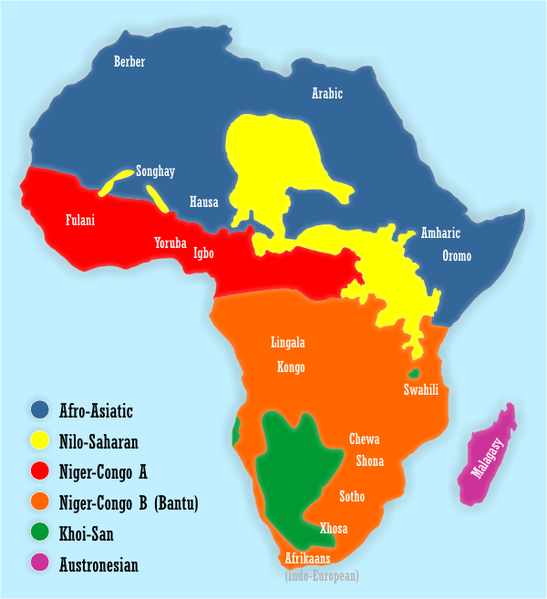

Dylan Violette (CopperViolette)
Psychology Minor and Philosophy Student who’s interested in archaeology, history, and astronomy.
Current Research Interests: The Archaic Era in North America; Long-Distance Trading Across the Americas; Eurasian Prehistory. Current Research Focus: The Eastern Archaic and the Megalithic Builders (10,000 – 1,177 B.C.E.).

Dylan Violette and I decided to blog jointly and will start doing videos together as well. Cory has had to step away from our joint endeavors we did for years, as he has issues he needs to focus on, and my friend Dylan is willing to step in and help me continue making thoughtful videos together.
Our Joint Academia Articles:

While hallucinogens are associated with shamanism, it is alcohol that is associated with paganism.
The Atheist-Humanist-Leftist Revolutionaries Shows in the prehistory series:
Show two: Pre-animism 300,000 years old and animism 100,000 years old: related to “Anarchism and Socialism”
Show tree: Totemism 50,000 years old: related to “Anarchism and Socialism”
Show four: Shamanism 30,000 years old: related to “Anarchism and Socialism”
Show five: Paganism 12,000 years old: related to “Anarchism and Socialism”
Show six: Emergence of hierarchy, sexism, slavery, and the new male god dominance: Paganism 7,000-5,000 years old: related to “Anarchism and Socialism” (Capitalism) (World War 0) Elite and their slaves!
Prehistory: related to “Anarchism and Socialism” the division of labor, power, rights, and recourses: VIDEO
Pre-animism 300,000 years old and animism 100,000 years old: related to “Anarchism and Socialism”: VIDEO
Totemism 50,000 years old: related to “Anarchism and Socialism”: VIDEO
Shamanism 30,000 years old: related to “Anarchism and Socialism”: VIDEO
Paganism 12,000 years old: related to “Anarchism and Socialism” (Pre-Capitalism): VIDEO
Paganism 7,000-5,000 years old: related to “Anarchism and Socialism” (Capitalism) (World War 0) Elite and their slaves: VIEDO
Paganism 5,000 years old: progressed organized religion and the state: related to “Anarchism and Socialism” (Kings and the Rise of the State): VIEDO
Paganism 4,000 years old: related to “Anarchism and Socialism” (First Moralistic gods, then the Origin time of Monotheism): VIEDO
I do not hate simply because I challenge and expose myths or lies any more than others being thought of as loving simply because of the protection and hiding from challenge their favored myths or lies.
The truth is best championed in the sunlight of challenge.
An archaeologist once said to me “Damien religion and culture are very different”
My response, So are you saying that was always that way, such as would you say Native Americans’ cultures are separate from their religions? And do you think it always was the way you believe?
I had said that religion was a cultural product. That is still how I see it and there are other archaeologists that think close to me as well. Gods too are the myths of cultures that did not understand science or the world around them, seeing magic/supernatural everywhere.
I personally think there is a goddess and not enough evidence to support a male god at Çatalhöyük but if there was both a male and female god and goddess then I know the kind of gods they were like Proto-Indo-European mythology.
This series idea was addressed in, Anarchist Teaching as Free Public Education or Free Education in the Public: VIDEO
Our 12 video series: Organized Oppression: Mesopotamian State Force and the Politics of power (9,000-4,000 years ago), is adapted from: The Complete and Concise History of the Sumerians and Early Bronze Age Mesopotamia (7000-2000 BC): https://www.youtube.com/watch?v=szFjxmY7jQA by “History with Cy“
Show #1: Mesopotamian State Force and the Politics of Power (Samarra, Halaf, Ubaid)
Show #2: Mesopotamian State Force and the Politics of Power
Show #3: Mesopotamian State Force and the Politics of Power (Uruk and the First Cities)
Show #4: Mesopotamian State Force and the Politics of Power (First Kings)
Show #5: Mesopotamian State Force and the Politics of Power (Early Dynastic Period)
Show #6: Mesopotamian State Force and the Politics of Power
Show #7: Mesopotamian State Force and the Politics of Power (Sargon and Akkadian Rule)
Show #9: Mesopotamian State Force and the Politics of Power (Gudea of Lagash and Utu-hegal)
Show #12: Mesopotamian State Force and the Politics of Power (Aftermath and Legacy of Sumer)

The “Atheist-Humanist-Leftist Revolutionaries”
Cory Johnston ☭ Ⓐ Atheist Leftist @Skepticallefty & I (Damien Marie AtHope) @AthopeMarie (my YouTube & related blog) are working jointly in atheist, antitheist, antireligionist, antifascist, anarchist, socialist, and humanist endeavors in our videos together, generally, every other Saturday.
Why Does Power Bring Responsibility?
Think, how often is it the powerless that start wars, oppress others, or commit genocide? So, I guess the question is to us all, to ask, how can power not carry responsibility in a humanity concept? I know I see the deep ethical responsibility that if there is power their must be a humanistic responsibility of ethical and empathic stewardship of that power. Will I be brave enough to be kind? Will I possess enough courage to be compassionate? Will my valor reach its height of empathy? I as everyone, earns our justified respect by our actions, that are good, ethical, just, protecting, and kind. Do I have enough self-respect to put my love for humanity’s flushing, over being brought down by some of its bad actors? May we all be the ones doing good actions in the world, to help human flourishing.
I create the world I want to live in, striving for flourishing. Which is not a place but a positive potential involvement and promotion; a life of humanist goal precision. To master oneself, also means mastering positive prosocial behaviors needed for human flourishing. I may have lost a god myth as an atheist, but I am happy to tell you, my friend, it is exactly because of that, leaving the mental terrorizer, god belief, that I truly regained my connected ethical as well as kind humanity.
Cory and I will talk about prehistory and theism, addressing the relevance to atheism, anarchism, and socialism.
At the same time as the rise of the male god, 7,000 years ago, there was also the very time there was the rise of violence, war, and clans to kingdoms, then empires, then states. It is all connected back to 7,000 years ago, and it moved across the world.
Cory Johnston: https://damienmarieathope.com/2021/04/cory-johnston-mind-of-a-skeptical-leftist/?v=32aec8db952d
The Mind of a Skeptical Leftist (YouTube)
Cory Johnston: Mind of a Skeptical Leftist @Skepticallefty
The Mind of a Skeptical Leftist By Cory Johnston: “Promoting critical thinking, social justice, and left-wing politics by covering current events and talking to a variety of people. Cory Johnston has been thoughtfully talking to people and attempting to promote critical thinking, social justice, and left-wing politics.” http://anchor.fm/skepticalleft
Cory needs our support. We rise by helping each other.
Cory Johnston ☭ Ⓐ @Skepticallefty Evidence-based atheist leftist (he/him) Producer, host, and co-host of 4 podcasts @skeptarchy @skpoliticspod and @AthopeMarie
Damien Marie AtHope (“At Hope”) Axiological Atheist, Anti-theist, Anti-religionist, Secular Humanist. Rationalist, Writer, Artist, Poet, Philosopher, Advocate, Activist, Psychology, and Armchair Archaeology/Anthropology/Historian.
Damien is interested in: Freedom, Liberty, Justice, Equality, Ethics, Humanism, Science, Atheism, Antiteism, Antireligionism, Ignosticism, Left-Libertarianism, Anarchism, Socialism, Mutualism, Axiology, Metaphysics, LGBTQI, Philosophy, Advocacy, Activism, Mental Health, Psychology, Archaeology, Social Work, Sexual Rights, Marriage Rights, Woman’s Rights, Gender Rights, Child Rights, Secular Rights, Race Equality, Ageism/Disability Equality, Etc. And a far-leftist, “Anarcho-Humanist.”
I am not a good fit in the atheist movement that is mostly pro-capitalist, I am anti-capitalist. Mostly pro-skeptic, I am a rationalist not valuing skepticism. Mostly pro-agnostic, I am anti-agnostic. Mostly limited to anti-Abrahamic religions, I am an anti-religionist.
Around 10,000 years ago, ideas went into Africa. Around 10,000 to 9,000 years ago, these ideas from the Middle East were in Siberia then moved to China and to the Americas by around 9,000 years ago. Religious ideas also left the Middle East from 9,000 to 8,000 years ago to Europe. Around 8,000 years ago, new ideas got to Ukraine but didn’t spread far. From 8,000 to 7,000 years ago, ideas again entered Africa with evolved beliefs from the Middle East. By 7,000 years ago, evolved deities from the Middle East moved again to Europe and Ukraine. And 7,000 years ago, the Siberian sun god of the sky, with a warrior culture, armed forts, and pre-kurgans, moved from Siberia to Ukraine and then returned to the Middle East around 6,000 years ago, influencing the Sumerian religious ideas. 6,000 to 5,000 years ago, these new Siberian influenced ideas from the Middle East were also in Africa. Then new evolved ideas moved back out of from Ukraine to the East by 5,500 to 5,000 years ago to Siberia, then China, and the Americas. Ideas from Ukraine went into Europe as well. Then, 5,000 to 4,000 years ago, the new ideas, now somewhat evolved again, from Siberia headed back to Europe, and so did ideas from the Middle East. ETC. This is just a rough outline to grasp some of the details, as I feel I understand them. There is a bit more, but this gives a good idea of how complicated it was.
I think the person, snakes, and two birds seen at Körtik Tepe is the oldest known Neolithic archaeological site in Turkey, more than 12,000 years old, were likely related to the Orion constellation as a shamanic figure holding a snake, referencing the use of the Milky Way to communicate with the gods and ancestors, as well as soul travel via the Milky Way. The big snake to me would reference the Milky Way itself and the two birds, either the star Venus and the moon, or some aspect of the sun, and the moon, but the sun aspect was likely not the noon sun by itself, as I see that as gaining prominence at a later date. And I think the other figures, also related to the Orion constellation, either as a deity or a deity of the stars, put Orion there. I assume, as seen at Tell Fekheriye, Syria, 11,000 to 9,000 years old, involving two standing figures on “step stools of power” that by 11,000 years ago were at least two sky deities, such as something similar to both a sky father and a sky mother deity, at this time, related to the stars, or planets (also seen as stars or star-like). But we must remember that planets were seen as star-related in mythology.
High Gods and a Divine Couple (universal mommy and daddy)?
I think high gods started with a divine couple, a sky god (sky father) “Day sky, often the Sun” and a sky goddess (sky mother) “Night sky, often the Noon” around 11,000 years ago or older, associated with pre-pastoralism animal management, early herding, and proto-pastoralism, of big-horned goats, big-horned sheep, both domesticated around 11,000 years ago, and cattle domesticated around 10,000 years ago or a little older, especially so with cattle, the last three. Then, as farming and agriculture grew and the domestication of grains emerged a little after 10,000 to 9,000 years ago, and along came a new Earth goddess (Earth Mother), who then commonly took the place of the older sky goddess (sky mother) as the wife or consort to the sky god (sky father). This younger divine couple, a sky god (sky father) and Earth goddess (Earth Mother), becomes the norm the world over. Spread largely with the spread of farming and agriculture to me.
The myths of (Sky Father) and Earth Mothers in general are found throughout the world, and I think started in the Middle East, with their origins around 11,000 years ago or older. Though totem couple artifacts are seen in Siberia’s Lake Baikal area with the Ancient North Eurasians Mal’ta–Buret’ culture (24,000 years ago) and seem to trace back to at least Russia, above the area between north of the Black Sea and the Caucasus mountains at the Kostenki site 25,000 years ago, a time when Kostenki is related to the eastern Gravettian culture, because the Kostenki site started with Aurignacian culture. I think the couple theme, though it seems to have evidence dating back to at least 25,000 years ago in portable totem pole-like figurines, was not considered deities until they evolved in the Middle East, due to different lifestyles creating a motivation for different thinking, a transition from hunting and gathering to herding and farming.


Damien Marie AtHope (Said as “At” “Hope”)/(Autodidact Polymath but not good at math):
Axiological Atheist, Anti-theist, Anti-religionist, Secular Humanist, Rationalist, Writer, Artist, Jeweler, Poet, “autodidact” Philosopher, schooled in Psychology, and “autodidact” Armchair Archaeology/Anthropology/Pre-Historian (Knowledgeable in the range of: 1 million to 5,000/4,000 years ago). I am an anarchist socialist politically. Reasons for or Types of Atheism
My Website, My Blog, & Short-writing or Quotes, My YouTube, Twitter: @AthopeMarie, and My Email: damien.marie.athope@gmail.com