

ref, ref, ref, ref, ref, ref, ref, ref, ref, ref, ref, ref, ref, ref, ref, ref, ref, ref, ref, ref, ref, ref, ref, ref, ref
“Na-Dene (Athabaskan–Eyak–Tlingit) is a family of Native American languages that includes at least the Athabaskan languages, Eyak, and Tlingit languages. Some linguists have proposed a genetic relationship between Na-Dene and the Yeniseian languages of central Siberia, termed Dene–Yeniseian. Speakers of the Na-Dene languages, while mostly closely related to other North American indigenous peoples, derive around 10% of their ancestry from a Siberian source closely related to Koryaks and not found in other Native American groups. The best-known of these proposals is the Dené–Yeniseian languages hypothesis from Edward Vajda and others. Under this hypothesis, the Na-Dené languages might be related to the Yeniseian (or Yeniseic) languages of Siberia, the only living representative of which is the Ket language. The core motivations for the proposed family connection are homologies in verb prefixes and a systematic correspondence between the distribution of Ket tones and consonant articulations found in Athabaskan–Eyak–Tlingit. Dene or Dine (the Athabaskan languages) is a widely distributed group of Native languages spoken by associated peoples in Alberta, British Columbia, Manitoba, the Northwest Territories, Nunavut, Saskatchewan, Yukon, Alaska, parts of Oregon, northern California, and the American Southwest as far as northern Mexico.” ref
- Gene Flow: DNA evidence indicates a notable genetic contribution (admixture) from early Arctic Small Tool tradition Paleo-Inuits into the ancestors of Na-Dene speakers. [1]
- Shared Heritage: Modern groups speaking Na-Dene languages (such as Athabaskan and Tlingit) carry distinct genetic markers inherited from these ancient Arctic interactions. [1]
“The Paleo-Inuit (Indigenous Arctic peoples’ preferred name) (also known as Paleo-Eskimo, “seen” as derogatory by Indigenous Arctic peoples) were the peoples who inhabited the Arctic region from Chukotka (e.g., Chertov Ovrag) in present-day Russia across North America to Greenland before the arrival of the modern Inuit and related cultures (formerly called Eskimo). The first known Paleo-Eskimo culture, known as the Early Paleo-Eskimo, had developed by 3900 to 3600 BCE, but were gradually displaced in most of the region, with the last one, the Dorset culture, disappearing around 1500 CE. Paleo-Inuits included the Pre-Dorset; the Saqqaq culture of Greenland (2500–800 BCE); the Independence I and Independence II cultures of northeastern Canada and Greenland (c. 2400–1800 BCE and c. 800–1 BCE); the Groswater culture of Labrador, Nunavik, and Newfoundland; and the Dorset culture (500 BCE – 1400 CE), which spread across the North American Arctic.” ref
“Using fragments of hair 4,000 years old, the National Museum of Denmark, the Beijing Genomics Institute, and additional collaborating scientific institutions sequenced nearly 80% of a Paleo-Eskimo man’s genome. The man was found in Greenland and believed to be from the prehistoric Saqqaq culture. Based on the genome, scientists believe there was a distinct, separate migration of peoples from Siberia to North America some 5,500 years ago. They noted that this was independent of earlier migrations, whose descendants comprised the historic cultures of the Indigenous peoples of the Americas, as well as later Inuit migration. By 4,500 years ago, descendants of this migration had reached Greenland. The remains used for analysis were found in a Saqqaq culture area.” ref
“A 2017 study identifies Paleo-Inuit ancestry in Athabaskan and in other Na-Dene-speaking populations. The authors note that the Paleo-Inuit peoples lived alongside Na-Dene ancestors for millennia. The authors believe that this represents new evidence of a genetic connection between Siberian and Na-Dene populations mediated by Paleo-Inuit peoples. According to these scholars, in general, the Paleo-Inuits had large proportions of Beringian ancestry, which includes Chukotko-Kamchatkan and Eskaleut (Eskimo-Aleut), Siberian, and Southeast Asian ancestry. Furthermore, some geneticists and archaeologists, such as David Reich, have hypothesized that the Paleo-Eskimos spread the Na-Dene languages into the American continent, which would make the Paleo-Inuits cultural and linguistic relatives (if not ancestors) of Na-Dene peoples. In 2019, scholars concluded that the Paleo-Inuit people were the ancestors not only of modern Na-Dene-speaking peoples but also of the Eskimo-Aleut speakers.” ref
- Shared Ancestry: Recent genetic studies (such as Flegontov et al.) indicate that Paleo-Inuits associated with the Arctic Small Tool tradition share close biological ties with both Yeniseian and Athabaskan (Na-Dene) populations. [1]
- Technological Borrowing: Linguistic evidence shows that Proto-Athabaskan vocabularies include specific words for advanced archery and ceramics that mirror technologies found in Arctic Small Tool tradition contexts around 4,000 years ago. [1]
- Alternative Hypotheses: While classic archaeology separates the Na-Dene migration from later Paleo-Inuit Arctic Small Tool tradition waves, some researchers propose that early Proto-Dene speakers were closely intertwined with or directly contributed to the cultural matrix of the early Arctic small tool technocomplexes. [1, 2]
“The Arctic Small Tool tradition (ASTt) was a broad cultural entity that developed along the Alaska Peninsula, around Bristol Bay, and on the eastern shores of the Bering Strait around 2500 BCE. ASTt groups were the first human occupants of Arctic Canada and Greenland. This was a terrestrial entity that had a highly distinctive toolkit based on microblade technology. Typically, tool types include scrapers, burins, and side and end blades used in composite arrows or spears made of other materials, such as bone or antler. Many researchers also assume that it was Arctic Small Tool populations who first introduced the bow and arrow to the Arctic, which eventually became the Eskimo archery material culture (Using sinew cords for the back of the bow and spruce timber or antler for the belly; however, they built very effective weapons). Arctic Small Tool tradition camps are often found along coasts and streams, to take advantage of seal or salmon populations. While some of the groups were fairly nomadic, more permanent, sod-roofed homes have also been identified from Arctic Small Tool tradition sites. Varieties of cable-backed bow have been made by non-Inuit cultures. Tlingit and Haida people have also made such bows.” ref, ref
“According to Pavel Flegontov, the Arctic Small Tool tradition may have originated in East Siberia about 5,000 years ago, a view supported by an ancient DNA study: “Paleo-Inuit archeological cultures are grouped under the Arctic Small Tool tradition, and include the Denbigh, Choris, Norton, and Ipiutak cultures in Alaska, and the Saqqaq, Independence, Pre-Dorset, and Dorset cultures in the Canadian Arctic and Greenland. The Arctic Small Tool tradition source has been argued to lie in the Syalakh-Bel’kachi-Ymyakhtakh culture sequence of East Siberia, dated to 6,500 – 2,800 years ago.” ref

“Palaeo-Inuit DNA (Palaeo-Eskimo genetic ancestry) and the peopling of Chukotka (Chukotko-Kamchatkan language speakers: such as the Chukchi, Koryak, and Itelmen) and North America (Na-Dene and Eskimo–Aleut languages) 5,000 years ago. Paleo-Eskimos contributed substantially to the ancestry of Native Americans speaking Na-Dene languages. An unspecified Asian source contributed around 43% of the ancestry of Eskimo-Aleut speakers and around 10% of the ancestry of Chipewyans, a Northern Athabaskan-speaking population. Our analyses show that this Asian source corresponds to the ancestral population we term proto-Paleo-Eskimos. Researchers show that within this lineage, two sub-lineages formed that contributed to almost all Na-Dene speakers and to Neo-Eskimos, respectively. A different study stated that Northern Athabaskan speakers did not receive Paleo-Eskimo admixture, but it proposed admixture between Athabaskans and Eskimo-Aleut speakers. Results show that Paleo-Eskimo ancestry is a nearly perfect tracer-dye for speakers of Na-Dene languages, including the most divergent linguistically (Tlingit) and the most geographically remote ones (Southern Athabaskans, including the Navajo language as well as various Apache groups). It is plausible that Paleo-Eskimos rather than Neo-Eskimos contributed to Na-Dene populations in light of archaeological evidence. The arrival of Neo-Eskimos (the Birnirkand Thule cultures) into western Alaska is dated to 1,350 – 1,150 years ago, but at that point Tlingit had probably already come to occupy their current position in southeastern Alaska. It has been hypothesized that the spread of Southern Athabaskan speakers from the Subarctic was triggered by a massive volcanic ash fall 1,100 years ago. If this hypothesis is correct, both Tlingit and Apache would have had little opportunity to mix with newly arriving Neo-Eskimos, which would explain why analysis shows that southern Athabaskan speakers and Tlingit have the Paleo-Eskimo ancestry but not the Neo-Eskimo ancestry. In contrast, Paleo-Eskimo peoples lived alongside Na-Dene ancestors for millennia, providing ample opportunity for genetic interaction16. Although archaeological evidence for such interaction across the coastal-interior cultural boundary remains sparse16,46, our genetic analyses show substantial gene flow from Paleo-Eskimos (25-40% in ancient Northern Athabaskans).” ref, ref, ref

ref, ref, ref, ref, ref, ref, ref, ref, ref, ref, ref
With art by Damien
I speculate that mythological and cosmological ideas from Ancient Egypt moved with haplogroup Y-DNA E to the area of the Proto-Indo-European language around 5,000 years ago, and these ideas then moved with Early Proto-Indo-European migrations from the Pontic steppes and across Central Asia to Siberia, also around 5,000 years ago, becoming the Afanasievo culture (early PIE) that then transferred to Siberian cultures, which moved into the Americas with the Paleo-Inuit migration around 5,000 years ago. This influenced the Pacific Northwest cultures, like Na-Dene language speakers (Tlingit, around 5,000-year-old culture) and others (Tsimshian, around 5,000-year-old culture), Penutian language speakers, and these ideas then moved down the coast to California, and then California moved these ideas down to Peru (5,000 years ago?), at least 4,200 years ago.


ref, ref, ref, ref, ref, ref, ref, ref, ref, ref, ref, ref, ref, ref
With art by Damien
In Uralic, Siberian, Native American, and Indo-European mythology, the World Tree is an axis connecting the upper world, the middle human realm, and the lower underworld. World Tree appears in Hungarian, Turkic, Mongol, Armenian, Norse, Germanic, Slavic, Finnish, Baltic, Chinese, and Hindu mythology.

Three Realm/Tripartite Worldview Mythological Cosmologies
In various cultural worldviews, mythological, and metaphysical systems, the universe is often divided into (three-part/tripartite structure) Three Cosmic Layers: Celestial/Heavenly Realm (The Upper World), Terrestrial/Earth Realm (The Middle World), and Chthonic/Underworld Realm (The Lower World) ref
“The world tree, also known as the cosmic tree, is a motif present in several religions and mythologies, particularly Indo-European, Siberian, and Native American religions. The world tree is represented as a colossal tree which supports the heavens, thereby connecting the heavens, the terrestrial world, and, through its roots, the underworld.” ref
“In 20th-century comparative mythology, the term axis mundi – also called the cosmic axis, world axis, world pillar, center of the world, or world tree – has been greatly extended to refer to any mythological concept representing “the connection between Heaven and Earth” or the “higher and lower realms. The axis mundi symbol may be found in cultures utilizing shamanic practices or animist belief systems, in major world religions. Items presented as examples of the axis mundi by comparative mythologists include plants (notably a tree but also other types of plants such as a vine or stalk), a mountain, a column of smoke or fire, or a product of human manufacture (such as a staff, a tower, a ladder, a staircase, a maypole, a cross, a steeple, a rope, a totem pole, a pillar, a spire).” ref
“The cosmological structure of the drum and the Sami cyclic world view: What becomes manifest on the surface of the shaman drum is a Sami Weltanschauung of a tripartite universe. It consists of the upper realm of the heavenly deities, the middle or human realm, and the lower realm, Jábmiidáibmu, or the upside-down world. They are, however, connected with a pillar having a peive or the sun as its center. The sun is located in the center of the whole drum, surrounded by gods, people, animals, and other symbols in a symmetric configuration towards the center. The location of the figures, as well as the whole structure of the drum with its oval form, seem to indicate a cyclic view of life.” ref, ref
“In Mesopotamian cosmology, heaven and earth both had a three-part (tripartite) structure: a Lower Heaven/Earth, a Middle Heaven/Earth, and an Upper Heaven/Earth.” ref
“The Hebrew Bible depicted a three-part world, with the heavens (shamayim) above, Earth (eres) in the middle, and the underworld (sheol) below. After the 4th century BCE, this was gradually replaced by a Greek scientific cosmology of a spherical Earth surrounded by multiple concentric heavens.” ref
“Bronze Age tripartite cosmologies: In some of its structural basics this cosmology of the Nordic Bronze Age shows some interesting parallels to the religion of Ancient Egypt.” ref
“The trifunctional hypothesis is a theory that prehistoric Proto-Indo-European society and religion reflected a tripartite ideology (“idéologie tripartite”) organized around three functions: the sacral, or sovereign, the martial, and the productive, or economic. These functions were sometimes associated with three social classes or castes: priests, warriors, and commoners (farmers, herders, craftspeople, or tradesmen). In later formulations, the hypothesis concerned a religious and ideological structure rather than a direct reconstruction of three original social classes.” ref
AI Overview: The structural framework is found across global traditions to explain how reality is organized.
1. The Celestial Realm (The Upper World)
- Names: Heaven, Overworld, Asgard, Svarga, the Empyrean.
- Inhabitants: Gods, deities, angels, ascended masters, and supreme spiritual cosmic forces.
- Symbolism: Enlightenment, absolute truth, order, light, and the ultimate source of creation. It represents the highest state of consciousness.
2. The Terrestrial Realm (The Middle World)
- Names: Earth, Midgard, Bhumi, the physical plane.
- Inhabitants: Humans, animals, plants, and physical nature.
- Symbolism: The space of duality, balance, and transition. It acts as the bridge where the cosmic forces of the Upper and Lower worlds interact, creating the physical experience of time and space.
3. The Chthonic Realm (The Lower World)
- Names: The Underworld, Netherworld, Patala, Helheim, Hades.
- Inhabitants: Ancestors, spirits, demons, chthonic deities, and primordial forces.
- Symbolism: The subconscious mind, the unseen roots of existence, secrets, death, and rebirth. It is rarely viewed purely as “evil” in ancient traditions, but rather as a place of transformation and foundational energy.

ref, ref, ref, ref, ref, ref, ref, ref, ref, ref, ref, ref, ref, ref, ref, ref, ref, ref, ref, ref, ref, ref, ref, ref, ref
Migration of northeastern Asians into the New World about 5,500 years ago. They seem to have brought new languages, cultural perspectives, and religious beliefs. To me, these new beliefs likely involved the last of three generations of Earth Diver myths, supreme god Sky Chief (Great Spirit Vertion), Raven, and other bird mythology, World Tree/Axis Mundi/Central Celestial Pole/the three worlds: Upper (heaven), Middle (Earth), and Lower (Underworld) mythology themes.
Dene–Yeniseian languages
Dene–Yeniseian (which I am starting to think entered the Americas twice, once 7,000 to 6,000 years ago with Haplogroup C Y-DNA, first. Then, a second time around 5,500 to 5,000 years ago, with Haplogroup Q Y-DNA, it then spread to Haplogroup C Y-DNA. Yeniseian-speaking Ket people of Siberia have one of the highest frequencies of Y-DNA Haplogroup Q in Eurasia, up to 94%.) It is a proposed language family consisting of the Yeniseian languages of central Siberia and the Na–Dene languages of northwestern North America. As for the wider Dene–Caucasian hypothesis, while Vajda did not find the kinds of morphological correspondences with these other families that he did with Yeniseian and Na–Dene, he did not rule out the possibility that such evidence exists, and urges that more work be done.” ref
I used to agree with the common claim that Na-Dene speakers brought Haplogroup C Y-DNA to the Americas approximately 8,000 to 6,000 years ago. But I now think it is likely that Dene–Yeniseian arrived twice, once closer to 7,000 to 6,000 years ago, with Haplogroup C Y-DNA. Then again, around 5,500 to 5,000 years ago, with Haplogroup Q Y-DNA, a time that aligns with the linguistic evidence, suggesting the Tlingit language likely separated from the Na-Dené language family roughly 5,000 years ago. Tlingit Y-DNA is predominantly represented by Haplogroup Q Y-DNA, with high diversity.

Heiltsuk language (Heiltsuk, also known as Bella Bella, not be confused with Salish-speaking Nuxalk peoples, called Bella Coola)
Athabaskan languages (part of the Na-Dené: Athabaskan–Eyak–Tlingit)
- Creator: Early traditions speak of a sacred creator, Kah-shu-goon-yah, who made all living things and controls the universe. His name was so sacred it was never spoken above a whisper. [1]
- Reincarnation: A central tenet of Tlingit philosophy is the belief that both humans and animals are reincarnated. [1]
Religion of the Tlingit
“Tlingit thought and belief, although never formally codified, were historically a fairly well-organized philosophical and religious system whose basic axioms shaped the way Tlingit people viewed and interacted with the world around them. Tlingits were traditionally animists, and hunters ritually purified themselves before hunting animals. Shamans, primarily men, cured diseases, influenced weather, aided in hunting, predicted the future, and protected people against witchcraft. A central tenet of the Tlingit belief system is the reincarnation of both humans and animals.” ref
“The Tlingit believed in a creator, Kah-shu-goon-yah, whose name was sacred and never mentioned above a whisper. This primordial grandfather, or “divisible-rich-man,” controlled the sun, moon, stars, and daylight in addition to creating all living things. Little more is known of him. The sacred past centers upon Raven (cultural hero, benefactor, trickster, and rascal), who was credited with organizing the world in its present form and in initiating many Tlingit customs. Raven was never represented, symbolized, or made equal with the supreme being who transcended Tlingit legends. The Tlingit inhabited a world filled with spirits, or jek. These spirits could manifest their power through individuals, animals, or things. Since every material object or physical force could be inhabited by a spirit, the Tlingit were taught to respect everything in the universe. The penalty for disrespect was the loss of the ability to obtain food. Properly purified persons could acquire spirit power for curing illnesses, for protection in warfare, for success in obtaining wealth, and for ceremonial prerogatives.” ref
“Each Tlingit had a mortal and an immortal spirit. Two options open to youths were to seek good power and help the community or to seek evil power and threaten the community. Every Tlingit had a personal guardian spirit, or tu-kina-jek. Spirit doctors, or ichet, received more powerful spirits and therefore could treat the sick with herbs, discern the presence of evil, predict the future, and protect the community from evil forces. Witches, or nukw-sati, sought evil power and used it to harm others. Dancing societies never gained a major foothold in Tlingit society as they did in neighboring Northwest Coast tribes. The Tlingit sought their power primarily through their clan spirit doctor, whom they trusted to help and not to harm them. Politicoreligious ceremonies called potlatches, or koolex, marked significant events in the life of the clan and its members. Sacred songs, dances, symbols, and stories accompanied all changes in social stature, political leadership, and ceremonial objects within the clan. Spirits of the dead traveled to the appropriate level of heaven commensurate with their moral conduct in this life. Morally respectable people went to the highest heaven, Kiwa-a, a realm of happiness; moral delinquents went to a second level, or Dog Heaven, Ketl-kiwa, a place of torment. Individuals remained in the afterworld for a period of time and then returned to this world as a reincarnation of some deceased maternal relative.” ref
Religion of the Tsimshian
“Tsimshian religion centered on the “Lord of Heaven,” who aided people in times of need by sending supernatural servants to Earth to aid them. The Tsimshian phrase for the “Lord of Heaven” or “Chief in Heaven” combines la̱xha (meaning heaven, sky, or up above) and sm’oogyet (meaning a male chief or lord). A Tsimshian shaman—traditionally known as a halait—acted as a spiritual healer, mediator, and protector. The Tsimshian believed that charity and purification of the body (either by cleanliness or fasting) were the route to the afterlife.” ref. ref, ref
“Tsimshian myth is known from orally passed tales. An adaawx(or true tellings) is a story concerning animal spirits in human guise and is usually linked to the origin of the Earth and the peoples on it. A malesk, in contrast, is an adventure or history tale that purports to entertain rather than explain. The Raven spirit is known as We-gyet or Txamsem. Txamsem is said to have a brother named Logobola, who is responsible for the lack of fresh and clear water as well as the existence of the fog into which Txamsem became lost. The Raven, known as Txamsem or Giant, is a central figure in Tsimshian mythology, part of the Raven Tales mythology connecting the indigenous peoples of the Pacific Northwest Coast. The Raven is viewed as the creator of the universe and an intermediary between its physical and spiritual incarnations. Tsimshian creation myth presupposes a dark and still universe populated by a variety of animal spirits. An animal chief pampers his son, causing him to fall sick and die, and his intestines are burned. The next day a new youth appears in the bed, healthy and visible in the darkness, “bright as fire.” The boy is adopted by the chief. Initially, this boy does not eat, but slave spirits trick him into eating scabs. This triggers an enormous appetite in the boy, who begins to eat so much that the chief and villagers send him away with a raven blanket. The boy leaves and becomes Raven.” ref
Secret Societies of the Coastal Inhabitants of Northwest America
“As diverse as the gods and heroic legends appear, they almost all have in common with one another the fact that, in addition to gods and humans, animals also play a comparatively important role. And the idea that the gods or spirits prefer to adopt the shapes of animals is found among almost all peoples of the earth. Indeed, nowhere could this idea appear more distinctive than among the inhabitants of the Northwest Coast of America. There, every year, according to the belief of the Indians, the various deities still come down to Earth in many shapes and at various times, showing themselves to humans and taking part in the celebrations held in their honor. Most of these gods are well disposed toward humans. Indeed, almost every family claims descent from one god or another, so that to a certain extent a cordial communication is formed between gods and humans. Apart from family gods, people also believe in evil spirits which can bring misfortune to humanity, but their power is a lesser one, and they can be expelled and rendered harmless with relative ease by the medicine man and the mighty spirits of all types which are in alliance with him.” ref
“Several intelligent and, as they allege, inspired men in each tribe take the role of representatives of the gods. They form secret societies so that their secret arts and teachings, their mummery and masques, are not disclosed to the uninitiated and to the people in general. These performances are supposed to instill, especially amongst youth and women, beliefs in the old traditions about the communication of the gods with humans and about their own intimate connections to the gods. In order to convince the possible doubter, members of the secret society take recourse to all kinds of mysterious procedures which to a civilized person must appear extremely crude. For example, they mutilate their bodies, tear apart and consume corpses, tear pieces from the bodies of living persons, and the like. Bordering on disorder, the excessive personal vanity observed among the Northwest Indians, as well as the addiction to turn oneself into someone who is considered famous and respected and to be regarded as something special, may also have served as a motive for joining secret societies, since each of their members enjoys great standing of that kind.” ref
“A closer and more thorough knowledge of the various customs in the secret societies is naturally very difficult for the foreigner, for even among the participating Indians only few have an understanding of what is happening in their midst. Only those who are members of a secret society can describe their proceedings, but do not readily disclose anything, because otherwise their secrets would cease to be secrets, and also because betrayal can be punished with severe penalties, even with death. Among the secret societies mentioned, the Hamatsa are the most respected and most famous, on the one hand because they must be of high descent, on the other hand because of their actions, which in the eyes of the people make them somewhat demonic and feared persons. The Hamatsa society is the highest-ranking and most prestigious secret dancing society of the Kwakwakaʼwakw (Kwakiutl). The society centers on the myth of Baxbaxwalanuksiwe, a giant man-eating spirit from the north end of the world who is accompanied by supernatural cannibal birds like the Raven and Crooked Beak. The Kwakiutl and the neighboring tribes recognize among the Hamatsa several men (occasionally also women) in each village who practice a kind of cannibalism. The right to become a Hamatsa can only be gained through high birth or marriage into families which possess the privilege. ” ref, ref, ref, ref, ref
- Egalitarian Sodalities: Hopewell religious life relied heavily on voluntary, cross-kinship secret societies or ritual sodalities rather than rigid political classes. [1]
- Exotic Trade Networks: Participants in the Hopewell Interaction Sphere traveled long distances to Ohio’s Hopewell Ceremonial Earthworks to share ritual items like mica, obsidian, and copper. [1, 2]
Animal pelt caps and Mississippian ritual sodalities: “Archaeologists have become increasingly interested in ancient belief systems, and it is recognized that the material remains of past societies may effectively aid in constructing informed interpretations of religious institutions and ritual practice. Recent research seeks linkages between ethnographic accounts and eastern Woodlands representational imagery. Depictions of animal pelt headdresses and Marshall Plains ethnographic accounts are used to argue that Mississippian figural imagery denotes more than status ascription. Animal pelt headgear was a distinctive and prominent feature of Mississippian belief systems, which materialized transcendent beings in figural art. The implication is that Mississippian ritual sodalities may be comparable to historic prairie–plains exemplars.” ref
The Role of Secret Societies (Ritual Sodalities)
- Theatrical Legerdemain: Secret societies maintained their influence by staging intense public performances and theatrical illusions (legerdemain). These rituals included symbolic mock-decapitations and resurrections designed to mimic the exploits of supernatural figures like the Hero Twins. [1, 2, 3, 4]
- Entheogenic Rituals: Recent archaeological residue testing confirms that some of these secretive groups controlled the distribution and ritual use of psychoactive plants like Datura to facilitate vision quests, dream interpretation, and spiritual transformations. [1, 2]
- Exclusive Insignia: Membership in a specific society was signaled through exclusive regalia. Members wore unique animal pelt caps (such as panther or bear), bore specific body tattoos, and carried non-functional, oversized ceremonial weaponry (like the stylized flint maces found in the Duck River Cache). [1, 2]
- The iconic artifacts unearthed at major Mississippian hubs like Cahokia, Spiro Mounds, and Moundville were the sacred property (sacra) of these high-ranking secret societies. The imagery engraved on repoussé copper plates and marine shell cups outlined a highly complex, layered universe: [1, 2, 3]
“The social organization of the Mississippian culture was based on warfare, which was represented by an array of motifs and symbols in articles fashioned from costly raw materials such as conches from Florida, copper from the Great Lakes area and Appalachian Mountains, lead from northern Illinois and Iowa, pottery from Tennessee, and stone tools from Kansas, Texas, and southern Illinois. Such objects occur in elite burial sites alongside war axes, maces, and other weapons. Other artifacts discovered in these burial sites bear cosmic imagery depicting animals, humans, and legendary creatures. This symbolic imagery united warfare, cosmology, and nobility into a comprehensive system. Some of these categories of artifacts were used as badges of chiefly office, which varied from one location to another. The term Southeast Ceremonial Complex refers to a complex, highly variable set of religious mechanisms that supported the authority of local chiefs. Most imagery focuses on cosmology and the supernatural beings who inhabit and influence the cosmos.” ref
“The cosmological map encompassed real geographic locations, both in this world and the supernatural realm of the Otherworld. The cosmos is portrayed in three levels. The Above World, or Overworld, was the home of the Thunderers, the Sun, Moon, and Morning Star, or Red Horn (He Who Wears Human Heads for Earrings), and represented order and stability. The Middle World was the earth that humans inhabit. The Beneath World, or Under World, was a cold, dark place of Chaos that was home to the Underwater Panther and Corn Mother (Old Woman Who Never Dies). These three worlds were connected by an axis mundi, usually portrayed as a cedar tree or a striped pole reaching from the Under World to the Over World. Each of the three levels was also believed to feature its own sub-levels. Central to the worldview of the S.E.C.C. was the concept of duality and opposition. The beings of the upper and lower spheres were in constant opposition to each other. Ritual and ceremony were the means by which these powerful forces could be accessed and harnessed.” ref
AI Overview: Native American spirituality is sometimes associated with secret orders; specialized religious societies are distinct features of other regions—such as the Antap Society of the California Chumash, the Midewiwin or the Grand Medicine Society of the Great Lakes, or the ritual winter masking societies of the Northwest Coast. [1, 2]

“Bird stones were mostly made east of the Mississippi, and the thousands in existence have been found primarily in New York, Ohio, Michigan, and Wisconsin. The stones range in length from 1 to 9 inches (2.5 to 22.9 cm), and have unique variations in style. Most are ground from grayish green, banded slate, and occasionally porphyry. In southern Wisconsin, two regional traditions of treating the dead, called Red Ocher people “Algonquian language-speakers” (3,000 to 2,400 years ago) and Glacial Kame culture (10,000 to 3,000 years ago, but Glacial Kame culture birdstones start 5,000 years ago), also emerged during the Late Archaic. Red Ocher Complex burials are usually in a flexed position in a pit excavated from a natural ridge or knoll, often made of sand or gravel. The burials are accompanied by grave goods, the most distinctive of which is a blue-grey to almost black, fine-grained chert cache blade. Artifacts also found in these graves include large white chert blades, cubic galena (lead ore) crystals, copper artifacts (usually beads and awls), ground stone artifacts (stone tube pipes, birdstones, gorgets), and necklaces made of shell beads traded from Native groups in marine environments. The graves were then capped by powdered red ocher, a mineral ranging in color from mustard yellow to bright red. A point type commonly associated with the Red Ocher burial style is called a turkey-tail point, because the base end resembles the tail of a turkey. The second burial technique, called Glacial Kame, is thought to be a forerunner to Red Ocher. The burials were placed in gravel knolls and had grave goods such as marine shell ornaments, beads, and gorgets.” ref, ref
“The Pacific Northwest tribes used a similar tool made of wood, also bird-shaped. It has also been suggested that these artifacts were worn as decorative items denoting marriage status or pregnancy, and as totems representing tribes.” ref

“Tlingit, Haida, Eyak & Tsimshian Culture: The Tlingit, Haida, Tsimshian, and Eyak live throughout Alaska’s southeastern panhandle — the Inside Passage region — sharing many cultural similarities with groups along the Pacific Northwest Coast, from Alaska through Canada all the way down to northwestern California. The Eyak, Tlingit, Haida, and Tsimshian share a common and similar Northwest Coast Culture with important differences in language and clan system. Anthropologists use the term “Northwest Coast Culture” to define the Eyak, Tlingit, Haida, and Tsimshian cultures, as well as that of other peoples indigenous to the Pacific coast, extending as far as northern Oregon. The Eyak, Tlingit, Haida, and Tsimshian have a complex social system consisting of moieties, phratries, and clans. Eyak, Tlingit, and Haida divide themselves into moieties, while the Tsimshian divide into phratries. All were hunter-fisher-gatherers, yet each local group of Eyak, Tlingit, Haida, and Tsimshian had at least one permanent winter village with various seasonal camps close to food resources.” ref
“The houses held 20-50 people, usually of one main clan. Houses, totem poles, daily utensils, storage and cooking boxes, transportation, ceremonial objects, labrets (worn by high-status women), and clothes were all made of wood and wood products. The Eyak, Tlingit, Haida, and Tsimshian are known for a ceremony called the “potlatch” and feasts. Potlatches are formal ceremonies. Feasts, a less formal but similar event, are more common with the Haida, in which debt was paid to the opposite clan. High-ranking Eyak, Tlingit, Haida, and Tsimshian clans and/or individuals were expected to give potlatches. However, a potlatch could be given by a commoner who could raise his position by doing so. Except in the Haida tradition, the host would not raise his personal status, but rather the status of his children. Potlatches were held for the following occasions: a funeral or memorial potlatch, whereby the dead are honored; the witness and validation of the payment of a debt, or naming an individual; the completion of a new house; the completion and naming of clan regalia; a wedding; the naming of a child; the raising of a totem pole; or to rid the host of a shame. Potlatches might last days and would include feasting, speeches, singing, and dancing. Guests witness and validate the events and are paid with gifts during the ceremony. In potlatches, there would be a feast; however, a feast does not constitute a potlatch.” ref
Tlingit and Tsimshian share deep cultural, artistic, and religious traditions, alongside clear genetic links like mt-DNA haplogroup A2.
“The Tlingit language, recognized as one of the oldest branches of the family, may have split from the Eyak-Athapaskan branch about 5,000 years ago. Around 5,000 years ago, the coastal art and aesthetic styles associated with the Northwest Coast began to appear. By 3,000 years ago, the cultures of the Northwest Coast were largely the same as those observed at the time of contact. Proto-Athapaskan itself may have originated in the subarctic region of North America some 3,000 years ago. All Northwest Coast groups have some form of an exogamous matrilineal clan system. In these systems, clan status is passed from mothers to their children. Based on this status, individuals have access to specific clan territories for hunting and fishing, and can use clan-specific crests for decorating clothing and dwellings. The clan system is comprised by two moieties or reciprocating descent groups. For the Tlingit and Eyak, clans are grouped into Raven (Yéil) or Eagle/Wolf (Ch’aak’/Gooch) moieties. Traditionally, moiety membership influenced marriage practices, whereby persons belonging to Eagle clans would marry those from Raven clans, and vice versa. Like the Tlingit and Eyak, the Haida are grouped into two moieties, although the clans belonging to the Haida Eagle moiety would belong to the Tlingit Raven moiety. By contrast, the Tsimshian have four phratries instead of two moieties. Thus, all Northwest Coast populations are organized into maternally linked clans, grouped into exogamous units, which influence their social and ritual practices, and probably also their genetic make-up. Haida and Tlingit populations had mtDNA profiles that resembled those of other northern populations from Alaska and Canada. The vast majority of individuals had mtDNAs belonging to Native American haplogroup A2, while most of the rest belonged to haplogroups C and D, which are also indigenous in origin. None of these populations possessed haplogroup B2 or X2a mtDNAs, which appear in Amerindian populations to the south.” ref
“Tsimshian populations carry specific sublineages of mt-DNA haplogroup A2, like A2ag and A2ah. Four ancient and three living individuals of the northern Northwest Coast of North America, specifically the north coast of British Columbia, Canada, current home to the indigenous Tsimshian, Haida, and Nisga’a. The mitogenomes of all individuals were previously unknown and assigned to new sub-haplogroup designations D4h3a7, A2ag, and A2ah. The analysis of mitogenomes allows for more detailed analyses of presumed ancestor–descendant relationships than sequencing only the HVSI region of the mitochondrial genome, a more traditional approach in local population studies. The results of this study provide contrasting examples of the evolution of Native American mitogenomes. Those belonging to sub-haplogroups A2ag and A2ah exhibit temporal continuity in this region for 5000 years up until the present day. Of possible associative significance is that archaeologically identified house structures in this region maintain similar characteristics for this same period of time, demonstrating cultural continuity in residence patterns. The individual dated to 6000 years before present (BP) exhibited a mitogenome belonging to sub-haplogroup D4h3a. This sub-haplogroup was earlier identified in the same general area at 10300 years ago on Prince of Wales Island, Alaska, and may have gone extinct, as it has not been observed in any living individuals of the Northwest Coast.” ref, ref
“Tt has been suggested that there have been at least three distinct waves of migration: the first wave, which contributed ancestry to all non-Inuit Indigenous peoples of the Americas; a second wave, which included the Paleo-Inuit (previously referred to as Paleo-Eskimos), a people of the Dorset culture who reportedly came to the Americas from Siberia ∼6 thousand years ago; and the third wave, which included the Neo-Inuit, a people of the Thule culture who settled in the Arctic ∼1 thousand years ago, possibly replacing the Paleo-Inuit, and giving rise to the present-day Inuit. It has been shown that mid- to late-Holocene genomes obtained from individuals on the British Columbia coast show affinity with genomes of present-day Indigenous Americans in the region, providing evidence of genetic continuity therein. Specifically, maternal genetic continuity for at least 5,500 years in coastal British Columbia, and the Tsimshian territory in particular, has been demonstrated. In addition, exome sequences from 25 ancient individuals from the Prince Rupert Harbor region in the Tsimshian Territory of coastal British Columbia exhibit genetic affinity with modern Tsimshian people. Haplogroup A2 remains the most frequently reported mitochondrial DNA (mtDNA) lineage in northern North America, and it is particularly common along the Pacific Northwest Coast, reaching frequencies >90% among the Haida and Tlingit people.” ref
“The presence of the A2aq lineage in both the Tsimshian and the Tlingit territories over the last few thousand years raises the question as to where in the Pacific Northwest Coast this haplotype first appeared ∼9 ka (the age estimate of its most recent common ancestor). One possible scenario is the initial appearance of this haplotype in the Tsimshian territory in British Columbia, followed by a northward migration to the Tlingit territory in Southeast Alaska sometime before 3,000 years ago (the age of TYYS). The fact that the oldest ancient sample belonging to this lineage comes from Tsimshian territory supports this scenario. Moreover, this scenario is also consistent with the Tlingit oral tradition that most Tlingit clans trace their origins to the Tsimshian coast, around the mouth of the Skeena River, from which they migrated northward. Indeed, the original migration stories of both the Raven and the Eagle clans included this northward movement. An alternative scenario to explain the presence of A2aq in both Tsimshian and Tlingit territories could be a movement of people southward from Tlingit to Tsimshian territory. Under this scenario, a southward movement must have occurred at least ∼4,855 years ago, a limit imposed by the age of the oldest known ancient individual from Tsimshian territory with the A2aq haplotype (160a). Another possible explanation is that people (along with the A2aq haplotype) moved into the Tlingit and Tsimshian territories independently from a third location that already harbored the A2aq haplotype. It is important to point out, however, that inference on the origin of this haplotype is limited by the very small sample size studied here, and any interpretations may change with increased data.” ref
“A2 is found in Chukotko–Kamchatka (The Chukchi a Siberian ethnic group in the farthest East of Russian Far East/Siberia: at the maritime border on the Bering Strait with the U.S. state of Alaska to the east. According to several studies on genomic show, the Chukchi are the closest Asian relatives of the Indigenous peoples of the Americas.) and is also one of five mtDNA haplogroups found in the indigenous peoples of the Americas, the others being B, C, D, and X. Haplogroup A2 is the most common haplogroup among the Inuit, Na-Dene, and many Amerind ethnic groups of North and Central America. Lineages belonging to haplogroup A2 also comprise the majority of the mtDNA pool of the Inuit and their neighbors, the Chukchis, in northeasternmost Siberia.” ref, ref
“In Chukchi religion, every object, whether animate or inanimate, is assigned a spirit. This spirit can be either harmful or benevolent. Some of Chukchi myths reveal a dualistic cosmology. A Chukchi shaman once explained to the ethnographer Vladimir Bogoraz that “The lamp walks around. The walls of the house have voices of their own. … Even the shadows on the wall constitute definite tribes and have their own country, where they live in huts and subsist by hunting.” During Chukchi rituals, shamans fall into trances (sometimes with the aid of hallucinogenic mushrooms), communicate with spirits, allow the spirits to speak through them, predict the future, and cast spells. Early Russian ethnographers observed that Chukchi shamans were said to be called by spirits, dreams, or omens, and were believed to be capable of flight, exorcism, and healing. Some shamans were called by mystical forces to engage in a form of ritualized homosexual relations with other men. This ritual typically involved a gender change through a religious ceremony that, it was believed, transformed his genitalia into that of a female. After the change, he might dress in women’s clothing and behave in feminine ways. He was then believed to “lose” masculine traits like hunting skill, and instead take on “feminine” traits, like healing and nurturing. Some of these shamans would take male lovers and could even marry other men, and the shaman would take on a “wifely” role.” ref

A2 — Ache, Waiwai, Zoro, Surui, Waiapi, Poturujara, Kayapo, Katuena, Guarani, Arsario, Cayapa, Dogrib, ancient Canada, USA (Pennsylvania, California), Mexico (Zapotec), Cuba, Dominican Republic, Colombia, Venezuela, Ecuador, Peru, Argentina [TMRCA 10,600 (95% CI 9,600 ↔ 11,700) years ago]
- A2a — Eskimo (Greenland, Chukotka), Chukchi
- A2a1 — Inuit (Canada), Selkup
- A2a2 — Eskimo (Chukotka), Chukchi
- A2a3 — Eskimo (Greenland, Canada, Chukotka), Chukchi
- A2a4 — USA (New Mexico, Arizona), Mexico (Chihuahua)
- A2a5 — Apache, USA (California, Arizona, New Mexico, Texas), Canada (Cree, Shuswap)
- A2b — Chukchi
- A2b1 — Chukchi, Koryak, Eskimo (Chukotka, Canada, Greenland)
- A2d — USA (Mexican, Hispanic)
- A2d1 — USA (Mexican)
- A2d1a — USA (Hispanic)
- A2d2 — USA (Hispanic)
- A2f1 — Newfoundland
- A2f1a — Canada, USA (Native American)
- A2f2 — USA (Mexican, Hispanic), Mexico
- A2f3 — USA (Mexican, Hispanic)
- A2g — USA (Mexican, Hispanic), Mexico
- A2g1 — USA (Mexican, Hispanic), Latin America
- A2h — Colombia (Cocama of Amazonas, Arhuaco), Yanomama, Kogui
- A2h1 — USA (Mexican, Hispanic), Mexico, Latin America
- A2i — USA (Hispanic, etc.), Canada (Ojibwa, Prince Edward Island, Pabos in Quebec)
- A2j — USA (Hispanic)
- A2j1 — USA (Hispanic)
- A2k — USA (Puerto Rico)
- A2k1 — Ecuador, Wayuu, Mexico
- A2k1a — Venezuela, Colombia (Pasto of Putumayo), USA (Hispanic)
- A2n — Canada
- A2am — USA (Puerto Rico, Hispanic), Venezuela. One ancient DNA found in Curaçao, in a Dabajuroid (Caquetio) site dating 1160-1500 CE.
- A2r — USA (Hispanic, Mexican), Cuba
- A2r1 — Mexico, USA (Mexican)
- A2t — USA (Mexican)
- A2v1 — USA (Mexican, Hispanic), Mexico (La Mixteca)
- A2v1a — Guatemala, USA (Mexican)
- A2v1b — Mexico
- A2v1i — Southwest USA (Indigenous, Mestizo(/a), Texas, Arizona, New Mexico, Mexican, Hispanic), Northern Mexico (Sonora, Chihuahua, Coahuila, Nuevo León, Tamaulipas) site dating in 600 CE. Modern Generation, there were few individuals found and carried with this haplogroup that is located in the Pacific Northwest.
- A2w — Colombia (Kogi, Guambiano of Putumayo), Arsario, USA (Mexican, Hispanic)
- A2w1 — Mexico, Cayman Islands, Guatemala (La Tinta), Panama (Guaymi), Colombia
- A2z — USA (Hispanic, Puerto Rico)
- A2ab – Brazil (PE, MT), Paraguay, Argentina
- A8a — Okunev culture, Ket, Selkup, Pakistan, Poland, Italy [TMRCA 11,000 (95% CI 8,000 ↔ 14,800) years ago]
- A8a* — Han Chinese (Guizhou), Korean
- A8a1 — Hungary, Albania [TMRCA 5,500 (95% CI 3,000 ↔ 9,200) years ago]
- A8a1* — Uyghur, Poland (Podhale), USA (Louisiana)
- A8a1a — Yakut, Uyghur, Buryat
- A8a2
- A8b — Koryak [TMRCA 1,050 (95% CI 75 ↔ 5,600) years ago]
- A10 — China (Uyghur), Afghanistan (Hazara, Uzbek), Russia (Mansi, Volga Tatars, etc.), France, Canada, New York [TMRCA 9,200 (95% CI 4,900 ↔ 15,600) years ago]

AI Overview: The Chukchi people refer to themselves as Luoravetlan (or ḷygʺoravètḷʹèt), which literally translates to “real people” or “genuine person”. Self-designation: They use Luoravetlan to describe themselves collectively as true or genuine human beings. Origin of “Chukchi”: The common name “Chukchi” comes from the Russian adaptation of the word chauchu, meaning “rich in reindeer,” which was originally used by inland reindeer herders to separate themselves from coastal groups. [1][1][1]
- Nenets: Their self-designation means “man” or “real human”.
- Evenki: The term Evenk and related clan words like ile translate simply to “person” or “human being”.
- Yupik: Across the Bering Strait in Siberia and Alaska, the name Yupik breaks down into yuk (“person”) plus -pik (“real” or “genuine”), meaning “real people”.
Original Tribal Names of Native North Americans (in their own languages)
Abenaki (Algonquian): (“dawn people”), also Alnombak (“the people”)
Anishinaabe (Algonquian): (“original people”)
Apache (Athabascan, part of Na-Dené, Tlingit): Mamaceqtaw (“the people”)
Arikara (Caddoan): Sahnish (“original people”)
Arapaho (Algonquian): Hinonoeino (“our people”)
Beaver/Tsatinne (Athabascan, part of Na-Dené, Tlingit): Dunne-Za (“real people”)
Caddo (Caddoan): Kadohadacho (“true chiefs”) or Hasinai (“our own people”)
Cayuse (Language isolate): Tetawken (“we people”)
Cherokee/Tsalagi (Muskogean): Aniyunwiya (“principal people”)
Cheyenne (Algonquian): Tsitsistas (“the people”)
Chipewyan (Athabascan, part of Na-Dené, Tlingit): Dene (“the people”)
Coeur d’Alene (Salishan): Schitsu’umsh (“the people found here”)
Comanche (Uto-Aztecan): Numinu (“the people”)
Cree (Algonquian): Iyiniwok/Ininiwok (“the people”)
Delaware (Algonquian): Lenape (“the people”), Lenni Lenape (“true people”)
Gwich’in or Kutchin (Athabascan, part of Na-Dené, Tlingit): Gwich’in (“the people”)
Hidatsa (Siouan): Nuxbaaga (“original people”)
Innu, Montagnais or Naskapi (Algonquian): Innu (“the people”)
Inuit (Eskaleut, Eskimo–Aleut, or Inuit–Yupik–Unangan): Inuit (“the people”)
Kiowa (Kiowa-Tanoan, most closely related to the Pueblo languages of the Southwest): Gaigwu (“principal people”)
Klamath (Penutian): Maklak (“the people”)
Mandan (Siouan): Numakiki (“people”)
Menominee (Algonquian): Mamaceqtaw (“the people”)
Mi’kmaq (Algonquian): L’nu’k (“the people”), Mi’kmaq (“my friends”)
Navajo (Athabascan, part of Na-Dené, Tlingit): Dine’e (“the people”)
Slavey (Athabascan, part of Na-Dené, Tlingit): Dene Tha (“the people”)
Tanaina (Athabascan, part of Na-Dené, Tlingit): Dena’ina (“the people”)
Tonkawa (Language isolate): Titska Watich (“civilized people”) or Tickanwa·tic (“real people”)
Ute (Uto-Aztecan): Nuutsiu or Nuntzi (“the people”)
Yurok (Algic-“Northern California”-Algonquian): Olekwo’l (the people) ref
AI Overview: The supreme creator and celestial being in traditional Chukchi mythology is often identified simply as the Creator (often associated with the Sun), while figures like the Raven (known as Kutkh or Quikinna’qu) also play a central role as a trickster and key creator figure in regional indigenous traditions. In Chukchi mythology, the ultimate creator and supreme being is conceptualized as dwelling in the sky and is often associated with the zenith, the sun, or the unchanging North Star. The Creator (Kanoirgin or Ku’urkil): The ultimate creator deity resides in the upper sky. In traditional Chukchi and neighboring Koryak narratives, the creator figure is also closely tied to the Raven archetype (known as Ku’urkil or analogous to the Raven/Big Raven Kutkh / Kutk’a). The creator and raven figure in Chukchi mythology is called Ku’urkil, which translates to “the self-created one”. [1, 2, 3, 4, 5, 6]
-
- The Creator and the Sun: In Chukchi traditional worldview, the Sun (vaśrgśn) is viewed as an individual living being and a superior celestial character. [1]
- Superior Beings: Alongside the Sun, the Creator, Dawn, Zenith, Midday, and the North Star are ranked as special, powerful beings. [1]
- Role: He acts as the primary creator deity and a powerful shaman, while also functioning as a traditional trickster. [1, 2]
- Regional Parallels: He is closely related to the Raven creator figures found among neighboring indigenous Siberian peoples, such as Quikinna’qu (Big Raven) in Koryak mythology and Kutkh or Kutkhu among the Itelmens and Kamchadals. [1, 2]
- The Raven Figure: Widely shared across northeastern Siberia (including the Chukchi, Koryak, and Itelmen peoples), the Raven acts as a powerful ancestral spirit, maker, and trickster. [1]
- Animistic Practice: Reindeer herders historically looked to constellations and planets for guidance, offering sacrifices during specific celestial events like a full moon. [1]
- The Zenith and Firmament: The chief celestial being residing at the zenith of the sky is called kanoirgin (meaning “being-a-crown” or “middle-crown”). [1]
- The Sun (Vaъrgъn): Alongside the sky creator, the Sun is viewed as a powerful, distinct individual being and the most prominent celestial character in daily ritual and sacrifice. [1]
- Celestial Views: While Ku’urkil is the main creator being, the Chukchi religion also views the Sun (vaъrgъn) as the most important celestial character and a superior living entity. [1]
“The Koryaks are culturally similar to the Chukchis of extreme northeastern Siberia. The Koryak language is linguistically close to the Chukchi language, and both are members of the Chukotko-Kamchatkan language family. It is possible that migratory peoples crossed the modern-day Koryak land en route to North America. Scientists have suggested that people traveled back and forth between this area and Haida Gwaii (“Islands of the Haida people“). Haida people live close to the Tlingit people in the Pacific Northwest and share deep cultural ties, despite having completely separate language roots.” ref, ref, ref
“Koryaks believe in a Supreme Being whom they call by various names: ŋajŋənen (Universe/World), ineɣitelʔən (Supervisor), ɣət͡ɕɣoletənvəlʔən (Master-of-the-Upper-World), ɣət͡ɕɣolʔən (One-on-High), etc. He is considered to reside in Heaven with his family, and when he wishes to punish mankind for immoral acts, he falls asleep and thus leaves man vulnerable to unsuccessful hunting and other ills. Koryak mythology centers on the supernatural shaman Quikil (Big-Raven), who was created by the Supreme Being as the first man and protector of the Koryak. Big Raven myths are also found in Southeast Alaska in the Tlingit culture, and among the Haida, Tsimshian, and other Native people of the Pacific Northwest Coast Amerindians.” ref
AI Overview: In global mythology, giant or “big” ravens appear as powerful creator gods, cunning tricksters, and cosmic messengers bridging the worlds of the living and the dead. [1, 2, 3]
- The Creator and Trickster: Among Pacific Northwest tribes like the Tlingit and Haida, Raven in mythology is a pivotal figure who shaped the world and stole the sun, moon, and stars to bring light to humanity. [1, 2, 3]
- Big-Crow: In Tahltan mythology, Athabaskan-speaking, the raven is called “Big-Crow” (Tse’sketco), a miraculous figure born of a troubled lineage who embarked on foundational journeys. [1]
- Siberian Creator: Across northeastern Asia and Siberia, the raven god Kutkh is credited with the literal creation of the landmasses, such as the Kamchatka Peninsula. [1]
“Kutkh (also Kutkha, Kootkha, Kutq, Kutcha, and other variants; Russian: Кутх) is a Raven spirit traditionally revered in various forms by various indigenous peoples of the Russian Far East. Kutkh appears in many legends: as a key figure in creation, as a fertile ancestor of mankind, as a mighty shaman, and as a trickster. He is a popular subject of the animist stories of the Chukchi people and plays a central role in the mythology of the Koryaks and Itelmens of Kamchatka. Many of the stories regarding Kutkh are similar to those of the Raven among the indigenous peoples of the Pacific Northwest Coast, suggesting a long history of indirect cultural contact between Asian and North American peoples. Kutkh is known widely among the people who share a common Chukotko-Kamchatkan language family. Regionally, he is known as Kúrkil among the Chukchi; as Kutq among the Itelmens; and as KútqI, KútqIy, or KúsqIy among the southeastern Koryaks and KúykIy or QúykIy among the northwestern Koryaks. In Koryak, the name is employed commonly in its augmentative form (KutqÍnnaku, KusqÍnnaku, KuyÍnnaku), all meaning “Big Kutkh” and often translated simply as “God.” ref
“The tales of Kutkh come in many, often contradictory versions. In some tales he is explicitly created by a Creator and lets the dawn onto the earth by chipping away at the stones surrounding her. In others, he creates himself (sometimes out of an old fur coat) and takes pride in his independence from the Creator. In some, Kamchatka is created as he drops a feather while flying over the earth. In others, islands and continents are created by his defecation, rivers and lakes out of his waters. The difficult volcanic terrain and swift rivers of Kamchatka are thought to reflect Kutkh’s capricious and willful nature. The bringing of light in the form of the sun and the moon is a common theme. Sometimes, he tricks an evil spirit which has captured the celestial bodies, much in the style of analogous legends about the Tlingit and Haida in the Pacific Northwest. In others, it is he who must be tricked into releasing the sun and the moon from his bill.” ref
“Kutkh’s virility is emphasized in many legends. Many myths concern his children copulating with other animal spirits and creating the peoples that populate the world. In the animistic tradition of north-Eurasian peoples, Kutkh has a variety of interactions and altercations with Wolf, Fox, Bear, Wolverine, Mouse, Owl, Dog, Seal, Walrus, and a host of other spirits. Many of these interactions involve some sort of trickery in which Kutkh comes out on top about as often as he is made a fool of. Although Kutkh is supposed to have given mankind variously light, fire, language, fresh water, and skills such as net-weaving and copulation, he is also often portrayed as a laughingstock, hungry, thieving, and selfish. In its contradictions, his character is similar to that of other trickster gods, such as Coyote.” ref
Ravens in Native American mythology: “Raven Tales are the traditional human and animal creation stories of the indigenous peoples of the Pacific Northwest Coast. They are also found among Athabaskan-speaking peoples and others. Raven stories exist in nearly all of the First Nations throughout the region but are most prominent in the tales of the Haida, Tsimshian, Tlingit, and Tahltan people.” ref
-
- Rulers as Intermediaries: Mississippian chiefs (such as the “Great Sun” of the Natchez) served as sacred mediators, claiming descent from or connection to sky powers to maintain cosmic and social order. [1, 2]
- Solar Connection: Many Mississippian-derived historic groups, such as the Natchez, maintained an official sun cult centered on a supreme deity living in the sky and closely tied to the sun. [1]
- The Great Spirit / High God?: Like many indigenous North American traditions, an overarching creator force or high god was tied to the celestial sphere and the cardinal directions, represented in art by the sacred circle-and-cross motif. [1, 2]
- The Great Spirit?: Descendants of Mississippian peoples, including southeastern and Great Lakes tribes, shared a foundational belief in an overarching creator deity who initiated the cosmos. The sun was a primary focus of worship and was closely tied to elite leadership (the “Great Sun” chiefs), reflecting Upper World power and order. [1]
- Absence in Art: Archaeologists rarely find direct visual representations of the supreme creator in ancient Mississippian art, which may reflect a cultural taboo or a conceptual view of the deity as formless or transcendent. [1]
- World Renewal: Rather than focusing solely on a creator in daily life, rituals centered on maintaining cosmic balance, sacred fire, and renewing the world through communal ceremonies atop flat-topped mounds. [1, 2, 3]
- Regional Traditions: In the Southeast, descendant tribes often associated the creator with a solar or sky deity (such as Ababinili among the Chickasaw), while northern traditions viewed the creator as more detached after initiating the world. [1, 2]
- Three-Tiered Universe: Mississippian religion focused on a cosmos divided into an Upper World (sky/celestial powers), this Middle World (human sphere), and an Underworld (water/underground powers). [1, 2]
“Mississippian peoples founded the city of Cahokia in 1050 and likely had a population of at least 22,400 at its peak around 1124. Archaeologists believe it to be a planned social and religious project, with towering mounds built by a mix of Caddoan, Natchezan (Language isolate or distantly related to Muskogean), Mus
“Mississippian period-related” Caddoan language: Great Spirit?
“Caddi Ayo means “Sky Chief” or “Chief Above” (also known as Chief Above or Great Father Above) in the Caddo language, and is the Caddo name for the Creator God. Sometimes the Plains Indian term “Great Spirit” is also used. Caddi Ayo is a divine spirit and is not generally personified in Caddo folklore. Related figures in other tribes: Nishanu (Arikara), Tirawa (Pawnee), Gitchie Manitou (Chippewa).” ref
“Mississippian period-related” Siouan language: Great Spirit?
“In Siouan-speaking traditions, the supreme creative power and sacred force of the universe is most commonly referred to as Wakan Tanka (among the Dakota/Lakota/Nakota) or Wakanda (among Dhegiha Siouan peoples like the Omaha, Osage, and Ponka). Hoocąk / Winnebago (Wakhą́ta): Cognate root denoting the sacred, holy, or divine aspect of reality. In Siouan religious traditions, the concept of a supreme creator is closely tied to the concept of a “Great Mystery” or an all-permeating sacred life force rather than a singular personified deity. Linguistically, this concept tracks back to the *Proto-Siouan root *wahką́* (meaning “sacred”, “holy”, or “spirit”).” ref, ref, ref, ref, ref, ref
“Mississippian period-related” Muskogean language: Great Spirit?
“In the Muskogean language family (which includes the languages of the Southeastern Native American tribes), traditional cosmologies feature a supreme, benevolent creator god. This deity is closely associated with the sky, the sun, light, and the ultimate life force. In Muscogee (Creek) & Seminole, the supreme creator and sky deity goes by several traditional names: Hesaketvmesē (pronounced Hisa-kita immi-see): Translates to “Master of Breath” or “The One who holds life’s breath.” He is the head of the pantheon, living in the Upper World. He brought order to chaos, created the first humans from clay, and is profoundly linked with the sun. Ibofanga (or Epohfvnkv): Translates directly to “The One Siting Above Us” or “The Sky Father.” He represents the absolute purity, order, and permanence of the celestial realm.” ref, ref, ref, ref, ref, ref, ref
“In Chickasaw & Choctaw, the Chickasaw supreme creator is recognized as a celestial being who resides above the clouds: Abaꞌ Binniꞌliꞌ (or Ababinili): Translates to “Sitting or Dwelling Above.” He is viewed as the sole creator of warmth, light, and all animal and vegetable life. Inki Abu: Meaning “Father Above” (a name that later blended traditional sky-father concepts with Christian terminology). The Choctaw language is closely related to Chickasaw and shares a nearly identical concept of a sky creator, though with distinct names: Aba: Translates simply to “The One Above.” Hvshtahli (or Hashtali): A contraction of Hvshi Atahli, meaning “The Sun’s Completed Order.” In traditional Choctaw belief, the sun was viewed as the physical “eye” of the great creator god looking down from the sky.” ref, ref, ref, ref
- Tlingit: Organized into numerous local clans divided into two large groups called moieties: the Raven and the Eagle (or Wolf). Clan crests appear on totem poles, house fronts, and ceremonial regalia. [1, 2]
- Haida: Traditionally divided into two primary moieties—Raven and Eagle—which contain various sub-clans and lineage houses.
- Tsimshian (including Gitxsan and Nisga’a): Use a foundational four-clan social system. The primary crests or phratries include the Killer Whale (Laxskiik), Eagle (Laxsgiik), Wolf (Gyisoo), and Raven (Laxgibuu). [1]
- Kwakwaka’wakw (Kwakiutl): Organized by extended family groups and societies with specific ancestral crests, though structured somewhat differently from the northern moiety system.
- Matrilineal Descent: Children belong to their mother’s clan, meaning social status, clan names, and hereditary rights are inherited through the maternal line. [1, 2]
Clans and Chiefs?
Mississippian period cultures are related to the Hopewell period cultures, which in turn are related to the Adena culture.
“The Adena culture lived in small extended family groups that formed lineages or clans, with four to six clans making up a broader social group. Living arrangements: The Adena Culture lived in circular wooden houses, forming small, scattered farming and foraging villages. Lineage groups: Several extended families of 15 to 20 people grouped together to form a lineage or clan. Social groups: About four to six of these individual clans combined to form a local Adena community or social network. Villages and ceremonial events were likely guided by influential clan leaders, shamans, healers, or diplomats.” ref, ref
“The Hopewell inherited from their Adena forebears an incipient social stratification. This increased social stability and reinforced sedentism, specialized use of resources, and probably population growth. Hopewell societies cremated most of their deceased and reserved burial for only the most important people. In some sites, hunters apparently were given a higher status in the community: their graves were more elaborate and contained more status goods. The Hopewellian peoples had leaders, but they did not command the kind of centralized power to order armies of slaves or soldiers. These cultures likely accorded certain families a special place of privilege. Some scholars suggest that these societies were marked by the emergence of “big-men” (chief) leaders whose influence depended on their skill at persuasion in important matters such as trade and religion. They also perhaps augmented their influence by cultivating reciprocal obligations with other important community members. The emergence of “big-men” was a step toward the development of these societies into highly structured and stratified chiefdoms.” ref
“Most Mississippians retained the Hopewell clan system, where each clan functioned like a ritual society rather than solely kin groups, and travelers were able to obtain hospitality from a fellow clan member thousands of miles from their original home. Mississippian period chiefs held hereditary, absolute political and religious authority, often residing atop monumental earthen platform mounds as sacred intermediaries connected to the sun or gods. Leadership passed down through hereditary lines, frequently traced through maternal clans. Chiefs were treated as elites and claimed divine or solar ancestry, positioning them as links between the human and supernatural worlds. Leaders managed agricultural harvests (primarily maize, beans, and squash), oversaw tribute collection from smaller settlements, and directed public labor for massive building projects like earthworks. Chiefs and their families lived in larger houses atop flat-topped mounds, wore special garments, and were exempt from manual labor. Major urban and ceremonial sites like Cahokia (founded in CE 1050) in Illinois or Moundville in Alabama served as the bases of power for paramount chiefs who ruled over confederations of smaller surrounding villages. Society was split between a small ruling elite and a majority of commoners who farmed, hunted, and built the iconic mounds.” ref, ref, ref, ref, ref, ref, ref, ref, ref, ref, ref, ref, ref, ref, ref, ref, ref, ref, ref, ref, ref, ref
“Middle Mississippian period (c. 1200 – c. 1400): The waning of Cahokian dominance created a mild power vacuum in the Mississippian world, giving rise to the Middle Mississippian period; a multipolar Mississippian world dominated by many polities competing and collaborating with each other to obtain prestige goods. In Alabama, there was Pafalaya, consolidated around Moundville. A monumental center of arts and earthen architecture during this period, Moundville saw its peak in population around 1200, the culmination of population movements from the countryside beginning c. 1120. Around the same time, large monuments sprang up all over the nearby Yazoo River, a new manifestation of the Mississippian way of life known as the Plaquemine culture. Allies of Moundville, the largest sites of this region include Holly Bluff, Winterville, and Emerald mound sites, the latter having the tallest Mississippian mound after Cahokia (if one were to count the secondary mound on top of the base mound).” ref
“Several centers with links to Cahokia also grew in power. Located on the southern edge of the Appalachian Mountains, the chiefdom of Itaba built the tallest single temple mound after Cahokia in its namesake capital of Etowah, and became the leading regional hegemon. Itaba’s prominence and grandeur may have forced an alliance against Etowah, between the Koasati and Coosa polities to the north, paving the way for Itaba’s eventual collapse. At the northern edge of the American Southeast lay Angel Mounds, capital of Taarsite/Arkansa. Formerly a Cahokian mission, the religious leaders at Angel grew a vast network of hinterland sites across western Kentucky, peaking in the early 14th century. In Tallahassee, an area with a long tradition of platform mound construction dating before the Mississippian period, the Apalachee constructed the Okeeheepkee Mounds, likely with some influence from Cahokian inspirations.” ref
“On the western edge of the American South lay the Caddoan Mississippians, the Mississippian period descendants of the Fourche Maline culture. Heavily involved with the development of Cahokia, the Caddoans also constructed numerous mound sites of their own, like Spiro and the Battle Mound Site,in the Arkansas River Valley and the Red River Valley respectively. A center for world renewal ritualism, Spiro became a center for prestige goods coming from all over the Mississippian world, reaching gatherings of up to 10,000 people. The religious elite at Spiro erected a vast network of Sprioan ‘monasteries’, spanning over a hundred miles; missionary outposts for some sort of Spiro gospel.” ref
“As the elite of these mound sites drew in more and more exotic trade goods from farther and farther places, the Mississippian world saw an influx of religious concepts from the west in the middle of this period, notably the Datura Ritual Complex, based around the consumption of Datura deliriants by the religious elite. Because the Central Mississippi River valley was located closer to these trade routes, the old rituals derived from Cahokia likely declined in favor of the new Datura-based Central Mississippian rituals. By 1300, nucleated ceremonial capitals like Moundville had declined substantially in residential population in favor of the elite. The capital districts became limited to the elite, used for their rituals and ceremonies. These ceremonies involved intricate works of art like Etowah’s copper plates and Moundville’s stone palettes, and likely forms of ceremonial music as recorded by historic descendants like the Osage.” ref

“The Late Mississippian period (c. 1400 – c. 1600), was marked by less elaborate, but territorially larger paramount chiefdoms. These paramountcies functioned less like the Middle Mississippian complex-chiefdoms, which had a powerful center and a less powerful periphery, but more as a confederation of many chiefdoms headed by a paramount, a primus inter pares known as the “Gran Cacique” by Spanish conquistadors. Several Mississippian states rose in political power, like the Cofitachequi in South Carolina, the Chiscas in Virginia, the aforementioned Apalachee in Florida, and the Ocute in Georgia. These developments were likely related to two factors; the Little Ice Age, and the introduction of the new Nodena Point arrow type.” ref
“The Little Ice Age caused instability in the maize-growing Southeast, resulting in the development of the Nodena Arrow Point and the powerful southeastern longbow. Many settlements nucleated and increased defenses with larger palisades and moats, accompanied by the rise of a new warrior system based on merit. Entire river basins, like the Savannah River, were transformed into ‘Vacant Quarters’; unsettled buffer zones that lay between growing paramount chiefdoms. Several Mississippian paramountcies rose in political power, like the Cofitachequi in South Carolina, the aforementioned Apalachee in Florida, the Ocute in Georgia, and Coosa in the Appalachian Mountains. Scholars have studied the records of Hernando de Soto‘s expedition of 1539–1543 to learn of his contacts with Mississippians, as he traveled through their villages of the Southeast. He visited many villages, in some cases staying for a month or longer. The list of sites and peoples visited by the Hernando de Soto Expedition chronicles those villages. Some encounters were violent, while others were relatively peaceful. In some cases, de Soto seems to have been used as a tool or ally in long-standing native feuds.” ref
- Crane and Loon: Leadership and governance (working together to balance differing perspectives).
- Bear: Policing, protection, and healing/herbal medicine.
- Fish (including Turtle and Catfish): Intellectuals, teachers, and conflict mediators.
- Marten: Warriors and defense.
- Deer: Poets, gentleness, and peacemaking.
- Bird (including Eagle): Spirituality, higher vision, and leadership in faith. [1]
Athabaskan language family is broken up into three groups, based on geographic distribution:
“The Tsuutʼina in Alberta, Canada, are a Northern Athabaskan language-speaking people, once part of the more northerly Dane-zaa (‘Beaver Indians’) nation. Tsuutʼina oral history has preserved the memory of their separation from the Dane-zaa. In turn, the Plains Apache separated from the Tsuu’tina on the Northern Plains. Their language is closely related to the languages of the Dene groups of northern Canada and Alaska, and also to those of the Navajo and Apache peoples of the American Southwest, rather than the geographically nearer Blackfoot language and the Cree language, which are both Algonquian languages. The Tsuutʼina consisted of five bands, the Big Plumes, Crow Childs, Crow Chiefs, Old Sarcees and Many Horses, and each band was led by a chief.” ref
“The Apache are several Southern Athabaskan language-speaking peoples, or “Apachean,” of the Southwest, the Southern Plains, and Northern Mexico. They are linguistically related to the Navajo, and the term Apachean includes the related Navajo people. They migrated from the homelands of Northern Athabaskan-speaking peoples into the Southwest between 1000 and 1500 CE. The Apache and Navajo speak related languages of the Athabaskan language family. Other Athabaskan-speaking people in North America continue to reside in Alaska, western Canada, and the Northwest Pacific Coast. Anthropological evidence suggests that the Apache and Navajo peoples lived in these same northern locales before migrating to the Southwest sometime between CE 1200 and 1500. Southern Athabaskan, adapted many of their neighbors’ technology and practices into their own cultures.” ref
Religion of the Tsuutʼina
“Tsuutʼina traditional spirituality centers on an interconnected worldview where living elements, natural phenomena, and the spirit world are deeply intertwined. Traditional Tsuutʼina Nation beliefs hold that all parts of the natural world—including animals, plants, and geographic features—possess a spirit and demand respect. Spiritual specialists, often referred to as medicine people or shamans, traditionally act as intermediaries between the physical world and the supernatural forces. Central to Tsuutʼina spirituality is a deep relationship with the Creator. A cornerstone of their calendar, Tsuutʼina Day (celebrated annually on May 1), originates from a traditional moon month dedicated to thanking the Great Spirit for a new cycle of life following the winter.” ref, ref, ref, ref, ref, ref, ref, ref, ref
Religion of the Apache
“Traditional Apache religion is animistic and centered on devotional shamanism, viewing the universe as filled with living spiritual forces in nature. Apache religion is based on a spiritual worldview that guides the Apaches to live with respect. All Apaches carry this spiritual respect for the Creator (Ussen or Usen, related to “Great Spirit”), the Four Directions, Mother Earth, and certain deities in the sky, like the North Star, the sun, the moon, and some of the other stars that are there. These deities take care of humans and so must be revered. The desire to build correct relations in accordance with the stories provides direction for life and a means by which Lipans cultivate knowledge and the power to heal. Through this alignment of the stories with personal vision and action, medicine is acquired. Medicine is intended for the good of one’s family and tribe, and when a person pursues and utilizes such power for personal gain at the expense of others, this is understood as witchcraft or the misuse of power.” ref, ref, ref
“An account of the creation of the earth involves the prophets Killer-of-Enemies and his brother Child of Water, as well as their mother ‘Isánáklésh, also known as Changing Woman. ‘Isánáklésh’s part in the creation story is the model for the girls’ puberty ceremony that is common to all Apaches. Special ceremonies such as this are times when families are called upon to bring their medicine in the form of songs and the spiritual work of ceremonial preparation and participation. However, sacred narratives are not just ceremonial guideposts; they are integral to teaching basic understandings of Lipan life. For example, Child of Water represents the “right hand” and loving way, whereas the Killer-of-Enemies symbolizes the “left hand,” which is not so loving. Child of Water provides refuge and salvation for people and animals, whereas Killer-of-Enemies changes animals from destroyers and killers of people to providers of meat and clothing by making sacred agreements between animals and people.” ref

“Penutian is a proposed grouping of language families that includes many Native American languages of western North America, predominantly spoken at one time in British Columbia, Washington, Oregon, and California. Consensus was reached at a 1994 workshop on Comparative Penutian at the University of Oregon that the families within the proposed phylum’s California, Oregon, Plateau, and Chinookan clusters would eventually be shown to be genetically related. Subsequently, Marie-Lucie Tarpent reassessed Tsimshianic, a geographically isolated family in northern British Columbia, and concluded that its affiliation within Penutian is also probable. Sahaptin, also called Ichishkiin, (a Yakama people’s language), is one of the two-language Sahaptian branch of the Plateau Penutian family spoken in a section of the northwestern plateau along the Columbia River and its tributaries in southern Washington, northern Oregon, and southwestern Idaho, in the United States; the other language is Nez Perce (Niimi’ipuutímt).” ref, ref, ref
“Traditional Yakama spirituality is both animistic and shamanistic, centered on personal spirit connections, including vision quests and traditional healers. The Yakama believe that the Creator created the world and all its inhabitants. They believe that the Creator made laws that they must follow, and that he created the first man and the first woman. Go to the Tribal Stories page to read the Yakama creation story. The Yakama were led by a chief (who maintained a complex relationship with religion). The chief was chosen by a council of elders and was respected by all the tribe members. The traditional Yakama religion had several different names: Wáashat, longhouse or seven drum religion, or Native American worship. Services were held in a longhouse, where participants were separated by gender. Males stood along the northern wall; females, along the southern one. Everyone dressed up and painted their faces red and yellow. Drummers, led by a bellringer, sat or stood on the west side. Participants sang and danced in sets of seven (a sacred number) on a hard-packed earthen floor. The Yakama went on vision quests as children to get a guardian spirit. Children went alone to a remote spot and stayed overnight or for several days until they had a vision. Those who received a spirit never talked about it, but would later experience “spirit sickness,” then a twáti (medicine doctor; see “Healing practices”) would explain how to use the power. Yakama who had guardian spirits participated in winter spirit dances or wáanpsha (“medicine sings”). These were sponsored by the family of a person who had been cured. Wáanpsha lasted five days, and those with guardian spirits sang and danced, accompanied by drummers who pounded on planks with sticks or canes.” ref, ref
AI Overview: The Kuksu religion and the Penutian language phylum represent two deeply intertwined pillars of Central and Northern California’s Indigenous cultural history. Kuksu was a complex shamanistic belief system and secret society structure practiced extensively by several distinct Native American tribes, most of whom spoke languages belonging to the proposed Penutian language grouping. [1, 2, 3, 4]

“The practice of Kuksu religion included elaborate narrative ceremonial dances and specific regalia. The men of the tribe practiced rituals to ensure good health, bountiful harvests, hunts, fertility, and good weather. Ceremonies included an annual mourning ceremony, rites of passage, and intervention with the spirit world. A male secret society met in underground dance rooms and danced in disguises at the public dances. Among the Patwin and Maidu, Hesi developed as a subdivision of Kuksu distinguished by its female participation. Kuksu has been identified archaeologically by the discovery of underground dance rooms and wooden dance drums.” ref
“Kuksu was personified as a spirit being by the Pomo people. Their mythology and dance ceremonies were witnessed, including the spirit of Kuksu or Guksu, between 1892 and 1904. The Pomo used the name Kuksu or Guksu, depending on the dialect, as the name for a red-beaked supernatural being, that lived in a sweathouse at the southern end of the world. Healing was his province and specialty. The person who played the Kuksu/Guksu in Pomo dance ceremonies was often considered the medicine man, and dressed as him when attending the sick. A ceremony dance was named after him. He also appeared in costume at most ceremonies briefly in order to take away the villager’s illnesses.” ref
“All males were expected to join a ceremonial society; some of their dances were private or secret from women and children. Scholars differ in their opinions of the societies’ power in the tribe: “There was no secret society of importance as there was among the Maidu and presumedly among the neighboring Wintun, and no organized priesthood vested with control over ceremonies.” In contrast, in 1925 a witness of the Clear Lake Pomo said: “The heart of religious activities lay in a secret society called kuhma, akin to that of the Patwin and Maidu and composed chiefly of men, which managed the ritual of the ancient kuksu religion.” ref
“North American religions have become known as varied, colorful, and spiritual. In the religio-scientific debate among anthropologists and historians of religion, concepts such as power and the supreme being, guardian spirits and totems, fasting visions and shamanism, myth-telling and ritualism have drawn on North American ideas and religious experiences. North America is a continent with many diverse cultures, and it is therefore meaningless to speak about North American religion as a unified aggregate of beliefs, myths, and rituals. Still, there are several religious traits that are basically common to all the Indians but variously formalized and interpreted among different peoples. These traits are also found in the religions of other continents and areas, particularly among the so-called primitive or primal peoples. Two characteristics are, however, typically Amerindian: the dependence on visions and dreams, which can modify old traditional rituals, and an intricate and time-consuming ceremonialism that sometimes almost conceals the cognitive message of rituals.” ref
“To these common elements belongs the idea of another dimension of existence that permeates life and yet is different from normal, everyday existence. Concepts such as the Lakota wakan and the Algonquian manitou refer to this consciousness of another world, the world of spirits, gods, and wonders. This supernatural or supranormal world is sometimes manifest in nature, which then receives a sacred import. Often the campsite or the village is arranged in a pattern that establishes a ritual identity with the supernatural world. The supernatural world is primarily expressed through the spiritual powers residing in a host of gods, spirits, and ghosts. In many American tribes prayers are directed to a collectivity of divine or spiritual beings, as in the pipe ceremony. Foremost among these divinities is, in most tribes, a sky god who represents all other supernatural beings or stands as their superior and the ruler of the universe. The Pawnee Indians in Nebraska, for instance, know a hierarchy of star gods and spirits, all of them subservient to the high god in the sky, Tirawa. It could be argued that their idea of a high god is formed after Mexican conceptual patterns, since the Caddoan-speaking peoples to whom the Pawnee belong were much inspired by the Mexican-derived prehistoric Mississippian culture.” ref
“The supreme being is closely associated with the axis mundi, or world pillar. The Delaware Indians say that he grasps the pole that holds up the sky and is the center of the world. In ceremonial life the world pole, or world tree, is the central cultic symbol in the great annual rites of peoples of the Eastern Woodlands, the Plains, the Basin, and the Plateau. At this annual celebration, the Indians thank the supreme being for the year that has been (the ceremony takes place in the spring in most cases) and dance in order to secure the support of the Great Spirit and all the powers for the year to come: the Plains Sun Dance is a good example. In California, a region of frequent earthquakes, similar world renewal rituals have as their main aim the stabilizing of the universe. In the east, the Delaware Big House ceremony is an adaptation of the hunters’ annual ceremony to the cultural world of more settled maize-growing peoples: the sacred pillar is here built into a ceremonial house. In many places throughout North America, myths testify that the annual ceremony is a repetition or commemoration of the cosmic creation at the beginning of time.” ref
“The connection of the supreme being with creation is often concealed by the fact that in mythology another supernatural being, the culture hero, is invested with creative powers. His true mission is to deliver cultural institutions, including religious ceremonies, to the first human beings, but he is sometimes an assistant creator as well. In this quality, he competes with the Great Spirit and appears as a ludicrous figure, a trickster, or an antagonist of the Great Spirit, an emergent “devil.” (It should be observed that all this takes place only on a mythological level, for the culture hero disappears after his work has been completed and in many quarters becomes a star.) Trickster tales occupy a major part of American Indian mythologies and have attracted all kinds of comic folktale motifs. The tales usually portray the culture hero/trickster as a zoomorphic being: a white hare in the Northeast; a coyote on the western Plains, in the Basin, the Plateau, and California; and a raven in the Northwest.” ref

“Glottochronology is a controversial method of reconstructing, in broad detail, the history of a language and its relationships, though it may still provide useful insights and generalizations regarding a family’s history. In the case of Proto-Caddoan, it appeared to have divided into two branches, Northern and Southern, more than 3000 years ago. (The division of the language implies also a geographic and/or political separation). Some linguists believe that the Caddoan, Iroquoian, and Siouan-Catawban languages may be connected in a Macro-Siouan language family, but their work is suggestive and the theory remains hypothetical. Similar attempts to find a connection with the Algonquian languages have been inconclusive. There is insufficient evidence for linguists to propose a hypothetical Macro-Algonquian/Iroquoian language family. Northern Caddoan evolved into several different languages. The language that became Wichita, with several different dialects, branched off about 2000 years ago. Kitsai separated from the Northern Caddoan stem about 1200 years ago, and Pawnee and Arikara separated 300 to 500 years ago.” ref
Revisiting Iroquoian and Caddoan: Inflectional and derivational morphology
“Aside from an ultimate Beringian and Siberian origin of the Caddoan and Iroquoian languages, linguistic inquiry has not yet been able to comment on the distributions of these families outside of the Greater Mississippi. The Proto-Caddoan homeland, following the summary of archaeological and linguistic evidence presented in Hughes (1968), was in the plains-woodlands transition area of the present-day eastern borders of Texas and Oklahoma. In contrast to the seeming consensus of the Proto-Caddoan Urheimat, the question of Proto-Iroquoian origins has enjoyed a long-running debate in the literature. While a full treatment of this discussion is necessary here (Birch 2015), there are two general positions: Proto-Iroquoian was spoken in the Great Lakes, i.e. the Northern branch is “in-situ” (Buell 1979, Lounsbury 1978, Mithun 1984, Schillaci et al. 2017), or Proto-Iroquoian was spoken South of the Great Lakes, known as the “migrationist” proposal (Snow 1995, 1996, Stothers 1977).” ref
“Schillaci et al. (2017) represents the most recent study on this topic. It argues in favor of the in-situ hypothesis on the basis of cognates for native flora and datable technological or biological introductions, namely: native trees, corn, beans, the bow, and smoking pipe. While their study clearly confirms the in-situ hypothesis for Proto-Northern Iroquoian, Cherokee does not have cognates for relevant native flora to the region, and so the evidence can only show that the Southern branch probably broke away from the Northern branch prior to the introduction of corn and the bow, but after the introduction of the smoking pipe. Given that no region can be firmly established on their evidence, it cannot be ruled out that the Proto-Iroquoian homeland prior to their divergence was not more southerly or westerly, as granted in the conclusion to Schillaci et al. (2017) and the homeland distributions of Buell (1979) who places the most southerly border of Proto-Northern Iroquoian into Ohio and Pennsylvania, much closer to the Central Mississippi Valley homeland presumed by Hughes (1968).” ref
“Of course, given the plentiful navigable waterways in the Mississippi Basin, these homelands are not particularly far away by boat. The travel of people, culture, and goods up the Mississippi and Ohio rivers is well documented in the archaeological literature (Smith 1990, Wilson 2017), though the integration of archaeological findings with the work presented in this paper is an issue for the future. In addition to these points of overlap, archaeogenetics offers hard data pointing to a shared origin of Caddoan- and Iroquoian-speaking populations. Lawrence et al. (2010) sampled human remains from the Mobridge (39WW1), Larson (39WW2), and Leavenworth (39CO9) ancestral Arikara sites. The authors compared this mitochondrial DNA with that of other Indigenous populations in the Eastern Woodlands that had been previously reported. They found that the ancestral Arikara populations shared ancient ties with Cherokee populations as well as ancient and more contemporary ties with Siouan and Northern Iroquoian DNA.” ref
“They also had recent admixture with Algonquian populations, but no ancient ties to these populations were found. While this is highly suggestive of an ancient and mid-range connection between Caddoan, Iroquoian, and Siouan populations—essentially providing supplementary evidence for a Macro-Siouan proposal—study into the genetic history of the region has not progressed at all since this publication; likely due to the impacts of colonial research practices (see Raff 2022). As the picture of historical and Proto-Siouan has continued to develop, it has increasingly looked like the family is unrelated to either Caddoan or Iroquoian. With that in mind, this paper has treated only the possible relation and/or contact between the latter two families, a possibility here called the Trans-Mississippian Connection. Some novel independent reconstructions and correspondences internal to the Caddoan and Iroquoian have also been proposed.” ref
“Although the lexical resemblances presented here are in areas unlikely to be borrowed and seem to show some consistent correspondences between proto- and contemporary languages, the scope of this paper is not enough to judge the ultimate question of genealogical relatedness. However, the evidence of a connection at the proto- or pre-proto-language level is – in this author’s opinion – substantial and warrants significant further study from diverse perspectives. Of particular note was the shared pronominal forms in all persons and the independent identification of homophonous vowels between each (pre-)proto-family’s pronominal role marking, identical allomorphy reconstructable to both proto-families in the inchoative and middle voice/dative morphemes. In addition, it should be noted that large sections of each family’s verbal template does not seem to find ready analogs in the other.” ref
“In particular, the derivational suffixes of Iroquoian – the causative-instrumental, the reversive, the dative-benefactive, etc – and the Caddoan portative at this time appear to have no parallels in the opposite family. The same seems to be true for most of both families’ prepronominal prefixes. These morphemes were checked for resemblance in the same region of the noun or verb that they occur in the origin family, and so it is entirely possible that there are lexical resemblances outside of the very same templatic slots or in non-affixes. As both families are reasonably old, it is also possible that resemblances might occur with some semantic drift, and so cognate or borrowed morphemes might take some time to find. However, despite these clear limitations, it is this researcher’s position that, given time, the resemblances noted first in the work of Wallace Chafe and further shown here to apply across the families and into their independent reconstructions will indeed prove to be cognates of a Trans-Mississippian family.” ref

“The Mississippian culture began in the middle Mississippi River valley, with its core development centered in Illinois at major sites like Cahokia Heights, CE 1000 to 1600, and was subdivided into the Early, Middle, and Late periods. The city of Cahokia was founded in CE 1050 and likely had a population of at least 22,400 at its peak around 1124. The Post-Hopewell Late Woodland Period was characterized by the use of new bow-and-arrow technology, an uptick in maize consumption, the elaboration of platform mound construction, and new forms of political organization. The latter half of this period, between CE 900 and 1000, is known as the transition to the Emergent Mississippian or Terminal Late Woodland period.” ref


“The Caddoan Mississippian culture was a prehistoric Native American culture considered by archaeologists as a variant of the Mississippian culture. The Caddoan Mississippians covered a large territory, including what is now Eastern Oklahoma, Western Arkansas, Northeast Texas, Southwest Missouri, and Northwest Louisiana of the United States. The speakers of Caddo and related Caddoan languages in prehistoric times and at first European contact have been proven to be the direct ancestors of the modern Caddo Nation of Oklahoma.” ref
“The Caddoan Mississippians are thought to be descendants of Woodland period groups, the Fourche Maline culture and Mossy Grove culture peoples who were living in the area around 200 BCE to 800 CE. They were linked to other peoples across much of the Eastern Woodlands through expansive trade networks. During this time period, pottery making was introduced to them by peoples to their East, and by 500 CE, the bow and arrow were introduced by peoples of the Southwest. By 800 CE, early Caddoan society began to coalesce into one of the earlier Mississippian cultures. Some villages began to gain prominence as ritual centers. Workers were organized to build earthwork platform mounds, often used for temples, in addition to building elite residences and constructions. The mounds were arranged around large, constructed, open, and level plazas. These were usually kept swept clean and were often used for ceremonial occasions involving large groups of people. As complex religious and social ideas developed, some people and family lineages gained prominence over others. This hierarchical structure is marked in the archaeological record by the appearance of large tombs with exotic grave offerings of obvious symbols of authority and prestige.” ref
“By 1000 CE, a society now known as “Caddoan” had emerged. This included the increased prominence of ritual centers and the development of a more stratified social hierarchy, with some lineage and kin groups exerting more control over the community. The tomb burials of people thought to be leaders were accompanied by elaborate grave goods, as noted above. In addition, there were sacrificial “retainer” deaths and burials of both family members and followers at the death of such leaders. Major sites such as Spiro and the Battle Mound Site were constructed in the Arkansas River Valley and the Red River Valley, respectively. As the largest and most fertile areas in the Caddoan region, these areas could support the most productive maize agriculture. Agricultural surpluses supported the growth of the dense populations of such major centers. By 1200 CE, the numerous villages, hamlets, and farmsteads established throughout the Caddo world had begun extensive maize agriculture. The Caddoans also developed a distinct type of pottery making.” ref

“I’ve seen two different theories for Algonquin expansion. The first being that they left the Columbia Plateau and went over the Northern Plains. The second being they left the Plateau, headed down the Missouri River, and started (or influenced) the Shell Mound Archaic. Kenneth Sassaman’s talked about the second theory. Many similarities between the Shell Mound Archaic and the Archaic Columbian Plateau. Do you think their migration could’ve been both, with a Northern and Southern group?” – CopperViolette @CopperViolette

ref, ref, ref, ref, ref, ref, ref, ref, ref, ref, ref, ref, ref, ref, ref, ref, ref
Manitoulin Island, called mnidoo mnis, or “island of the Great Spirit”
“Manitoulin Island is an island in Lake Huron, located within the borders of the Canadian province of Ontario, in the bioregion known as Laurentia. With an area of 2,766 km2 (1,068 sq mi), it is the largest lake island in the world, large enough that it has over 100 lakes itself. In addition to the historic Anishinaabe settlement of the island, archaeological discoveries at Sheguiandah have demonstrated Paleo-Indian and Archaic cultures dating from 10,000 to 2,000 BCE. The modern Odawa name for Manitoulin Island is Mnidoo Mnising, meaning “Spirit Island”. The current name of the island is the English version, via French, of the Ottawa or Ojibwe name Manidoowaaling, which means “cave of the spirit”. It was named for an underwater cave where a powerful spirit is said to live. Manitoulin means spirit island in Anishinaabemowin (Ojibwe language). The island is considered sacred by the Native Anishinaabe people, who identify as the “People of the Three Fires.” This loose confederation is made up of the Ojibwe, Odawa and Potawatomi tribes.” ref
“Manitou is the spiritual and fundamental life force among Algonquian groups in the Native American mythology. Manitou is one aspect of the interconnection and balance of nature and life, similar to the East Asian concept of qi. In simpler terms it can refer to a spirit. This spirit is seen as a person as well as a concept. Everything has its own manitou—every plant, every stone and, since their invention, even machines. These manitous do not exist in a hierarchy like European gods/goddesses, but are more akin to one part of the body interacting with another and the spirit of everything; the collective is named Gitche Manitou. Manitoulin Island, called mnidoo mnis, or “island of the Great Spirit”, by the Odawa, is very important to the Ojibwe, or Anishinaabe, because of its many sacred sites and sounding rocks. Manitou is the fundamental life force in the theologies of Algonquian peoples. It is said to be omnipresent and manifests everywhere: organisms, the environment, events, etc. Aashaa monetoo means “good spirit”, while otshee monetoo means “bad spirit”. When Turtle Island was created, the Great Spirit, Aasha Monetoo, gave the land to the indigenous peoples. Manitou was widely used during early European contact. In 1585, when Thomas Harriot recorded the first glossary of an Algonquian language, Roanoke (Pamlico), he included the word mantóac, meaning “gods and goddesses”. Similar terms are found in nearly all Algonquian languages. In some Algonquian traditions, Gitche Manitou refers to a supreme being. The term has analogues dating to before European contact, and the word uses of gitche and manitou existed before contact. After contact, however, Gitche Manitou was adopted by some Anishinaabe, such as the Ojibwe, to refer to the supreme being.” ref
“Gitche Manitou (Gitchi Manitou, Kitchi Manitou, etc.) means “Great Spirit” in several Algonquian languages. Christian missionaries have translated God as Gitche Manitou in scriptures and prayers in the Algonquian languages. Manitou is a common Algonquian term for spirit, mystery, or deity. Native American Churches in Mexico, United States and Canada often use this term. In more recent Anishinaabe culture, the Anishinaabe language word Gichi-manidoo means Great Spirit, the Creator of all things and the Giver of Life, and is sometimes translated as the “Great Mystery”. Historically, Anishinaabe people believed in a variety of spirits, whose images were placed near doorways for protection. According to Anishinaabeg tradition, Michilimackinac, later named by European settlers as Mackinac Island, in Michigan, was the home of Gitche Manitou, and some Anishinaabeg tribes would make pilgrimages there for rituals devoted to the spirit. Other Anishinaabe names for God incorporated through the process of syncretism are Gizhe-manidoo (“venerable Manidoo”), Wenizhishid-manidoo (“Fair Manidoo”) and Gichi-ojichaag (“Great Spirit”). While Gichi-manidoo and Gichi-ojichaag both mean “Great Spirit”, Gichi-manidoo carried the idea of the greater spiritual connectivity while Gichi-ojichaag carried the idea of individual soul’s connection to the Gichi-manidoo. Consequently, Christian missionaries often used the term Gichi-ojichaag to refer to the Christian idea of a Holy Spirit. In addition to the Algonquian Anishinaabeg, many other tribes believed in Gitche Manitou. References to the Great Manitou by the Cheyenne and the Oglala Sioux (notably in the recollections of Black Elk), indicate that belief in this deity extended into the Great Plains, fully across the wider group of Algonquian peoples.” ref
“The Ojibwe or Chippewa are an Anishinaabe people whose homeland (Ojibwewaki) covers much of the Great Lakes region and the northern plains, extending into the subarctic and throughout the northeastern woodlands. The Ojibwe language is known as Anishinaabemowin or Ojibwemowin, and belongs to the Algonquian linguistic group and is descended from Proto-Algonquian. The six established doodem (clans) for people in the east, symbolized by animals. The five original Anishinaabe doodem were the Wawaazisii (Bullhead), Baswenaazhi (Echo-maker, i.e., Crane), Aan’aawenh (Pintail), Nooke (Tender, i.e., Bear) and Moozoonsii (Little Moose). The six miigis then returned to the ocean as well. If the seventh had stayed, it would have established the Thunderbird doodem. Their migration path would be symbolized by a series of smaller Turtle Islands, which was confirmed with miigis shells (i.e., cowry shells). After receiving assurance from their “Allied Brothers” (i.e., Mi’kmaq) and “Father” (i.e., Abenaki) of their safety to move inland, the Anishinaabeg gradually migrated west along the Saint Lawrence River to the Ottawa River to Lake Nipissing, and then to the Great Lakes. The first of the smaller Turtle Islands was Mooniyaa, where Mooniyaang (present-day Montreal)[19] developed. The “second stopping place” was in the vicinity of the Wayaanag-gakaabikaa (Concave Waterfalls, i.e., Niagara Falls). At their “third stopping place”, near the present-day city of Detroit, Michigan, the Anishinaabeg divided into six groups, of which the Ojibwe was one. The first significant new Ojibwe culture-center was their “fourth stopping place” on Manidoo Minising (Manitoulin Island).” ref
“They have a culturally-specific form of pictorial writing, used in the religious rites of the Midewiwin and recorded on birch bark scrolls and possibly on rock. The many complex pictures on the sacred scrolls communicate much historical, geometrical, and mathematical knowledge, as well as images from their spiritual pantheon. The use of petroforms, petroglyphs, and pictographs has been common throughout the Ojibwe traditional territories. Petroforms and medicine wheels have been used to teach important spiritual concepts, record astronomical events, and to use as a mnemonic device for certain stories and beliefs. Some ceremonies use the miigis shell (cowry shell), which is found naturally in distant coastal areas. Their use of such shells demonstrates there is a vast, longstanding trade network across the continent. The use and trade of copper across the continent has also been proof of a large trading network that took place for thousands of years, as far back as the Hopewell tradition. Certain types of rock used for spear and arrow heads have also been traded over large distances precontact. The Ojibwe bury their dead in burial mounds. Many erect a jiibegamig or a “spirit-house” over each mound. An historical burial mound would typically have a wooden marker, inscribed with the deceased’s doodem (clan sign).” ref
“Traditionally, the Ojibwe had a patrilineal system, in which children were considered born to the father’s clan. Ojibwe understanding of kinship is complex and includes the immediate family as well as extended family. It is considered a modified bifurcate merging kinship system. As with any bifurcate-merging kinship system, siblings generally share the same kinship term with parallel cousins because they are all part of the same clan. The Ojibwe people were divided into a number of doodemag (clans; singular: doodem) named primarily for animals and birds totems (pronounced doodem). The word in the Ojibwe language means “my fellow clansman.” Traditionally, each band had a self-regulating council consisting of leaders of the communities’ clans, or odoodemaan. The band was often identified by the principal doodem. In meeting others, the traditional greeting among the Ojibwe people is, “What is your ‘doodem’?” (“Aaniin gidoodem?” or “Awanen gidoodem?”) The response allows the parties to establish social conduct by identifying as family, friends or enemies.” ref
“The Ojibwe have spiritual beliefs that have been passed down by oral tradition under the Midewiwin teachings. These include a creation story and a recounting of the origins of ceremonies and rituals. The sweatlodge is still used during important ceremonies about the four directions, when oral history is recounted. The modern dreamcatcher, adopted by the Pan-Indian Movement and New Age groups, originated in the Ojibwe “spider web charm”, a hoop with woven string or sinew meant to replicate a spider’s web, used as a protective charm for infants. According to Ojibwe legend, the protective charms originate with the Spider Woman, known as Asibikaashi; who takes care of the children and the people on the land and as the Ojibwe Nation spread to the corners of North America it became difficult for Asibikaashi to reach all the children, so the mothers and grandmothers wove webs for the children, which had an apotropaic purpose and were not explicitly connected with dreams.” ref
“In Ojibwe tradition, the main task after a death is to bury the body as soon as possible, the very next day or even on the day of death. This was important because it allowed the spirit of the dead to journey to its place of joy and happiness. The land of happiness where the dead reside is called Gaagige Minawaanigozigiwining. This was a journey that took four days. If burial preparations could not be completed the day of the death, guests and medicine men were required to stay with the deceased and the family in order to help mourn, while also singing songs and dancing throughout the night. Once preparations were complete, the body would be placed in an inflexed position with their knees towards their chest. Over the course of the four days it takes the spirit to journey to its place of joy, it is customary to have food kept alongside the grave at all times. A fire is set when the sun sets and is kept going throughout the night. The food is to help feed the spirit over the course of the journey, while the smoke from the fire is a directional guide. Once the four–day journey is over, a feast is held, which is led by the chief medicine man. At the feast, it is the chief medicine man’s duty to give away certain belongings of the deceased. Those who were chosen to receive items from the deceased are required to trade in a new piece of clothing, all of which would be turned into a bundle. The bundle of new clothes and a dish is then given to the closest relative. The recipient of the bundle must then find individuals that he or she believes to be worthy, and pass on one of the new pieces of clothing.” ref
“Ojibwe shell mounds and older Shell Mounds are found at the Sheguiandah site on Manitoulin Island. “Sheguiandah is an archaeological site and National Historic Site of Canada. It is located on the northwestern shore of Manitoulin Island in Manitoulin District, Ontario. The site has remains from 9000 years of occupation, from the Paleo-Indian period through the Archaic period until the Middle Woodland period. Throughout this time, the people of the area travelled to the site to quarry from its quartzite outcroppings for use in toolmaking.” ref
“Subclade Q-Y4273 is defined by a set of single nucleotide polymorphisms (SNPs) found in descendants of Algonquian speaking Amerindians at the time of European contact. Y4273 subclade is likely rooted in Northeastern Archaic cultural region, either the Maritime or Lake Forest Culture (8,000 to 3,000 years ago). It is possible Y4273 emerged with the Susquehanna tradition (3,700 years ago) which expanded east to the mid Atlantic and suddenly expanded northward to the Gulf of Maine somewhat replacing the Maritime tradition with Susquehanna culture adaptations.” ref

Native American Culture – The Great Spirit
“Native Americans are traditionally very spiritual people, and most tribes revere “The Great Spirit”. This is an English translation of The Creator, a deity or “God”. Native American culture to this day honors and is mindful of The Great Spirit, and Native American blankets like the Pendleton Rio Canyon blanket (pictured) pay homage to the presence of The Great Spirit in all living things. The concept of a universal spiritual force represents a god of creation and eternity. It speaks through chosen individuals or mediators and provides guidance to humans. The Great Spirit is perceived as both male and female, separate but one divine deity, though some tribes refer to it as “Father”, “Grandfather”, or “Old Man”. The Mother Earth aspect of The Great Spirit harks back to Neolithic Goddess culture. Women shared equality with men and the Divine Feminine was the source of animal, vegetation, and human life. In the post-Goddess era, the masculine hierarchy thrived, yet among Native American tribal culture, the masculine and feminine are far more generally balanced than for most Western religions and cultural traditions. Women in Native American culture enjoy an influence and respect exceeding that of almost any other culture worldwide. The Great Spirit is seen by the Lakota Sioux, for example, as an amalgamation of Father Sky (the dominant force), Mother Earth, and an array of Spirits who oversee human life and the elements. The Shoshone call their creator god “Tam Apo” which translates as “Our Father”. Some tribes represent the Supreme Being as an animal, most often a wolf, having human thought and speech.” ref
Native American Sky Gods and Spirits:
 The Above People (Blackfoot)Morning Star (many tribes)Old-Man-Sky (Carib)Sky Chief (Caddo)Sky-Holder (Iroquois)Sky Woman (Iroquois)The Star-Boy (Blackfoot)The Thunder-Bird (Plains and Western tribes)Thunderer (Sioux)Thunders (Iroquois)Utakké (Carrier) ref
“The Above People, or Sky Beings, were the first creations of the Blackfoot god Apistotoke. The first Sky Being created was the Sun, Natosi, who is highly venerated by Blackfoot people. Other Sky Beings include the moon goddess, Komorkis, the immortal hero Morning-Star, and all the stars in the sky. The Above People are said to have their own land and their own society above the clouds.Apisirahts is the Blackfoot Morning Star, a hero of the celestial Above People. He is the son of the sun god Natosi and the moon goddess Komorkis. Morning Star’s mortal son Poia (by other tellings, his adopted brother) is an important figure in the Blackfoot Sun Dance.” ref, ref
- “Historically, the member peoples of the Blackfoot Confederacy were nomadic bison hunters and trout fishermen, who ranged across large areas of the northern Great Plains of western North America.” ref
“Tamosi: Ancient One, Sky-Chief, Old-Man-Sky, Grandfather Sky. Carib religious beliefs, high god, related figures in other tribes: Kururumany (Arawak), Gitchie Manitou (Anishinabe).Tamosi is the great Creator god of the Carib tribe. Sometimes Tamosi Kabutana or Tamosi Kabo-Tano is used (“Ancient One of the Sky”).” ref
- “Kalina people, or Caribs, an Indigenous people of South America; Carib language, also known as Kalina, the language of the South American Caribs; Kalinago people, or Island Caribs, an Indigenous people of the Lesser Antilles in the Caribbean; and Kalinago language, also known as Island Carib, the language of the Island Caribs.” ref
“Caddi Ayo (Sky Chief Above) Chief Above, Great Father Above, Sky Chief, Great Spirit, High god, creator god, related figures in other tribes: Nishanu (Arikara), Tirawa (Pawnee), Gitchie Manitou (Chippewa). Caddi Ayo means “Sky Chief” or “Chief Above” in the Caddo language, and is the Caddo name for the Creator (God.) Sometimes the Plains Indian term “Great Spirit” is also used. Caddi Ayo is a divine spirit and is not generally personified in Caddo folklore.” ref
- “The Caddo Confederacy was a network of Indigenous peoples of the Southeastern Woodlands, who historically inhabited much of what is now northeast Texas, western Louisiana, southwestern Arkansas, and southeastern Oklahoma. Prior to European contact, they were the Caddoan Mississippian culture, who constructed huge earthwork mounds at several sites in this territory, flourishing about 800 to 1400 CE.” ref
“Sky-Holder: Iroquois League, Huron, Master of Breath, Holder of the Heavens, Sky-Grasper, Culture hero, Creator, Native American god, related figures in other tribes: Ioskeha (Huron), Good Spirit (Cayuga), Manabush (Anishinabe). In Iroquois mythology, Sky-Holder (Taronhiawagon or Tarachiawagon) is the benefactor of humans and the high god of the Haudenosaunee tribes. His position in Iroquois cosmology varies greatly from telling to telling, however. In the mythology of many communities. There are some Iroquois people who assert that Sky-Holder was the name of both Sky-Woman’s husband and her grandson, and that the culture hero was either the reincarnation or namesake of the original Sky Chief. Some Iroquois people also believe that the legendary leader Hiawatha (or his ally the Great Peacemaker) was also a reincarnation or aspect of Sky-Holder. Others feel that “Sky-Holder” was simply a title of divinity and reverence, and that Ioskeha, Sky Woman’s husband, Hiawatha, and the Peacemaker were all entirely distinct personages.” ref
- “The peoples of the Iroquois included (from east to west) the Mohawk, Oneida, Onondaga, Cayuga, and Seneca. At its peak around 1700, Iroquois power extended from what is today New York State, north into present-day Ontario and Quebec along the lower Great Lakes–upper St. Lawrence, and south on both sides of the Allegheny mountains into present-day Virginia and Kentucky and into the Ohio Valley.” ref
Native American High Gods from Various Tribes:
Ababinili (Chickasaw high god)Above Old Man (Wiyot high god)Agug’uq (Aleut high god)Ancient One of the Sky (Carib high god)Apistotoke (Blackfoot high god)Atius Tirawa (Pawnee high god)Ayamat Caddi (Caddo high god)Breath Maker (Seminole high god)Cuaiguerry (Achagua Indian high god)Earthmaker (Hochunk high god)Gicelemu’kaong (Lenape high god)Gisoolg (Micmac high god)Gitchy Manitou (Anishinabe high god)
Great Spirit (many tribes) GREAT SPIRIT MYTHOLOGY
Heisonoonin (Arapaho high god)Ixtcibenihehat (Gros Ventre high god)Maheu (Cheyenne high god)Makunaima (Cariban high god)Mokut (Cahuilla Indian high god)Nesaru (Arikara Indian high god)Nitosi (Dene high god)Orenda (Iroquois Indian high god)Ouga (Cherokee high god)Raweno (Iroquois high god)Rawottonemd (Powhatan high god)Tabaldak (Abenaki high god)Wakonda (Omaha high god)Wakan-Tanka (Sioux high god)Yuttoere (Carrier Indian high god)” ref
The Great Spirit
“The Great Spirit” is the English translation of the name of the creator god in many Native American traditions, particularly Algonquian and Siouan tribes. Since Algonquian tribes were the first Native American cultures encountered by English speakers, “Great Spirit” became a common term referring to Native American creator deities in general, and was also frequently used as the word for “God” in translations of Christian texts into Native American languages. Indeed, many Native American people consider the Great Spirit and the Christian God to be one and the same. Other Native American people are less receptive to this idea, believing that today’s notion of the Great Spirit was mostly constructed by missionaries. The truth is probably somewhere in the middle– many Native American tribal traditions definitely did include some form of the Great Spirit in their creation myths and religious rituals, but some tribes never had such traditions until after colonization. And in other tribes, while there had always been the belief in a Great Spirit or Great Mystery that provided order to the spiritual world, this belief system became significantly altered after contact with Christianity, and modern conceptions of the Native American Great Spirit may not be a very accurate representation of the original Native spirituality.” ref
“Makunaima: High God, Creator, “God” or “Great Spirit” but not personified. Tribal affiliation: Akawaio, Pemon, Macusi, Carib. Related figures in other tribes: Kururumany (Arawak). The Sun, the Frog, and the Fire-Sticks: A Guyanese Carib legend about Makunaima and his twin brother Pia.” ref
Raweno: High god, Creator, Great Spirit
“Raweno is the great creator god of the Mohawk and Huron tribes. The name “Raweno” comes from words meaning “great voice” or “great ruler” in the Iroquois languages.” ref
Saya: creator god
“Saya is the benevolent culture hero of the Beaver tribe, a heroic monster-slayer, and friend to mankind, though there are some Beaver stories about him that are humorous in nature.” ref
Beaver Legends, Myths and Stories
“Beaver tribe (also known as the Dane-zaa, Dunne-za, or Danezaa,) the traditional stories of related tribes like the Sekani and Chipewyan are very similar.” ref
Sky Father/Sky Chief Mythology: Great Spirit, Great Mystery, and Great Father
Haa Shageinyaa – Tlingit – Great Spirit
Wakan Tanka – Lakota – Great Spirit
Manitou – Algonquian – Great Spirit
Orenda – Iroquoian – Great Spirit
Tirawa Atius /Atius Tirawa – Pawnee – Great Spirit
Tam Apo – Shoshoni – Great Spirit (Numic division of the Uto-Aztecan language family)
Yahwera – Kahniina – Great Spirit? (Numic division of the Uto-Aztecan language family)
Gichi-manidoo/ Gichi-ojichaag – Apache
Naayéé /Tsohanoai – Navajo
“Most indigenous cultures of the Americas possess a notion of a Great Spirit or Wakan Tanka to the Lakota and Sioux for example. Wakan Tanka, or by other names – Maheu, Orenda, Utakke, or the Sky-Chief, appears in many Native American stories, legends, and creation myths; e.g., the Great Spirit existed in great emptiness until loneliness drove him to creation in one myth. Native American religions also tend to see the spiritual in everyday life and have an intimate connection with the wildlife and animals that they encounter and harvest.” ref

“The Great Spirt and the Evil one Native American (Navajo): the Fathers of All Fathers. The Supreme Being. The Father of the Holy People. The Great Spirit. (watches us by light like sun light or moon light) = Sky Father creator and maker to all things, corn pollen prayer are offered, sacred stone offering to, protect us by the light of the sun. The Great Spirit is a common reference among many Native American Tribes.” ref, ref
There are three types of the Great Spirit thinking (to me):
- Great Spirit (animistic type): “Great Mystery” likely no referred gender.
- Great Spirit (totemistic/shamanistic type): “Great Spirit” is likely not fully seen as a god/goddess-type spirit, it could be an animal but may have male or female gender.
- Great Spirit (paganistic type): “Great/High God” likely a male gender commonly related to the sun or blue/clear sky.
Native American Names For The Great Spirit
Above Old Man (Wiyot Indian Great Spirit)Apistotoke (Blackfoot Great Spirit)Caddi-Ayo (Caddo Great Spirit)Chebbeniathan (Arapaho Great Spirit)Gici Niwaskw (Abenaki Great Spirit)Gichi Manidoo (Ojibwe Great Spirit)Ha-Wen-Neyu (Huron Indian Great Spirit)Kisulkw (Micmac Indian Great Spirit)Ketanitowet (Lenape Indian Great Spirit)Maheu (Cheyenne Indian Great Spirit)Orenda (Iroquois Indian Great Spirit)Sky-Chief (Carib Indian Great Spirit)Spider of Heaven (Gros Ventre Great Spirit)Tirawa Atius (Pawnee Indian Great Spirit)Utakké (Carrier Great Spirit)Wakantanka (Sioux Indian Great Spirit)Wakanda (Omaha Indian Great Spirit) ref

ref, ref, ref, ref, ref, ref, ref, ref, ref, ref, ref, ref, ref, ref, ref, ref, ref, ref, ref, ref, ref, ref, ref, ref, ref, ref, ref
The Great Spirit in both the Gros Ventre and the Arapaho is called: “Spider Above” or “Spider of Heaven.”
“Ixtcibenihehat “Great Spirit” (Gros Ventre), also known as: Spider of Heaven, Man Above, Creator, Chebbeniathan; as distinguished from the earthly Nihaat.” ref
“Chebbeniathan or Hichaba Nihancan “Great Spirit” (Arapaho), also known as: Spider-Above, Man Above, Creator, Heisonoonin, Our Father; as distinguished from the earthly Nihancan.” ref
“The Arapaho split from the Gros Ventres, and both are part of the Algic: Algonquian–Wiyot–Yurok language family, which also includes other names for the Great Spirit Creator god, as well as Spider mythology.” ref, ref, ref, ref, ref
Other Great Spirit terms recorded in other Algonquian languages
“To the Cree people, the Great Spirit is known as Kise-manito (related to Gitche Manitou). To the Munsee people, the Great Spirit is known as Kitschimanitto (related to Gitche Manitou). To the Illinois people, the Great Spirit is known as Kisseh Manetou (related to Kishe Manitou). To the Fox people, the Great Spirit is known as Mannittoo (related to Manitou). To the Narragansett people, the Great Spirit is known as Cautantowwit or Kytan. To the Shawnee people, the Great Spirit is known as Wishemenetou. To the Menominee people, the Great Spirit is known as Kishä Manido or Mashe Manido. To the Potawatomi people, the Great Spirit is known as Mamogosnan. To the Abenaki people, the Great Spirit is known as Gici Niwaskw. To the Powhatan people, the Great Spirit is known as Ahone. To the Massachusett/Wampanoag people, the Great Spirit is known as Kehtannit. To the Narragansett people, the Great Spirit is known as Cautantowwit or Kautantowit. To the Mohegan-Pequot people, the Great Spirit is known as Konchi Manto. To the Carolina Algonquian people, the Great Spirit is known as Manitou or Montoac.” ref, ref, ref, ref, ref, ref, ref, ref, ref

“Proto-Algic (sometimes abbreviated PAc) is the proto-language from which the Algic languages (Wiyot language, Yurok language, and Proto-Algonquian) are descended. It is estimated to have been spoken about 7,000 years ago somewhere in the American Northwest, possibly around the Columbia Plateau.” ref, ref
“Proto-Algonquian (a branch of the larger Algic language family) is the proto-language from which the various Algonquian languages are descended. It is generally estimated to have been spoken around 2,500 to 3,000 years ago, but there is less agreement on where it was spoken. It was Proto-Algonquian to Arapaho–Gros Ventre then a split to Arapaho and Gros Ventre languages. Arapaho (endonym: Hinónoʼeitíít), also spelled Arapahoe, is one of the Plains Algonquian languages, closely related to Gros Ventre and other Arapahoan languages. Among the sound changes in the evolution from Proto-Algonquian to Arapaho are the loss of Proto-Algonquian *k, followed by *p becoming either /k/ or /tʃ/; the two Proto-Algonquian semivowels merging to either /n/ or /j/; the change from *s to /n/ in word-initial position, and *m becoming /b/ or /w/ depending on the following vowel. Arapaho is unusual among Algonquian languages in retaining the contrast between the reconstructed phonemes *r and *θ. These and other changes serve to give Arapaho a phonological system very divergent from that of Proto-Algonquian and other Algonquian languages, and even from languages spoken in the adjacent Great Basin.” ref, ref, ref
“The Gros Ventres are believed to have lived in the western Great Lakes region 3,000 years ago, where they lived an agrarian lifestyle, cultivating maize. With the ancestors of the Arapaho, they formed a single Algonquian-speaking people who lived along the Red River Valley in present-day Minnesota and North Dakota. In Ojibwa oral history, they are known as the “men of the olden time” who occupied the lands surrounding the headwaters of the Mississippi River. They were closely associated with the ancestors of the Cheyenne. They spoke the now nearly extinct Gros Ventre language (Atsina), a closely related Plains Algonquian language, much like the Arapaho, and is grouped as an Arapahoan language (Arapaho-Atsina). Around 3,000 years ago, the ancestral Arapaho-speaking people (Heeteinono’eino‘) lived in the western Great Lakes region along the Red River Valley in what is classified as present-day Manitoba, Canada, and Minnesota, United States. There, along the Red River Valley, the Arapaho were an agricultural people who grew crops, including maize. A large group of Arapaho split from the main tribe and became an independent people, commonly known as the Gros Ventre. Following European colonization in eastern Canada, together with the early Cheyenne people (Hitesiino’), the Arapaho were forced to migrate westward onto the eastern Great Plains by the Ojibwe. ” ref, ref
“The Red Ocher people in the Upper Great Lakes, whose burial complex dates to 3,000 – 2,400 years ago, spoke an ancestral form of the Algonquian languages.” ref
“Mitochondrial DNA (mtDNA) was extracted and analyzed from the skeletal remains of 44 individuals, representing four prehistoric populations, and compared to that from two other prehistoric and several contemporary Native American populations to investigate biological relationships and demographic history in northeastern North America. The mtDNA haplogroup frequencies of ancient human remains from the Morse (Red Ocher tradition, 2,700 years ago) and Orendorf (Mississippian tradition, 800 years ago) sites from the Central Illinois River Valley, and the Great Western Park (Western Basin tradition, 800 years ago) and Glacial Kame (2,900 years ago) populations from southwestern Ontario, change over time while maintaining a regional continuity between localities. Haplotype patterns suggest that some ancestors of present-day Native Americans in northeastern North America have been in that region for at least 3,000 years but have experienced extensive gene flow throughout time, resulting, at least in part, from a demic expansion of ancestors of modern Algonquian-speaking people.” ref
“A unique culture called the Red Ocher Culture existed in the time between the end of the Archaic and the beginning of Woodland. This culture showed more social complexity than earlier peoples. The people were involved in long-distance trade of exotic materials and practiced elaborate burial practices. A characteristic of this culture was its unique burial practices of using red ochre to decorate or cover the corpses of their dead. Red ochre is ground-up iron ore that is red in color. Objects made from exotic materials were placed with the burials to mark the individual’s status. Copper ornaments, marine shell beads, and ceremonial blades (knives or points that were thinner and larger than could be practically used) have been found buried with some individuals. The trade networks and use of copper by the Red Ocher people have their beginnings in the trade and copper use of the Old Copper Culture. Red Ocher people used copper more to make ornaments (beads, rings) than tools, like the Old Copper Culture people did. Not all Archaic or Woodland people were involved in the Red Ocher Culture. This is a unique set of lifeways that only some people were involved in.” ref


“The Red Ocher people were an indigenous people of North America. A series of archaeological sites located in the Upper Great Lakes, the Greater Illinois River Valley, and the Ohio River Valley in the American Midwest have been discovered to be a Red Ocher burial complex, dating from 1000 to 400 BCE, or 3,000 to 2,400 years ago, the Terminal Archaic– Early Woodland period. Characterized as shallow burials located in sandy ridges along river valleys, covered in red ochre or hydrated iron oxide (FeH3O), they contain diagnostic artifacts that include caches of flint points, turkey-tails, and various forms of worked copper. Turkey-tails are large flint blades of a distinct type. Red ochre has a long history of use in North America; as early as the Folsom tradition during the Paleo-Indian period, certain localities in New Mexico and Wyoming were being mined for the substance.” ref
“This culture used powdered red ochre in their burials. There is considerable variation from site to site in the few sites with this artifact. There is no broad synthesis of the existing information, and it is easily confused with the Glacial Kame culture. It is found in Wisconsin, Michigan, Illinois, Iowa, Indiana, and Ohio. The sites are from eastern Iowa to central Ohio and from southern Ohio to the Manitoulin District of Ontario. Most of the sites are in southeastern Wisconsin, northern Illinois, northern Indiana, and the southern half of the Lower Peninsula of Michigan. This area of Red Ocher culture is a co-occupant with Glacial Kame. It seems probable that the Old Copper complex, or Old Copper culture, merges into both Red Ocher and Glacial Kame.” ref
“The Glacial Kame culture was a culture of Archaic people in North America that occupied southern Ontario, Michigan, Ohio, and Indiana from around 8000 to 1000 BCE or 10,000 to 3,000 years ago. The name of this culture derives from its members’ practice of burying their dead atop glacier-deposited gravel hills. Among the most common types of artifacts found at Glacial Kame sites are shells of marine animals and goods manufactured from a copper ore, known as float copper.” ref

Art/Map by “Dylan Violette” CopperViolette: @CopperViolette

Art/Map by “Dylan Violette” CopperViolette: @CopperViolette

Art/Map by “Dylan Violette” CopperViolette: @CopperViolette
“The Old Copper complex or Old Copper culture is an archaeological culture from the Archaic period of North America’s Great Lakes region. Artifacts from some of these sites have been dated from 6500 to 1580 BCE. The Old Copper complex is characterized by widespread copper artifacts, including tools and weapons, as well as ornamental objects. By heating, annealing, and hammering, these cultures worked the copper into shape and produced a variety of spearpoints, tools, and decorative objects. In addition to their own use, the Copper Complex peoples traded copper goods for other exotic materials. By about 1,000 BCE or 3,000 years ago, copper was increasingly restricted to jewelry and other status-related items, rather than tools. This is thought to represent the development of more complex social hierarchies in the area.” ref

“The Proto-Siouan language is believed to have been originally spoken in and around the Ohio River Valley around 2000 BCE or 4,000 years ago, when the Western Siouan languages, also called Siouan proper, split off from Eastern Siouan languages. Although the attested daughter languages are largely native to the Great Plains region of the United States and Canada, it split off from Eastern Siouan languages.” ref

ref, ref, ref, ref, ref, ref, ref, ref, ref, ref, ref, ref, ref, ref, ref, ref, ref
- Medicine Wheel
- Serpent Mound
- Mesa Verde
- Chaco Canyon
- Casas Grandes/Paquime
- Ciudad Perdida “lost city”; Teyuna
- Ingapirca “Inca”
- Chavín de Huántar “pre-Inca”
- Sacred City of Caral-Supe *Caral culture developed between 3000 – 1800 BCE*
- Machu Picchu
- Nazca Lines
- Sacsayhuamán
- Tiwanaku/Tiahuanaco
- Atacama Giant/Lines
- Pucará de Tilcara “pre-Inca”

My Speculations are in Comparative Mythologies?
For instance, the mytheme of an ancient belief that is seemingly shared though changed and adapted, a fundamental generic unit of narrative structure seems to be shared a common relation with mountains/ancestors/gods or sacred animals with Sacred Mounds, Mountains, Kurgans, and Pyramids.
Sacred Mounds, Mountains, Kurgans, and Pyramids may hold deep Mythology connections?
Mound Builders
“Many pre-Columbian cultures in North America were collectively termed “Mound Builders“, but the term has no formal meaning. It does not refer to specific people or an archaeological culture but refers to the characteristic mound earthworks that indigenous peoples erected for an extended period of more than 5,000 years. The “Mound Builder” cultures span the period of roughly 3500 BCE (the construction of Watson Brake) to the 16th century CE, including the Archaic period (Horr’s Island), Woodland period (Caloosahatchee, Adena and Hopewell cultures), and Mississippian period. Geographically, the cultures were present in the region of the Great Lakes, the Ohio River Valley, Florida, and the Mississippi River Valley and its tributary waters. Outlying mounds exist in South Carolina at Santee and in North Carolina at Town Creek.” ref
“The first mound building was an early marker of political and social complexity among the cultures in the eastern part of what is now the United States. Watson Brake in Louisiana, constructed about 3500 BCE during the Middle Archaic period, is the oldest known and dated mound complex in North America. It is one of 11 mound complexes from this period found in the Lower Mississippi Valley. These cultures generally had developed hierarchical societies that had an elite. These commanded hundreds or even thousands of workers to dig up tons of earth with the hand tools available, move the soil long distances, and finally, workers to create the shape with layers of soil as directed by the builders. However, early mounds found in Louisiana preceded such cultures and were products of hunter-gatherer cultures.” ref
“From about 800 CE, the mound-building cultures were dominated by the Mississippian culture, a large archaeological horizon, whose youngest descendants, the Plaquemine culture and the Fort Ancient culture, were still active at the time of European contact in the 16th century. One tribe of the Fort Ancient culture has been identified as the Mosopelea, presumably of southeast Ohio, who spoke an Ohio Valley Siouan language. The bearers of the Plaquemine culture were presumably speakers of the Natchez language isolate. The first written description of these cultures were made by members of Spanish explorer Hernando de Soto‘s expedition, between 1540 and 1542.” ref

The Adena Culture, 500 BCE to 100 CE
“Known for its burial mounds, though also important because of far-reaching trade, items such as copper from the Great Lakes area, Micah from North Carolina, and shells from the Atlantic coast have been found at Adena sites. Centered on the location of the modern state of Ohio, but also extended into contiguous areas of Kentucky, West Virginia, Indiana, Illinois, Southern Wisconsin, and parts of extreme western Pennsylvania.” ref, ref
“The Adena culture, named after a site near Chillicothe, Ohio, lived during the Woodland period between 500 B.C. and 200 A.D., roughly 2500-1800 years ago. The Adena are an archaeological culture, meaning that they did not call themselves “Adena” and likely would not have identified themselves as one group. Rather, archaeologists have grouped Adena sites together based on shared traits, such as mortuary practices and what types of tools they used. The Adena are primarily known for their burial mounds, though many of these mounds have now eroded through natural causes as well as continual plowing by farmers. The Adena were mobile hunter-gatherers and moved camp seasonally to take advantage of seasonal plants and hunting. They likely lived in small family groups and interacted with other small groups while moving around the land.” ref
“Important hunting resources included white-tailed deer, black bear, and elk, while items such as fruits and nuts would be gathered. Adena hunters were likely mainly men, who used atlatl’s (aht-laht), a tool used to lengthen spear throws, to help them throw farther and more accurately. Adena women are thought to have been in charge of gardening, growing plants such as sunflower, maygrass, and goosefoot, which would have been an important part of their diet. Known for their far-reaching trade, items such as copper from the Great Lakes area, Micah from North Carolina, and shells from the Atlantic coast have been found at Adena sites. In return, the Adena might have traded items that can only be found locally, such as barite, which was often used as a weight for atlatls.” ref
AI Overview: Adena culture copper artifacts primarily consist of ornamental or ceremonial items such as bracelets, rings, beads, and pendants, which were almost exclusively found in burial mounds. These objects were created using native copper from the Great Lakes region, obtained through extensive trade networks. Copper was a valuable, exotic material to the Adena people, and its use was largely reserved for items associated with status and ritual. The artifacts were typically made by hammering nuggets of native copper into thin sheets and then rolling or shaping them.
- Bracelets: These were commonly made from a single rod of copper bent into an elliptical or nearly circular form, with the ends often nearly touching.
- Rings: Similar in manufacture to the bracelets, rings were also created from hammered and shaped copper.
- Beads: Copper beads were often cylindrical in shape, made by rolling small pieces of the metal, and were found in large quantities in burials, likely as part of necklaces or other adornments threaded with organic cord.
- Pendants and Gorgets: Various pendants and gorgets (ornaments worn on the chest) have been found, including reel-shaped pendants. Some headdresses also incorporated copper elements.
- Axes and Adzes: A few rare examples of copper axes have been found, but generally, copper was not widely used for utilitarian tools in the same way stone was.
Function and Significance
The copper artifacts served a significant social and symbolic purpose within Adena society, contrasting with their use of stone for everyday tools.
- Status Symbols: The presence of copper items in burials, along with other exotic materials like mica and marine shell, indicates that these objects likely served as symbols of wealth or social standing.
- Mortuary Context: These ornamental goods are found almost exclusively in burial mounds, placed in association with the deceased as grave goods. This practice underscores their importance in Adena burial rituals and beliefs.
- Trade Network Evidence: The copper was sourced from the Great Lakes region, hundreds of miles away from the Adena heartland in the Ohio Valley. The existence of these artifacts provides valuable evidence of the extensive trade networks the Adena culture maintained with other distant groups.
- Aesthetic and Ritual Value: The focus on ornamental forms rather than utilitarian tools suggests that the value of copper was largely tied to its appearance, rarity, and perhaps perceived spiritual properties, which some later Native American tribes associated with powerful spirits.

Geographic distribution of the Adena (500 BCE to CE 100), Hopewell (200 BCE to CE 500), and Fort Ancient (CE 1000–1750) cultures.
“The Adena culture was a pre-Columbian Native American culture that existed from 500 BCE to CE 100, in a time known as the Early Woodland period. The Adena culture refers to what were probably a number of related Native American societies sharing a burial complex and ceremonial system. The Adena culture was centered on the location of the modern state of Ohio, but also extended into contiguous areas of Kentucky, West Virginia, Indiana, Illinois, Southern Wisconsin and parts of extreme western Pennsylvania.” ref
“The culture is the most prominently known of a number of similar cultures in eastern North America that began mound building ceremonialism at the end of the Archaic period. The geographic range of the Adena sites is centered on central and southern Ohio, with further sites in contiguous areas of the surrounding states of Indiana, Kentucky, West Virginia and Pennsylvania. The importance of the Adena complex comes from its considerable influence on other contemporary cultures and cultures that came after it.” ref
“The Adena culture is seen as the precursor to the traditions of the Hopewell tradition, which are sometimes thought as an elaboration, or zenith, of Adena traditions. The Adena were notable for their agricultural practices, pottery, artistic works, and extensive trading network, which supplied them with a variety of raw materials, ranging from copper from the Great Lakes to shells from the Gulf Coast.” ref
Settlement patterns
“The large and elaborate mound sites served a nearby scattering of people. The population was dispersed in small settlements of one to two structures. A typical house was built in a circle form from 15 to 45 feet in diameter. The walls were made of paired posts tilted outward, that were then joined to other pieces of wood to form a cone shaped roof. The roof was then covered with bark and the walls may have been bark and/or wickerwork.” ref
Food sources
“Their sustenance was acquired through foraging and the cultivation of native plants.
- Hunted deer, elk, black bear, woodchuck, beaver, porcupine, turkey, trumpeter swan, and ruffed grouse.
- Gathered several edible seed, grasses, and nuts.
- Cultivated pumpkin, squash, sunflower, goosefoot, and erect knotweed.” ref
“The Adena ground stone tools and axes. Somewhat rougher slab-like stones with chipped edges were probably used as hoes. Bone and antler were used in small tools, but even more prominently in ornamental objects such as beads, combs, and worked animal-jaw gorgets or paraphernalia. Spoons, beads and other implements were made from the marine conch. A few copper axes have been found, but otherwise the metal was hammered into ornamental forms, such as bracelets, rings, beads, and reel-shaped pendants.” ref
Mounds
“Lasting traces of Adena culture are still seen in the remains of their substantial earthworks. At one point, larger Adena mounds numbered in the hundreds, but only a small number of the remains of the larger Adena earthen monuments still survive today. These mounds generally ranged in size from 20 feet (6.1 m) to 300 feet (91 m) in diameter and served as burial structures, ceremonial sites, historical markers, and possibly gathering places. These earthen monuments were built using hundreds of thousands of baskets full of specially selected and graded earth. According to archaeological investigations, Adena earthworks were often built as part of their burial rituals, in which the earth of the earthwork was piled immediately atop a burned mortuary building.” ref
“These mortuary buildings were intended to keep and maintain the dead until their final burial was performed. Before the construction of the earthworks, some utilitarian and grave goods would be placed on the floor of the structure, which was burned with the goods and honored dead within. The earthwork would then be constructed, and often a new mortuary structure would be placed atop the new earthwork. After a series of repetitions, mortuary/earthwork/mortuary/earthwork, a quite prominent earthwork would remain. In the later Adena period, circular ridges of unknown function were sometimes constructed around the burial earthworks.” ref
Stone tablets
“The Adena also carved small stone tablets, usually 4 or 5 inches by 3 or 4 inches by .5 inches thick. On one or both flat sides were gracefully composed stylized zoomorphs or curvilinear geometric designs in deep relief. Paint has been found on some Adena tablets, leading archaeologists to propose that these stone tablets were probably used to stamp designs on cloth or animal hides, or onto their own bodies. It is possible that they were used to outline designs for tattooing.” ref
Timber circles
“Postholes from a number of timber circles have been found during excavations of Adena culture causewayed ring ditch sites in the Bluegrass region of Kentucky and adjacent regions of Ohio and West Virginia. A notable example was found by archaeologist William S. Webb during the excavations of the Mount Horeb Site 1 in Fayette County, Kentucky in 1939. Webb discovered a circle of “paired-posts” inside of the embankment ring and ditch. The 48.5 feet (14.8 m) circle was made up of sixty two “paired” post sets and eight single posts.” ref
Pottery
“Unlike in other cultures, Adena pottery was not buried with the dead or the remains of the cremated, as were other artifacts. Usually Adena pottery was tempered with grit or crushed limestone and was very thick; its decoration was largely plain, cord-marked or fabric marked, although one type bore a nested-diamond design incised into its surface. The vessel shapes were sub-conoidal or flat-bottomed jars, sometimes with small foot-like supports.” ref
AI Overview: Earliest pottery in the American Midwest appeared around 500–600 BCE (Early Woodland period), characterized by thick-walled, cord-marked, and conically shaped, pointed-bottom vessels. These, often tempered with sand or grit, were primarily used for storage by nomadic or semi-sedentary groups, evolving from simpler, earlier technologies.
- Earliest Traditions: The earliest pottery in the region, often called “cord-marked,” originated in the eastern U.S. and appeared in the upper Midwest around 500 BCE.
- Appearance: These vessels were very large (up to 2 1/2 feet tall), thick-walled, and had conical or pointed bottoms.
- Function: They were likely used for storage rather than cooking, as they were heavy and not easily transported.
- Evolution: By 400 to 200 BCE, pottery became more common, with thinner, harder, sand-tempered, or grit-tempered wares appearing.
- Regional Examples: Pottery found in the Illinois River Valley dates back roughly 2,500 years. Further north, in the Boundary Waters, pottery from the Laurel Cultural Tradition has been dated to roughly 1,600–1,750 years old.
- Manufacturing: Early potters used coiled or slab techniques to build the pots, using paddles wrapped in cord or fabric to shape and decorate the exterior.
These early ceramic vessels marked a transition in food storage, paving the way for the more refined, diverse, and decorated ceramics seen later in the Hopewell (200 BCE – CE 450) and Mississippian periods.
Ceramics of Indigenous peoples of the Americas
“The earliest ceramics known from the Americas have been found in the lower Amazon Basin. Ceramics from the Caverna da Pedra Pintada, near Santarém, Brazil, have been dated to between 7,500 and 5,000 years ago. Ceramics from Taperinha, also near Santarém, have been dated to 8,000 to 7,000 years ago. Some of the sherds at Taperinho were shell-tempered, which allowed the sherds themselves to be radiocarbon dated. These first ceramics-making cultures were fishers and shellfish-gatherers.” ref
“Ceramics appeared next across northern South America and then down the western side of South America and northward through Mesoamerica. Ceramics of the Alaka culture in Guyana have been dated to 6,000 to 4,500 years ago. Ceramics of the San Jacinto culture in Colombia have been dated to about 4530 BCE, and at Puerto Hormiga, also in Colombia, to about 3794 BCE. Ceramics appeared in the Valdivia culture in Ecuador around 3200 BCE, and in the Pandanche culture in Peru around 2460 BCE.” ref
“Ceramics of Indigenous peoples of the Americas is an art form with at least a 7500-year history in the Americas. Pottery is fired ceramics with clay as a component. Ceramics are used for utilitarian cooking vessels, serving and storage vessels, pipes, funerary urns, censers, musical instruments, ceremonial items, masks, toys, sculptures, and a myriad of other art forms.” ref
Eastern Woodlands Ceramics
- “Hopewell pottery is the ceramic tradition of the various local cultures involved in the Hopewell tradition (ca. 200 BCE to CE 400) and are found as artifacts in archeological sites in the American Midwest and Southeast.
- Mississippian culture pottery is the ceramic tradition of the Mississippian culture (CE 800–1600) found as artifacts in archaeological sites in the American Midwest and Southeast.” ref
Southeastern Woodlands Ceramics
“The appearance of ceramics in the Southeastern United States does not fit the above pattern. Ceramics from the middle Savannah River in Georgia and South Carolina (known as Stallings, Stallings Island, or St. Simons) have been dated to about 2,888 BCE, and ceramics of the Orange and Norwood cultures in northern Florida to around 2,460 BCE (all older than any other dated ceramics from north of Colombia). Ceramics appeared later elsewhere in North America. Ceramics reached southern Florida (Mount Elizabeth) by 4000 years ago, Nebo Hill (in Missouri) by 3700 years ago, and Poverty Point (in Louisiana) by 3400 years ago.” ref
“Fiber-tempered ceramics associated with shell middens left by Late Archaic hunter-fisher-gatherers appeared in the Atlantic coastal plain of Florida, Georgia and South Carolina starting in 2,500 BCE. The earliest attested pottery is in the Stallings culture area, around the middle Savannah River. Fiber-tempered pottery of the Orange culture in northeast Florida has been dated to 2000 BCE or a bit earlier. Fiber-tempered pottery of very similar form spread along coasts and river valleys of the Southeastern United States from the Atlantic coast into Alabama, reaching northwestern Florida (Norwood culture) and the Gulf coast by 1300 BCE, the interior Middle South by 1100 BCE, and Poverty Point by 1000 BCE.” ref
“Thoms Creek ceramics closely resembled Stallings ceramics, but used more sand and less fiber as temper than Stalling or Orange ware. Thoms Creek ceramics were largely contemporary with Stalling and Orange ceramics, although no Thoms Creek ceramics have been found that are as early as the earliest Stallings. Thoms Creek ceramics overlapped Stallings ceramics in northern Georgia and southern South Carolina, but were the dominant tradition north of the Santee River into North Carolina.” ref
“Later significant developments in ceramics in the Southeastern Woodlands included Mississippian culture pottery in the Mississippi River valley, and Weedon Island pottery, a style of pottery used primarily in ceremonial contexts and high status burials, produced and traded along the Gulf of Mexico coast from southwestern Florida to the Florida panhandle.” ref
- “Swift Creek and Santa Rosa culture pottery post Deptford, northwest Florida, ceremonial decorative pottery, CE 1000.
- Glade and Belle Glade culture pottery fiber or sand-tempered crude pottery, south Florida to central Florida, 500 BCE until CE 1700, reference four periods I, II, III and IV
- Alachua culture pottery northeast, north central Florida, protohistoric period
- Plaquemine culture pottery, ceramics of the Natchez people, a historic tribe known also to be one of the last of the Plaquemine culture chiefdoms in southwestern Mississippi
- Fort Walton culture pottery distinctively Mississippi culture in Florida panhandle, developed out of the Weedon Island culture CE 1000.” ref

“Ancient DNA results from the Hopewell Culture (representing a very diverse group) include 4 of the 5 documented Native American lineages (mtDNA haplotypes). This apparent diversity might suggest that individuals from different groups were buried together in these mounds. These ancient Native Americans shared close ties with Asia, which offers strong support for the already well-supported conclusion that Native Americans originated in Asia and migrated to the Americas. There were clear links between these people and individuals from two Adena culture sites as well as individuals from the even earlier Glacial Kame culture. This confirms the inference that the people of the Hopewell culture were the descendants of people of the Adena culture (circa 800 BCE to CE 1) who were, in turn, descended from the local Archaic cultures (circa 3000-500 BCE).” ref
“Interestingly, however, the Hopewell site individuals did not show a close relationship to the Fort Ancient culture samples. Perhaps, as some scholars have suggested, some Fort Ancient-era groups (circa CE 1000-1650) moved into Ohio from elsewhere. The most closely related ancient groups outside of Ohio included individuals buried at the 700-year-old Norris Farm mound in central Illinois. Also, Mills found that one particular female buried at Mound 25 at the Hopewell site had a rare mutation that she shared with several elite individuals buried at the 1000-year-old Cahokia site.” ref
“Modern groups with whom the individuals at the Hopewell site shared some degree of relatedness include the Chippewa/Ojibwa and Kickapoo of the Great Lakes region. Some genetic links are also indicated between one or more of the individuals from the Hopewell site and tribes as diverse and widespread as the Apache (Southern Athabaskan language), Iowa (Siouan language), Micmac (Eastern Algonquian language), Pawnee (Caddoan language), Pima (Uto-Aztecan language), Seri (Language isolate, theorized Hokan), Southwest Sioux (Siouan language), and Yakima (Penutian language).” ref

“I’ve seen Hopewell-like art (balanced geometries) with the Shell Mound Archaic. The OCC didn’t make decorated copper plates, ear spools, or items like that. They had pendants, beads, bracelets, and a copper feather headdress. Their well-made woodworking toolkit suggests routine work that requires durable tools. The variety in size also suggests different tools for different jobs. Those geometric Hopewell ornaments? I think the OCC was making stuff like that. Not the same, but similar. Many of their artifacts already suggest an interest in geometry (etched grids, chevrons, spirals, abstract figures, etc., on stone and some copper items). Speculation based on available evidence.” – CopperViolette @CopperViolette

AI Overview: Hopewell tradition artisans created elaborate, sacred copper artifacts by cold-hammering, folding, and cutting raw copper, primarily sourced from the Lake Superior region. These ceremonial items—including earspools, breastplates, headdresses, falcon effigies, and celts—symbolized high social status and were frequently buried in mounds. Copper was sourced from the Lake Superior area (nearly 800 miles away) and the Appalachian Mountains. Copper was considered a sacred material, and items often showed no wear, indicating they were created specifically for ritualistic or burial purposes.
Archaeology: Copper was sacred to Hopewell, regardless of its source
“One of its hallmarks was the accumulation of large quantities of iconic works of art fashioned from raw materials at key earthwork centers from the four corners of their world. These rare and spiritually charged materials included large seashells from the Gulf of Mexico, mica from the southern Appalachian Mountains, and obsidian from the Rocky Mountains. By far the most abundant raw material used for Hopewell regalia was copper, long assumed to have been obtained from around Lake Superior. 52 copper artifacts studied from six Ohio Hopewell sites, including the Hopewell Mound Group and Seip Mound, both of which are now part of Hopewell Culture National Historical Park. The artifacts included copper beads, breastplates and earspools.” ref
“Hill and his team compared the chemical signatures of these copper artifacts with the signatures of raw copper specimens collected from sources in the Lake Superior region and the southern Appalachian Mountains. They found that, as expected, the majority of the copper came from Lake Superior. Surprisingly, 21 % came from southern Appalachia. So a significant proportion of the copper found at Ohio’s Hopewell ceremonial centers may have been taken there by the same people who delivered the mica.” ref
Based on the new data, Hill and his co-authors conclude that there was nothing particularly sacred about Lake Superior copper. Instead, “native copper, regardless of source, seems to have been channeled along similar social and symbolic pathways.” This conclusion is consistent with some traditional American Indian beliefs associated with copper. Regardless of where they found it, copper “was always held to be a sacred and powerful mineral.” ref
“17th century Jesuit missionary Claude-Jean Allouez, who observed that native people in the region commonly possessed pieces of copper, which they believed were “presents which the gods dwelling beneath the waters have given them” and which could bring luck in hunting and fishing. These so-called “gods” were the Underwater Panther and the Great Serpent, powerful spirits who ruled the World Below. If the Hopewell culture shared some version of these beliefs, then copper would have been a powerful, sacred material whether it came from Lake Superior or southern Appalachia. And beads and breastplates made from it would therefore have had an enhanced social and symbolic significance.” ref
“For the people of the Hopewell culture in the Scioto River Valley 2,000 years ago, copper was a sacred metal. They used this beautiful metal to create some of the ceremonial objects archeologists found in the earthworks. Like many materials used in Hopewell ceremonial art, it was shiny when polished and able to reflect sunlight or the glow of a fire. The metal can also be shaped by hand. Ancient artists, folded, hammered, drilled, and rolled copper using stone and bone tools. Just like today, the metal was used to create jewelry and decorations. But the decorations created in the Hopewell tradition were part of ceremonial regalia that included: beautiful earspools, headdresses, buttons, tinklers (rattle like ornaments), axes, plates, and many other shapes and patterns including the falcon effigies.” ref
“Collecting copper was no small feat. The people of the Scioto River Valley had to travel over 300 miles by foot and boat to mine copper from either Lake Superior or the Southern Appalachian Mountains. Most of the copper found in the earthworks in the Scioto River Valley came from sources in and around Lake Superior, a nearly 800-mile journey (one way!). Some came from sources in the Appalachian Mountains, and these ancient Ohioans could have collected quartz crystal, mica, and other exotic materials in these mountains, kind of like how we collect souvenirs from vacations and special events. Some of the copper from Ohio mounds could have been carried here in glacial ice and meltwaters. These ancient travelers likely encountered other groups across the eastern United States, forming close connections and relationships allowing their Hopewellian beliefs and practices to spread.” ref
“Hopewell copper objects were made particularly for religious ceremonies, likely playing roles in animating myths, and used in song and dance. The material in its final form was viewed as a living thing with a spirit and was given ceremonial burials in the mounds here at Hopewell Culture National Historical Park. Historic and modern American Indian tribes continued to view copper as a sacred metal with spiritual powers. The metal is associated with Mishipeshu, the Great Lynx or Water Panther, the protector of copper. In Ojibwa oral tradition, the Great Lynx is a powerful dragon-like animal with a feline face and paws, its deer-like horns are made of copper and its body is covered with scales and dagger-like spikes running down its back and long copper tail. This being has the power to create storms and drown humans. Mishipeshu must be revered through offerings so that one may pass safely along the waters of Lake Superior and acquire its precious metal, copper.” ref

Hopewell tradition 100 BCE to CE 500
“The Hopewell tradition, also called the Hopewell culture and Hopewellian exchange, describes a network of precontact Native American cultures that flourished in settlements along rivers in the northeastern and midwestern Eastern Woodlands from 100 BCE to CE 500, in the Middle Woodland period. The Hopewell tradition was not a single culture or society but a widely dispersed set of populations connected by a common network of trade routes.” ref
“At its greatest extent, the Hopewell exchange system ran from the northern shores of Lake Ontario south to the Crystal River Indian Mounds in modern-day Florida. Within this area, societies exchanged goods and ideas, with the highest amount of activity along waterways, which were the main transportation routes. Peoples within the Hopewell exchange system received materials from all over the territory of what now comprises the mainland United States. Most of the items traded were exotic materials; they were delivered to peoples living in the major trading and manufacturing areas. These people converted raw materials into products and exported them through local and regional exchange networks.” ref
“Hopewell communities traded finished goods, such as steatite platform pipes, far and wide; they have been found among grave goods in many burials outside the Midwest. Although the origins of the Hopewell are still under discussion, the Hopewell culture can also be considered a cultural climax. Hopewell populations originated in western New York and moved south into Ohio, where they built upon the local Adena mortuary tradition. Or, Hopewell was said to have originated in western Illinois and spread by diffusion… to southern Ohio. Similarly, the Havana Hopewell tradition was thought to have spread up the Illinois River and into southwestern Michigan, spawning Goodall Hopewell.” ref
“American archaeologist Warren K. Moorehead popularized the term Hopewell after his 1891 and 1892 explorations of the Hopewell Mound Group in Ross County, Ohio. The mound group was named after Mordecai Hopewell, whose family then owned the property where the earthworks are sited. What any of the various peoples now classified as Hopewellian called themselves is unknown; indeed, what language families they spoke is unknown. Archaeologists applied the term “Hopewell” to a broad range of cultures. Many Hopewell communities were temporary settlements of one to three households near rivers. They practiced a mixture of hunting, gathering, and horticulture.” ref
Politics and hierarchy
“The Hopewell inherited from their Adena forebears an incipient social stratification. This increased social stability and reinforced sedentism, specialized use of resources, and probably population growth. Hopewell societies cremated most of their deceased and reserved burial for only the most important people. In some sites, hunters apparently were given a higher status in the community: their graves were more elaborate and contained more status goods. The Hopewell settlements were linked by extensive and complex trading routes; these operated also as communication networks, and were a means to bring people together for important ceremonies.” ref
“The Hopewellian peoples had leaders, but they did not command the kind of centralized power to order armies of slaves or soldiers. These cultures likely accorded certain families a special place of privilege. Some scholars suggest that these societies were marked by the emergence of “big-men“, leaders whose influence depended on their skill at persuasion in important matters such as trade and religion. They also perhaps augmented their influence by cultivating reciprocal obligations with other important community members. The emergence of “big-men” was a step toward the development of these societies into highly structured and stratified chiefdoms.” ref
“Today, the best-surviving features of the Hopewell tradition era are earthwork mounds. Researchers have speculated about their purposes and debate continues. Great geometric earthworks are some of the most impressive Native American monuments throughout American prehistory, and were built by cultures following the Hopewell. Eastern Woodlands mounds typically have various geometric shapes and rise to impressive heights. Some of the gigantic sculpted earthworks, described as effigy mounds, were constructed in the shape of animals, birds, or writhing serpents.” ref
“Several scientists, including Bradley T. Lepper, hypothesize that the Octagon, in the Newark Earthworks at Newark, Ohio, was a lunar observatory. He believes that it is oriented to the 18.6-year cycle of minimum and maximum lunar risings and settings on the local horizon. The Octagon covers more than 50 acres (20 ha), the size of 100 football pitches. John Eddy completed an unpublished survey in 1978, and proposed a lunar major alignment for the Octagon. Ray Hively and Robert Horn of Earlham College in Richmond, Indiana, were the first researchers to analyze numerous lunar sightlines at the Newark Earthworks (1982) and the High Banks Works (1984) in Chillicothe, Ohio.” ref
“Christopher Turner noted that the Fairground Circle in Newark, Ohio aligns to the sunrise on May 4, i.e. that it marks the May cross-quarter sunrise. In 1983, Turner demonstrated that the Hopeton earthworks encode various sunrise and moonrise patterns, including the winter and summer solstices, the equinoxes, the cross-quarter days, the lunar maximum events, and the lunar minimum events, due to their precise straight and parallel lines.” ref
“William F. Romain has written a book on the subject of “astronomers, geometers, and magicians” at the earthworks. Many of the mounds also contain various types of human burials, some containing precious grave goods such as ornaments of copper, mica and obsidian imported from hundreds of miles away. Stone and ceramics were also fashioned into intricate shapes.” ref
Artwork
“The Hopewell created some of the finest craftwork and artwork of the Americas. Most of their works had some religious significance, and their graves were filled with necklaces, ornate carvings made from bone or wood, decorated ceremonial pottery, ear covers, and pendants. Some graves were lined with woven mats, mica (a mineral consisting of thin glassy sheets), or stones. The Hopewell produced artwork in a greater variety and with more exotic materials than their predecessors the Adena. Grizzly bear teeth, fresh water pearls, sea shells, sharks’ teeth, copper, and small quantities of silver were crafted as elegant pieces. The Hopewell artisans were expert carvers of pipestone, and many of the mortuary mounds are full of exquisitely carved statues and pipes.” ref
“Excavation of the Mound of Pipes at Mound City found more than 200 stone smoking pipes; these depicted animals and birds in well-realized three-dimensional form. More than 130 such artifacts were excavated from the Tremper site in Scioto County. Some artwork was made from carved human bones. A rare mask found at Mound City was created using a human skull as a face plate. Hopewell artists created both abstract and realistic portrayals of the human form.” ref
“One tubular pipe is so accurate in form that the model was identified by researchers as an achondroplastic (chondrodystropic) dwarf. Many other figurines are highly detailed in dress, ornamentation, and hairstyles. An example of the abstract human forms is the “Mica Hand” from the Hopewell Site in Ross County, Ohio. Delicately cut from a piece of mica 11 in × 6 in (280 mm × 150 mm), the hand carving was likely worn or carried for public viewing. They also made beaded work.” ref
Local expressions of Hopewellian traditions
“In addition to the noted Ohio Hopewell, a number of other Middle Woodland period cultures are known to have been involved in the Hopewell tradition and participated in the Hopewell exchange network.” ref
Armstrong culture
“The Armstrong culture was a Hopewell group in the Big Sandy River Valley of northeastern Kentucky and western West Virginia from CE 1 to 500. They are thought to have been a regional variant of the Hopewell tradition or a Hopewell-influenced Middle Woodland group who had peacefully mingled with the local Adena peoples. Archaeologist Edward McMichael characterized them as an intrusive Hopewell-like trade culture or a vanguard of Hopewellian tradition that had probably peacefully absorbed the local Adena in the Kanawha River Valley. Their culture and very Late Adena (46PU2) is thought to have slowly evolved into the later Buck Garden people.” ref
Copena culture
“The Copena culture was a Hopewellian culture in northern Alabama, Mississippi, and Tennessee, as well as in other sections of the surrounding region including Kentucky. Researchers developed the Copena name based on the first three letters of copper and the last three letters of the mineral galena, as copper and galena artifacts have often been found with Copena burials.” ref
Crab Orchard culture
“During the Middle Woodland period, the Crab Orchard culture population increased from a dispersed and sparsely settled Early Woodland pattern to one consisting of small and large base camps. These were concentrated on terrace and floodplain landforms associated with the Ohio River channel in southern Indiana, southern Illinois, and northwestern and western Kentucky. In the far western limits of Crab Orchard culture is the O’byams Fort site. This large earthwork, shaped like a tuning fork, is reminiscent of Ohio Hopewell enclosures. Examples of a type of pottery decoration found at the Mann site are also known from Hopewell sites in Ohio (such as Seip earthworks, Rockhold, Harness, and Turner), as well as from Southeastern sites with Hopewellian assemblages, such as the Miner’s Creek site, Leake Mounds, 9HY98, and Mandeville site in Georgia, and the Yearwood site in southern Tennessee.” ref
Goodall focus
“The Goodall focus culture occupied Michigan and northern Indiana from around 200 BCE to CE 500. The Goodall pattern stretched from the southern tip of Lake Michigan, east across northern Indiana, to the Ohio border, then northward, covering central Michigan, almost reaching to Saginaw Bay on the east and Grand Traverse Bay to the north. The culture is named for the Goodall site in northwest Indiana.” ref
Havana Hopewell culture
“The Havana Hopewell culture was a Hopewellian people in the Illinois and Mississippi river valleys in Iowa, Illinois, and Missouri. They are considered ancestral to the groups who eventually formed the Mississippian culture that built Cahokia (in present-day southwestern Illinois) and influenced the hinterlands of the Mississippi and Ohio rivers, including into the Appalachian Mountains.” ref
“The Toolesboro site is a group of seven burial mounds on a bluff overlooking the Iowa River near its confluence with the Mississippi River. The conical mounds were constructed between 100 BCE and CE 200. At one time, as many as 12 mounds may have existed. Mound 2, the largest remaining, measures 100 ft (30 m) in diameter and 8 ft (2.4 m) in height. This mound was possibly the largest Hopewell mound in Iowa.” ref
Kansas City Hopewell
“At the western edge of the Hopewell interaction sphere is the Kansas City Hopewell. The Renner Village archeological site in Riverside, Missouri, is one of several sites near the junction of Line Creek and the Missouri River. The site contains Hopewell and succeeding Middle Mississippian remains. The Trowbridge archeological site near Kansas City is close to the western limit of the Hopewell. “Hopewell-style” pottery and stone tools, typical of the Illinois and Ohio River valleys, are abundant at the Trowbridge site. Decorated Hopewell-style pottery rarely appears further west.” ref
“The Cloverdale site is situated at the mouth of a small valley that opens into the Missouri River Valley, near present-day Saint Joseph, Missouri. It is a multi-component site with evidence of Kansas City Hopewell (around CE 100 to 500) and Steed-Kisker (around CE 1200) occupation.” ref
Laurel complex
“The Laurel complex was a Native American culture in what is now southern Quebec, southern and northwestern Ontario, and east-central Manitoba in Canada; and northern Michigan, northwestern Wisconsin, and northern Minnesota in the United States. They were the first pottery-using people of Ontario north of the Trent-Severn Waterway. The complex is named after the former unincorporated community of Laurel, Minnesota.” ref
Marksville culture
“The Marksville culture was a Hopewellian culture in the Lower Mississippi valley, Yazoo valley, and Tensas valley areas of present-day Louisiana, Mississippi, Missouri, and Arkansas. It evolved into the Baytown culture and later the Coles Creek and Plum Bayou cultures. It is named for the Marksville Prehistoric Indian Site in Marksville, Louisiana.” ref
Miller culture
“The Miller culture was a Hopewellian culture located in the upper Tombigbee River drainage areas of southwestern Tennessee, northeastern Mississippi, and west-central Alabama, best known from excavations at the Pinson Mounds, Bynum Mounds, Miller (type site), and Pharr Mounds sites. The culture is divided chronologically into two phases, Miller 1 and Miller 2, with a later Miller 3 belonging to the Late Woodland period. Some sites associated with the Miller culture, such as Ingomar Mound and Pinson Mounds on its western periphery, built large platform mounds. Archaeologist speculate the mounds were for feasting rituals. With that purpose, they fundamentally differed from later Mississippian culture platform mounds, which were mortuary and substructure platforms. By the end of the Late Woodland period, about CE 1000, the Miller culture area was absorbed into the succeeding Mississippian culture.” ref
Montane Hopewell
“The Montane Hopewell on the Tygart Valley area, an upper branch of the Monongahela River of northern West Virginia, is similar to Armstrong. The pottery and cultural characteristics are also similar to late Ohio Hopewell. They occurred during the neighboring Watson through Buck Garden periods of peoples to the south and westerly in the state. Montane Hopewell is a variant that is a considerable distance from Cole Culture and Peters Phase, or Hopewell central Ohio. According to McMichael, the culture built small, conical mounds in the late Hopewell period; this religion appeared to be waning in terms of being expressed in the daily living activities at these sites. The influence of an elite priest cult, burial phase was centered toward the Midwest states and was less important here.” ref
Ohio Hopewell culture
“The greatest concentration of Hopewell ceremonial sites is in the Scioto River Valley (from Columbus to Portsmouth, Ohio) and adjacent Paint Creek valley, centered on Chillicothe, Ohio. These cultural centers typically contained a burial mound and a geometric earthwork complex that covers ten to hundreds of acres, with sparse residential settlements. There is little evidence of large resident populations at the monument complexes.” ref
“The Hopewell Culture National Historical Park, encompassing mounds for which the culture is named, is in the Paint Creek Valley just a few miles from Chillicothe, Ohio. Other earthworks in the Chillicothe area include Hopeton, Mound City, Seip Earthworks and Dill Mounds District, High Banks Works, Liberty, Cedar-Bank Works, Anderson, Frankfort, Dunlap, Spruce Hill, Story Mound, and Shriver Circle. When colonial settlers first crossed the Appalachians, after almost a century and a half in North America, they were astounded at these monumental constructions, some as high as 70 feet (21 m) and covering acres.” ref
“The Ohio Hopewell may have made pilgrimages to Obsidian Cliff in what is today Yellowstone National Park, a journey which would have required walking 2,000 miles (3,200 kilometers) each way. Grave goods at Mound City include hundreds of pounds of obsidian traceable to Yellowstone as well as copper shaped to resemble the horns of bighorn sheep native to the Rockies.” ref
“The Portsmouth Earthworks were constructed from 100 BCE to CE 500. It is a large ceremonial center located at the confluence of the Scioto and Ohio rivers. Part of this earthwork complex extends across the Ohio River into Kentucky. The earthworks included a northern section consisting of a number of circular enclosures, two large, horseshoe-shaped enclosures, and three sets of parallel-walled roads leading away from this location. One set of walls went to the southwest and may have linked to a large square enclosure located on the Kentucky side of the Ohio River. Another set of walls led to the southeast, where it crossed the Ohio River and continued to the Biggs site, a complicated circular enclosure surrounding a conical mound. The third set of walls went to the northwest for an undetermined distance, in the direction of the Tremper site.” ref
Point Peninsula complex
“The Point Peninsula complex was a Native American culture located in present-day Ontario, Canada and New York, United States, during the Middle Woodland period. It is thought to have been influenced by the Hopewell traditions of the Ohio River valley. This influence seems to have ended about CE 250, after which burial ceremonialism was no longer practiced.” ref
Saugeen complex
“The Saugeen complex was a Native American culture located around the southeast shores of Lake Huron and the Bruce Peninsula, around the London, Ontario area, and possibly as far east as the Grand River in Canada. Some evidence exists that the Saugeen complex people of the Bruce Peninsula may have evolved into the historic Odawa people, also known as the Ottawa.” ref
Swift Creek culture
“The Swift Creek culture was a Middle Woodland period archaeological culture in the southeast of the United States (present-day Georgia, Alabama, Florida, South Carolina, and Tennessee) dating to around CE 100–700.” ref
Wilhelm culture
“The Wilhelm culture (CE 1 to 500), Hopewellian influenced, appeared in the Northern Panhandle of West Virginia. They were contemporaneous to Armstrong central in the Big Sandy valley, nearly 200 miles downstream on the Ohio River. They were surrounded by peoples who made Watson-styled pottery, with a Z-twist cordage finished surface. Wilhelm pottery was similar to Armstrong pottery, but not as well made. Pipe fragments appear to be the platform-base type.” ref
“Small earthwork mounds were built around individual burials in stone-lined graves (cists). These were covered over together under a single large mound. Little studied are their four reported village sites, which appear to have been abandoned by about CE 500. As of 2009, new local researchers are looking at this area period and may provide future insight.” ref
Cultural decline
“Around CE 500, the Hopewell exchange ceased, mound building stopped, and characteristic art forms were no longer produced. War is a possible cause, as villages dating to the Late Woodland period shifted to larger communities protected by palisade walls and ditches. Colder climatic conditions could have driven game animals north or west in search of grazing land. The introduction of the bow and arrow may have led to over-hunting of game populations and made warfare more deadly. With fewer people using trade routes, the transmission of traditions may have dwindled. The breakdown in social organization could also have resulted from adoption of full-scale agriculture. Conclusive reasons for the dispersal of the people have not yet been determined.” ref

“Cahokia was the largest and most influential urban settlement of the Mississippian culture, The city’s original name is unknown. The mounds were later named after the Cahokia tribe, a historic Illiniwek people living in the area when the first French explorers arrived in the 17th century. As this was centuries after Cahokia was abandoned by its original inhabitants, the Cahokia tribe was not necessarily descended from the earlier Mississippian-era people.” ref
“The Cahokia (Miami-Illinois: Kahokiaki) were an Algonquian-speaking Native American tribe and members of the Illinois Confederation. By then, the Cahokia Mounds had been abandoned for centuries. Starting around the 1500s, the Cahokia people began to repopulate the Cahokia region. Unlike their previous Mississippian counterparts, the Illinois Confederation populated areas outside of what was considered to be the central city. The Cahokia people may not have been related to the residents of the Cahokia Mounds, who were most likely Dhegiha Siouan-speaking peoples. In 1752, Shawnee (an Algonquian language) and Meskwaki (an Algonquian language) allies of the British destroyed the primary Cahokia settlement. Survivors joined the neighboring Michigamea (who may have spoken an Algonquian or a Siouan-Catawban language).” ref

AI Overview: Mississippian culture copper artifacts, often created as sacred plates, ornaments, and symbols of status, were crafted from raw copper nuggets sourced primarily from the Lake Superior region (Michigan’s Upper Peninsula). This native copper was transported via trade networks to major centers like Cahokia (Illinois) and Etowah (Georgia), where artisans utilized cold-hammering and annealing to create intricate, thin sheets.
- Source Locations: The vast majority of the pure, native copper was procured from the Lake Superior region and, to a lesser extent, from “float” copper found in glacial deposits throughout the Midwest.
- Production Methods: Mississippian artisans did not smelt or melt the metal; they employed cold hammering (pounding with stones) and annealing (heating in wood fires to prevent brittleness) to turn raw nuggets into thin sheets for crafting items.
- Key Manufacturing Sites: While artifacts are found throughout the Southeast, specialized workshops were located at major sites like Cahokia (near Mound 34) in Illinois and Etowah in Georgia.
- Artifact Types: Copper was primarily fashioned into ritualistic items such as embossed plates, gorgets (neck plates), earspools, and long-nosed maskettes.
AI Overview: Mississippian culture copper artifacts (800–1600 CE) are prestige, ceremonial items crafted from native Great Lakes copper using cold-hammering and annealing techniques. Often associated with the Southeastern Ceremonial Complex, these items include repoussé plates depicting “Birdman” warriors,, copper celts (axes), and ear maskettes, primarily found in elite burials.
Key Aspects of Mississippian Copper:
- Production Techniques: Copper was not smelted but worked by cold-hammering and annealing (heating and cooling to prevent cracking) to create thin sheets.
- Iconography: Repoussé, or embossed, plates were a major form of artistry, featuring dancing warriors, falcon/raptorial bird imagery, and, in the Wulfing cache, two-headed bird designs.
- Significance: These items functioned as symbols of power, rank, and religious, or cosmological, beliefs related to the Southeastern Ceremonial Complex.
- Key Finds: Major discoveries include the Wulfing cache in Missouri, the Etowah Mounds in Georgia, and Spiro Mounds in Oklahoma.
- Artifact Types: Beyond plates, artifacts include copper-clad ear spools, hair ornaments, pendants (e.g., in the shape of the Hand and Eye motif), and copper-covered wooden celts.
Mississippian copper plates
“Mississippian copper plates, or plaques, are plain and repousséd plates of beaten copper crafted by peoples of the various regional expressions of the Mississippian culture between CE 800 and 1600. They have been found as artifacts in archaeological sites in the American Midwest and Southeast. The plates, found as far afield as Florida, Georgia, Illinois, Mississippi, Oklahoma, Tennessee, and Wisconsin, were instrumental in the development of the archaeological concept known as the Southeastern Ceremonial Complex. Some of the more notable examples are representations of raptorial birds and avian-themed dancing warriors.” ref
Copper in the Eastern Woodlands
“Copper trade routes throughout the Eastern Woodlands were established during the Archaic period (3000 – 1000 BCE) and continued into historic times. Copper was usually imported from the Great Lakes region; however other sources of copper have been found elsewhere including in the Appalachian Mountains near the Etowah site in Alabama. For generations the Indigenous peoples of North America pursued copper sources and transmitted the skill of copper’s manipulation and preparation as a special material for use in elite goods on to their descendants.” ref
“Elites at major political and religious centers during the Mississippian period used copper ornamentation as a sign of their status by crafting the sacred material into representations connected with the Chiefly Warrior cult of the Southeastern Ceremonial Complex. These elites used a trade network that spanned most of North America to acquire exotic trade items from far away, trading their own locally manufactured elite goods and materials.” ref
“After the collapse of the Mississippian way of life in the 1500s with the advent of European colonization, copper still retained a place in Native American religious life as a special material. Copper was traditionally regarded as sacred by many historic period Eastern tribes. Copper nuggets are included in medicine bundles among Great Lakes tribes. Among 19th century Muscogee (Creek), a group of copper plates carried along the Trail of Tears are regarded as some of the tribe’s most sacred items.” ref
Methods of manufacture
“The native copper, as well as the technique of cold working it, is believed to have come from the Great Lakes area, hundreds of miles to the north of the Cahokia polity and most other Mississippian culture sites, although the copper workshops discovered near Mound 34 at Cahokia are so far the only copper workshops found at a Mississippian culture archaeological site. Researchers at Northwestern’s School of Engineering and Applied Science used an electron microscope to analyze pieces of the flat copper sheets found during excavations at the Mound 34 site at Cahokia. The researchers found that the metal had been repeatedly heated and cooled and while it was softened by the heat, had been hammered, a process known as annealing, similar to how blacksmiths work iron.” ref
“They were also able to determine that the Cahokian coppersmiths had heated the copper in a wood fire to produce sufficient heat for this process. This process of heating and hammering was repeated over and over until a sheet of the desired thickness was obtained and was sufficient to work the copper into very thin sheets. Researchers have also tried different techniques to duplicate how larger pieces were manufactured. They determined that the larger pieces had not been laminated together but had most likely been riveted together with small copper knobs. Researchers were also able to determine that the artisans cut the copper into the desired shapes by bending the sheet metal back and forth until it broke in the desired location.” ref
“After the flat sheets of copper were produced, designs were then embossed into the surfaces probably with stone, bone or wooden tools. Frank Hamilton Cushing, an anthropologist working in the early 20th century, worked out a method for flattening and embossing the plates. He hammered raw nuggets of copper smooth and removed imperfections by scouring the surface with a piece of sandstone. He was then able to duplicate the avian designs by resting the sheet of copper on a rawhide pad and pressing into the surface using a piece of pointed deer antler and pressing with his chest. This produced a sharp thin line that when the plate was reversed resembled the embossed lines of the aboriginal artifacts. This process is thought to be similar in principle to the means used by Mississippian coppersmiths.” ref
Iconography
Avian themed plates
“Avian themed plates are thought to depict aspects of the Birdman, a major figure in Mississippian iconography closely associated with warfare, ritual dancing, and the game of chunkey. Numerous examples of similar avian themed plates have been found in locations across the Midwest and Southeast, from the large cache found in Malden near the bootheel region in Dunklin County, Missouri to others from Mangum in Mississippi, Spiro in Oklahoma, Etowah in Georgia, Lake Jackson Mounds in Florida and other sites in Missouri, Illinois, and Alabama.” ref
Cahokia and the Birdman
“Years of study by archaeologists, ethnologists and historians of artifacts of different materials found at many sites throughout the midwestern and southeastern United States has led many of these researchers to conclude that the cosmology associated with the avian imagery of this artwork originated at Cahokia (the largest Mississippian culture site, in western Illinois near St Louis, Missouri) between CE 1100 – 1300. This cosmology was expressed as the “Braden style“, a label applied to ceramics, shell pieces, stone statuary and copper artifacts all bearing the hallmarks and elements of the same sophisticated style.” ref
“These pieces were exported to other centers where they were emulated by regional craftsman and became the basis of local styles, such as the “Craig style” of Spiro Mounds, the “Hightower style” of Etowah Mounds and the “Hemphill style” of Moundville. Avian imagery occupied a central place in Cahokian iconography, with examples including an incised sandstone tablet with a birdman excavated from Monks Mound and an elaborate elite personage burial in Mound 72 with thousands of shell beads arranged in the shape of a bird. Although no copper plates other than some small fragments have ever been found at Cahokia, it is the only Mississippian culture site to date where a copper workshop has been located by archaeologists.” ref
“Excavations of the copper workshops at Mound 34, (a small mound located on the Ramey Plaza east of Monks Mound) indicate copper was worked there. The area contains the remains of three tree stumps thought to have been used to hold anvil stones used for beating out the flattened sheets of copper. However, despite the lack of copper plates, one copper artifact has been found at the site. A copper-covered wooden mace 6.3 centimeters (2.5 in) by 2.5 centimeters (0.98 in) thought to have been part of a headdress was found during surface collections at Cahokia. Several other copper ornaments have been found in nearby locations.” ref
Other themes
“Many of the hundreds of plates found have not been specifically avian themed and come in a variety of other shapes. These include embossed geometric designs, weeping eye motifs, bi-lobed arrow motif headdresses, head shapes with headresses, and plain sheets. The unique “Upper Bluff Lake Dancing Birdmen” plate was found in the same burial in Union County, Illinois as a Malden style avian plate. Several related examples of bi-lobed arrow headdresses have been found at the Etowah site and the Moundville site. A variety of non-avian themed plates were found at the Spiro site. These finds include copper feather and flame-like shapes believed to have been part of headdresses, a human head cutout wearing similar “feathers”, 13 inches (33 cm) square sheets with Forked Eye motifs and concentric circle designs, and several copper covered wooden plaques also with Forked Eye motifs and circles.” ref
Known locations
Arkansas plates
“A number of plates have been found in various sites in eastern Arkansas. At least three of the Arkansas examples (Rose Mound, Scott Place, and Clay Hill) and two others (a 32.6 centimeters (12.8 in) found in a Dallas phase burial at the Henry Farm Site (40 LO 53) in Loudon County, Tennessee and a specimen unexamined by archaeologists thought to come either from the Neeley’s Ferry (3 CS 24) or Rose Mound sites in Cross County) have stylistic similarities that indicate they may have all been made by the same artist. Four of the five were found in the St. Francis River Valley area of Arkansas. Researchers think the five plates may represent a composite creature that is part snake and part hawk as the shape of the tail feathers resemble a rattlesnakes’ rattle or that the design may represent a hawk in the act of swallowing a snake.” ref
“A copper plate found at the Clay Hill Site (3 LE 11) in Lee County, Arkansas has the same chest region design and long narrow shape and distinctive tail feathers as the Scott Site and Rose Mound examples. Although fragmented it is approximately 14 inches (36 cm) in length. The plate was found in an Armorel Phase burial that also contained a Clarksdale bell, an item of European manufacture that is a hallmark of the 1541 Hernando de Soto excursion through the southeast. This does not date the era for the production of the plate though as such items were often kept as heirlooms for long periods, even many generations, before they ended up becoming grave goods.” ref
“In 1910 Clarence Bloomfield Moore found a stylized hawk or eagle plate while excavating graves at the Rose Mound Site (3 CS 27) in Cross County, Arkansas. The plate was 16.25 inches (41.3 cm) and remarkably well preserved, missing only the tip of one wing. The plate is not embossed but merely a shape cut from a flat copper sheet. A copper bird 28 centimeters (11 in) in length was found by looters at the Scott Site (3 MS 24), also known as Big Lake Bridge, in Mississippi County, Arkansas. The specimen was located at the back of the head of an extended adult burial, and may have been bent over the top of the head. Eight plain pottery vessels grave good vessels were found with it.” ref
“A possible partial avian style plate was found at the Magness Site (3 IN 8) in Independence County, Arkansas along with several engraved shell cups. The plate is a typical head portion with the forked eye, earspool, and elaborate headdress and hairdo known from other examples. As the lower portion of the plate is missing it is impossible to tell if the figure is a dancer or a human headed bird like the Wulfing A plate.” ref
“A 8 inches (20 cm) avian themed plate very similar to the Wulfing Plates copper plate was discovered at the Toul Creek Site in Baxter County, Arkansas by several local farmers. The plate was located in the chest area of an extended adult who was also wearing the two limestone ear spools. Other grave goods found in the burial included a marine shell dipper and a 6 inches (15 cm) chert knife. Its whereabouts are currently unknown.” ref
Etowah and the Rogan plates
“The Rogan plates were discovered in a stone box grave within Mound C at the Etowah site by John P. Rogan in the 1880s. Several are very similar to plates later found at Lake Jackson Mounds, and it is believed that the Lake Jackson plates came from Etowah. The designs of the plates are in the Classic Braden style from the Cahokian area, and it is generally thought that some of the plates were manufactured at Cahokia before ending up at sites in the Southeast. The two Rogan plates were interred as a pair and are very similar to one another.” ref
“The first is approximately 20 inches (51 cm) and the second 16 inches (41 cm). Holes in the plates suggest they were once hung as a decoration. Other plates were found by Warren K. Moorehead at the Etowah site in excavations during the mid-1920s. The other plates are in a slightly different style and indicate that local artisans had begun production of their own copper plates in emulation of the Braden style. These plates, along with artifacts from Spiro and Moundville were instrumental in the development of the archaeological concept of the S.E.C.C.” ref
Florida plates
“Although at the periphery of the Mississippian world, Florida has been the site of the discovery of many S.E.C.C. associated copper artworks. Archaeologists believe that this is because of the busycon shell trade, the shells being a valuable ritual and high status trade good to Mississippian elites. It has even been proposed that the Fort Walton culture founders of the Lake Jackson Mounds site moved east and founded the settlement in approximately CE 1100 to strategically position themselves in this trade network. Lake Jackson trade for copper pieces seems to have taken place almost exclusively with the Etowah polity of north central Georgia.” ref
When Mound 3 at the site was excavated it yielded fourteen copper plates, deposited in the burial mound sometime between CE 1300—1500. The so-called “Copper Solar Ogee Deity,” a 21 inches (53 cm) high repoussé copper plate, depicts the profile of a dancing winged figure, wielding a ceremonial mace in its right hand and a severed head in the left. The extended, curling nose resembles a proboscis and resembles another S.E.C.C. motif, the long-nosed god maskette. The figures elaborate headdress includes a bi-lobed arrow motif and, at the top of the plate, an ogee motif surrounded by a chambered circle.” ref
“Some art historians have argued that this plate and one of the Rogan plates may represent a female or “Birdwoman” because the breast on the figure protrudes slightly more than it does on other examples, while others have argued that the plate may represent a third gender or “two-spirit” tradition. After the collapse of the Etowah polity in approximately 1375, trade continued for the Lake Jackson peoples, albeit now with peoples located in the northern Georgia and eastern Tennessee area. No longer able to get the elaborate copper plates from Etowah, a local style developed, producing a new style of such as that depicted on the “Elder Birdman” plate, thought to represent the merger of the Birdman corpus with a local solar deity.” ref
“Further east and south into Florida were non-Mississippian culture peoples who were involved in long-distance trade of local high status items such as busycon shells for gorgets and yaupon holly for the black drink. The Mill Cove Complex is a St. Johns culture site in Duval County, Florida with two sand burial mounds, one platform mound shaped and associated village habitation areas. Clarence Bloomfield Moore excavated the mounds in 1894 and found numerous copper grave goods, including two copper long-nosed god maskettes and 11 copper plates.” ref
“The one plate found in the Shields Mound was plain, but several of the other 10 found in the Grant Mound were decorated with an oval central boss and ringed with an oval embossed or beaded line. They measured 10 centimeters (3.9 in)-15 centimeters (5.9 in) to 5 centimeters (2.0 in)-10 centimeters (3.9 in). They had perforated holes for hanging. Archaeologists speculate they were used either for gorgets or headdress ornaments. Analysis of the metal in the plaques has connected them to locations in the Great Lakes region, Wisconsin and the Appalachian Mountains.” ref
“A little further down the Atlantic coast was the Mount Royal Mound (8 PU 35), a site occupied on and off since 4,000 BCE, and during the historic period a Timucua settlement. Construction of the mound at Mount Royal, began in approximately CE 1050. In 1893 and 1894, Clarence B. Moore excavated the mound. Among the copper ornaments he disinterred, Moore discovered a copper breast-place with a “forked eye and blade image”, and another plate with concentric circles and lines. The first plate was almost 11 inches (280 mm) square and the second plate was 10.5 inches (270 mm) square.” ref
“Located in central Florida, the Old Okahumpka Site (8 LA 57) is a now destroyed burial mound in Lake County, Florida near the modern town of Okahumpka. The site was excavated by Clarence B. Moore in the 1890s. During his excavation he found a burial associated plate measuring 7.1 centimeters (2.8 in) wide by 15.2 centimeters (6.0 in) in length and depicting the lower portion of a dancing figure wearing a sash, kilt, cuffed moccasins, and holding a knife. The design is almost identical to two examples known from Spiro and a site in Jackson County, Alabama, although of the three it is the only one to show a figure wielding a knife.” ref
“Archaeologists estimate the plate was deposited in the mound sometime between CE 1100 and 1300. The plate is now part of the collection of the National Museum of the American Indian. From an unknown location on the west coast of central Florida comes the Wilcox plate, a partial avian themed copper plate showing the middle section details of scalloped wings, tail feathers and a raptors leg and claw in the Malden style very similar to the Wulfing plates. It was discovered somewhere near Waldo, Florida in Levy County in the 1880s.” ref
Illinois plates
“Outside of Cahokia, Illinois has seen the discovery of many Mississippian culture copper items including copper maces, ear spools, several avian plates, a wooden copper covered mask (known as the Emmons mask), and headdress pieces. Three copper plates have been found, one of them been identified as being from the same workshop as the Wulfing plates and others as having stylistic similarities with the Wulfing, Spiro and Etowah plates. The Edwards falcon plate is a 37.8 centimeters (14.9 in) by 11.3 centimeters (4.4 in) copper avian plate found at the Material Service Quarry Site in LaSalle County, Illinois.” ref
“Before it was deposited as a grave good it had its head riveted on in the reverse position. It is one of several plates found in Illinois believed to have been made by the same workshop as the Malden plates. The Peoria Falcon is a unique avian plate found in 1856 on the shore of Peoria Lake. It is a 7 inches (18 cm) by 9 inches (23 cm) copper plate depicting a naturalistic peregrine falcon. The Upper Bluff Lake plates are two plates found at the Saddle Site (11U284) in Union County, Illinois in the 1880s, in the same stone box grave. One of the plates is avian themed and the other a unique double birdman design, but still within the corpus of the S.E.C.C.” ref
“The Upper Bluff Lake falcon plate is a 25.7 centimeters (10.1 in) by 8.25 centimeters (3.25 in) avian themed Wulfing style plate. It has a mostly intact tail, which the Malden plates do not, and has helped archaeologists understand what the tails of the other pieces would have looked like. The Dancing Figures plate is a rectangular 15.5 centimeters (6.1 in) by 16.5 centimeters (6.5 in) plate depicting two Birdman figures holding ceremonial chipped flint maces, possibly dancing, and shielding themselves from a possible liquid or ropelike motif falling from the top center of the plate. Stylistically the Dancers plate has been linked to the Classic Braden style associated with Cahokia and it bears stylistic similarities to Craig A style shell objects found at the Spiro site. Both the plates date from CE 1100 to 1300.” ref
Malden plates or the Wulfing cache
“The plates of the Wulfing cache, eight plates, made in the Late Braden style associated with Cahokia, are thought to date to the late 13th or early 14th century. The Wulfing plates depict raptors and one bird-human hybrids, ranging human heads to raptor’s heads to double-headed raptors on stylized bird’s bodies, with naturalistic bird’s claws. The plates were found buried in a field with no known local mounds or village sites. They had been considerably used prior to their burial, as each plates shows multiple episodes of aboriginal repair work including patch repairs and riveted cracks.” ref
“The eight plates are designated Plates A-H. Plate A, the only anthropomorphic human headed avian in the Wulfing cache, measures 30 centimeters (12 in) in length by 13.5 centimeters (5.3 in) in width and weighs 84 grams (3.0 oz). Many similar plates found in other states are now believed to have come from the same workshop, if not the same artist, as the Wulfing cache. The sites of the discovery of these other plates span the United States from central Florida to northern Illinois to Oklahoma, and include the Upper Bluff Lake falcon plate, the Toul Creek plate, the Reed Mound plate, the Edwards plate, and the Wilcox plate, as well as showing stylistic links to plates found in burials at Etowah and Spiro.” ref
Spiro plates
“Spiro Mounds is a Caddoan Mississippian culture archaeological site located in present-day LeFlore County, Oklahoma. In the 1930s the only burial mound at the site, the Craig Mound, was looted by locals who used dynamite on the mound to gain access to its interior. Once inside the 10 feet (3.0 m) high and 15 feet (4.6 m) wide cavity the looters discovered almost perfectly preserved fragile artifacts made of wood, conch shell, fabric of vegetal and animal fibers, lace, fur, feathers and copper. The Great Mortuary, as the hollow interior has since become known to archaeologists, was a burial structure for Spiro’s rulers. It was created as a circle of sacred cedar posts sunk in the ground and angled together at the top like a tipi.” ref
“The cone-shaped chamber was covered with layers of earth to create the mound, and it never collapsed. Minerals percolating through the mound hardened the chamber’s log walls, making them resistant to decay and shielding the perishable artifacts inside from direct contact with the earth. No other Mississippian mound has been found with such a hollow space inside it or with such large and distinctive collection of preserved artifacts. Among the grave goods were numerous copper pieces, including ear-spools, celts, copper sheathed wooden knives and 265 repoussé plates.” ref
“One of the more famous of these copper plates depicts a man’s head, possibly severed, in profile, with a Forked Eye motif, an ear-spool, and hair styled into an occipital hair knot from which a single feather projects. The plate measures 24 centimeters (9.4 in) by 17.4 centimeters (6.9 in). Another of the plates is the avian themed “naturalistic hawk cutout”, which measures 11.5 inches (29 cm) in width. The plate shows stylistic similarities with the Wulfing plates. Some of the other repoussé copper pieces found include eight examples of copper “feathers” that were worn as hair ornaments. Many of the plates found at Spiro are in the “Braden Style” and are thought by archaeologists to have been imported from Cahokia.” ref
Other locations
“Besides the Spiro site, four other plates have been found during excavations at Caddoan Mississippian sites. The Reed Mound in Oklahoma produced a fragmentary Malden style plate thought to be from the same workshop as the Wulfing set. Three other plates were found at the Gahagan Mounds Site in Red River Parish, Louisiana in the early 20th century, along with numerous other copper objects including copper covered ear spools and a matched set of large copper long-nosed god maskettes. The plates were large rectangular plaques embossed with concentric circles or squares and are similar to the Mount Royal plates from Florida. A matching pair of large thin sheet copper cutout human hands were also found at Gahagan.” ref
“Two plates were found in a Plaquemine culture site in Mississippi. Three fragments of a repoussé plate with an avian design were found in a burial in the Mangum Mound Site in Claiborne County, Mississippi in 1936 by a farmer who owned the site. When pieced together the plate was about 12 inches (30 cm) in width and weighed a total of 53 grams (1.9 oz). The plate had been reinforced and riveted in several places to protect weak spots in the metal. A second plate was found during archaeological excavations at the site in 1963. The Mangum plates stylistically resemble the Rogan plates from Etowah.” ref
Other copper items
“Besides the repoussé copper plates, Mississippian people also created copper axes, knives, gorgets, beads, and fishhooks, as well as wooden beads and ear spools covered in copper. Long-nosed god maskettes, a special kind of ear ornamentation, are sometimes found made of copper. Copper examples have been found at the Gahagan Mounds Site in Louisiana and at the Grant Mound in Florida, each of which produced two of the earpieces. Several copper covered cedar knives were found in the Great Mortuary mound at Spiro.” ref
“Several matching pairs were found, although of slightly differing lengths, ranging up to 17 inches (43 cm) long. One set had Weeping eye motifs repousséd into the copper sheathing. A variety of copper and copper covered items have been found at the Moundville in Alabama, although no copper plates have been found there. Moundville copper artifacts generally consist of copper covered ear spools and tear drop shaped pendants thought to represent trophy scalps.” ref
“A unique copper piece was discovered at the Emmons Cemetery Site in Fulton County, Illinois. It is a wooden 11.9 centimeters (4.7 in) by 9.9 centimeters (3.9 in) by 5.5 centimeters (2.2 in) copper covered object shaped like a human face with a crenelated crown-like decoration on its forehead. It resembles the small human face that makes up part of the headdress of Malden plate A (including the distinctive crenelated crown-like structure) and archaeologists believe it was in fact part of a real headdress.” ref
Mississippian culture CE 800 to 1600
“The Mississippian culture was a collection of Native American societies that flourished in what is now the Midwestern, Eastern, and Southeastern United States from approximately CE 800 to 1600, varying regionally. It was known for building large, earthen platform mounds, and often other shaped mounds as well. It was composed of a series of urban settlements and satellite villages linked together by loose trading networks. The largest city was Cahokia, believed to be a major religious center, located in what is present-day southern Illinois.” ref
“The Mississippian way of life began to develop in the Mississippi River Valley (for which it is named). Cultures in the tributary Tennessee River Valley may have also begun to develop Mississippian characteristics at this point. Almost all dated Mississippian sites predate 1539–1540 (when Hernando de Soto explored the area), with notable exceptions being Natchez communities. These maintained Mississippian cultural practices into the 18th century.” ref
Cultural traits
“A number of cultural traits are recognized as being characteristic of the Mississippians. Although not all Mississippian peoples practiced all of the following activities, they were distinct from their ancestors in the adoption of some or all of these traits.” ref
- “The construction of large, truncated earthwork pyramid mounds, or platform mounds. Such mounds were usually square, rectangular, or occasionally circular. Structures (domestic houses, temples, burial buildings, or other) were usually constructed atop such mounds.
- Maize-based agriculture. In most places, the development of Mississippian culture coincided with the adoption of comparatively large-scale, intensive maize agriculture, which supported larger populations and craft specialization. They expanded by sectioning off land and working one plot at a time.
- Shell-tempered pottery. The adoption and use of riverine (or more rarely marine) shells as tempering agents in ceramics.
- Widespread trade networks extending as far west as the Rocky Mountains, north to the Great Lakes, south to the Gulf of Mexico, and east to the Atlantic Ocean.
- The development of the chiefdom or complex chiefdom level of social complexity.
- The development of institutionalized social inequality.
- A centralization of control of combined political and religious power in the hands of few or one.
- The beginnings of a settlement hierarchy, in which one major center (with mounds) has clear influence or control over a number of lesser communities, which may or may not possess a smaller number of mounds.
- The adoption of the paraphernalia of the Southeastern Ceremonial Complex (SECC), also called the Southern Cult. This is the belief system of the Mississippians as we know it. SECC items are found in Mississippian-culture sites from Wisconsin (see Aztalan State Park) to the Gulf Coast, and from Florida to Arkansas and Oklahoma. The SECC was frequently tied into ritual game-playing, as with chunkey.” ref
“The Mississippians had no writing system or stone architecture. They worked naturally occurring metal deposits, such as hammering and annealing copper for ritual objects such as Mississippian copper plates and other decorations, but did not smelt iron or practice bronze metallurgy.” ref
Chronological history
“The Mississippian stage is usually divided into three or more chronological periods. Each period is an arbitrary historical distinction varying regionally. At a particular site, each period may be considered to begin earlier or later, depending on the speed of adoption or development of given Mississippian traits. The “Mississippian period” should not be confused with the “Mississippian culture”. The Mississippian period is the chronological stage, while Mississippian culture refers to the cultural similarities that characterize this society.” ref
- “The Early Mississippian period (CE 1000–1200) had just transitioned from the Late Woodland period way of life (CE 500–1000). Different groups abandoned tribal lifeways for increasing complexity, sedentism, centralization, and agriculture. Production of surplus corn and attractions of the regional chiefdoms led to rapid population concentrations in major centers.
- The Middle Mississippian period (CE 1200–1400) is the apex of the Mississippian era. The expansion of the great metropolis and ceremonial complex at Cahokia (in present-day Illinois), the formation of other complex chiefdoms, and the spread and development of SECC art and symbolism are characteristic changes of this period. The Mississippian traits listed above came to be widespread throughout the region.
- The Late Mississippian period (CE 1400–1540) is characterized by increasing warfare, political turmoil, and population movement. The population of Cahokia dispersed early in this period (CE 1350–1400), perhaps migrating to other rising political centers. More defensive structures are often seen at sites, and sometimes a decline in mound-building and large-scale, public ceremonialism. Although some areas continued an essentially Middle Mississippian culture until the first significant contact with Europeans, the population of most areas had dispersed or were experiencing severe social stress by CE 1500. Along with the contemporaneous Ancestral Pueblo peoples, these cultural collapses coincide with the global climate change of the Little Ice Age. The Little Ice Age led to a period of cold-season-like conditions which reduced effective moisture from CE 1200 to 1800, consistent with the population decline of Cahokia from CE 1200 and its abandonment from CE 1350 to 1400. Scholars theorize drought and the reduction of maize agriculture, together with possible deforestation and overhunting by the concentrated populations, forced them to move away from major sites. This period ended with European contact in the 16th century.” ref
Regional variations
Middle Mississippian
“The term Middle Mississippian is also used to describe the core of the classic Mississippian culture area. This area covers the central Mississippi River Valley, the lower Ohio River Valley, and most of the Mid-South area, including western and central Kentucky, western Tennessee, and northern Alabama and Mississippi. Sites in this area often contain large ceremonial platform mounds, residential complexes and are often encircled by earthen ditches and ramparts or palisades.” ref
“Middle Mississippian cultures, especially the Cahokia polity located near East St. Louis, Illinois, were very influential on neighboring societies. High-status artifacts, including stone statuary and elite pottery associated with Cahokia, have been found far outside of the Middle Mississippian area. These items, especially the pottery, were also copied by local artists.” ref
- “Cahokia (fl. CE 1050–1350): The largest and most complex Mississippian site and the largest Pre-Columbian settlement north of Mexico, Cahokia is considered to have been the most influential of the Mississippian culture centers. Discoveries found at the massive site include evidence of copper working (Mound 34), astronomy (Cahokia Woodhenge and the symbolic maximum southern moon rise aligned Rattlesnake Causeway), and ritual retainer burials (Mound 72).
- Angel Mounds: A chiefdom in southern Indiana near Evansville. It is thought by some archaeologists that the Late Mississippian Caborn-Welborn culture developed from the Angel phase people around CE 1400 and lasted to around 1700.
- Kincaid site: A major Mississippian mound center in southern Illinois across the Ohio River from Paducah, Kentucky.
- Moundville: Ranked with Cahokia as one of the two most important sites at the core of the Mississippian culture, located near Tuscaloosa, Alabama.
- The Parkin site: The type site for the “Parkin phase”, an expression of Late Mississippian culture, believed by many archaeologists to be the province of Casqui visited by Hernando de Soto in 1542.” ref
South Appalachian Mississippian
“The term South Appalachian Province was originally used by W. H. Holmes in 1903 to describe a regional ceramic style in the southeast involving surface decorations applied with a carved wooden paddle. By the late 1960s, archaeological investigations had shown the similarity of the culture that produced the pottery and the midwestern Mississippian pattern defined in 1937 by the Midwestern Taxonomic System.” ref
“In 1967, James B. Griffin coined South Appalachian Mississippian to describe the evolving understanding of the peoples of the Southeast. South Appalachian Mississippian area sites are distributed across a contiguous area including Alabama, Georgia, northern Florida, South Carolina, central and western North Carolina, and Tennessee. Chronologically this area became influenced by Mississippian culture later than the Middle Mississippian area (about 1000 as compared to 800) to its northwest. It is believed that the peoples of this area adopted Mississippian traits from their northwestern neighbors.” ref
“Typical settlements were located on riverine floodplains and included villages with defensive palisades enclosing platform mounds and residential areas. Etowah and Ocmulgee in Georgia are both prominent examples of major South Appalachian Mississippian settlements. Both include multiple large earthwork mounds serving a variety of functions. These large networks of mounds and settlements coalesced into larger polities such as Moundville, Cofitachequi, and Ocute.” ref
“Villages with single platform mounds were more typical of the river valley settlements throughout the mountainous area of southwest North and South Carolina and southeastern Tennessee that were known as the historic Cherokee homelands. In Western North Carolina for example, some 50 such mound sites in the eleven westernmost counties have been identified since the late 20th century, following increased research in this area of the Cherokee homeland.” ref
Caddoan Mississippian
“The Caddoan Mississippian area, a regional variant of the Mississippian culture, covered a large territory, including what is now eastern Oklahoma, western Arkansas, northeastern Texas, and northwestern Louisiana. Archaeological evidence has led to a scholarly consensus that the cultural continuity is unbroken from prehistory to the present, and that the Caddo and related Caddo language speakers in prehistoric times and at first European contact are the direct ancestors of the modern Caddo Nation of Oklahoma.” ref
“The climate in this area was drier than areas in the eastern woodlands, hindering maize production, and the lower population on the plains to the west may have meant fewer neighboring competing chiefdoms to contend with. Major sites such as Spiro and the Battle Mound Site are in the Arkansas River and Red River Valleys, the largest and most fertile of the waterways in the Caddoan region, where maize agriculture would have been the most productive. The sites generally lacked wooden palisade fortifications often found in the major Middle Mississippian towns. Living on the western edge of the Mississippian world, the Caddoans may have faced fewer military threats from their neighbors.” ref
“Their societies may also have had a somewhat lower level of social stratification. The Caddoan people were speakers of one of the many Caddoan languages. These languages once had a broad geographic distribution, but many are now extinct. The modern languages in the Caddoan family include Caddo and Pawnee. Hernando de Soto led an expedition into the area in the early 1540s, he encountered several native groups now thought to have been Caddoan. Composed of many tribes, the Caddo were organized into three confederacies, the Hasinai, Kadohadacho, and Natchitoches, which were all linked by their similar languages.” ref
Plaquemine Mississippian
“The Plaquemine culture was an archaeological culture in the lower Mississippi River Valley in western Mississippi and eastern Louisiana. Good examples of this culture are the Medora site (the type site for the culture and period) in West Baton Rouge Parish, Louisiana, and the Anna, Emerald Mound, Winterville and Holly Bluff sites located in Mississippi. Plaquemine culture was contemporaneous with the Middle Mississippian culture at the Cahokia site near St. Louis, Missouri. It is considered ancestral to the Natchez and Taensa Peoples.” ref
- “Emerald Mound: A Plaquemine Mississippian period archaeological site located on the Natchez Trace Parkway near Stanton, Mississippi. The site dates from the period between CE 1200 and 1730. The platform mound is the second-largest Pre-Columbian earthwork in the country, after Monks Mound at Cahokia.
- Grand Village of the Natchez: The main village of the Natchez people, with three mounds. The only mound site to be used and maintained into historic times.” ref
Contact with Europeans
“Scholars have studied the records of Hernando de Soto‘s expedition of 1539–1543 to learn of his contacts with Mississippians, as he traveled through their villages of the Southeast. He visited many villages, in some cases staying for a month or longer. The list of sites and peoples visited by the Hernando de Soto Expedition chronicles those villages. Some encounters were violent, while others were relatively peaceful. In some cases, de Soto seems to have been used as a tool or ally in long-standing native feuds. In one example, de Soto negotiated a truce between the Pacaha and the Casqui.” ref
“De Soto’s later encounters left about half of the Spaniards and perhaps many hundreds of Native Americans dead. The chronicles of de Soto are among the first documents written about Mississippian peoples and are an invaluable source of information on their cultural practices. The chronicles of the Narváez expedition were written before the de Soto expedition; the Narváez expedition informed the Court of de Soto about the New World.” ref
“After the destruction and flight of the de Soto expedition, the Mississippian peoples continued their way of life with little direct European influence. Indirectly, however, European introductions dramatically changed these native societies. Because the natives lacked immunity to infectious diseases unknowingly carried by the Europeans, such as measles and smallpox, epidemics caused so many fatalities that they undermined the social order of many chiefdoms. Some groups adopted European horses and changed to nomadism. Political structures collapsed in many places.” ref
“At Joara, near Morganton, North Carolina, Native Americans of the Mississippian culture interacted with Spanish colonizers of the Juan Pardo expedition, who built a base there in 1567 called Fort San Juan. Expedition documentation and archaeological evidence of the fort and Native American culture both exist. The soldiers were at the fort about 18 months (1567–1568) before the natives killed them and destroyed the fort. (They killed soldiers stationed at five other forts as well; only one man of 120 survived.) Sixteenth-century Spanish artifacts have been recovered from the site, marking the first European colonization in the interior of what became the United States.” ref
“By the time more documentary accounts were being written, the Mississippian way of life had changed irrevocably. Some groups maintained an oral tradition link to their mound-building past, such as the late 19th-century Cherokee. Other Native American groups, having migrated many hundreds of miles and lost their elders to diseases, did not know their ancestors had built the mounds dotting the landscape. This contributed to the myth of the Mound Builders as a people distinct from Native Americans, which was rigorously debunked by Cyrus Thomas in 1894.” ref


“Southeastern Ceremonial Complex (formerly Southern Cult, Southern Death Cult or Buzzard Cult), abbreviated S.E.C.C., is the name given by modern scholars to the regional stylistic similarity of artifacts, iconography, ceremonies, and mythology of the Mississippian culture. It coincided with their adoption of maize agriculture and chiefdom-level complex social organization from CE 1200 to 1650.” ref
“S.E.C.C. motifs have been found on a variety of non-perishable materials, including marine shell, ceramics, chert (Duck River cache), carved stone, and copper (Wulfing cache and Etowah plates). Undoubtedly many other materials also were used, but haven’t survived the intervening centuries. It may be judged by looking at the remaining artifacts that S.E.C.C. practitioners worked with feathers and designs woven into cloth, practiced body painting, and possibly tattooing, as well as having pierced ears. One surviving painting found on a baked clay floor at the Wickliffe Mounds site suggests they also painted designs in and on their dwellings.” ref
“Paintings displaying S.E.C.C. imagery also have been found in caves, most notably Mud Glyph Cave in Tennessee. Animal images, serpents, and warrior figures occur, as well as winged warriors, horned snakes, stylized birds, maces, and arrows. Their location underneath the Earth probably reflect aspects of Mississippian myth and cosmology concerning the (perhaps sacred) precincts beneath the earth.” ref
“Due to some similarities between S.E.C.C. and contemporary Mesoamerican cultures (i.e., artwork with similar aesthetics or motifs; maize-based agriculture; and the development of sophisticated cities with large pyramidal structures), scholars from the late 1800s to mid-1900s suspected there was a connection between the two locations. One hypothesis was that Meso-Americans enslaved by conquistador Tristán de Luna y Arellano (1510–1573) may have spread artistic and religious elements to North America. However, later research indicates the two cultures have no direct links and that their civilizations developed independently.” ref
“Due to the seemingly rapid spread of S.E.C.C. traits, early scholarship described the S.E.C.C. as “a kind of religious revival in the lower Mississippi Valley” and nearby regions. As of 2004, theories suggest that the complex developed from pre-existing beliefs spread over the midwest and southeast by the Hopewell Interaction Sphere from 100 BCE to CE 500.” ref
“Other research shows the complex operated as an exchange network. This kind of network may be illustrated by a pair of shell gorgets whose representation is so similar as to suggest that they were made by the same artist. One was found in southeast Missouri and the other found hundreds of miles away in Spiro Mounds in Oklahoma, suggesting the items were used as gifts or exchange across a wide region. Numerous other pairs of extremely similar gorgets serve to link sites across the entire Southeast.” ref
“The social organization of the Mississippian culture was based on warfare, which was represented by an array of motifs and symbols in articles made from costly raw materials, such as conches from Florida, copper from the Great Lakes area and Appalachian Mountains, lead from northern Illinois and Iowa, pottery from Tennessee, and stone tools sourced from Kansas, Texas, and southern Illinois. Such objects occur in elite burials, together with war axes, maces, and other weapons.” ref
“These warrior symbols occur alongside other artifacts, which bear cosmic imagery depicting animals, humans, and legendary creatures. This symbolic imagery bound together warfare, cosmology, and nobility into a coherent whole. Some of these categories of artifacts were used as markers of chiefly office, which varied from one location to another. The term Southeast Ceremonial Complex refers to a complex, highly variable set of religious mechanisms that supported the authority of local chiefs.” ref


A Datura Ritual Complex in the Mississippian Southeast
“In the American Southwest and northern Mexico, it has long been argued that ceramic vessels with exterior surfaces that are covered with small nodes are Datura seed pod effigies. Datura is a genus of flowering plants containing psychoactive alkaloids that, when consumed, can induce hallucinations. Scholars have argued that these noded vessels were part of a ritual complex originating in Mexico and spreading throughout the Southwest. In a 2012 article, Lankford hypothesized that this ritual complex made its way into the southeastern United States based on the presence of the ceramic type Fortune Noded in the Mississippi River Valley. In this article, we evaluate three hypotheses suggested by Lankford. Our absorbed residue study did not support his first hypothesis that Fortune Noded vessels were directly related to Datura consumption. However, existing archaeological data do support the idea that a ritual complex including noded vessels moved through the Caddoan region to the Central Mississippi Valley. Those data also confirm Lankford’s final hypothesis that Datura was used in Mississippian period contexts in the Central Mississippi Valley. We conclude that Lankford’s hypothesis has merit and suggest that noded vessels and other ritual equipment be considered inalienable objects that moved through a network of ritual practitioners.” ref

Fort Ancient “Mound Building” culture (1000–1750 CE)
“Spanning 750 years, the Fort Ancient culture is separated into three time periods: Early Fort Ancient (CE 1000-1200), Middle Fort Ancient (CE 1200-1400), and Late Fort Ancient (CE 1400-1750). The Fort Ancient culture was present at the same time as the Mississippian culture and shares many similarities. However, differences like a lack of platform mounds at Fort Ancient sites have made archaeologists consider the Fort Ancient to be their own group. Fort Ancient sites are located within central and Eastern Kentucky, Southeastern Indiana, Southern Ohio, and western West Virginia. Unlike earlier fluted and notched points, projectile points associated with the Fort Ancient culture are more triangular. This is partly due to the introduction of the bow and arrow, which was used rather than spears. By CE ~1200, villages were often laid out in a circular fashion, with a central plaza, then rings of burials, storage/trash, housing, and sometimes a palisade. Some sites also feature small, circular burial mounds on the outskirts. Population estimates for these villages range from 100 to 300 inhabitants.” ref
“The rise in socio-political complexity in the Fort Ancient culture (1000–1750 CE) is evidenced by the building of substructure mounds and new village layouts, which may indicate influences from Middle Mississippian cultures down the Ohio River. Although there seem to have been positions of leadership, the Fort Ancient culture appears to have been egalitarian. Grave goods rarely vary between individuals, which shows that social levels were weakly defined. Scholars believe that their societies were organized into groups based on kinship. If social organization was based on kinship, people likely achieved some status by virtue of personal qualities, such as generosity, charisma, and being a good hunter, as well as their deeds. People of higher status were probably leaders of communities and were potentially responsible for organizing trade, settling disputes among other members of the village, and presiding over ceremonies. Evidence indicates that Fort Ancient leadership was more like that of the historic Iroquois, whose egalitarian obligations left leaders to be buried with no more than others of their age.” ref
“In the Haudenosaunee (Iroquois) Confederacy, leaders—known traditionally as Hoyaneh (Caretakers of the Peace) or chiefs—held heavily structured, egalitarian obligations that prevented the accumulation of personal power, wealth, or social stratification.” ref, ref
“Ancient DNA results link the mound-building cultures of the Adena culture, Hopewell Culture, and Mississippian culture, but interestingly, did not show a close relationship to the Fort Ancient culture samples.” ref


But is Atlantis real?
No. Atlantis (an allegory: “fake story” interpreted to reveal a hidden meaning) can’t be found any more than one can locate the Jolly Green Giant that is said to watch over frozen vegetables. Lol


May Reason Set You Free
There are a lot of truly great things said by anarchists in history, and also some deeply vile things, too, from not supporting Women’s rights to Anti-Semitism. There are those who also reject those supporting women’s rights as well as fight anti-Semitism. This is why I push reason as my only master, not anarchist thinking, though anarchism, to me, should see all humans everywhere as equal in dignity and rights.
We—Cory and Damien—are following the greatness that can be found in anarchist thinking.
As an Anarchist Educator, Damien strives to teach the plain truth. Damien does not support violence as my method to change. Rather, I choose education that builds Enlightenment and Empowerment. I champion Dignity and Equality. We rise by helping each other. What is the price of a tear? What is the cost of a smile? How can we see clearly when others pay the cost of our indifference and fear? We should help people in need. Why is that so hard for some people? Rich Ghouls must End. Damien wants “billionaires” to stop being a thing. Tax then into equality. To Damien, there is no debate, Capitalism is unethical. Moreover, as an Anarchist Educator, Damien knows violence is not the way to inspire lasting positive change. But we are not limited to violence, we have education, one of the most lasting and powerful ways to improve the world. We empower the world by championing Truth and its supporters.
Anarchism and Education
“Various alternatives to education and their problems have been proposed by anarchists which have gone from alternative education systems and environments, self-education, advocacy of youth and children rights, and freethought activism.” ref
“Historical accounts of anarchist educational experiments to explore how their pedagogical practices, organization, and content constituted a radical alternative to mainstream forms of educational provision in different historical periods.” ref
“The Ferrer school was an early 20th century libertarian school inspired by the anarchist pedagogy of Francisco Ferrer. He was a proponent of rationalist, secular education that emphasized reason, dignity, self-reliance, and scientific observation. The Ferrer movement’s philosophy had two distinct tendencies: non-didactic freedom from dogma and the more didactic fostering of counter-hegemonic beliefs. Towards non-didactic freedom from dogma, and fulfilled the child-centered tradition.” ref

Teach Real History: all our lives depend on it.
Damien sees lies about history as crimes against humanity. And we all must help humanity by addressing “any and all” who make harmful lies about history.

Dylan Violette (CopperViolette) (in Maine) and Damien Marie AtHope (in Texas) seek to learn more about the indigenous peoples of the Americas (First Nations/Native Americans) where they both live.
Native Americans in Maine are: collectively known as the Wabanaki or “People of the Dawnland.” Houlton Band of Maliseet Indians (Maliseet/Wolastoqiyik), Miꞌkmaq Nation (concentrated in Northern Maine, specifically Aroostook County), Passamaquoddy Tribe (with communities at Motahkomikuk/Indian Township and Sipayik/Pleasant Point), and Penobscot Nation (headquartered on Indian Island).
Native Americans in Texas: More than 30 organizations claim to represent historic tribes within Texas; however, these groups are unrecognized, meaning they do not meet the minimum criteria of federally recognized tribes and are not state-recognized tribes. There are three federally recognized tribes in Texas, each with their own reservation:
- Alabama-Coushatta Tribe of Texas: Located near Livingston in the Big Thicket area, the reservation is the oldest in Texas.
- Kickapoo Traditional Tribe of Texas: Based in Eagle Pass, the tribe maintains strong cultural ties and resides on a reservation along the Rio Grande on the U.S.-Mexico border.
- Ysleta del Sur Pueblo (Tigua): Located in El Paso, this is one of the oldest continuously inhabited communities in Texas, established in 1682.
Before European settlement, numerous tribes lived across the varied Texas landscape, developing distinct cultures
Southeastern & East Texas: The Caddo built large, permanent villages and elaborate ceremonial mounds, developing extensive trade networks. Other groups included the Atakapa and Wichita peoples.
Gulf Coast: Tribes like the Karankawa and Coahuiltecans were semi-nomadic, adapting to the coastal environment through fishing, hunting, and gathering.
Plains (North & West Texas): The powerful, horse-mounted Comanche and Kiowa dominated a vast territory known as the Comanchería, hunting bison and conducting trade and raids. The Apache, including the Lipan and Mescalero groups, were also prominent in West and Central Texas before being pushed out by the Comanche and later by Anglo settlers.
West Texas: The Jumano people lived along rivers and practiced farming and extensive trading before eventually joining Apache groups.
Damien and Dylan live around a 33 hr. drive apart.
Dylan Violette (CopperViolette) (in Maine) is close to the Mi’kmaq. He passes by their reservation whenever he heads south (the nearest city is that way; He is almost in the middle of nowhere).
Damien Marie AtHope (in Texas) lives in Corpus Christi, which is in the Gulf Coast Tribes area, like the Karankawa and Coahuiltecans. (I was living in Florida, but moved to Texas)


My favorite “Graham Hancock” Quote?
“In what archaeologists have studied, yes, we can say there is NO Evidence of an advanced civilization.” – (Time 1:27) Joe Rogan Experience #2136 – Graham Hancock & Flint Dibble

People don’t commonly teach religious history, even that of their own claimed religion. No, rather they teach a limited “pro their religion” history of their religion from a religious perspective favorable to the religion of choice.

Do you truly think “Religious Belief” is only a matter of some personal choice?
Do you not see how coercive one’s world of choice is limited to the obvious hereditary belief, in most religious choices available to the child of religious parents or caregivers? Religion is more commonly like a family, culture, society, etc. available belief that limits the belief choices of the child and that is when “Religious Belief” is not only a matter of some personal choice and when it becomes hereditary faith, not because of the quality of its alleged facts or proposed truths but because everyone else important to the child believes similarly so they do as well simply mimicking authority beliefs handed to them. Because children are raised in religion rather than being presented all possible choices but rather one limited dogmatic brand of “Religious Belief” where children only have a choice of following the belief as instructed, and then personally claim the faith hereditary belief seen in the confirming to the belief they have held themselves all their lives. This is obvious in statements asked and answered by children claiming a faith they barely understand but they do understand that their family believes “this or that” faith, so they feel obligated to believe it too. While I do agree that “Religious Belief” should only be a matter of some personal choice, it rarely is… End Hereditary Religion!

Animism: Respecting the Living World by Graham Harvey
“How have human cultures engaged with and thought about animals, plants, rocks, clouds, and other elements in their natural surroundings? Do animals and other natural objects have a spirit or soul? What is their relationship to humans? In this new study, Graham Harvey explores current and past animistic beliefs and practices of Native Americans, Maori, Aboriginal Australians, and eco-pagans. He considers the varieties of animism found in these cultures as well as their shared desire to live respectfully within larger natural communities. Drawing on his extensive casework, Harvey also considers the linguistic, performative, ecological, and activist implications of these different animisms.” ref

We are like believing machines; we vacuum up ideas, like Velcro sticks to almost everything. We accumulate beliefs that we allow to negatively influence our lives, often without realizing it. Our willingness must be to alter skewed beliefs that impede our balance or reason, which allows us to achieve new positive thinking and accurate outcomes.

My thoughts on Religion Evolution with external links for more info:
- (Pre-Animism Africa mainly, but also Europe, and Asia at least 300,000 years ago), (Pre-Animism – Oxford Dictionaries)
- (Animism Africa around 100,000 years ago), (Animism – Britannica.com)
- (Totemism Europe around 50,000 years ago), (Totemism – Anthropology)
- (Shamanism Siberia around 30,000 years ago), (Shamanism – Britannica.com)
- (Paganism Turkey around 12,000 years ago), (Paganism – BBC Religion)
- (Progressed Organized Religion “Institutional Religion” Egypt around 5,000 years ago), (Ancient Egyptian Religion – Britannica.com)
- (CURRENT “World” RELIGIONS after 4,000 years ago) (Origin of Major Religions – Sacred Texts)
- (Early Atheistic Doubting at least by 2,600 years ago) (History of Atheism – Wikipedia)
“Religion is an Evolved Product” and Yes, Religion is Like Fear Given Wings…
Atheists talk about gods and religions for the same reason doctors talk about cancer, they are looking for a cure, or a firefighter talks about fires because they burn people and they care to stop them. We atheists too often feel a need to help the victims of mental slavery, held in the bondage that is the false beliefs of gods and the conspiracy theories of reality found in religions.
Understanding Religion Evolution:
- Pre-Animism (at least 300,000 years ago)
- Animism (Africa: 100,000 years ago)
- Totemism (Europe: 50,000 years ago)
- Shamanism (Siberia: 30,000 years ago)
- Paganism (Turkey: 12,000 years ago)
- Progressed organized religion (Egypt: 5,000 years ago), (Egypt, the First Dynasty 5,150 years ago)
- CURRENT “World” RELIGIONS (after 4,000 years ago)
- Early Atheistic Doubting (at least by 2,600 years ago)
“An Archaeological/Anthropological Understanding of Religion Evolution”
It seems ancient peoples had to survived amazing threats in a “dangerous universe (by superstition perceived as good and evil),” and human “immorality or imperfection of the soul” which was thought to affect the still living, leading to ancestor worship. This ancestor worship presumably led to the belief in supernatural beings, and then some of these were turned into the belief in gods. This feeble myth called gods were just a human conceived “made from nothing into something over and over, changing, again and again, taking on more as they evolve, all the while they are thought to be special,” but it is just supernatural animistic spirit-belief perceived as sacred.
Quick Evolution of Religion?
Pre-Animism (at least 300,000 years ago) pre-religion is a beginning that evolves into later Animism. So, Religion as we think of it, to me, all starts in a general way with Animism (Africa: 100,000 years ago) (theoretical belief in supernatural powers/spirits), then this is physically expressed in or with Totemism (Europe: 50,000 years ago) (theoretical belief in mythical relationship with powers/spirits through a totem item), which then enlists a full-time specific person to do this worship and believed interacting Shamanism (Siberia/Russia: 30,000 years ago) (theoretical belief in access and influence with spirits through ritual), and then there is the further employment of myths and gods added to all the above giving you Paganism (Turkey: 12,000 years ago) (often a lot more nature-based than most current top world religions, thus hinting to their close link to more ancient religious thinking it stems from). My hypothesis is expressed with an explanation of the building of a theatrical house (modern religions development). Progressed organized religion (Egypt: 5,000 years ago) with CURRENT “World” RELIGIONS (after 4,000 years ago).
Historically, in large city-state societies (such as Egypt or Iraq) starting around 5,000 years ago culminated to make religion something kind of new, a sociocultural-governmental-religious monarchy, where all or at least many of the people of such large city-state societies seem familiar with and committed to the existence of “religion” as the integrated life identity package of control dynamics with a fixed closed magical doctrine, but this juggernaut integrated religion identity package of Dogmatic-Propaganda certainly did not exist or if developed to an extent it was highly limited in most smaller prehistoric societies as they seem to lack most of the strong control dynamics with a fixed closed magical doctrine (magical beliefs could be at times be added or removed). Many people just want to see developed religious dynamics everywhere even if it is not. Instead, all that is found is largely fragments until the domestication of religion.
Religions, as we think of them today, are a new fad, even if they go back to around 6,000 years in the timeline of human existence, this amounts to almost nothing when seen in the long slow evolution of religion at least around 70,000 years ago with one of the oldest ritual worship. Stone Snake of South Africa: “first human worship” 70,000 years ago. This message of how religion and gods among them are clearly a man-made thing that was developed slowly as it was invented and then implemented peace by peace discrediting them all. Which seems to be a simple point some are just not grasping how devastating to any claims of truth when we can see the lie clearly in the archeological sites.
I wish people fought as hard for the actual values as they fight for the group/clan names political or otherwise they think support values. Every amount spent on war is theft to children in need of food or the homeless kept from shelter.
Here are several of my blog posts on history:
- To Find Truth You Must First Look
- (Magdalenian/Iberomaurusian) Connections to the First Paganists of the early Neolithic Near East Dating from around 17,000 to 12,000 Years Ago
- Natufians: an Ancient People at the Origins of Agriculture and Sedentary Life
- Possible Clan Leader/Special “MALE” Ancestor Totem Poles At Least 13,500 years ago?
- Jewish People with DNA at least 13,200 years old, Judaism, and the Origins of Some of its Ideas
- Baltic Reindeer Hunters: Swiderian, Lyngby, Ahrensburgian, and Krasnosillya cultures 12,020 to 11,020 years ago are evidence of powerful migratory waves during the last 13,000 years and a genetic link to Saami and the Finno-Ugric peoples.
- The Rise of Inequality: patriarchy and state hierarchy inequality
- Fertile Crescent 12,500 – 9,500 Years Ago: fertility and death cult belief system?
- 12,400 – 11,700 Years Ago – Kortik Tepe (Turkey) Pre/early-Agriculture Cultic Ritualism
- Ritualistic Bird Symbolism at Gobekli Tepe and its “Ancestor Cult”
- Male-Homosexual (female-like) / Trans-woman (female) Seated Figurine from Gobekli Tepe
- Could a 12,000-year-old Bull Geoglyph at Göbekli Tepe relate to older Bull and Female Art 25,000 years ago and Later Goddess and the Bull cults like Catal Huyuk?
- Sedentism and the Creation of goddesses around 12,000 years ago as well as male gods after 7,000 years ago.
- Alcohol, where Agriculture and Religion Become one? Such as Gobekli Tepe’s Ritualistic use of Grain as Food and Ritual Drink
- Neolithic Ritual Sites with T-Pillars and other Cultic Pillars
- Paganism: Goddesses around 12,000 years ago then Male Gods after 7,000 years ago
- First Patriarchy: Split of Women’s Status around 12,000 years ago & First Hierarchy: fall of Women’s Status around 5,000 years ago.
- Natufians: an Ancient People at the Origins of Agriculture and Sedentary Life
- J DNA and the Spread of Agricultural Religion (paganism)
- Paganism: an approximately 12,000-year-old belief system
- Paganism 12,000 years old: related to “Anarchism and Socialism” (Pre-Capitalism)
- Shaman burial in Israel 12,000 years ago and the Shamanism Phenomena
- Need to Mythicized: gods and goddesses
- 12,000 – 7,000 Years Ago – Paleo-Indian Culture (The Americas)
- 12,000 – 2,000 Years Ago – Indigenous-Scandinavians (Nordic)
- Norse did not wear helmets with horns?
- Pre-Pottery Neolithic Skull Cult around 11,500 to 8,400 Years Ago?
- 10,400 – 10,100 Years Ago, in Turkey the Nevail Cori Religious Settlement
- 9,000-6,500 Years Old Submerged Pre-Pottery/Pottery Neolithic Ritual Settlements off Israel’s Coast
- Catal Huyuk “first religious designed city” around 9,500 to 7,700 years ago (Turkey)
- Cultic Hunting at Catal Huyuk “first religious designed city”
- Special Items and Art as well as Special Elite Burials at Catal Huyuk
- New Rituals and Violence with the appearance of Pottery and People?
- Haplogroup N and its related Uralic Languages and Cultures
- Ainu people, Sámi people, Native Americans, the Ancient North Eurasians, and Paganistic-Shamanism with Totemism
- Ideas, Technology and People from Turkey, Europe, to China and Back again 9,000 to 5,000 years ago?
- First Pottery of Europe and the Related Cultures
- 9,000 years old Neolithic Artifacts Judean Desert and Hills Israel
- 9,000-7,000 years-old Sex and Death Rituals: Cult Sites in Israel, Jordan, and the Sinai
- 9,000-8500 year old Horned Female shaman Bad Dürrenberg Germany
- Neolithic Jewelry and the Spread of Farming in Europe Emerging out of West Turkey
- 8,600-year-old Tortoise Shells in Neolithic graves in central China have Early Writing and Shamanism
- Swing of the Mace: the rise of Elite, Forced Authority, and Inequality begin to Emerge 8,500 years ago?
- Migrations and Changing Europeans Beginning around 8,000 Years Ago
- My “Steppe-Anatolian-Kurgan hypothesis” 8,000/7,000 years ago
- Around 8,000-year-old Shared Idea of the Mistress of Animals, “Ritual” Motif
- Pre-Columbian Red-Paint (red ochre) Maritime Archaic Culture 8,000-3,000 years ago
- 7,522-6,522 years ago Linear Pottery culture which I think relates to Arcane Capitalism’s origins
- Arcane Capitalism: Primitive socialism, Primitive capital, Private ownership, Means of production, Market capitalism, Class discrimination, and Petite bourgeoisie (smaller capitalists)
- 7,500-4,750 years old Ritualistic Cucuteni-Trypillian culture of Moldova, Romania, and Ukraine
- Roots of a changing early society 7,200-6,700 years ago Jordan and Israel
- Agriculture religion (Paganism) with farming reached Britain between about 7,000 to 6,500 or so years ago and seemingly expressed in things like Western Europe’s Long Barrows
- My Thoughts on Possible Migrations of “R” DNA and Proto-Indo-European?
- “Millet” Spreading from China 7,022 years ago to Europe and related Language may have Spread with it leading to Proto-Indo-European
- Proto-Indo-European (PIE), ancestor of Indo-European languages: DNA, Society, Language, and Mythology
- The Dnieper–Donets culture and Asian varieties of Millet from China to the Black Sea region of Europe by 7,022 years ago
- Kurgan 6,000 years ago/dolmens 7,000 years ago: funeral, ritual, and other?
- 7,020 to 6,020-year-old Proto-Indo-European Homeland of Urheimat or proposed home of their Language and Religion
- Ancient Megaliths: Kurgan, Ziggurat, Pyramid, Menhir, Trilithon, Dolman, Kromlech, and Kromlech of Trilithons
- The Mytheme of Ancient North Eurasian Sacred-Dog belief and similar motifs are found in Indo-European, Native American, and Siberian comparative mythology
- Elite Power Accumulation: Ancient Trade, Tokens, Writing, Wealth, Merchants, and Priest-Kings
- Sacred Mounds, Mountains, Kurgans, and Pyramids may hold deep connections?
- Between 7,000-5,000 Years ago, rise of unequal hierarchy elite, leading to a “birth of the State” or worship of power, strong new sexism, oppression of non-elites, and the fall of Women’s equal status
- Paganism 7,000-5,000 years old: related to “Anarchism and Socialism” (Capitalism) (World War 0) Elite & their slaves
- Hell and Underworld mythologies starting maybe as far back as 7,000 to 5,000 years ago with the Proto-Indo-Europeans?
- The First Expression of the Male God around 7,000 years ago?
- White (light complexion skin) Bigotry and Sexism started 7,000 years ago?
- Around 7,000-year-old Shared Idea of the Divine Bird (Tutelary and/or Trickster spirit/deity), “Ritual” Motif
- Nekhbet an Ancient Egyptian Vulture Goddess and Tutelary Deity
- 6,720 to 4,920 years old Ritualistic Hongshan Culture of Inner Mongolia with 5,000-year-old Pyramid Mounds and Temples
- First proto-king in the Balkans, Varna culture around 6,500 years ago?
- 6,500–5,800 years ago in Israel Late Chalcolithic (Copper Age) Period in the Southern Levant Seems to Express Northern Levant Migrations, Cultural and Religious Transfer
- KING OF BEASTS: Master of Animals “Ritual” Motif, around 6,000 years old or older…
- Around 6000-year-old Shared Idea of the Solid Wheel & the Spoked Wheel-Shaped Ritual Motif
- “The Ghassulian Star,” a mysterious 6,000-year-old mural from Jordan; a Proto-Star of Ishtar, Star of Inanna or Star of Venus?
- Religious/Ritual Ideas, including goddesses and gods as well as ritual mounds or pyramids from Northeastern Asia at least 6,000 years old, seemingly filtering to Iran, Iraq, the Mediterranean, Europe, Egypt, and the Americas?
- Maykop (5,720–5,020 years ago) Caucasus region Bronze Age culture-related to Copper Age farmers from the south, influenced by the Ubaid period and Leyla-Tepe culture, as well as influencing the Kura-Araxes culture
- 5-600-year-old Tomb, Mummy, and First Bearded Male Figurine in a Grave
- Kura-Araxes Cultural 5,520 to 4,470 years old DNA traces to the Canaanites, Arabs, and Jews
- Minoan/Cretan (Keftiu) Civilization and Religion around 5,520 to 3,120 years ago
- Evolution Of Science at least by 5,500 years ago
- 5,500 Years old birth of the State, the rise of Hierarchy, and the fall of Women’s status
- “Jiroft culture” 5,100 – 4,200 years ago and the History of Iran
- Stonehenge: Paganistic Burial and Astrological Ritual Complex, England (5,100-3,600 years ago)
- Around 5,000-year-old Shared Idea of the “Tree of Life” Ritual Motif
- Complex rituals for elite, seen from China to Egypt, at least by 5,000 years ago
- Around 5,000 years ago: “Birth of the State” where Religion gets Military Power and Influence
- The Center of the World “Axis Mundi” and/or “Sacred Mountains” Mythology Could Relate to the Altai Mountains, Heart of the Steppe
- Progressed organized religion starts, an approximately 5,000-year-old belief system
- China’s Civilization between 5,000-3,000 years ago, was a time of war and class struggle, violent transition from free clans to a Slave or Elite society
- Origin of Logics is Naturalistic Observation at least by around 5,000 years ago.
- Paganism 5,000 years old: progressed organized religion and the state: related to “Anarchism and Socialism” (Kings and the Rise of the State)
- Ziggurats (multi-platform temples: 4,900 years old) to Pyramids (multi-platform tombs: 4,700 years old)
- Did a 4,520–4,420-year-old Volcano In Turkey Inspire the Bible God?
- Finland’s Horned Shaman and Pre-Horned-God at least 4,500 years ago?
- 4,000-year-Old Dolmens in Israel: A Connected Dolmen Religious Phenomenon?
- Creation myths: From chaos, Ex nihilo, Earth-diver, Emergence, World egg, and World parent
- Bronze Age “Ritual” connections of the Bell Beaker culture with the Corded Ware/Single Grave culture, which were related to the Yamnaya culture and Proto-Indo-European Languages/Religions
- Low Gods (Earth/ Tutelary deity), High Gods (Sky/Supreme deity), and Moralistic Gods (Deity enforcement/divine order)
- The exchange of people, ideas, and material-culture including, to me, the new god (Sky Father) and goddess (Earth Mother) religion between the Cucuteni-Trypillians and others which is then spread far and wide
- Koryaks: Indigenous People of the Russian Far East and Big Raven myths also found in Tlingit, Haida, Tsimshian, and other Indigenous People of North America
- 42 Principles Of Maat (Egyptian Goddess of the justice) around 4,400 years ago, 2000 Years Before Ten Commandments
- “Happy Easter” Well Happy Eostre/Ishter
- 4,320-3,820 years old “Shimao” (North China) site with Totemistic-Shamanistic Paganism and a Stepped Pyramid
- 4,250 to 3,400 Year old Stonehenge from Russia: Arkaim?
- 4,100-year-old beaker with medicinal & flowering plants in a grave of a woman in Scotland
- Early European Farmer ancestry, Kelif el Boroud people with the Cardial Ware culture, and the Bell Beaker culture Paganists too, spread into North Africa, then to the Canary Islands off West Africa
- Flood Accounts: Gilgamesh epic (4,100 years ago) Noah in Genesis (2,600 years ago)
- Paganism 4,000 years old: related to “Anarchism and Socialism” (First Moralistic gods, then the Origin time of Monotheism)
- When was the beginning: TIMELINE OF CURRENT RELIGIONS, which start around 4,000 years ago.
- Early Religions Thought to Express Proto-Monotheistic Systems around 4,000 years ago
- Kultepe? An archaeological site with a 4,000 years old women’s rights document.
- Single God Religions (Monotheism) = “Man-o-theism” started around 4,000 years ago with the Great Sky Spirit/God Tiān (天)?
- Confucianism’s Tiān (Shangdi god 4,000 years old): Supernaturalism, Pantheism or Theism?
- Yes, Your Male God is Ridiculous
- Mythology, a Lunar Deity is a Goddess or God of the Moon
- Sacred Land, Hills, and Mountains: Sami Mythology (Paganistic Shamanism)
- Horse Worship/Sacrifice: mythical union of Ruling Elite/Kingship and the Horse
- The Amorite/Amurru people’s God Amurru “Lord of the Steppe”, relates to the Origins of the Bible God?
- Bronze Age Exotic Trade Routes Spread Quite Far as well as Spread Religious Ideas with Them
- Sami and the Northern Indigenous Peoples Landscape, Language, and its Connection to Religion
- Prototype of Ancient Analemmatic Sundials around 3,900-3,150 years ago and a Possible Solar Connection to gods?
- Judaism is around 3,450 or 3,250 years old. (“Paleo-Hebrew” 3,000 years ago and Torah 2,500 years ago)
- The Weakening of Ancient Trade and the Strengthening of Religions around 3000 years ago?
- Are you aware that there are religions that worship women gods, explain now religion tears women down?
- Animistic, Totemistic, and Paganistic Superstition Origins of bible god and the bible’s Religion.
- Myths and Folklore: “Trickster gods and goddesses”
- Jews, Judaism, and the Origins of Some of its Ideas
- An Old Branch of Religion Still Giving Fruit: Sacred Trees
- Dating the BIBLE: naming names and telling times (written less than 3,000 years ago, provable to 2,200 years ago)
- Did a Volcano Inspire the bible god?
- Dené–Yeniseian language, Old Copper Complex, and Pre-Columbian Mound Builders?
- No “dinosaurs and humans didn’t exist together just because some think they are in the bible itself”
- Sacred Shit and Sacred Animals?
- Everyone Killed in the Bible Flood? “Nephilim” (giants)?
- Hey, Damien dude, I have a question for you regarding “the bible” Exodus.
- Archaeology Disproves the Bible
- Bible Battle, Just More, Bible Babble
- The Jericho Conquest lie?
- Canaanites and Israelites?
- Accurate Account on how did Christianity Began?
- Let’s talk about Christianity.
- So the 10 commandments isn’t anything to go by either right?
- Misinformed christian
- Debunking Jesus?
- Paulism vs Jesus
- Ok, you seem confused so let’s talk about Buddhism.
- Unacknowledged Buddhism: Gods, Savior, Demons, Rebirth, Heavens, Hells, and Terrorism
- His Foolishness The Dalai Lama
- Yin and Yang is sexist with an ORIGIN around 2,300 years ago?
- I Believe Archaeology, not Myths & Why Not, as the Religious Myths Already Violate Reason!
- Archaeological, Scientific, & Philosophic evidence shows the god myth is man-made nonsense.
- Aquatic Ape Theory/Hypothesis? As Always, Just Pseudoscience.
- Ancient Aliens Conspiracy Theorists are Pseudohistorians
- The Pseudohistoric and Pseudoscientific claims about “Bakoni Ruins” of South Africa
- Why do people think Religion is much more than supernaturalism and superstitionism?
- Religion is an Evolved Product
- Was the Value of Ancient Women Different?
- 1000 to 1100 CE, human sacrifice Cahokia Mounds a pre-Columbian Native American site
- Feminist atheists as far back as the 1800s?
- Promoting Religion as Real is Mentally Harmful to a Flourishing Humanity
- Screw All Religions and Their Toxic lies, they are all fraud
- Forget Religions’ Unfounded Myths, I Have Substantiated “Archaeology Facts.”
- Religion Dispersal throughout the World
- I Hate Religion Just as I Hate all Pseudoscience
- Exposing Scientology, Eckankar, Wicca and Other Nonsense?
- Main deity or religious belief systems
- Quit Trying to Invent Your God From the Scraps of Science.
- Archaeological, Scientific, & Philosophic evidence shows the god myth is man-made nonsense.
- Ancient Alien Conspiracy Theorists: Misunderstanding, Rhetoric, Misinformation, Fabrications, and Lies
- Misinformation, Distortion, and Pseudoscience in Talking with a Christian Creationist
- Judging the Lack of Goodness in Gods, Even the Norse God Odin
- Challenging the Belief in God-like Aliens and Gods in General
- A Challenge to Christian use of Torture Devices?
- Yes, Hinduism is a Religion
- Trump is One of the Most Reactionary Forces of Far-right Christian Extremism
- Was the Bull Head a Symbol of God? Yes!
- Primate Death Rituals
- Christian – “God and Christianity are objectively true”
- Australopithecus afarensis Death Ritual?
- You Claim Global Warming is a Hoax?
- Doubter of Science and Defamer of Atheists?
- I think that sounds like the Bible?
- History of the Antifa (“anti-fascist”) Movements
- Indianapolis Anti-Blasphemy Laws #Free Soheil Rally
- Damien, you repeat the golden rule in so many forms then you say religion is dogmatic?
- Science is a Trustable Methodology whereas Faith is not Trustable at all!
- Was I ever a believer, before I was an atheist?
- Atheists rise in reason
- Mistrust of science?
- Open to Talking About the Definition of ‘God’? But first, we address Faith.
- ‘United Monarchy’ full of splendor and power – Saul, David, and Solomon? Most likely not.
- Is there EXODUS ARCHAEOLOGY? The short answer is “no.”
- Lacking Proof of Bigfoots, Unicorns, and Gods is Just a Lack of Research?
- Religion and Politics: Faith Beliefs vs. Rational Thinking
- Hammer of Truth that lying pig RELIGION: challenged by an archaeologist
- “The Hammer of Truth” -ontology question- What do You Mean by That?
- Navigation of a bad argument: Ad Hominem vs. Attack
- Why is it Often Claimed that Gods have a Gender?
- Why are basically all monotheistic religions ones that have a male god?
- Shifting through the Claims in support of Faith
- Dear Mr. AtHope, The 20th Century is an Indictment of Secularism and a Failed Atheist Century
- An Understanding of the Worldwide Statistics and Dynamics of Terrorist Incidents and Suicide Attacks
- Intoxication and Evolution? Addressing and Assessing the “Stoned Ape” or “Drunken Monkey” Theories as Catalysts in Human Evolution
- Sacred Menstrual cloth? Inanna’s knot, Isis knot, and maybe Ma’at’s feather?
- Damien, why don’t the Hebrews accept the bible stories?
- Dealing with a Troll and Arguing Over Word Meaning
- Knowledge without Belief? Justified beliefs or disbeliefs worthy of Knowledge?
- Afrocentrism and African Religions
- Crecganford @crecganford offers history & stories of the people, places, gods, & culture
- Empiricism-Denier?
I am not an academic. I am a revolutionary that teaches in public, in places like social media, and in the streets. I am not a leader by some title given but from my commanding leadership style of simply to start teaching everywhere to everyone, all manner of positive education.


To me, Animism starts in Southern Africa, then to West Europe, and becomes Totemism. Another split goes near the Russia and Siberia border becoming Shamanism, which heads into Central Europe meeting up with Totemism, which also had moved there, mixing the two which then heads to Lake Baikal in Siberia. From there this Shamanism-Totemism heads to Turkey where it becomes Paganism.


- Wild (unreasonable) speculation
- Loose (potential or possible but not unreasonable) speculation
- Justified (some amount of evidence or reason for the educated guess, though less than well supported) speculation
- Reasoned (well-supported educated guess that is related to good/strong evidence or sound reason, often of or from many sources or angles) speculation

Not all “Religions” or “Religious Persuasions” have a god(s) but
All can be said to believe in some imaginary beings or imaginary things like spirits, afterlives, etc.

Paganism 12,000-4,000 years old
12,000-7,000 years old: related to (Pre-Capitalism)
7,000-5,000 years old: related to (Capitalism) (World War 0) Elite and their slaves!
5,000 years old: related to (Kings and the Rise of the State)
4,000 years old: related to (First Moralistic gods, then the Origin time of Monotheism)


ref, ref, ref, ref, ref, ref, ref, ref, ref, ref, ref, ref, ref, ref, ref, ref, ref, ref, ref, ref, ref
Low Gods “Earth” or Tutelary deity and High Gods “Sky” or Supreme deity
“An Earth goddess is a deification of the Earth. Earth goddesses are often associated with the “chthonic” deities of the underworld. Ki and Ninhursag are Mesopotamian earth goddesses. In Greek mythology, the Earth is personified as Gaia, corresponding to Roman Terra, Indic Prithvi/Bhūmi, etc. traced to an “Earth Mother” complementary to the “Sky Father” in Proto-Indo-European religion. Egyptian mythology exceptionally has a sky goddess and an Earth god.” ref
“A mother goddess is a goddess who represents or is a personification of nature, motherhood, fertility, creation, destruction or who embodies the bounty of the Earth. When equated with the Earth or the natural world, such goddesses are sometimes referred to as Mother Earth or as the Earth Mother. In some religious traditions or movements, Heavenly Mother (also referred to as Mother in Heaven or Sky Mother) is the wife or feminine counterpart of the Sky father or God the Father.” ref
“Any masculine sky god is often also king of the gods, taking the position of patriarch within a pantheon. Such king gods are collectively categorized as “sky father” deities, with a polarity between sky and earth often being expressed by pairing a “sky father” god with an “earth mother” goddess (pairings of a sky mother with an earth father are less frequent). A main sky goddess is often the queen of the gods and may be an air/sky goddess in her own right, though she usually has other functions as well with “sky” not being her main. In antiquity, several sky goddesses in ancient Egypt, Mesopotamia, and the Near East were called Queen of Heaven. Neopagans often apply it with impunity to sky goddesses from other regions who were never associated with the term historically. The sky often has important religious significance. Many religions, both polytheistic and monotheistic, have deities associated with the sky.” ref
“In comparative mythology, sky father is a term for a recurring concept in polytheistic religions of a sky god who is addressed as a “father”, often the father of a pantheon and is often either a reigning or former King of the Gods. The concept of “sky father” may also be taken to include Sun gods with similar characteristics, such as Ra. The concept is complementary to an “earth mother“. “Sky Father” is a direct translation of the Vedic Dyaus Pita, etymologically descended from the same Proto-Indo-European deity name as the Greek Zeûs Pater and Roman Jupiter and Germanic Týr, Tir or Tiwaz, all of which are reflexes of the same Proto-Indo-European deity’s name, *Dyēus Ph₂tḗr. While there are numerous parallels adduced from outside of Indo-European mythology, there are exceptions (e.g. In Egyptian mythology, Nut is the sky mother and Geb is the earth father).” ref
Tutelary deity
“A tutelary (also tutelar) is a deity or spirit who is a guardian, patron, or protector of a particular place, geographic feature, person, lineage, nation, culture, or occupation. The etymology of “tutelary” expresses the concept of safety and thus of guardianship. In late Greek and Roman religion, one type of tutelary deity, the genius, functions as the personal deity or daimon of an individual from birth to death. Another form of personal tutelary spirit is the familiar spirit of European folklore.” ref
“A tutelary (also tutelar) in Korean shamanism, jangseung and sotdae were placed at the edge of villages to frighten off demons. They were also worshiped as deities. Seonangshin is the patron deity of the village in Korean tradition and was believed to embody the Seonangdang. In Philippine animism, Diwata or Lambana are deities or spirits that inhabit sacred places like mountains and mounds and serve as guardians. Such as: Maria Makiling is the deity who guards Mt. Makiling and Maria Cacao and Maria Sinukuan. In Shinto, the spirits, or kami, which give life to human bodies come from nature and return to it after death. Ancestors are therefore themselves tutelaries to be worshiped. And similarly, Native American beliefs such as Tonás, tutelary animal spirit among the Zapotec and Totems, familial or clan spirits among the Ojibwe, can be animals.” ref
“A tutelary (also tutelar) in Austronesian beliefs such as: Atua (gods and spirits of the Polynesian peoples such as the Māori or the Hawaiians), Hanitu (Bunun of Taiwan‘s term for spirit), Hyang (Kawi, Sundanese, Javanese, and Balinese Supreme Being, in ancient Java and Bali mythology and this spiritual entity, can be either divine or ancestral), Kaitiaki (New Zealand Māori term used for the concept of guardianship, for the sky, the sea, and the land), Kawas (mythology) (divided into 6 groups: gods, ancestors, souls of the living, spirits of living things, spirits of lifeless objects, and ghosts), Tiki (Māori mythology, Tiki is the first man created by either Tūmatauenga or Tāne and represents deified ancestors found in most Polynesian cultures). ” ref, ref, ref, ref, ref, ref, ref
Mesopotamian Tutelary Deities can be seen as ones related to City-States
“Historical city-states included Sumerian cities such as Uruk and Ur; Ancient Egyptian city-states, such as Thebes and Memphis; the Phoenician cities (such as Tyre and Sidon); the five Philistine city-states; the Berber city-states of the Garamantes; the city-states of ancient Greece (the poleis such as Athens, Sparta, Thebes, and Corinth); the Roman Republic (which grew from a city-state into a vast empire); the Italian city-states from the Middle Ages to the early modern period, such as Florence, Siena, Ferrara, Milan (which as they grew in power began to dominate neighboring cities) and Genoa and Venice, which became powerful thalassocracies; the Mayan and other cultures of pre-Columbian Mesoamerica (including cities such as Chichen Itza, Tikal, Copán and Monte Albán); the central Asian cities along the Silk Road; the city-states of the Swahili coast; Ragusa; states of the medieval Russian lands such as Novgorod and Pskov; and many others.” ref
“The Uruk period (ca. 4000 to 3100 BCE; also known as Protoliterate period) of Mesopotamia, named after the Sumerian city of Uruk, this period saw the emergence of urban life in Mesopotamia and the Sumerian civilization. City-States like Uruk and others had a patron tutelary City Deity along with a Priest-King.” ref
“Chinese folk religion, both past, and present, includes myriad tutelary deities. Exceptional individuals, highly cultivated sages, and prominent ancestors can be deified and honored after death. Lord Guan is the patron of military personnel and police, while Mazu is the patron of fishermen and sailors. Such as Tu Di Gong (Earth Deity) is the tutelary deity of a locality, and each individual locality has its own Earth Deity and Cheng Huang Gong (City God) is the guardian deity of an individual city, worshipped by local officials and locals since imperial times.” ref
“A tutelary (also tutelar) in Hinduism, personal tutelary deities are known as ishta-devata, while family tutelary deities are known as Kuladevata. Gramadevata are guardian deities of villages. Devas can also be seen as tutelary. Shiva is the patron of yogis and renunciants. City goddesses include: Mumbadevi (Mumbai), Sachchika (Osian); Kuladevis include: Ambika (Porwad), and Mahalakshmi. In NorthEast India Meitei mythology and religion (Sanamahism) of Manipur, there are various types of tutelary deities, among which Lam Lais are the most predominant ones. Tibetan Buddhism has Yidam as a tutelary deity. Dakini is the patron of those who seek knowledge.” ref
“A tutelary (also tutelar) The Greeks also thought deities guarded specific places: for instance, Athena was the patron goddess of the city of Athens. Socrates spoke of hearing the voice of his personal spirit or daimonion:
You have often heard me speak of an oracle or sign which comes to me … . This sign I have had ever since I was a child. The sign is a voice which comes to me and always forbids me to do something which I am going to do, but never commands me to do anything, and this is what stands in the way of my being a politician.” ref
“Tutelary deities who guard and preserve a place or a person are fundamental to ancient Roman religion. The tutelary deity of a man was his Genius, that of a woman her Juno. In the Imperial era, the Genius of the Emperor was a focus of Imperial cult. An emperor might also adopt a major deity as his personal patron or tutelary, as Augustus did Apollo. Precedents for claiming the personal protection of a deity were established in the Republican era, when for instance the Roman dictator Sulla advertised the goddess Victory as his tutelary by holding public games (ludi) in her honor.” ref
“Each town or city had one or more tutelary deities, whose protection was considered particularly vital in time of war and siege. Rome itself was protected by a goddess whose name was to be kept ritually secret on pain of death (for a supposed case, see Quintus Valerius Soranus). The Capitoline Triad of Juno, Jupiter, and Minerva were also tutelaries of Rome. The Italic towns had their own tutelary deities. Juno often had this function, as at the Latin town of Lanuvium and the Etruscan city of Veii, and was often housed in an especially grand temple on the arx (citadel) or other prominent or central location. The tutelary deity of Praeneste was Fortuna, whose oracle was renowned.” ref
“The Roman ritual of evocatio was premised on the belief that a town could be made vulnerable to military defeat if the power of its tutelary deity were diverted outside the city, perhaps by the offer of superior cult at Rome. The depiction of some goddesses such as the Magna Mater (Great Mother, or Cybele) as “tower-crowned” represents their capacity to preserve the city. A town in the provinces might adopt a deity from within the Roman religious sphere to serve as its guardian, or syncretize its own tutelary with such; for instance, a community within the civitas of the Remi in Gaul adopted Apollo as its tutelary, and at the capital of the Remi (present-day Rheims), the tutelary was Mars Camulus.” ref
Household deity (a kind of or related to a Tutelary deity)
“A household deity is a deity or spirit that protects the home, looking after the entire household or certain key members. It has been a common belief in paganism as well as in folklore across many parts of the world. Household deities fit into two types; firstly, a specific deity – typically a goddess – often referred to as a hearth goddess or domestic goddess who is associated with the home and hearth, such as the ancient Greek Hestia.” ref
“The second type of household deities are those that are not one singular deity, but a type, or species of animistic deity, who usually have lesser powers than major deities. This type was common in the religions of antiquity, such as the Lares of ancient Roman religion, the Gashin of Korean shamanism, and Cofgodas of Anglo-Saxon paganism. These survived Christianisation as fairy-like creatures existing in folklore, such as the Anglo-Scottish Brownie and Slavic Domovoy.” ref
“Household deities were usually worshipped not in temples but in the home, where they would be represented by small idols (such as the teraphim of the Bible, often translated as “household gods” in Genesis 31:19 for example), amulets, paintings, or reliefs. They could also be found on domestic objects, such as cosmetic articles in the case of Tawaret. The more prosperous houses might have a small shrine to the household god(s); the lararium served this purpose in the case of the Romans. The gods would be treated as members of the family and invited to join in meals, or be given offerings of food and drink.” ref
“In many religions, both ancient and modern, a god would preside over the home. Certain species, or types, of household deities, existed. An example of this was the Roman Lares. Many European cultures retained house spirits into the modern period. Some examples of these include:
- Brownie (Scotland and England) or Hob (England) / Kobold (Germany) / Goblin / Hobgoblin
- Domovoy (Slavic)
- Nisse (Norwegian or Danish) / Tomte (Swedish) / Tonttu (Finnish)
- Húsvættir (Norse)” ref
“Although the cosmic status of household deities was not as lofty as that of the Twelve Olympians or the Aesir, they were also jealous of their dignity and also had to be appeased with shrines and offerings, however humble. Because of their immediacy they had arguably more influence on the day-to-day affairs of men than the remote gods did. Vestiges of their worship persisted long after Christianity and other major religions extirpated nearly every trace of the major pagan pantheons. Elements of the practice can be seen even today, with Christian accretions, where statues to various saints (such as St. Francis) protect gardens and grottos. Even the gargoyles found on older churches, could be viewed as guardians partitioning a sacred space.” ref
“For centuries, Christianity fought a mop-up war against these lingering minor pagan deities, but they proved tenacious. For example, Martin Luther‘s Tischreden have numerous – quite serious – references to dealing with kobolds. Eventually, rationalism and the Industrial Revolution threatened to erase most of these minor deities, until the advent of romantic nationalism rehabilitated them and embellished them into objects of literary curiosity in the 19th century. Since the 20th century this literature has been mined for characters for role-playing games, video games, and other fantasy personae, not infrequently invested with invented traits and hierarchies somewhat different from their mythological and folkloric roots.” ref
“In contradistinction to both Herbert Spencer and Edward Burnett Tylor, who defended theories of animistic origins of ancestor worship, Émile Durkheim saw its origin in totemism. In reality, this distinction is somewhat academic, since totemism may be regarded as a particularized manifestation of animism, and something of a synthesis of the two positions was attempted by Sigmund Freud. In Freud’s Totem and Taboo, both totem and taboo are outward expressions or manifestations of the same psychological tendency, a concept which is complementary to, or which rather reconciles, the apparent conflict. Freud preferred to emphasize the psychoanalytic implications of the reification of metaphysical forces, but with particular emphasis on its familial nature. This emphasis underscores, rather than weakens, the ancestral component.” ref
“William Edward Hearn, a noted classicist, and jurist, traced the origin of domestic deities from the earliest stages as an expression of animism, a belief system thought to have existed also in the neolithic, and the forerunner of Indo-European religion. In his analysis of the Indo-European household, in Chapter II “The House Spirit”, Section 1, he states:
The belief which guided the conduct of our forefathers was … the spirit rule of dead ancestors.” ref
“In Section 2 he proceeds to elaborate:
It is thus certain that the worship of deceased ancestors is a vera causa, and not a mere hypothesis. …
In the other European nations, the Slavs, the Teutons, and the Kelts, the House Spirit appears with no less distinctness. … [T]he existence of that worship does not admit of doubt. … The House Spirits had a multitude of other names which it is needless here to enumerate, but all of which are more or less expressive of their friendly relations with man. … In [England] … [h]e is the Brownie. … In Scotland this same Brownie is well known. He is usually described as attached to particular families, with whom he has been known to reside for centuries, threshing the corn, cleaning the house, and performing similar household tasks. His favorite gratification was milk and honey.” ref

ref, ref, ref, ref, ref, ref, ref, ref, ref, ref, ref, ref, ref, ref, ref, ref, ref
“These ideas are my speculations from the evidence.”
I am still researching the “god‘s origins” all over the world. So, you know, it is very complicated, but I am smart and willing to look, DEEP, if necessary, which going very deep does seem to be needed here, when trying to actually understand the evolution of gods and goddesses. I am sure of a few things and less sure of others, but even in stuff I am not fully grasping I still am slowly figuring it out, to explain it to others. But as I research more, I am understanding things a little better, though I am still working on understanding it all or something close and thus always figuring out more.
Sky Father/Sky God?
“Egyptian: (Nut) Sky Mother and (Geb) Earth Father” (Egypt is different but similar)
Turkic/Mongolic: (Tengri/Tenger Etseg) Sky Father and (Eje/Gazar Eej) Earth Mother *Transeurasian*
Hawaiian: (Wākea) Sky Father and (Papahānaumoku) Earth Mother *Austronesian*
New Zealand/ Māori: (Ranginui) Sky Father and (Papatūānuku) Earth Mother *Austronesian*
Proto-Indo-European: (Dyḗus/Dyḗus ph₂tḗr) Sky Father and (Dʰéǵʰōm/Pleth₂wih₁) Earth Mother
Indo-Aryan: (Dyaus Pita) Sky Father and (Prithvi Mata) Earth Mother *Indo-European*
Italic: (Jupiter) Sky Father and (Juno) Sky Mother *Indo-European*
Etruscan: (Tinia) Sky Father and (Uni) Sky Mother *Tyrsenian/Italy Pre–Indo-European*
Hellenic/Greek: (Zeus) Sky Father and (Hera) Sky Mother who started as an “Earth Goddess” *Indo-European*
Nordic: (Dagr) Sky Father and (Nótt) Sky Mother *Indo-European*
Slavic: (Perun) Sky Father and (Mokosh) Earth Mother *Indo-European*
Illyrian: (Deipaturos) Sky Father and (Messapic Damatura’s “earth-mother” maybe) Earth Mother *Indo-European*
Albanian: (Zojz) Sky Father and (?) *Indo-European*
Baltic: (Perkūnas) Sky Father and (Saulė) Sky Mother *Indo-European*
Germanic: (Týr) Sky Father and (?) *Indo-European*
Colombian-Muisca: (Bochica) Sky Father and (Huythaca) Sky Mother *Chibchan*
Aztec: (Quetzalcoatl) Sky Father and (Xochiquetzal) Sky Mother *Uto-Aztecan*
Incan: (Viracocha) Sky Father and (Mama Runtucaya) Sky Mother *Quechuan*
China: (Tian/Shangdi) Sky Father and (Dì) Earth Mother *Sino-Tibetan*
Sumerian, Assyrian and Babylonian: (An/Anu) Sky Father and (Ki) Earth Mother
Finnish: (Ukko) Sky Father and (Akka) Earth Mother *Finno-Ugric*
Sami: (Horagalles) Sky Father and (Ravdna) Earth Mother *Finno-Ugric*
Puebloan-Zuni: (Ápoyan Ta’chu) Sky Father and (Áwitelin Tsíta) Earth Mother
Puebloan-Hopi: (Tawa) Sky Father and (Kokyangwuti/Spider Woman/Grandmother) Earth Mother *Uto-Aztecan*
Puebloan-Navajo: (Tsohanoai) Sky Father and (Estsanatlehi) Earth Mother *Na-Dene*
ref, ref, ref, ref, ref, ref, ref, ref, ref, ref, ref, ref, ref, ref, ref, ref, ref, ref, ref, ref, ref, ref, ref, ref, ref, ref, ref
“In Australian Aboriginal mythology, Baiame (or Biame, Biami, Baayami, Baayama, Byamee) is the creator god and sky father, and Birrangulu, or Birrahgnooloo, a “fertility spirit” with powers over water (can send floods if properly asked), maintenance of the earthly landscape, and one of his two wives, can be seen as the mother from the sky, often being identified as an emu. By coming to earth (and possibly staying on earth), she may have become the earth mother and is said to be the mother of Daramulum. Daramulum (variations: Darhumulan, Daramulan, Dhurramoolun or Dharramaalan), a sky hero shapeshifter associated with an emu-wife. In other stories, Dharramalan is said to be the brother of Baiame. The Baiame story tells how Baiame came down from the sky to the land and created rivers, mountains, and forests in all the lands. When he had finished, he returned to the sky, and people called him the Sky Hero, or All Father, or Sky Father. He then gave the people their laws of life, traditions, songs, and culture of several Aboriginal Australian peoples of south-eastern Australia, such as the Wonnarua, Kamilaroi, Guringay, Eora, Darkinjung, and Wiradjuri peoples.” ref, ref, ref
“There are Australian Aborigines who believed that the Sun Mother created all the animals, plants, and bodies of water on earth upon the urging of the Father of All Spirits. These two divine beings did not actually have children. Only their names reflected the mother-father theme. However, the Sun Mother was portrayed as one who gives life to the sleeping spirits. A human mother also gives life to a spirit.” ref

I believe that the birth of the Earth Mother, which may have occurred sometime before 10,000 years ago, or after it sometime at least by 8,000 years ago to likely 9,000 years ago from the Sky Woman/Mistress of Animals, took place at Nevalı Çori (8400-8100 BCE or approximately 10,000 years ago), in Southeastern Anatolia, Turkey. This new Earth Mother/Mistress of Animals goddess is later seen at Çatal Höyük (7,100-5,700 BCE or 9,100 to 7,700 years ago), sitting figurines, and to me, the standing figurines are likely related to the sky. Later, after 6/5,000 years ago, even sky deities may be depicted as sitting and sitting in a chair/stool in general, after this time seems to be associated with elites and deities. These ideas seem to spread in the movement ways of Haplogroup E, west to Central Turkey as seen at seen at Çatal Höyük, on next to west Turkey, then Europe/Balkans/Ukraine, as seen at the Cucuteni–Trypillia culture, It moved south to Israel and Egypt/North Africa, as well as Sodi Arabia and the Horn of Africa. These ideas seem to spread East to Iran, then Pakistan/India, as seen in the Indus Valley civilization.
From Sky Mother to Earth Mother?
Native American Legends: Sky Woman (Ataensic, Atahensic, Ataentsic)
“Tribal affiliation: Iroquois League, Wyandot
Native names: Ataensic, Ata-en-sic, Ataentsic, Atahensic, Ataensiq, Aataentsic, Athensic, Ataensie, Eataentsic, Eyatahentsik, Iaataientsik, Yatahentshi; Iotsitsisonh, Iotsitsisen, Iottsitison, Iottsitíson, Atsi’tsiaka:ion, Atsi’tsiakaion, Ajinjagaayonh; Iagen’tci, Iagentci, Eagentci, Yekëhtsi, Yagentci; Awenhai, Awenha’i, Awenha:ih; Wa’tewatsitsiané:kare; Aientsik, Aentsik
Also known as: Grandmother Moon, the Woman who Fell from the Sky
Type: Mother goddess, sky spirit, first woman
Related figures in other tribes: Nokomis (Anishinabe), Our Grandmother (Shawnee)” ref
“Sky Woman is either the grandmother or the mother (depending on the version) of the twin culture heroes Sky-Holder and Flint, sometimes known as Good Spirit and Bad Spirit.” ref
Sky Woman (depending on the version) either dies giving birth to twins and becomes Earth Mother, or Sky Woman has a daughter who dies giving birth to twins, becoming Earth Mother.
“Myths about Sky Woman vary enormously from community to community. In some Iroquois myths, Sky Woman is a minor character who dies in childbirth immediately upon reaching the earth, while in others, she is the central character of the entire creation saga. In some myths, Sky Woman is the mother of the twins, but more commonly, she is the mother of a daughter, Tekawerahkwa or Breath of the Wind, who in turn gives birth to the twins. In some Iroquois traditions, the twins represent good and evil, while in others, neither twin is evil, but Flint represents destruction, death, night, and winter to Sky-Holder’s creation, life, day, and summer. In many versions of the myth, Sky Woman favored Flint, usually because Flint had deceived her into thinking Sky-Holder killed Tekawerahkwa, but sometimes because Sky Woman herself disapproved of Sky-Holder’s human creations and their ways. In other versions, Sky Woman supported both of her grandchildren equally, declaring that there must be both life and death in the world. Sky Woman is associated with the moon by many Iroquois people. In some traditions, Sky Woman turned into the moon; in others, Sky-Holder turned her body into the sun, moon, and stars after her death; and in still others, it was Sky Woman herself who created the sun, moon, and stars.” ref
“Sky Woman goes by many different names in Iroquois mythology. The name “Sky Woman” itself is a title, not her name– she is a Sky Woman because she is one of the Sky People, Karionake. Her own name is variously given as Ataensic (a Huron name probably meaning “ancient body,”) Iagentci (a Seneca name meaning “ancient woman,”) Iotsitsisonh or Atsi’tsiaka:ion (Mohawk names meaning “fertile flower” and “mature flower,”) Awenhai (a Cayuga and Seneca name also meaning “mature flower,”) and Aentsik (probably an Iroquois borrowing from Huron.) She is sometimes also referred to as Grandmother or Grandmother Moon.” ref
“Sky Woman (Shy Mother in my thinking) is the Iroquois sky goddess who falls from the sky world to a watery world, where animals create land on a turtle’s back. Sky Woman gives birth to the first child on earth, a daughter (Earth Mother in my thinking), who later becomes pregnant, dies in childbirth, giving birth to twins who are polar opposites; her body becomes the source of the Earth’s fertility. The good twin created the Moon and Stars from his mother’s breasts, and tasked them, his sisters, to guard the night sky. He gave the rest of his mother’s body to the earth, the Great Mother from whom all life came. Hahgwehdiyu then planted a seed into his mother’s corpse. From this seed grew corn, as a gift to mankind.”
According to Mohawk midwife Katsi Cook: “They say corn is the breast milk of Mother Earth. In Akwesasne, a Mohawk community on the New York/Canadian border, the connections between women’s fertile bodies and these important cultural foods are reinforced through Mother Earth gardens, which were planted as part of the Ohero:kon Rites of Passage ceremonies revitalized by Bear Clan Mother Louise MacDonald and her family. As part of this ceremony, young men shape a pile of dirt into the form of a woman’s body, while the uncles lead them in a discussion about the sanctity of women. The young women then plant seeds on the woman-shaped garden—corn at her breasts, strawberries at her heart, beans at her fingers, squash at her navel, and sunchokes at her feet—just as they sprang up from the grave of Sky Woman’s daughter.
Sky Woman (Shy Mother in my thinking) fell from the sky and was placed upon the newly formed earth made for her. Soon after her arrival, Sky Woman gave birth to twins. The firstborn became known as the Good Spirit. The other twin caused his mother so much pain that she died during his birth. He was to be known as the Evil Spirit. The Good Spirit took his mother’s head and hung it in the sky, and it became the sun. The Good Spirit also fashioned the stars and the moon from his mother’s body. He buried the remaining parts of Sky Woman under the earth (Thus, she became Earth Mother, in my thinking). Thus, living things may always find nourishment from the soil, for it springs from Mother Earth. While the Good Spirit provided light, the Evil Spirit created the darkness.” ref

Hinduism around 3,700 to 3,500 years old. ref
Judaism around 3,450 or 3,250 years old. (The first writing in the bible was “Paleo-Hebrew” dated to around 3,000 years ago Khirbet Qeiyafa is the site of an ancient fortress city overlooking the Elah Valley. And many believe the religious Jewish texts were completed around 2,500) ref, ref
Judaism is around 3,450 or 3,250 years old. (“Paleo-Hebrew” 3,000 years ago and Torah 2,500 years ago)
“Judaism is an Abrahamic, its roots as an organized religion in the Middle East during the Bronze Age. Some scholars argue that modern Judaism evolved from Yahwism, the religion of ancient Israel and Judah, by the late 6th century BCE, and is thus considered to be one of the oldest monotheistic religions.” ref
“Yahwism is the name given by modern scholars to the religion of ancient Israel, essentially polytheistic, with a plethora of gods and goddesses. Heading the pantheon was Yahweh, the national god of the Israelite kingdoms of Israel and Judah, with his consort, the goddess Asherah; below them were second-tier gods and goddesses such as Baal, Shamash, Yarikh, Mot, and Astarte, all of whom had their own priests and prophets and numbered royalty among their devotees, and a third and fourth tier of minor divine beings, including the mal’ak, the messengers of the higher gods, who in later times became the angels of Judaism, Christianity and Islam. Yahweh, however, was not the ‘original’ god of Israel “Isra-El”; it is El, the head of the Canaanite pantheon, whose name forms the basis of the name “Israel”, and none of the Old Testament patriarchs, the tribes of Israel, the Judges, or the earliest monarchs, have a Yahwistic theophoric name (i.e., one incorporating the name of Yahweh).” ref
“El is a Northwest Semitic word meaning “god” or “deity“, or referring (as a proper name) to any one of multiple major ancient Near Eastern deities. A rarer form, ‘ila, represents the predicate form in Old Akkadian and in Amorite. The word is derived from the Proto-Semitic *ʔil-, meaning “god”. Specific deities known as ‘El or ‘Il include the supreme god of the ancient Canaanite religion and the supreme god of East Semitic speakers in Mesopotamia’s Early Dynastic Period. ʼĒl is listed at the head of many pantheons. In some Canaanite and Ugaritic sources, ʼĒl played a role as father of the gods, of creation, or both. For example, in the Ugaritic texts, ʾil mlk is understood to mean “ʼĒl the King” but ʾil hd as “the god Hadad“. The Semitic root ʾlh (Arabic ʾilāh, Aramaic ʾAlāh, ʾElāh, Hebrew ʾelōah) may be ʾl with a parasitic h, and ʾl may be an abbreviated form of ʾlh. In Ugaritic the plural form meaning “gods” is ʾilhm, equivalent to Hebrew ʾelōhîm “powers”. In the Hebrew texts this word is interpreted as being semantically singular for “god” by biblical commentators. However the documentary hypothesis for the Old Testament (corresponds to the Jewish Torah) developed originally in the 1870s, identifies these that different authors – the Jahwist, Elohist, Deuteronomist, and the Priestly source – were responsible for editing stories from a polytheistic religion into those of a monotheistic religion. Inconsistencies that arise between monotheism and polytheism in the texts are reflective of this hypothesis.” ref
Jainism around 2,599 – 2,527 years old. ref
Confucianism around 2,600 – 2,551 years old. ref
Buddhism around 2,563/2,480 – 2,483/2,400 years old. ref
Christianity around 2,o00 years old. ref
Shinto around 1,305 years old. ref
Islam around 1407–1385 years old. ref

Knowledge to Ponder:
Stars/Astrology:
- Possibly, around 30,000 years ago (in simpler form) to 6,000 years ago, Stars/Astrology are connected to Ancestors, Spirit Animals, and Deities.
- The star also seems to be a possible proto-star for Star of Ishtar, Star of Inanna, or Star of Venus.
- Around 7,000 to 6,000 years ago, Star Constellations/Astrology have connections to the “Kurgan phenomenon” of below-ground “mound” stone/wood burial structures and “Dolmen phenomenon” of above-ground stone burial structures.
- Around 6,500–5,800 years ago, The Northern Levant migrations into Jordon and Israel in the Southern Levant brought new cultural and religious transfer from Turkey and Iran.
- “The Ghassulian Star,” a mysterious 6,000-year-old mural from Jordan may have connections to the European paganstic kurgan/dolmens phenomenon.
“Astrology is a range of divinatory practices, recognized as pseudoscientific since the 18th century, that claim to discern information about human affairs and terrestrial events by studying the apparent positions of celestial objects. Different cultures have employed forms of astrology since at least the 2nd millennium BCE, these practices having originated in calendrical systems used to predict seasonal shifts and to interpret celestial cycles as signs of divine communications. Most, if not all, cultures have attached importance to what they observed in the sky, and some—such as the Hindus, Chinese, and the Maya—developed elaborate systems for predicting terrestrial events from celestial observations. Western astrology, one of the oldest astrological systems still in use, can trace its roots to 19th–17th century BCE Mesopotamia, from where it spread to Ancient Greece, Rome, the Islamicate world and eventually Central and Western Europe. Contemporary Western astrology is often associated with systems of horoscopes that purport to explain aspects of a person’s personality and predict significant events in their lives based on the positions of celestial objects; the majority of professional astrologers rely on such systems.” ref
Around 5,500 years ago, Science evolves, The first evidence of science was 5,500 years ago and was demonstrated by a body of empirical, theoretical, and practical knowledge about the natural world. ref
Around 5,000 years ago, Origin of Logics is a Naturalistic Observation (principles of valid reasoning, inference, & demonstration) ref
Around 4,150 to 4,000 years ago: The earliest surviving versions of the Sumerian Epic of Gilgamesh, which was originally titled “He who Saw the Deep” (Sha naqba īmuru) or “Surpassing All Other Kings” (Shūtur eli sharrī) were written. ref
Hinduism:
- 3,700 years ago or so, the oldest of the Hindu Vedas (scriptures), the Rig Veda was composed.
- 3,500 years ago or so, the Vedic Age began in India after the collapse of the Indus Valley Civilization.
Judaism:
- around 3,000 years ago, the first writing in the bible was “Paleo-Hebrew”
- around 2,500 years ago, many believe the religious Jewish texts were completed
Myths: The bible inspired religion is not just one religion or one myth but a grouping of several religions and myths
- Around 3,450 or 3,250 years ago, according to legend, is the traditionally accepted period in which the Israelite lawgiver, Moses, provided the Ten Commandments.
- Around 2,500 to 2,400 years ago, a collection of ancient religious writings by the Israelites based primarily upon the Hebrew Bible, Tanakh, or Old Testament is the first part of Christianity’s bible.
- Around 2,400 years ago, the most accepted hypothesis is that the canon was formed in stages, first the Pentateuch (Torah).
- Around 2,140 to 2,116 years ago, the Prophets was written during the Hasmonean dynasty, and finally the remaining books.
- Christians traditionally divide the Old Testament into four sections:
- The first five books or Pentateuch (Torah).
- The proposed history books telling the history of the Israelites from their conquest of Canaan to their defeat and exile in Babylon.
- The poetic and proposed “Wisdom books” dealing, in various forms, with questions of good and evil in the world.
- The books of the biblical prophets, warning of the consequences of turning away from God:
- Henotheism:
- Exodus 20:23 “You shall not make other gods besides Me (not saying there are no other gods just not to worship them); gods of silver or gods of gold, you shall not make for yourselves.”
- Polytheism:
- Judges 10:6 “Then the sons of Israel again did evil in the sight of the LORD, served the Baals and the Ashtaroth, the gods of Aram, the gods of Sidon, the gods of Moab, the gods of the sons of Ammon, and the gods of the Philistines; thus they forsook the LORD and did not serve Him.”
- 1 Corinthians 8:5 “For even if there are so-called gods whether in heaven or on earth, as indeed there are many gods and many lords.”
- Monotheism:
- Isaiah 43:10 “You are my witnesses,” declares the LORD, “and my servant whom I have chosen, so that you may know and believe me and understand that I am he. Before me no god was formed, nor will there be one after me.
Around 2,570 to 2,270 Years Ago, there is a confirmation of atheistic doubting as well as atheistic thinking, mainly by Greek philosophers. However, doubting gods is likely as old as the invention of gods and should destroy the thinking that belief in god(s) is the “default belief”. The Greek word is apistos (a “not” and pistos “faithful,”), thus not faithful or faithless because one is unpersuaded and unconvinced by a god(s) claim. Short Definition: unbelieving, unbeliever, or unbelief.

Expressions of Atheistic Thinking:
- Around 2,600 years ago, Ajita Kesakambali, ancient Indian philosopher, who is the first known proponent of Indian materialism. ref
- Around 2,535 to 2,475 years ago, Heraclitus, Greek pre-Socratic philosopher, a native of the Greek city Ephesus, Ionia, on the coast of Anatolia, also known as Asia Minor or modern Turkey. ref
- Around 2,500 to 2,400 years ago, according to The Story of Civilization book series certain African pygmy tribes have no identifiable gods, spirits, or religious beliefs or rituals, and even what burials accrue are without ceremony. ref
- Around 2,490 to 2,430 years ago, Empedocles, Greek pre-Socratic philosopher and a citizen of Agrigentum, a Greek city in Sicily. ref
- Around 2,460 to 2,370 years ago, Democritus, Greek pre-Socratic philosopher considered to be the “father of modern science” possibly had some disbelief amounting to atheism. ref
- Around 2,399 years ago or so, Socrates, a famous Greek philosopher was tried for sinfulness by teaching doubt of state gods. ref
- Around 2,341 to 2,270 years ago, Epicurus, a Greek philosopher known for composing atheistic critics and famously stated, “Is God willing to prevent evil, but not able? Then he is not omnipotent. Is he able, but not willing? Then he is malevolent. Is he both able and willing? Then whence cometh evil? Is he neither able nor willing? Then why call him god?” ref
This last expression by Epicurus, seems to be an expression of Axiological Atheism. To understand and utilize value or actually possess “Value Conscious/Consciousness” to both give a strong moral “axiological” argument (the problem of evil) as well as use it to fortify humanism and positive ethical persuasion of human helping and care responsibilities. Because value-blindness gives rise to sociopathic/psychopathic evil.

“Theists, there has to be a god, as something can not come from nothing.”
Well, thus something (unknown) happened and then there was something. This does not tell us what the something that may have been involved with something coming from nothing. A supposed first cause, thus something (unknown) happened and then there was something is not an open invitation to claim it as known, neither is it justified to call or label such an unknown as anything, especially an unsubstantiated magical thinking belief born of mythology and religious storytelling.


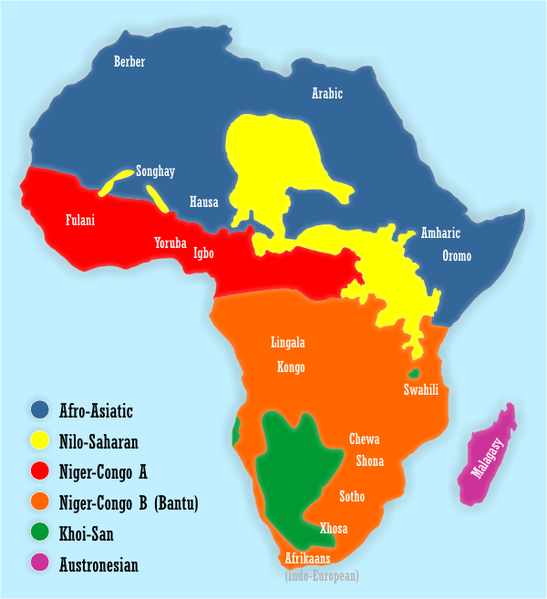

Dylan Violette (CopperViolette)
Psychology Minor and Philosophy Student who’s interested in archaeology, history, and astronomy.
Current Research Interests: The Archaic Era in North America; Long-Distance Trading Across the Americas; Eurasian Prehistory. Current Research Focus: The Eastern Archaic and the Megalithic Builders (10,000 – 1,177 B.C.E.).

Dylan Violette and I decided to blog jointly and will start doing videos together as well. Cory has had to step away from our joint endeavors we did for years, as he has issues he needs to focus on, and my friend Dylan is willing to step in and help me continue making thoughtful videos together.
Our Joint Academia Articles:

While hallucinogens are associated with shamanism, it is alcohol that is associated with paganism.
The Atheist-Humanist-Leftist Revolutionaries Shows in the prehistory series:
Show two: Pre-animism 300,000 years old and animism 100,000 years old: related to “Anarchism and Socialism”
Show tree: Totemism 50,000 years old: related to “Anarchism and Socialism”
Show four: Shamanism 30,000 years old: related to “Anarchism and Socialism”
Show five: Paganism 12,000 years old: related to “Anarchism and Socialism”
Show six: Emergence of hierarchy, sexism, slavery, and the new male god dominance: Paganism 7,000-5,000 years old: related to “Anarchism and Socialism” (Capitalism) (World War 0) Elite and their slaves!
Prehistory: related to “Anarchism and Socialism” the division of labor, power, rights, and recourses: VIDEO
Pre-animism 300,000 years old and animism 100,000 years old: related to “Anarchism and Socialism”: VIDEO
Totemism 50,000 years old: related to “Anarchism and Socialism”: VIDEO
Shamanism 30,000 years old: related to “Anarchism and Socialism”: VIDEO
Paganism 12,000 years old: related to “Anarchism and Socialism” (Pre-Capitalism): VIDEO
Paganism 7,000-5,000 years old: related to “Anarchism and Socialism” (Capitalism) (World War 0) Elite and their slaves: VIEDO
Paganism 5,000 years old: progressed organized religion and the state: related to “Anarchism and Socialism” (Kings and the Rise of the State): VIEDO
Paganism 4,000 years old: related to “Anarchism and Socialism” (First Moralistic gods, then the Origin time of Monotheism): VIEDO
I do not hate simply because I challenge and expose myths or lies any more than others being thought of as loving simply because of the protection and hiding from challenge their favored myths or lies.
The truth is best championed in the sunlight of challenge.
An archaeologist once said to me “Damien religion and culture are very different”
My response, So are you saying that was always that way, such as would you say Native Americans’ cultures are separate from their religions? And do you think it always was the way you believe?
I had said that religion was a cultural product. That is still how I see it and there are other archaeologists that think close to me as well. Gods too are the myths of cultures that did not understand science or the world around them, seeing magic/supernatural everywhere.
I personally think there is a goddess and not enough evidence to support a male god at Çatalhöyük but if there was both a male and female god and goddess then I know the kind of gods they were like Proto-Indo-European mythology.
This series idea was addressed in, Anarchist Teaching as Free Public Education or Free Education in the Public: VIDEO
Our 12 video series: Organized Oppression: Mesopotamian State Force and the Politics of power (9,000-4,000 years ago), is adapted from: The Complete and Concise History of the Sumerians and Early Bronze Age Mesopotamia (7000-2000 BC): https://www.youtube.com/watch?v=szFjxmY7jQA by “History with Cy“
Show #1: Mesopotamian State Force and the Politics of Power (Samarra, Halaf, Ubaid)
Show #2: Mesopotamian State Force and the Politics of Power
Show #3: Mesopotamian State Force and the Politics of Power (Uruk and the First Cities)
Show #4: Mesopotamian State Force and the Politics of Power (First Kings)
Show #5: Mesopotamian State Force and the Politics of Power (Early Dynastic Period)
Show #6: Mesopotamian State Force and the Politics of Power
Show #7: Mesopotamian State Force and the Politics of Power (Sargon and Akkadian Rule)
Show #9: Mesopotamian State Force and the Politics of Power (Gudea of Lagash and Utu-hegal)
Show #12: Mesopotamian State Force and the Politics of Power (Aftermath and Legacy of Sumer)

The “Atheist-Humanist-Leftist Revolutionaries”
Cory Johnston ☭ Ⓐ Atheist Leftist @Skepticallefty & I (Damien Marie AtHope) @AthopeMarie (my YouTube & related blog) are working jointly in atheist, antitheist, antireligionist, antifascist, anarchist, socialist, and humanist endeavors in our videos together, generally, every other Saturday.
Why Does Power Bring Responsibility?
Think, how often is it the powerless that start wars, oppress others, or commit genocide? So, I guess the question is to us all, to ask, how can power not carry responsibility in a humanity concept? I know I see the deep ethical responsibility that if there is power their must be a humanistic responsibility of ethical and empathic stewardship of that power. Will I be brave enough to be kind? Will I possess enough courage to be compassionate? Will my valor reach its height of empathy? I as everyone, earns our justified respect by our actions, that are good, ethical, just, protecting, and kind. Do I have enough self-respect to put my love for humanity’s flushing, over being brought down by some of its bad actors? May we all be the ones doing good actions in the world, to help human flourishing.
I create the world I want to live in, striving for flourishing. Which is not a place but a positive potential involvement and promotion; a life of humanist goal precision. To master oneself, also means mastering positive prosocial behaviors needed for human flourishing. I may have lost a god myth as an atheist, but I am happy to tell you, my friend, it is exactly because of that, leaving the mental terrorizer, god belief, that I truly regained my connected ethical as well as kind humanity.
Cory and I will talk about prehistory and theism, addressing the relevance to atheism, anarchism, and socialism.
At the same time as the rise of the male god, 7,000 years ago, there was also the very time there was the rise of violence, war, and clans to kingdoms, then empires, then states. It is all connected back to 7,000 years ago, and it moved across the world.
Cory Johnston: https://damienmarieathope.com/2021/04/cory-johnston-mind-of-a-skeptical-leftist/?v=32aec8db952d
The Mind of a Skeptical Leftist (YouTube)
Cory Johnston: Mind of a Skeptical Leftist @Skepticallefty
The Mind of a Skeptical Leftist By Cory Johnston: “Promoting critical thinking, social justice, and left-wing politics by covering current events and talking to a variety of people. Cory Johnston has been thoughtfully talking to people and attempting to promote critical thinking, social justice, and left-wing politics.” http://anchor.fm/skepticalleft
Cory needs our support. We rise by helping each other.
Cory Johnston ☭ Ⓐ @Skepticallefty Evidence-based atheist leftist (he/him) Producer, host, and co-host of 4 podcasts @skeptarchy @skpoliticspod and @AthopeMarie
Damien Marie AtHope (“At Hope”) Axiological Atheist, Anti-theist, Anti-religionist, Secular Humanist. Rationalist, Writer, Artist, Poet, Philosopher, Advocate, Activist, Psychology, and Armchair Archaeology/Anthropology/Historian.
Damien is interested in: Freedom, Liberty, Justice, Equality, Ethics, Humanism, Science, Atheism, Antiteism, Antireligionism, Ignosticism, Left-Libertarianism, Anarchism, Socialism, Mutualism, Axiology, Metaphysics, LGBTQI, Philosophy, Advocacy, Activism, Mental Health, Psychology, Archaeology, Social Work, Sexual Rights, Marriage Rights, Woman’s Rights, Gender Rights, Child Rights, Secular Rights, Race Equality, Ageism/Disability Equality, Etc. And a far-leftist, “Anarcho-Humanist.”
I am not a good fit in the atheist movement that is mostly pro-capitalist, I am anti-capitalist. Mostly pro-skeptic, I am a rationalist not valuing skepticism. Mostly pro-agnostic, I am anti-agnostic. Mostly limited to anti-Abrahamic religions, I am an anti-religionist.
Why did Deities FIRST Emerge, and When?
Well, it attaches to my interest in the transition from hunting to herding as for my speculations are that “Hunting Cult” Shamanism (Cosmic Hunt) (hunter and animal spirit focus) becomes “Herding Cult” Paganism (new deity/anthropomorphic divine status spirit being addition focus) in the Middle East 12,000 to 11,000 years ago beginning at and after Kortik Tepe (12,400 to 11,250 years ago) in Turkey on into Tas Tepeler culture sites (around 12,000–9000 years ago: Such as Gobekli Tepe, Karahan Tepe, Sayburc, and Nevali Cori) in Turkey as well as Upper Mesopotamia in general. As domesticated animals (11,000 to 10,000 years ago: Sheep, Goats, and Cows?) are seen before domesticated grains (10,500 to 9,000 years ago? From some of the earliest grain domestication in “Nevali Cori” that dates between 10,400 to 10,100 years ago to “Catal Hoyuk” with cultivated domestic wheat at roughly 9,000 years ago) in the Middle East and are associated with evolving culture. I get it was close to gathering, and both influenced culture, but seeming religion/ritual “especially presented in art” favored animal representations, not grains highlighted in the agricultural revolution. Agriculture influenced paganism (Nevali Cori “origin?” and Catal Hoyuk “evolved?”) is, to me, a further evolution after “Herding Cult” paganism. I try to ground my beliefs/speculations in reason, not wild opinions.
John Hoopes on Facebook asked me: “Did myths about deities emerge from stories about ancestral lineage founders, real heroes and heroines, anthropomorphic interpretations of natural phenomena, dream imagery, a combination of these, or something else?”
My response: Thanks for your question, John. I think hunters in the sky Orion/Big Dipper-related themes in the Cosmic Hunt mythology likely were attached to different groups themselves in a way that could have been deities emerging from stories about ancestral lineage founders’/sky hunters. I think it is likely that the anthropomorphic interpretations of natural phenomena as deities were related but more fully developed in agricultural shifts in early paganism than the move from hunting cult to herding cult that seems to me to relate to human control of animals like Master of Animals, which I see as an evolution of the hunter cult theme where hunters dominate the animal hunted.
Around 10,000 years ago, ideas went into Africa. Around 10,000 to 9,000 years ago, these ideas from the Middle East were in Siberia then moved to China and to the Americas by around 9,000 years ago. Religious ideas also left the Middle East from 9,000 to 8,000 years ago to Europe. Around 8,000 years ago, new ideas got to Ukraine but didn’t spread far. From 8,000 to 7,000 years ago, ideas again entered Africa with evolved beliefs from the Middle East. By 7,000 years ago, evolved deities from the Middle East moved again to Europe and Ukraine. And 7,000 years ago, the Siberian sun god of the sky, with a warrior culture, armed forts, and pre-kurgans, moved from Siberia to Ukraine and then returned to the Middle East around 6,000 years ago, influencing the Sumerian religious ideas. 6,000 to 5,000 years ago, these new Siberian influenced ideas from the Middle East were also in Africa. Then new evolved ideas moved back out of from Ukraine to the East by 5,500 to 5,000 years ago to Siberia, then China, and the Americas. Ideas from Ukraine went into Europe as well. Then, 5,000 to 4,000 years ago, the new ideas, now somewhat evolved again, from Siberia headed back to Europe, and so did ideas from the Middle East. ETC. This is just a rough outline to grasp some of the details, as I feel I understand them. There is a bit more, but this gives a good idea of how complicated it was.
I think the person, snakes, and two birds seen at Körtik Tepe is the oldest known Neolithic archaeological site in Turkey, more than 12,000 years old, were likely related to the Orion constellation as a shamanic figure holding a snake, referencing the use of the Milky Way to communicate with the gods and ancestors, as well as soul travel via the Milky Way. The big snake to me would reference the Milky Way itself and the two birds, either the star Venus and the moon, or some aspect of the sun, and the moon, but the sun aspect was likely not the noon sun by itself, as I see that as gaining prominence at a later date. And I think the other figures, also related to the Orion constellation, either as a deity or a deity of the stars, put Orion there. I assume, as seen at Tell Fekheriye, Syria, 11,000 to 9,000 years old, involving two standing figures on “step stools of power” that by 11,000 years ago were at least two sky deities, such as something similar to both a sky father and a sky mother deity, at this time, related to the stars, or planets (also seen as stars or star-like). But we must remember that planets were seen as star-related in mythology.
High Gods and a Divine Couple (universal mommy and daddy)?
I think high gods started with a divine couple, a sky god (sky father) “Day sky, often the Sun” and a sky goddess (sky mother) “Night sky, often the Noon” around 11,000 years ago or older, associated with pre-pastoralism animal management, early herding, and proto-pastoralism, of big-horned goats, big-horned sheep, both domesticated around 11,000 years ago, and cattle domesticated around 10,000 years ago or a little older, especially so with cattle, the last three. Then, as farming and agriculture grew and the domestication of grains emerged a little after 10,000 to 9,000 years ago, and along came a new Earth goddess (Earth Mother), who then commonly took the place of the older sky goddess (sky mother) as the wife or consort to the sky god (sky father). This younger divine couple, a sky god (sky father) and Earth goddess (Earth Mother), becomes the norm the world over. Spread largely with the spread of farming and agriculture to me.
The myths of (Sky Father) and Earth Mothers in general are found throughout the world, and I think started in the Middle East, with their origins around 11,000 years ago or older. Though totem couple artifacts are seen in Siberia’s Lake Baikal area with the Ancient North Eurasians Mal’ta–Buret’ culture (24,000 years ago) and seem to trace back to at least Russia, above the area between north of the Black Sea and the Caucasus mountains at the Kostenki site 25,000 years ago, a time when Kostenki is related to the eastern Gravettian culture, because the Kostenki site started with Aurignacian culture. I think the couple theme, though it seems to have evidence dating back to at least 25,000 years ago in portable totem pole-like figurines, was not considered deities until they evolved in the Middle East, due to different lifestyles creating a motivation for different thinking, a transition from hunting and gathering to herding and farming.


Damien Marie AtHope (Said as “At” “Hope”)/(Autodidact Polymath but not good at math):
Axiological Atheist, Anti-theist, Anti-religionist, Secular Humanist, Rationalist, Writer, Artist, Jeweler, Poet, “autodidact” Philosopher, schooled in Psychology, and “autodidact” Armchair Archaeology/Anthropology/Pre-Historian (Knowledgeable in the range of: 1 million to 5,000/4,000 years ago). I am an anarchist socialist politically. Reasons for or Types of Atheism
My Website, My Blog, & Short-writing or Quotes, My YouTube, Twitter: @AthopeMarie, and My Email: damien.marie.athope@gmail.com