
Religion is an evolved cultural product and moved in cultural migrations.
Original Cosmology and Death Mythology?
To me, in a Primordial African (70,000 to between 30,000 to 5,000 years ago?) animist mythology thinking the place a dead spirit goes was either to the Above World/Upper World/Heavens/Sky realm (Southeran Africa animism related as early as 100,000 to 80,000 years ago) or stayed in on the Earth realm (Northeastern and Middle East Africa animism related as early as 120,000 to 80,000 years ago).
- Burial evidence of Neanderthals and Homo sapiens sharing culture between 120,000 and 100,000 years ago?
- Emergence and Time of Early Animism in Africa (Eastern and Southern Africa), as well as South African-speaking groups
Cosmic Mythology Evolution?
To me, a basic outline of primordial mythology seems to express that, in the First version, there was only one realm: a connected Heaven and Earth with an axis mundi (the Milky Way running through them. The Second version involved two realms, with a separated Heaven and Earth with an “axis mundi” Milky Way link, and the Third version included three realms of Heaven, Earth, and the Underworld, still with an “axis mundi” Milky Way linking them. Often, the three realms’ “axis mundi” Milky Way linking them is envisioned as a cosmic/World Tree, which has been seen as connected to Tree of Life mythology. However, I see the Tree of Life as a young or small tree or bush, and the World Tree mythology as an old or massively large tree stretching across the three realms of the cosmos. If they are connected, it is that the Tree of Life mythology is more closely tied to creation-themed mythology, while the World Tree mythology represents a later, fully developed cosmos, far removed from early creation themes.
- A Seeming African Origin of the Milky Way Mythology and Its Relatedness to Other Mythology
- Milky Way Mythology: Often a Path to the Afterlife, Souls of the Dead on the Milky Way
- Shamanism Origins 34,000 years ago, and the Origin of Dogs as Tutelary Spirits?
- The Center of the World “Axis Mundi” and/or “Sacred Mountains” Mythology Could Relate to the Altai Mountains, Heart of the Steppe, as well as a hub for Shamanism
- Earth diver, Axis Mundi, and World Turtle Mythology
- Seeming Connections: Totem poles, Ceremonial poles, Spirit poles, Sacred poles, Deity poles, Deities with poles, Pole star, Axis Mundi, Sacred trees, World tree, Maypole, Sun Dance with poles, etc.
- Around 5,000-year-old Shared Idea of the “Tree of Life” Ritual Motif?
“Upper World in animism and shamanism are commonly interpreted as the celestial realm of the sky, a place of high gods, cosmic order, and transcendent wisdom. The Lower World, Central World, and Upper World are all inhabited by spirit-beings. In most traditional cultures past and present, the upper world is regarded as the home of ancestors, light and life, while the underworld is identified with malevolent spirits, darkness, danger, and death.” ref, ref, ref
“High God, is a type of deity/creator found among many peoples of North and South America, Africa, northern Asia, and Australia. The adjective high is primarily a locative term: a High God is conceived as being utterly transcendent, removed from the world that he created. A High God is high in the sense that he lives in or is identified with the sky. Among North American Indians and Central and South Africans, thunder is thought to be the voice of the High God. In Siberia the sun and moon are considered the High God’s eyes. He is connected with food and heaven among American Indians. Though the pattern varies from people to people, the High God usually is conceived as masculine or sexless. He is thought to be the sole creator of heaven and earth. Although he is omnipotent and omniscient, he is thought to have withdrawn from his creation and therefore to be inaccessible to prayer or sacrifice. Generally, no graphic images of him exist, nor does he receive cult worship or appear in the mythology.” ref
“Among the peoples of northern Asia, the universe is full of heavenly bodies peopled by spiritual beings. The world is disk-shaped—saucer-like—Flat Earth and includes several planes of existence. The Earth, or Central World, stands in water held on the back of a colossal creature that may be a turtle, a huge fish, a bull, or a mammoth. The movement of this animal causes earthquakes. The Central World is surrounded by an immense belt that connects it to the Lower World through an umbilicus of sorts; it connects to the Upper World by the Pillar of the World.” ref
Upper World in mythology and Religion:
- “Upper World (Greek), in Greek mythology, the land where people live, as opposed to the Underworld
- Upper World (“Heaven”), in Hungarian mythology, where the gods and good souls live
- Upper World, where the Aiy (benevolent spirits) live, in Yakut mythology
- Urdhva Loka, the upper world, in Jain cosmology
- the Seven Logas or Upper Worlds of Ayyavazhi (a Hindu sect) mythology.” ref
“Tian (天), translated as “Heaven” or the “Upper World” celestial realm, which serves as the elevated home of supreme deities, celestial officers, and immortal beings. Tian is one of the oldest Chinese terms for heaven or the cosmos and is a central concept in Chinese mythology, philosophy, and cosmology. In Taoism and Confucianism, Tian is described in relation to its complementary aspect Dì (地), which is the term for Earth. Together, they were understood to represent the two poles of reality, with Humanity (人, rén) occupying the Earth realm. In some traditions, the sky was also divided into Jiǔ-tiān (nine divisions of heaven”): the central sky and the eight directions. Tian has had multiple meanings or roles attached to it, there are questions of whether it may or may not indicate that the original meaning was ‘deity’ rather than ‘sky’. It was thought of as a supreme power over other gods and humans, a force that could bring order or catastrophe, destiny, a deity, or even in evolved conceptions a holy world or afterlife.” ref
“Tian has been said to link with the Turkic and Mongolian word tengri (“sky,” “heaven,” “deity”), as well as with Tibeto-Burman words such as taleŋ (Adi) and tǎ-lyaŋ (Lepcha), both meaning “sky” or “god.” In Chinese culture, heaven has often been associated with “order,” serving as “the blueprint for creation,” “the mandate by which earthly rulers govern,” and “the standard by which to measure beauty, goodness, and truth.” Tian is a component in many Chinese compounds. Such as, Mandate of Heaven (Tiān-mìng) – a concept of divine legitimacy for Chinese Dynasties. Heavenly Questions (Tiān-wèn) – a section of the Chu Ci. Tiān-zǐ (“Son of Heaven“) – an honorific title for the emperor. All under heaven (Tiān-xià), or Tiān-dì (‘heaven and earth’) – meaning “the world; the universe. In Buddhist cosmology, Tian (天) refers to the heavenly realms (Trāyastriṃśa celestial realm of the devas “deity or god-like being” in Buddhist cosmology) and pure lands (places without the sufferings of samsara and to be beyond the three planes of existence: (tri-loka) appear in the main Indian religions of Hinduism, Buddhism and Jainism). Certain classes of devas are also referred to as Tian.” ref, ref, ref, ref
Evolution of Heaven as Afterlife Mythology?
“Heaven is often described as a “highest place”, the holiest place, a paradise, in contrast to Hell or the Underworld or the “low places”. Another belief is in an axis mundi or world tree which connects the heavens, the terrestrial world, and the underworld. Any place of existence, either of humans, souls or deities, outside the tangible world (Heaven, Hell, or other) is referred to as the otherworld. The ancient Mesopotamians regarded the sky as a series of domes (usually three, but sometimes seven) covering the flat Earth. In ancient Near Eastern cultures in general and in Mesopotamia in particular, humans had little to no access to the divine realm. Heaven and Earth were separated by their very nature; humans could see and be affected by elements of the lower heaven, such as stars and storms, but ordinary mortals could not go to Heaven because it was the abode of the gods alone. In the Epic of Gilgamesh, Gilgamesh says to Enkidu, “Who can go up to heaven, my friend? Only the gods dwell with Shamash forever.” Instead, after a person died, their soul went to Kur (later known as Irkalla), a dark shadowy underworld, located deep below the surface of the earth.” ref
“All souls went to the same afterlife, and a person’s actions during life had no impact on how they would be treated in the world to come. Nonetheless, funerary evidence indicates that some people believed that Inanna had the power to bestow special favors upon her devotees in the afterlife. Despite the separation between heaven and earth, humans sought access to the gods through oracles and omens. The gods were believed to live in Heaven, but also in their temples, which were seen as the channels of communication between Earth and Heaven, which allowed mortal access to the gods. The Ekur temple in Nippur was known as the “Dur-an-ki”, the “mooring rope” of heaven and earth. The ancient Hittites believed that some deities lived in Heaven while others lived in remote places on Earth, such as mountains, where humans had little access. Zoroaster, the Zoroastrian prophet who introduced the Gathas, spoke of the existence of Heaven and Hell. According to the Zoroastrian tradition, Zarathustra lived around 600 BCE, however, many consider the date closer to 900 BCE to as early as 1500 BCE. Historically, the unique features of Zoroastrianism, such as its conception of heaven, hell, angels, monotheism, belief in free will, and the day of judgement, among other concepts, may have influenced other religious and philosophical systems, including the Abrahamic religions, Gnosticism, Northern Buddhism, and Greek philosophy.” ref, ref
“As in other ancient Near Eastern cultures, in the Hebrew Bible, the universe is commonly divided into two realms: heaven (šāmayim) and earth (‘ereṣ). Sometimes a third realm is added: either “sea”, “water under the earth”, or sometimes a vague “land of the dead” that is never described in depth. The God of the Israelites is described as ruling both Heaven and Earth. The structure of heaven itself is not fully described in the Hebrew Bible, but the fact that the Hebrew word šāmayim is plural has been interpreted by scholars as an indication that the ancient Israelites envisioned the heavens as having multiple layers, much like the ancient Mesopotamians. This reading is also supported by the use of the phrase “heaven of heavens” in verses such as Deuteronomy 10:14, 1 Kings 8:27, and 2 Chronicles 2:6. In line with the typical view of most Near Eastern cultures, the Hebrew Bible depicts Heaven as a place that is inaccessible to humans.” ref
“Although some prophets are occasionally granted temporary visionary access to heaven, such as in 1 Kings 22:19–23, Job 1:6–12 and 2:1–6, and Isaiah 6, they hear only God’s deliberations concerning the Earth and learn nothing of what Heaven is like. There is almost no mention in the Hebrew Bible of Heaven as a possible afterlife destination for human beings, who are instead described as “resting” in Sheol (“The underworld, or the unseen world of the dead to which departed spirits go. It was said to be a place of stillness and darkness in the subterranean regions. The state of existence is shadowy and silent, where the inhabitants are in weakened forms having an inactive remnant of humanity, seemingly describing it as a place where both the righteous and the unrighteous dead go, regardless of their moral choices in life.” ref). The only two possible exceptions to this are Enoch, who is described in Genesis 5:24 as having been “taken” by God, and the prophet Elijah, who is described in 2 Kings 2:11 as having ascended to Heaven in a chariot of fire. According to Michael B. Hundley, the text in both of these instances is ambiguous regarding the significance of the actions being described and in neither of these cases does the text explain what happened to the subject afterwards.” ref
“During the period of the Second Temple (c. 515 BCE – CE 70), the Hebrew people lived under the rule of first the Persian Achaemenid Empire, then the Greek kingdoms of the Diadochi, and finally the Roman Empire. Their culture was profoundly influenced by those of the peoples who ruled them. Consequently, their views on existence after death were profoundly shaped by the ideas of the Persians, Greeks, and Romans. By the early first century CE, these two seemingly incompatible ideas were often conflated by Hebrew thinkers. The Hebrews also inherited from the Persians, Greeks, and Romans the idea that the human soul originates in the divine realm and seeks to return there. The idea that a human soul belongs in Heaven and that Earth is merely a temporary abode in which the soul is tested to prove its worthiness became increasingly popular during the Hellenistic period (323–31 BCE). Gradually, some Hebrews began to adopt the idea of Heaven as the eternal home of the righteous dead.” ref
“Descriptions of Heaven in the New Testament are more fully developed than those in the Old Testament, but are still generally vague. As in the Old Testament, in the New Testament God is described as the ruler of Heaven and Earth, but His power over the Earth is challenged by Satan. The Gospels of Mark and Luke speak of the “Kingdom of God” (Ancient Greek: βασιλεία τοῦ θεοῦ; basileía tou theou), while the Gospel of Matthew more commonly uses the term “Kingdom of Heaven” (Ancient Greek: βασιλεία τῶν οὐρανῶν; basileía tōn ouranōn). Both phrases are thought to have the same meaning, but the author of the Gospel of Matthew changed the name “Kingdom of God” to “Kingdom of Heaven” in most instances because it was the more acceptable phrase in his own cultural and religious context in the late first century.” ref
“Modern scholars agree that the Kingdom of God was an essential part of the teachings of the historical Jesus but there is no agreement on what this kingdom was. None of the gospels record Jesus as having explained exactly what the phrase “Kingdom of God” means. The most likely explanation for this apparent omission is that the Kingdom of God was a commonly understood concept that required no explanation. According to Sanders and Casey, Jews in Judea during the early first century believed that God reigns eternally in Heaven, but many also believed that God would eventually establish his kingdom on earth as well. Because God’s Kingdom was believed to be superior to any human kingdom, this meant that God would necessarily drive out the Romans, who ruled Judea, and establish His own direct rule over the Jewish people.” ref
“This belief is referenced in the first petition of the Lord’s Prayer, taught by Jesus to his disciples and recorded in Matthew and Luke 11:2: “Your kingdom come, Your will be done, on earth as it is in heaven.” Traditionally, Christianity has taught that Heaven is the location of the throne of God as well as the holy angels, although this is in varying degrees considered metaphorical. In traditional Christianity, it is considered a state or condition of existence (rather than a particular place somewhere in the cosmos) of the supreme fulfillment of theosis in the beatific vision of the Godhead. In most forms of Christianity, Heaven is also understood as the abode for the redeemed dead in the afterlife, usually a temporary stage before the resurrection of the dead and the saints‘ return to the New Earth. The resurrected Jesus is said to have ascended to Heaven where he now sits at the Right Hand of God and will return to Earth in the Second Coming. Various people have been said to have entered Heaven while still alive, including Enoch, Elijah and Jesus, after his resurrection.” ref
Gates of the Underworld: World Mythologies?
Gates of Hell and Heaven in Christianity?
“The ‘gates of hell’ (Greek: pulai hadou) is a biblical phrase from Matthew 16:18: ‘Jesus says the gates of hell will not prevail.‘ The phrase pulai hadou (gates of hell) is a Jewish expression meaning ‘realm of the dead.” The same two words appear in the Septuagint version of Job 38:17–“Have the gates of death been revealed to you, or have you seen the gates of deep darkness [puloroi de hadou]?” They appear again in Isaiah 38:10–“I said in the middle of my days I must depart; I am consigned to the gates of Sheol [pulais hadou] for the rest of my years”. In both passages, pulai hadou is a euphemism for death. Notice the parallelism in both passages. The first half of each verse clarifies that the second half of the verse is not about hell but about death. The gates of hell represent the passageway from this life to the grave.” ref
“Pearly gates is an informal name for the gateway to Heaven according to some Christian denominations. It is inspired by the description of the New Jerusalem in Revelation 21:21: “The twelve gates were twelve pearls, each gate made of a single pearl.” ref – describing the physical features of the “New Jerusalem”
Rivers in or to the Afterlife?
AI Overview: Mythology across many ancient cultures features sacred or supernatural rivers that mark the boundary between the living world and the realm of the dead. Across global mythologies, the Milky Way is widely envisioned as a celestial river, spirit road, or bridge of souls that guides the dead to the afterlife.
- Mesopotamian Mythology (Hubur): The river of the underworld (Irkalla) that all dead souls must cross.
- Egyptian Mythology (The Duat River): The solar boat of the sun god Ra carries the sun and the souls of the deceased nightly through the winding waters of the Duat, an underworld filled with trials, monsters, and rebirth.
- Hindu Mythology (Vaitarna): A terrifying river of blood, filth, and suffering located at the entrance of Naraka (hell), which sinners must cross while holding a cow’s tail for guidance.
- In Greco-Roman mythology, the domain of Hades (or Pluto) is crossed or surrounded by five principal rivers.
- Norse Mythology (Gjöll): The freezing river Gjöll flows through the icy realm of Niflheim and Hel. It is crossed by the gold-decked Gjallarbrú bridge, guarded by the maiden Móðgúðr.
- Japanese Buddhist Tradition (Sanzu River): The “Three-Crossing River” that the dead must traverse seven days after passing away. The difficulty of the crossing depends on the karma accumulated during life (passing via a bridge, a shallow ford, or a deep, monster-infested churning current).
- Mayan Mythology (K’ich’ich’ ha’ & K’ich’ saq ha’): In the underworld of Xibalba, the Hero Twins must navigate hazardous rivers including a river of blood and a river of pus.
- Aztec Mythology (Apanohuacalhuia): The first of the nine subterranean levels of Mictlán. Souls must cross this wide, turbulent river with the aid of a psychopomp dog (xoloitzcuintle).

Underworld to Hell Evolution of Afterlife Mythology
To me, humanity’s cultural imagining the Afterlife Mythology changed or evolved more than once, not just between going to the Upper world and staying on the Earth (and their different versions) but also including conceptions of the Underworld of soul nonjudgment/no punishment afterlife mythology that changes into Hell with soul judgment/punishment afterlife mythology. In general, an envisaging of the Underworld (typically more neutral than a place of torment; a general afterlife realm for the dead somewhere under the Earth; may have dogs as guardians) and Hell (commonly an afterlife realm of judgment or punishment, often a fiery domain, typically a place of torture and torment, maybe in another supernatural dimension or under the Earth; may have demons as guardians).
“The underworld is the supernatural world of the dead in various religious traditions and myths, located below the world of the living. Chthonic is the technical adjective for things of the underworld. Common features of underworld myths are accounts of living people making journeys to the underworld, often for some heroic purpose. Other myths reinforce traditions that the entrance of souls to the underworld requires a proper observation of ceremony, such as the ancient Greek story of the recently dead Patroclus haunting Achilles until his body could be properly buried for this purpose. People with high social status were dressed and equipped in order to better navigate the underworld. A number of mythologies incorporate the concept of the soul of the deceased making its own journey to the underworld, with the dead needing to be taken across a defining obstacle such as a lake or a river to reach this destination.” ref
“Spirit helpers that guide souls to the Underworld are known as psychopomps (creatures, spirits, angels, demons, or deities in many religions whose responsibility is to escort newly deceased souls from Earth to the afterlife).” ref
“World Tree, a tree that connects the heavens, the earth and the Underworld in a number of spiritual belief systems. Many ancient cultures, including the Maya and Norse traditions, envisioned the World Tree as a physical manifestation of the Milky Way stretching across the night sky. The World Tree serves as a cosmic pillar (axis mundi) whose roots plunge deep into the underworld to anchor the structure of the universe. Structure and Realms: 1. Tree Top “Canopy” (Heavens): The topmost branches reach the sky and house celestial bodies or divine realms. 2. Tree Middle “Trunk” (Earth): The middle section represents the mortal, human world. 3. Tree Bottom “Roots” (Underworld): The lowest roots extend far underground into subterranean realms, springs, or the land of the dead. Using the World Tree as a pathway to the afterlife relies on its role as an axis mundi—a cosmic pillar connecting the underworld, the earthly realm, and the heavens. Scholarship states that many Eurasian mythologies share the motif of the “world tree”, “cosmic tree”, or “Eagle and Serpent Tree”. More specifically, it shows up in “Haitian, Finnish, Lithuanian, Hungarian, Indian, Chinese, Japanese, Norse, Siberian and northern Asian Shamanic folklore”. The World Tree has also been compared to a World Pillar that appears in other traditions and functions as separator between the earth and the skies, upholding the latter. Another representation akin to the World Tree is a separate World Mountain. However, in some stories, the world tree is located atop the world mountain, in a combination of both motifs. A conflict between a serpentine creature and a giant bird (an eagle) occurs in Eurasian mythologies: a hero kills the serpent that menaces a nest of little birds, and their mother repays the favor – a motif comparativist Julien d’Huy dates to the Paleolithic. A parallel story is attested in the traditions of the indigenous peoples of the Americas, where the thunderbird is slotted into the role of the giant bird whose nest is menaced by a “snake-like water monster.” ref, ref, ref, ref, ref
“The World Tree (or axis mundi) mythology is estimated to be between 6,000 and 30,000 years old, depending on how scholars trace attempts to address believed cultural transmission. One speculation is for a Pre-Beringia/Bering Strait crossing: between 15,000 to 30,000 years ago, World Tree (or axis mundi) myth’s origins in Siberia and Central Asia. Another is Proto-Indo-European Reconstruction: between 7,000 to 6,000 years ago, World Tree (or axis mundi) myth’s origins in Pontic-Caspian steppe region spanning modern-day Russia and Ukraine. Lastly, the speculated origins of the World Tree (axis mundi) mythology in Northeast Siberia between 6,000 to 5,000 years ago are deeply intertwined with the dawn of classic Siberian shamanism, climate-driven migrations, and early cosmic mapping. Age is allusive to completely track down and prove conclusively because it is a universal motif found across disparate cultures—including Germanic, Slavic, Siberian, Hindu, and Native American traditions; comparative mythologists use different historical markers to map its origin range. However, having three realms thus an underworld at the time of the Proto-Indo-Europeans or before seems less because Proto-Indo-Europeans did not have a standardized concept of a subterranean “underworld,” but instead envisioned an Otherworld often located in the sky, across the sea, or on a distant island. Specific world trees include Égig érő fa in Hungarian mythology, Ağaç Ana in Turkic mythology, Kenac’ Car in Armenian mythology, Modun in Mongol mythology, Yggdrasil in Norse mythology, Irminsul in Germanic mythology, the oak in Slavic, Finnish and Baltic, Jianmu (Chinese: pinyin: jiànmù) in Chinese mythology, and in Hindu mythology the Ashvattha (a Ficus religiosa).” ref, ref, ref, ref, ref, ref, ref, ref, ref, ref, ref, ref
Examples of a Neutral Underworld as an Envisioned Afterlife Mythology?
“Albanian mythology (Paleo-Balkanic origin; similarities with neighboring Indo-European traditions): Have their origins in pagan beliefs, including in particular the ancestor worship, animism and totemism. Albanian underworld (Ferri) mythology centers around chthonic (earth-derived) demons, vampiric spirits, and the eternal cosmic battle between celestial weather heroes and subterranean water monsters. As well as Kulshedra a massive, multi-headed fire-breathing serpent or dragon-hag tied to water, storms, drought, and the underworld. She represents chaos and is locked in a perpetual conflict with celestial storm-bringers. The “Daughter of the Sun and Moon” legend (E Bija e Hënës dhe e Diellit), and the guard of the gates of the Underworld (the three-headed dog who never sleeps). The supremacy of the deity of the sky – the light side – over that of the underworld – the dark side – is symbolized by the victory of celestial divine heroes against kulshedra, an earthly/chthonic deity or demon originating from darkness. Prende is identified with the cult of Venus and she was worshipped in northern Albania, especially by the Albanian women, until recent times. She features attributes of Aphrodite, Iris, and Helen, as well as Persephone as shown by the etymology of her name. Describing a goddess of the underworld and at the same time a personification of springtime, the Albanian e Bukura e Dheut (“the Beauty of the Earth”) is evidently an epithet of the Albanian equivalent of Persephone.” ref, ref, ref, ref, ref
“Aztec mythology Underworld (Mictlan): Most people who die would travel to Mictlan, although other possibilities exist (see “Other destinations“, below). Mictlan consists of nine distinct levels. The nine regions of Mictlán (also known as Chiconauhmictlán) in Aztec mythology take shape within the Nahua worldview of space and time as parts of a universe composed of living forces. According to Mexica mythology, in the beginning, there were two primordial gods, Omecíhuatl and Ometecuhtli, whose children became the creator gods. The names of these creator gods were Xipetótec, Tezcatlipoca, Quetzalcóatl, and Huitzilopochtli, and they inherited the art of creation from their parents. From the preexisting matter, after 600 years of inactivity, Tezcatlipoca and Quetzalcóatl organized the vertical and horizontal universes, where the horizontal universe was composed of cardinal or hemispheric directions and the vertical universe was composed of two parts, a higher and a lower. The higher part was supported by four gigantic trees, growing in each corner of the Tlalocán (the central part of the universe). Such imagery is also found in the idea of a world tree, such as Yggdrasil in Norse mythology, Jian Mu in Chinese mythology or the Ashvattha fig in Hindu mythology. These trees impeded the joining of the Overworld (the higher world) and the Underworld (the lower world) to Tlaltícpac (the earth). The journey from the first level to the ninth is difficult and takes four years, but the dead are aided by the psychopomp, Xolotl. The dead must pass many challenges, such as crossing a mountain range where the mountains crash into each other, a field with wind that blows flesh-scraping knives, and a river of blood with fearsome jaguars and snakes. Mictlan is believed to be ruled by King Mictlantecuhtli (“Lord of the Underworld”) and his wife, Mictecacihuatl (“Lady of the Underworld”). Unlike many Western concepts of the afterlife, Mictlan was not a place of punishment or torture based on moral “sins.” Instead, it was a neutral, albeit grim and shadowy, resting place for the vast majority of people who died of ordinary causes (such as old age or common illnesses). In addition to Mictlan, the dead could also go to other destinations. Warriors who died in battle and those who died as a sacrifice went east and accompanied the sun during the morning. Women who died in childbirth went to the west and accompanied the sun when it set in the evening. People who died of drowning — or from other causes that were linked to the rain god Tlaloc, such as certain diseases and lightning — went to a paradise called Tlalocan.” ref, ref
“Mesopotamian religion Underworld (Irkalla): Known in Sumerian as Kur, Irkalla, Kukku, Arali, or Kigal, and in Akkadian as Erṣetu), was the lowermost part of the ancient near eastern cosmos, roughly parallel to the region known as Tartarus from early Greek cosmology. It was described as a dark, dreary cavern located deep below the ground, where inhabitants were believed to continue “a transpositional version of life on earth”. The only food or drink was dry dust, but family members of the deceased would pour sacred mineral libations from the earth for them to drink. In the Sumerian underworld, it was initially believed that there was no final judgement of the deceased and the dead were neither punished nor rewarded for their deeds in life. The Sumerians had a large number of different names which they applied to the underworld, including Arali, Irkalla, Kukku, Kur, Kigal, and Ganzir.” ref, ref
“All of these terms were later borrowed into Akkadian. The rest of the time, the underworld was simply known by words meaning “earth” or “sand”, including the terms Kur and Ki in Sumerian and the word erṣetu in Akkadian. When used in reference to the underworld, the word Kur usually means “ground”, but sometimes this meaning is conflated with another possible meaning of the word Kur as “mountain”. The cuneiform sign for Kur was written ideographically with the cuneiform sign 𒆳, a pictograph of a mountain. Sometimes the underworld is called the “land of no return”, the “desert”, or the “lower world”. The most common name for the earth and the underworld in Akkadian is erṣetu, but other names for the underworld include: ammatu, arali / arallû, bīt ddumuzi (“House of Dumuzi“), danninu, erṣetu la târi (“Earth of No Return”), ganzer / kanisurra, ḫaštu, irkalla, kiūru, kukkû (“Darkness”), kurnugû (“Earth of No Return”), lammu, mātu šaplītu, and qaqqaru.” ref
“All souls went to the same afterlife, and a person’s actions during life had no effect on how the person would be treated in the world to come. Unlike in the ancient Egyptian afterlife, there was no process of judgement or evaluation for the deceased; they merely appeared before Ereshkigal, who would pronounce them dead, and their names would be recorded by the scribal goddess Geshtinanna. The souls in Kur were believed to eat nothing but dry dust and family members of the deceased would ritually pour libations into the dead person’s grave through a clay pipe, thereby allowing the dead to drink. For this reason, it was considered essential to have as many offspring as possible so that one’s descendants could continue to provide libations for the dead person to drink for many years. Those who had died without descendants would suffer the most in the underworld, because they would have nothing to drink at all, and were believed to haunt the living. Sometimes the dead are described as naked or clothed in feathers like birds. Ancient Mesopotamians had the belief that the afterlife was a shadow version of life on earth.” ref
“In a Sumerian myth called “In Those Distant Days,” the fate of the dead in the underworld is described in detail. After the hero Bilgamesh (Akkadian: Gilgamesh) drops two toys into the underworld, his servant Enkidu goes there to find them. Enkidu is given a long list of rules he must follow to avoid attracting attention, similar to the myth of Ishtar’s descent into the underworld. After breaking all the rules, he has to be rescued by the sun god Shamash, as he descends underground every night to rise again in the east the following morning. Enkidu describes the fate of different people in the underworld. Initially, people are described according to the number of children they had and who can perform libations and food offerings for them. Nonetheless, there are assumptions according to which treasures in wealthy graves had been intended as offerings for Utu and the Anunnaki, so that the deceased would receive special favors in the underworld. During the Third Dynasty of Ur (c. 2112 – c. 2004 BCE), it was believed that a person’s treatment in the afterlife depended on how they were buried; those that had been given sumptuous burials would be treated well, but those who had been given poor burials would fare poorly. Those who did not receive a proper burial, such as those who had died in fires and whose bodies had been burned or those who died alone in the desert, would have no existence in the underworld at all, but would simply cease to exist. The Sumerians believed that, for the highly privileged, music could alleviate the bleak conditions of the underworld.” ref
“A staircase led down to the gates of the underworld. The underworld itself is usually located deeper below ground than the Abzu, the body of freshwater which the ancient Mesopotamians believed lay deep beneath the earth. In other, conflicting traditions, however, it seems to be located at a remote and inaccessible location on Earth, possibly somewhere in the far west. This alternate tradition is hinted at by the fact that the underworld is sometimes called “desert” and by the fact that actual rivers located far away from Sumer are sometimes referred to as the “river of the underworld”. The underworld was believed to have seven gates, through which a soul needed to pass. All seven gates were protected by bolts. The god Neti was the gatekeeper. At night, the Mesopotamian sun-god Utu (known as Shamash in Akkadian) descended into the underworld to illuminate the darkness, judge the dead, and journey toward the eastern gates for sunrise, mirroring the nightly solar voyages of Atum and Ra in Egyptian mythology. Despite Utu’s typical high status, it is agreed that the role of the sun and deities representing it in Mesopotamian religion was not comparable to that known from ancient Egyptian religion.” ref, ref, ref, ref
“Common epithets characterize Utu as a “youth” (Sumerian šul, Akkadian eṭlu) and “hero” (Sumerian ursaĝ, Akkadian qarrādu). As a representation of the sun, he was believed to travel every day through the sky from east to west, and at night in the opposite direction through AN.ŠAG4, a “nether sky” located directly above the underworld, though the notion of a night journey only developed later, and in sources from the third millennium BCE Utu usually rests at night. One Sumerian literary work refers to Utu (also known as Shamash in Akkadian) illuminating the underworld and dispensing judgement there and Shamash Hymn 31 (BWL 126) states that Utu serves as a judge of the dead in the underworld alongside the malku, kusu, and the Anunnaki. On his way through the underworld, Utu was believed to pass through the garden of the sun-god, which contained trees that bore precious gems as fruit. The Sumerian hymn Inanna and Utu contains an etiological myth in which Utu’s sister Inanna begs her brother Utu to take her to Kur, so that she may taste the fruit of a tree that grows there, which will reveal to her all the secrets of sex. Utu complies and, in Kur, Inanna tastes the fruit and becomes knowledgeable of sex.” ref, ref
“Utu was also the primary god of justice, presumably because due to traveling through the sky every day he was believed to see everything that happened in the world. He could be assisted in this role by his father Nanna, his sister Inanna, and various minor judge deities. At least in the third millennium BCE, Ishtaran was regarded as a divine judge equal in rank to Utu, and a fragment of a myth from Ebla mentions a divine tribunal in which they both partake alongside Idlurugu, a river god also known for his association with justice and judgment who represented ordeal by water. A hymn to Utu states that Idlurugu cannot give judgment without his presence. As an extension of his role as a divine judge, Utu could be associated with the underworld, though this connection is not attested before the Old Babylonian period. In exorcisms, he could be implored to help with bringing restless ghosts to the land of the dead. In this capacity he could be associated with the deified legendary king Gilgamesh, commonly portrayed in a similar role.” ref
“The ancient Mesopotamian underworld starts as a neutral dark place for all dead; with no demons, torment, or torture but then adds judgment, punishment, demons, with a potential of torment, and/or torture. The transformation of Kur (also known as Irkalla or Erṣetu) from a bleak but morally neutral “House of Dust” into a realm that accommodated judgment and demonic torment reflects thousands of years of shifting cultural, political, and religious anxieties. In the earliest Sumerian traditions (circa 3000–2000 BCE), death was the ultimate, indiscriminate leveler. The underworld was not a place of punishment, but a shadowy continuation of earthly life located deep beneath the earth. There was no divine evaluation of a person’s virtues or sins. Kings, priests, criminals, and beggars all went to the exact same place and shared the same fate. The ancient Mesopotamians also believed that the underworld was home to many demons, which are sometimes referred to as “offspring of arali“. These demons could sometimes leave the underworld and terrorize mortals on earth. One class of demons that were believed to reside in the underworld were known as galla; their primary purpose appears to have been to drag unfortunate mortals back to Kur. They are frequently referenced in magical texts, and some texts describe them as being seven in number. Several extant poems describe the galla dragging the god Dumuzid into the underworld. Like other demons, however, galla could also be benevolent and, in a hymn from King Gudea of Lagash (c. 2144 – 2124 BCE), a minor god named Ig-alima is described as “the great galla of Girsu“. Demons had no cult in Mesopotamian religious practice since demons “know no food, know no drink, eat no flour offering and drink no libation.” ref, ref, ref
Ancient Egyptian religion Underworld (Aaru, Duat, Neter-khertet, Amenti): “The Egyptian conception of the underworld did start as a relatively neutral place, and in its final, late-period evolutions, it became more universalized—but in between, it featured one of the most intense systems of moral judgment in human history. In the Old Kingdom (c. 2686–2181 BCE), the afterlife was not a place of moral judgment or punishment for the average person. The underworld (Duat: a dark subterranean realm that not only houses the deceased, but a variety of deities, such as Osiris, Anubis, Thoth, Horus, and Maat in various forms) was a perilous, magical geography filled with monsters and gates, but entering it wasn’t based on being “good” or “bad.” In this early era, a true cosmic afterlife was primarily reserved for the Pharaoh. Regular citizens hoped to survive as spirits (akhs) near their tombs, but there was no grand trial where sins were punished. However, in the Middle & New Kingdoms things evolved, adding the Weighing of the Heart (Strict Afterlife Judgment). This is the era that contradicts your premise. During the Middle Kingdom (2055 to 1650 BCE) and reaching its peak in the New Kingdom (1550–1077 BCE), the underworld became completely centered around strict moral judgment and brutal punishment. Egyptians believed that the world was imbued with magic and so was every living thing upon it. When humans were created, that magic took the form of the soul, an eternal force which resided in and with every human. The concept of the soul and the parts which encompass it has varied from the Old Kingdom to the New Kingdom, at times changing from one dynasty to another, from five parts to more. A dead person’s heart was weighed against the feather of Ma’at (truth and justice). If you lived a wicked life, your heart was heavy, and it was immediately devoured by the monster Ammit. This meant “the second death”—complete obliteration from existence, which Egyptians feared above all else. The Duat is not equivalent to the conceptions of Hell in the Abrahamic religions, in which souls are condemned with fiery torment. The absolute punishment for the wicked, in ancient Egyptian thought, was the denial of an afterlife to the deceased, ceasing to exist in the intellectual form seen through the devouring of the heart by Ammit. Many of the Egyptian gods played roles in guiding the souls of the dead through the afterlife. Egyptian religious doctrines included three afterlife ideologies: belief in an underworld, eternal life, and rebirth of the soul. The underworld, also known as the Duat, had only one entrance that could be reached by traveling through the tomb of the deceased.” ref, ref, ref, ref, ref, ref
“Buddhism Underworld (Naraka also Niraya): usually referred to as “hell” (or “hell realm”) or “purgatory“. Another term used for the concept of hell in earlier writings is niraya (Pali and Sanskrit). In Cambodia, Naraka was part of Buddhist cosmology and indeed also a Khmer word (នរក; norok) for hell. The Narakas of Buddhism are closely related to Diyu, the hell in Chinese mythology. A naraka differs from the concept of hell in Christianity in two respects: firstly, beings are not sent to Naraka as the result of a divine judgment or punishment; secondly, the length of a being’s stay in a naraka is not eternal, though it is usually incomprehensibly long. Dating the idea of hell within Buddhist tradition proves to be difficult, since ideas were orally transmitted until about 100 BCE when the Pali canon was written down in Ceylon. However, the concept of hell played a significant role since the early stage of Buddhism, since it is closely connected to the concept of karma. Karma determines into which realm a soul is born. Good actions cause someone to be reborn in heaven or as a human on earth. Bad actions cause one to be reborn in “bad states” (duggati) like animals, hungry ghosts, and as a hell resident. There is barely dharma within these existences and a rebirth in a higher realm is very difficult. In the Kathāvatthu, one of the earliest Buddhist writings written around 250—100 BCE, a version of hell is fully developed, described, and discussed. It is probably one of the earliest religious works offering a presentation of hell imagery. It discusses related topics such as whether hell is the result of particular bad actions or the committed bad actions themselves. It further argues that hell is a state experienced in another life as the result of a bad action, connecting hell to the concept of the retribution for bad actions and compensation for good actions.” ref, ref
“Celtic mythology Underworld (Annwn, Mag Mell, Dubnos): In Celtic mythology, the underworld is not a gloomy place of punishment, but rather a vibrant, parallel supernatural realm known as the Otherworld. Annwn in Welsh mythology is a world of delights and eternal youth where disease is absent and food is ever-abundant. Middle Welsh sources suggest that the term was recognized as meaning “very deep” in medieval times. The appearance of a form antumnos on an ancient Gaulish curse tablet, which means an (‘other’) + tumnos (‘world’) suggests that the original term may have been *ande-dubnos, a common Gallo-Brittonic word that literally meant ‘underworld’. The compound *ande-dubnos is derived from Proto-Celtic ande– (‘below’) attached to *dubnos (‘deep’, ‘world’). The latter also underlies Old Irish domain (‘deep’) and domun (‘world’). In Irish mythology, Mag Mell (modern spelling: Magh Meall, meaning ‘delightful plain’) is one of the names for the Celtic Otherworld, a mythical realm achievable through death and/or glory. Unlike the underworld in some mythologies, Mag Mell was a pleasurable paradise, identified as either an island far to the west of Ireland or a kingdom beneath the ocean. However, Mag Mell was similar to the fields of Elysium in Greek mythology, and similarly was accessible only to a select few. Furthermore, Mag Mell, like the numerous other mystical islands said to be off the coast of Ireland, was never explicitly stated in any surviving mythological account to be an afterlife. Rather, it is usually portrayed as a paradise populated by deities, which is occasionally visited by some adventurous mortals.” ref, ref, ref, ref, ref
“Chinese folk religion / Taoism Underworld (Míngjiè, Huángquán, or Diyu): Centuries before Buddhism reached China, there was already a word for where the dead went: Huangquan” (‘Yellow Spring’ underground realm of the dead or the underworld). It’s recorded as early as the Zuo Zhuan, a commentary text from around the 4th century BCE — making it one of the oldest layers of Chinese afterlife belief, long before judges, courts, or karma entered the picture. In this older layer, Huangquan is simpler: a shadowy underground realm beneath the earth, not yet organized into a bureaucracy of punishment. That changes once Buddhism arrives. Indian Buddhist cosmology introduced Yama, lord of the dead and judge of souls, along with the concept of Naraka — a realm of karmic punishment. As this idea moved into China, it fused with native Daoist and folk beliefs about Huangquan, Mount Tai as a seat of the dead, and the City God (Chénghuángshén) who kept records of the living. By the Tang dynasty (618–907 CE), Chinese tradition had done something distinctly Chinese to the idea: it turned a single judge into a bureaucracy. One Yama became ten kings, each running a separate court, because — as more than one modern retelling of the myth notes — a civilization this large clearly wasn’t going to be judged efficiently by just one official. Diyu (Hell) was the new evolved Chinese underworld. And unlike the afterlife most Western readers picture, it isn’t a place you stay forever. It’s a place you pass through. You die. Nothing goes dark. Instead, a local spirit is already waiting for you — the guardian of the ground you died on — and he has your file. He walks you to a gate. Beyond it is not fire and a single devil with a pitchfork. It’s an office. Ten of them, actually. Each with its own king, its own department, its own specific punishments for specific sins — and its own paperwork. Diyu (‘earth prison’ an Underworld realm of judgment and punishment) is the realm of the dead or “hell” in Chinese mythology. Diyu is typically depicted as a subterranean maze with various levels and chambers, to which souls are taken after death to atone for the sins they committed when they were alive. It is loosely based on a combination of the Buddhist concept of Naraka, traditional Chinese beliefs about the afterlife, and a variety of popular expansions and reinterpretations of these two traditions. The concept parallels purgatory in certain Christian denominations. According to ideas from Taoism, Buddhism, and traditional Chinese folk religion, Diyu is a purgatory that serves to punish and renew spirits in preparation for reincarnation.” ref, ref, ref
“Christian mythology Underworld (Hell, Tartarus, Purgatory, Hades): with the Devil and demons as well as for sinners.” ref
“Estonian mythology/Finnish mythology Underworld (Toonela/Tuonela): Tuonela is the realm of the dead or the Underworld in Finnish mythology. Similar realms appear in most Finnic cultural traditions, including among Karelian, Ingrian, and Estonian beliefs. In Estonian mythology, the realm is called Toonela or Manala. Tuonela can also refer to a grave or a graveyard. According to the Finnish pagan faith, the fate of good and bad people is the same and the dead wander the afterlife as shadow-like ghosts.” ref, ref
“Fijian mythology Underworld (Burotu, Murimuria): In the Melanesian mythology of Fiji, Burotu is the paradise–underworld. Newly dead souls are judged by Degei, and a few go to Burotu. The rest go to Murimuria. Bulu, said to be the name for the Fijian ‘land of death’ Pulotu, a similar concept in the Polynesian cultures of Tonga and Samoa. In pre-Christian Fijian mythology, Murimuria is part of the underworld. According to Fijian religion, after a man dies, his soul is brought over a stretch of water by a ferryman, and has to face many dangers on the other side by going through the Path of the Souls (Sala Ni Yalo). For unmarried men, there seems to be no chance of surviving this path, because even if they escape the Great Woman, they would be killed by the monster Nangganangga, since no one ever got away from it, while married men could survive, if they withstand the Pandanus tree and the armed giant Killer of Souls. The survivors are judged by the god called Degei. Those who had the favor of Degei (chiefs with great wealth and many wives, who were destroyers of many towns, killers of many enemies and rulers over a powerful people) are instructed not to try to cross the lake. These go to Burotu. The rest inevitably try to cross the lake by a boat that always capsizes. They eventually sink to the bottom, Murimuria, and are rewarded and punished appropriately. Murimuria is considered a place neither of happiness, nor of unhappiness. As such, residence in Murimuria is characterized by both punishment and peace. Some of the souls in Murimuria are punished for sins committed while alive. However, these sins do not necessarily correspond to Christian notions of sin. Those who did not kill an enemy in life are forced to pound muck with clubs, which is regarded as the most degrading punishment. Those who did not have their ears pierced are forced to carry upon their shoulders forever logs of wood upon which tapa cloth is beaten out, jeered by all who see them. Women who were not tattooed are chased by ghosts who use sharp shells to tear at their skin or turn them into bread. Anyone who has done an act which displeases the gods are laid in rows on their faces and turned into taro beds.” ref, ref, ref
“Georgian mythology Underworld (Kveskneli, suleti): Kveskneli – the lowest world or underworld, inhabited by the ogres, serpents, and demons. Black is the color of Kveskneli. Devi – Many-headed ogres whose heads can regenerate if any of them are cut off (compare Lernaean Hydra). These malevolent giants live in the underworld or in remote mountains, where they hoard treasure troves and keep their captives. Matsil – Evil spirits from the underworld that plague travelers and hunters. Folk tales refer to Kopala’s efforts to defeat them. Paskunji – A phoenix-like being who helps heroes and humans. He lives in the underworld, and fights the serpents there. Heroes summoned him by burning one of his feathers, and he could transport them to other places and heal wounds and illnesses. In certain other myths, by contrast, paskunjis are portrayed as being hostile to humans and to have persecuted them. Bwdis Mtserlebi– One or several deities that recorded and decided human fate; similar to Greek moiras or Roman parcae/fatae. They lived in suleti or the world of dead souls, and constantly consulted the Book of Fates (bedis tsigni). They supervised every human life and notified the god of the dead (suletis ghmerti) when a person’s lifetime was over. Special heralds (mgrebrebi) then were sent to take human’s soul and bring it to the underworld.” ref, ref, ref
“Germanic religion Underworld (Hel, Náströnd, Niflhel): Hel is a realm for those who do not die in battle, including those who pass from old age, illness, or other natural causes. It is often depicted as a cold, misty, and shadowy place rather than a fiery one. Hel, the goddess, presides over this underworld, and unlike in Christian hell, her role is more administrative than punitive. Hel’s realm is not depicted as a place of eternal torment, but more as a neutral afterlife. Hel (Old Norse: [hel) is an afterlife location in Norse mythology and paganism. It is ruled over by a being of the same name, Hel. In late Icelandic sources, varying descriptions of Hel are given and various figures are described as being buried with items that will facilitate their journey to Hel after their death. In the Poetic Edda, Brynhildr‘s trip to Hel after her death is described and Odin, while alive, also visits Hel upon his horse Sleipnir. In the Prose Edda, Baldr goes to Hel on his death and subsequently Hermóðr uses Sleipnir to attempt to retrieve him. The Old Norse feminine proper noun Hel is identical to the name of the entity that presides over the realm. All forms ultimately derive from the reconstructed Proto-Germanic feminine noun *haljō (‘concealed place, the underworld’). In turn, the Proto-Germanic form derives from the o-grade form of the Proto-Indo-European root *kel-, *kol-: ‘to cover, conceal, save’. The term is etymologically related to Modern English hall and therefore also Valhalla, an afterlife ‘hall of the slain’ in Norse Mythology. Hall and its numerous Germanic cognates derive from Proto-Germanic *hallō ‘covered place, hall’, from Proto-Indo-European *kol-. In Grímnismál stanza 31, Hel is listed as existing beneath one of the three roots of the world tree Yggdrasil. In Norse mythology, Náströnd (“Corpse Shore”) is a place in Hel where Níðhöggr devours the dead souls of the dishonorable. It is the afterlife for those guilty of murder, and severe oath-breaking. Niflhel (“Misty Hel“; Nifel meaning fog) is a location in Norse mythology which appears in the eddic poems Vafþrúðnismál and Baldrs draumar, and also in Snorri Sturluson‘s Gylfaginning. According to Snorri Sturluson’s work, Niflhel could be interpreted as the lowest level of Hel, but Niflhel and sometimes Hel are conflated with the concept of Niflheim, a term which originates with Sturluson.” ref, ref, ref, ref, ref
“Greek religion Underworld (Elysium, Asphodel Meadows, Tartarus): Elysium (there is no punishment in Elysium), otherwise known as the Elysian Fields, Elysian Plains or Elysian Realm, is a conception of the afterlife that developed over time and was maintained by some Greek religious and philosophical sects and cults. It was initially separated from the Greek underworld—the realm of Hades. Only mortals related to the gods and other heroes could be admitted past the river Styx. Later, the conception of who could enter was expanded to include those chosen by the gods, the righteous, and the heroic. They would remain at the Elysian Fields after death, to live a blessed and happy afterlife, and indulge in whatever they had enjoyed in life. In Greek mythology, the Asphodel Meadows or Asphodel Fields are a section of the ancient Greek underworld where most ordinary souls are sent to live after death. They are one of the three main divisions of the underworld along with Elysium, where righteous souls are rewarded, and Tartarus, where vicious souls are punished. In his Odyssey, Homer locates the Fields of Asphodel close to the Land of dreams. He further refers to them as the dwelling place of the spirits of men who have abandoned their earthly labors. In Greek mythology, Tartarus (Tartarus is both a deity and a place in the underworld) is the deep abyss that is used as a dungeon of torment and suffering for the wicked and as the prison for the Titans. Tartarus is the place where, according to Plato‘s Gorgias (400 BCE), souls are judged after death and where the wicked received divine punishment. Tartarus appears in early Greek cosmology, such as in Hesiod‘s Theogony, where the personified Tartarus is described as one of the earliest beings to exist, alongside Chaos and Gaia (Earth).” ref, ref, ref, ref
“Hinduism Underworld (Patala, Naraka or Yamaloka): In Hindu cosmology, the universe is divided into the three worlds: Svarga, Bhumi or Martya (earth/mortal plane) and Patala (gross dimensions, the underworld). Patala is composed of seven realms/dimensions or lokas, the seventh and lowest of them is also called Patala or Nāga-loka, the region of the Nagas. In Indian religions, Patala (that which is below the feet), denotes the subterranean realms of the universe – which are located under the earthly dimension. Patala is often translated as underworld or netherworld. Patala is described as more beautiful than Svarga (subtle dimensions, loosely translated as heaven). Patala is described as filled with splendid jewels, beautiful groves and lakes. The Bhagavata Purana calls the seven lower regions bila-svargas (“subterranean heavens”) and they are regarded as planets or planetary systems below the earth. These regions are described as being more opulent than the upper heavenly regions of the universe. The life here is of pleasure, wealth and luxury, with no distress. The asura architect Maya has constructed palaces, temples, houses, yards and hotels for foreigners, with jewels. The natural beauty of Patala is said to surpass that of Svarga. There is no sunlight in the lower realms, but the darkness is dissipated by the shining of the jewels that the residents of Patala wear. There is no old age, no sweat, no disease in Patala.” ref, ref
“Naraka, also called Yamaloka, is the Hindu name of Hell, where sinners are tormented after death. It is also the abode of Yama, the god of Death. It is described as located in the south of the universe and beneath the earth. The number and names of hells, as well as the type of sinners sent to a particular hell, varies from text to text; however, many scriptures describe 28 hells. After death, messengers of Yama called Yamadutas bring all beings to the court of Yama, where he weighs the virtues and the vices of the being and passes a judgement, sending the virtuous to Svarga (heaven) and the sinners to one of the hells. The stay in Svarga or Naraka is generally described as temporary. After the quantum of punishment is over, the souls are reborn as lower, or higher beings as per their merits (the exception being Hindu philosopher Madhvacharya, who believes in eternal damnation of the Tamo-yogyas in Andhantamas). In Cambodia, Naraka is part of Hinduism and is also a Khmer word for hell. The Bhagavata Purana describes Naraka as beneath the earth, similar to the western Hell, between the seven realms of the underworld (Patala) and the Garbhodaka Ocean, the lowest, most southerly region of the universe. In Hindu cosmology both Patala and Naraka concepts evolved parallel to each other across centuries of scriptural development. In the Vedic Period (1500 to 500 BCE, Earliest Texts), neither a multi-layered Patala nor a detailed Naraka existed initially. In the Rigveda only vaguely refers to a “dark, bottomless pit” where the wicked or chaotic forces are cast. In the Atharvaveda introduces a basic concept of an afterlife destination of darkness for wrongdoers. At this stage, afterlife rewards focused more on Pitru Loka (the realm of ancestors). In the Brahmana & Epics Period (900 to 600 BCE), the Shatapatha Brahmana is the first to elaborate on the actual pain and existential suffering of Naraka. In the Mahabharata and Ramayana, Naraka begins to take shape as a distinct destination overseen by Yama. In the Puranic Period (3rd and 10th centuries CE, The Final Evolution), the Puranas (like the Bhagavata Purana and Vishnu Purana) mathematically mapped out the universe. They fixed Patala as seven structural subterranean dimensions directly beneath the Earth (Atala, Vitala, Sutal, Talatal, Mahatal, Rasatal, and Patala). They then established Naraka as a completely separate zone (often numbering 21 or 28 distinct hellish realms) located deep in the southern universe, completely apart from the luxury cities of Patala.” ref, ref, ref, ref, ref, ref, ref, ref, ref
“Hungarian mythology Underworld (Alvilág/Alsó világ): Amongst the modern religions, Hungarian mythology is closest to the cosmology of Uralic peoples. In Hungarian myth, the world is divided into three spheres: the first is the Upper World (Felső világ), the home of the gods; the second is the Middle World (Középső világ) or world we know, and finally the underworld (Alsó világ). In the center of the world stands a tall tree: the World Tree / Tree of Life (Világfa/Életfa). Its foliage is the Upper World, and the Turul bird dwells on top of it. The Middle World is located at its trunk and the underworld is around its roots. In some stories, the tree has fruit: the golden apples. In Hinduism and Buddhism, there are very similar beliefs in the Trailokya and Kalpavriksha. The Underworld is the home of Ördög, creator of everything bad for humans: for example, annoying animals such as fleas, lice, and flies. It is uncertain whether the underworld was regarded as a place of punishment or not, since the naming of it as Pokol (Hell) developed after Christianization. Ördög (god): Meaning “Devil”, He was the god of death, diseases and wicked things, and ruled the underworld realm. Research about the ancient Hungarian religion has led to the conclusion that it was a form of Tengrism, the ethnic Turko-Mongol religion which was probably picked up from the Turkic peoples the Magyar came into contact with, but was influenced by Hindus and Buddhists whom the Huns and Avars had encountered and converted to during their westward migration. Another theory ties the religion to that of the Huns and Scythians of Central Asia who converted to Buddhism in the largely Buddhist populace of Central Asia of those times due to similar or even identical legends to the Hungarian origin myth.” ref, ref
“Islamic mythology Underworld (Jahannam, Sijjin – for sinners): In Islam, Jahannam is the place of punishment for evildoers in the Akhirah / afterlife, or hell. Sijjīn Netherworld, Underworld, Chthonian World) is, in Islamic belief, either a prison, vehement torment or straitened circumstances at the bottom of Jahannam or hell, below the earth (compare Greek Tartarus), which is mentioned in Quran 83:7. Sijjin is also considered to be a place for the souls of disbelievers until resurrection. The universal resurrection of the dead at the end of the world is a standard eschatological belief in the Abrahamic religions. Like some forms of the Abrahamic religions, the Dharmic religions also include belief in resurrection and/or reincarnation. Hinduism and Buddhism center on saṃsāra and rebirth rather than resurrection, though both preserve stories of the dead restored to life. In pre-Islamic Arabia, the dominant religious practice was that of Arab polytheism, which was based on the veneration of various deities and spirits. Arabian polytheism was not a single organized religion, but a range of local and regional cults with their own deities, spirits, cultic places, objects, ritual specialists (like diviners) and cultic practices (like pilgrimage). Before the spread of Judaism, Christianity and other monotheistic traditions in late antiquity, most inhabitants of Arabia appear to have practiced some form of polytheism. Until about the fourth century, almost all inhabitants of Arabia practiced polytheistic religions at which point pre-Islamic Arabian monotheism had begun to spread. From the fourth to sixth centuries, Jewish, Christian, and other monotheistic populations developed. Until recent decades, it was believed that polytheism remained the dominant belief system in pre-Islamic Arabia, but recent trends suggest that henotheism or monotheism was dominant from the fourth century onwards. Pre-Islamic Arabian religion lacked a unified, explicit concept of a moral afterlife or an organized underworld, instead focusing heavily on mortal finality while practicing specific burial customs that hinted at a continued shadow-existence.” ref, ref, ref, ref, ref, ref
“Jainism Underworld (Naraka, Adho Loka “the lower world”): Naraka is the realm of existence in Jain cosmology characterized by great suffering. These realms are situated in the seven lower levels (adho lok) of the universe while the human abode of Jambudvip is in the middle (madhya lok) and the heavenly realms exist above (urdhva loka). Naraka is usually translated into English as “hell” or “purgatory“. The Khmer language for “Naraka” is norok and is also a term used in Jainism and other Indian religions in Cambodia. Naraka differs from the hells of Abrahamic religions as souls are not sent to Naraka as the result of a divine judgment and punishment. Furthermore, the length of a being’s stay in a Naraka is not eternal, though it is usually very long—measured in billions of years. A soul is reborn into a Naraka as a direct result of their previous karma (actions of body, speech and mind), and resides there for a finite length of time until their karma has achieved its full result. After their karma is used up, they may be reborn in one of the higher worlds as the result of an earlier karma that had not yet ripened. The hellish beings (Nārakī) are a type of soul which reside in these various hells. They are born in hells by sudden manifestation. The hellish beings each possess a vaikriya body (protean body which can transform itself and take various forms). They have a fixed life span in the respective hells where they reside. The minimum life span of hellish beings in the first to seventh hellish grounds is 10,000 years. According to Jain scripture, Tattvarthasutra, following are the causes for birth in hell, Killing or causing pain with intense passion, Excessive attachment to things and worldly pleasure with constantly indulging in cruel and violent acts, and Vowless/Ruleless and unrestrained life.” ref, ref
“Shinto Underworld (Yomi, Ne-no-Kuni, Jigoku): Yomi or Yomi-no-kuni is the Japanese word for the land of the dead (World of Darkness). According to Shinto mythology as related in Kojiki, this is where the dead go in the afterlife. Once one has eaten at the hearth of Yomi it is (mostly) impossible to return to the land of the living. This realm of the dead shares geographical continuity with the living world, where souls “remain eternally in Japan.” Yomi cannot be thought of as a paradise to which one would aspire, nor can it appropriately be described as a hell in which one suffers retribution for past deeds; rather, all deceased carry on a gloomy and shadowy existence in perpetuity, regardless of their behavior in life. Some “suggest that the concept of a life after death was not a familiar one to the ancient Japanese and it only took form with the introduction of Buddhism from China in the 6th century CE.” Scholars believe that the image of Yomi was derived from ancient Japanese tombs in which corpses were left for some time to decompose, an image believed to reflect the structure of the burial mounds (kofun) of the late Kofun period. The kanji that are sometimes used to transcribe Yomi actually refer to the mythological Chinese realm of the dead called Diyu or Huángquán (“Yellow Springs”), which appears in Chinese texts as early as the eighth century BCE. This dark and vaguely defined realm was believed to be located beneath the earth, but it was not until the Han dynasty that the Chinese had a clearly articulated conception of an underworld below in contrast with a heavenly realm above. Ne-no-kuni (“Land of roots; Land of origin”) or Soko-tsu-ne-no-kuni (“Distant land of roots”) in the Nihon Shoki, also called Ne-no-kata-su-kuni (“Borderland of roots”) or Haha-no-kuni (“Land of my late mother”) in the Kojiki, refers to a netherworld in Japanese mythology. It is sometimes considered to be identical to Yomi, another netherworld in the myths as well as Tokoyo no kuni (“Eternal land”). There is no clear consensus on the relationship between these three realms. Jigoku/Diyu (traditional Chinese: ‘earth prison’) is the realm of the dead or “hell” in Chinese mythology.” ref, ref, ref, ref
“Jewish mythology Underworld (Sheol, Abaddon, Tehom (in Kabbalah), Tophet, Tzoah Rotachat, Dudael): Judaism traditionally focuses on earthly life and actions (this-worldliness), but its conception of the afterlife has significantly evolved over millennia from vague shadows to concrete ideas of resurrection, soul immortality, and the world to come. The early books of the Hebrew Bible (Torah) contain no clear commands or descriptions regarding heaven, hell, or an active afterlife. The dead went to Sheol, a neutral, shadowy subterranean pit. Both the righteous and the wicked went to Sheol, where existence was described as silent and cut off from God’s active praise. Second Temple Period: Diversification and Hellenistic Influence. National tragedies, persecutions, and the martyrdom of the righteous under foreign rulers (like the Seleucids) created a deep need to explain why good people suffered without immediate earthly reward. Texts 2 Maccabees and 1 Enoch introduced the physical resurrection of the dead to vindicate martyrs. There arose sectarian divisions in afterlife thinking. The Sadducees rejected any afterlife, resurrection, or spirit immortality, insisting God rewards and punishes strictly in mortal life. The Pharisees championed the belief in the resurrection of the dead and divine judgment in an afterlife (Olam Ha-Ba). The Essenes adopted a Greek-influenced dualism, viewing the physical body as temporary and the virtuous soul as immortal and liberated upon death. Whereas in Rabbinic literature (Talmud and Midrash) there was a fusing of the concepts of soul immortality immediately after death with a future physical resurrection during the Messianic age. Gehenna transformed from a geographical valley into a temporary, purgatorial space of purification (up to 12 months) for misdeeds, while Gan Eden (Garden of Eden) became paradise for the righteous. Medieval rationalists like Maimonides focused heavily on the spiritual immortality of the intellect/soul while sparking fierce controversy over whether physical bodily resurrection would literally occur. Kabbalistic texts like the Zohar popularized Gilgul (reincarnation) as a mechanism for souls to complete unfinished spiritual missions. Contemporary Judaism maintains minimal rigid dogma regarding the afterlife, allowing for a wide spectrum of personal belief. Many modern streams emphasize living on through one’s legacy, children, and the enduring impact of good deeds rather than focusing on celestial real estate. Traditional frameworks upholding the resurrection of the dead and a spiritual World to Come (Olam Ha-Ba) remain actively maintained in daily liturgy (such as the Amidah prayer).” ref, ref, ref, ref, ref, ref, ref, ref, ref, ref, ref, ref
“Korean mythology Underworld (Jiok): Korean mythology is the group of myths told by historical and modern Koreans. There are two types: the written, literary mythology in traditional histories, mostly about the founding monarchs of various historical kingdoms, and the much larger and more diverse oral mythology, mostly narratives sung by shamans or priestesses (mansin) in rituals invoking the gods and which are still considered sacred today. The narratives of Korean shamanism, the country’s indigenous religion, feature a diverse array of both gods and humans. The shamanic mythology is divided into five regional traditions, with each region having original narratives, as well as distinctive versions of pan-Korean narratives. The mythological tradition of southern Jeju Island is especially divergent. The two narratives found in all but one region respectively are the Jeseok bon-puri, featuring a girl who in most versions is impregnated by a supernaturally potent Buddhist priest—who was probably originally a sky god—and gives birth to triplets who themselves become gods; and the Princess Bari, about a princess who is abandoned by her father for being a girl and who later resurrects her dead parents with the flower of life. The shamanic narratives are works of oral literature sung during gut—the Korean term for large-scale shamanic rituals—which constitute the mythology of Korean shamanism, the indigenous polytheistic religion of the country. Korean hell mythology, known as Jiok within the broader afterworld concept of Jeoseung, is a bureaucratic, karma-based underworld heavily influenced by Korean Buddhism and folk shamanism. Ten Kings (Siwang), who act as judges evaluating a soul’s earthly karma.” ref, ref, ref, ref, ref, ref
“Latvian mythology Underworld (Aizsaule): Latvian mythology, for the most part, likely stem from Proto-Indo-European practices and the later folk traditions of the Latvian people and pre-Christian Baltic mythology. The world of the dead is called Aizsaule or Viņsaule (“The Other Sun”, where the sun goes at night). It is related to various mother deities (or perhaps one referred to by several names): Zemes māte (Mother of Earth), sometimes referred to as “Nāve”, literally meaning “death”; Veļu māte (Mother of Wraiths), Kapu māte (Mother of Graves), and Smilšu māte (Mother of Sand). Zemes mate is portrayed as wearing a long robe in all white and occasionally has a scythe or sickle. Jods (not to be confused with velni), the equivalent to Satan, is a being usually portrayed as being on par with other deities. Unlike velni, Jods is purely evil. He is said to have taken part in the creation of the world and living things. Jods steals people away to take them to his world. In this he is similar to other spirits who kill people, including Veļi who were believed to sometimes come back to claim a life of a person they knew in their lifetime. The dead – called Veļi (also Iļģi, Dieviņi, Pauri) – were considered to be visiting their old homes during autumn from Miķeļi (September 29) to Mārtiņi (November 10). The Proto-Indo-Europeans did not have a standardized concept of a subterranean “underworld,” but instead envisioned an Otherworld often located in the sky, across the sea, or on a distant island.” ref, ref, ref, ref, ref
“Malay mythology/Indonesian mythology Underworld (Alam Ghaib “The unseen realm”): Alam Ghaib is translated literally as “The Unseen Realm” and is often listed as the equivalent term for the “underworld” or spiritual plane in regional folklore. In traditional regional belief systems, Alam Ghaib functions similarly to an “underworld,” parallel dimension, or spirit world. It is believed to coexist right alongside the physical world, partitioned by an invisible barrier. The supernatural realm refers to the subtle realm, the unseen dimension or realm that has different properties from this physical realm. This includes the afterlife, the realm of subtle beings, and in the present day it is like the realm of the 4th, 5th, 6th dimensions, and so on. In ancient times, this supernatural realm included spirits such as jinn, goblins, belaan or (saka), and the like. Nowadays, the supernatural also includes different dimensions, for example the 4th dimension. The unseen realm cannot be seen with human senses, although there are a few humans who claim to have senses that are strong enough (powerful) to be able to see and communicate with the unseen realm. Due to changing times, different terms are used. For example, in the past, people believed in elves who lived in the supernatural realm. Nowadays, elves are also called aliens who live in different dimensions. Some also say that ordinary humans can meet with inhabitants of the unseen world but must have a pure heart and no evil intentions because it can be said that all inhabitants of the unseen world have clean hearts, therefore they must purify their hearts in order to meet with the unseen world. There are many interesting facts about the unseen world. If it is real, then there are many more mysterious things in the world that we can explore together. See you again, Assalamualaikum.” ref, ref, ref, ref
“Māori mythology Underworld (Hawaiki, Rarohenga, Rangi Tuarea, Te Toi-o-nga-Ranga, Uranga-o-te-rā): There are many mythologies that describe the creation of humankind. One such legend of humanity’s origins is which Tāne Mahuta created the first woman, Hineahuone, from soil and with her became the father of Hinetītama. Tāne Mahuta concealed Hinetītama’s parentage to her, and together they had children. Upon the realisation that he is her father, she flees to the underworld and renames herself to Hinenuitepō, becoming the goddess (atua) of night, death, and the underworld, where she receives the souls of their descendants. Māui’s failure to conquer death, Māui followed his mother to the underworld but baptismal rituals for Māui’s birth were done improperly, making it certain that he would die, so Māui decided to overcome death by facing his ancestress Hinenuitepō, who ends up crushing him to death. Hawaiki (also rendered as ʻAvaiki in the Cook Islands, Hawaiki in Māori, Savaiʻi in Samoan, Havaiʻi in Tahitian, Hawaiʻi in Hawaiian) is, in Polynesian folklore, the original home of the Polynesians, before dispersal across Polynesia. It also features as the underworld in many Māori stories. Rarohenga is the subterranean realm where spirits of the deceased dwell after death, according to Māori oral tradition. The underworld is ruled by Hine-nui-te-pō, the goddess of death and night.” ref, ref, ref, ref
“Melanesian mythology/includes Fijian Underworld (Bulu, Burotu, Murimuria, Nabagatai, Tuma): Melanesian mythology features various concepts for the land of the dead, some of which are located underground or associated with specific subterranean or remote geographical realms.” ref, ref
“Philippine mythology Underworld (Kasanaan): The first things in existence were the sky world and the underworld (the underworld is guarded by the giant dog, Lobo). Peoples on each side fought. A man from the underworld hit the sun god with an arrow; the sun god afterwards pushed up the sky world and pushed down the underworld, and then created the Earth. The upperworld and underworld each have seven tiers, but only three are identifiable. The middle world is saucer-shaped, as is the sky. The sky world and the underworld were once close to each other. This changed after a war between the two sides where a man from the underworld hit the sun god with an arrow. The sun god moved the two worlds apart, establishing a gap between. Earth was later established as the middle world. The underworld has two realms, Maca (where the spirits of good mortals go) and Kasanaan (where the spirits of sinful mortals go). Deities dwell in the underworld, notably Sitan and his four agents. Batala is a reappearing mountain realm located in the middle world that is filled with the sacred tigmamanukan omen creatures. The earth world and the underworld are opposites – night in the earth world is day in the underworld and vice versa. Rivers flow backward in the underworld, from sea to mountains, and rice is always eaten cold. Like most myths (or religions) in the world, the concept of realms focuses on Earth, heaven, and hell. These concepts are present in Philippine myth. The Philippine concept of heaven may locate it in the underworld, while hell may be located in the sky world. These differences stem from cultural diffusion and cultural parallelism. The underworld is called Gimokudan, where spirits with heavy misdeeds are engulfed by flames, while those with little misdeeds find their bodies covered with sores as they lie in an acid that burns like lemon juice. An underworld sub-realm called Banua Mebuyan, near a black river, is reserved for children who died at their mother’s breast. These souls are nourished by the many-breasted goddess Mebuyan. Children’s souls who graduate from Banua Mebuyan go to another realm to join souls dead of disease. All souls pass through Banua Mebuyan before going to Gimokudan. Another underworld realm is dedicated to those slain by swords or spears, where scars stay with the soul and plants are the color of blood.” ref, ref
“Polynesian mythology Underworld Avaiki “Samoa, Hawaii, Cook Islands”, Bulotu “Tonga and Samoa”, Iva, Lua-o-Milu “Hawaiian”, Nga- Atua, Pulotu “Samoan, Tongan, Fijian”, Rangi Tuarea, Te Toi-o-nga-Ranga, Uranga-o-Te-Ra “Māori”): In Polynesian mythology, the underworld generally serves as the land of the dead, though specific names and descriptions vary greatly across different island cultures. Because Polynesia spans a massive triangle of the Pacific Ocean, each island group developed its own distinct traditions for the afterlife, often picturing the realm of spirits beneath the earth, inside caves, or across the ocean.” ref, ref
“Roman mythology Underworld (Orcus, Inferi Di, Avernus): Orcus was a god of the underworld in Roman mythology. As with Hades, the name of the god was also used for the underworld itself. His origins are disputed: some scholars regard him as a native Roman underworld deity, others as derived from Etruscan or Greek tradition, his name being borrowed from the near-homophone Horkos (Ancient Greek “oath”), the son of Eris who punished broken oaths, an association that led ancient scholars to describe Orcus himself as a punisher of perjurers. In time his figure merged with those of Dis Pater and Pluto. The di inferi or dii inferi (Latin, “the gods below”) were a shadowy collective of ancient Roman deities associated with death and the underworld. The epithet inferi is also given to the mysterious Manes, a collective of ancestral spirits. The most likely origin of the word Manes is from manus or manis (more often in Latin as its antonym immanis), meaning “good” or “kindly,” which was a euphemistic way to speak of the inferi so as to avert their potential to harm or cause fear. Avernus was an ancient name for a volcanic crater near Cumae (Cuma), Italy, in the region of Campania west of Naples. Avernus was believed to be the entrance to the underworld, and is portrayed as such in the Aeneid of Virgil. According to tradition, all birds flying over the lake were destined to fall dead, hence the lake’s name was transferred to Greek as Ἄορνος (λίμνη) Áornos (límnē)‚ or ‘birdless (lake)’. This was likely due to the toxic fumes that the mouths of the crater gave off into the atmosphere. In later times, the word was simply an alternative name for the underworld.” ref, ref, ref, ref
“Romanian mythology Underworld (Tărâmul Celălalt): Romanian folklore and mythology preserve deep archaic motifs that trace directly back to the reconstructed belief systems of the Proto-Indo-European mythology. In comparative mythology, the reconstructed Proto-Indo-European Otherworld is envisioned primarily as a peaceful, paradisiacal realm rather than a grim underworld. The Other Realm is a mythological notion, indicating – in the conception of double worlds (parallel universes) – the transhuman or parahuman universe, less often the infernal world. In a broad sense, the Other Realm (always a chthonic notion) is never the sky, with the abode of the solar or atmospheric gods: on the contrary, only the underworld, sometimes a territory not necessarily underground, but not even surface; only in this sense, the Inferno (Hades, Yudu, Chi-Xibalba, Sheol) can sometimes be the other realm. In general mythology there are myths of hidden realms either underground or in Para-terrestrial worlds, the former being reached by initiatory paths, the latter by magic or miraculous means. The first category includes Agarttha, a mythical underground settlement beloved especially by theosophists; the other includes fabulous realms, primarily those accessible through relativistic time translation (for example, the place where Youth without Age is found). In a special sense, found especially in the folkloric mythology of fantastic fairy tales and abundantly in Romanian epic folklore, perhaps drawing from a Dacian source, the Other Realm is also the interior of the hidden mountain where Zalmoxis retreated, namely Mount Kogaionon. In Romanian mythological folklore, there are anonymous places (conventionally determined as the Other World), where fabulous animals and birds rule , sometimes a kite , sometimes the Master Bird, or there are Para-terrestrial and parahuman places with special attributes: Ionică Făt-Frumos, after reaching a mountain peak where only at noon a few rays of sunlight arrived, being “the end of this world”, enters the “mouth of a dark valley whirlpool” and after a long walk, seeing “deep below him a small target of light”, approaches the source of the light: “a mill with a single wheel that was spinning terribly”; other realms are either suspended quasi-aerially (“Calu-Gastru monastery, in a straw it rests and in a hair it hangs”), or terrestrial, but strictly initiatory (Alba Monastery, from “the pebbles of the black sea”, built by the Holy Sun, with these landmarks: “Neither wide nor too wide / Without encompassing the whole world, / Nor high nor too high, / Without with the tower high in the clouds”).” ref, ref, ref, ref
“Slavic mythology Underworld (Nav, Vyraj): The cosmology of ancient Slavic religion, which is preserved in contemporary Slavic folk-religion, is visualized as a three-tiered vertical structure, or “world tree“, as is common in some other Indo-European religions. At the top there is the heavenly plane, symbolized by birds, the sun and the moon; the middle plane is that of earthly humanity, symbolized by bees and men; at the bottom of the structure there is the netherworld, symbolized by snakes and beavers, and by the chthonic god Veles. The scholar Jiří Dynda studied the figure of Triglav (literally “the Three-Headed One”) and Svetovid, which are widely attested in archaeological testimonies, as the respectively three-headed and four-headed representations of the same axis mundi, of the same supreme god. Triglav itself was connected to the symbols of the tree and the mountain, which are other common symbols of the axis mundi, and in this quality he was a summus deus (a sum of all things), as recorded by Ebbo (c. 775–851). Triglav represents the vertical interconnection of the three worlds, reflected by the three social functions studied by Dumézil: sacerdotal, martial and economic. Ebbo himself documented that the Triglav was seen as embodying the connection and mediation between Heaven, Earth and the underworld. The Triglav also represents the three dimensions of time, mythologically rendered in the figure of a three-stranded rope. Triglav is Perun in the heavenly plane, Svetovid in the centre from which the horizontal four directions unfold, and Veles the psychopomp in the underworld. Nav is a phrase used to denote the souls of the dead in Slavic mythology. The singular form (Nav or Nawia) is also used as a name for an underworld, over which Veles exercises custody—it is often interpreted as another name for the underground variant of the Vyraj (heaven or paradise). The words nawia, nav and its other variants are most likely derived from the Proto-Slavic *navь-, meaning “corpse”, “deceased. Iriy/Vyrai is a mythical place in Slavic mythology where “birds fly for the winter and souls go after death” that is sometimes identified with paradise. Spring is believed to have arrived on Earth from Vyrai. According to Andrzej Szyjewski, initially the Early Slavs believed in only one Vyrai, connected to the deity known as Rod—it was apparently located far away beyond the sea, at the end of the Milky Way. According to folkloristic fables, the gates of Vyrai were guarded by Veles, who sometimes took the animal form of a raróg, grasping in its claws the keys to the otherworlds. It was often imagined as a garden beyond an iron gate that barred the living from entering, located in the crown of the cosmic tree. Whereas the branches were said to be nested by the birds, who were usually identified as human souls.” ref, ref, ref, ref
“Turko-Mongol Underworld (Tamağ): Turko-Mongol mythology relates to features Tengrist and Shamanist strata of belief along with many other social and cultural constructs related to the nomadic and warrior way of life of Turkic and Mongol peoples in ancient times. The oldest recorded belief-system of the Turks is named Tengrism. It is attested by the oldest available sources known from the inscriptions of the Kül-Tegin-Stele, which also mentions the three potentials Sky (täŋri), Earth (Yer), and human (kişi), characteristically for these beliefs. Turko-Mongol mythology is essentially polytheistic but became more monotheistic during the imperial period among the ruling class, and was centered around the worship of Tengri, the omnipresent Sky God. The words Tengri and Sky were synonyms and is maybe personification of the universe. Kök Tengri is the first of the primordial deities in the religion of the early Turkic people. The World Tree or Tree of Life is a central symbol in Turkic mythology, and may have its origin in Central Asia. The tree of life connects the upper world, middle world and underworld. It is also imagined as the “white creator lord” (yryn-al-tojon). After the Turks started to migrate and leave Central Asia and encounter monotheistic religions, Tengrism was modified from its pagan/polytheistic origins, with only two of the original gods remaining: Tengri, representing goodness and Uçmag (a place like heaven), while Erlik represents evil and hell. Ancient Turks believed that Tam is underground. Tamag/Tam is the name of hell in Tengrism and Turkic mythology. It is the place where criminals go to be punished after they die. There are several depictions of Tamag, but the common point in almost all views is about the fire. Erlik Khan is the deity ruling hell and punishes the all people. Further, there is another entity named Tami Han who is governing Tam in Khakasian lore. It was believed that the people in Tam would be brought to the third floor of the sky after they had served their imprisonment in Tam. Tamag is the opposite of Uçmag (heaven). According to the beliefs of the Tuvans (a Turkic ethnic group indigenous to Siberia), the earth has three lowers, and beneath them are 18 layers of hell-fires (Tamas).” ref, ref, ref
“Zoroastrianism Underworld (Duzakh): Duzakh is Hell in the Iranian mythology. The word was dao‘aηúha in the Avestan and dušokh in Middle Persian. In Zoroastrianism, Duzakh is described as a deep well that is dark, stinky, and extremely narrow. The smallest of the xrafstars (harmful creatures in Zoroastrian mythology) are “as big as mountains” and “all devour and destroy the souls of the damned”. It is there that happens the most horrible punishments and tortures adapted to the sins committed by the damned. There is much emphasis on sexual crimes, but also on other actions disapproved of by Mazdean ethics. Duzakh is firstly the residence of Ahriman, the demons, and the drujes (“deceit, falsehood”). All atmospheric calamities are associated with it: snow, cold, hail, rain, burning heat. Duzakh is used as a word for Hell in many modern languages including Persian, Pashto, Kurdish, Balochi, Turkmen, Uzbek, Bengali, Punjabi, and Hindi-Urdu. The word for Hell in Georgian, Dzjodzjokheti, is of Persian origin. Zoroastrianism, thinking evolved historically Henotheism or hierarchical polytheism with ethical dualism to Monotheism. Opinions vary among scholars as to whether Zoroastrianism is monotheistic, polytheistic, henotheistic, or a combination of all three. The Gathas, hymns of Zoroaster’s Avesta, introduced monotheistic ideas to Persia, while through the Yashts and Yasna, mentions are made of polytheism and earlier creeds. The Vedas and the Avesta have both served researchers as important resources in discovering early Proto-Indo-Iranian religious beliefs and ideas, from which the later indigenous religions of the Iranian and Indo-Aryan peoples evolved. Ancient Iranian religion was a set of ancient beliefs and practices of the Iranian peoples before the rise of Zoroastrianism. The religion closest to it was the historical Vedic religion that was practiced during the Vedic period. The major deities worshipped were Ahura Mazda and Mithra from Iran to Rome, but Atar was also worshipped, as names of kings and common public showing devotion to these three exist in most cases. Some sects, the precursors of the Magi, also worshipped Ahura Mazda, the chief of the Ahuras. With the rise of Zoroaster and his new, reformatory religion, Ahura Mazda became the principal deity, while the Daevas were relegated to the background. Many of the attributes and commandments of Varuna, called Fahrana in Median times, were later attributed to Ahura Mazda by Zoroaster. The Iranian peoples emerged as a separate branch of the Indo-Iranians in the 2nd millennium BCE, during which they came to dominate the Eurasian Steppe and the Persian Plateau. Their religion is derived from Iranian religions, and therefore shares many similarities with the Vedic religion of India. The understanding of the underworld and the land of the dead in Ancient Iranian religion underwent one of the most radical shifts in religious history. It evolved from a grim, undifferentiated subterranean twilight (similar to Mesopotamian and Greek concepts) into a highly moralized cosmic battleground that birthed the modern Western concepts of Heaven, Hell, and Purgatory. Zoroastrianism is sometimes credited with being the first monotheistic religion in history, antedating that of the Israelites and leaving a lasting and profound imprint on Second Temple Judaism and, through it, on later monotheistic religions such as early Christianity and Islam. There are clear commonalities and similarities between Zoroastrianism, Judaism and Christianity, such as: monotheism, dualism (i.e., a robust notion of a Devil—but with a positive appraisal of material creation), symbolism of the divine, heaven(s) and hell(s), angels and demons, eschatology and final judgment, a messianic figure and the idea of a savior, a holy spirit, concern with ritual purity, an idealization of wisdom and righteousness, and other doctrines, symbols, practices, and religious features. According to Mary Boyce, “Zoroaster was thus the first to teach the doctrines of an individual judgement, Heaven and Hell, the future resurrection of the body, the general last judgement, and life everlasting for the reunited soul and body. These doctrines were to become familiar articles of faith to much of mankind, through borrowing by Judaism, Christianity and Islam; yet it is in Zoroastrianism itself that they have their fullest logical coherence. Since Zoroaster insisted both on the goodness of material creation, and hence of the physical body, and on the unwavering impartiality of divine justice.” ref, ref, ref, ref, ref, ref
Underworld In Siberian Cultures
Siberian Mythology and Cosmology, in general: “In addressing Siberia, we are referring to a vast region in northern Asia, stretching from the Ural Mountains in the west to the Pacific Ocean in the east. To the north lies the Arctic Ocean; to the south lie Mongolia, China, and Central Asia. Traditionally, Siberians had varied and evolved views of the world but commonly were people lived was seen as the middle/Earth realm in a series of three, five, or seven worlds that were stacked one on top of the other. As in many belief systems, the realms above belonged to good gods and spirits, those below to evil ones. A tree connected the worlds of Siberian myths in the same way that the World Tree Yggdrasill (pronounced IG-druh-sil) linked realms in Norse mythology. The tree’s roots and branches extended into all levels. The devil or chief evil spirit in Siberian mythology was named Erlik. He was sometimes said to have been a human who helped in the creation of the earth but then turned against Ulgan, the creator god. Other times Erlik was said to rule the dead, and his evil spirits brought him the souls of sinners.” ref
“Shamans held a central role in Siberian religion and mythology. They were believed to travel between worlds by climbing the World Tree or by flying, and they communicated with the spirit world through ceremonies and trances. The healing magic of shamans involved finding or curing the lost or damaged souls of sick people. Many Siberian myths deal with powerful shamans. The Buriat people of the Lake Baikal region told of Morgon-Kara, who were believed to be able to bring the dead back to life. This angered the lord of the dead, who complained to the high god of heaven. The idea of rebirth is also found in the myths of the Siberian people. The high god tested the shaman by sealing a man’s soul in a bottle. Riding his magic drum into the spirit universe, Morgon-Kara found the soul in the botde. Turning himself into a wasp, he stung the high god’s forehead. The startled god released the trapped soul, and the shaman carried it down to earth. Animals appear in many myths, sometimes as the ancestors or mates of humans. The Yukaghir people, for example, told of an ancestral hero who was the offspring of a man who spent the winter in the cave of a female bear.” ref
“Siberian mythology, which includes the beliefs and myths of a number of different peoples, has many variations on the story of creation. In one, the gods Chagan-Shukuty and Otshirvani came down from heaven to find the world covered with water. Otshirvani sat on a frog or turtle while Chagan-Shukuty dove repeatedly to the bottom, bringing up a bit of mud each time. The gods piled the mud on the back of the animal, which eventually sank into the water, leaving only the earth on the surface. Siberian tradition includes myths about a great flood and a hero who saved his family. In one version, the creator god Ulgan told a man named Nama to build a boat. Into the boat Nama brought his wife, his three sons, some other people, and some animals. The boat saved them all from the flood, and they lived on the earth after it dried out. Years later Nama was close to death. His wife told him that if he killed all the animals and people he had saved in his boat, he would become king of the dead in the afterlife. Nama’s son argued that the killing would be a sin, so Nama killed his wife instead and took the virtuous son to heaven, where he became a constellation of stars.” ref
“Uralic (Finnish, Karelian): 3 tiers, world tree/pillar; Underworld/Lower World of animals, ancestors, 1st place of the dead and 2nd place of the dead, taken above by migratory birds on the Milky Way. (Khanty, Mansi): Souls of dead first go to Underworld/Lower World, where they live their life backwards. Then migratory Birds take the souls up to the Upper World Father. After this they may return to Earth and reincarnate. (Nenet, Enet): Shaman journeys to Lower World on Reindeer, fights its evil spirits who cause disease and dead live as in middle world. The spring of the world’s river is in the north at the cold ‘sea of the dead’ (Underworld). (Nganasan): Shaman is psychopomp, as Polar Bear assists souls to other side via the sea; soul goes to Lower World, then master of souls, reincarnates (Returning via sea is a return to origins, womb-water origins?).” ref
“Uralic (Sel’kup): (South Sel’kup) Ob’ River mouth is portal to Lower World; headwaters > Upper World; Middle World river is earthy continuation of Milky Way (‘the stony river’). An island in the sea the land of the ancestors; Lower World river goes to the sea of the dead. (North Sel’kup) Milky Way is smoke or sparks of hearth fire of Celestial Old Woman who lives at highest Upper World layer, ‘the night rainbow (bridge)’ keeping away and blocking the way against every evil that comes at night. (Sel’kup) Air burial rite; transition to world of spirits 2-3 days, during which a soul revisits places visited in life; way to Lower World down and to west; souls live as in life; grave goods torn, broken or ruined. (South Sel’kup) Souls after death ascend, some turn into stars, some into birds. (North Sel’kup) soul had 2 parts, ‘the great soul’ ruled all the souls in the body, dwelt in the head or heart; the ‘free soul’ (‘soul which has left the person’) settled in a cult tribal storehouse with spirits of kin; a wooden-effigy twin held it; the ( ‘a living shadow’), the shadow soul after death lived under the ground; (North Sel’kup) the vital soul, evil spirit takes it to Lower World upon death; = ‘free soul; or it moves into a Bear and continues to live on earth; Mammoth-Bear guards land of the dead near portal to Lower World. Souls travel to roots of World Tree, up to the sky in form of a Spider from there reincarnate. Every morning Celestial Mother sent souls on tips of sunrays (‘ray’, ‘soul’) down to people. A tree or river fork is where different worlds interact; a tree fork was placed on the grave of shamans. A sea of bloody water described for shamanic travels. Dog as a guardian of the land of the dead.” ref
“Ket people (“A Yeniseian-speaking people in Siberia; closely related to other Indigenous people of Siberia and Indigenous peoples of the Americas, The Ket language has been linked to the Na-Dené languages of North America in the Dené–Yeniseian language family.” ref): Every person possesses 7 spirits, of which most essential is the (water-wind; ‘soul’), which can only animate a human being or a Bear (a lost human relative). When a person died, his water-wind-‘soul’ passed into Sky or Lower World, in state of limbo awaiting reincarnation. A tree fork was placed on the graves. Dog and Reindeer sacrifices; buried their dead in the earth, sometimes dogs were also killed and placed with the deceased. Ket mythology is the mythology of the Kets, which includes legends, fairy tales, data related to shamanic rituals and other religious ideas. The Ket religious and mythological system is a hierarchy in which six levels are distinguished. The connection between the levels is carried out with the help of plots in which characters of different levels participate. The first (highest) level of Ket mythology includes only one mythological character – the upper god Eś (Eş, which is translated into English as ‘sky’ and ‘god’ or ‘deified sky’). The characters of the second level include the personification of the evil principle, the mistress of the underworld Hosedem, who has several parallel names in Ket: Хоşеdæm, Хоşijdæm, Hosejdam, etc. and is translated as “mother of Hosij”. Khosedem sends bad weather, troubles and damage, pestilence, as well as death and illness of people, devouring their souls – uļwej. According to some legends, Khosedem lives in the ground, according to others – on a rock on the northern island at the mouth of the Yenisey. The third level includes the characters-heroes of the epic. Doh and Albe are the first cultural heroes of the Kets, who confront Khosedem. Albe acts as the first person or even a participant in the act of creation of the world, while Doh lived later, as evidenced by the story of his death, separated from the time of the narrator by a gap of 300 years. The fourth level includes spirits – embodiments of earthly nature. This includes earth and water spirits Dotethem, Lyutys, Kai-gus, Ul-gus and others. All these creatures live in forests and rivers and are capable of causing harm to humans, although they do not always actively strive to do so. Another class of this level includes objects that make up the system of human protection and the well-being of his home. A separate class of this level includes natural objects – animals: first of all, the bear, as well as the loon as a bird of the lower world, the eagle as a bird of the upper world, the swan, the deer, the beaver, the burbot. A special class is represented by celestial objects: the moon, the sun, some stars and constellations. In this case, the Big Dipper and Orion are depicted as animals (like an elk and a deer) and are adjacent to the previous class. Another class within this level is the hostile to the Kets “non-Kets”: Evenks, Yuraks, Russians. The last class of this level consists of characters who may have previously belonged to higher levels. The fifth level is represented by shamans. Shamanism in Ket mythology is associated with the reincarnation of a shaman, explained by the inhabitation of spirits. These spirits themselves can be considered as objects of the fourth level. Shamans can differ in the strength of their shamanic abilities (the difference between great shamans and lesser shamans). The main character of the sixth level is the person himself. However, just as a shaman becomes a shaman only after the spirits enter him, a person becomes an object of this level only after the main (seventh) soul enters him – uļwej, which accompanies the person throughout his life. In Ket mythology, the underworld is structured into seven layers similar to the sacred sky above, the underworld consists of seven distinct underground levels.” ref, ref, ref
“Yukaghir (in the Russian Far East): Underworld/Lower World shadow soul to shadow realm, of soul-loss. A shaman on way to retrieve a patient’s soul encounters an Old Woman with a Dog, and then proceeds to a river, crossing in a boat, and on the other side finds in a tent the sick soul, and returns with it. Relatives of a shaman who died, separated flesh of corpse from the bones, placed dried flesh in larch tent, and killed Dogs as offerings, not bad dogs, only good ones. 3 souls (‘shadow’): 1 in head, head-soul can cause illness, but loss not entirely life threatening; 1 in heart, heart-soul, integral to life, (analogous to breath-soul, mechanism of animation); 1 in whole body, shadow-soul; all living things possessed all three, even inanimate objects possessed one, presumably the shadow-soul. The ancestor-name-soul reincarnates in womb, and newborn gets name when it begins to speak and announces it name. 3 souls: 1 stays with corpse, 1 journeys over to shadow realm also realm of soul-loss, 1 ascends to sky. Dead is carried to other world by his Reindeer. Condition to reach other world is having treated actual Dogs well during one’s lifetime; Soul reincarnates in human and animals.” ref
“Altai (languages in the Altai Mountains) a set of Turkic languages spoken officially in the Altai Republic, Russia: (General Tengrist: “Tengrism “Turkic Tengri “Heaven,” “Sky God” ultimately originates as a loanword from Proto-Yeniseian *tɨŋgɨr- – high” is a belief system originating in the Eurasian steppes, based on shamanism and animism, and commonly centered on the titular sky god Tengri” ref; “the all-encompassing God of Heaven in the traditional Turkic, Yeniseian, Mongolic, and various other nomadic religious beliefs” ref) Lower World of lakes, rivers and, source of evil disease spirits, Realm of the Dead, dwelling of Erlik Khan; entered via a river. For soul-retrieval or psychopomp, a black shaman makes difficult journey on Horse, enters it through hole to the Lower World, across a bridge the width of a hair, and despite guard Dogs, pays off the porter with gifts and gets Erlik drunk, who blesses him with promises of multiplying cattle, and finally returns to yurt riding Goose) (Altaic Turks) In Erlik’s Lower World is a lake filled with tears of mourners, a red lake filled with blood of victims of murder and suicide, and those who accidentally cut themselves and bled to death. Erlik’s palace lies at the joining of 9 rivers into a single river of human tears. Two black Dogs under a ‘7-jointed’ poplar tree guard the way to the world of Erlik (master of the dead) and back (Turkic-Tatars) Sky is a tent; Milky Way the “seam”; stars “holes” for light; however, ‘In most Turkic languages, the name of the Milky Way is associated with a bird; (Birds take the souls up to the Upper World?).” ref
Tofalar (Turkic language in Russia): On way to the land of Erlik-Khan (Lower World, Realm of the Dead), the deceased has to cross a precipice on a rope as thin as a human hair and to pass through a Dog village where dogs end up after their death. If the man has beaten dogs in his lifetime, he needs to bring bones with him. Condition for receiving Dog’s help to reach land of dead or not be punished there, is having treated actual dogs well during one’s life. (Siberian Turkic, Tuvan + Tofa): In land of Erlik (Lower World), the hero encounters the Black Dog (associated with dog sacrifice) he killed previously, who now helps him. During funeral avoid pointing corpse toward Mouth of the Black Dog, associated with Milky Way, Ursa Major, Cholbon [Venus], etc. If falls into its Mouth, it must be fed meat, sheep or horse, etc., so it does not drag relatives to land of the dead; land of shadows darkness; reincarnates.” ref
Tungusic (in eastern Siberia and northern China): “(Evenk-S): Lower World place of death, abyss of darkness and cold forever (evil spirits, that cause illness or death). Helper spirits dispatch soul’s omi to a clan world of the dead. Upper World is lodge of souls of unborn omi, souls of dead children, and good people; souls lived the same life as on earth. Spirit-Birds on poles, clan road to Lower World and Reindeer carried souls of dead to Other World. (“In historical Indo-European religion, the concept of an otherworld, also known as an otherside, is reconstructed in comparative mythology. Its name is a calque of orbis alius (Latin for “other world/side”), a term used by Lucan in his description of the Celtic Otherworld.Comparable religious, mythological or metaphysical concepts, such as a realm of supernatural beings and a realm of the dead, are found in cultures throughout the world. Spirits are thought to travel between worlds or layers of existence in such traditions, usually along an axis such as a giant tree, a tent pole, a river, a rope or mountains.” ref) (Evenk-N): Old Woman psychopomp and mistress of the land of the dead; also, mistress of the universe; Engdekit River to Lower World of the dead.” ref
Tungusic “(Even): sacrifice dog blood on figurine of deceased (as protection?) Upon death, relative made wood figurines smeared with blood of sacrificed dog and placed around the fire Lower World Arinka, hairy, one-eye and one-horn, kidnaps people to Lower World (buni land of the dead), causes diseases, incites people to evil. Summer Solstice reindeer sacrifice to Hevki (Seveki), old year and sun, dies at solstice; ‘Reindeer-Sun’ revives from blood of sacrificed reindeer; bones not broken, put on platform after ritual meal. Between 2 larch trees a rope strung with many-colored shreds of cloth and holy reindeer’s hair; symbolizes ‘gate into the heaven, to heavenly beings’ country; where sun rises, a new day born, and ‘ancestor’s land, land of the dead’; a soul could get to this land of ‘happiness, abundance and common bliss’ only June 22-24.” ref (Oroqen, Nanai): Enduri (‘spirit, deity, god’) the supreme spirit, entrusts creation of world and humans to hero Hadau, teaches humans fire, clothes, gives them Dog; later kills 2 of 3 suns; in a dream sees a spirit who advises how to make shaman accessories to escort souls of the dead to Lower World (buni). Newborn receives èrga (life-breathing) from parents, omi (soul, self) (child becomes conscious), of 3 parts: 1st departs only if loss of consciousness; 2nd only a short time, or else death and goes to world of the dead forever or be reincarnated; 3rd stays until body decomposed, then goes to remain with family members.” ref
Tungusic “(Udege): 2 souls: chalini banya, stays with owner’s body, protects from evil spirit attacks; banya, shadow soul, vulnerable to attack, disease; after death banya leaves for land of the dead; chalini banya stays in this world, turns into good or evil spirit depending on how its owner did during lifetime; shaman accompanies soul of the dead to Lower World (Buni), descends through hole in the earth. Shaman takes souls to hole in the west, gives them over to mistress of the other world; her Dog guards entrance, prevents souls from escaping. (Oroch): At death, soul goes to Buni, if avoids village of Dogs; after 5 generations goes upriver, at source turns into Worm, slides into Celestial Realm, enters Moon Land, chooses one of 2 rivers, Tiger Old Woman or Bear Old Woman, nourished with charcoal, then falls to earth rebirth. Shaman assists; flies through 3 cloud levels as Swift, Bat, Dragonfly, Grasshopper on Moon; Dog is guide to realm of the dead; Dog village.” ref
Tungusic “(Manchu): Lower World realm of the dead; linked by world-tree or pole. Dog is guardian of realm of the dead and it escorts soul to it. Clan shaman conducts sacrifices to Heaven and ancestors. (Nanai): Lower World realm of the panya shadow soul. Dead child >1 year or under, not buried, placed in tree, > Bird, flies away, until returns to womb of the mother. Shaman is psychopomp; shaman required ‘spirit-Bird’ to return from Lower World journey (bird costume; Manchu headgear made of feathers imitates bird; tutelary spirit Ayami) Uilta mythical bird kori, and Nanai, an Eagle, lives in Lower World; shaman uses it to carry souls of the dead. Old Woman psychopomp and mistress of land of the dead. Deceased’s soul put in wooden doll panyo; then large wooden figure (mugdeh) and onto a ritual dog sled led by shaman to Lower World (Buni). (Amur Nanai) panya/fanya shadow soul conducted to land of the dead; incarnated uksuki mortal soul; (Gorin Nanai) 3 souls, pania/panya vital soul; zulemzi, spirit on earth after death; morso twin tree soul; Dog takes soul to realm of the dead.” ref
Tungusic “(Ulchi): Lower World is water and ancestors. Souls of the dead traverse to the Lower World of Buni, live a thousand years, die again, to be reborn. Squirrel, Fox, Polecat or other special spirit escorts soul to realm of the dead. (Uilta): Dog (dog sacrifice: Ritual meal with meat of sacrificed Dog) is a psychopomp protect with shaman along river, canine world at entrance to human land of the dead. Eagle (kori) shaman used to transport soul in, and return from, Lower World. Shaman psychopomp journeys on sacred river with Dog; this river. Evenk Engdekit (like river), origin Upper World, west, north, into Lower World sea buni (‘place of death’). Dog protects the soul of the hunter on its way to the other world; canine other world at entrance leading to the human other world.” ref
“Mongol Buryat (south‑eastern Siberia and northernmost Mongolia): All Mongols descend from the Grey Wolf and White Maral Doe. Wolf a favorite mount of shamans. Dogs scavenged corpses, so souls depart soon. Most important helpers, Raven and Dog; Raven is messenger sent to make shaman’s wishes known; Dog, to find enemy spirits, defend its owner. (Mongol) Souls of deceased travel to an “other-world” (parallel world), often imagined at the borders of the realm of the living. Kalmyks, e.g., imagine it to be to west of realm of the living. Prior to Buddhism seem not to have had reincarnation belief. (Balagan and Alar Buryats) one soul (carrier of moral character) goes to Upper World after death, later can return as ancestral soul, reincarnate. Burial wrapped, on ground, under trees/wood or stone mound, near predators, so soul departs quickly to ancestors; infant sacred air burial, in birchbark on birch tree to ascend as Bird to Upper World, then descend, enter wombs; people not buried but placed in countryside to be scavenged by dogs.” ref
“Nivkh means “person” (“In northern half of Sakhalin Island “Northeast Asia/part of Russia” and the lower Amur River “Russian Far East” and coast on the adjacent Russian mainland. Historically, may have inhabited parts of Manchuria; Spiritual beliefs are similar to those of the Northwest Coast Indians of North America, whose ancestors migrated from this area; language isolate or possibly related to < Proto-Algonquian, distant relationship between these two together and the Wakashan languages of coastal British Columbia.” ref, ref, ref): Lower World under ground, duplicate status reversal plenty food. Dogs as guides in crossing to the land of the dead. Dog sled team killed on grave. Old Woman is mistress of land of dead and psychopomp (Anisimov, 1963); she guards portals to Lower, Upper Worlds; sled burial with Dog pryski, kept alive, kindly treated, sleeps on deceased’s bed; sled and tools smashed; deceased cremated, other Dogs sacrificed, meet shared; child who dies before age 5 or 6, cremated, buried near path the mother frequents calling for it to reincarnate in her womb; others go through narrow hole/passage, obstacles, Old Woman, final river crossing; get guidance from soul of a Dog(s) slain during funeral, thread of hair as guide line, wood figurine to make bridge across the river; if survive 3-4 generations, emerge as grasses, or bird-cherry bush, or bird, rich become Dogs.” ref
“Sakhalin Ainu (Ainu people reside in northern Japan and southeastern Russia) (Sakhalin island in Northeast Asia which is a part of Russia): Sakhalin Ainu dog sacrifice to Bear and occasionally during shaman rites. Soul goes to Lower World, reaches 3-road fork: to Upper World, happiness, the good; or back to Middle World; or bad to Damp Underworld, punishment; reincarnation; Dog leads soul on one of two paths; Dog escorts soul to realm of the dead.” ref “Hokkaido Ainu: (indigenous people of northern Japan), the universe is divided into multiple tiers or worlds (mosir). The concept of the lower world is categorized into two main realms: Pokna-moshir (“the world below”) is the primary underworld but not inherently a place of torture or punishment. It is primarily the realm where the spirits of deceased humans (ramat) go to live their afterlives. Pokna-moshir is a mirror image of the human world (Ainu-moshir). Life there continues much like it does on Earth, but everything is inverted: when it is night on Earth, it is day in the underworld; what is upside down or broken in the human world is right-side up and whole in the lower world.” ref, ref, ref, ref, ref, ref
“Itelmen (“An indigenous ethnic group of the Kamchatka Peninsula in Russia; Native peoples of Kamchatka “Itelmen, Ainu, Koryaks, and Chuvans,” Itelmen language is distantly related to Chukchi and Koryak, forming the Chukotko-Kamchatkan language family.” ref ): divided the world into three layers: the sky, the earth and the subterranean world; underworld represents a mirror-image, not a place of punishment, but an eternal, superior second life. Death was imagined as a second life, moreover an eternal one. Dog sacrifice (May be Koryak influence, since performed in Koryak language territory?).” ref, ref, ref, ref, ref
Koryak (“Koryaks believe in a Supreme Being whom they call by various names: ŋajŋənen (Universe/World), ineɣitelʔən (Supervisor), ɣət͡ɕɣoletənvəlʔən (Master-of-the-Upper-World), ɣət͡ɕɣolʔən (One-on-High), etc. He is considered to reside in Heaven with his family and when he wishes to punish mankind for immoral acts, he falls asleep and thus leaves man vulnerable to unsuccessful hunting and other ills. Koryak mythology centers on the supernatural shaman Quikil (Big-Raven), who was created by the Supreme Being as the first man and protector of the Koryak. Big Raven myths are also found in Southeast Alaska in the Tlingit culture, and among the Haida, Tsimshian, and other Native people of the Pacific Northwest Coast Amerindians.” ref): Lower world: deceased goes to land of shadows > ancestors and souls in upper world reincarnate. Dogs guard entrance to Lower World; can be bribed, e.g., with fish fins. Dog sacrifice of deceased’s best dog to lead the way, drive off evil spirits who block the way. Each person has 2 souls. At death one ascends to the upper world Supreme Being, who later sends it back to earth placing it in the womb of a married woman related to the deceased; the husband using a divining stone to discover which relative has entered his child. Other soul descends to ‘country of the shadows’, continues to interact with living relatives as ancestors, exchanging food, rewarding good behavior and punish wrongdoers on earth by sending evil spirits (kala). Condition for receiving Dog’s help to reach realm of the dead or not be punished there, is having treated actual dogs well during one’s lifetime. (Maritime Koryak) dog and reindeer sacrifice and compare dog sacrifices of Iroquois and Sioux.” ref
“Chukchi (“Chukchi Peninsula, farthest eastern Russia, closest Asian relatives of the Indigenous peoples of the Americas, as such they are descendants of the settlers of Beringia who remained on the Asian side.” ref): In Chukchi religion, every object, whether animate or inanimate, is assigned a spirit. This spirit can be either harmful or benevolent. Some of Chukchi myths reveal a dualistic cosmology. Mortuary ritual has affinity to an ideal reindeer sacrifice. Dead get mouth resin (close mouth so as not to gossip with ancestors about the living, sometimes a ‘dog’ in form of a stone kept and fed for years). Also, some dried salmon to feed the many Dogs he will encounter at edge of the world of the ancestors, which if he mistreated in life, would tear him apart unless ‘softened’ with this food, all to assist the deceased on its long journey. Dead believed to exist in Upper and Lower world and various regions of the sky, where they lived lives similar to living, but abounding in reindeer, walrus and otherworld oddities. Soul must pass other world land of dogs. Whoever beats a dog on earth, attacked and severely bitten by the dogs there. Maritime Chukchi sacrifice Dogs, sometimes to the new moon, or to the sea, for good luck in hunting and safety wandering over unstable ice-floes, if requested by a spirit in a dream and at a funeral. Reindeer Chukchi sacrifice both Reindeer and Dogs frequently, but poorer people sacrifice mostly dogs and puppies.” ref, ref “According to the Chukchi belief there are several worlds, one above another. Some reckon there are five such worlds, where others say seven or nine. There is said to be a hole under the Pole Star, that forms a passage from one world to the other, and through this hole shamans and spirits pass between worlds. Another way to reach other worlds is to take a step downwards in the direction of the dawn. There are also other ‘worlds’ in the ‘directions’ of the compass: one under the sea and another small, dark ‘world’ which is vaguely described as being ‘above’, and is the abode of the female kele-birds. Some of the stars also are distinct ‘worlds’ with their own inhabitants. The sky, they say, is a ‘world’ too, and it touches our Earth at the horizon, where there are gates at four points. When the wind blows, these gates are believed to be opening.” ref
Underworld In Cultures of the Americas
“Inuit (“Traditionally inhabiting the Arctic and Subarctic regions of North America and Russia, including Greenland, Labrador, Quebec, Nunavut, the Northwest Territories, Yukon (traditionally), and Alaska.” ref; Proto-Inuit Arctic Small Tool tradition originated in East Siberia about 5,000 years ago, also supported by an ancient DNA source argued to lie in the Syalakh-Bel’kachi-Ymyakhtakh culture sequence of East Siberia, dated to 6,500 – 2,800 years ago.” ref): “In Inuit religion, Adlivun (those who live beneath us, from at ~ al below, -lirn in a certain direction, -vun possessive first person plural; also known as Idliragijenget) are the spirits of the departed who reside in the underworld, and by extension the underworld itself, located beneath the land and the sea. The souls are purified there, in preparation for the travel to the Land of the Moon (Quidlivun or Qudlivun, the uppermost ones), where they find eternal rest and peace. Sedna, Torngarsuk and the tornat (spirits of animals and natural formations) and tupilaq (souls of dead people) live in Adlivun, which is usually described as a frozen wasteland. The psychopomps Pinga and Anguta bring the souls of the dead to Adlivun, where they must stay for one year before moving on.” ref “Pana guardian of souls in the spirit world is an important figure in Inuit mythology. He is known as the god who looks after the souls of the dead in the underworld before they are reborn. After a time, souls are reborn into the world, often into new babies. This cycle of life, death, and rebirth is a central part of Inuit spiritual understanding.” ref
(Yup’ik Inuit): (Nunivak) 2 souls, cucix, leaves body in soul-loss, frights, death; tunax, outside body, kind of shadow, becomes ghost, goes to afterlife realm or reincarnates, also (Chugach), (Central Yupik) Soul going to land of the dead, first arrives at village of Dogs, abused like a dog to have empathy, then crosses the river of tears over bridge of dry grass, rubbish floating; to village of the dead.” ref (Iñupiaq Inuit): A shaman visited land of dead, returned on Milky Way, came back to life on the shaman own grave. Underworld is known as Adlivun (meaning “those who are below”) serves as a temporary resting and purification ground for souls before they transition or reincarnate. 3 souls: (a) poklihm taghunuga, life-giving warmth, departs at death, inua (‘shade’, breath-soul), inner, human face within ceremonial masks, whose outer face depicts an animal; can suffer soul-loss; (b) taghunugak, invisible shade, form like body, sentient, enjoys afterlife, may denote ghosts, malicious spirits, that do not journey to afterlife; (c) ilitquasuk, free-soul, goes to afterlife, acquired by child at naming, a guardian soul; reincarnation, human and animal; names of deceased (name-soul) given to newborns.” ref, ref (Greenland Inuit): (E. Greenland) 2 souls (tarnik), the breath-soul and name-soul (atekata). (Labrador) The path to the underworld lies along a long dark passage guarded by a creature (probably a Dog) that looks after souls. (W. Greenland) Soul arrives at house, in front of which a watch is kept by terrible animals, sometimes described as Seals, sometimes as Dogs. Within the house-passage itself, the soul has to cross an abyss by means of a bridge as narrow as a knife edge. ‘Sila represents the fundamental embodiment of the natural world, from wind to weather to the preternatural, undefinable forces of change; silanngajaarpoq indicates one has fallen out of equilibrium with nature and literally gone crazy. “sila… is manifest in each and every person. It is an all-pervading, life-giving force connecting a person with the rhythms of the universe, and integrating the self with the natural world.” ref
“Deg Xit’an (Athabaskan: Na Dené): Soul goes down a wide path, narrow paths branch to settlements of various animal souls; passes that of human souls, then Dog souls, a dangerous place guarded by 2 dog souls, then crosses a black river and then a clear river of tears. With reincarnation typical of Alaskan Athabascan. In Deg Xitʼan (Ingalik) tradition, a person’s spirit (yeg) travels to an underworld realm in a journey that lasts for four days following death.” ref, ref, ref
“Tlingit (Na Dené): Dog sacrifice, dog helps soul to reach realm of the dead; Dog heaven in clouds. Death by natural causes or old age travel through a thorny forest and cross a river to reach the immaterial Village of the Dead (or Town of the Dead). Those who die a violent death, such as in battle, then go straight to this upper realm. Their spirits (Keeyek) are closely associated with the Northern Lights. Likewise, in some variations of the belief, individuals who upheld an exceptionally high standard of morality throughout life are also granted passage to Kiwa-a (Upper World). Tlingit practice of cremation. The body is burned, removing water under great heat, and leaving behind the hard bones. The soul is said to go on to be near the heat of the great bonfire in the house in the spirit world, unless it is not cremated in which case it is said to be relegated to a place near the door with the cold winds. The hardest part of the spirit, the most physical part, is said to be reincarnated into a clan descendant.” ref, ref, ref, ref, ref, ref, ref, ref
“Hupa (California Athabascan): Spirits of shamans and singer go to pleasant world in Sky, others, to ‘damp, dark Lower World as well as have reincarnation. Apache (Southern Athabaskan): Departed makes its way or is led by other ghostly kin to the Lower World, a beautiful place beneath the ground, where a nice stream of water flows between banks that are lined with cottonwood trees, and everything is green. The way is through an opening in the ground ‘cut out like a window’, hidden by tall grass, and must be guided to find it; a place with no sickness, pain, sorrow or death. Fear ghosts, which they believe to cause death; this in contrast to Lakota Sioux who keep and feed them and help it along the ghost road to the spirit world. Navajo (Southern Athabaskan): Afterworld is shadowy, uninviting place, like this world, but located in the north just below earth’s surface. Soul travels down a trail, reaches a sandpile at the bottom, and there deceased kin guide it to the afterworld; the Lower World neither of pleasure nor beauty or pain, but only dreary; or the individual becomes universal in the cosmos; ‘returns to be among living’, Have intense fear of ghosts; no matter how good the person was while alive, their ghost is always dangerous; any slip in burial rites offends it; causes it to hover around the grave or home to take revenge.” ref
Tsimshian (in British Columbia, while others live in Alaska; Penutian language families): “Reincarnation into lineage grandchildren; a person’s baby song and mourning dirge are the same song (Halpin & Seguin, 1990) (Gitxsan) One soul can be reincarnated simultaneously as multiple people. Cremation, and also burial in a large box placed on a tree; a prince in a grave-box erected on four strong poles to protect against wolves. Ghosts live in a village of their own on the other side of a river, crossed on a bridge; and are led into the house of the chief of the Ghosts in the middle of the village. In Tsimshian mythology, the cosmos is conceptualized as a multi-layered universe, where the underworld acts as a parallel lower realm occupied by supernatural forces, animal spirits, and the souls of the deceased. This subterranean domain interacts closely with the “middleworld” (the physical earth inhabited by humans) and the “upperworld” (the sky country).” ref, ref, ref, ref
Kwakwaka’wa (Wakashan languages): “Lower World reversals ghosts live underground, on earth can restore killed dead to life. In Kwakwaka’wakw mythology, the cosmos is interconnected through four major spiritual realms: the sky, the land, the sea, and the underworld (or subterranean realm). Rather than a singular place of punishment, the Kwakwaka’wakw underworld and its overlapping ocean-depth domains represent a realm of profound supernatural wealth, ancestral origins, and transformative spirit power. Cannibal Dance, said to consume human flesh; head ring of hä’mats’a represents the Milky Way; the dance house cannibal pole of red cedar represents Milky Way, the axis mundi center of our world, which birds ascend. the dance house cannibal pole ‘the Milky Way [q’a´nq’aqa´waleits] of our world… the right-hand side of our world’, in other cases, ‘the rainbow’; depicts top to bottom, devourers: Eagle, Man-Eater, Raven, Grizzly Bear, Wolf. Bird (dancers) fly away, as bird souls ascending to the sky, the source of sacred power; while Ghost (dancers), who live underground, on earth have power to revive a person killed. ‘The axis mundi, seen in the sky as the Milky Way, in the dance house the sacred pole, trunk of a cedar tree, 30 to 35 feet high, over half of which projects through the roof. The pillar confers a cosmic structure on the house. In the ritual songs the house is called ‘our world’ and the novices, who live in it, proclaim: ‘I am at the Center of the World… I am at the post of the World!…’; … Among the Cannibals, the door to the back partition represents a bird’s beak. When the novice enters, he is swallowed by the Bird. In other words, he flies to Heaven, for bird symbolism is always connected with ascension. The sound of the flutes and other sacred instruments which have such a considerable role in the Kwakiutl and Nootka see rituals represents the voices of birds. A ghost, visible just before death, fetches soul; so, ghosts feared; afterlife in Lower World, of reversals; but ‘soul of sea-hunter goes to the home of the Killer Whales; a hunter’s to home of the Wolves; twins to the Salmon country; and common people “the owl mask”, i.e., become Owls)’; sometimes items of the dead are burned so the deceased has access to them in the spirit world and there is also reincarnation.” ref, ref, ref, ref
Heiltsuk (Wakashan languages): “Lower World like living, but reversals and Milky Way related to words for sky, ghosts, (seeming way to Upper World ancestors?). A person has ‘realness’ = power, self-containedness, immutability and connection to place; and 3 components: body, persona (the title-name, social rights and privileges), and soul, which is life. Souls come from Upper World of ancestors, creator beings; or Lower World, villages, mirror living, except reversals. Reincarnation common. Twins reincarnate as salmon, with healing powers. Dead soul can visit living as guardian spirit, supernatural clan animal or simply as a ghost.” ref
Nuu-chah-nulth (Wakashan languages): “In traditional Nuu-chah-nulth cosmology, the universe is divided into four major realms—the Sea World, the Land/Mountain World, the Sky World, and the Spirit World (which includes conceptions of an afterlife, a heavenly place for the good, and a netherworld). The Nuu-chah-nulth view reality as an integrated whole (Tsawalk) comprised of the sea, land, sky, and spirit realms. Traditional beliefs include a distinction after death where righteous or good individuals go to a favorable place, while others pass into a shadowy netherworld.” ref, ref, ref, ref, ref “Images on a ceremonial house curtain often represent ancestors. ‘Ancestors—that is, those who have died, left the physical world, and completed the year-long, sometimes four-year-long cycle returning to Taa’winisim (The Milky Way)—come back to witness … thus add to the spiritual power of the event.” ref
Nuxalk (Salishan languages): “Dog Eating Dance, dancer with Wolf-spirit eats tabooed flesh (not dog’s). Contrast Kwak’wala Cannibal Dance, said to consume human flesh. At death soul visits places habitually visited in life; after 4 days descends below, where it lives forever. Voice of the dead may speak through an Owl to a living person, so owls are treated with respect. Food morsels thrown in fire to souls below. Lower World, land of ghosts, shamans say it stretches along a large river; seasons, etc. are reversed; ghosts live in a house; dance upside down; may return from Lower to Upper and be reincarnated; while other ghosts die a 2nd death with no return. In Nuxalk mythology, the concept of the “underworld” is closely tied to Nuyaltwa, the undersea world. Unlike Western or Mesoamerican concepts of a dark or agonizing subterranean hell, the Nuxalk—an Indigenous nation of the Pacific Northwest Coast—view this realm as a place of immense beauty, wealth, and origin.” ref , ref, ref
Quileute (western Washington state): “Lower World: houses on each side of river, canoe crossing, dancing, feasting, plenty, reversal day/night; ghosts steal souls. Everything has 5 souls: body, inner soul, outer shadow, ‘life-unit’ [‘life-force’; compare ‘power’ in Numic religion], ghost; dead descend to Land of Ghosts deep underground. Every person has an individual guardian spirit; also prays to Sun and the universe; first Quileute humans Raven created from a Wolf. Dwelling place of souls is called Country of the Ghosts and situated way under the ground. It is a large valley through which runs a river, and the souls dwell on both banks, recently dead on the near side, those who died long ago on the other side, occupying houses exactly like those of the living, and their days are spent in same occupations, and all have plenty. The river is crossed by canoe, and thus Quileute bury their dead in canoes. Souls stay there forever. Infants and children have a separate underworld, south of that of adults, the trail, no obstacles, a beautiful lake for bathing, houses by playgrounds, and an old woman gives them all perpetual care.” ref “Traditional Quileute beliefs revolve around the essence of the universe (t̕siḳ̓áti), the Creator-Transformer Qwaeti (Ḳ̓ʷá̱·ti), spirit powers (taxí·lit), and the ghosts of the dead (yalá·). Individuals claimed spirit powers through spirit questing or through adoption by a power.” ref
Shuswap (Interior Salish): “In Secwépemc (Shuswap) mythology, the underworld is commonly referred to as the Spirit-Land or the Land of the Dead. Traditional Secwépemc cosmological beliefs detail a specific journey and structure for the afterlife. Upon death, souls journeyed westward across a symbolic river to reach the underworld. In this realm, spirits retained their earthly form but lived an idealized existence completely free from illness, surrounded by an abundance of food like deer and berries. The supreme creator figure known as “Old One” (or Great Mystery), after finishing his transformations on Earth, departed to the Spirit-Land where he became the Chief of the Dead. The Secwépemc traditionally prayed directly to the earth, the sun, and the Chief of the Dead. While the true soul departed to the underworld, it was believed that each soul left behind a “shadow” that remained in the living world as a ghost.” ref, ref, ref, ref, ref, ref, ref “Dog sacrifice, dead’s best or favorite dog killed at grave, body hung up on pole or nearby tree. Dog Dance ceremony, lead dancer in wolf-skin tears apart dog, eats flesh. 2 myths on how 4 dogs transform from Grizzly Bear, Timber Wolf, Panther [Cougar], Rattlesnake, kill, devour cannibals; and how hunter uses 4 bones (Grizzly, Wolf, Porcupine, Marmot) which transform into 4 dogs to kill and devour cannibal. Also there are beliefs in reincarnation.” ref
Nlaka’-pamux (Interior Salish): “Milky Way, ‘what has been emptied on the trail of the stars’, ‘the gray trail’ or ‘tracks of the dead.’ Land of the dead not in sky, but ‘where the sun sets’; is a life of continuous ceremony; across a river; as well as a belief in reincarnation. Land of Dead, West, sunset. Past shaman shortcut, trail is red ochred; descends to stream, a log crossing, ends at large lodge, souls welcomed; land of sweet flowers, plenty; or is beyond a lake crossed by a canoe. The souls of animals go to their respective homes in Lower World, where animals are born.” ref
Kalispel (Montana Salish): “The good go to Amotken; bad to evil goddess Emtép (‘who lives at the foot of the tree’ “Lower World/Underworld”).” ref
Kutenai (southeastern British Columbia, northern Idaho, and western Montana): “In Kutenai (Ktunaxa) traditional belief and cosmology, the concept of a “Lower World” or underworld is less prominent as a distinct geographical zone of the afterlife and is instead deeply tied to the ancient animal/pre-human spirit world that existed before the arrival of human beings. Milky Way the trail of single animal, ‘Dog’s trail.’ Departure Version 1. The dead were painted, dressed, wrapped in skins and deposited in earthen graves, on the back with head towards the west ‘because they were going to where the sun sets. Soul wends its way to West, returns from Eeast at end of the world. Version 2: the disembodied soul hovers about the village, waiting for a baby to be born, which it then inhabits to enjoy another life’. Land of the dead not across a river, but same as on earth, but more pleasant or less pleasant; life is a continuous ceremony.” ref, ref, ref
“Mapuche mythology of the Mapuche people is practiced primarily in south-central Chile and southwest Argentina and features a pantheon of gods and goddesses. The Meli Küyen are the four moon spirits; the Meli Wangülen are the four spirits of the stars. The wenu püllüam are ancestral spirits in the sky. Both the deities and other spirits are thought to have both good and bad sides. Sun and moon worship among the Mapuche have parallels among the Central Andean peoples and the Inca religion. Indeed, in among Mapuches as well as Central Andean peoples the moon (Mama Killa, Cuyen in Mapudungun) and the sun (Inti, Antu in Mapudungun) are spouses. Mapuche, Quechua and Aymara words for the sun and the moon appear to be a borrowing from Puquina language. Thus the parallels in cosmology may be traced back to the days of the Tiwanaku Empire in which Puquina is thought to have been an important language. In Mapuche traditional belief, the cosmos consists of three vertical planes, each comprising a different force that remains in conflict with the other two. The upper realm is termed the wenu mapu and is associated with goodness, purity, and the forces of creation. Located in the sky and containing the sun and the moon, it is the home of the gods and the ancestral spirits. It is associated with the colors white, yellow, and blue. The earth is called mapu and it is here that the struggle between good and evil takes place. Mapu is associated with the colors green and blood red. The underworld beneath mapu is termed munche mapu, a realm associated with evil, death, destruction, and pollution. It is also associated with volcanic eruptions, whirlwinds, and cemeteries, as well as the colors bright red and opaque black. It is in munche mapu that the wekufe spirits live. The word Wallmapu originally meant “Universe” as well as “set of surrounding lands”. Mapuche traditional religion teaches that humans, other animals, and natural phenomena all have a trata, or body, as well as a distinct spiritual essence. The living soul is called a püllü, while humans also have a soul that survives bodily death, the am. According to the traditional belief, Mapuche people fear that their spirit can be captured and manipulated by a wekufe spirit or a witch; spirits of the dead can for instance be captured and polluted by witches unless they are appropriately dispatched to the afterlife. The spirits of the dead can reside in an eternal shadow realm. The continuing relationship of mutual dependence between the living and their ancestors is an important facet of Mapuche traditional religion. Propitiating these ancestors is thus a key ritual among Mapuche traditionalists. If ancestral spirits do not feel they are being acknowledged, they may return to the land of the living to remind their descendants of their obligations. There are differing views among scholars on whether ancestors play a significant role in Mapuche religion. Wine or chicha is regularly poured for the ancestors. The Mapuche underworld is called Miñche Mapu (or Munche Mapu), representing the subterranean realm situated beneath the surface of the earth in Mapuche cosmology. The underworld is linked with destructive earthly events and phenomena like volcanic eruptions, whirlwinds, cemeteries, and deep pollution. Malicious and disruptive spirits known as wekufe reside within this lower realm, not a final resting place or administrative domain for human souls. Souls (am or püllü) do not go underground. Instead, after proper funeral rites (such as the amulpüllün farewell) and guided by tradition and memorials like wooden chemamüll statues, the spirit travels across earthly spaces or the sea toward the upper sky realm (Wenu Mapu) or the distant west where the sun sets. Wenu Mapu is the celestial upper plane is where the deities, good spirits, and revered ancestors (futakeche yem) ultimately reside and watch over the living.” ref, ref, ref, ref, ref, ref, ref, ref, ref
“The Mayan underworld is known as Xibalba, which translates to “the place of fright/fear,” not a place of punishment for moral sins like the modern concept of Hell, but rather a literal subterranean kingdom ruled by twelve death gods known as the Lords of Xibalba. All souls, except for those who died in battle, childbirth, or as sacrifices, were believed to journey here after death. Xibalba plays a central role in the Popol Vuh, the sacred creation narrative of the K’iche’ Maya. The famous Hero Twins, Hunahpu and Xbalanque, descended into Xibalba to avenge their father and uncle. Through cleverness and magic, the Twins outsmarted the Lords of Xibalba in a legendary ballgame, defeated them, and ascended to the heavens to become the Sun and the Moon. Xibalba is the Kʼicheʼ name of the Underworld (known as Mitnal in Yucatec) in Maya mythology, ruled by the Maya death gods and their helpers. In 16th-century Verapaz, the entrance to Xibalba was traditionally held to be a cave in the vicinity of Cobán, Guatemala. Cave systems in nearby Belize have also been referred to as the entrance to Xibalba. In some Maya areas, the Milky Way is viewed as the road to Xibalba. The first among the Maya death gods ruling Xibalba were Hun-Came (“One Death”) and Vucub-Came (“Seven Death”), though Hun-Came is the senior of the two. The remaining ten Lords are often referred to as demons and are given commission and domain over various forms of human suffering: to cause sickness, starvation, fear, destitution, pain, and ultimately death. These Lords all work in pairs: Xiquiripat (“Flying Scab”) and Cuchumaquic (“Gathered Blood”), who sicken people’s blood; Ahalpuh (“Pus Demon”) and Ahalgana (“Jaundice Demon”), who cause people’s bodies to swell up; Chamiabac (“Bone Staff”) and Chamiaholom (“Skull Staff”), who turn dead bodies into skeletons; Ahalmez (“Sweepings Demon”) and Ahaltocob (“Stabbing Demon”), who hide in the unswept areas of people’s houses and stab them to death; and Xic (“Wing”) and Patan (“Packstrap”), who cause people to die coughing up blood while out walking on a road. The remaining residents of Xibalba are thought to have fallen under the dominion of one of these Lords, going about the face of the Earth to carry out their listed duties.” ref, ref
Pomo (in Northern California was large; Hokan): “In Pomo cosmology, the universe is traditionally perceived through a tripartite (three-layered) division. The Lower World, or underworld, is one of these three distinct realms: The Upper World was a realm of celestial spirits and supreme power. The Middle World was a physical realm where humans, wildlife, and vegetation reside. The Lower World (Underworld) was a realm located underneath the physical surface of the earth. Milky Way path of departed souls; (Eastern Pomo) Milky Way trail of single animal, Bear. Ghost Dance, then Earth Lodge cult among Pomo; and Bole-Maru cult (pro-burial anti-cremation), world destruction and return of the dead; all possibly grafted on prior Ghost impersonation ceremony. Soul ascends by ladder to heaven; wicked fall off, descend to limbo forever; the truly evil > forever hungry grizzly bear or rattlesnake.” ref, ref, ref, ref, ref
Shoshone (Central Numic): “In Shoshone cosmology and the broader Numic-speaking traditions of the Great Basin, the underworld (or lower world) is conceived not as a place of punishment or “hell,” but as a sacred, hidden realm of spiritual power, replenishment, and life. In Western Great Basin and Shoshone oral traditions, the underworld is viewed as a wealthy, beautifully adorned replica of the earth. It serves as the ultimate source where game animals (like the bighorn sheep) go to be spiritually regenerated and “recharged” before returning to the middle world for humans to hunt. Natural features in the landscape—such as caves, deep rock crevices, hot springs, and deep water holes—are treated as literal portals or gateways to this underground domain. Shamanic practitioners often sought visions near these portals to connect with chthonic (underground) spiritual energy. The lower world is home to distinct supernatural entities. While it hosts benevolent animal spirit helpers, it is also associated with more unpredictable spirits, such as the dangerous Water Babies (spirits inhabiting springs and deep pools) and the demon ogre Dzoavits, who in legends was tricked by other animals and permanently trapped inside a deep cavern (Devils Hole). (N. Shoshone) Coyote brought death into the world. Narrator says he got sick, died, soul descended to another world, where the Father was making some dead come alive again. He had vision of the whole earth, his dead body, then suddenly he was alive again. Another time, went up into the clouds, saw another world, only skeletons, departed friends, lots of sagebrush. A common N. Shoshone belief is that the mugua of the deceased rises immediately until it reaches Wolf’s house, where it is washed and revived by Wolf, and while rising they look like clouds. Burial in rocks, rock covered (9 of 15 bands); cremation (some deceased); after death soul goes to the sky (2 of 15 report); along Milky Way (2 of 15 report); Milky Way named (only 3 of 15 report), ‘dust road’ (1 of 15 report), ‘smoke from fire’ (1 yes, 1 denies), ‘sky path’ (1 denies, 1?).” ref, ref, ref, ref, ref, ref, ref, ref, ref, ref
Kawaiisu (Central Numic): “In Kawaiisu mythology, the netherworld or Lower World (n east; pass over Great Snake/Lizard) is a prominent spiritual realm primarily understood as the abode of animal spirits and the domain of supernatural forces. Unlike Western concepts of hell, it represents a place of revitalization, animal consciousness, and shamanic healing. ‘An ominous sign, reddish Great Snake/Lizard in sky, a relative will die; a sick man had to pass over it on way to Lower World’. ‘Every person and animal has an inipi (spirit, ghost), the essence of life; which may wander off during sleep, and leaves at death, taking a path E across the desert to land of the dead, where they act as they did when living; may tease survivors, play tricks on them, or frighten someone who was unkind to them… An evil shaman can control an inipi to harm to others. Whirlwinds almost always inipi. Tobacco and blue sage used to keep ghosts away; also, charms such as 2 bird wings attached to a stick or a spiral made of strips of wood, hung from ceiling to freely move in air currents.” ref, ref
Hopi (Uto-Aztecan): “In Hopi tradition, the Lower World or underworld is known as muski (meaning “corpse-home”), serving as the sacred land of the dead and the origin point from which humanity emerged into the current world. The souls of the dead return through the [sipapu] to the underworld in a journey of four days. They are not confined underground but also visit the mountains and the sky where they appear as clouds. The virtuous follow the Sun Trail to the village of the Cloud People. In Hopi tradition, the lower world or underworld is a sequence of previous subterranean worlds (the First, Second, and Third Worlds) from which humanity emerged into the current Fourth World through a sacred portal known as the sipapu.” ref, ref, ref, ref, ref, ref, ref, ref
Cahuilla Luiseño Gabrielino (Uto-Aztecan): “Lower World as realm where ordinary souls; make merry with dancing and feasting. (Luiseño) Soul goes up to realm ruled by hinigchinix, similar to world of the living, but without sadness or work; some say he judges who goes to heaven or not. Milky Way tracks or dust of race between Coyote and Wildcat, or Milky Way is ‘backbone of the sky’, or associated with deceased man with sacred cord ‘life’; and ‘White-Grayish’, a pre-existence of Sky and Earth. (Mountain Cahuilla, 2 of 3 Luiseño bands) Land of the Dead in Lower World, below. Milky Way associated with a deceased man (towish), with the sacred cord wanawut—representative of life—and probably with the mystic being Whaikut Piwkut (‘White-Grayish’), one of the preexistences of Sky (Night) and Earth; and where one’s spirit went at death. (Gabrielino) Fully initiated souls became stars in the Milky Way; ordinary souls to Lower World, where they made merry with dancing and feasting.” ref
Zuni (a Pueblo people): “Lower World as realm where the dead join ancestors at katchina village beneath lake. In Zuni cosmology, the Lower World (or underworld) is not a singular place of punishment, but a multi-layered domain of creation, emergence, and ancestral spirits. It is most prominently featured in the Zuni emergence myth, The Beginning of Newness. Spirit of the dead lingers in village for 4 days, then journey to Land of the Dead; Bow priesthood members become lightning makers; rain priests join their kind in the waters of the world; medicine society members go to Shipapulima, the place of emergence; majority of others go to kachina village beneath Lake Kolhu/wala-wa to be with their ancestors.” ref, ref, ref
Ojibwe (Great Lakes region, Algonquian): “In traditional Ojibwe cosmology features a multi-layered universe that includes an underworld beneath the earth, though the final destination for the dead is typically described as a peaceful spirit world or “land of everlasting happiness” reached via a four-day westward journey. The Ojibwe Universe has three Layers. 1. The Upper World: Ruled or associated with powerful beings like the Thunderbird (Animikii). 2. The Earth/Human Realm: Visualized as an island surrounded by water. 3. The Underworld: Located beneath the earth and associated with underwater manitouk (spirits) like the great horned serpent or underwater panther. In some accounts, parts of this lower layer mirror or reverse the earthly realm. Upon death, a person’s spirit embarks on a symbolic four-day journey along the Path of Souls toward its final resting place. Rather than a grim or punishing underworld, the final dwelling place for the spirit is generally understood as a pleasant “spirit world” where deceased ancestors reside. Soul journeys south to shores of a great ocean; on the way must bridge stream over a large Snake [Horned Serpent]; some fall and drown. Afterworld souls are treated according to their merits, the good free from pain, spend time dancing and singing; souls of bad persons are haunted by the phantom of the persons or things they have injured; souls pass over the Owl Bridge’. Deceased journey to land of dead; at a bifurcation a large Dog guards the way, lets only those pass who were good to dogs, or souls walk a dusty road to a river with log across; Dogs guard it at both sides; if person was cruel to dogs, they throw it into the river. If mistreated Dogs or Horses, they torment the souls after death. (Timiskaming Ojibwe) Milky Way is path of departed souls on their way to the next world. (Ojibwa, including 2 groups near Lake Huron and Saulteaux) Milky Way is path of migratory birds or (Timiskaming) birds of light/fire. (Ojibwe) jibekana (‘the path of the dead’, ‘path of souls’; and also ‘Milky Way’, ‘the serpent’s path’); Combined soul and bird path motifs concentrated among Algonquians, has only Finno-Ugric parallel.” ref, ref, ref, ref, ref, ref, ref, ref
Menominee (Algonquian): “Each person 2 souls: ghost (= intellect, in head), lingers about graveyard for indefinite time; gives sharp whistling cries at night; food offerings made to it + immortal soul, travels the Road of the Dead (Milky Way) to Land of the Departed. Just before the Land is reached, a river crossed over slippery log; a huge Dog guards it, forbids evildoers and those who have mistreated Dogs or Wolves, and they fall, swept away forever. If soul succeeds, it is welcomed by spirits of those gone before and joins them in feasting and playing lacrosse forever. In the west, the Land is ruled by Little Wolf, who was slain by lower world powers. Over 4 days Little Wolf washes the soul in a large wooden bowl, cures it of all ailments and purges it of all earthly knowledge, so as to be endowed with heavenly lore’ for members of the Midewiwin… the dead person called back to feast, then released to return, live forever in the [afterlife]’. Milky Way is path of souls to the next world; a giant Dog, leader of all earthly dogs, prevents those who ill-treated Dogs and Wolves in their lifetime to cross a slippery log to settlement of the dead. In traditional Menominee oral tradition features a distinct lower world and a spiritual land of the dead located in the west. In Menominee cosmology, the earth is an island resting between an upper world (associated with good and sky powers like the Thunderbirds) and a lower world (the realm of underwater and subterranean beings). The lower world—inhabited by spirits known as the Anamaqkiu—consisted of multiple subterranean or underwater layers. These layers were home to powerful entities such as the Horned Serpent, the White Deer, the Underground Panther, and the Great White Bear at the lowest tier. While these underworld forces were often viewed as powerful or adversarial opposites to the upper sky spirits, the lower realms formed a foundational part of the cosmos. Separate from the elemental or subterranean tiers of the underworld monsters, the destination for human souls after death was conceived as a peaceful spirit land located in the west.” ref, ref, ref, ref, ref, ref, ref, ref
Yurok, Wiyot (California Proto-Algic-Algonquian): “(Wiyot) Earth Creator: Old Man Above, made a boat, then people, bad all died, made new people by thought, gave them dances. (Yurok) Transformer Culture Hero – Widower across the Ocean, similar to Algonquian heroes [native-languages.org] (Yurok) The dead, called ‘ghost’ or ‘skeleton’, go below, at a small tree not far above the river; underground the dead came to a river, crossed by a ferryman in a canoe; people killed by weapons went to a place in willows, and forever shouted and danced the war dance; contentious and thievish people, to an inferior place; a rich, peaceable person, who had constantly planned entertainment for dances, came to the sky. Souls had to cross an extremely attenuated greased pole, which bridges over the chasm of the ‘Debatable Land’; mourners burned a fire to light their way, the number of nights varied, less for the good, more for the wicked as well as having reincarnation beliefs. In Algic and Algonquian cosmologies, the land of the dead is known as Gaagige Minawaanigozigiwining (in Ojibwe/Anishinaabemowin, translating to the “Land of Everlasting Happiness”) or simply the Land of Souls. The land of the dead is ruled by Chibiabos (also spelled Jiibayaabooz or Chipiapoos). According to legend, Chibiabos was drowned by malevolent water spirits (such as the Underwater Panther or Horned Serpent). Upon his death, he descended to the spirit realm to serve as its kind and protective caretaker. Depending on the specific tribe, Chibiabos is heavily associated with wolves. In Menominee traditions, his counterpart is known as Moqwaio (the Wolf Lord of the Dead). Unlike Western definitions of an “underworld” or “hell,” this realm is not a place of torment or punishment. Instead, it is traditionally often described as a peaceful, bountiful paradise located either far to the west (aligned with the setting sun) or to the south.” ref, ref, ref, ref, ref, ref, ref, ref
Mandan (Siouan): “According to Mandan tradition, the land of the dead is located in an underground or lower world region where their ancestors originally lived. In Mandan genesis and creation traditions, the people originally lived in a subterranean world near a underground lake. When some individuals climbed a grapevine to the surface of the earth, the vine broke under the weight of a heavy woman, leaving the rest of the people behind in those subterranean villages. When a Mandan person dies, their spirit expects to return to this original underground homeland of their ancestors. According to traditional accounts, the souls of the dead travel back toward this subterranean realm, where they must cross a lake. Good souls successfully cross over to the ancient village, while the wicked are unable to cross because they are weighed down by the burden of their sins. Milky Way is path of departed souls on their way to the next world (May not be original but possibly Ghost Dance influence?). A person has 4 souls: (1) white spirit, often seen traveling through the air as a shooting star, the principal spirit, represented by white upland sage; (2) scarcely visible, light brown, spirit, as a Meadow Lark; (3) lodge spirit, remained around the lodge of which it was a member during life, sometimes as a light; (4) black, represented by a shadow, could frighten people. First two spirits unite, go downriver to a spirit village lodge, one for each village where the old people lived, and once there plant, hunt, perform ceremonies as in life. Some claimed the two souls would return to Baby Hill to be reincarnated. Children who died before being named (usually the 10th day) were wrapped in robes and placed in trees or interred apart from the rest of the dead. There were no rites, since not considered a part of the village until named. They were believed to return immediately to the Home of the Babies to be reborn later; at prayer request of a childless woman. Mandan believed the soul returned to the Lower World, the place of origin of the Mandan. Humans were thought to be stars before birth. Beliefs in reincarnation.” ref, ref, ref, ref, ref
Natchez (Possibly Muskogean related): “The Natchez people possessed a distinct concept of both a physical Underworld in their cosmology and a punitive “land of the dead” for those who violated tribal laws. As one of the last surviving sovereign chiefdoms of the Mississippian culture, the Natchez conceptualized a layered universe consisting of the Upper World, the Middle World (Earth), and the Underworld (Tripartite Mississippian Cosmology). Their view of where human souls traveled after death was heavily tied to morality, splitting into two starkly different realms. The Natchez viewed the universe as a delicately balanced, three-tiered structure. 1. The Upper World that is inhabited by spirit birds and the supreme solar deities. 2. The Middle World that involves a flat disk of the Earth where humans lived. 3. The Underworld that was a realm associated with water, chaos, change, and darkness, primarily inhabited by spirit snakes, serpents, and the underwater panther. Milky Way is the path of dogs. The afterworld had such abundant feasting, dancing woman and pleasure that men willingly went to their deaths in battle to enter it; also, a hell world in which soul was left naked, exposed to mosquitoes, the world covered in water, and only food, spoiled fish. There are some conceptions as well of Two Lands of the Dead. Unlike some neighboring tribes who believed all souls traveled along the Milky Way to a singular destination, the Natchez believed a person’s earthly behavior determined their eternal fate. 1. The Regions of Bliss (The Heavenly Afterlife): Individuals who upheld the laws and rules of tribal society were rewarded with an afterlife of perpetual joy. This paradise was filled with abundant feasts, music, dancing, and pleasant weather. Because of this belief, the elite and voluntaristic servants willingly went to their deaths (via ritual strangulation) during a chief’s funeral to join them in this paradise. 2. The Punitive Realm (The Submerged Hell): Those who committed crimes or broke societal rules were condemned to a miserable, lower-world-style afterlife. This land of the dead was described as a water-covered swamp where souls were left entirely naked and relentlessly attacked by swarms of mosquitoes. The only sustenance available to the damned was spoiled, rotten fish.” ref, ref, ref, ref, ref, ref, ref, ref, ref, ref
Dogs/Canines in Relation to Death and Afterlife Mythology?
- Shamanism Origins 34,000 years ago, and the Origin of Dogs as Tutelary Spirits?
- The Mytheme of Ancient North Eurasian Sacred-Dog belief and similar motifs are found in Indo-European, Native American, and Siberian comparative mythology
“Archaeological discoveries place the domestication of the dog thousands if not tens of thousands of years prior to that of any of the other animals with which humanity has shared its cultural evolution. This shared heritage is reflected in the ritual, mythology, and religious doctrine of nearly every human society. The ancient Phoenicians, Chinese, Meso-Americans, and Egyptians buried, entombed, or mummified dogs, separately or together with their human masters; archaic astronomical systems from Europe, Asia, Africa, and North America identify star clusters or planets with supernatural dogs; and dogs figure prominently in a wide variety of myths and rituals, particularly those concerned with death and afterlife. Numerous myths of the origin of death involve a dog. In several western African traditions, the dog is a messenger whose failure to deliver a message to a high god results in human mortality. A central Asian mytheme, found from the Balkans to Siberia and northern Japan, features a primal dog who is charged by a deus otiosis -type figure with protecting the bodies of a primal human pair; the dog succumbs to the temptations of the Devil, who befouls humans and dog with his spittle, thereby rendering them mortal.” ref
“The origin of death is a common theme in Native American mythology. The myths of the plateau tribes blame its origin on the interference of the trickster figure Coyote. The Chiricahua Apache myth also blames Coyote. Among the native peoples of the Western United States, a common explanation of death was that it was the result of a debate between two people or animals in which one would favor death and the other immortality. For example, the story of the Thompson Indians (Salish) was that Raven wanted death as there would otherwise be too many men. Coyote preferred sleep to death but was outvoted by Crow, Fly and Maggot, who sided with Raven. Raven’s daughter was then the first to die and so Raven wanted to reverse his choice. But Coyote, the trickster, said that the decision was now irrevocable.” ref
“In Scottish folklore there was a belief that a black, dark green or white dog known as a Cù Sìth took dying souls to the afterlife. Comparable figures exist in Irish and Welsh stories. According to the Midrash (a genre of Jewish Biblical exegesis or “textual interpretation”), the Angel of Death was created by God on the first day. If the dogs howl, the Angel of Death has entered the city; if they make sport, the prophet Elijah has come” (B. Ḳ. 60b).” ref
“A hellhound is a mythological hound that embodies a guardian or a servant of hell, the devil, or the underworld. Hellhounds occur in mythologies around the world, with the best-known examples being Cerberus from Greek mythology, Garmr from Norse mythology, the black dogs of English folklore, and the fairy hounds of Celtic mythology. Physical characteristics vary, but they are commonly black, anomalously overgrown, supernaturally strong, and often have red eyes or are accompanied by flames. The behaviors of a Hellhound are very calculated and purposeful and they are said to be highly intelligent. In Albanian mythology, a three-headed dog, who never sleeps, guards the gates of the underworld. The myth is common across Great Britain in the form of the “black dogs” of English folklore. The earliest written record of the “hellhound” is in the 11th- and 12th-century Peterborough version of the Anglo-Saxon Chronicle, which speaks of a “wild hunt” through the forest between Peterborough and Stamford. The gwyllgi (compound noun of either gwyllt “wild” or gwyll “twilight” + ci “dog”) is a mythical black dog from Wales that appears as an English Mastiff with baleful breath and blazing red eyes. In Welsh mythology and folklore, Cŵn Annwn (/ˌkuːn ˈænʊn/; “hounds of Annwn“) were the spectral hounds of Annwn, the otherworld of Welsh myth. In Hinduism, Yama, the lord of death, has two dogs who guard the underworld. The Mahākanha Jātaka of the Buddhist Pali Canon includes a story about a black hound named Mahākanha (Pali; lit. “Great black”). Led by the god Śakra in the guise of a forester, Mahākanha scares unrighteous people toward righteousness so that fewer people will be reborn in hell.” ref
“Canines (Dogs, Foxes, Wolves, and Coyotes) appear in various global mythologies as psychopomps (literally meaning the ‘guide of souls’), threshold guardians, and guides that navigate the boundary between the living world and the afterlife, as well as tricksters ” threshold/boundary-crossing” characters.” ref, ref, ref, ref, ref, ref
“Psychopomps (from the Greek word ψυχοπομπός, psychopompós, literally meaning the ‘guide of souls’) are creatures, spirits, angels, demons, or deities in many religions whose responsibility is to escort newly deceased souls from Earth to the afterlife. Their role is not to judge the deceased, but simply to guide them. Classical examples of a psychopomp are the ancient Egyptian god Anubis or the Aztec god Xolotl.” ref
“A canine psychopomp, such as, the ancient Egyptian god Anubis, god of funerary rites, protector of graves, and guide to the underworld in ancient Egyptian religion, usually depicted as a canine or a man with a canine head. Like many ancient Egyptian deities, Anubis assumed different roles in various contexts. Depicted as a protector of graves as early as the First Dynasty (c. 3100 – c. 2890 BCE), Anubis was also an embalmer. By the Middle Kingdom (c. 2055–1650 BCE) he was replaced by Osiris in his role as lord of the underworld. One of his prominent roles was as a god who ushered souls into the afterlife.” ref
“A canine psychopomp, such as, the Aztec god Xolotl, commonly depicted as a dog-headed man as well as sometimes a skeletal canine, and Xolotl is the canine brother and twin of Quetzalcōātl. A common belief across the Mesoamerican region is that a dog carries the newly deceased across a body of water in the afterlife.” ref, ref
“Dogs have occupied a powerful place in Mesoamerican folklore and myth since at least the Classic Period right through to modern times. A common belief across the Mesoamerican region is that a dog carries the newly deceased across a body of water in the afterlife. Dogs appear in underworld scenes painted on Maya pottery dating to the Classic Period and even earlier than this, in the Preclassic, the people of Chupícuaro buried dogs with the dead. In the great Classic Period metropolis of Teotihuacan, 14 human bodies were deposited in a cave, most of them children, together with the bodies of three dogs to guide them on their path to the underworld. The Xoloitzcuintli is a hairless dog from Mesoamerica. Zooarchaeological and genetic evidence suggests that the hairless breed likely originated in central Mexico before spreading to other parts of Mesoamerica.” ref
“Archaeological evidence has been found in the tombs of the Colima, Mayan, Toltec, Zapotec, and Aztec people dating the breed to over 3500 years ago. Long regarded as guardians and protectors, the indigenous peoples believed that the Xolo would safeguard the home from evil spirits as well as intruders. In ancient times the Xolos were often sacrificed and then buried with their owners to act as guide to the soul on its journey to the underworld. These dogs were considered a great delicacy, and were consumed for sacrificial ceremonies – including marriages and funerals. In many versions of the 20-day cycle of the Mesoamerican calendar, the tenth day bears the name dog. This is itzcuintli in Nahuatl, the language of the Aztecs, tz’i’ in the Kʼicheʼ Maya language and oc in Yucatec Maya. Among the Mixtecs, the tenth day was taken by the coyote, ua.” ref
“Mexica nobility of Mexico occasionally kept tlalchichi, the direct ancestor of the modern Chihuahua breed, as pets. Some well-preserved and intact dog mummies and other burials with grave goods, such as blankets and food, have been interpreted as pertaining to dogs that were considered to have had familial status. At the Inca site of Machu Picchu, dogs with no evidence that would indicate sacrifice have been found in mortuary contexts with and near individuals of apparent high status. In South America, several different cultures sacrificed dogs in religious ceremonies. At the site of Pachacamac in Peru, a popular place of pilgrimage and religious ritual best known for the presence of an oracle, archaeologists uncovered the burials of over a hundred dogs with physical signs of sacrifice. Dogs were sometimes considered to be psychopomps, guides to the afterlife, and were often buried with elite. The Peruvian hairless dog was believed to have supernatural abilities, such as the ability to see spirits, and was seen as a particularly good psychopomp. In Inca times, the dog was also heavily associated with the Moon and was sacrificed during lunar eclipses in order to bring the Moon back.” ref
“Across various North American groups, people were occasionally buried alongside their dogs to ensure the animal’s spirit could continue guiding or protecting the soul into the next world. Many tribes viewed dogs as loyal members of the community and spiritual intermediaries who could ward off negative or evil forces. In traditions like the Cheyenne Creation Story, humans and animals (including dogs) possess a living spirit or immortal soul (tasoom), meaning the afterlife is populated by both people and their animal companions. In Algonquin and other Anishinaabe traditions, dogs were viewed as close family members, protectors, and spiritual allies rather than mere animals, though distinct from the explicit “underworld river guide” dogs of Mesoamerican cultures like the Aztec Xoloitzcuintli. Oral traditions (such as Ojibwe and Cree origin stories) often feature the dog as a gift from a giant or spirit being, highlighting a primordial pact of loyalty and shared survival. While Algonquin afterworld beliefs center on a journey where the soul must cross a hazardous obstacle—such as a body of water or a bridge guarded by a serpent—the emphasis is placed on the human spirit’s conduct, memory, and the tending of the sacred fire by family on Earth over a four-to-five-day mourning period, rather than a specific canine psychopomp carrying the soul across. Sites associated with Algonquian peoples (such as the Frank Bay site in Ontario) have revealed intentional, ceremonial treatment and bundling of dogs, pointing to deep ritual significance surrounding death and communal ceremonies.” ref, ref, ref, ref, ref, ref, ref, ref
Foxes in the Oldest Burials?
“Dolní Věstonice a Gravettian period site in the Czech Republic. There was found a 30,000-year-old Wolf bone with 55 marks, which some believe to be tally marks, lying close to the head of an female ivory Venus figurine (maybe the marks reference the Milky Way and spirits to the Upper World). Moreover, also found was a 26/25,000-year-old burials of a female aged to 40+ years old, ritualistically placed beneath a pair of mammoth scapulae, one leaning against the other. Surprisingly, the left side of the skull was disfigured in the same manner as the aforementioned carved ivory figure, indicating that the figure was an intentional depiction of this specific individual. The bones and the earth surrounding the body contained traces of red ochre, a flint spearhead had been placed near the skull, and in one hand held the body of a fox. This evidence suggests that this was the burial site of a shaman. This is the oldest site not only of ceramic figurines and artistic portraiture, but also of evidence of female shamans.” ref
“Human-Fox Burial from a Pre-Natufian “about 16,500 years old” Cemetery in the Levant (Jordan). Many of the next earliest involve dogs, including one site in Israel where a woman was buried with her hand resting on a puppy, but even they are about 4,000 years younger than Uyun-al-Hammam. The Late Epipalaeolithic Natufian culture is well-known for a wide variety of mortuary practices, with treatments of the dead including grave goods and animal inclusions such as early domesticated dogs. For example, the burial of an adult female with a juvenile domestic dog is well-known from ‘Ain Mallaha (‘Eynan), while another human-dog burial comes from Hayonim Terrace. Also, a unique burial from the Late Natufian site of Hilazon Tachtit features an elderly female buried with over 50 tortoise carapaces, several articulated raptor wings, the pelvis of a leopard, and the mandible of a wolf.” ref, ref
Oldest Dogs in Burials?
“Three 15,800-year-old puppies were placed in a pit directly above a human burial at a site called Pınarbaşı in central Turkey. The genomes of the Turkish, English, and Swiss dogs were strikingly similar to one another, despite the vast geographical distances separating the sites, and the very different human cultures there. The Gough’s Cave in southern England and a cave known as Kesslerloch in northern Switzerland mitochondrial was a close match to that of 14,000-year-old canine remains from western Germany and southern Italy, revealing that dogs were widespread across Europe by this time. Based on canine and human DNA at the various sites, the team suggests Epigravettian people, expert stone-tool craftsmen who lived throughout southern and eastern Europe between about 21,000 and 12,000 years ago, may have helped spread dogs throughout the continent. Although, recent genomic studies show that 14,000-year-old dogs in Europe trace their primary genetic ancestry to eastern Eurasian (including Siberian) wolves rather than local European wolf populations. The oldest dog data that we recovered are from a 14,200-year-old dog from the Kesslerloch site in Switzerland, and we find that it shares ancestry with later worldwide dogs—inconsistent with the hypothesis that European Upper Palaeolithic dogs derived wholly from a separate domestication process. All dogs may be descended from the same 23,000-year-old Siberian ancestor and the first domesticated dogs likely appeared in Siberia. The Dog mtDNA showed that all ancient American dogs carried the same genetics A2b (A2b dogs likely descended from a Siberian ancestor around 23,000 years ago), a DNA split that mimic population dispersal patterns of Native Americans, who migrated from Siberia.” ref, ref, ref
“Ancient North Eurasian (24,000 to 15,000 years ago) ancestry has spread throughout Eurasia and the Americas in various migrations and can be found in Native Americans, as well as in Europe, South Asia, Central Asia, and Siberia. Some have suggested that their mythology may have included narratives shared by both Indo-European and some Native American cultures, such as the existence of a dog that guards the path to the afterlife. The mytheme of the dog guarding the Otherworld possibly stems from an older Ancient North Eurasian belief, as suggested by similar motifs found in Indo-European, Native American and Siberian mythology. In many Native American religions, a fierce guard dog was located in the Milky Way, perceived as the path of souls in the afterlife, and getting past it was a test.” ref
“The Siberian Chukchi and Tungusic peoples believed in a guardian-of-the-afterlife dog and a spirit dog that would absorb the dead man’s soul and act as a guide in the afterlife. In Indo-European myths, the figure of the dog is embodied by Cerberus, Sarvarā, and Garmr. In Zoroastrianism, two four-eyed dogs guard the bridge to the afterlife called Chinvat Bridge. Anthony and Brown note that it might be one of the oldest mythemes recoverable through comparative mythology. A second canid-related series of beliefs, myths and rituals connected dogs with healing rather than death. For instance, Ancient Near Eastern and Turkic–Kipchaq myths are prone to associate dogs with healing and generally categorized dogs as impure. A similar myth-pattern is assumed for the Eneolithic site of Botai in Kazakhstan, dated to 3500 BCE, which might represent the dog as absorber of illness and guardian of the household against disease and evil. In Mesopotamia, the goddess Nintinugga, associated with healing, was accompanied or symbolized by dogs. Similar absorbent-puppy healing and sacrifice rituals were practiced in Greece and Italy, among the Hittites, again possibly influenced by Near Eastern traditions.” ref
“In mythology, dogs often appear as pets or as watchdogs. Stories of dogs guarding the gates of the underworld recur throughout Indo-European mythologies and may originate from Proto-Indo-European traditions. Anubis an ancient Egyptian god of death who was often depicted as a man with the head of a jackal or as a jackal, a type of wild dog. Wepwawet is an ancient Egyptian jackal god who helped the deceased pass through the dangerous paths to the afterlife. Though not as well-known as Anubis, Duamutef is another jackal-headed god from ancient Egypt. Duamutef and his brothers guarded the four canopic jars containing the internal organs of the deceased. Wepwawet was often depicted alongside Anubis, but he also had his own independent identity and cult centers at Asyut and Abydos. In Egyptian mythology, Am-heh was a minor god of the Underworld, whose name means either “devourer of millions” or “eater of eternity.” He was often depicted as a man with the head of a hunting dog who lived in a lake of fire. In Greek mythology, Cerberus is a three-headed, dragon-tailed watchdog who guards the gates of Hades. Dogs also feature in association with the Greek goddess Hecate. In Norse mythology, a dog called Garmr guards Hel, a realm of the dead. In Persian mythology, two four-eyed dogs guard the Chinvat Bridge. In Welsh mythology, Cŵn Annwn guards Annwn. In Hindu mythology, Yama, the god of death, owns two watchdogs named Shyama and Sharvara, which each have four eyes—they are said to watch over the gates of Naraka. A black dog is considered to be the vahana (vehicle) of Bhairava (an incarnation of Shiva).” ref, ref
“In Welsh mythology, the Cŵn Annwn are spectral hounds associated with the Otherworld, Annwn. Led by the god Arawn, the hounds hunt the souls of the damned and escort souls to Annwn. In Irish folklore, a faoladh is a werewolf that is often depicted as a benevolent or protective creature rather than a malevolent monster. Many tales portray them as protectors of children and the wounded or as guides for lost souls. In Irish mythology, the Morrigan is a goddess primarily associated with war, battle, prophecy, and death often portrayed as a shapeshifter and has been known to take the shape of a wolf. In Hindu Mythology, Yudhishthira, the eldest of the Pandavas, is accompanied by a dog during his final journey to the gates of heaven. During the journey, all of his companions fell except for the dog. When the two reach the gates of heaven, Yudhishthira refuses to go without the dog. It is then revealed that the dog is actually the god of dharma in disguise. The tiangou (or “heavenly dog”) is a legendary creature from Chinese mythology. As a good spirit, the tiangou resembles a white-headed fox and brings peace and protection. As a bad spirit, it is a black dog that is said to eat the sun or moon during an eclipse. In northern China, dog images made by cutting paper were thrown in the water as part of the ritual of the Double Fifth (Duanwu Festival) holiday, celebrated on the fifth day of the fifth lunar month, as an apotropaic magic act meant to drive away evil spirits. Paper dogs were also provided for protecting the dead.” ref, ref
“In some Native American cultures, dogs are believed to have a unique connection with the spirit world. They supposedly possess heightened spiritual awareness, allowing them to see ghosts, spirits, and other unseen forces. Some cultures, such as the Lakota, view dogs as sacred beings that help protect them. Coyote appears with a pivotal role in the creation myth of the Navajo people, which narrates that the ascent of the progenitors of Earth’s inhabitants from story to story of the Underworld, and their final emergence upon Earth As the story develops Coyote guides the humans down to earth while badger continues to the underworld. One day they saw the Sky stooping down and the earth rising to meet it. At the point of contact, Coyote and Badger sprang down from the world above; Badger descended into the world below, but Coyote remained with the people (First Man). Claude Lévi-Strauss, French anthropologist proposed a structuralist theory that suggests that Coyote and Crow obtained mythic status because they are mediator animals between life and death. In Eurasia, rather than a coyote, a fox is often featured as a trickster hero. In many African cultures, wild dogs are symbols of courage, loyalty, and mystical powers. They’re often depicted as guardians, protectors, and messengers of the spirit world, playing vital roles in various origin myths and legends. Some cultures believe they can ward off evil spirits and guide souls to the spirit world.” ref, ref
“Researchers suggest that sled dogs could have been used in Siberia around 15,000 years ago. Archaeologists have unearthed ancient pet burials dating as far back as 14,000 years, at the site of Bonn-Oberkassel, Germany. At an 11,000-12,000 years old site in Israel had a young dog or wolf pup (too young for the taxonomy to be certain) buried with an elderly person. The approximately 6-month-old pup was buried with a middle aged man, twenty-something woman, and grave goods including a bone hairpin, elk sculpture and the penis bone of a bear. 9,000 years old Dog burials were found at the Jiahu site in northern China. Most of the dogs in China had been sacrificed and buried as pups dispelling them as beloved pets buried with their owners. Over 200 dog burials more than 3,000 years old have been discovered in North America. The oldest are three dogs found in shallow pits at the Koster family farm in Illinois, dating to 8,500 years ago. An 8,400-year-old dog burial found in Sweden, and objects found with it are believed to be grave goods, suggesting the dog was a beloved companion and colleague. A dog burial was found in Japan at the Kamikuroiwa Rockshelter site at about 8,000-8,500 years old. Deliberate burial of special dogs was particularly common between 7,000-8,000 years ago around Lake Baikal in eastern Russia/Siberia (One of the most interesting burials contains a dog wearing a necklace made out of four red deer tooth pendants). During this period forager people began burying their dead in cemeteries, and gave the same treatment to some canines. North American “precontact dogs,” are most closely related to 9000-year-old dogs from Russia’s Zhokhov Island, hundreds of kilometers north of the Siberian mainland. The data suggest that the first dogs may have come to the Americas from Siberia thousands of years after the first people,“ ref, ref, ref, ref, ref, ref, ref
The Evolution of Hell Mythology

ref, ref, ref, ref, ref, ref, ref, ref, ref, ref, ref
Sumerian religion/ Mesopotamian mythology
Hell-like underworld mythologies, commonly inhabited by torturous demons and the souls of the dead sent to suffer.
The main Art I made in 2020 comprises the proposed Hellish afterlives of several cultures, from left to right, top to bottom: Proto-Indo-European, Sumerian, Egyptian, Greek, Hindu, and Buddhist. I used to think hell-like afterlife thinking might have been 5,000 to 6,000 years old. Now, in 2026, I no longer think hell-like afterlife thinking goes back that far; it likely dates to no earlier than 3,500 years ago, but most hell-like afterlife thinking seems to date to after 3,000 years ago or even much less.
(The blog post above is from 2020, and I, in 2026, no longer think hell-like afterlife thinking goes back that far; it is more like 4,000 to 3,000 years ago, and likely much less.)
Also, in the Proto-Indo-European mythology afterlife-related art (top left, also from 2020), I mixed ancient Greek religion and mythology, of Hades and Tartarus, with two underworld rivers, one of water (Styx or Acheron as in some accounts; Charon the ferryman rows the dead over the Acheron rather than the Styx) and one of fire (Pyriphlegethon), by Cerberus, the multi-headed dog that guards the gates of the underworld, Hades.
“Hades (one of the three realms that make up the cosmos) evolved as time went on as it changed in how it was portrayed in early to later mythology. In early mythology (e.g., Homer‘s Iliad and Odyssey), the dead were indiscriminately grouped together and led a shadowy post-existence; however, in later mythology (e.g., Platonic philosophy) elements of post-mortem judgment began to emerge, with good and bad people being separated (both spatially and with regard to treatment). The deceased could enter the underworld through various routes, but perhaps the most common depiction is that of the ferryman Charon taking them across the river. This was a particularly common motif on Athenian white ground lekythoi (funerary vases) of the fifth century BCE or around 2,500 years ago, and it is difficult to date this figure much earlier than the 6th century BCE or around 2,600 years ago (perhaps the latest of Hades’ inhabitants to ‘appear’). While Charon doesn’t feature in the earliest mythical sources, there was still a superstition that the unburied couldn’t cross over until they received a proper burial (the most famous examples being Patroclus and Hector in the Iliad).” ref
“Greek mythographers were not perfectly consistent about the geography of the afterlife. In older Greek myths, the realm of Hades is the misty and gloomy abode of the dead (also called Erebus) where all mortals go when they die. Later Greek philosophy introduced the idea that all mortals are judged after death and are either rewarded or cursed. There were several sections of the realm of Hades, including Elysium, the Asphodel Meadows, and Tartarus. The mythographer Apollodorus, describes Tartarus as “a gloomy place in Hades as far distant from Earth, as Earth is distant from the sky.” The far side of the river was guarded by Cerberus, the three-headed dog defeated by Heracles (Roman Hercules). Passing beyond Cerberus, the shades of the departed entered the land of the dead to be judged. The five rivers of the realm of Hades, and their symbolic meanings, are Acheron (the river of sorrow, or woe), Cocytus (lamentation), Phlegethon (fire), Lethe (oblivion), and Styx (hate), the river upon which even the gods swore and in which Achilles was dipped to render him invincible. The Styx forms the boundary between the upper and lower worlds.” ref
“Tartarus evolved as time went on as it changed in how it was portrayed in early to later mythology. Tartarus appears in early Greek cosmology, such as in Hesiod‘s Theogony, where the personified Tartarus is described as one of the earliest beings to exist, alongside Chaos and Gaia (Earth). In the Iliad (c. 8th century BCE or around 2,800 years ago), Zeus asserts that Tartarus is “as far beneath Hades as heaven is above earth.” While Greek mythology describes the realm of Hades as the place of the dead, Tartarus also has a number of inhabitants. Originally, Tartarus confined only dangers to the gods of Olympus and their predecessors. In later mythologies, Tartarus became a place dedicated to imprisoning and tormenting mortals who had sinned against the gods, and each punishment was unique to the condemned. Tartarus was the place where, according to Plato‘s Gorgias (c. 400 BCE or around 2,400 years ago), souls are judged after death and where the wicked receive divine punishment. Thus, Tartarus evolved into the deep abyss that is used as a dungeon of torment and suffering for the wicked and as the prison for the Titans.” ref
“Phlegethon (‘flaming‘) or Pyriphlegethon (‘fire-flaming‘) is one of the five rivers in the infernal regions of the underworld, along with the rivers Styx, Lethe, Cocytus, and Acheron. According to Homer‘s Odyssey, the Phlegethon feeds into the river Acheron, alongside the Cocytus. Plato describes it as “a stream of fire, which coils round the earth and flows into the depths of Tartarus.” ref
Examples of a Torment Hell as an Envisioned Afterlife Mythology?
To me, Hell (land of the dead for those who were seen as wrong doers/sinners), with its common judgment, punishment, and torment, was a later-evolved afterlife concept of, or derived from, the original underworld/lower world or otherworld (neutral land of the dead “for all”) themes, which were not like the later hell themes. The older original underworld/lower world or otherworld thinking commonly involved a land that “all the dead” went to; good or bad people/behaviors did not matter, nor were they treated differently, and thus there “used to be” no judgment, punishment, or torment in the afterlife. Hell-worlds/realms emerged between 3,500 and 2,500 years ago. I used to think they might have been 5,000 to 6,000 years old, but now I don’t think so; I now realize they are much younger, likely dating to less than 3,000 years old.
“In religion and folklore, Hell is a location or state in the afterlife in which souls are subjected to punishment after death. Religions with a linear divine history sometimes depict hells as eternal, such as in some versions of Christianity and Islam, whereas religions with reincarnation usually depict a hell as an intermediary period between incarnations, as is the case in the Indian religions. Religions typically locate Hell in another dimension or under Earth‘s surface. Other afterlife destinations include heaven, paradise, purgatory, limbo, and the underworld. Other religions, which do not conceive of the afterlife as a place of punishment or reward, merely describe an abode of the dead, the grave, a neutral place that is located under the surface of Earth (for example, see Kur, Hades, and Sheol). Such places are sometimes equated with the English word hell, though a more correct translation would be “underworld” or “world of the dead”. The ancient Mesopotamian, Greek, Roman, and Finnic religions include entrances to the underworld from the land of the living.” ref
“The modern English word hell is derived from Old English hel, helle (first attested around CE 725 to refer to a nether world of the dead) reaching into the Anglo-Saxon pagan period. The word has cognates in all branches of the Germanic languages, including Old Norse hel (which refers to both a location and goddess-like being in Norse mythology), Old Frisian helle, Old Saxon hellia, Old High German hella, Gothic halja, Old English helle-wíte ‘hell-torment, hell’. All forms ultimately derive from the reconstructed Proto-Germanic feminine noun *xaljō or *haljō (‘concealed place, the underworld’). In turn, the Proto-Germanic form derives from the o-grade form of the Proto-Indo-European root *kel-, *kol-: ‘to cover, conceal, save’. Indo-European cognates include Latin cēlāre (“to hide”, related to the English word cellar) and early Irish ceilid (“hides”). Upon the Christianisation of the Germanic peoples, extensions of the Proto-Germanic *xaljō were reinterpreted to denote the underworld in Christian mythology (see Gehenna).” ref
“The idea of retribution for evil thoughts and evil deeds features almost universally in human cultural history. Accordingly, justice may be carried out post-mortem, whereby positing a place of punishment in the afterlife. As early as 1500 BCE, the Egyptians asserted that the dead will be judged and, if found guilty, punished and tortured for their crimes. One of the oldest detailed descriptions of Hell, however, are probably found in the Kathāvatthu, one of the earliest Buddhist writings written around 250—100 BCE. It argues that Hell is a state as the result of a bad action, connecting Hell to the concept of the retribution for bad actions and compensation for good actions. Such concept of Hell did not require the existence of a God and does not depend on deities. Within the context of Persian dualism, which posits the existence of the embodiment of good and evil, Hell was considered to be the abode of the principal Devil called Angra Manyu. According to Mazdaist eschatology, the dead are not condemned to Hell, but freely choose paradise or Hell determined by their actions in life, which either corresponds to the values of God or the Devil. In the mythological narrative, Hell is believed to be in the middle of Earth, a bridge spans over it, and the dead must pass over Hell, but those who did evil in life will fall down.” ref
“In Hell, the souls are tormented by the inhabitants of Hell; demons, and tortured according to their crimes and sins. However, their torment is not eternal, as eventually God would triumph over the Devil and his demons, destroy Hell, restore cosmic order, and redeem the lost souls. The Old Testament does not contain the modern Christian concept of hell or eternal conscious torment. The Bible primarily refers to Sheol, a shadowy, neutral place in the earth where all the dead go regardless of their moral character. Sheol in the Hebrew Bible/Old Testament is the underworld, or the unseen world of the dead to which departed spirits go. It was said to be a place of stillness and darkness in the subterranean regions. The state of existence is shadowy and silent, where the inhabitants are in weakened forms having an inactive remnant of humanity. The word ‘Sheol’ is almost exclusive to the Old Testament. Both the righteous and the wicked went to Sheol, where they exist in a state of quiet weakness, not fiery punishment. Early ancient Israelites generally did not hold a Greek or later theological view of an immortal soul that splits into heavenly reward or hellish torture after death. Older translations like the King James Version translated the Hebrew word Sheol (and Greek words like Hades or Gehenna) as “hell” multiple times, which created later doctrinal confusion. Most modern biblical scholarship and translations have removed the word “hell” from the Old Testament, leaving Sheol as a reference to the grave or the common pit of the dead.” ref, ref, ref, ref, ref, ref, ref
“While the Hebrew Bible appears to describe Sheol as the permanent place of the dead, in the Second Temple period (c. 500 BCE – CE 70), a more diverse set of ideas developed. In some texts, Sheol is considered the home of both the righteous and the wicked, separated into respective compartments; in others, it was considered a place of punishment meant for the wicked dead alone. When the Hebrew scriptures were translated into Greek in ancient Alexandria (c. 200 BCE), the word “Hades” (i.e., the Greek underworld) was substituted for Sheol owing to its similarities to the Underworld of Greek mythology. The gloss of Sheol as “Hades” is reflected in the New Testament, wherein Hades is both the underworld of the dead and the personification of the evil it represents. In the New Testament, part of the Christian sacred scripture, references to Hell are sparse. The Septuagint understanding of Hades is similar to the Hebrew Sheol, a place for the dead to await resurrection. Gehenna, on the other hand, is portrayed differently, as containing “unquenchable fire” and “worms that never die” where body and soul can be destroyed. As evident from apocrypha, such as Ethiopic Book of Enoch, the idea of the underworld and Hell begin to conflate: In the Ethiopic Book of Enoch, the apostate Jews will suffer in Gehenna and for the Rabbis, it was a temporal punishment for Jews, but eternal for the Gentiles. Closely after the composition of the New Testament, the idea arose that the Devil is also a prisoner to Hell.” ref, ref
“Despite common depictions of Hell as a place containing fire, some other traditions portray Hell as cold. Buddhist – and particularly Tibetan Buddhist – descriptions of Hell feature an equal number of hot and cold hells. Among Christian descriptions Dante‘s Inferno portrays the innermost (9th) circle of Hell as a frozen lake of blood and guilt. But cold also played a part in earlier Christian depictions of Hell or Purgatory, beginning with the Apocalypse of Paul, originally from the early third century; the “Vision of Dryhthelm” by the Venerable Bede from the seventh century; “St Patrick’s Purgatory“, “The Vision of Tundale” or “Visio Tnugdali“, and the “Vision of the Monk of Eynsham“, all from the twelfth century; and the “Vision of Thurkill” from the early thirteenth century.” ref
Ancient Mesopotamia (underworld “less than/not similar to” Hell): “The Sumerian afterlife was a dark, dreary cavern located deep below the ground, where inhabitants were believed to continue “a shadowy version of life on earth”. This bleak domain was known as Kur, and was believed to be ruled by the goddess Ereshkigal. All souls went to the same afterlife, and a person’s actions during life had no effect on how the person would be treated in the world to come. Nonetheless, funerary evidence indicates that some people believed that the goddess Inanna, Ereshkigal’s younger sister, had the power to award her devotees with special favors in the afterlife. During the Third Dynasty of Ur (2112-2004 BCE), it was believed that a person’s treatment in the afterlife depended on how he or she was buried; those that had been given sumptuous burials would be treated well, but those who had been given poor burials would fare poorly. The entrance to Kur was believed to be located in the Zagros Mountains (spanning Iran, northern Iraq, and southeastern Turkey) in the far east. It had seven gates, through which a soul needed to pass. The god Neti was the gatekeeper. Bitu or Bidu (older sources Neti or Nedu) was a minor Mesopotamian god who served as the doorkeeper of the underworld. His name is Akkadian in origin, but he is present in Sumerian sources as well. Galla were a class of demons that were believed to reside in the underworld; their primary purpose appears to have been to drag unfortunate mortals back to Kur. They are frequently referenced in magical texts, and some texts describe them as being seven in number. The Descent of Inanna into the Underworld (as early as 1600 BCE?) (or, in its Akkadian version, Descent of Ishtar into the Underworld) or Angalta (“From the Great Sky”) is a Sumerian myth that narrates the descent of the goddess Inanna into the Underworld to overthrow its ruler, Ereshkigal. Following the removal of her adornments, she perishes (the goddess Inanna is stripped of her powers, struck dead, and hung from a meat hook as a corpse for three days). Enki intervenes indirectly, restoring Inanna to life. Inanna is required to deliver another living being in exchange for her freedom. She selects Dumuzi, who is transported to the Underworld. Responding to the pleas of Geshtinanna, Dumuzi is permitted to remain in the Underworld for only a portion of the year, with his sister assuming his role for the remaining duration. In Inanna‘s Descent, Bitu announces the arrival of the eponymous goddess in the land of the dead to his mistress, Ereshkigal. He is also tasked with telling Inanna to remove various articles of clothing while she enters through the seven gates of the underworld. In the text Death of Ur-Namma, Bitu is absent, but seven anonymous doorkeepers are mentioned among the underworld deities, possibly as a reflection of the motif of seven gates mentioned in Inanna’s Descent. Several extant poems describe a horde of galla demons dragging the god Dumuzid into the underworld. The ancient Mesopotamians also believed that the underworld was home to many demons, and these demons could sometimes leave the underworld and terrorize mortals on earth. One class of demons that were believed to reside in the underworld were known as galla; their primary purpose appears to have been to drag unfortunate mortals back to Kur. Like other demons, however, galla could also be benevolent and, in a hymn from King Gudea of Lagash (c. 2144 – 2124 BCE), a minor god named Ig-alima is described as “the great galla of Girsu“. The later Mesopotamians knew this underworld by its East Semitic name: Irkalla. During the Akkadian Period, Ereshkigal’s role as the ruler of the underworld was assigned to Nergal, the god of death. The Akkadians attempted to harmonize this dual rulership of the underworld by making Nergal Ereshkigal’s husband. Nergal’s role as a god of the underworld is the already attested in an Early Dynastic Zame Hymns (from the Early Dynastic period 2900 – 2350 BCE), specifically in the hymn dedicated to Kutha, where he is additionally associated with the so-called “Enki-Ninki deities“, a group regarded as ancestors of Enlil believed to reside in the underworld. A grim concept of the Mesopotamian underworld may have originated with the earlier Sumerians, a bleak afterlife date as far back as 2900–2000 BCE, long before the rise of the Akkadian Empire. However, there really was not a tormenting moral judgment of souls, it never actually started or evolved into anything hell-like in ancient Mesopotamia, neither with the Sumerians nor the Akkadians.” ref, ref, ref, ref, ref, ref, ref, ref, ref, ref, ref
Ancient Egypt (underworld “less than” Hell): “Egyptian religious doctrines included three afterlife ideologies: belief in an underworld, eternal life, and rebirth of the soul. The underworld, also known as the Duat, had only one entrance that could be reached by traveling through the tomb of the deceased. There were many challenges the dead had to face before they were able to enter into the final stages of the afterlife. However, through the support of the living, the dead had access to the protection and knowledge they would need to be reborn in the netherworld. Throughout the centuries, the Egyptian people decorated their tombs and coffins with religious spells and texts hoping to help the dead in the afterlife. As Egyptian culture developed, these texts also evolved and became more complex and extensive in nature. The Duat (realm most often depicted as having a judgment of the soul after death) was a concept in ancient Egyptian mythology involving death. It is most often seen as a realm where people go after they die. What is known of the Duat derives principally from funerary texts such as the Book of Gates, the Book of Caverns, the Coffin Texts, the Amduat, and the Book of the Dead, among many other sources. The Pyramid Texts (2400–2300 BCE) were the first religious spells to be carved into the walls of royal ancient Egyptian pyramids. Beginning in the Old Kingdom period, these texts were used exclusively by the Egyptian pharaohs to decorate the walls of their tombs. However, Egyptian Queens and high-ranking government officials soon began to use Pyramid Texts in their burial tombs as well. The purpose of these texts were to help the pharaoh successfully complete his journey through the afterlife, by conveying knowledge to the deceased about the paths he should take and the dangers he might face along the way. Unlike the later Coffin Texts and Book of the Dead, the Pyramid Texts were reserved only for the pharaoh and were not illustrated. The use and occurrence of Pyramid Texts changed between the Old, Middle, and New Kingdoms of Ancient Egypt. In the Middle Kingdom period the Pyramid Texts were replaced by the Coffin Texts. What is known of the Duat derives principally from funerary texts such as the Book of Gates (dating from the New Kingdom 1570 – 1069 BCE), the Book of Caverns (dating from the New Kingdom), the Coffin Texts (dated back to 2100 BCE but mostly from the Middle Kingdom 2055 – 1650 BCE), the Amduat (dating from the New Kingdom), and the Book of the Dead (dating from the New Kingdom), among many other sources. To the ancient Egyptians, the judgment of the dead was the process that allowed the Egyptian gods to judge the worthiness of the souls of the deceased. As such, many variations of judgment scenes appear in the Egyptian afterlife texts. Each soul that entered the afterlife was handled individually during judgment. When the deceased had completed their journey through the underworld, they arrived at the Hall of Maat. Here their purity would be the determining factor in whether they would be allowed to enter the Kingdom of Osiris. The Duat is not equivalent to the conceptions of Hell in the Abrahamic religions, in which souls are condemned with fiery torment. The absolute punishment for the wicked, in ancient Egyptian thought, was the denial of an afterlife to the deceased, ceasing to exist in the intellectual form seen through the devouring of the heart by Ammit. With the rise of the cult of Osiris during the Middle Kingdom, the “democratization of religion” offered to even his humblest followers the prospect of eternal life, with moral fitness becoming the dominant factor in determining a person’s suitability. At death a person faced judgment by a tribunal of forty-two divine judges. If they had led a life in conformance with the precepts of the goddess Maat, who represented truth and right living, the person was welcomed into the heavenly reed fields. If found guilty the person was thrown to Ammit, the “devourer of the dead” and would be condemned to the lake of fire. The person taken by the devourer is subject first to terrifying punishment and then annihilated. These depictions of punishment may have influenced medieval perceptions of the inferno in Hell via early Christian and Coptic texts.” ref, ref, ref, ref
Ancient Hinduism (Early Vedic religion “1500–1000 BCE” does not have a concept of hell, there was no system of judgment, punishment until after 1000 BCE): “Early Vedic religion does not have a concept of hell. Historically, after the collapse of the Indus Valley Civilisation, which occurred around 1900 BCE, groups of Indo-Aryan peoples (a sub-group that diverged from other Indo-Iranian tribes) migrated into north-western India and started to inhabit the northern Indus Valley bring their religious ideas. The Rigveda (1500–1000 BCE) mentions three realms, bhūr (the earth), svar (the sky) and bhuvas or antarikṣa (the middle area, i.e. air or atmosphere). During the era of the earliest sacred text, the Rigveda (written roughly between 1500 BCE and 1000 BCE), there was no system of judgment, punishment, or reincarnation. The shift toward individual accountability began with the Upanishads (starting around 800–500 BCE). The vivid, explicit system of formal courtroom judgment and terrifying afterlife punishments emerged much later, primarily during the Purana era (ranging from 300 BCE to 1000 CE). In later Hindu literature, especially the law books and the Puranas (CE 3rd and 10th centuries), more realms are mentioned, including a realm similar to hell, called Naraka. Yama as the first born human (together with his twin sister Yamī), by virtue of precedence, becomes ruler of men and a judge on their departure. In the law-books (the Smritis “600 BCE to CE 1000” and the Dharmashashtras “300 BCE – CE 1st century”), Naraka is a place of punishment for misdeeds. It is a lower spiritual plane (called naraka-loka) where the spirit is judged and the partial fruits of karma affect the next life. In the Mahabharata (may be started as early as 800 BCE – but mostly/principally compiled in 300 BCE – CE 4th century), there is a mention of the Pandavas and the Kauravas both going to heaven. At first Yudhishthira goes to heaven, where he sees Duryodhana enjoying the realm; Indra tells him that Duryodhana is in heaven as he had adequately performed his Kshatriya duties. Then he shows Yudhishthira hell, where it appears his brothers are. Later it is revealed that this was a test for Yudhishthira and that his brothers and the Kauravas are all in heaven, and live happily in the divine abode of the devas. Various hells are also described in various Puranas and other scriptures. The Garuda Purana (CE 4th and 11th centuries) gives a detailed account of each hell and its features; it lists the amount of punishment for most crimes, much like a modern-day penal code. It is believed that people who commit misdeeds go to hell and have to go through punishments in accordance with the misdeeds they committed. The god Yama, who is also the god of death, presides over hell. Detailed accounts of all the misdeeds committed by an individual are kept by Chitragupta, who is the record keeper in Yama’s court. Chitragupta reads out the misdeeds committed and Yama orders appropriate punishments to be given to individuals. These punishments include dipping in boiling oil, burning in fire, torture using various weapons, etc. in various hells. Individuals who finish their quota of the punishments are reborn in accordance with their balance of karma. All created beings are imperfect and thus have at least one misdeed to their record; but if one has generally led a meritorious life, one ascends to Svarga, a temporary realm of enjoyment similar to Paradise, after a brief period of expiation in hell and before the next reincarnation, according to the law of karma. With the exception of Hindu philosopher Madhva, time in hell is not regarded as eternal damnation within Hinduism.” ref, ref, ref, ref, ref
“Naraka is the realm of hell in Indian religions. According to schools of Hinduism, Jainism, and Buddhism, Naraka is a place of torment. The word Neraka (modification of Naraka) in Indonesian and Malaysian has also been used to describe the Islamic and Christian concepts of Hell. Naraka was also a Khmer word for hell in Cambodia. Alternatively, the “hellish beings” that are said to reside in this underworld are often referred to as Narakas. These beings are also termed in Sanskrit as Narakiyas, Narakarnavas, and Narakavasis. The Khmer Empire had blended with Buddhism and Hinduism which understands and represents the concept of Naraka which referred to realm of torment and suffering, often depicted as hell with its integration of worldviews. Naraka is a realm in the Vedas, a place where souls are sent for the expiation of their sins. It is mentioned primarily in the Dharmashastras, Itihasas, and the Puranas, but also described in the Vedic samhitas, the Aranyakas and the Upanishads. Some Upanishads speak of ‘darkness’ instead of hell. A summary of the Upanishads and the Bhagavad Gita mentions hell several times. Adi Sankara also mentions it in his commentary on the Vedanta sutra. With the exception of the views of one Hindu philosopher, Madhva, it is not seen as a place of eternal damnation within Hinduism.” ref
Ancient Zoroastrianism (Hell beliefs from between 1500 to 600 BCE): “Zoroastrianism incorporated the concept of a hell—known as the “House of Lies” (Drujo Dmana) or Duzakh—from its very inception in the teachings of the prophet Zoroaster (Zarathushtra), dating between 1500 and 600 BCE. The earliest texts of Zoroastrianism, the Gathas (composed by Zoroaster himself), outline a moral dualism where souls are judged at the Chinvat Bridge (the Bridge of the Requiter). Wicked souls who fail the judgment fall from the bridge into the Drujo Dmana (House of Lies), a dark, foul-smelling, and agonizing place of punishment. Zoroastrianism has historically suggested several possible fates for the wicked, including annihilation, purgation in molten metal, and eternal punishment, all of which have standing in Zoroaster’s writings. Zoroastrian eschatology includes the belief that wicked souls will remain in Duzakh until, following the arrival of three saviors at thousand-year intervals, Ahura Mazda reconciles the world, destroying evil and resurrecting tormented souls to perfection. The sacred Gathas mention a “House of the Lie″ for those “that are of an evil dominion, of evil deeds, evil words, evil Self, and evil thought, Liars”. However, the best-known Zoroastrian text to describe hell in detail is the Book of Arda Viraf. It depicts particular punishments for particular sins—for instance, being trampled by cattle as punishment for neglecting the needs of work animals. Other descriptions can be found in the Book of Scriptures (Hadhokht Nask), Religious Judgments (Dadestan-i Denig) and the Spirit of Wisdom (Menog-i Khrad).” ref, ref, ref, ref
Ancient Greece (8th Century BCE: No true hell to a Hell-like Shift 6th–4th Centuries BCE): “Early Homeric View (8th Century BCE) there was No true hell. In early works like the Iliad and Odyssey, the underworld (Hades) was a neutral, shadowy, and dreary resting place for nearly everyone. Heroes and ordinary people alike were reduced to gray ghosts (“shadows”) without major moral rewards or fiery punishments. Only a few mythic figures (like Sisyphus or Tantalus) faced unique eternal punishments ordered by the gods for extreme hubris. Then there was an evolution or shift in the Archaic and Classical Periods (6th–4th Centuries BCE). In classic Greek mythology, below heaven, Earth, and Pontus is Tartarus, or Tartaros. It is either a deep, gloomy place, a pit or abyss used as a dungeon of torment and suffering that resides within Hades (the entire underworld) with Tartarus being the hellish component. In the Gorgias, Plato (c. 400 BCE) wrote that souls of the deceased were judged after they paid for crossing the river of the dead and those who received punishment were sent to Tartarus. As a place of punishment, it can be considered a hell. The classic Hades, on the other hand, is more similar to Old Testament Sheol. The Romans later adopted these views.” ref, ref, ref, ref
Ancient Judaism (Nothing close to a Hell-like afterlife until 3rd–2nd centuries BCE): “Early Israelites did not have a concept of heaven or hell. Instead, they believed everyone—good and bad alike—went to Sheol, a shadowy, silent, and neutral underworld. The concept of a punishing underworld resembling “hell” began to develop in Ancient Judaism during the Second Temple period (roughly 3rd to 2nd centuries BCE). Judaism does not have a specific doctrine about the afterlife, but it does have a mystical/Orthodox tradition of describing Gehinnom. Gehinnom is originally a grave and in later times a sort of Purgatory where one is judged based on one’s life’s deeds, or rather, where one becomes fully aware of one’s own shortcomings and negative actions during one’s life.” ref, ref, ref, ref, ref
“The Kabbalah explains it as a “waiting room” (commonly translated as an “entry way”) for all souls (not just the wicked). The overwhelming majority of rabbinic thought maintains that people are not in Gehinnom forever; the longest that one can be there is said to be 12 months, however, there has been the occasional noted exception. Some consider it a spiritual forge where the soul is purified for its eventual ascent to Olam Habah (heb. עולם הבא; lit. “The world to come”, often viewed as analogous to heaven). This is also mentioned in the Kabbalah, where the soul is described as breaking, like the flame of a candle lighting another: the part of the soul that ascends being pure and the “unfinished” piece being reborn. According to Jewish teachings, Hell is not entirely physical; rather, it can be compared to a very intense feeling of shame. People are ashamed of their misdeeds and this constitutes suffering which makes up for the bad deeds. When one has so deviated from the will of God, one is said to be in Gehinnom. This is not meant to refer to some point in the future, but to the very present moment. The gates of teshuva (return) are said to be always open, and so one can align his will with that of God at any moment. Being out of alignment with God’s will is itself a punishment according to the Torah. Many scholars of Jewish mysticism, particularly of the Kabbalah, describe seven “compartments” or “habitations” of Hell, just as they describe seven divisions of heaven.” Maimonides declares in his 13 principles of faith that the hells of the rabbinic literature were pedagogically motivated inventions to encourage respect of the Torah commandments by mankind, which had been regarded as immature. Instead of being sent to hell, the souls of the wicked would actually get annihilated.” ref
“These divisions go by many different names, and the most frequently mentioned are as follows:
- Sheol (Hebrew: שְׁאוֹל – “underworld“, “Hades“; “grave”)
- Abaddon (Hebrew: אֲבַדּוֹן – “doom”, “perdition”)
- Be’er Shachat (Hebrew: בְּאֵר שַׁחַת, Be’er Shachath – “pit of corruption”)
- Tit ha-Yaven (Hebrew: טִיט הַיָוֵן – “clinging mud”)
- Sha’are Mavet (Hebrew: שַׁעֲרֵי מָוֶת, Sha’arei Maveth – “gates of death”)
- Tzalmavet (Hebrew: צַלמָוֶת, Tsalmaveth – “shadow of death”)
- Gehinnom (Hebrew: גֵיהִנוֹם, Gehinnom – “valley of Hinnom“; “Tartarus“, “Purgatory“).” ref
“Besides those mentioned above, there also exist additional terms that have been often used to either refer to Hell in general or to some region of the underworld:
- Azazel (Hebrew: עֲזָאזֵל, compd. of ez עֵז: “goat” + azal אָזַל: “to go away” – “goat of departure”, “scapegoat”; “entire removal”, “damnation”)
- Dudael (Hebrew: דּוּדָאֵל – lit. “cauldron of God”)
- Tehom (Hebrew: תְהוֹם – “abyss“; “sea”, “deep ocean”)
- Tophet (Hebrew: תֹּפֶת or תוֹפֶת, Topheth – “fire-place”, “place of burning”, “place to be spit upon”; “inferno”)
- Tzoah Rotachat (Hebrew: צוֹאָה רוֹתֵחַת, Tsoah Rothachath – “boiling excrement”)
- Mashchit (Hebrew: מַשְׁחִית, Mashchith – “destruction”, “ruin”)
- Dumah (Hebrew: דוּמָה – “silence”)
- Neshiyyah (Hebrew: נְשִׁיָּה – “oblivion”, “Limbo“)
- Bor Shaon (Hebrew: בּוֹר שָׁאוֹן – “cistern of sound”)
- Eretz Tachtit (Hebrew: אֶרֶץ תַּחְתִּית, Erets Tachtith – “lowest earth”).
- Masak Mavdil (Hebrew: מָסָך מַבְדִּ֔יל, Masak Mabdil – “dividing curtain”)
- Haguel (Ethiopic: ሀጉለ – “(place of) destruction”, “loss”, “waste”)
- Ikisat (Ethiopic: አክይስት – “serpents”, “dragons“; “place of future punishment”).” ref
Christianity (More Evolved Doctrine of Hell by CE 426?): “The New Testament is a collection of 27 Christian texts written in Koine Greek by various authors. The books of the New Testament were composed in a chronological order that differs from their printed arrangement, written roughly between CE 48 and CE 100. It discusses the teachings and person of Jesus, as well as events relating to first-century Christianity. The first division, known as the Old Testament (based primarily on the Hebrew Bible), together with the New Testament, constitutes the sacred scripture of Christianity. The letter attributed to James (CE 48) is most likely the oldest letter in the entire New Testament. The book of James in the Bible mentions hell (the Greek word Gehenna is translated as “hell” in many English Bibles) only once in James 3:6: “And the tongue is a fire, a world of iniquity: so is the tongue among our members, that it defiled the whole body, and set on fire the course of nature; and it is set on fire of hell.” Rather than offering a detailed theological discourse on eternal conscious torment or post-mortem judgment, James uses Gehenna metaphorically or vividly to describe the destructive, corrupting power of an unbridled tongue in everyday speech. The Pauline epistles (CE 48/50 to 65?) are the thirteen books of the New Testament attributed to Paul the Apostle, although the authorship of some is in dispute. Among these epistles are some of the earliest extant Christian documents. They provide an insight into the beliefs and controversies of early Christianity. The Apostle Paul never explicitly uses the word “hell,” “Hades,” or “Gehenna” in any of his surviving letters. Paul warns that unrepentant people store up wrath for the day of God’s righteous judgment (Romans 2:5; Romans was written CE 55–57). He writes that those who are self-seeking and obey unrighteousness will face “wrath and fury” (Romans 2:8). In 2 Thessalonians 1:9 (Second Thessalonians was written CE 51–52), Paul states that those who do not know God “will suffer the punishment of eternal destruction, away from the presence of the Lord.” Paul famously summarizes the fate of sin as death, contrasting it with eternal life through Christ: “For the wages of sin is death, but the free gift of God is eternal life in Christ Jesus our Lord” (Romans 6:23). The Christian doctrine of hell derives from passages in the New Testament. The English word hell does not appear in the Greek New Testament; instead, one of three words is used: the Greek words Tartarus or Hades, or the Hebrew word Gehinnom. In the Septuagint and New Testament, the authors used the Greek term Hades for the Hebrew Sheol, but often with Jewish rather than Greek concepts in mind. In the Jewish concept of Sheol, such as expressed in Ecclesiastes, Sheol or Hades is a place where there is no activity. However, since Augustine’s conversion to Christianity and baptism in CE 386, some Christians have believed that the souls of those who die either rest peacefully, in the case of Christians, or are afflicted, in the case of the damned in hell, after death until the resurrection. Well-known as Saint Augustine, he was a Christian theologian and philosopher who shaped the standard Christian belief in an eternal, physical, and conscious hell through his systematic writings in The City of God (CE 426). He argued that hell features real, supernatural fire that can torment both physical bodies and incorporeal spirits without destroying them. In chapter 21 of The City of God, he became the first major theologian to construct a rigorous biblical defense for endless conscious torment, pushing back against universalist or purgatorial views held by some of his contemporaries. He claimed that eternal punishment is perfectly just because any sin committed against an infinite God merits an infinite penalty. He taught that humans inherit a corrupted nature through original sin, making salvation a necessary choice via free will to avoid eternal damnation.” ref, ref, ref, ref, ref, ref, ref, ref, ref, ref, ref, ref, ref, ref, ref, ref, ref, ref, ref, ref, ref, ref
According to Christian Margaret Mowczko (with a theology degree and a master’s degree with a specialization in early Christian and Jewish studies): “I’m not exactly sure where the church got its ideas of hell from, especially as the scriptural support for our traditional notion of hell—as a place or state of eternal conscious torment—is slim. Paul was not concerned about hell, and he was not waiting for heaven. Paul was waiting for the Day of Christ when Jesus would come from heaven and transform our bodies and renew the earth and creation. As seen in Philippians 3:18–21. Like Paul, James also writes about the two options of life and death, rather than heaven and hell. Jesus, mentions Gehenna several times. Did he use it for rhetorical effect? Or did he indicate that sinners actually go to a place called “hell”? It seems to me that Jesus is using the rhetorical device of hyperbole (exaggeration) in most, if not all, of his Gehenna related statements (seen in Matthew 5:22, Matthew 5:29, Matthew 5:30, Matthew 10:28, Matthew 18:9, Matthew 23:15, Matthew 23:33, Mark 9:43, Mark 9:45, Mark 9:47, and Luke 12:5). Furthermore, just as the scribes and Pharisees he mentions as snakes were not in reality snakes, and just as Jesus was not teaching that people should actually cut off or remove body parts that were causing them to stumble, it is probable that Jesus uses Gehenna metaphorically. Note also that there is no sense of eternal torment conveyed in any of his statements on Gehenna (that relate to notions of hell today). Besides the gospels of Jesus, the only other mention of “Gehenna” was in James 3:6: the tongue…sets on fire the cycle of life, and is set on fire by Gehenna” ref
So, what is Gehenna?
“Gehenna or Gehinnom (‘Valley of Hinnom’) is a Biblical toponym that has acquired various theological connotations, including as a place of divine punishment, in Jewish eschatology. The place is first mentioned in the Hebrew Bible as part of the border between the tribes of Judah and Benjamin (Joshua 15:8). According to the Bible, during the late First Temple period, it was the site of the Tophet, where some of the kings of Judah had sacrificed their children by fire (Jeremiah 7:31). Thereafter, it was cursed by the biblical prophet Jeremiah (Jeremiah 19:2–6). In later rabbinic literature, “Gehinnom” became associated with divine punishment as the destination of the wicked for the atonement of their sins. The term is different from the more neutral term Sheol, the abode of the dead. The King James Version of the Bible translates both with the Anglo-Saxon word hell. In classic rabbinic sources, Gehinnom occasionally occurs as a place of punishment or destruction of the wicked.” ref
“Child sacrifice at other Tophets contemporary with the Bible accounts (700–600 BCE) of the reigns of Ahaz and Manasseh has been established, such as the bones of children sacrificed at the Tophet to the goddess Tanit in Phoenician Carthage, and also child sacrifice in ancient Syria-Palestine. The biblical words in the Book of Jeremiah (627 to 580 BCE) describe events taking place in the seventh century in the place of Ben-Hinnom: “Because they [the Israelites] have forsaken Me and have made this an alien place and have burned sacrifices in it to other gods, and because they have filled this place with the blood of the innocent and have built the high places of Baal to burn their sons in the fire as burnt offerings to Baal, “this place will no longer be called Topheth or the valley of Ben-Hinnom, but rather the valley of Slaughter. The name given to Hell in Islam, Jahannam, directly derives from Gehenna. The Quran contains 77 references to the Islamic interpretation of Gehenna, but does not mention the word Sheol/Hades (the “abode of the dead”).” ref
“No archaeological evidence such as mass children’s graves has been found; however, it has been suggested that such a find may be compromised by the heavy population history of the Jerusalem area compared to the Tophet found in Tunisia.[20] The site would also have been disrupted by the actions of Josiah: “And he defiled Topheth, which is in the valley of the children of Hinnom, that no man might make his son or his daughter to pass through the fire to Molech.” (2 Kings 23). A minority of scholars have attempted to argue that the Bible does not portray actual child sacrifice, but only dedication to the god by fire; however, they are judged to have been “convincingly disproved. The New Testament also refers to Hades as a place distinct from Gehenna. Unlike Gehenna, Hades typically conveys neither fire nor punishment but forgetfulness. The King James Version is the only English translation in modern use to translate Sheol, Hades, Tartarus, and Gehenna as Hell.” ref
As a Child raised as a Christian (I came to the realization of atheism in college at 35), I was told over and over how hell was a “Lake of Fire,” but the odd thing is that only one book of the Bible, “Revelation” dating to CE 95, the last and oldest book, even uses that phrase I was so often threatened with throughout my life.
- 19:20: “the two were thrown alive into the Lake of Fire which burns with sulfur”
- 20:10: “the devil, the one deceiving them, was thrown into the Lake of Fire and sulfur”
- 20:14: “death and Hades were thrown into the Lake of Fire. This is the second death,
- 20:15: “was not found written in the scroll of life, he was thrown into the Lake of Fire”
“The book of the Bible “Revelation” also mentions “Hades” (similar to ancient Judaism’s Sheol), in ancient Greek mythology, the underworld of Hades was a neutral, shadowy destination for all mortals, and most souls were not tortured. Rather, it was “Tartarus” that was closer to Hell and involved a deep abyss reserved exclusively for wicked transgressors, extreme blasphemers, and defeated Titans who suffered eternal punishment. Only the worst offenders—faced severe, specific eternal tortures for hubris or crimes against the gods.” ref, ref, ref, ref, ref, ref
- 1:18: “ages to come; and I have the keys of death and of Hades.”
- 6:8: “His name was Death, and Hades was following along with him”
- 20:13: “death and Hades gave back the dead that were in them”
- 20:14: “And death and Hades were thrown into the Lake of Fire”
Islam (Evolved Doctrine of Hell?): “In Islam, Jahannam is the place of punishment for evildoers in the Akhirah / afterlife, or hell. This notion is an integral part of Islamic theology and has occupied an important place in Muslim belief. The concept is often called by the proper name “Jahannam”, but other names refer to hell and these are also often used as the names of different levels of hell. The term “Jahannam” itself is used not only for hell in general but (in one interpretation) for the uppermost layer of hell. The importance of hell in Islamic doctrine is that it is an essential element of the Day of Judgment, which is one of the six articles of faith “by which the Muslim faith is traditionally defined”. In mainstream Islam, punishment and suffering in hell is physical, psychological, and spiritual, and varies according to the sins of the condemned person. Its pain and horror as described in the Qur’an (first written down CE 610–632) juxtaposes the pleasure and delights of Jannah (heaven). Muslim scholars disagree over whether hell will last for eternity, or whether God’s mercy will lead to its eventual elimination. The common belief among Muslims holds that Jahannam coexists with the temporal world, just as Jannah does (rather than being created after Judgment Day). Hell is described physically in different ways in different sources within Islamic literature. It is enormous in size, and located below Paradise. It has seven levels, each one more severe than the one above it, but it is also said to be a huge pit the resurrected walk over on the bridge of As-Sirāt. It is said to have mountains, rivers, valleys and “even oceans” filled with disgusting fluids; and also, to be able to walk (controlled by reins), and to ask questions, much like a sentient being.” ref, ref
“According to tradition, after the death of Muhammad in 632, when many of his companions who had memorized the Qur’an were killed by Musaylima in the Battle of al-Yamama, the first caliph Abu Bakr (632-634) decided to compile the book into a single volume for its preservation and appointed Zayd ibn Thabit (d. 655) for this task, as he was “the person who wrote down the divine revelation for the Messenger of Allah.” Zayd’s difficulties in collecting the Quranic material from parchments, palm-leaf stalks, thin stones and from men who knew it by heart is recorded in narratives along with a group of friends, and created a draft of the entire book, which he then presented to Abu Bakr. Upon Abu Bakr’s death in 644, the Mushaf was given to Muhammad’s widow, Hafsa bint Umar, and remained with her until the third caliph, Uthman (reign 644-656), requested a standard copy from her. Around the 650s, the spread of Islam beyond the Arabian Peninsula to Persia, the Levant, and North Africa, and the establishment of large military garrisons, necessitated the co-existence, integration, and communal worship of soldiers from different tribes. During this time, conflicts arose among the soldiers due to differing readings of the Quran, presented by Islamic scholars as the use of seven syllables (ahruf), and this was reported to Uthman, who requested a solution. Thus, in order to preserve the Holy text, he ordered a committee headed by Zayd to prepare a standard text known as the Uthmanic codex, and copies to sent to various city centers. It is also believed that other versions (or private codices) of the Qur’an were collected and destroyed on Uthman’s orders. According to historian Michael Cook, early Muslim accounts of the collection and compilation of the Qur’an sometimes contradict themselves. Current version of the Quranic text is accepted by Muslim scholars -as the Qurayshi version- compiled by Abu Bakr, and codified by Uthman; the Quran, which is not a book structured according to the order of revelation received by Muhammad, has its present coherence and sequential order debated, with some claiming it was achieved through divine revelation during Muhammad’s time, while others suggest it was accomplished through an ijtihad (legal reasoning) decision by Uthman’s committee.” ref

But is Atlantis real?
No. Atlantis (an allegory: “fake story” interpreted to reveal a hidden meaning) can’t be found any more than one can locate the Jolly Green Giant that is said to watch over frozen vegetables. Lol


May Reason Set You Free
There are a lot of truly great things said by anarchists in history, and also some deeply vile things, too, from not supporting Women’s rights to Anti-Semitism. There are those who also reject those supporting women’s rights as well as fight anti-Semitism. This is why I push reason as my only master, not anarchist thinking, though anarchism, to me, should see all humans everywhere as equal in dignity and rights.
We—Cory and Damien—are following the greatness that can be found in anarchist thinking.
As an Anarchist Educator, Damien strives to teach the plain truth. Damien does not support violence as my method to change. Rather, I choose education that builds Enlightenment and Empowerment. I champion Dignity and Equality. We rise by helping each other. What is the price of a tear? What is the cost of a smile? How can we see clearly when others pay the cost of our indifference and fear? We should help people in need. Why is that so hard for some people? Rich Ghouls must End. Damien wants “billionaires” to stop being a thing. Tax then into equality. To Damien, there is no debate, Capitalism is unethical. Moreover, as an Anarchist Educator, Damien knows violence is not the way to inspire lasting positive change. But we are not limited to violence, we have education, one of the most lasting and powerful ways to improve the world. We empower the world by championing Truth and its supporters.
Anarchism and Education
“Various alternatives to education and their problems have been proposed by anarchists which have gone from alternative education systems and environments, self-education, advocacy of youth and children rights, and freethought activism.” ref
“Historical accounts of anarchist educational experiments to explore how their pedagogical practices, organization, and content constituted a radical alternative to mainstream forms of educational provision in different historical periods.” ref
“The Ferrer school was an early 20th century libertarian school inspired by the anarchist pedagogy of Francisco Ferrer. He was a proponent of rationalist, secular education that emphasized reason, dignity, self-reliance, and scientific observation. The Ferrer movement’s philosophy had two distinct tendencies: non-didactic freedom from dogma and the more didactic fostering of counter-hegemonic beliefs. Towards non-didactic freedom from dogma, and fulfilled the child-centered tradition.” ref

Teach Real History: all our lives depend on it.
Damien sees lies about history as crimes against humanity. And we all must help humanity by addressing “any and all” who make harmful lies about history.

Dylan Violette (CopperViolette) (in Maine) and Damien Marie AtHope (in Texas) seek to learn more about the indigenous peoples of the Americas (First Nations/Native Americans) where they both live.
Native Americans in Maine are: collectively known as the Wabanaki or “People of the Dawnland.” Houlton Band of Maliseet Indians (Maliseet/Wolastoqiyik), Miꞌkmaq Nation (concentrated in Northern Maine, specifically Aroostook County), Passamaquoddy Tribe (with communities at Motahkomikuk/Indian Township and Sipayik/Pleasant Point), and Penobscot Nation (headquartered on Indian Island).
Native Americans in Texas: More than 30 organizations claim to represent historic tribes within Texas; however, these groups are unrecognized, meaning they do not meet the minimum criteria of federally recognized tribes and are not state-recognized tribes. There are three federally recognized tribes in Texas, each with their own reservation:
- Alabama-Coushatta Tribe of Texas: Located near Livingston in the Big Thicket area, the reservation is the oldest in Texas.
- Kickapoo Traditional Tribe of Texas: Based in Eagle Pass, the tribe maintains strong cultural ties and resides on a reservation along the Rio Grande on the U.S.-Mexico border.
- Ysleta del Sur Pueblo (Tigua): Located in El Paso, this is one of the oldest continuously inhabited communities in Texas, established in 1682.
Before European settlement, numerous tribes lived across the varied Texas landscape, developing distinct cultures
Southeastern & East Texas: The Caddo built large, permanent villages and elaborate ceremonial mounds, developing extensive trade networks. Other groups included the Atakapa and Wichita peoples.
Gulf Coast: Tribes like the Karankawa and Coahuiltecans were semi-nomadic, adapting to the coastal environment through fishing, hunting, and gathering.
Plains (North & West Texas): The powerful, horse-mounted Comanche and Kiowa dominated a vast territory known as the Comanchería, hunting bison and conducting trade and raids. The Apache, including the Lipan and Mescalero groups, were also prominent in West and Central Texas before being pushed out by the Comanche and later by Anglo settlers.
West Texas: The Jumano people lived along rivers and practiced farming and extensive trading before eventually joining Apache groups.
Damien and Dylan live around a 33 hr. drive apart.
Dylan Violette (CopperViolette) (in Maine) is close to the Mi’kmaq. He passes by their reservation whenever he heads south (the nearest city is that way; He is almost in the middle of nowhere).
Damien Marie AtHope (in Texas) lives in Corpus Christi, which is in the Gulf Coast Tribes area, like the Karankawa and Coahuiltecans. (I was living in Florida, but moved to Texas)


My favorite “Graham Hancock” Quote?
“In what archaeologists have studied, yes, we can say there is NO Evidence of an advanced civilization.” – (Time 1:27) Joe Rogan Experience #2136 – Graham Hancock & Flint Dibble

People don’t commonly teach religious history, even that of their own claimed religion. No, rather they teach a limited “pro their religion” history of their religion from a religious perspective favorable to the religion of choice.

Do you truly think “Religious Belief” is only a matter of some personal choice?
Do you not see how coercive one’s world of choice is limited to the obvious hereditary belief, in most religious choices available to the child of religious parents or caregivers? Religion is more commonly like a family, culture, society, etc. available belief that limits the belief choices of the child and that is when “Religious Belief” is not only a matter of some personal choice and when it becomes hereditary faith, not because of the quality of its alleged facts or proposed truths but because everyone else important to the child believes similarly so they do as well simply mimicking authority beliefs handed to them. Because children are raised in religion rather than being presented all possible choices but rather one limited dogmatic brand of “Religious Belief” where children only have a choice of following the belief as instructed, and then personally claim the faith hereditary belief seen in the confirming to the belief they have held themselves all their lives. This is obvious in statements asked and answered by children claiming a faith they barely understand but they do understand that their family believes “this or that” faith, so they feel obligated to believe it too. While I do agree that “Religious Belief” should only be a matter of some personal choice, it rarely is… End Hereditary Religion!

Animism: Respecting the Living World by Graham Harvey
“How have human cultures engaged with and thought about animals, plants, rocks, clouds, and other elements in their natural surroundings? Do animals and other natural objects have a spirit or soul? What is their relationship to humans? In this new study, Graham Harvey explores current and past animistic beliefs and practices of Native Americans, Maori, Aboriginal Australians, and eco-pagans. He considers the varieties of animism found in these cultures as well as their shared desire to live respectfully within larger natural communities. Drawing on his extensive casework, Harvey also considers the linguistic, performative, ecological, and activist implications of these different animisms.” ref

We are like believing machines; we vacuum up ideas, like Velcro sticks to almost everything. We accumulate beliefs that we allow to negatively influence our lives, often without realizing it. Our willingness must be to alter skewed beliefs that impede our balance or reason, which allows us to achieve new positive thinking and accurate outcomes.

My thoughts on Religion Evolution with external links for more info:
- (Pre-Animism Africa mainly, but also Europe, and Asia at least 300,000 years ago), (Pre-Animism – Oxford Dictionaries)
- (Animism Africa around 100,000 years ago), (Animism – Britannica.com)
- (Totemism Europe around 50,000 years ago), (Totemism – Anthropology)
- (Shamanism Siberia around 30,000 years ago), (Shamanism – Britannica.com)
- (Paganism Turkey around 12,000 years ago), (Paganism – BBC Religion)
- (Progressed Organized Religion “Institutional Religion” Egypt around 5,000 years ago), (Ancient Egyptian Religion – Britannica.com)
- (CURRENT “World” RELIGIONS after 4,000 years ago) (Origin of Major Religions – Sacred Texts)
- (Early Atheistic Doubting at least by 2,600 years ago) (History of Atheism – Wikipedia)
“Religion is an Evolved Product” and Yes, Religion is Like Fear Given Wings…
Atheists talk about gods and religions for the same reason doctors talk about cancer, they are looking for a cure, or a firefighter talks about fires because they burn people and they care to stop them. We atheists too often feel a need to help the victims of mental slavery, held in the bondage that is the false beliefs of gods and the conspiracy theories of reality found in religions.
Understanding Religion Evolution:
- Pre-Animism (at least 300,000 years ago)
- Animism (Africa: 100,000 years ago)
- Totemism (Europe: 50,000 years ago)
- Shamanism (Siberia: 30,000 years ago)
- Paganism (Turkey: 12,000 years ago)
- Progressed organized religion (Egypt: 5,000 years ago), (Egypt, the First Dynasty 5,150 years ago)
- CURRENT “World” RELIGIONS (after 4,000 years ago)
- Early Atheistic Doubting (at least by 2,600 years ago)
“An Archaeological/Anthropological Understanding of Religion Evolution”
It seems ancient peoples had to survived amazing threats in a “dangerous universe (by superstition perceived as good and evil),” and human “immorality or imperfection of the soul” which was thought to affect the still living, leading to ancestor worship. This ancestor worship presumably led to the belief in supernatural beings, and then some of these were turned into the belief in gods. This feeble myth called gods were just a human conceived “made from nothing into something over and over, changing, again and again, taking on more as they evolve, all the while they are thought to be special,” but it is just supernatural animistic spirit-belief perceived as sacred.
Quick Evolution of Religion?
Pre-Animism (at least 300,000 years ago) pre-religion is a beginning that evolves into later Animism. So, Religion as we think of it, to me, all starts in a general way with Animism (Africa: 100,000 years ago) (theoretical belief in supernatural powers/spirits), then this is physically expressed in or with Totemism (Europe: 50,000 years ago) (theoretical belief in mythical relationship with powers/spirits through a totem item), which then enlists a full-time specific person to do this worship and believed interacting Shamanism (Siberia/Russia: 30,000 years ago) (theoretical belief in access and influence with spirits through ritual), and then there is the further employment of myths and gods added to all the above giving you Paganism (Turkey: 12,000 years ago) (often a lot more nature-based than most current top world religions, thus hinting to their close link to more ancient religious thinking it stems from). My hypothesis is expressed with an explanation of the building of a theatrical house (modern religions development). Progressed organized religion (Egypt: 5,000 years ago) with CURRENT “World” RELIGIONS (after 4,000 years ago).
Historically, in large city-state societies (such as Egypt or Iraq) starting around 5,000 years ago culminated to make religion something kind of new, a sociocultural-governmental-religious monarchy, where all or at least many of the people of such large city-state societies seem familiar with and committed to the existence of “religion” as the integrated life identity package of control dynamics with a fixed closed magical doctrine, but this juggernaut integrated religion identity package of Dogmatic-Propaganda certainly did not exist or if developed to an extent it was highly limited in most smaller prehistoric societies as they seem to lack most of the strong control dynamics with a fixed closed magical doctrine (magical beliefs could be at times be added or removed). Many people just want to see developed religious dynamics everywhere even if it is not. Instead, all that is found is largely fragments until the domestication of religion.
Religions, as we think of them today, are a new fad, even if they go back to around 6,000 years in the timeline of human existence, this amounts to almost nothing when seen in the long slow evolution of religion at least around 70,000 years ago with one of the oldest ritual worship. Stone Snake of South Africa: “first human worship” 70,000 years ago. This message of how religion and gods among them are clearly a man-made thing that was developed slowly as it was invented and then implemented peace by peace discrediting them all. Which seems to be a simple point some are just not grasping how devastating to any claims of truth when we can see the lie clearly in the archeological sites.
I wish people fought as hard for the actual values as they fight for the group/clan names political or otherwise they think support values. Every amount spent on war is theft to children in need of food or the homeless kept from shelter.
Here are several of my blog posts on history:
- To Find Truth You Must First Look
- (Magdalenian/Iberomaurusian) Connections to the First Paganists of the early Neolithic Near East Dating from around 17,000 to 12,000 Years Ago
- Natufians: an Ancient People at the Origins of Agriculture and Sedentary Life
- Possible Clan Leader/Special “MALE” Ancestor Totem Poles At Least 13,500 years ago?
- Jewish People with DNA at least 13,200 years old, Judaism, and the Origins of Some of its Ideas
- Baltic Reindeer Hunters: Swiderian, Lyngby, Ahrensburgian, and Krasnosillya cultures 12,020 to 11,020 years ago are evidence of powerful migratory waves during the last 13,000 years and a genetic link to Saami and the Finno-Ugric peoples.
- The Rise of Inequality: patriarchy and state hierarchy inequality
- Fertile Crescent 12,500 – 9,500 Years Ago: fertility and death cult belief system?
- 12,400 – 11,700 Years Ago – Kortik Tepe (Turkey) Pre/early-Agriculture Cultic Ritualism
- Ritualistic Bird Symbolism at Gobekli Tepe and its “Ancestor Cult”
- Male-Homosexual (female-like) / Trans-woman (female) Seated Figurine from Gobekli Tepe
- Could a 12,000-year-old Bull Geoglyph at Göbekli Tepe relate to older Bull and Female Art 25,000 years ago and Later Goddess and the Bull cults like Catal Huyuk?
- Sedentism and the Creation of goddesses around 12,000 years ago as well as male gods after 7,000 years ago.
- Alcohol, where Agriculture and Religion Become one? Such as Gobekli Tepe’s Ritualistic use of Grain as Food and Ritual Drink
- Neolithic Ritual Sites with T-Pillars and other Cultic Pillars
- Paganism: Goddesses around 12,000 years ago then Male Gods after 7,000 years ago
- First Patriarchy: Split of Women’s Status around 12,000 years ago & First Hierarchy: fall of Women’s Status around 5,000 years ago.
- Natufians: an Ancient People at the Origins of Agriculture and Sedentary Life
- J DNA and the Spread of Agricultural Religion (paganism)
- Paganism: an approximately 12,000-year-old belief system
- Paganism 12,000 years old: related to “Anarchism and Socialism” (Pre-Capitalism)
- Shaman burial in Israel 12,000 years ago and the Shamanism Phenomena
- Need to Mythicized: gods and goddesses
- 12,000 – 7,000 Years Ago – Paleo-Indian Culture (The Americas)
- 12,000 – 2,000 Years Ago – Indigenous-Scandinavians (Nordic)
- Norse did not wear helmets with horns?
- Pre-Pottery Neolithic Skull Cult around 11,500 to 8,400 Years Ago?
- 10,400 – 10,100 Years Ago, in Turkey the Nevail Cori Religious Settlement
- 9,000-6,500 Years Old Submerged Pre-Pottery/Pottery Neolithic Ritual Settlements off Israel’s Coast
- Catal Huyuk “first religious designed city” around 9,500 to 7,700 years ago (Turkey)
- Cultic Hunting at Catal Huyuk “first religious designed city”
- Special Items and Art as well as Special Elite Burials at Catal Huyuk
- New Rituals and Violence with the appearance of Pottery and People?
- Haplogroup N and its related Uralic Languages and Cultures
- Ainu people, Sámi people, Native Americans, the Ancient North Eurasians, and Paganistic-Shamanism with Totemism
- Ideas, Technology and People from Turkey, Europe, to China and Back again 9,000 to 5,000 years ago?
- First Pottery of Europe and the Related Cultures
- 9,000 years old Neolithic Artifacts Judean Desert and Hills Israel
- 9,000-7,000 years-old Sex and Death Rituals: Cult Sites in Israel, Jordan, and the Sinai
- 9,000-8500 year old Horned Female shaman Bad Dürrenberg Germany
- Neolithic Jewelry and the Spread of Farming in Europe Emerging out of West Turkey
- 8,600-year-old Tortoise Shells in Neolithic graves in central China have Early Writing and Shamanism
- Swing of the Mace: the rise of Elite, Forced Authority, and Inequality begin to Emerge 8,500 years ago?
- Migrations and Changing Europeans Beginning around 8,000 Years Ago
- My “Steppe-Anatolian-Kurgan hypothesis” 8,000/7,000 years ago
- Around 8,000-year-old Shared Idea of the Mistress of Animals, “Ritual” Motif
- Pre-Columbian Red-Paint (red ochre) Maritime Archaic Culture 8,000-3,000 years ago
- 7,522-6,522 years ago Linear Pottery culture which I think relates to Arcane Capitalism’s origins
- Arcane Capitalism: Primitive socialism, Primitive capital, Private ownership, Means of production, Market capitalism, Class discrimination, and Petite bourgeoisie (smaller capitalists)
- 7,500-4,750 years old Ritualistic Cucuteni-Trypillian culture of Moldova, Romania, and Ukraine
- Roots of a changing early society 7,200-6,700 years ago Jordan and Israel
- Agriculture religion (Paganism) with farming reached Britain between about 7,000 to 6,500 or so years ago and seemingly expressed in things like Western Europe’s Long Barrows
- My Thoughts on Possible Migrations of “R” DNA and Proto-Indo-European?
- “Millet” Spreading from China 7,022 years ago to Europe and related Language may have Spread with it leading to Proto-Indo-European
- Proto-Indo-European (PIE), ancestor of Indo-European languages: DNA, Society, Language, and Mythology
- The Dnieper–Donets culture and Asian varieties of Millet from China to the Black Sea region of Europe by 7,022 years ago
- Kurgan 6,000 years ago/dolmens 7,000 years ago: funeral, ritual, and other?
- 7,020 to 6,020-year-old Proto-Indo-European Homeland of Urheimat or proposed home of their Language and Religion
- Ancient Megaliths: Kurgan, Ziggurat, Pyramid, Menhir, Trilithon, Dolman, Kromlech, and Kromlech of Trilithons
- The Mytheme of Ancient North Eurasian Sacred-Dog belief and similar motifs are found in Indo-European, Native American, and Siberian comparative mythology
- Elite Power Accumulation: Ancient Trade, Tokens, Writing, Wealth, Merchants, and Priest-Kings
- Sacred Mounds, Mountains, Kurgans, and Pyramids may hold deep connections?
- Between 7,000-5,000 Years ago, rise of unequal hierarchy elite, leading to a “birth of the State” or worship of power, strong new sexism, oppression of non-elites, and the fall of Women’s equal status
- Paganism 7,000-5,000 years old: related to “Anarchism and Socialism” (Capitalism) (World War 0) Elite & their slaves
- Hell and Underworld mythologies starting maybe as far back as 7,000 to 5,000 years ago with the Proto-Indo-Europeans?
- The First Expression of the Male God around 7,000 years ago?
- White (light complexion skin) Bigotry and Sexism started 7,000 years ago?
- Around 7,000-year-old Shared Idea of the Divine Bird (Tutelary and/or Trickster spirit/deity), “Ritual” Motif
- Nekhbet an Ancient Egyptian Vulture Goddess and Tutelary Deity
- 6,720 to 4,920 years old Ritualistic Hongshan Culture of Inner Mongolia with 5,000-year-old Pyramid Mounds and Temples
- First proto-king in the Balkans, Varna culture around 6,500 years ago?
- 6,500–5,800 years ago in Israel Late Chalcolithic (Copper Age) Period in the Southern Levant Seems to Express Northern Levant Migrations, Cultural and Religious Transfer
- KING OF BEASTS: Master of Animals “Ritual” Motif, around 6,000 years old or older…
- Around 6000-year-old Shared Idea of the Solid Wheel & the Spoked Wheel-Shaped Ritual Motif
- “The Ghassulian Star,” a mysterious 6,000-year-old mural from Jordan; a Proto-Star of Ishtar, Star of Inanna or Star of Venus?
- Religious/Ritual Ideas, including goddesses and gods as well as ritual mounds or pyramids from Northeastern Asia at least 6,000 years old, seemingly filtering to Iran, Iraq, the Mediterranean, Europe, Egypt, and the Americas?
- Maykop (5,720–5,020 years ago) Caucasus region Bronze Age culture-related to Copper Age farmers from the south, influenced by the Ubaid period and Leyla-Tepe culture, as well as influencing the Kura-Araxes culture
- 5-600-year-old Tomb, Mummy, and First Bearded Male Figurine in a Grave
- Kura-Araxes Cultural 5,520 to 4,470 years old DNA traces to the Canaanites, Arabs, and Jews
- Minoan/Cretan (Keftiu) Civilization and Religion around 5,520 to 3,120 years ago
- Evolution Of Science at least by 5,500 years ago
- 5,500 Years old birth of the State, the rise of Hierarchy, and the fall of Women’s status
- “Jiroft culture” 5,100 – 4,200 years ago and the History of Iran
- Stonehenge: Paganistic Burial and Astrological Ritual Complex, England (5,100-3,600 years ago)
- Around 5,000-year-old Shared Idea of the “Tree of Life” Ritual Motif
- Complex rituals for elite, seen from China to Egypt, at least by 5,000 years ago
- Around 5,000 years ago: “Birth of the State” where Religion gets Military Power and Influence
- The Center of the World “Axis Mundi” and/or “Sacred Mountains” Mythology Could Relate to the Altai Mountains, Heart of the Steppe
- Progressed organized religion starts, an approximately 5,000-year-old belief system
- China’s Civilization between 5,000-3,000 years ago, was a time of war and class struggle, violent transition from free clans to a Slave or Elite society
- Origin of Logics is Naturalistic Observation at least by around 5,000 years ago.
- Paganism 5,000 years old: progressed organized religion and the state: related to “Anarchism and Socialism” (Kings and the Rise of the State)
- Ziggurats (multi-platform temples: 4,900 years old) to Pyramids (multi-platform tombs: 4,700 years old)
- Did a 4,520–4,420-year-old Volcano In Turkey Inspire the Bible God?
- Finland’s Horned Shaman and Pre-Horned-God at least 4,500 years ago?
- 4,000-year-Old Dolmens in Israel: A Connected Dolmen Religious Phenomenon?
- Creation myths: From chaos, Ex nihilo, Earth-diver, Emergence, World egg, and World parent
- Bronze Age “Ritual” connections of the Bell Beaker culture with the Corded Ware/Single Grave culture, which were related to the Yamnaya culture and Proto-Indo-European Languages/Religions
- Low Gods (Earth/ Tutelary deity), High Gods (Sky/Supreme deity), and Moralistic Gods (Deity enforcement/divine order)
- The exchange of people, ideas, and material-culture including, to me, the new god (Sky Father) and goddess (Earth Mother) religion between the Cucuteni-Trypillians and others which is then spread far and wide
- Koryaks: Indigenous People of the Russian Far East and Big Raven myths also found in Tlingit, Haida, Tsimshian, and other Indigenous People of North America
- 42 Principles Of Maat (Egyptian Goddess of the justice) around 4,400 years ago, 2000 Years Before Ten Commandments
- “Happy Easter” Well Happy Eostre/Ishter
- 4,320-3,820 years old “Shimao” (North China) site with Totemistic-Shamanistic Paganism and a Stepped Pyramid
- 4,250 to 3,400 Year old Stonehenge from Russia: Arkaim?
- 4,100-year-old beaker with medicinal & flowering plants in a grave of a woman in Scotland
- Early European Farmer ancestry, Kelif el Boroud people with the Cardial Ware culture, and the Bell Beaker culture Paganists too, spread into North Africa, then to the Canary Islands off West Africa
- Flood Accounts: Gilgamesh epic (4,100 years ago) Noah in Genesis (2,600 years ago)
- Paganism 4,000 years old: related to “Anarchism and Socialism” (First Moralistic gods, then the Origin time of Monotheism)
- When was the beginning: TIMELINE OF CURRENT RELIGIONS, which start around 4,000 years ago.
- Early Religions Thought to Express Proto-Monotheistic Systems around 4,000 years ago
- Kultepe? An archaeological site with a 4,000 years old women’s rights document.
- Single God Religions (Monotheism) = “Man-o-theism” started around 4,000 years ago with the Great Sky Spirit/God Tiān (天)?
- Confucianism’s Tiān (Shangdi god 4,000 years old): Supernaturalism, Pantheism or Theism?
- Yes, Your Male God is Ridiculous
- Mythology, a Lunar Deity is a Goddess or God of the Moon
- Sacred Land, Hills, and Mountains: Sami Mythology (Paganistic Shamanism)
- Horse Worship/Sacrifice: mythical union of Ruling Elite/Kingship and the Horse
- The Amorite/Amurru people’s God Amurru “Lord of the Steppe”, relates to the Origins of the Bible God?
- Bronze Age Exotic Trade Routes Spread Quite Far as well as Spread Religious Ideas with Them
- Sami and the Northern Indigenous Peoples Landscape, Language, and its Connection to Religion
- Prototype of Ancient Analemmatic Sundials around 3,900-3,150 years ago and a Possible Solar Connection to gods?
- Judaism is around 3,450 or 3,250 years old. (“Paleo-Hebrew” 3,000 years ago and Torah 2,500 years ago)
- The Weakening of Ancient Trade and the Strengthening of Religions around 3000 years ago?
- Are you aware that there are religions that worship women gods, explain now religion tears women down?
- Animistic, Totemistic, and Paganistic Superstition Origins of bible god and the bible’s Religion.
- Myths and Folklore: “Trickster gods and goddesses”
- Jews, Judaism, and the Origins of Some of its Ideas
- An Old Branch of Religion Still Giving Fruit: Sacred Trees
- Dating the BIBLE: naming names and telling times (written less than 3,000 years ago, provable to 2,200 years ago)
- Did a Volcano Inspire the bible god?
- Dené–Yeniseian language, Old Copper Complex, and Pre-Columbian Mound Builders?
- No “dinosaurs and humans didn’t exist together just because some think they are in the bible itself”
- Sacred Shit and Sacred Animals?
- Everyone Killed in the Bible Flood? “Nephilim” (giants)?
- Hey, Damien dude, I have a question for you regarding “the bible” Exodus.
- Archaeology Disproves the Bible
- Bible Battle, Just More, Bible Babble
- The Jericho Conquest lie?
- Canaanites and Israelites?
- Accurate Account on how did Christianity Began?
- Let’s talk about Christianity.
- So the 10 commandments isn’t anything to go by either right?
- Misinformed christian
- Debunking Jesus?
- Paulism vs Jesus
- Ok, you seem confused so let’s talk about Buddhism.
- Unacknowledged Buddhism: Gods, Savior, Demons, Rebirth, Heavens, Hells, and Terrorism
- His Foolishness The Dalai Lama
- Yin and Yang is sexist with an ORIGIN around 2,300 years ago?
- I Believe Archaeology, not Myths & Why Not, as the Religious Myths Already Violate Reason!
- Archaeological, Scientific, & Philosophic evidence shows the god myth is man-made nonsense.
- Aquatic Ape Theory/Hypothesis? As Always, Just Pseudoscience.
- Ancient Aliens Conspiracy Theorists are Pseudohistorians
- The Pseudohistoric and Pseudoscientific claims about “Bakoni Ruins” of South Africa
- Why do people think Religion is much more than supernaturalism and superstitionism?
- Religion is an Evolved Product
- Was the Value of Ancient Women Different?
- 1000 to 1100 CE, human sacrifice Cahokia Mounds a pre-Columbian Native American site
- Feminist atheists as far back as the 1800s?
- Promoting Religion as Real is Mentally Harmful to a Flourishing Humanity
- Screw All Religions and Their Toxic lies, they are all fraud
- Forget Religions’ Unfounded Myths, I Have Substantiated “Archaeology Facts.”
- Religion Dispersal throughout the World
- I Hate Religion Just as I Hate all Pseudoscience
- Exposing Scientology, Eckankar, Wicca and Other Nonsense?
- Main deity or religious belief systems
- Quit Trying to Invent Your God From the Scraps of Science.
- Archaeological, Scientific, & Philosophic evidence shows the god myth is man-made nonsense.
- Ancient Alien Conspiracy Theorists: Misunderstanding, Rhetoric, Misinformation, Fabrications, and Lies
- Misinformation, Distortion, and Pseudoscience in Talking with a Christian Creationist
- Judging the Lack of Goodness in Gods, Even the Norse God Odin
- Challenging the Belief in God-like Aliens and Gods in General
- A Challenge to Christian use of Torture Devices?
- Yes, Hinduism is a Religion
- Trump is One of the Most Reactionary Forces of Far-right Christian Extremism
- Was the Bull Head a Symbol of God? Yes!
- Primate Death Rituals
- Christian – “God and Christianity are objectively true”
- Australopithecus afarensis Death Ritual?
- You Claim Global Warming is a Hoax?
- Doubter of Science and Defamer of Atheists?
- I think that sounds like the Bible?
- History of the Antifa (“anti-fascist”) Movements
- Indianapolis Anti-Blasphemy Laws #Free Soheil Rally
- Damien, you repeat the golden rule in so many forms then you say religion is dogmatic?
- Science is a Trustable Methodology whereas Faith is not Trustable at all!
- Was I ever a believer, before I was an atheist?
- Atheists rise in reason
- Mistrust of science?
- Open to Talking About the Definition of ‘God’? But first, we address Faith.
- ‘United Monarchy’ full of splendor and power – Saul, David, and Solomon? Most likely not.
- Is there EXODUS ARCHAEOLOGY? The short answer is “no.”
- Lacking Proof of Bigfoots, Unicorns, and Gods is Just a Lack of Research?
- Religion and Politics: Faith Beliefs vs. Rational Thinking
- Hammer of Truth that lying pig RELIGION: challenged by an archaeologist
- “The Hammer of Truth” -ontology question- What do You Mean by That?
- Navigation of a bad argument: Ad Hominem vs. Attack
- Why is it Often Claimed that Gods have a Gender?
- Why are basically all monotheistic religions ones that have a male god?
- Shifting through the Claims in support of Faith
- Dear Mr. AtHope, The 20th Century is an Indictment of Secularism and a Failed Atheist Century
- An Understanding of the Worldwide Statistics and Dynamics of Terrorist Incidents and Suicide Attacks
- Intoxication and Evolution? Addressing and Assessing the “Stoned Ape” or “Drunken Monkey” Theories as Catalysts in Human Evolution
- Sacred Menstrual cloth? Inanna’s knot, Isis knot, and maybe Ma’at’s feather?
- Damien, why don’t the Hebrews accept the bible stories?
- Dealing with a Troll and Arguing Over Word Meaning
- Knowledge without Belief? Justified beliefs or disbeliefs worthy of Knowledge?
- Afrocentrism and African Religions
- Crecganford @crecganford offers history & stories of the people, places, gods, & culture
- Empiricism-Denier?
I am not an academic. I am a revolutionary that teaches in public, in places like social media, and in the streets. I am not a leader by some title given but from my commanding leadership style of simply to start teaching everywhere to everyone, all manner of positive education.


To me, Animism starts in Southern Africa, then to West Europe, and becomes Totemism. Another split goes near the Russia and Siberia border becoming Shamanism, which heads into Central Europe meeting up with Totemism, which also had moved there, mixing the two which then heads to Lake Baikal in Siberia. From there this Shamanism-Totemism heads to Turkey where it becomes Paganism.


- Wild (unreasonable) speculation
- Loose (potential or possible but not unreasonable) speculation
- Justified (some amount of evidence or reason for the educated guess, though less than well supported) speculation
- Reasoned (well-supported educated guess that is related to good/strong evidence or sound reason, often of or from many sources or angles) speculation

Not all “Religions” or “Religious Persuasions” have a god(s) but
All can be said to believe in some imaginary beings or imaginary things like spirits, afterlives, etc.

Paganism 12,000-4,000 years old
12,000-7,000 years old: related to (Pre-Capitalism)
7,000-5,000 years old: related to (Capitalism) (World War 0) Elite and their slaves!
5,000 years old: related to (Kings and the Rise of the State)
4,000 years old: related to (First Moralistic gods, then the Origin time of Monotheism)


ref, ref, ref, ref, ref, ref, ref, ref, ref, ref, ref, ref, ref, ref, ref, ref, ref, ref, ref, ref, ref
Low Gods “Earth” or Tutelary deity and High Gods “Sky” or Supreme deity
“An Earth goddess is a deification of the Earth. Earth goddesses are often associated with the “chthonic” deities of the underworld. Ki and Ninhursag are Mesopotamian earth goddesses. In Greek mythology, the Earth is personified as Gaia, corresponding to Roman Terra, Indic Prithvi/Bhūmi, etc. traced to an “Earth Mother” complementary to the “Sky Father” in Proto-Indo-European religion. Egyptian mythology exceptionally has a sky goddess and an Earth god.” ref
“A mother goddess is a goddess who represents or is a personification of nature, motherhood, fertility, creation, destruction or who embodies the bounty of the Earth. When equated with the Earth or the natural world, such goddesses are sometimes referred to as Mother Earth or as the Earth Mother. In some religious traditions or movements, Heavenly Mother (also referred to as Mother in Heaven or Sky Mother) is the wife or feminine counterpart of the Sky father or God the Father.” ref
“Any masculine sky god is often also king of the gods, taking the position of patriarch within a pantheon. Such king gods are collectively categorized as “sky father” deities, with a polarity between sky and earth often being expressed by pairing a “sky father” god with an “earth mother” goddess (pairings of a sky mother with an earth father are less frequent). A main sky goddess is often the queen of the gods and may be an air/sky goddess in her own right, though she usually has other functions as well with “sky” not being her main. In antiquity, several sky goddesses in ancient Egypt, Mesopotamia, and the Near East were called Queen of Heaven. Neopagans often apply it with impunity to sky goddesses from other regions who were never associated with the term historically. The sky often has important religious significance. Many religions, both polytheistic and monotheistic, have deities associated with the sky.” ref
“In comparative mythology, sky father is a term for a recurring concept in polytheistic religions of a sky god who is addressed as a “father”, often the father of a pantheon and is often either a reigning or former King of the Gods. The concept of “sky father” may also be taken to include Sun gods with similar characteristics, such as Ra. The concept is complementary to an “earth mother“. “Sky Father” is a direct translation of the Vedic Dyaus Pita, etymologically descended from the same Proto-Indo-European deity name as the Greek Zeûs Pater and Roman Jupiter and Germanic Týr, Tir or Tiwaz, all of which are reflexes of the same Proto-Indo-European deity’s name, *Dyēus Ph₂tḗr. While there are numerous parallels adduced from outside of Indo-European mythology, there are exceptions (e.g. In Egyptian mythology, Nut is the sky mother and Geb is the earth father).” ref
Tutelary deity
“A tutelary (also tutelar) is a deity or spirit who is a guardian, patron, or protector of a particular place, geographic feature, person, lineage, nation, culture, or occupation. The etymology of “tutelary” expresses the concept of safety and thus of guardianship. In late Greek and Roman religion, one type of tutelary deity, the genius, functions as the personal deity or daimon of an individual from birth to death. Another form of personal tutelary spirit is the familiar spirit of European folklore.” ref
“A tutelary (also tutelar) in Korean shamanism, jangseung and sotdae were placed at the edge of villages to frighten off demons. They were also worshiped as deities. Seonangshin is the patron deity of the village in Korean tradition and was believed to embody the Seonangdang. In Philippine animism, Diwata or Lambana are deities or spirits that inhabit sacred places like mountains and mounds and serve as guardians. Such as: Maria Makiling is the deity who guards Mt. Makiling and Maria Cacao and Maria Sinukuan. In Shinto, the spirits, or kami, which give life to human bodies come from nature and return to it after death. Ancestors are therefore themselves tutelaries to be worshiped. And similarly, Native American beliefs such as Tonás, tutelary animal spirit among the Zapotec and Totems, familial or clan spirits among the Ojibwe, can be animals.” ref
“A tutelary (also tutelar) in Austronesian beliefs such as: Atua (gods and spirits of the Polynesian peoples such as the Māori or the Hawaiians), Hanitu (Bunun of Taiwan‘s term for spirit), Hyang (Kawi, Sundanese, Javanese, and Balinese Supreme Being, in ancient Java and Bali mythology and this spiritual entity, can be either divine or ancestral), Kaitiaki (New Zealand Māori term used for the concept of guardianship, for the sky, the sea, and the land), Kawas (mythology) (divided into 6 groups: gods, ancestors, souls of the living, spirits of living things, spirits of lifeless objects, and ghosts), Tiki (Māori mythology, Tiki is the first man created by either Tūmatauenga or Tāne and represents deified ancestors found in most Polynesian cultures). ” ref, ref, ref, ref, ref, ref, ref
Mesopotamian Tutelary Deities can be seen as ones related to City-States
“Historical city-states included Sumerian cities such as Uruk and Ur; Ancient Egyptian city-states, such as Thebes and Memphis; the Phoenician cities (such as Tyre and Sidon); the five Philistine city-states; the Berber city-states of the Garamantes; the city-states of ancient Greece (the poleis such as Athens, Sparta, Thebes, and Corinth); the Roman Republic (which grew from a city-state into a vast empire); the Italian city-states from the Middle Ages to the early modern period, such as Florence, Siena, Ferrara, Milan (which as they grew in power began to dominate neighboring cities) and Genoa and Venice, which became powerful thalassocracies; the Mayan and other cultures of pre-Columbian Mesoamerica (including cities such as Chichen Itza, Tikal, Copán and Monte Albán); the central Asian cities along the Silk Road; the city-states of the Swahili coast; Ragusa; states of the medieval Russian lands such as Novgorod and Pskov; and many others.” ref
“The Uruk period (ca. 4000 to 3100 BCE; also known as Protoliterate period) of Mesopotamia, named after the Sumerian city of Uruk, this period saw the emergence of urban life in Mesopotamia and the Sumerian civilization. City-States like Uruk and others had a patron tutelary City Deity along with a Priest-King.” ref
“Chinese folk religion, both past, and present, includes myriad tutelary deities. Exceptional individuals, highly cultivated sages, and prominent ancestors can be deified and honored after death. Lord Guan is the patron of military personnel and police, while Mazu is the patron of fishermen and sailors. Such as Tu Di Gong (Earth Deity) is the tutelary deity of a locality, and each individual locality has its own Earth Deity and Cheng Huang Gong (City God) is the guardian deity of an individual city, worshipped by local officials and locals since imperial times.” ref
“A tutelary (also tutelar) in Hinduism, personal tutelary deities are known as ishta-devata, while family tutelary deities are known as Kuladevata. Gramadevata are guardian deities of villages. Devas can also be seen as tutelary. Shiva is the patron of yogis and renunciants. City goddesses include: Mumbadevi (Mumbai), Sachchika (Osian); Kuladevis include: Ambika (Porwad), and Mahalakshmi. In NorthEast India Meitei mythology and religion (Sanamahism) of Manipur, there are various types of tutelary deities, among which Lam Lais are the most predominant ones. Tibetan Buddhism has Yidam as a tutelary deity. Dakini is the patron of those who seek knowledge.” ref
“A tutelary (also tutelar) The Greeks also thought deities guarded specific places: for instance, Athena was the patron goddess of the city of Athens. Socrates spoke of hearing the voice of his personal spirit or daimonion:
You have often heard me speak of an oracle or sign which comes to me … . This sign I have had ever since I was a child. The sign is a voice which comes to me and always forbids me to do something which I am going to do, but never commands me to do anything, and this is what stands in the way of my being a politician.” ref
“Tutelary deities who guard and preserve a place or a person are fundamental to ancient Roman religion. The tutelary deity of a man was his Genius, that of a woman her Juno. In the Imperial era, the Genius of the Emperor was a focus of Imperial cult. An emperor might also adopt a major deity as his personal patron or tutelary, as Augustus did Apollo. Precedents for claiming the personal protection of a deity were established in the Republican era, when for instance the Roman dictator Sulla advertised the goddess Victory as his tutelary by holding public games (ludi) in her honor.” ref
“Each town or city had one or more tutelary deities, whose protection was considered particularly vital in time of war and siege. Rome itself was protected by a goddess whose name was to be kept ritually secret on pain of death (for a supposed case, see Quintus Valerius Soranus). The Capitoline Triad of Juno, Jupiter, and Minerva were also tutelaries of Rome. The Italic towns had their own tutelary deities. Juno often had this function, as at the Latin town of Lanuvium and the Etruscan city of Veii, and was often housed in an especially grand temple on the arx (citadel) or other prominent or central location. The tutelary deity of Praeneste was Fortuna, whose oracle was renowned.” ref
“The Roman ritual of evocatio was premised on the belief that a town could be made vulnerable to military defeat if the power of its tutelary deity were diverted outside the city, perhaps by the offer of superior cult at Rome. The depiction of some goddesses such as the Magna Mater (Great Mother, or Cybele) as “tower-crowned” represents their capacity to preserve the city. A town in the provinces might adopt a deity from within the Roman religious sphere to serve as its guardian, or syncretize its own tutelary with such; for instance, a community within the civitas of the Remi in Gaul adopted Apollo as its tutelary, and at the capital of the Remi (present-day Rheims), the tutelary was Mars Camulus.” ref
Household deity (a kind of or related to a Tutelary deity)
“A household deity is a deity or spirit that protects the home, looking after the entire household or certain key members. It has been a common belief in paganism as well as in folklore across many parts of the world. Household deities fit into two types; firstly, a specific deity – typically a goddess – often referred to as a hearth goddess or domestic goddess who is associated with the home and hearth, such as the ancient Greek Hestia.” ref
“The second type of household deities are those that are not one singular deity, but a type, or species of animistic deity, who usually have lesser powers than major deities. This type was common in the religions of antiquity, such as the Lares of ancient Roman religion, the Gashin of Korean shamanism, and Cofgodas of Anglo-Saxon paganism. These survived Christianisation as fairy-like creatures existing in folklore, such as the Anglo-Scottish Brownie and Slavic Domovoy.” ref
“Household deities were usually worshipped not in temples but in the home, where they would be represented by small idols (such as the teraphim of the Bible, often translated as “household gods” in Genesis 31:19 for example), amulets, paintings, or reliefs. They could also be found on domestic objects, such as cosmetic articles in the case of Tawaret. The more prosperous houses might have a small shrine to the household god(s); the lararium served this purpose in the case of the Romans. The gods would be treated as members of the family and invited to join in meals, or be given offerings of food and drink.” ref
“In many religions, both ancient and modern, a god would preside over the home. Certain species, or types, of household deities, existed. An example of this was the Roman Lares. Many European cultures retained house spirits into the modern period. Some examples of these include:
- Brownie (Scotland and England) or Hob (England) / Kobold (Germany) / Goblin / Hobgoblin
- Domovoy (Slavic)
- Nisse (Norwegian or Danish) / Tomte (Swedish) / Tonttu (Finnish)
- Húsvættir (Norse)” ref
“Although the cosmic status of household deities was not as lofty as that of the Twelve Olympians or the Aesir, they were also jealous of their dignity and also had to be appeased with shrines and offerings, however humble. Because of their immediacy they had arguably more influence on the day-to-day affairs of men than the remote gods did. Vestiges of their worship persisted long after Christianity and other major religions extirpated nearly every trace of the major pagan pantheons. Elements of the practice can be seen even today, with Christian accretions, where statues to various saints (such as St. Francis) protect gardens and grottos. Even the gargoyles found on older churches, could be viewed as guardians partitioning a sacred space.” ref
“For centuries, Christianity fought a mop-up war against these lingering minor pagan deities, but they proved tenacious. For example, Martin Luther‘s Tischreden have numerous – quite serious – references to dealing with kobolds. Eventually, rationalism and the Industrial Revolution threatened to erase most of these minor deities, until the advent of romantic nationalism rehabilitated them and embellished them into objects of literary curiosity in the 19th century. Since the 20th century this literature has been mined for characters for role-playing games, video games, and other fantasy personae, not infrequently invested with invented traits and hierarchies somewhat different from their mythological and folkloric roots.” ref
“In contradistinction to both Herbert Spencer and Edward Burnett Tylor, who defended theories of animistic origins of ancestor worship, Émile Durkheim saw its origin in totemism. In reality, this distinction is somewhat academic, since totemism may be regarded as a particularized manifestation of animism, and something of a synthesis of the two positions was attempted by Sigmund Freud. In Freud’s Totem and Taboo, both totem and taboo are outward expressions or manifestations of the same psychological tendency, a concept which is complementary to, or which rather reconciles, the apparent conflict. Freud preferred to emphasize the psychoanalytic implications of the reification of metaphysical forces, but with particular emphasis on its familial nature. This emphasis underscores, rather than weakens, the ancestral component.” ref
“William Edward Hearn, a noted classicist, and jurist, traced the origin of domestic deities from the earliest stages as an expression of animism, a belief system thought to have existed also in the neolithic, and the forerunner of Indo-European religion. In his analysis of the Indo-European household, in Chapter II “The House Spirit”, Section 1, he states:
The belief which guided the conduct of our forefathers was … the spirit rule of dead ancestors.” ref
“In Section 2 he proceeds to elaborate:
It is thus certain that the worship of deceased ancestors is a vera causa, and not a mere hypothesis. …
In the other European nations, the Slavs, the Teutons, and the Kelts, the House Spirit appears with no less distinctness. … [T]he existence of that worship does not admit of doubt. … The House Spirits had a multitude of other names which it is needless here to enumerate, but all of which are more or less expressive of their friendly relations with man. … In [England] … [h]e is the Brownie. … In Scotland this same Brownie is well known. He is usually described as attached to particular families, with whom he has been known to reside for centuries, threshing the corn, cleaning the house, and performing similar household tasks. His favorite gratification was milk and honey.” ref

ref, ref, ref, ref, ref, ref, ref, ref, ref, ref, ref, ref, ref, ref, ref, ref, ref
“These ideas are my speculations from the evidence.”
I am still researching the “god‘s origins” all over the world. So, you know, it is very complicated, but I am smart and willing to look, DEEP, if necessary, which going very deep does seem to be needed here, when trying to actually understand the evolution of gods and goddesses. I am sure of a few things and less sure of others, but even in stuff I am not fully grasping I still am slowly figuring it out, to explain it to others. But as I research more, I am understanding things a little better, though I am still working on understanding it all or something close and thus always figuring out more.
Sky Father/Sky God?
“Egyptian: (Nut) Sky Mother and (Geb) Earth Father” (Egypt is different but similar)
Turkic/Mongolic: (Tengri/Tenger Etseg) Sky Father and (Eje/Gazar Eej) Earth Mother *Transeurasian*
Hawaiian: (Wākea) Sky Father and (Papahānaumoku) Earth Mother *Austronesian*
New Zealand/ Māori: (Ranginui) Sky Father and (Papatūānuku) Earth Mother *Austronesian*
Proto-Indo-European: (Dyḗus/Dyḗus ph₂tḗr) Sky Father and (Dʰéǵʰōm/Pleth₂wih₁) Earth Mother
Indo-Aryan: (Dyaus Pita) Sky Father and (Prithvi Mata) Earth Mother *Indo-European*
Italic: (Jupiter) Sky Father and (Juno) Sky Mother *Indo-European*
Etruscan: (Tinia) Sky Father and (Uni) Sky Mother *Tyrsenian/Italy Pre–Indo-European*
Hellenic/Greek: (Zeus) Sky Father and (Hera) Sky Mother who started as an “Earth Goddess” *Indo-European*
Nordic: (Dagr) Sky Father and (Nótt) Sky Mother *Indo-European*
Slavic: (Perun) Sky Father and (Mokosh) Earth Mother *Indo-European*
Illyrian: (Deipaturos) Sky Father and (Messapic Damatura’s “earth-mother” maybe) Earth Mother *Indo-European*
Albanian: (Zojz) Sky Father and (?) *Indo-European*
Baltic: (Perkūnas) Sky Father and (Saulė) Sky Mother *Indo-European*
Germanic: (Týr) Sky Father and (?) *Indo-European*
Colombian-Muisca: (Bochica) Sky Father and (Huythaca) Sky Mother *Chibchan*
Aztec: (Quetzalcoatl) Sky Father and (Xochiquetzal) Sky Mother *Uto-Aztecan*
Incan: (Viracocha) Sky Father and (Mama Runtucaya) Sky Mother *Quechuan*
China: (Tian/Shangdi) Sky Father and (Dì) Earth Mother *Sino-Tibetan*
Sumerian, Assyrian and Babylonian: (An/Anu) Sky Father and (Ki) Earth Mother
Finnish: (Ukko) Sky Father and (Akka) Earth Mother *Finno-Ugric*
Sami: (Horagalles) Sky Father and (Ravdna) Earth Mother *Finno-Ugric*
Puebloan-Zuni: (Ápoyan Ta’chu) Sky Father and (Áwitelin Tsíta) Earth Mother
Puebloan-Hopi: (Tawa) Sky Father and (Kokyangwuti/Spider Woman/Grandmother) Earth Mother *Uto-Aztecan*
Puebloan-Navajo: (Tsohanoai) Sky Father and (Estsanatlehi) Earth Mother *Na-Dene*
ref, ref, ref, ref, ref, ref, ref, ref, ref, ref, ref, ref, ref, ref, ref, ref, ref, ref, ref, ref, ref, ref, ref, ref, ref, ref, ref
“In Australian Aboriginal mythology, Baiame (or Biame, Biami, Baayami, Baayama, Byamee) is the creator god and sky father, and Birrangulu, or Birrahgnooloo, a “fertility spirit” with powers over water (can send floods if properly asked), maintenance of the earthly landscape, and one of his two wives, can be seen as the mother from the sky, often being identified as an emu. By coming to earth (and possibly staying on earth), she may have become the earth mother and is said to be the mother of Daramulum. Daramulum (variations: Darhumulan, Daramulan, Dhurramoolun or Dharramaalan), a sky hero shapeshifter associated with an emu-wife. In other stories, Dharramalan is said to be the brother of Baiame. The Baiame story tells how Baiame came down from the sky to the land and created rivers, mountains, and forests in all the lands. When he had finished, he returned to the sky, and people called him the Sky Hero, or All Father, or Sky Father. He then gave the people their laws of life, traditions, songs, and culture of several Aboriginal Australian peoples of south-eastern Australia, such as the Wonnarua, Kamilaroi, Guringay, Eora, Darkinjung, and Wiradjuri peoples.” ref, ref, ref
“There are Australian Aborigines who believed that the Sun Mother created all the animals, plants, and bodies of water on earth upon the urging of the Father of All Spirits. These two divine beings did not actually have children. Only their names reflected the mother-father theme. However, the Sun Mother was portrayed as one who gives life to the sleeping spirits. A human mother also gives life to a spirit.” ref

I believe that the birth of the Earth Mother, which may have occurred sometime before 10,000 years ago, or after it sometime at least by 8,000 years ago to likely 9,000 years ago from the Sky Woman/Mistress of Animals, took place at Nevalı Çori (8400-8100 BCE or approximately 10,000 years ago), in Southeastern Anatolia, Turkey. This new Earth Mother/Mistress of Animals goddess is later seen at Çatal Höyük (7,100-5,700 BCE or 9,100 to 7,700 years ago), sitting figurines, and to me, the standing figurines are likely related to the sky. Later, after 6/5,000 years ago, even sky deities may be depicted as sitting and sitting in a chair/stool in general, after this time seems to be associated with elites and deities. These ideas seem to spread in the movement ways of Haplogroup E, west to Central Turkey as seen at seen at Çatal Höyük, on next to west Turkey, then Europe/Balkans/Ukraine, as seen at the Cucuteni–Trypillia culture, It moved south to Israel and Egypt/North Africa, as well as Sodi Arabia and the Horn of Africa. These ideas seem to spread East to Iran, then Pakistan/India, as seen in the Indus Valley civilization.
From Sky Mother to Earth Mother?
Native American Legends: Sky Woman (Ataensic, Atahensic, Ataentsic)
“Tribal affiliation: Iroquois League, Wyandot
Native names: Ataensic, Ata-en-sic, Ataentsic, Atahensic, Ataensiq, Aataentsic, Athensic, Ataensie, Eataentsic, Eyatahentsik, Iaataientsik, Yatahentshi; Iotsitsisonh, Iotsitsisen, Iottsitison, Iottsitíson, Atsi’tsiaka:ion, Atsi’tsiakaion, Ajinjagaayonh; Iagen’tci, Iagentci, Eagentci, Yekëhtsi, Yagentci; Awenhai, Awenha’i, Awenha:ih; Wa’tewatsitsiané:kare; Aientsik, Aentsik
Also known as: Grandmother Moon, the Woman who Fell from the Sky
Type: Mother goddess, sky spirit, first woman
Related figures in other tribes: Nokomis (Anishinabe), Our Grandmother (Shawnee)” ref
“Sky Woman is either the grandmother or the mother (depending on the version) of the twin culture heroes Sky-Holder and Flint, sometimes known as Good Spirit and Bad Spirit.” ref
Sky Woman (depending on the version) either dies giving birth to twins and becomes Earth Mother, or Sky Woman has a daughter who dies giving birth to twins, becoming Earth Mother.
“Myths about Sky Woman vary enormously from community to community. In some Iroquois myths, Sky Woman is a minor character who dies in childbirth immediately upon reaching the earth, while in others, she is the central character of the entire creation saga. In some myths, Sky Woman is the mother of the twins, but more commonly, she is the mother of a daughter, Tekawerahkwa or Breath of the Wind, who in turn gives birth to the twins. In some Iroquois traditions, the twins represent good and evil, while in others, neither twin is evil, but Flint represents destruction, death, night, and winter to Sky-Holder’s creation, life, day, and summer. In many versions of the myth, Sky Woman favored Flint, usually because Flint had deceived her into thinking Sky-Holder killed Tekawerahkwa, but sometimes because Sky Woman herself disapproved of Sky-Holder’s human creations and their ways. In other versions, Sky Woman supported both of her grandchildren equally, declaring that there must be both life and death in the world. Sky Woman is associated with the moon by many Iroquois people. In some traditions, Sky Woman turned into the moon; in others, Sky-Holder turned her body into the sun, moon, and stars after her death; and in still others, it was Sky Woman herself who created the sun, moon, and stars.” ref
“Sky Woman goes by many different names in Iroquois mythology. The name “Sky Woman” itself is a title, not her name– she is a Sky Woman because she is one of the Sky People, Karionake. Her own name is variously given as Ataensic (a Huron name probably meaning “ancient body,”) Iagentci (a Seneca name meaning “ancient woman,”) Iotsitsisonh or Atsi’tsiaka:ion (Mohawk names meaning “fertile flower” and “mature flower,”) Awenhai (a Cayuga and Seneca name also meaning “mature flower,”) and Aentsik (probably an Iroquois borrowing from Huron.) She is sometimes also referred to as Grandmother or Grandmother Moon.” ref
“Sky Woman (Shy Mother in my thinking) is the Iroquois sky goddess who falls from the sky world to a watery world, where animals create land on a turtle’s back. Sky Woman gives birth to the first child on earth, a daughter (Earth Mother in my thinking), who later becomes pregnant, dies in childbirth, giving birth to twins who are polar opposites; her body becomes the source of the Earth’s fertility. The good twin created the Moon and Stars from his mother’s breasts, and tasked them, his sisters, to guard the night sky. He gave the rest of his mother’s body to the earth, the Great Mother from whom all life came. Hahgwehdiyu then planted a seed into his mother’s corpse. From this seed grew corn, as a gift to mankind.”
According to Mohawk midwife Katsi Cook: “They say corn is the breast milk of Mother Earth. In Akwesasne, a Mohawk community on the New York/Canadian border, the connections between women’s fertile bodies and these important cultural foods are reinforced through Mother Earth gardens, which were planted as part of the Ohero:kon Rites of Passage ceremonies revitalized by Bear Clan Mother Louise MacDonald and her family. As part of this ceremony, young men shape a pile of dirt into the form of a woman’s body, while the uncles lead them in a discussion about the sanctity of women. The young women then plant seeds on the woman-shaped garden—corn at her breasts, strawberries at her heart, beans at her fingers, squash at her navel, and sunchokes at her feet—just as they sprang up from the grave of Sky Woman’s daughter.
Sky Woman (Shy Mother in my thinking) fell from the sky and was placed upon the newly formed earth made for her. Soon after her arrival, Sky Woman gave birth to twins. The firstborn became known as the Good Spirit. The other twin caused his mother so much pain that she died during his birth. He was to be known as the Evil Spirit. The Good Spirit took his mother’s head and hung it in the sky, and it became the sun. The Good Spirit also fashioned the stars and the moon from his mother’s body. He buried the remaining parts of Sky Woman under the earth (Thus, she became Earth Mother, in my thinking). Thus, living things may always find nourishment from the soil, for it springs from Mother Earth. While the Good Spirit provided light, the Evil Spirit created the darkness.” ref

Hinduism around 3,700 to 3,500 years old. ref
Judaism around 3,450 or 3,250 years old. (The first writing in the bible was “Paleo-Hebrew” dated to around 3,000 years ago Khirbet Qeiyafa is the site of an ancient fortress city overlooking the Elah Valley. And many believe the religious Jewish texts were completed around 2,500) ref, ref
Judaism is around 3,450 or 3,250 years old. (“Paleo-Hebrew” 3,000 years ago and Torah 2,500 years ago)
“Judaism is an Abrahamic, its roots as an organized religion in the Middle East during the Bronze Age. Some scholars argue that modern Judaism evolved from Yahwism, the religion of ancient Israel and Judah, by the late 6th century BCE, and is thus considered to be one of the oldest monotheistic religions.” ref
“Yahwism is the name given by modern scholars to the religion of ancient Israel, essentially polytheistic, with a plethora of gods and goddesses. Heading the pantheon was Yahweh, the national god of the Israelite kingdoms of Israel and Judah, with his consort, the goddess Asherah; below them were second-tier gods and goddesses such as Baal, Shamash, Yarikh, Mot, and Astarte, all of whom had their own priests and prophets and numbered royalty among their devotees, and a third and fourth tier of minor divine beings, including the mal’ak, the messengers of the higher gods, who in later times became the angels of Judaism, Christianity and Islam. Yahweh, however, was not the ‘original’ god of Israel “Isra-El”; it is El, the head of the Canaanite pantheon, whose name forms the basis of the name “Israel”, and none of the Old Testament patriarchs, the tribes of Israel, the Judges, or the earliest monarchs, have a Yahwistic theophoric name (i.e., one incorporating the name of Yahweh).” ref
“El is a Northwest Semitic word meaning “god” or “deity“, or referring (as a proper name) to any one of multiple major ancient Near Eastern deities. A rarer form, ‘ila, represents the predicate form in Old Akkadian and in Amorite. The word is derived from the Proto-Semitic *ʔil-, meaning “god”. Specific deities known as ‘El or ‘Il include the supreme god of the ancient Canaanite religion and the supreme god of East Semitic speakers in Mesopotamia’s Early Dynastic Period. ʼĒl is listed at the head of many pantheons. In some Canaanite and Ugaritic sources, ʼĒl played a role as father of the gods, of creation, or both. For example, in the Ugaritic texts, ʾil mlk is understood to mean “ʼĒl the King” but ʾil hd as “the god Hadad“. The Semitic root ʾlh (Arabic ʾilāh, Aramaic ʾAlāh, ʾElāh, Hebrew ʾelōah) may be ʾl with a parasitic h, and ʾl may be an abbreviated form of ʾlh. In Ugaritic the plural form meaning “gods” is ʾilhm, equivalent to Hebrew ʾelōhîm “powers”. In the Hebrew texts this word is interpreted as being semantically singular for “god” by biblical commentators. However the documentary hypothesis for the Old Testament (corresponds to the Jewish Torah) developed originally in the 1870s, identifies these that different authors – the Jahwist, Elohist, Deuteronomist, and the Priestly source – were responsible for editing stories from a polytheistic religion into those of a monotheistic religion. Inconsistencies that arise between monotheism and polytheism in the texts are reflective of this hypothesis.” ref
Jainism around 2,599 – 2,527 years old. ref
Confucianism around 2,600 – 2,551 years old. ref
Buddhism around 2,563/2,480 – 2,483/2,400 years old. ref
Christianity around 2,o00 years old. ref
Shinto around 1,305 years old. ref
Islam around 1407–1385 years old. ref

Knowledge to Ponder:
Stars/Astrology:
- Possibly, around 30,000 years ago (in simpler form) to 6,000 years ago, Stars/Astrology are connected to Ancestors, Spirit Animals, and Deities.
- The star also seems to be a possible proto-star for Star of Ishtar, Star of Inanna, or Star of Venus.
- Around 7,000 to 6,000 years ago, Star Constellations/Astrology have connections to the “Kurgan phenomenon” of below-ground “mound” stone/wood burial structures and “Dolmen phenomenon” of above-ground stone burial structures.
- Around 6,500–5,800 years ago, The Northern Levant migrations into Jordon and Israel in the Southern Levant brought new cultural and religious transfer from Turkey and Iran.
- “The Ghassulian Star,” a mysterious 6,000-year-old mural from Jordan may have connections to the European paganstic kurgan/dolmens phenomenon.
“Astrology is a range of divinatory practices, recognized as pseudoscientific since the 18th century, that claim to discern information about human affairs and terrestrial events by studying the apparent positions of celestial objects. Different cultures have employed forms of astrology since at least the 2nd millennium BCE, these practices having originated in calendrical systems used to predict seasonal shifts and to interpret celestial cycles as signs of divine communications. Most, if not all, cultures have attached importance to what they observed in the sky, and some—such as the Hindus, Chinese, and the Maya—developed elaborate systems for predicting terrestrial events from celestial observations. Western astrology, one of the oldest astrological systems still in use, can trace its roots to 19th–17th century BCE Mesopotamia, from where it spread to Ancient Greece, Rome, the Islamicate world and eventually Central and Western Europe. Contemporary Western astrology is often associated with systems of horoscopes that purport to explain aspects of a person’s personality and predict significant events in their lives based on the positions of celestial objects; the majority of professional astrologers rely on such systems.” ref
Around 5,500 years ago, Science evolves, The first evidence of science was 5,500 years ago and was demonstrated by a body of empirical, theoretical, and practical knowledge about the natural world. ref
Around 5,000 years ago, Origin of Logics is a Naturalistic Observation (principles of valid reasoning, inference, & demonstration) ref
Around 4,150 to 4,000 years ago: The earliest surviving versions of the Sumerian Epic of Gilgamesh, which was originally titled “He who Saw the Deep” (Sha naqba īmuru) or “Surpassing All Other Kings” (Shūtur eli sharrī) were written. ref
Hinduism:
- 3,700 years ago or so, the oldest of the Hindu Vedas (scriptures), the Rig Veda was composed.
- 3,500 years ago or so, the Vedic Age began in India after the collapse of the Indus Valley Civilization.
Judaism:
- around 3,000 years ago, the first writing in the bible was “Paleo-Hebrew”
- around 2,500 years ago, many believe the religious Jewish texts were completed
Myths: The bible inspired religion is not just one religion or one myth but a grouping of several religions and myths
- Around 3,450 or 3,250 years ago, according to legend, is the traditionally accepted period in which the Israelite lawgiver, Moses, provided the Ten Commandments.
- Around 2,500 to 2,400 years ago, a collection of ancient religious writings by the Israelites based primarily upon the Hebrew Bible, Tanakh, or Old Testament is the first part of Christianity’s bible.
- Around 2,400 years ago, the most accepted hypothesis is that the canon was formed in stages, first the Pentateuch (Torah).
- Around 2,140 to 2,116 years ago, the Prophets was written during the Hasmonean dynasty, and finally the remaining books.
- Christians traditionally divide the Old Testament into four sections:
- The first five books or Pentateuch (Torah).
- The proposed history books telling the history of the Israelites from their conquest of Canaan to their defeat and exile in Babylon.
- The poetic and proposed “Wisdom books” dealing, in various forms, with questions of good and evil in the world.
- The books of the biblical prophets, warning of the consequences of turning away from God:
- Henotheism:
- Exodus 20:23 “You shall not make other gods besides Me (not saying there are no other gods just not to worship them); gods of silver or gods of gold, you shall not make for yourselves.”
- Polytheism:
- Judges 10:6 “Then the sons of Israel again did evil in the sight of the LORD, served the Baals and the Ashtaroth, the gods of Aram, the gods of Sidon, the gods of Moab, the gods of the sons of Ammon, and the gods of the Philistines; thus they forsook the LORD and did not serve Him.”
- 1 Corinthians 8:5 “For even if there are so-called gods whether in heaven or on earth, as indeed there are many gods and many lords.”
- Monotheism:
- Isaiah 43:10 “You are my witnesses,” declares the LORD, “and my servant whom I have chosen, so that you may know and believe me and understand that I am he. Before me no god was formed, nor will there be one after me.
Around 2,570 to 2,270 Years Ago, there is a confirmation of atheistic doubting as well as atheistic thinking, mainly by Greek philosophers. However, doubting gods is likely as old as the invention of gods and should destroy the thinking that belief in god(s) is the “default belief”. The Greek word is apistos (a “not” and pistos “faithful,”), thus not faithful or faithless because one is unpersuaded and unconvinced by a god(s) claim. Short Definition: unbelieving, unbeliever, or unbelief.

Expressions of Atheistic Thinking:
- Around 2,600 years ago, Ajita Kesakambali, ancient Indian philosopher, who is the first known proponent of Indian materialism. ref
- Around 2,535 to 2,475 years ago, Heraclitus, Greek pre-Socratic philosopher, a native of the Greek city Ephesus, Ionia, on the coast of Anatolia, also known as Asia Minor or modern Turkey. ref
- Around 2,500 to 2,400 years ago, according to The Story of Civilization book series certain African pygmy tribes have no identifiable gods, spirits, or religious beliefs or rituals, and even what burials accrue are without ceremony. ref
- Around 2,490 to 2,430 years ago, Empedocles, Greek pre-Socratic philosopher and a citizen of Agrigentum, a Greek city in Sicily. ref
- Around 2,460 to 2,370 years ago, Democritus, Greek pre-Socratic philosopher considered to be the “father of modern science” possibly had some disbelief amounting to atheism. ref
- Around 2,399 years ago or so, Socrates, a famous Greek philosopher was tried for sinfulness by teaching doubt of state gods. ref
- Around 2,341 to 2,270 years ago, Epicurus, a Greek philosopher known for composing atheistic critics and famously stated, “Is God willing to prevent evil, but not able? Then he is not omnipotent. Is he able, but not willing? Then he is malevolent. Is he both able and willing? Then whence cometh evil? Is he neither able nor willing? Then why call him god?” ref
This last expression by Epicurus, seems to be an expression of Axiological Atheism. To understand and utilize value or actually possess “Value Conscious/Consciousness” to both give a strong moral “axiological” argument (the problem of evil) as well as use it to fortify humanism and positive ethical persuasion of human helping and care responsibilities. Because value-blindness gives rise to sociopathic/psychopathic evil.

“Theists, there has to be a god, as something can not come from nothing.”
Well, thus something (unknown) happened and then there was something. This does not tell us what the something that may have been involved with something coming from nothing. A supposed first cause, thus something (unknown) happened and then there was something is not an open invitation to claim it as known, neither is it justified to call or label such an unknown as anything, especially an unsubstantiated magical thinking belief born of mythology and religious storytelling.


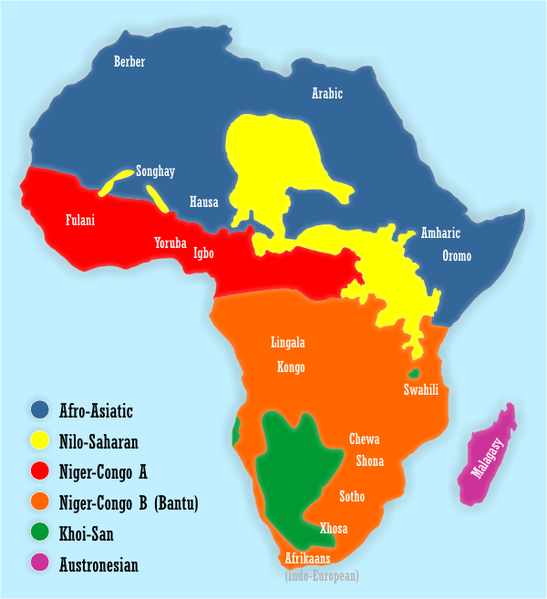

Dylan Violette (CopperViolette)
Psychology Minor and Philosophy Student who’s interested in archaeology, history, and astronomy.
Current Research Interests: The Archaic Era in North America; Long-Distance Trading Across the Americas; Eurasian Prehistory. Current Research Focus: The Eastern Archaic and the Megalithic Builders (10,000 – 1,177 B.C.E.).

Dylan Violette and I decided to blog jointly and will start doing videos together as well. Cory has had to step away from our joint endeavors we did for years, as he has issues he needs to focus on, and my friend Dylan is willing to step in and help me continue making thoughtful videos together.
Our Joint Academia Articles:

While hallucinogens are associated with shamanism, it is alcohol that is associated with paganism.
The Atheist-Humanist-Leftist Revolutionaries Shows in the prehistory series:
Show two: Pre-animism 300,000 years old and animism 100,000 years old: related to “Anarchism and Socialism”
Show tree: Totemism 50,000 years old: related to “Anarchism and Socialism”
Show four: Shamanism 30,000 years old: related to “Anarchism and Socialism”
Show five: Paganism 12,000 years old: related to “Anarchism and Socialism”
Show six: Emergence of hierarchy, sexism, slavery, and the new male god dominance: Paganism 7,000-5,000 years old: related to “Anarchism and Socialism” (Capitalism) (World War 0) Elite and their slaves!
Prehistory: related to “Anarchism and Socialism” the division of labor, power, rights, and recourses: VIDEO
Pre-animism 300,000 years old and animism 100,000 years old: related to “Anarchism and Socialism”: VIDEO
Totemism 50,000 years old: related to “Anarchism and Socialism”: VIDEO
Shamanism 30,000 years old: related to “Anarchism and Socialism”: VIDEO
Paganism 12,000 years old: related to “Anarchism and Socialism” (Pre-Capitalism): VIDEO
Paganism 7,000-5,000 years old: related to “Anarchism and Socialism” (Capitalism) (World War 0) Elite and their slaves: VIEDO
Paganism 5,000 years old: progressed organized religion and the state: related to “Anarchism and Socialism” (Kings and the Rise of the State): VIEDO
Paganism 4,000 years old: related to “Anarchism and Socialism” (First Moralistic gods, then the Origin time of Monotheism): VIEDO
I do not hate simply because I challenge and expose myths or lies any more than others being thought of as loving simply because of the protection and hiding from challenge their favored myths or lies.
The truth is best championed in the sunlight of challenge.
An archaeologist once said to me “Damien religion and culture are very different”
My response, So are you saying that was always that way, such as would you say Native Americans’ cultures are separate from their religions? And do you think it always was the way you believe?
I had said that religion was a cultural product. That is still how I see it and there are other archaeologists that think close to me as well. Gods too are the myths of cultures that did not understand science or the world around them, seeing magic/supernatural everywhere.
I personally think there is a goddess and not enough evidence to support a male god at Çatalhöyük but if there was both a male and female god and goddess then I know the kind of gods they were like Proto-Indo-European mythology.
This series idea was addressed in, Anarchist Teaching as Free Public Education or Free Education in the Public: VIDEO
Our 12 video series: Organized Oppression: Mesopotamian State Force and the Politics of power (9,000-4,000 years ago), is adapted from: The Complete and Concise History of the Sumerians and Early Bronze Age Mesopotamia (7000-2000 BC): https://www.youtube.com/watch?v=szFjxmY7jQA by “History with Cy“
Show #1: Mesopotamian State Force and the Politics of Power (Samarra, Halaf, Ubaid)
Show #2: Mesopotamian State Force and the Politics of Power
Show #3: Mesopotamian State Force and the Politics of Power (Uruk and the First Cities)
Show #4: Mesopotamian State Force and the Politics of Power (First Kings)
Show #5: Mesopotamian State Force and the Politics of Power (Early Dynastic Period)
Show #6: Mesopotamian State Force and the Politics of Power
Show #7: Mesopotamian State Force and the Politics of Power (Sargon and Akkadian Rule)
Show #9: Mesopotamian State Force and the Politics of Power (Gudea of Lagash and Utu-hegal)
Show #12: Mesopotamian State Force and the Politics of Power (Aftermath and Legacy of Sumer)

The “Atheist-Humanist-Leftist Revolutionaries”
Cory Johnston ☭ Ⓐ Atheist Leftist @Skepticallefty & I (Damien Marie AtHope) @AthopeMarie (my YouTube & related blog) are working jointly in atheist, antitheist, antireligionist, antifascist, anarchist, socialist, and humanist endeavors in our videos together, generally, every other Saturday.
Why Does Power Bring Responsibility?
Think, how often is it the powerless that start wars, oppress others, or commit genocide? So, I guess the question is to us all, to ask, how can power not carry responsibility in a humanity concept? I know I see the deep ethical responsibility that if there is power their must be a humanistic responsibility of ethical and empathic stewardship of that power. Will I be brave enough to be kind? Will I possess enough courage to be compassionate? Will my valor reach its height of empathy? I as everyone, earns our justified respect by our actions, that are good, ethical, just, protecting, and kind. Do I have enough self-respect to put my love for humanity’s flushing, over being brought down by some of its bad actors? May we all be the ones doing good actions in the world, to help human flourishing.
I create the world I want to live in, striving for flourishing. Which is not a place but a positive potential involvement and promotion; a life of humanist goal precision. To master oneself, also means mastering positive prosocial behaviors needed for human flourishing. I may have lost a god myth as an atheist, but I am happy to tell you, my friend, it is exactly because of that, leaving the mental terrorizer, god belief, that I truly regained my connected ethical as well as kind humanity.
Cory and I will talk about prehistory and theism, addressing the relevance to atheism, anarchism, and socialism.
At the same time as the rise of the male god, 7,000 years ago, there was also the very time there was the rise of violence, war, and clans to kingdoms, then empires, then states. It is all connected back to 7,000 years ago, and it moved across the world.
Cory Johnston: https://damienmarieathope.com/2021/04/cory-johnston-mind-of-a-skeptical-leftist/?v=32aec8db952d
The Mind of a Skeptical Leftist (YouTube)
Cory Johnston: Mind of a Skeptical Leftist @Skepticallefty
The Mind of a Skeptical Leftist By Cory Johnston: “Promoting critical thinking, social justice, and left-wing politics by covering current events and talking to a variety of people. Cory Johnston has been thoughtfully talking to people and attempting to promote critical thinking, social justice, and left-wing politics.” http://anchor.fm/skepticalleft
Cory needs our support. We rise by helping each other.
Cory Johnston ☭ Ⓐ @Skepticallefty Evidence-based atheist leftist (he/him) Producer, host, and co-host of 4 podcasts @skeptarchy @skpoliticspod and @AthopeMarie
Damien Marie AtHope (“At Hope”) Axiological Atheist, Anti-theist, Anti-religionist, Secular Humanist. Rationalist, Writer, Artist, Poet, Philosopher, Advocate, Activist, Psychology, and Armchair Archaeology/Anthropology/Historian.
Damien is interested in: Freedom, Liberty, Justice, Equality, Ethics, Humanism, Science, Atheism, Antiteism, Antireligionism, Ignosticism, Left-Libertarianism, Anarchism, Socialism, Mutualism, Axiology, Metaphysics, LGBTQI, Philosophy, Advocacy, Activism, Mental Health, Psychology, Archaeology, Social Work, Sexual Rights, Marriage Rights, Woman’s Rights, Gender Rights, Child Rights, Secular Rights, Race Equality, Ageism/Disability Equality, Etc. And a far-leftist, “Anarcho-Humanist.”
I am not a good fit in the atheist movement that is mostly pro-capitalist, I am anti-capitalist. Mostly pro-skeptic, I am a rationalist not valuing skepticism. Mostly pro-agnostic, I am anti-agnostic. Mostly limited to anti-Abrahamic religions, I am an anti-religionist.
Why did Deities FIRST Emerge, and When?
Well, it attaches to my interest in the transition from hunting to herding as for my speculations are that “Hunting Cult” Shamanism (Cosmic Hunt) (hunter and animal spirit focus) becomes “Herding Cult” Paganism (new deity/anthropomorphic divine status spirit being addition focus) in the Middle East 12,000 to 11,000 years ago beginning at and after Kortik Tepe (12,400 to 11,250 years ago) in Turkey on into Tas Tepeler culture sites (around 12,000–9000 years ago: Such as Gobekli Tepe, Karahan Tepe, Sayburc, and Nevali Cori) in Turkey as well as Upper Mesopotamia in general. As domesticated animals (11,000 to 10,000 years ago: Sheep, Goats, and Cows?) are seen before domesticated grains (10,500 to 9,000 years ago? From some of the earliest grain domestication in “Nevali Cori” that dates between 10,400 to 10,100 years ago to “Catal Hoyuk” with cultivated domestic wheat at roughly 9,000 years ago) in the Middle East and are associated with evolving culture. I get it was close to gathering, and both influenced culture, but seeming religion/ritual “especially presented in art” favored animal representations, not grains highlighted in the agricultural revolution. Agriculture influenced paganism (Nevali Cori “origin?” and Catal Hoyuk “evolved?”) is, to me, a further evolution after “Herding Cult” paganism. I try to ground my beliefs/speculations in reason, not wild opinions.
John Hoopes on Facebook asked me: “Did myths about deities emerge from stories about ancestral lineage founders, real heroes and heroines, anthropomorphic interpretations of natural phenomena, dream imagery, a combination of these, or something else?”
My response: Thanks for your question, John. I think hunters in the sky Orion/Big Dipper-related themes in the Cosmic Hunt mythology likely were attached to different groups themselves in a way that could have been deities emerging from stories about ancestral lineage founders’/sky hunters. I think it is likely that the anthropomorphic interpretations of natural phenomena as deities were related but more fully developed in agricultural shifts in early paganism than the move from hunting cult to herding cult that seems to me to relate to human control of animals like Master of Animals, which I see as an evolution of the hunter cult theme where hunters dominate the animal hunted.
Around 10,000 years ago, ideas went into Africa. Around 10,000 to 9,000 years ago, these ideas from the Middle East were in Siberia then moved to China and to the Americas by around 9,000 years ago. Religious ideas also left the Middle East from 9,000 to 8,000 years ago to Europe. Around 8,000 years ago, new ideas got to Ukraine but didn’t spread far. From 8,000 to 7,000 years ago, ideas again entered Africa with evolved beliefs from the Middle East. By 7,000 years ago, evolved deities from the Middle East moved again to Europe and Ukraine. And 7,000 years ago, the Siberian sun god of the sky, with a warrior culture, armed forts, and pre-kurgans, moved from Siberia to Ukraine and then returned to the Middle East around 6,000 years ago, influencing the Sumerian religious ideas. 6,000 to 5,000 years ago, these new Siberian influenced ideas from the Middle East were also in Africa. Then new evolved ideas moved back out of from Ukraine to the East by 5,500 to 5,000 years ago to Siberia, then China, and the Americas. Ideas from Ukraine went into Europe as well. Then, 5,000 to 4,000 years ago, the new ideas, now somewhat evolved again, from Siberia headed back to Europe, and so did ideas from the Middle East. ETC. This is just a rough outline to grasp some of the details, as I feel I understand them. There is a bit more, but this gives a good idea of how complicated it was.
I think the person, snakes, and two birds seen at Körtik Tepe is the oldest known Neolithic archaeological site in Turkey, more than 12,000 years old, were likely related to the Orion constellation as a shamanic figure holding a snake, referencing the use of the Milky Way to communicate with the gods and ancestors, as well as soul travel via the Milky Way. The big snake to me would reference the Milky Way itself and the two birds, either the star Venus and the moon, or some aspect of the sun, and the moon, but the sun aspect was likely not the noon sun by itself, as I see that as gaining prominence at a later date. And I think the other figures, also related to the Orion constellation, either as a deity or a deity of the stars, put Orion there. I assume, as seen at Tell Fekheriye, Syria, 11,000 to 9,000 years old, involving two standing figures on “step stools of power” that by 11,000 years ago were at least two sky deities, such as something similar to both a sky father and a sky mother deity, at this time, related to the stars, or planets (also seen as stars or star-like). But we must remember that planets were seen as star-related in mythology.
High Gods and a Divine Couple (universal mommy and daddy)?
I think high gods started with a divine couple, a sky god (sky father) “Day sky, often the Sun” and a sky goddess (sky mother) “Night sky, often the Noon” around 11,000 years ago or older, associated with pre-pastoralism animal management, early herding, and proto-pastoralism, of big-horned goats, big-horned sheep, both domesticated around 11,000 years ago, and cattle domesticated around 10,000 years ago or a little older, especially so with cattle, the last three. Then, as farming and agriculture grew and the domestication of grains emerged a little after 10,000 to 9,000 years ago, and along came a new Earth goddess (Earth Mother), who then commonly took the place of the older sky goddess (sky mother) as the wife or consort to the sky god (sky father). This younger divine couple, a sky god (sky father) and Earth goddess (Earth Mother), becomes the norm the world over. Spread largely with the spread of farming and agriculture to me.
The myths of (Sky Father) and Earth Mothers in general are found throughout the world, and I think started in the Middle East, with their origins around 11,000 years ago or older. Though totem couple artifacts are seen in Siberia’s Lake Baikal area with the Ancient North Eurasians Mal’ta–Buret’ culture (24,000 years ago) and seem to trace back to at least Russia, above the area between north of the Black Sea and the Caucasus mountains at the Kostenki site 25,000 years ago, a time when Kostenki is related to the eastern Gravettian culture, because the Kostenki site started with Aurignacian culture. I think the couple theme, though it seems to have evidence dating back to at least 25,000 years ago in portable totem pole-like figurines, was not considered deities until they evolved in the Middle East, due to different lifestyles creating a motivation for different thinking, a transition from hunting and gathering to herding and farming.


Damien Marie AtHope (Said as “At” “Hope”)/(Autodidact Polymath but not good at math):
Axiological Atheist, Anti-theist, Anti-religionist, Secular Humanist, Rationalist, Writer, Artist, Jeweler, Poet, “autodidact” Philosopher, schooled in Psychology, and “autodidact” Armchair Archaeology/Anthropology/Pre-Historian (Knowledgeable in the range of: 1 million to 5,000/4,000 years ago). I am an anarchist socialist politically. Reasons for or Types of Atheism
My Website, My Blog, & Short-writing or Quotes, My YouTube, Twitter: @AthopeMarie, and My Email: damien.marie.athope@gmail.com