


Did Neanderthals teach us “Primal Religion (Pre-Animism/Animism?)” 120,000 Years Ago?
Homo sapiens – is known to have reached the Levant between 120,000 and 90,000 years ago, but that exit from Africa evidently went extinct. Homo sapiens – is known to have reached the Levant between 120,000 and 90,000 years ago, but that exit from Africa evidently went extinct. Tabun Cave Mousterian (stone tool) culture (about 200,000 45,000 years ago). Small flint tools, made of thin flakes, predominate here, many produced by the Levallois technique. ref, ref

“Middle Paleolithic Burials at Qafzeh Cave, Israel, 96,000–115,000 years ago of early anatomically modern humans. It is the only double Bural known from the entire Middle Paleolithic. Could this have been a mother and her child? The two bodies were interred together, oriented north-south, and this could have been part of a complex funerary practice. It is probably a significant funerary practice that the child was placed at the feet of the adult, rather than at its side. The meaning of this placement is unknown.” ref, ref, ref

“Graves are the clearest signs of spiritual behavior, as they mark the boundary between the world of the living and the world of the dead. Most often, archaeologists seek to identify grave goods, pigment use, or other forms of symbolic behavior to differentiate burials motivated by other reasons, such as hygiene.” ref
Above-world or Under-world?
Investigating what could have come first: heaven or underworld beliefs. I realized that beliefs about souls going into the sky (such as seen in Milky Way mythology, souls to the stars or sun) are older than beliefs about souls going to the underworld (as seen in three-level world beliefs like heaven, Earth, and underworld mythology). However, what may and likely did come either before or at a similar time to Milky Way mythology (100,000 to 70,000 years ago) was the belief that either souls stayed on the earth, reincarnated back into a new human life or animal life, or merged with a group/universal spirit somewhere in the earthly environment (such as a forest or sacred area of land like a body of water “river, lake, swamp, bog” or “hill/mountain, cave, valley/gorge”).
I think it is probable that if the Neandertals (in the Middle East 120,000 to 100,000 years ago or before in Croatia 130,000 years ago) had animistic mythology that related to their burials, it more likely could have involved the thinking that spirits or souls of the dead stayed in the Earthly Environment (not go to some above-world or under-world), this would seem to then relate to a potential reason they buried their dead and transmitted this myth thinking to modern humans in the Middle East. This northerly animism mythology I am relating with the neandertals, I surmise was different than the seeming animism mythology over 100,000 years ago in Southern Africa, which I speculate probably related to “Milky Way” above-world animism mythology beliefs expressed in red ocher with marking and a lack of burials (as would be similar to Hadza indigenous African hunter-gatherers, who traditionally did not bury their dead, nor have much regard for the body after death and had beliefs that the spirits of their people go to the above-world at death but yet lack an afterworld, “spirits leave and then end existing”). The burials stated in South Africa with the southern migration of the “Back-to-Africa” people leaving the Middle East moving south in Africa. Likewise, animistic mythology related to the “Milky Way” above-world moved north and did not leave “Out of Africa” until about 60,000 to 50,000 years ago, connected with the main “Out of Africa” migration, then spread these two sets of animistic mythology thinking: one that spirits or souls of the dead stayed in the earthly environment, and the other that spirits or souls of the dead go to some above-world.
Here are two African cultures with religious beliefs about death: one that could relate to northern animism and another that could relate to southern animism.
Possible Northern Animism Analog Thinking Culture (spirits stay in the earthly realm)
“The Tikar people are a Central African ethnic group in Cameroon. The Tikar refer to God the Creator as Nyuy, and the Bamileke refer to Nyuy as Si. Both groups, along with the other peoples of the Grasslands, believe God requires them to revere their lineage ancestors. This is pivotal to their spirituality, as they traditionally believed ancestral spirits were embodied in the skulls of the deceased and remained present. The eldest living male in each lineage possesses the skulls, and all members of an extended family recognize the same skulls as belonging to their group. When a family decides to relocate, a dwelling, which must first be purified by a diviner, is built to house the skulls in the new location. Although not all ancestral skulls are in a family’s possession, they are not forgotten. These spirits have nowhere to reside, though, and may as a result cause trouble for the family. To compensate when a man’s skull is not preserved, a family member must undergo a ceremony involving pouring libations into the ground. Earth gathered from the site of that offering then represents the skull of the deceased. Respect is also paid to female skulls, although detail about such practices is largely unrecorded.” ref
Possible Southern Animism Analog Thinking Culture (spirits go to the above/sky realm)
“The Hadza do not follow a formal religion, and it has been claimed that they do not believe in an afterlife. They offer prayers to Ishoko (the Sun) or to Haine (the moon) during hunts and believe they go to Ishoko (the Sun) when they die. Sometimes the Hadza leave the dead without burying them, instead moving them to another place. The Hadza are among those who ignore the dead or do little for the dead. The Hadza treat death with very little fuss, and when someone is laid to rest, no permanent markers, monuments, or gravestones are erected. After placing the body, community members might simply toss a few dry twigs over the site and walk away without prolonged or dramatic goodbyes. A generation or two ago, the Hadza did not bury their dead. They traditionally wrapped the body and left it on the ground or in the deep bush for wild animals and scavengers (such as hyenas or lions) to consume. They viewed this as a practical way to give back to the ecosystem and complete the natural circle of life. However, in modern times, they may instead choose to bury the corpse, typically wrapping the deceased and placing them inside a quickly dug, shallow hole or grave in the forest. They often pack or harden the soil and place rocks or brush on top to discourage scavengers. The Hadza do hold rituals such as the monthly epeme dance for men at the new moon. Ishoko and Haine (Ishoko is a solar figure, and Haine, her husband, is a lunar figure) are mythological figures who are believed to have arranged the world by rolling the sky and the earth like two sheets of leather and swapping their order to put the sky above us.” ref, ref, ref, ref, ref, ref
Heaven and Earth: the First Two Parts?
“In traditional African mythologies, the separation of heaven and earth describes a time when the divine realm and the human world were physically close or connected but grew apart due to a human action or an accidental offense. Common themes in African mythology include the Heaven and Earth connection and its later separation. Heaven (the sky, or the domain of the creator god) was originally low or linked directly to the earth by a rope, chain, or ladder (likely related to the “Milky Way”). Humans could easily climb up to speak with the creator god. A human mistake—frequently a woman striking the sky or the rope with a pestle while pounding grain (agriculture related shows a younger origin time for this potencual mythology change: Near East domestic cereals were in Northern Sudan under 7,000 years ago), or disobedience regarding food and rules (totemism related, thus it could predate agriculture related) —offended the creator (a god makes the origin date younger as well, likely after between 9,000 to 7,000 years ago, as I speculate gods did not come from the Middle East until then. The supreme being/creator god retreated far into the sky, severed the physical connector (likely having a relation to/or relating to the older beliefs of spirits traveling the “Milky Way”). For the Dinka (in Southern Sudan) a rope used to hang down from heaven, allowing people to climb up and converse with the creator Nhialic, until a woman struck the sky with a garden pole (likely having a relation to the “Milky Way”) and severed the connection forever. For the Efik (in Nigeria) the creator Abassi and his wife Atai initially kept humanity close, but human disobedience—tilling the soil (agriculture related)—led to a permanent earthly separation. For the Dogon (in Mali), creation involves a cosmic descent from the celestial realm via an ark down a bridge or chain, symbolizing an original unity and subsequent ordering of the earthly world separate from the pure source of heaven. For the Akan in West Africa, the sky once pressed so close that a woman pounding grain (agriculture-related) could reach up and touch the sky god Nyame with the tip of her pestle. Then came the blow. A pestle swung upward by a woman preparing food struck the sky. Some versions say it happened once. Others say it happened again and again, as neighbors joined in, as children reached up for curiosity, as the divine ceiling grew bruised from human carelessness. Nyame, offended, withdrew. He lifted himself high and far, to the place where the sky now lives, and the distance between the human world and the sacred never fully closed again.” ref, ref, ref, ref, ref
“One recurring theme across various mythologies is the descent from heaven to earth, facilitated by a divine or supernatural means such as a rope, chain, web, or similar object. These myths not only explain the connection between the divine and mortal realms but also emphasize significant transitions in human history, such as the establishment of civilization, the beginning of human autonomy, or the creation of land. For the Surma in southern Ethiopia, they once resided in the heavens with their creator god Tuma. One day, Tuma decided to send the Surma people to earth by opening a large hole in the clouds and providing them with ropes (likely related to the “Milky Way”) to descend safely to earth. The place where they arrived is known as the Kibbish River, a location that remains significant to their cultural heritage. But while grinding grain, a woman accidentally broke the rope. One version suggests that while grinding, she either stumbled or the grinding process itself somehow interfered with the rope, causing it to snap. Another version implies that the grinding tools or the force used in the process caused the rope to break. For the Yoruba in Nigeria, the narrative also involves a descent from the heavens: the Supreme God Olodumare sent Oduduwa to earth to create land. Oduduwa descended on a chain carrying essential items to perform his task, such as a calabash of sand, a chicken, and a palm nut. After successfully creating land at Ile Ife, which became the cradle of Yoruba civilization, the chain (likely having a relation to the “Milky Way”) linking heaven and earth was withdrawn by Olodumare, severing the direct connection between the divine and human realms.” ref
“Mythical bonds, akin to ropes or cables, played the role of cohesively holding the entire world and all its layers of heaven and Earth together. These are sometimes called the “bonds of heaven and earth”. They can be referred to with terminology like durmāhu (typically referring to a strong rope made of reeds), markaṣu (referring to a rope or cable of a boat, for example), or ṣerretu (lead-rope passed through an animal’s nose). Heaven and Earth connected mythology is also seen the cosmology of the ancient Near East beliefs about where the universe, an area that corresponds with the Middle East today (including Mesopotamia, Egypt, Persia, the Levant, Anatolia/Turkey, and the Arabian Peninsula) were existence starts with only a primordial state of “Heaven and Earth,” which are connected as one dual gendered being with two parts “bond of heaven and earth” but no seeming underworld, and only later were they split and into three plane of existence (or more parts) with heaven, Earth, and then also a defined lowest plane of existence the underworld. “Heaven and earth” was a common phrase for the entire cosmos, describing it by its two main parts. Sometimes, a third region was added to refer to the entire cosmos in addition to these two, usually the netherworld or the region between heaven and earth. The cosmic union, or marriage, of heaven and earth is spoken of in ancient Near Eastern texts stretching back to the 3rd millennium BCE. The first source that mentions their separation is from the late 3rd millennium BCE, known as the Song of the hoe. During the 2nd millennium BCE, these texts shift their focus from union to the separation of heaven and earth, as shown in Sumerian, Akkadian, Phoenician, Egyptian, and Greek mythologies. The separation of heaven and earth is a cross-cultural creation myth event. The separation serves the role of differentiating the chaotic, undifferentiated cosmos (sometimes interpreted as a universal cosmic ocean) into coherent and organized parts. The mechanics and causes differ from one story to another, but usually involve either a spontaneous process or the agency of a deity. In the Sumerian sources, heaven and earth are separated over the course of “long days and nights” (similar to the six-day timeline in the Genesis creation narrative), by two gods: Anu, the King of Heaven, and Enlil, the King of Earth. Or the cause of the separation involves either the agency of Enlil or takes place as a spontaneous act. One recovered Hittite text states that there was a time when they “severed the heaven from the earth with a cleaver”, and an Egyptian text refers to “when the sky was separated from the earth.” Sumerian texts say Enlil separated Earth from Sky and separated Sky from Earth. The introduction of Gilgamesh, Enkidu, and the Netherworld says that heaven is carried off from the earth by the supreme sky god Anu (the divine personification of the “Sky”/”Heaven”, king of the gods, and ancestor of many of the deities in ancient Mesopotamian religion ref) to become the possession of the wind god Enlil. Several other sources also present this idea. In “many” ancient Near Eastern cultures, the underworld had a prominent place in descriptions of the sun journey, where the sun would carry out various roles including judgment related to the dead. During the day, when the moon was not visible, it was thought that the moon descended beneath the flat disk of the earth and, like the sun, underwent a voyage through the underworld. Both Babylonian and Israelite texts describe one of the divisions of the cosmos as the underworldly ocean. In Babylonian texts, this is coincided with the region/god Abzu. In Sumerian mythology, this realm was created by Enki, the god of fresh subterranean waters. It was also where Enki lived and ruled over.” ref, ref
“Proto-Indo-European primordial state of “Heaven and Earth” mythology thinking is similar as well. The main Proto-Indo-European mythologies to reconstruct a potential original thinking are Indo-Iranian/Indian-Vedic, Baltic, Roman, Norse, Celtic, Germans, Greek, Slavic, Hittite, Armenian, and Albanian. In Indo-European mythology, the separation of heaven and earth stems from the primordial coupling of the Sky Father (*Dyēus Ph₂tēr) and Mother Earth (*Dʰéǵʰōm), whose union or splitting gave shape to the ordered cosmos. In Indo-European traditions, Earth Mother and Sky Father are generally worshipped as the two of the primary deities. However, many of these same mythologies, as well as others across the world, tell of a primordial separation between earth and sky, potentially effected by some third god or hero figure, albeit the details are somewhat hazy or disconsonant.” ref, ref, ref
“In Chinese mythology and in Taoism, heaven and earth are separated. In earlier sources, this is a process that happens spontaneously. Later sources, after a primordial being named Pangu (P’an Ku) had been transformed into a great deity and the creator of heaven and earth, relate the separation of the two to Pangu. In earlier sources, Pangu is originally inside of heaven and earth. The three of them grow over the course of 18,000 years, eventually separating. In the Wuyan Linianji, the growth and separation of heaven and earth occurs naturally, and only later does Pangu begin to grow. In later texts, once Pangu had become transformed into the creator of heaven and earth, the growing body of Pangu is the cause of the separation of heaven and earth. Other late sources have heaven and earth being created out of distinct parts of the corpse of Pangu.” ref
“The separation myth occurs among indigenous natives of both the North and South Americas. As well as in Oceania (especially Polynesia), as well as in Indonesia, a myth appears that begins with a primordial sexual union between Heaven (Rangi) and Earth (Papa), and then describes their separation. In the creation according to the Māori, Rangi and Papa, or Heaven and Earth, were the source from which, in the beginning, all things originated. Darkness then rested upon the heaven and upon the earth, and they still both stuck together, for they had not yet been cleaved apart.” ref
To me, Neanderthals were related with “primordial religion” (pre-animism) at least by 130,000 years ago as seen by both evolved symbolism and the earliest primary burials and secondary “double funeral” re-burial or other mortuary practices/ritual burial actions in Krapina, Croatia. Some of these Neanderthals then went to the Middle east/Israel and started burying by 120,000 years ago. “Secondary burial was used by Homo Neanderthals and by anatomically modern Homo sapiens.” ref, ref And between 120,000 and 100,000 years ago, small migrations of modern Homo sapiens exited “out-of-Africa” into the Middle east/Israel meeting and blending culture with the Neanderthals, and also started burying by 120,000 years ago for the first time. Likely influenced by Neanderthals, but we had evolved it by 100,000 years ago, adding grave goods such as animal bones or horns in the graves with the bodies, demonstrating human evolution of the religious/ritual ideas transferred.
Religion is a cultural product and moved in cultural migrations.
I estimate that Animism emerged at least 100,000 years ago (as seen in the 100,000-year-old burial sites), likely after our meeting with Neanderthals in Israel/the Middle East, who may have taught us primordial religion (pre-animism or a very early form of animism). These (early out-of-Africa) people traveled back and forth between the Middle East and Eastern North Africa, and as the climate cooled or other pressures/motivation arose, these (early out-of-Africa) people left the Neanderthals in the Middle East 85,000 to 80,000 years ago and headed south to East Africa, reaching it about 80,000 years ago (as seen in the 78,000-years-old burial), eventually reaching Southern Africa (75,000 years ago? As seen in the 74,000-year-old burial).
Around the same time in Southern Africa, as they met Neanderthals in Israel/the Middle East, a different form of animism could also have emerged at least 100,000 years ago. Then these two evolving early forms of animism mixed in Southern Africa (75,000 to 70,000 years ago) when people from the north came down, meeting the people in the south, and they probably created at that time a new animistic religion with very early mythology and a basic-outlined worldview (as seen in evolved abstract symbolism “modified/marked red ochre pieces” and “world’s oldest known ritual site, consisting of a massive 20-foot-long natural rock, intentionally modified/marked to be more snake-like” both possibly relating to Milky Way mythology themes) that migrated back north (70,000 to 50,000 years ago), potentially contributing to humanity before the out-of-Africa migrations that led to all non-African populations outside Africa today, thus spreading these Africanized animistic religion themes a crossed the world.
- The 70,000-Year-Old “Python Cave” (Tsodilo Hills, Botswana):
In 2006, archaeologist Sheila Coulson discovered evidence of what is widely considered the world’s oldest known organized ritual site. Inside a secluded cave, researchers found a massive, 20-foot-long natural rock formation that early humans had intentionally carved with hundreds of indentations to resemble python skin. Beside this “serpent god,” they found over 100 stone spearheads that had been brought from long distances, intentionally burned, and systematically smashed in what appears to be a sacrificial ritual. [1, 2, 3, 4, 5]
- Blombos Cave (South Africa):
Dating back to roughly 73,000 to 77,000 years ago, scientists excavated pieces of red ochre cross-hatched with intentional, abstract geometric engravings. This indicates a profound grasp of abstract symbolism—the exact mental hardware required to invent mythologies, gods, and early animistic concepts. [1, 2, 3]
- 105,000 years ago: “Origins of culture, complex symbolic behaviors. Recent research in South Africa, outside Kuruman, at Ga-Mohana Hill, a rock shelter, suggests that hunter-gatherer humans collected calcite crystals about 7 kilometers away and brought them there for some kind of ritualistic purpose. This again suggests complex, symbolic behaviors in that area 105,000 years ago, and fragments of ostrich eggshells were also found, possibly used for carrying water.
- 100,000 years ago: The symbolic connection, relationship, and use of pigments/ochre, the use of fire to harden stone tools, evidence of complex social and behavioral tasks, and artifacts such as stone tools, ochre, engraved ostrich eggshells, and hearths collectively show that the MSA occupants had the capacity for creative, symbolic and cultural behavior, which collectively have shaped the consciousness and defined us as Modern Humans. As well as systematic tidal harvesting. These MSA sites in South Africa provide some of the earliest evidence of systematic tidal harvesting of marine resources and continued harvesting of a coastal, marine-based diet spanning thousands of years, dating back more than 100,000 years. This ocean tidal harvesting would have an added cosmic connection and understanding of the Full and New Moon’s relationship to the oceans’ high and low tidal extremes (Spring).
- 90,000 – 60,000 years ago: – Animism as a human religion and spirituality. The collective scientific research into the origins of human religion and spirituality shows synonymously that the earliest form of religion or spirituality was found in hunter-gatherer groups globally, including the San Bushmen of Southern Africa. Pleistocene hunter-gatherers would more than likely have possessed both the cognitive and communicative skills to share religious beliefs and practices prior to dispersal out of Africa more than 60,000 to 90,000 years ago. With the earliest originating in Africa, this spirituality would have been in the form of Animism. Animism, is defined as; the belief in the animation of all nature, including the belief in all individuals having a soul, and that in the many forms of Nature, there were Supernatural and Spiritual Beings present in plants, trees, animals, waterfalls, thunder, lightning, wind, sun, moon, stars, etc., all having a “Vital Force and Intentionality” that they believed had influence on their lives. Animism within the early San Bushmen of Southern Africa is further quantified by work with Khoisan from the 1870’s, which shows a deep relationship and understanding these early people held. To them, the sun, moon, and stars had supernatural powers and an influence over people and nature: “The Sun was a man”. In the early race there were “Sitting People”, “Animal People” and “Sky People”. The wind was also known by some to be a person.
- 70,000 years ago: Research at Tsodilo Hills in Botswana, Southern Africa, shows a ritual cave, “The Serpent Cave”, was used some 70,000 years ago, with arrowheads offered ceremoniously. Early spiritual and ritual places are also often associated with serpent mythologies, creation myths, fertility, rainmaking and hunting rituals, water, sacred springs, rivers and lakes. South African San Bushman and Early Khoisan connection to Snakes, Rain and the Python!
- 65,000 years ago: Diepkloof Shelter, 200 kilometers west of Cape Town, South Africa, where engraved ostrich eggshells were found dating to 65,000 years ago.
- 26,000 (or earlier) years ago: Research also shows that the presence of a Shaman, responsible for helping heal, guide, and hold the spiritual integrity of the family/clan, was also of great importance to these early hunter-gatherers. The shaman acted as a conduit communicator between the earthly and spiritual realms, with their earliest shamanic rock paintings located in Apollo Cave, Namibia dating to around 26,000 years ago. Early research shows that the early Khoisan of Southern Africa had many sun, moon, and star myths and beliefs.” ref

From a scientific perspective, belief in spirits is classified as a form of magical thinking or superstition rather than a physically measurable reality.
“Magical thinking—the need to believe that one’s hopes and desires can have an effect on how the world turns—is everywhere. Spirits, ghosts, patterns, and signs seem to be everywhere, especially if you look for them. People tend to connect mystical thinking with real-life events, even when it’s not rational. Of course, some of this is animistic thinking, with the belief that the supernatural is everywhere and has some power over what happens in people’s lives. There is some comfort in thinking that someone or something is pulling all the cosmic strings. It gives us permission to relax a little. Magical Thinking starts at a young age. Children are primary make-believe enthusiasts; they embrace fantasies like imaginary friends with passion. This is normal in child development. Researchers believe that fantastical play and magical thinking do indeed promote creative divergent thinking. One study has found that when children watched a film with magical undertones, their performance on creative tasks increased significantly when compared with children who watched a film with no references to magic. Children start to believe when they are toddlers. As children grow older, around age 10, they move away from fantastical play and question how feasible magical thinking is. Sometimes people look for meaning in strange places; that’s because the brain is designed to pick up on patterns. Making such connections helped our ancestors survive what they didn’t fully understand—for instance, they learned not to eat a certain kind of berry, or they would die. Seeing patterns also creates an illusion of control, offering comfort by eliminating unwanted surprises. Humans look for superstitions, lucky numbers, coincidences, synchronicities, among other forms of thinking. Superstitions come in many forms, and they appear across cultures.” ref
I don’t believe in the supernatural notion of a “soul,” especially with our natural only evolution. Undesigned natural processes of evolution made us “believing-machines.” I am not an animist, thus I don’t believe in souls or spirits. How can I? When in our natural only evolution was there added magical anything? I can’t buy anything but natural, thus, I can be labeled a “Metaphysical naturalist (also called ontological naturalist, philosophical naturalist, and anti-supernaturalist) which is a philosophical worldview that holds that there is nothing but natural elements, principles, and relations of the kind studied by the natural sciences.” ref
The belief in or proposal of spirits/souls is a common foundation in animistic thinking held by young children and supported by religious/supernatural beliefs. However, this spirit/soul theorizing is a magical-thinking superstition about nature, not a real feature of nature.
I fully enjoy the value (axiology) of archaeology (empirical evidence from facts or artifacts at a site) as knowledge (epistemology) of the past, adding to our anthropology (evidence from cultures both present and past) intellectual (rational) assumptions about the likely reality of actual events from time past.
Religion is Unwarranted Faith and Belief. The problem with religion is unwarranted faith and belief. The problem of faith is that it is an invalid justification, and the belief problem is holding unjustified false belief and believing it is justified true belief. I use the Animism term as a definition of spirit-beliefs or a kind of Supernatural-Spiritism thinking, that to me, are in all spiritual or religious-type beliefs, not primitive but core. I see Animism as the original religion (religious non-naturalism/supernatural persuasion or spiritual/magical thinking) of all humanity and is still in all the religions of the world.
I am mainly a prehistorian, 1 million to around 5,000/4,000 years ago. So, while I may understand the past, most don’t; I don’t know a lot of history that many seem to commonly know.
Nothing is a justified true belief without valid or reliable reason and evidence; just as everything believed must be open to question, leaving nothing above challenge.
I don’t see religious terms Animism, Totemism, Shamanism, or Paganism as primitive but as original or core elements that are different parts of worldviews and their supernatural/non-natural beliefs or thinking.
In the past or even lingering today, are beliefs often ripe with religious bigotry, seen in how religious/spiritual thinking not Abrahamic (Judaism, Christianity, or Islam) religious thinking are often believed to be primitive, unequal, or less than monotheism (preserved as the only real or not the correct religion beliefs if not monotheism).
I see all religions as having shared or similar features or core elements that relate to religious terms such as Animism, Totemism, Shamanism, or Paganism, including Abrahamic (Judaism, Christianity, or Islam) religious thinking.
I don’t classify any religious thinking as primitive, but in error to what I see as a natural-only world, religious thinking then makes up a myriad of non-natural/non-empirical themes/beings, stories, and myths that, when grouped together, are called religions.
To me, Animistic Somethingism: You just feel/think there has to be something supernatural/spirit-world or feel/think things are supernatural/spirit-filled. “Somethingism” is commonly an unspecified belief in an undetermined supernatural reality, stated sometimes as spiritual but not religious, but, to me, is basically unrealized animism. Vague Theism or god Somethingism: just say NO! May I remind you , vague theism, somethingism or “ietsism” is not some Philosophers Stone of Theism removed from strong critique.
So loudly, I will proclaim supernatural, and gods are willful mental illusions, confusions, and lies that are commonly inspired by a life of religious influences, religiously motivated fears, and or religious indoctrination. I laugh at questions like “what would convince you of god” as if I approach thinking differently dependent. As a rationalist I am always moved best by valid and reliable reason and evidence, you know the very stuff, all religions and any supernatural claim always lack in the end. Religion is big on claims but small of real reasoning, full of logical fallacies in thinking, and no evidence to quorate all their delusionary supernatural nonsense and superstitions.
“But Damien, Souls are real because energy does not die!”
My response: That is a logical fallacy, as it is not a reasoned jump in logic. Energy leaves all once-alive bodies by dissipating heat into the environment, and then is gone as the once-related energy in a now-dead body.
“It is almost an animist’s argument…that the idea that things possess some kind of energy. To me, the logical fallacy is equating energy with a soul. All matter in the universe consists of energy; that’s why you can’t get to absolute zero…by that I mean removing all heat from something. So if we agree scientifically that a soul is energy and that everything in the universe has energy, therefore a soul…it is an animist’s position that makes no meaningful argument…Ultimately, the person saying the soul is heat… By the way, the logical fallacy both of us were addressing is the false equivalency fallacy, meaning wrongly associating one thing with another.” – Marquis Amon
“The physical remains themselves hold the potential for more energy to be released. The body releases more energy as it decomposes or is incinerated. Well, that’s how it was explained to me, and it makes sense now.” – Susanna Sharp-Schwacke
Simply put, no accepted scientific evidence shows that souls or spirits exist. Modern neuroscience shows that human traits like memory, emotion, and personality come from physical activity in the brain. When the brain is hurt or changes, a person’s behavior and consciousness change with it. Injuries to specific parts of the brain change how a person thinks or acts.
Go religion-free and rise to your own self-mastery.

- Animism: Spiritism and Supernaturalism/Spiritualism
- Totemism: Animism and Socio-Religio-Cultural Laws/Beliefs
- Shamanism: Animism/some Totemism as well as Afterlife thinking
- Paganism: Animism, Totemism, and Shamanism; plus Deity focus
- Organized Religion: Institutional Pagan Religion with all the aspects

Animism (Africa: 100,000 years ago)
- Aterian Culture (North African 145,000–20,000 years ago)
- Sangoan Culture (sub-Saharan African 130,000-10,000 years ago)
A study suggests that the oldest Language began at least 135,000 years ago
“Rather than look at fossils and artifacts, they studied the movement of ancient populations via 15 genetic studies conducted over the past 18 years. Three featured Y chromosome analysis (tracing paternal lineage), three examined mitochondrial DNA (tracing maternal lineage), and nine were whole-genome studies. All indicated that early Homo sapiens began diverging around 135,000 years ago. The researchers believe all languages likely stem from a single original language. This would mean that ancient humans had the capacity for language before we spread across the planet. “All languages are related,” the lead researcher explained. The first major split among humans occurred around 135,000 years ago, so we can infer that language must have existed by then — or even earlier.” ref
“Moreover, an article in the journal Science proposed an African origin of modern human languages. It was suggested that human language predates the out-of-Africa migrations of 50,000 to 70,000 years ago and that language might have been the essential cultural and cognitive innovation that facilitated human colonization of the globe. Also, by tracing the number of distinct sounds, or phonemes — consonants, vowels, and tones — in 504 world languages, the finding provides compelling evidence that they can be traced back to a long-forgotten dialect spoken by our Stone Age ancestors.” ref, ref
“Likewise, scientists say they have traced the world’s 6,000 modern languages — from English to Mandarin — back to a single “mother tongue,” an ancestral language spoken in sub-Saharan Africa 50,000 to 70,000 years ago. This research suggests that this single ancient language gave rise to human civilization—a Diaspora—as well as advances in art and hunting tool technology, and laid the groundwork for all the world’s cultures.” ref
A shared language would help transmit a shared religious worldview, as well as mythological thinking.
A shared language is one of the most powerful ways to transmit a shared religious worldview and mythological thinking. When a group speaks the same language, they share more than vocabulary; they share a framework for conceptualizing natural reality or a proposed supernatural. Language maps out what a culture deems important. In many ancient worldviews, language does not just describe reality; it alters it. Many religious and mythological systems rely on specific words that carry deep, layered spiritual meanings. Mythologies and early religious worldviews were completely oral. Therefore, prehistoric language was the essential vehicle for transmitting shared religious worldviews and mythological thinking. Mythological thinking relies heavily on metaphor to explain the inexplicable.
- 120,000 to 75,000 years ago: Khoisanid migration from Southern Africa to East Africa.
- 82,000 years ago: small perforated seashell beads from Taforalt in Morocco are the earliest evidence of personal adornment found anywhere in the world.
- 75,000 years ago: Toba Volcano supereruption that almost made humanity extinct. Populations could have been lowered to about 3000-1000 people on the Earth.
- 70,000 years ago: earliest example of abstract art or symbolic art from Blombos Cave, South Africa—stones engraved with grid or cross-hatch patterns.
- 70,000 years ago: Recent African origin: separation of sub-Saharan Africans and non-Africans.” ref
The oldest trait of religion, present in the most recent common ancestor of present-day hunter-gatherers, was animism!
“The universality of religion across human society points to a deep evolutionary past. However, specific traits of nascent religiosity and the sequence in which they emerged have remained unknown. Religion is unique to humans. Belief in supernatural agents and the entailed religious practices occur in virtually all human cultures. The universality of religion across human societies suggests a deep evolutionary past. The human ability to create complex culture (“cultural capacity”) may be older than the first split in the modern human lineage, and some aspects of religion may have been present before the appearance of anatomically modern humans. Religion has generally been assumed to have emerged among anatomically modern humans in Africa during the Upper Paleolithic, and to have played a vital role in the subsequent out-of-Africa expansion. Whether early hominins held religious beliefs prior to the emergence of language is unknown. We should not dismiss the possible presence of non-linguistic religious thought and sentiment among early members of the genus Homo.” ref
“However, a case can be made that transmission of religious concepts from one individual to another requires complex mental imaging, and a capacity for symbolic thought and communication that might include ritual, dancing, singing, gestures, art and ornamentation, as well as language. Finds at Pinnacle Point in southern Africa demonstrate the use and processing of pigment among anatomically modern humans as early as 165,000 years ago. Ochre nodules bearing engraved abstract patterns and perforated shell beads found at Blombos Cave in South Africa, dating to 75,000–100,000 years ago, suggest symbolically mediated behavior. These and other similar finds lend substantial support to the theory of progressive development of symbolic behavior and complex imagery along with the evolution of modern human anatomy. Pleistocene hunter-gatherers would most likely have possessed both the cognitive and communicative skills to share religious beliefs and practices prior to dispersal out of Africa more than 60,000 years ago. Although present-day hunter-gatherers are not direct analogs of those early societies and may not be direct, unbroken descendants of ancestral hunter-gatherers, they can provide a window onto traits selected for in the Pleistocene, including traits of early religion.” ref
“In a hunter-gatherer ethnographic religiosity study, Researchers investigate the early evolution of religion by reconstructing ancestral states for seven characters describing religious beliefs and behaviors in a global sample of 33 hunter-gatherer societies; animistic thinking/beliefs were 100%. Researchers in a study were trying to reconstruct the evolution of religious beliefs and behaviors in early modern humans using a global sample of hunter-gatherers and seven traits describing hunter-gatherer religiosity: animism, belief in an afterlife, shamanism, ancestor worship, high gods, and worship of ancestors or high gods who are active in human affairs. We reconstruct ancestral character states using a time-calibrated supertree based on published phylogenetic trees and linguistic classification, then test for correlated evolution between the characters and the direction of cultural change. Results indicate that the oldest trait of religion, present in the most recent common ancestor of present-day hunter-gatherers, was animism, in agreement with long-standing beliefs about the fundamental role of this trait. Belief in an afterlife emerged, followed by shamanism and ancestor worship. Ancestor spirits or high gods who are active in human affairs were absent among early humans, suggesting a deep history for the egalitarian nature of hunter-gatherer societies.” ref
“Hunter-gatherer religions are seldom religions of protest or evangelism. Instead, each society focuses on maintaining its unique beliefs and culture, along with a sense of self-worth and the general health and well-being of the group. Simple egalitarian hunter-gatherer groups generally hold fewer religious beliefs and participate in less ritual than more complex groups. But hunter-gatherers do have religion, embodied in sacred healing dances and rituals marking life events. Although there is considerable variation in specific religious traits among hunter-gatherer societies, a cross-cultural view reveals underlying similarities in cosmology, ritual, and belief. What were the specific traits of early religion? How did traits of nascent religiosity evolve and interact over time? Recently, phylogenetic comparative methods have been increasingly applied to the study of the evolution of material and non-material culture, including religion. Reconstructing ancestral character states on phylogenies based on genetic or linguistic data has proven valuable in revealing the history of various sociocultural phenomena. Although religious beliefs are regarded as one of those cultural traits that are historically labile and prone to cultural borrowing, cross-cultural research suggests that religion (and mythology) can be surprisingly stable across time and space, and shared religious beliefs can be indicative of deep ancestry.” ref


Animism: 78,000 Years Old Deliberate Burial of a Human Child in Kenya, Africa
AI Overview: The 78,000-year-old child burial (“Mtoto”) at the Panga ya Saidi cave in Kenya did not itself contain formal grave goods. However, researchers noted that shell fragments—specifically from giant African land snails (Achatina)—were found near the skull, and shell beads were recovered from the broader site levels. [1, 2, 3, 4, 5]


Around 74,000 years ago, Border Cave, South Africa, burial of a 4 to 6 month old child was found in a oval pit with a personal ornament, a perforated Conus shell. ref

ref, ref, ref, ref, ref, ref, ref, ref, ref, ref, ref, ref, ref, ref, ref, ref, ref, ref, ref, ref, ref, ref, ref, ref, ref, ref, ref, ref, ref, ref, ref, ref, ref, ref, ref, ref, ref, ref, ref, ref, ref, ref, ref, ref, ref, ref, ref, ref, ref, ref, ref, ref
Animism: a belief among some indigenous people, young children, or all religious people!
Over 100,000 years ago or so, Southern Africa, in the Land before and the beginning Time of Animism?


Our origins originate from Southern African (NOT THE FIRST ANCESTORS EVER AS THAT WOULD BE NORTH AFRICA AROUND 300,000 YEARS AGO TO EAST AFRICA AROUND 200,000 YEARS AGO OR SO BUT RATHER OUR LAST MAIN COMMON ANCESTORS AROUND 100,000 YEARS AGO), with a population divergence around 120,000 to 110,000 years ago and this is after the two other main areas of North and East Africa either migrated south or largely went extinct around 100,000 years ago. This is the most recent glacial era that consisted of a larger pattern of glacial and interglacial periods beginning around 115,000 which may have influenced both the migrating south and possibly could connect to some of the influences relating to the extinctions as well. Moreover, as these Ancient Southern African peoples developed over time, they also expanded out from there to populate the globe, and the DNA of us all points to a southern African origin. Furthermore, it seems as they expanded back out, they either replaced the other populations in central and east Africa that may have been left or absorbed any remaining individuals. ref
Southern African Middle Stone Age sites:
(Ap) Apollo 11; (BAM) Bambata; (BBC) Blombos Cave; (BC) Border Cave; (BGB)Boegoeberg; (BPA) Boomplaas; (BRS) Bushman Rock Shelter; (BUN) Bundu Farm; (CF)Cufema Reach; (CK) Canteen Kopje; (COH) Cave of Hearths; (CSB) Cape St Blaize; (DK)Die Kelders Cave 1; (DRS) Diepkloof Rock Shelter; (EBC) Elands Bay Cave; (FL) Florisbad; (≠GI) ≠Gi; (HP) Howiesons Poort; (HRS) Hollow Rock Shelter; (KD) Klipdrift; (KKH) Klein Kliphuis; (KH) Khami; (KK) Kudu Koppie; (KP) Kathu Pan; (KRM) Klasies River Main Site; (L) Langebaan; (MBA) Mumbwa Caves; (MC) Mwulu’s Cave; (MEL)Melikane; (MON) Montagu Cave; (NBC) Nelson Bay Cave; (NG) Ngalue; (NT) Ntloana Tšoana; (OBP) Olieboomspoort; (PC) Peers Cave; (POC) Pockenbank; (PL) Plover’s Lake; (POM) Pomongwe; (PP) Pinnacle Point; (RCC) Rose Cottage Cave; (RED) Redcliff; (RHC) Rhino Cave; (SCV) Seacow Valley; (SFT) Soutfontein; (SEH) Sehonghong; (SIB)Sibudu Cave; (SPZ) Spitzkloof Rock Shelter; (SS) Sunnyside 1; (STB) Strathalan Cave B; (STK) Sterkfontein; (TR) Twin Rivers; (UMH) Umhlatuzana; (VR) Varsche Rivier 003; (WPS) White Paintings Shelter; (WK) Wonderkrater; (WW) Wonderwerk; (YFT)Ysterfontein 1; (ZOM) Zombepata Cave. ref

“When researchers completed the final analysis of the Human Genome Project in April 2003, they confirmed that the 3 billion base pairs of genetic letters in humans were 99.9 percent identical in every person. It also meant that individuals are, on average, 0.1 percent different genetically from every other person on the planet. And in that 0.1 percent lies the mystery of why some people are more susceptible to a particular illness or more likely to be healthy than their neighbor – or even another family member.” ref

ref, ref, ref, ref, ref, ref, ref, ref
How old do I think African Totemism could be?
To me, (my reasoned speculations) Totemism (around 50,000 to 45,000 years ago) emerged in Western Europe (France and Germany) with some of the first European early modern human groups (around 56,000 to 40,000 years ago) like the Aurignacian Culture (Proto-Aurignacian and the Early Aurignacian dating as early as 45,000 years ago; ref, ref), and possibly made it back to North Africa around 30,000 years ago (seen in the Khormusan and Iberomaurusian cultures, likely this European Totemism thinking was transferred to North Africa by the “back-to-Africa” migration of the mt-DNA U6 haplogroup that “originated outside Africa”, coming back “around 35 000 to 30 000 years ago” after the time related to the “out-of-Africa theory;” ref, ref, ref), which occurred after first getting back to the Middle East, as seen in the Levantine Aurignacian culture (around 35,000-29,000 years old). So, to me, totemism entered Africa around 30,000 years ago, and shamanism entered Africa around 15,000 to 12,000 years ago.

Adapted from: ref
Here we see the tracings of the engraved ochres from the Blombos cave site’s in South Africa, from its Middle Stone Age layers and their stratigraphic locations where they were found in the dirt and the years they relate to. M1 dates to around 73,000 years ago, M2 around 85,000 to 77,000 years ago, and M3 dates to around 100,000 to 99,000 years ago. Middle Stone Age generally started around 280,000 years ago and ended around 25,000 years ago or so. Therefore, amazing as it is, here we have proof that “Symbolic Meaning,” seems to be clear at the beginning of Animism, as seen in Africa 100,000 years ago. In a landmark study, it was demonstrated, for the first time, that there are seeming tradition in the production of geometric engraved representations, includes the production of a number of different patterns and this set of evolving traditions have roots that go back in time to at least 100,000 years ago (around a time I say Animism begins in Africa). The fact that they were created, that most of them are deliberate and were made with representational intent, strongly suggests they functioned as artifacts within a society by symbols with meaning. ref
“According to André Leroi-Gourhan, the use of pigment is evidence of spiritual behavior, as its use serves no material purpose. A great number of pigments have been found in both Neanderthal and early modern human sites. Particularly interesting is a painted mammoth molar from Tata, Hungary, associated with Neanderthals. The main side of the mammoth molar was painted in red ochre, while the back side of it showed heavy traces of use. In Blombos Cave on the Southern Cape coastline of South Africa, researchers found two ochre fragments bearing engraved geometric patterns.” ref

I think that Milky Way mythology (path of the souls after death going to the stars/becoming stars but not life after death) originated in Africa, likely central East Africa or Southern Africa (between 100,000 and 70,000 years ago) before it moved out of Africa with human migrations to the Middle East around 60,000 to 55,000 years ago. Then one branch of humanity went to Western Europe, such as France, where this mythology merged/evolved into the Cosmic Hunt (still related to the Milky Way, though with less focus), where Totemism also emerged between 50,000 and 40,000 years ago or so. A different branch of humanity left the Middle East heading for Siberia where this path of souls evolved into after life thinking or souls living on after death around 30,000 to 35,000 years ago a long with the emergence of shamanism; a belief that a special person that could contact/interact with souls. Sometimes this meant soul-travel beliefs, in which only the shamanism before death was believed to use the Milky Way as a path to the souls of ancestors for help. Shamanism beliefs spread both further East into the Americas and further west into Central Europe, where they meet Totemism and the Cosmic Hunt mythology. These now somewhat grouped mythologies both evolved from the Milky Way mythology and larger religion styles of Totemism-Shamanism, heading back to Siberia and Lake Baikal, where they evolved again before heading to the Americas, now with early Earth Diver myths, and to the Middle East, where Shamanism would evolve into Paganism by 12,000 to 13,000 years ago.
A Seeming African Origin of the Milky Way Mythology and Its Relatedness to Other Mythology
From the YouTube video “The Milky Way: Source of some of our Oldest Myths ” by the Crecganford Channel, its producer, mythology expert John White, stated, “That it is likely Milky Way mythology originated in Africa before the recent Out of Africa theory migration: about 70,000–50,000 years ago.”

To me, Animism starts in Southern Africa, then to West Europe, and becomes Totemism. Another split goes near the Russia and Siberia border becoming Shamanism, which heads into Central Europe meeting up with Totemism, which also had moved there, mixing the two which then heads to Lake Baikal in Siberia. From there this Shamanism-Totemism heads to Turkey where it becomes Paganism.
AI Overview: Between 80,000 and 60,000 years ago, modern humans in Africa developed two major, highly sophisticated stone tool industries: Still Bay and Howieson’s Poort. Cultural and technological connections between South Africa and Eastern Africa 100,000 to 70,000 years ago involved a northward dispersal of modern humans that transmitted complex symbolic behaviors and advanced toolkits. [1, 2, 3]
-
- Craftsmanship: Makers fashioned leaf-shaped, symmetrical bifacial points (flaked on both sides) that likely served as spear tips.
-
- Moisture windows: A brief climate period around 60,000 to 70,000 years ago provided enough moisture across the African continent to open a green corridor connecting southern and eastern regions. [1]
- Inter-regional contact: Shifting environmental conditions allowed small groups of Homo sapiens to travel and link populations that were previously separated by arid zones. Genetic and archaeological studies published in Nature indicate a minor migration pulse or cultural transmission moving from southern to eastern Africa just prior to major out-of-Africa expansions. [1, 2, 3]
-
- Symbolic behavior: Advanced traits like the use of ochre pigments for symbolism, first documented extensively in South African sites, began appearing in Eastern Africa around 65,000 years ago. [1]
- Stone tool innovations: Sophisticated microlith and bladelet technologies mirrored developments previously established in the south, suggesting a cultural transmission from South Africa northward. Advanced stone tool traits, such as small bladelets and microliths that originated in South Africa around 71,000 to 65,000 years ago, later appeared in Eastern Africa. [1, 2, 3, 4]
- Cognitive readiness: Eastern African populations were biologically modern and shared similar advanced neural structures, allowing them to readily adopt these new cultural and technological ideas. [1]
- Inter-regional Networks: Long-term social and mating networks existed across diverse African ecozones, connecting the ancestors of southern populations (such as early Prehistoric Southern Africa groups) with eastern groups. [1, 2]
-
- Pan-African networks: Recent archaeological and genetic findings show that early human evolution did not happen in just one isolated cradle, but relied on vast social and cultural networks spanning different African landscapes. [1]
- Precursor to global migration: This internal African movement and cultural sharing immediately preceded the major “out-of-Africa” demographic expansions.

“Humans were processing wild sorghum grains at Ngalue Cave 100,000 years ago in Mozambique, not waiting for full agriculture to exist. Researchers found 555 artifacts at this site that differed from those at other sites in Africa at the time, and most of the stone tools were handheld, though some smaller tools were braced. Along with stone axes, they also found scrapers and awls. Three special grinding objects had an ochre pigment on them. Of all the grains recovered, 89% was sorghum. Evidence for starch was found related to the African false banana and the African potato.” ref, ref


Stone Snake of South Africa: “first human worship” 70,000 years ago
Evidence from Rhino Cave, in Botswana produced results that revealed a very special set of behavioral patterns which best-fit ritualized behavior. There were colorful non-local stone tools carefully and often elaborately made just to be offered to the stone snake; burned and smashed beyond use then abandoned. ref

60,000-year-old fragments of engraved ostrich eggshells from the Diepkloof Rock Shelter, Western Cape, South Africa.
Symbolic meaning expressed in art or designs and patterns, starting with animism at 100,000 years ago and more so around 50,000 years ago with the emergence of totemism and shamanism 30,000 years ago which I think all connect in a general way to religious thinking or mindsets that create the art or patterns and are not only a much older phenomenon than previously thought and has its roots in the African continent. Such early symbolic expression is seen in things like personal ornamentation and engraved designs, traditions that go far back into African prehistory. The patterns are symbolic and could have been used to express religious clan connections, group relations or personal expression. The patterns may indeed have a meaning and while abstract in representation they are unequivocal evidence for symbolic thought and one step closer to language. Ref

ref, ref, ref, ref, ref, ref, ref
mt-DNA L3 basal lineages migrated back to Africa from West Asia around 70,000 years ago
“Study results are congruent with a model proposing an out-of-Africa migration into Asia, following a northern route, of early anatomically modern humans carrying pre-L3 mtDNA lineages around 125,000 years ago, subsequent diversification of pre-L3 into the basal lineages of L3, a return to Africa of Eurasian fully modern humans around 70,000 years ago carrying the basal L3 lineages and the subsequent diversification of Eurasian-remaining L3 lineages into the M and N lineages in the outside-of-Africa context, and a second Eurasian global expansion by 60,000 years ago, most probably, out of southeast Asia. Climatic conditions and the presence of Neanderthals and other hominins might have played significant roles in these human movements. Moreover, recent studies based on ancient DNA and whole-genome sequencing also support this hypothesis. Haplogroup L3 mt-DNA is strongly associated with the out-of-Africa migration of modern humans about 70,000–50,000 years ago. All modern non-African populations, as well as some populations in Africa, inherit L3 mt-DNA. The coastal route theory primarily describes the initial peopling of West Asia, India, Southeast Asia, New Guinea, Australia, Near Oceania, and East Asia beginning between roughly 70,000 and 50,000 years ago. It is linked to the presence and dispersal of mtDNA haplogroups M and N, as well as the specific distribution patterns of Y-DNA haplogroups C, D, and FT in these regions.” ref, ref, ref, ref, ref, ref


“Ancestor L (“MRCA” Mitochondrial Eve, mt-DNA Eve, or “Mitochondrial-Most Recent Common Ancestor,” with a possible time of origin as far back as 230,000 years ago), ancient DNA analysis of a 2,330-year-old male forager’s skeleton in Southern Africa found that the specimen belonged to the L0d2c1c mt-DNA subclade. This mt-DNA maternal haplogroup is today most closely associated with the Ju (part of the broader !Kung people group, of northeastern Namibia and northwestern Botswana), a subgroup of the indigenous San people, which points to population continuity in the region. L0 (130,000 to 200,000 years old) is found most commonly in Sub-Saharan Africa. It reaches its highest frequency in the Khoisan people at 73% on average. Some of the highest frequencies are: Namibia (!Xun also called “!Kung or Ju”) 79%, South Africa (Khwe also called “Khoe”/!Xun) 83%, and Botswana (!Kung) 100%.” ref, ref, ref

Haplogroups mt-DNA L0d and L0k are nearly exclusively in Khoisan populations
Ancient Substructure in Early mtDNA Lineages of Southern Africa
“Haplogroups L0d and L0k are present nearly exclusively in Khoisan populations and neighboring Bantu-speaking populations that have been in documented close contact with them; the only known exceptions are sporadic occurrences of haplogroup L0d in East Africa (e.g., in the Sandawe from Tanzania)7 and in an individual from Yemen6 as well as an individual from Kuwait6 who belongs to haplogroup L0k. Specialists recognize three independent language families among Khoisan, namely Tuu, Kx’a, and Khoe-Kwadi, which are spoken by a large number of different ethnolinguistic groups comprising both foragers and pastoralists.” ref
“The forager populations of the central Kalahari, who speak languages belonging to the Tuu and Kx’a families, are assumed to be the descendants of autochthonous Late Stone Age populations, whereas the Khoe-Kwadi languages may have been brought to the area by pastoralist populations around 2,000 years ago. The populations speaking Bantu languages, in contrast, are known for their expansion over almost half the African continent and are associated with the concomitant spread of the Bantu language family, an agricultural lifestyle, and iron technology.” ref
“Archeological data suggest that they may have reached southern Africa not earlier than 2,000–1,200 years ago, where they met populations who were probably ancestral to current Khoisan populations. the age and variability of the Khoisan-specific haplogroups L0d and L0k, with the aim of investigating the most likely model of origin and isolation of Khoisan populations. With their data they were able to suggest a time frame for the dispersal of the main lineages and the split of Khoisan and other modern humans, which they dated not later than 90,000 years ago; furthermore, they suggested that the early human settlement of Africa was matrilineally structured.” ref
“Several sites in eastern, central, and southern Africa contain artifacts consistent with a shift in technology and population expansion ~75,000–55,000 years ago, including hunting weapons, indications of increased plant utilization, signs of increased marine exploitation, and evidence of large-scale movement of red ochre (used for art/ritual?), stone, and shell ornaments. It is tempting to speculate that these developments are tied to improvements in human communication; however, the reconstruction of proto-languages does not extend back this far in time; therefore, there is no empirical way to establish when or where human language emerged. Interestingly, an analysis of mtDNA data estimates a population expansion in Africa 70,000 years ago, consistent with the archaeological evidence from the late Middle Stone Age.” ref
“The Khoesan language family, which includes languages that contain click consonants and is spoken by hunter–gatherer populations in eastern (Hadza and Sandawe) and southern Africa [the San, referred to here as “southern African Khoesan”], is the most contentious of the African language families because there is so much divergence among the Hadza, Sandawe, and southern African Khoesan languages. The southern African Khoesan speakers including the eastern Khoesan speakers, the Hadza and Sandawe, cluster closely with other eastern Africans, but the Khoesan language family is more divergent Sandawe and Hadza click language speakers.” ref
“The Khoesan language family is contentious given the high diversity within each subclade and extreme divergence among them, particularly for the Sandawe and Hadza. A common classification, therefore, groups the three languages spoken in South Africa into a separate branch (southern African Khoesan) from the more divergent Sandawe and Hadza. One interpretation of this extreme linguistic diversity is that the last common ancestor of the language family must be extremely ancient, and Ehret estimates the Time to Most Recent Common Ancestor to be at least 20,000 years ago (which approaches the limit in timescale to linguistic reconstruction). The Sandawe and southern African Khoesan are more similar to each other linguistically than either one is to the Hadza. Geographically, however, the Sandawe and Hadza are extremely close to each other (150 km apart in Tanzania), and both are geographically distant from the southern African Khoesan populations residing in southern Africa.” ref
“A recent study of mtDNA and NRY variation investigates the genetic relationship among the Hadza, Sandawe, and southern African Khoesan. The authors find that in general, the Hadza and Sandawe are more genetically similar to each other than either one is to the southern African Khoesan. However, the Sandawe and southern African Khoesan share ancient mtDNA lineages, which may suggest an ancient common ancestry. For example, mtDNA haplogroup L0d is present at high frequency in the southern African Khoesan and at low frequency in the Sandawe, but is not present in the Hadza samples, and the Time to Most Recent Common Ancestor estimate of the southern African Khoesan and Sandawe L0d lineages is ancient (~60,000 years ago). Similarly, the southern African Khoesan and Sandawe share NRY haplogroup A (M91), which is not present in the Hadza samples. On the other hand, haplogroup L4g is common in both the Sandawe and the Hadza and absent from the southern African Khoesan samples, and the Time to Most Recent Common Ancestor for the Sandawe and Hadza L4g is more recent (~25,000 years ago). And all three samples share NRY haplogroup B2b (M112). The authors discuss more than one interpretation of these results.” ref
“The absence of mtDNA haplogroup L0d and NRY haplogroup A (M91) from the Hadza could reflect loss due to genetic drift because there is evidence of a recent bottleneck in the Hadza. Alternatively, the pattern of haplogroup variation could reflect an ancient linguistic and genetic divergence of the Hadza from the southern African Khoesan. Moreover, the authors performed a likelihood analysis to estimate the time of divergence among the populations and found that the divergence between the Hadza and the Sandawe was >20,000 years ago and the divergence between the Hadza/Sandawe and the SAK was >40,000 years ago. Additional studies of mtDNA and NRY variation have identified ancient shared lineages among the southern African Khoesan and the Hadza as well as several other eastern African populations. Consistent with the mtDNA and NRY data, our MDS analysis shows that the Hadza and Sandawe cluster closely together with each other and with other eastern African populations. Additionally, the Hadza are slightly farther from the southern African Khoesan than the Sandawe along both dimensions.” ref
“Evidence for an ancient common ancestry of Khoesan and Pygmy populations, suggests the possibility of a proto-Khoesan hunter–gatherer population in eastern Africa that diverged >30,000 years ago. STRUCTURE analysis revealed that the pygmies cluster together with other hunter–gatherer samples, including the southern African Khoesan, Hadza, and Sandawe at low K values (K = 3), and then differentiate at higher K values (K = 5). The analysis also shows that the Mbuti pygmies cluster with the southern African Khoesan at higher K values (K = 7), which could be due to either common ancestry or more recent gene flow. In addition, recent work on mtDNA, NRY, and autosomal data estimated the Time to Most Recent Common Ancestor of the pygmy and agricultural populations to be approximately 70,000–60,000 years ago and the Time to Most Recent Common Ancestor of western and eastern pygmies to be approximately 20,000 years ago.” ref
“Research findings raise the possibility that the pygmy populations, who have lost their indigenous language, once spoke some form of proto-Khoesan with click consonants. Interestingly, linguistic analysis of the southern African Khoesan suggests that they originated in eastern Africa and possibly as far north as Ethiopia before migrating into southern Africa, consistent with the identification of rock art in the Sandawe homeland and in southern Africa that is thought to be related to Khoesan speakers. There is further evidence that, although there has not been recent gene flow among these populations, there has been recent admixture between the Sandawe and neighboring populations as well as between the pygmies and neighboring populations, and this recent admixture may be obscuring the more ancient relationships among the hunter–gatherer populations. Future analyses that incorporate data from across the genome together with full-likelihood or approximate Bayesian computation methods will be necessary to more fully understand these complex population histories.” ref


With art by Damien
“L0 mt-DNA dates back 200,000 years in Botswana, and that was its home for around 70,000 years, as the L0 mt-DNA lineage shows that prehistoric humans lived in the region for around 70,000 years before climatic events forced them to begin dispersing throughout the world roughly 130,000 years ago. We’ve known for a long time that modern humans originated in Africa roughly 200,000 years ago. But what we hadn’t known until the study was where exactly this homeland was.” The area identified in the study was called Makgadikgadi-Okavango, once home to a massive lake, roughly twice the area of modern-day Lake Victoria. But by the time 70,000 years had passed, the genetic split occurred when a subset of the population migrated northeast, and a different one migrated southwest. A third population remained in the homeland until today. Vocabulary transfer between languages from three families (Kx’a, Tuu, Khoe-Kwadi) comprising the linguistic unit Southern African Khoisan shows that 71% of roots are shared. The remaining 29% reflects ancient contact or shared ancestry between Kx’a and Tuu. More than half of the shared roots trace back to Khoe-Kwadi and were borrowed into the other families’ languages.” ref, ref, ref, ref

“Africa has been identified as the place of origin of Homo sapiens, evident by the highest genetic diversity and deepest splits being found among people from this continent. The fact that the earliest fossil finds of early humans have been found in Africa, including northern (dating to about 300 000 years old), southern (a 260 000-year-old individual) and eastern Africa (about 195 000–160 000 years old) further points to Africa’s importance for early human development. Africa is the continent with the greatest genetic diversity among humans and the level of diversity is further enhanced by incorporating non-majority groups, which are often understudied.” ref
“Many of today’s minority populations historically practiced foraging lifestyles, which were the only subsistence strategies prior to the rise of agriculture and pastoralism, but only a few groups practicing these strategies remain today. Genomic investigations of Holocene (beginning around 11,000 years ago) human remains excavated across the African continent show that the genetic landscape was vastly different compared to today’s genetic landscape and that many groups that today are population isolate inhabited larger regions in the past. It is becoming clear that there are periods of isolation among groups and geographic areas, but also genetic contact over large distances throughout human history in Africa.” ref
Genomic information from minority populations and from prehistoric remains provide an invaluable source of information on the human past, in particular deep human population history, as Holocene large-scale population movements obscure past patterns of population structure. Hunting and gathering were the lifestyle of all humans prior to the Neolithic transition and emergence of agriculture and pastoralism. Most hunter-gatherer groups have been replaced or incorporated in expanding agriculturalist and pastoralist populations, only a few extant groups continue to practice this way of life and can be found scattered in various regions across the globe, including Africa.” ref
“In Africa, hunter-gatherer groups can be found in the south and east and in the Congo Basin. In southern Africa, the San hunter-gatherers and the Khoekhoe herders, who adopted a pastoralist lifestyle after contact with east African pastoralists, inhabit arid regions unsuitable for agriculture. They are collectively named Khoe–San, in correspondence to speaking Khoisan languages, which comprise ‘click’-rich languages belonging to five linguistic families that are otherwise unrelated. In eastern Africa, there are various populations that practice, or have until recently, a hunter-gatherer lifestyle. East African hunter-gatherers (EAHG) have been shown to be more closely genetically related to each other than to other hunter-gatherer populations in Africa.” ref
“Furthermore, several hunter-gatherer populations inhabit the rainforests of equatorial Africa, such as the Biaka, Baka, Bakola, Bedzan, Batwa, Twa and Mbuti. These rainforest hunter-gatherer (RHG) groups have adopted the languages of neighboring agricultural populations. The rapid expansion in the last 5000 years, as well as other recent migrations in Africa obscure patterns of deep population structure in sub-Saharan Africa and much of sub-equatorial Africa, is today populated by people of western African descent speaking Bantu languages.” ref
“The genetic relationship between the various contemporary regional hunter-gatherer groups can be modeled with isolation-by-distance, revealing that hunter-gatherer populations were connected, potentially in overlapping areas and inhabited larger geographic areas. There are indications of gene-flow between Khoe–San and other African hunter-gatherer populations after they split from each other, suggesting that the genetic exchange persisted until the Holocene. For instance, there appear to have been a clinal link between southern African San groups and eastern African hunter-gatherers, where prehistoric individuals from e.g. current-day Malawi display affinities to both San groups and to eastern African hunter-gatherers, with some San-like ancestry, detected in ancient individuals excavated in eastern Africa. The contraction of once wide-spread, overlapping hunter-gatherer populations, which led to the scattered populations we know today, left a mark in their genomes.” ref


AI Overview: Y-DNA Haplogroups in the Khoisan
- Haplogroup A (such as A-M51 and A-M14): This is the root lineage of the human Y-chromosome tree. Certain sub-lineages within Haplogroup A appear to be unique or highly localized to the Khoe-San populations in southern Africa, representing an ancient continuous lineage. [1, 2]
- Haplogroup B (such as B-M112): Frequently found in basal forms, Haplogroup B points to early ancient gene flow and divergence shared across eastern and southern African hunter-gatherer networks. [1, 2]
- Later Admixture: Some modern Khoisan groups also display minor frequencies of other haplogroups (like E1b1b, J1, or R1b) resulting from later historical interactions and migrations with neighboring Bantu-speaking agriculturalists or back-migrations. [1, 2]

Reconstructing Prehistoric African Population Structure
“Genome-wide analysis of 16 African individuals who lived up to 8,100 years ago show that forager populations related to southern African San were once widespread in eastern Africa, especially compared to modern Africans.” ref
“The primary ancestry of the southern African San had a wider distribution in the past, contributing approximately two-thirds of the ancestry of Malawi hunter-gatherers (who did the oldest known cremation in Africa at 9,500‑year‑old; most closely genetically related to the modern Khoe-San) ∼8,100–2,500 years ago and approximately one-third of the ancestry of Tanzanian hunter-gatherers ∼1,400 years ago. We document how the spread of farmers from western Africa involved complete replacement of local hunter-gatherers in some regions, and we track the spread of herders by showing that the population of a ∼3,100-year-old pastoralist from Tanzania contributed ancestry to people from northeastern to southern Africa, including a ∼1,200-year-old southern African pastoralist. The deepest diversifications of African lineages were complex, involving either repeated gene flow among geographically disparate groups or a lineage more deeply diverging than that of the San contributing more to some western African populations than to others.” ref
“Today, some of the earliest-branching African lineages are present only in populations with relatively small census sizes, including the southern African Khoe-San, central African rainforest hunter-gatherers, and Hadza of Tanzania.” ref


“Southern African hunter-gatherers, primarily known currently as the San peoples. After about 100,000-70,000 years ago, small groups of southern African hunter-gatherers may have/seem to have wandered northwards, carrying several of their genetic signatures, complex thinking, and techno-behaviors with them. The genomes of ancient southern African hunter-gatherers as one of the earliest Homo sapiens groups to split from a common ancestor, and these markers are still found in sub-Saharan Africa, mostly in San or Bushman people such as the Ju/’hoan in Namibia and Botswana, and the Karretjie Mense of South Africa.” ref

ref, ref, ref, ref, ref, ref, ref, ref, ref, ref
With art by Damien
“SLC24A5 originated at least 19,000 years ago and is associated with up to 40% of European light skin, as recently as the last 5,000 years. Introduced to the Khoisan people through a “back-to-Africa” migration around 2,000 years ago, it partly explains their distinct African skin tone.” ref, ref, ref, ref
“Light-skinned genes SLC45A2 and SLC24A5 seemingly arose in the Afontova Gora culture (mtDNA R), seen in Eastern hunter-gatherers (who had mtDNA R1b, just like Afontova Gora 3) and Caucasus hunter-gatherers (with 52–62% DNA close/related to ancient north Eurasians or eastern European hunter-gatherer) at 13,000 years ago with SLC24A5, just as light skin is seen in the Tarim mummies over 4,000 years ago, who descended from a population related to the Afontova Gora 3 specimen from 18,000 years ago, despite a 14,000-year gap. Distinct from European-related Andronovo and Afanasievo cultures, or the BMAC culture. Afontova Gora (18,000-12,000 years ago) is a Late Upper Paleolithic complex of Siberia. Afontova Gora has cultural and genetic links to the people from Mal’ta–Buret’ (c. 24,000 years ago) an ancestral component that represents the lineage of the Ancient North Eurasian population in Siberia. A study noted that Eastern hunter-gatherers, Scandinavian hunter-gatherers, and Baltic hunter-gatherers carried high frequencies of the derived alleles for SLC45A2 and SLC24A5, which code for light skin. Around half of the Yamnaya (referred to in archaeogenetics as Western Steppe Herder ancestry, “light-skinned with SLC24A5,” and related to the Kurgan hypothesis and Proto-Indo-Europeans) people’s DNA comes from the Caucasus hunter-gatherers, with the other half being derived from Eastern hunter-gatherers. African SLC24A5 likely relates back to the Anatolian Neolithic Farmers (with “intermediate to light skin complexion” from SLC24A5) who brought agriculture to Europe and Northwest Africa around 9,000 to 7,000 years ago. Around 8,000 to 6,000 years ago, populations from the Near East and the Levant began expanding into North and East Africa. The Arabian Peninsula was also a geographic bridge for part of these back-to-Africa migrations. In ancient Saudi Arabia between 8,000 and 6,000 years ago (the Neolithic period), the SLC24A5 gene was highly prevalent and played a significant role in the regional demographic shifts. The Arabian Peninsula is a region through which numerous migrations between Africa and Asia took place since ancient times. The gene that causes lighter skin pigmentation, SLC24A5, was introduced from eastern African to southern African populations just 2,000 years ago. Strong positive selection caused this gene to rise in frequency among some KhoeSan populations.” ref, ref, ref, ref, ref, ref, ref, ref, ref, ref, ref, ref, ref

Two genes, SLC24A5 and SLC45A2, are most associated with lighter skin color in modern Europeans.


Since we can’t see into the deep past to understand what group dynamics or animistic thinking they may have had, or their beliefs about death and ritual burial, I have added contemporary, highly animistic African cultures below to provide an ethnographic and anthropological perspective on what such past thinking might have involved.
While addressing animism in modern African hunter-gatherers as a potential reference to the Paleolithic past. However, modern hunter-gatherers were first influenced by Bantu agriculturists through their paganism, shamanism, totemism, and animist thinking. Then, next by European Christians and colonialism. These influences must be realized when understanding the religious and cultural ways we see today in modern African hunter-gatherers. Some may have also been influenced by the spread of Islam.
African Traditional Religions
“The beliefs and practices of African people are highly diverse and include various ethnic religions. Generally, these traditions are oral rather than scriptural and are passed down from one generation to another through narratives, songs, myths, and festivals. They include beliefs in spirits and higher and lower gods, sometimes including a supreme being, as well as the veneration of the dead, use of magic, and African traditional medicine. Most religions can be described as animistic with various polytheistic and pantheistic aspects. The role of humanity is generally seen as one of harmonizing nature with the supernatural. Highly complex animistic beliefs build the core concept of traditional African religions. This includes the worship of tutelary deities, nature worship, ancestor worship, and the belief in an afterlife, comparable to other traditional religions around the world. While some religions have a pantheistic worldview with a supreme creator god next to other gods and spirits, others follow a purely polytheistic system with various gods, spirits, and other supernatural beings. Traditional African religions also have elements of totemism, shamanism, and veneration of relics.” ref
“Followers of traditional African religions pray to various spirits as well as to their ancestors. This also includes nature, elemental, and animal spirits. The difference between powerful spirits and gods is often minimal. Most African societies believe in several “high gods” and a large amount of lower gods and spirits. There are also some religions with a single supreme being (Chukwu, Nyame, Olodumare, Ngai, Roog, etc.). Some recognize a dual god and goddess such as Mawu-Lisa. Traditional African religions generally believe in an afterlife, one or more Spirit worlds. Ancestor worship is an important basic concept in nearly all African religions. Within contemporary Africa, many people identify with both traditional African religions and either Christianity or Islam, practicing elements of both in a form of religious duality. Traditional African religions have faced persecution from Christians and Muslims. Adherents of these religions have been forcefully converted to Islam and Christianity, demonized and marginalized. The atrocities include killings, waging war, destroying of sacred places, and other atrocities.” ref
Stealing Meat, from Carnivores “MEAT Eaters”, that Kill?
Animists stealing meat without killing, stealing meat from Lions and stealing meat from Cheetahs! By doing so, it shows me that these Animists are brave enough to steal “food” from lions and cheetahs, and thus Animists do not fear nature.
AI Overview: Specific groups of indigenous hunters in Africa do intentionally steal fresh kills from apex predators like lions. This rare but documented phenomenon is a form of aggressive scavenging called kleptoparasitism, where humans leverage their psychological dominance and teamwork to bully large carnivores off their food. Dorobo or Maasai hunters in East Africa. Rather than tracking and killing game themselves, a trio of hunters will spot a lion pride feeding on a carcass and orchestrate.
“Kleptoparasitism meaning “parasitism by theft“) is a form of feeding behavior in which one animal — i.e. the kleptoparasite — deliberately takes food from another animal, often via aggressive confrontations.” ref
AI Overview: Cheetahs are built entirely for speed rather than combat. Because a single deep scratch or broken bone means starvation, a cheetah will almost always abandon its kill rather than fight. Throughout history, human hunter-gatherers tracked vultures or watched for cheetah sprints to easily chase the exhausted cats away and claim the fresh meat.
Misunderstanding of Animist thinking societies
Some theorists of the evolution of religion may misunderstand indigenous animist cultures. While animism may be at the foundation of religions origins it is a misunderstanding of the agency of things in nature seeing them “like us” alive and thinking or having a spirit or personhood as we do. Thus, some theorists of the evolution of religion projected their own fear of, and separation from, nature onto animist thinking societies that felt/feel deeply connected to it and whole part of it. Animism stems from a cognitive tendency toward psychological belief/feeling of sameness and a misunderstanding of non-human entities not being the same as us, rather than from baseline fear or anxiety. Animism in child psychology, “unlike pretend play,” can involve the feelings/beliefs that inanimate (not living) objects may/can have agency, feelings, consciousness, and/or lifelike qualities. This animist thinking can support or create a worldview full of spirit thinking, which I call “spiritism,” and I feel it explains the misunderstood term animism better.
Religion is beyond animistic thinking, but all “Religion” links to animistic thinking?
Religion is a cultural product (simultaneously acting as a primary driver that constructs human culture as well as is also shaped and evolved by it), but animistic thinking is somewhat common, a childlike way of perceiving the world. Religion is a culturally taught thinking and set of behaviors, but animistic thinking can and does emerge in children naturally. Religion does not invent animism; it expands on it and hijacks this internal misunderstanding about reality and the (non-supernatural) natural world. Religion teaches children to keep thinking animistically even after reason would have inspired them to do otherwise. No child is born knowing religion; it is an instructed and constructed cultural product. Children naturally engage in animistic thinking, involving the belief that inanimate objects have feelings, consciousness, and intentions (including the further speculation of supernatural possibilities). This is most common or typically seen in the development of children between the ages of 2 and 7 years old. Through an inaccurate scientific understanding of the world, animistic thinking is often linked to a normal stage of childhood cognitive development, where a child thinks non-living things are alive or have a thinking agency behind them, as expressed in the preoperational stage of child development. Young children in the preoperational stage of child development can and often may assume objects experience the world the exact same way they do. Young children in this stage of child development lack the scientific understanding of biology and physics; thus, they use themselves as a way of understanding or their own feelings to understand things and explain how things are motivated to move, behave, or work.
Mediation of fear helped the emergence of religion?
People with a tendency to see or perceive the world animalistically also felt powerless against forces they could not see or understand. Feeling out of control can be mediated by believed pseudo-controlling ritual behaviors. Pseudo-controlling ritual behaviors can soothe humans emotionally and psychologically. Not knowing the future or the cause of tragedy created deep emotional stress. Rituals provide a powerful psychological buffer against anxiety, uncertainty, and stress. When people face situations they cannot control, performing repetitive, structured behaviors helps them regain a sense of agency and emotional stability. Pseudo-controlling ritual behaviors, thus, are a foundational aspect of mediation to fear and helped the emergence of religion with other animistic thinking about the behaviors with the responsive animistic believed world. Not the only reason, but the fear of lacking control over life is a major reason why religion emerged in human history. Early humans faced constant threats, including the unpredictability of death and the fragility of life, which helped religion emerge, along with animistic thinking that life involved supernatural relations.
No one should put “Faith” in Faith?
Faith is a form of primitive (undeveloped or unsophisticated thinking style) pseudo-knowledge or belief of knowing. Faith as pseudo-knowledge mimics the position of real facts without using facts, relying instead on feelings, hopes, or desires. Faith is to feel some level of unjustified confidence; it acts as an unproven claim to know things, establishing validation for beliefs without facts or reason and adding certainty regardless of any lack of proof or contradictory evidence or reason. Reason, unlike faith’s blind form of primitive pseudo-knowledge or belief confirmation, requires evidence and logic to justify a claim or belief confirmation. There is thus no reason in faith.
Cartoonish thinking about Ancient Peoples or Hunter-Gatherer lifeways is all too common.
The thinking is that Hunter-Gatherers (a subsistence style) are/or tended to be limited/primitive, mostly naked or wore loincloths (a clothing style), and were only egalitarian (a social behavioral style). The limitation was that this was believed to be absolute and not variable (cartoonish), as actually found expressed in actual Ancient Peoples or Hunter-Gatherer lifeways. People must think beyond the “cartoonish” oversimplification of hunter-gatherer societies (not trapped in a single social mold) as always about the same, rigid, primitive, and uniform. Nuanced egalitarianism can be expressed as a behavior of generally/some elevated amount of equal food or item distribution or a social arrangement of generally/some elevated amount of equal status or ranking, though there may still be a division of a kind by family/band/clan, gender, age, or leadership. Ancient Peoples or Hunter-Gatherer lifeways can range from the more simple to highly complex. Cultures and peoples were varied; it is our perceptions that are limited and cartoonish in their thinking. The first person to critically challenge our beliefs as good thinkers should be ourselves.
“Animism emerged as a means for early societies to comprehend the world and forge a relationship with the natural environment. At the core of animistic philosophy lies the belief that all entities, regardless of form, can and often do possess a spiritual essence. This essence is not limited to humans, but also animates animals, plants, rivers, mountains, and even inanimate objects such as rocks and tools. Moreover, animists perceive the natural world as intrinsically interconnected and interdependent, underscoring a complex web of relationships among all beings. This worldview inspires reverence, respect, and a profound sense of responsibility toward nature. Animistic traditions frequently incorporate elaborate rituals and ceremonies intended to sustain this delicate balance and promote harmony between humans and the natural environment. Notably, animism has been a significant cultural force throughout human history and continues to shape the worldview of many indigenous societies. Its emphasis on the spiritual dimension of existence and the interconnectedness of all things resonates with those seeking a deeper and more meaningful relationship with the world. Although animism does not adhere to a single cultural tradition, it can be found wherever indigenous peoples have lived.” ref
Animism as the Dominant Religious Tradition Across All Human Societies
“Animism, in some form or other, has been the dominant religious tradition across all human societies since our ancestors first left Africa. Despite the near ubiquity of animistic beliefs and practices among indigenous peoples of every continent, and despite the crucial role of animism in the early emergence and development of human religious thought, contemporary academic philosophy of religion is virtually silent on the subject. Animism is a foundational religious and ontological perspective common to many indigenous cultures across the globe. At a minimum, animists accept that some features of the natural environment, such as trees, lakes, mountains, thunderstorms, and animals, are non-human persons with whom we may maintain and develop social relationships. Additionally, many animist traditions regard features of the environment to be non-human relatives or ancestors from whom members of the community are descended.” ref
“Animist religious traditions have been particularly prevalent among hunter-gatherer societies worldwide. A variety of different and conflicting religious traditions across the globe have been labeled “animist”. So, animism is not a single religious tradition, but is instead a category to which various differing traditions appear to belong. Note that the terms “theism” and “animism” are not mutually exclusive: an animist may or may not also be a theist. Animism could be understood as consisting of a distinct ontology with distinct commitments. One way of thinking about animism is that it is just one competing way among several in which the culturally universal notions of “interiority” (subjective or private states of experience) and “exteriority” (physical states) can be carved up. Thus, for the animist, while humans and trees, for example, differ in exteriority, they nevertheless share in common the possession of similar interior states. In ‘animic’ systems, humans and non-humans possess the same type of interiority. Since this interiority is understood to be common to both humans and non-humans alike, it follows that non-humans are understood as having social characteristics, such as respecting kinship rules and ethical codes.” ref
“On such an account, the animist takes the interiority of any given creature to differ from human interiority only to the extent that it is grounded in different cognitive and perceptual instruments. A tree, for example, cannot change location at will, and so has an interior life very different from that of a human being or a raven. Nevertheless, trees, humans, and ravens share in common the quality of interiority. A more radical view in the same vein, dubbed “perspectivism”, holds that a common interiority consists in a common cultural life, and that this common culture is cloaked in diverse exterior appearances. This view turns the traditional, Western, naturalistic notion of the unity of nature and the plurality of culture on its head. Instead, the unity of culture is a fundamental feature of the animists’ world. Whereas under normal conditions humans see humans as humans and animals as animals, animals do not see themselves as animals. Although perspectivism seems to apply to only a limited number of cultures, it may not serve as a broad and inclusive account of animism that could act as an umbrella for the broad range of traditions that are, on their face, animistic.” ref
“An increasingly popular view understands animism, not as depending upon some abstract notion of interiority or soul, but rather as being fundamentally to do with relationships between human and other-than-human persons. Thus, what is fundamental to the animist’s worldview is a commitment to the existence of a broad set of non-human persons. One way one could approach animism is to summarize the animist’s belief as the position that “the world is full of persons, only some of whom are human, and that life is always lived in relationship with others.” That is not to say that animists have no concept of objecthood as divorced from personhood, but rather that animist traditions seriously challenge traditional Western views of what sorts of things can count as persons. What is fundamental to the animist’s worldview is the subject-subject relation, in contrast to the subject-object relation taken up in a naturalist’s understanding of the world. This does not hinge on a metaphysical dualism that distinguishes spirits/souls from bodies/objects. Rather, this account hinges on a particular conception of the world as coming to be known principally via socialization.” ref
“The animist does not hypothesize that some particular tree is a person, and socialize accordingly. Instead, one personifies some particular tree as, when and because one socializes with it. Thus, the commitment to the idea of non-human personhood is a commitment that develops across time and through social interaction. The animist’s common adoption of kinship terms (such as “grandfather”) for animals and other natural phenomena may also be elucidated in this picture. One can describe the extent to which “bear cults” of the circumpolar region carefully avoid general terms, such as “bear” or “animal”, when addressing bears both pre- and post-mortem. Instead, kinship terms are regularly adopted. This can be explained on the assumption that the social role of the kinship term is being invoked (“grandfather”, for example, refers to one who is wise, who deserves to be listened to, who has authority within the social life of the community, and so on). For the animist, with this worldview or perspective, the world does not so much consist in a variety of human and non-human persons, who differ in their species-specific and special forms of community life; rather, the world is composed of a network of human and non-human relatives, and what is fundamental to the animist’s worldview is this network as well as the maintenance of good relations within it.” ref
Animism: sensibility and way of relating
“Animism is a particular sensibility and way of relating to various beings in the world. It involves attributing sentience to other beings, which may include persons, animals, plants, spirits, the environment, or even items of technology, as well as human creations. Animism is really more a sensibility, tendency, or style of engaging with the world and the beings or things that populate it. Through ethnographic examples drawn from animistic societies worldwide, this entry examines key themes in the study of animism, from principles of animation to attributing sentience to animal spirits and animistic places. Because early and contemporary anthropological approaches to animism are often grounded in the principles, philosophies, and conclusions of modern science, anthropologists use concepts such as immanence, transcendence, and disenchantment to understand animistic sensibilities. By contrast, animistic people do not rely on scholars’ concepts to understand their own worlds. Recently, anthropologists have approached animism as a particular ‘ontology’ in the world, bringing it into conversation with related ontologies such as totemism, analogism, naturalism, and a newly proposed homologism. These and other terms are briefly explained, while humor and reflexive awareness are explored as themes that push anthropologists to re-envision the effects of imagination and creativity in a variety of animistic worlds.” ref
“To an animistic person or social group, sentience is often envisioned as a vital force, life force, or animated property that is ‘immanent’, accessible, and ‘ready to hand’ in the everyday world, even if this property is usually latent and not perceivable. There is often an important contrast between the ‘immanence’ of animistic sensibilities and the ‘transcendent’ qualities attributed to a monotheistic god or polytheistic gods, which are related to as beings that exist apart from the everyday lives of human beings. Just what it is that animates any particular being or thing can vary between different animistic persons and societies. These two ethnographic studies point to seminal themes in the study of animism. One theme is the existence of various kinds of ‘spirits’ and ‘souls’. Spirits are understood in a broad sense that encompasses the spirits of beings, things, or energies. Souls are often the spirits of beings and things, depending on the social context. There is no set definition for animism, just as there is no set definition for spirits or souls. Yet a general feel for how the terms animism, spirits, and souls are understood can be gleaned from the ways that scholars (and, in some cases, animistic persons) apply them to social contexts.” ref
“A second theme in the study of animism revolves around the attribution of personhood. Such as the idea that active things like animals, trees, and rivers are ‘people like us’ because, like human beings, they possess certain kinds of souls. It is these shared souls that imbue animals, trees, and rivers with a sentience that enables them, like humans, to move, grow, and breathe. By contrast, static things like stones, skis, and food products are ‘not persons’ because they only share one soul in common with humans and lack the kind of sentience that would enable them to move and show signs of animated life, consciousness, and motivation. Not all beings or things have the same animistic sensibilities. Given this difference in animistic sensibilities, the following question arises: Is there an archetypal form of animism in which spirits or souls animate all beings? If so, could this form have undergone a process of ‘diminution’ or ‘disenchantment’ in some societies, which caused certain of their animistic sensibilities to become less important or widespread? Would disenchantment explain why some animists view their stones, tools, or food products as being ‘not people’? Conversely, explain why some animists may or have sought to inhabit a ‘re-enchanted’ world, where everything has Spirit?” ref
“Studies of animism often point out the importance of animal spirits and places that are sacred or charged with animistic potentialities. Animal spirits refer to the spirits or souls attributed to animals that may be considered the seat of an animal’s consciousness and motivation. These studies show how animistic potentialities go beyond the human subject. In animistic societies, animals frequently show their sentience, awareness, and motivation to act through their relationships to human beings. Diverse ways of relating to animal sentience are revealed by the ways that hunters and shamans in particular treat animal spirits. For example, consider that the spirits of the animals one hunts are master-parents to all humans. As parents, animal spirits may take pity on their children – which include Eveny persons – by offering themselves up as food to eat. A hunted animal does not make this sacrifice lightly, but ‘will “give itself up” only when the relation between hunter and prey is hierarchical’ – that is, when the human being needs to eat meat to survive. But like parents, animal spirits are manipulated into giving themselves up to justify their acts of killing. To this end, hunters seek to establish ‘social contact’ with prey animals in a way that makes them appear vulnerable, not a threat, but in need.” ref
“L0 (130,000 to 200,000 years old) is found most commonly in Sub-Saharan Africa. It reaches its highest frequency in the Khoisan people at 73% on average. Some of the highest frequencies are: Namibia (!Xun, also called “!Kung or Ju”) 79%, South Africa (Khwe, also called “Khoe”/!Xun) 83%, and Botswana (!Kung) 100%.” ref, ref, ref
“The ǃKung people of Southern Africa recognize a Supreme Being, ǃXu, who is the creator and upholder of life. Like other African High Gods, he also punishes man by means of the weather, and the Otjimpolo-ǃKung know him as Erob, who “knows everything”. They also have animistic and animatistic beliefs. Amongst the ǃKung there is a strong belief in the existence of spirits of the dead (llgauwasi) who live immortally in the sky. The llgauwasi can come to the earth and interact with humans. There is no particular connection to personal ancestors, but the ǃKung fear the llgauwasi, pray to them for sympathy and mercy, as well as call on them in anger.” ref
“The ǃKung practice shamanism to communicate with the spirit world, and to cure what they call “Star Sickness”. The communication with the spirit world is done by a natural healer entering a trance state and running through a fire, thereby chasing away bad spirits. Star Sickness is cured by laying hands on the diseased. Nisa, a ǃKung woman, reported through anthropologist Marjorie Shostak that a healer in training is given a root to help induce trance. Nisa said, “I drank it a number of times and threw up again and again. Finally, I started to tremble. People rubbed my body as I sat there feeling the effect getting stronger and stronger. Trance-medicine really hurts! As you begin to trance, the nǀum [power to heal] slowly heats inside you and pulls at you. It rises until it grabs your insides and takes your thoughts away.” ref
“Traditionally, especially among Juǀʼhoansi ǃKung, women generally collect plant foods and water while men hunt. However, these gender roles are not strict and people do all jobs as needed with little or no stigma. Every first marriage is arranged. The culture of the ǃKung is “being directed at marriage itself, rather than at a specific man.” Even though it does not matter who the man is, the woman’s family is looking for a specific type of man. The man should not be too much older than the woman, should preferably be unmarried rather than divorced, should be able to hunt, and should be willing to take on the responsibilities of the wife’s family. The latter is because a woman’s family depends heavily on her husband’s family, particularly through trade, when there are times of scarcity.” ref
“On the marriage day, the tradition is the “marriage-by-capture” ceremony in which the bride is forcibly removed from her hut and presented to her groom. During the ceremony, the bride has her head covered and is carried and then laid down in the hut while the groom is led to the hut and sits beside the door. The couple stay respectfully apart from each other and do not join the wedding festivities. After the party is over, they spend the night together, and the next morning they are ceremonially rubbed with oil by the husband’s mother.” ref
“Marriage is generally between a man in his twenties and a girl in her teens (14–18 years old). Newlyweds live in the same village as the wife’s family so she has family support during her new life. Often, young wives return to their parents’ houses to sleep until they become comfortable with their husbands. During this time, the husband will hunt for his wife’s family (a form of bridewealth). Extramarital sex is not condoned, but is equally acceptable for each spouse. Domestic violence is prevented because villages are small and close, and houses are open so that neighbors and relatives can intervene as needed.” ref
“Unlike other complex food-foraging groups, it is unusual for the ǃKung to have a chieftain or headman in a position of power over the other members. These San are not devoid of leadership, but neither are they dependent on it. San groups of the Southern Kalahari have had chieftains in the past; however, there is a somewhat complicated process to gain that position. Chieftainship within these San groups is not a position with the greatest power, as they have the same social status as those members of “aged years”. Becoming chieftain is mostly nominal, though there are some responsibilities the chieftain assumes, such as becoming the group’s “logical head”. This duty entails such roles as dividing up the meat from hunters’ kills; these leaders do not receive a larger portion than any other member of the village. The ǃKung people have given name to the Theory of Regal and Kungic Societal Structures due to their peacefulness and egalitarian social structure.” ref
“Kinship is one of the central organizing principles for societies like the ǃKung. Richard Borshay Lee breaks ǃKung kinship principles down into three different sets (Kinship I, Kinship II, and Kinship III or wi). Kinship I follows conventional kin terms (father, mother, brother, sister) and is based on genealogical position. Kinship II applies to name relationships, meaning that people who share the same name (ǃkunǃa) are treated as though they are kin of the same family and are assigned the same kinship term. This is a common occurrence as there are a limited number of ǃKung names. Kung names are also strictly gendered, meaning that men and women cannot share the same name. Names are passed down from ancestors according to a strict set of rules, though parents are never allowed to name their children after themselves. Kinship III, or wi, has to do with the principles of relative age status. In situations where there are two people trying to decide what kin terms to use, the older person makes the ultimate decision. This is especially important in cultures like the ǃKung, as there are not many status distinctions.” ref
“Hunting can take days of tracking, attacking, and following a wounded animal. The Juǀʼhoansi have rites to prevent arrogance amongst male hunters. When a man kills an animal, he does not take it directly into the settlement, but leaves the body and returns as if he was unsuccessful. An older man will inquire about his hunt and remark upon his failure, to which the hunter must avoid credit and accept humility. The next day, a group will go “see if some small animal was nicked by an arrow.” Upon finding the quarry, the hunter will be reassured of the little value of the kill which is finally returned. Additionally, the kill may belong not to him, but to the person who gave him arrows (man or woman), who then follows rules on how to distribute the meat to everyone in the group. Upon returning from a successful hunt, if the kill is transportable, it will be brought back to the village. The ǃKung promote the belief of community well-being, and so the village elders or “those of mature years” will allot meat to the members of the group. The ǃKung also believe in the betterment of their neighbors, so if the kill is too large to move or there is a surplus of meat, word will be spread to villages that are close by to come collect meat for themselves.” ref
“The San are the peoples of southern Africa who traditionally lived a hunter-gatherer lifestyle and spoke non-Bantu languages with click consonants (thus excluding the Twa, Kwisi, and Cimba, but also the Kwadi and Damara). The San peoples, are the members of any of the indigenous hunter-gatherer cultures of southern Africa, and the oldest surviving cultures of the region. Some interpretations of the genetic analysis suggest divergence from other humans as early as 100,000 to 200,000 years ago. Their recent ancestral territories span Botswana, Namibia, Angola, Zambia, Zimbabwe, Lesotho, and South Africa. San is a pejorative Khoekhoe term that was adopted by Western anthropologists; the representatives of San peoples stated their preference in 2003 to be referred to as their respective nations. The San refer to themselves as their individual nations, such as ǃkung (also spelled ǃxuun, including the Juǀʼhoansi), ǀxam, Nǁnǂe (part of the ǂKhomani), Kxoe (Khwe and ǁAni), Haiǁom, Ncoakhoe, Tshuwau, Gǁana and Gǀui (ǀGwi), etc. The compound Khoisan is used to refer to the pastoralist Khoi and the foraging San collectively. The San speak, or their ancestors spoke, languages of the Khoe, Tuu, and Kxʼa language families, and can be defined as a people only in contrast to neighboring pastoralists such as the Khoekhoe and descendants of more recent waves of immigration such as the Bantu. Due to their mode of sustenance based primarily on hunting and foraging, San were able to migrate and spread more rapidly than herder or farmer cultures, and are believed to have spread to present-day South Africa, including the South Coast, before the Khoe and Bantu peoples. The San organized themselves into hunting parties, and did not have clans nor chiefs, with decisions taken by elders. Early San societies left a rich legacy of cave paintings across Southern Africa, which depict hunting, battles, domestic life, and mythological events.” ref
“The San kinship system reflects their history as traditionally small mobile foraging bands. San kinship is similar to Inuit kinship, which uses the same set of terms as in European cultures but adds a name rule and an age rule for determining what terms to use. The age rule resolves any confusion arising from kinship terms, as the older of two people always decides what to call the younger. Relatively few names circulate (approximately 35 names per sex), and each child is named after a grandparent or another relative, but never their parents. Traditionally, the San were an egalitarian society. Although they had hereditary chiefs, their authority was limited. The San made decisions among themselves by consensus, with women treated as relative equals in decision-making. San economy was a gift economy, based on giving each other gifts regularly rather than on trading or purchasing goods and services. A set of tools almost identical to those used by the modern San and dating to 42,000 BCE was discovered at Border Cave in KwaZulu-Natal. And what is thought to be the world’s oldest ritual is interpreted as evidence that would make the San culture the oldest still-practiced culture today.” ref
The /Xam San (Animistic Religion)
“Most of our information about the /Xam San comes from a man named //Kabbo, a member of the /Xam San who in the 1870s was released from prison into the custody of Dr. Wilhelm Bleek, a German linguist who hoped to learn about the /Xam San, their culture, language, and practices.” ref
“The /Xam San believed in a realm invisible to them, but one that also influenced their lives. Phenomena such as altered states of consciousness, including visions and hallucinations, were evidence of this supernatural realm and its connection with the natural realm. They also believed that beings within this supernatural realm could inhabit animals such as the eland, the meerkat, and the praying mantis. The /Xam San people also held cosmological views, including a three-tiered view of the cosmos, with the spirit world placed both above and below the natural world. They also believed each world was accessible to the other, and that what occurred in one world influenced another. Some people with special powers given to them by their creator could enter the spirit world, and a trance-like dance was a way to open access. Those who entered the spirit world would plead for the sick in the hope of returning with healing powers.” ref
“They believed in a creator named/Kaggen, who dreamed the world into being and inhabited the upper realm alongside animals and the spirits of the dead. /Kaggen could transform into human beings and animals if he wished; for example, he would transform into an animal so it could be hunted and provide food for the /Xam San people. The /Xam San had their own myths to explain the origin of things such as natural phenomena. They believed that the children of the Early Race (a respected hybrid race of animal-humans who had the power to create, shape, and transform, and who were the first to live on Earth) threw the sleeping sun into the sky, that the stars were created by throwing the ashes of fire into the Milky Way, and that clouds came about as the result of the hair of the dead. When a person died, his or her hair was transformed into clouds to shelter human beings from the sun, particularly because the /Xam San were a desert-dwelling people. Rain was believed to come from an animal; for example, thunderstorms came from a rain bull, and gentler rain from a rain cow.” ref
- ǀXam religion
The ǀXam prayed to the Sun and Moon. Many myths are ascribed to various stars.
- ǀKágge̥n (sometimes corrupted to “Cagn”) is a Mantis, demiurge, and hero in ǀXam folklore. He is a trickster god who can shape-shift. His wife is ǀHúnntuǃattǃatte̥n.
- ǀHúnntuǃattǃatte̥n (also known as, or corrupted to, “Coti”), the Dassie, adopted ǃXo, Porcupine, as their daughter.
- ǃXo, Porcupine, the daughter of ǀKágge̥n and ǀHúnntuǃattǃatte̥n, married ǀKwammang-a, and her son was the Egyptian mongoose.
- ǀKwammang-a, a dangerous stranger carnivore, married ǃXo, and his son was Ichneumon, the Egyptian mongoose.
- ǂKá̦gára and ǃHãunu are brothers-in-law who fought with lightning, causing massive storms in the east.
- ǃXu, from the Khoikhoi word ǃKhub ‘rich man, master’, was used by some Christian missionaries to translate “Lord” in the Bible, and repeated by various San peoples in reporting what the Khoikhoi had told them. It is used in Juǀʼhoan as the word for the Christian god. It has been misinterpreted as the “Bushman creator”.
- ǃXwe-ǀna-ssho-ǃke was a girl who was one of the people of the early race. ref
“To enter the spirit world, trance has to be initiated by a shaman through the hunting of a tutelary spirit or power animal. The eland often serves as a power animal. The fat of the eland is used symbolically in many rituals including initiations and rites of passage. Other animals such as giraffe, kudu and hartebeest can also serve this function. One of the most important rituals in San religions is the great dance, or the trance dance. This dance typically takes a circular form, with women clapping and singing and men dancing rhythmically. Although there is no evidence that the Kalahari San use hallucinogens regularly, student shamans may use hallucinogens to go into trance for the first time.” ref
“Psychologists have investigated hallucinations and altered states of consciousness in neuropsychology. They found that entoptic phenomena can occur through rhythmic dancing, music, sensory deprivation, hyperventilation, prolonged and intense concentration and migraines. The psychological approach explains rock art through three trance phases. In the first phase of trance, an altered state of consciousness would come about. People would experience geometric shapes commonly known as entoptic phenomena. These would include zigzags, chevrons, dots, flecks, grids, vortices, and U-shapes. These shapes can be found especially in rock engravings of Southern Africa. During the second phase of trance, people try to make sense of the entoptic phenomena. They would elaborate the shape they had ‘seen’ until they had created something that looked familiar to them.” ref
“Shamans experiencing the second phase of trance would incorporate the natural world into their entoptic phenomena, visualizing honeycombs or other familiar shapes. In the third phase, a radical transformation occurs in mental imagery. The most noticeable change is that the shaman becomes part of the experience. Subjects under laboratory conditions have found that they experience sliding down a rotating tunnel, entering caves or holes in the ground. People in the third phase begin to lose their grip on reality and hallucinate monsters and animals of strong emotional content. In this phase, therianthropes in rock paintings can be explained as heightened sensory awareness that gives one the feeling that they have undergone a physical transformation.” ref
“Pictographs can be found across Southern Africa in places such as the cave sandstone of KwaZulu-Natal, Free State and North-Eastern Cape, the granite and Waterberg sandstone of the Northern Transvaal, the Table Mountain sandstone of the Southern and Western Cape. Images of conflict and war-making are not uncommon. There are also often images of therianthropic entities which have both human and animal traits and are connected to the notion of trancing, but these represent only a fraction of all rock art representations. Most commonly portrayed are animals such as the eland, although grey rhebok and hartebeest are also in rock art in places such as Cederberg and Warm Bokkeveld. At uKhahlamba / Drakensberg Park there are paintings thought to be some 3,000 years old which depict humans and animals, and are thought to have religious significance.” ref
“The Khoikhoi attached special significance to the moon. The new and full moons were important times for rainmaking rites and dancing, and it seems that the moon was viewed as the physical manifestation of a supreme being associated with heaven, earth, and especially rain (of key significance to people in drier regions, whose existence was so dependent upon rainfall).” ref
“Amongst the Nama, two prominent figures stand out in their religious mythology. The first is Tsui-//goab, the deity who was sometimes seen as the founding ancestor of the Khoikhoi. He was ‘the creator, the guardian of health, the source of prosperity and abundance, and above all the controller of the rain and its associated phenomena of clouds, thunder and lightning.’ By contrast, //Gaunab was ‘primarily an evil being, who causes sickness or death.’ The other major figure is Haitsi-aibib, a folk hero and magician of great repute who could change his form. Haitsi-aibib died many times in different places, but had the ability to come to life again – often being reborn in a different form. His ‘graves’ are widely distributed, and it was seen as good luck for passers-by to add to the piles of stones already there, or to leave branches, pieces of their clothing, or skins.” ref
“The Khoisan religion is an amalgamation of the beliefs of two distinct cultures: the Khoekhoe (also known as Khoikhoi) and the San (also known as Ju). Both are aboriginal tribal cultures from Southern Africa, though each tribe has its own deities and myths. Historically, the Khoekhoe people were mostly farmers, while the San were nomadic hunter-gatherers. Both groups were seasonal migrators, inhabiting regions that correspond to modern-day Namibia, Botswana, Zimbabwe, and South Africa. The Khoekhoe cultural group is made up of several different religious communities. Likewise, the San people are divided into a number of smaller groups or clans, often with fewer than one hundred members each.” ref
“Every Khoisan group “has its own dialect, such as Kung and Auni, and some even have a separate language such as [Cham] (|Xam).” Because of this linguistic and cultural diversity, it is somewhat misleading to speak of a unified Khoisan religion. Indeed, “Khoisan” is simply a catch-all term for the indigenous peoples of Southern Africa who speak click languages rather than Bantu languages. As with many African religions, the Khoisan religion is grounded in oral tradition, which has resulted in a number of variations on each myth. As stories are passed down through the generations, elements of those stories are altered, with information being added or lost along the way.” ref
“Moreover, since these myths come from many different tribes, the characteristics of any given deity may differ according to the particular storyteller’s cultural identity. This guide is an attempt to consolidate the most common myths and deities in the recorded literature, while acknowledging that the religion does not have a unified set of beliefs or practices. Each tribe has its own name, attributes, and myths for the Khoisan supreme deity. Even so, all agree that this supreme being is the creator god. “The pantheon of the Khoisan religion is complex and difficult to pin down. Each tribe seems to worship a supreme being, but since the various Khoisan mythologies are derived from many different tribes, the identity of that supreme being varies. The chief deity is typically joined by a number of lesser gods and heroes.” ref
“Kaggen is the chief deity of the San people. He is most often described as a praying mantis with trickster attributes. Kaggen appears in most San myths, as he is the god responsible for creating all living beings. Kho is another name for Kaggen, used by the San people when they are referring to the moon—one of the supreme being’s many forms. Tsui-Goab, meanwhile, is the chief deity of the Khoekhoe people. His name translates to “Wounded Knee,” referring to an injury he sustained in his battle with Gaunab, the god of darkness. Tsui-Goab is responsible for bringing the dawn to earth each day by vanquishing Gaunab every night. Hishe (also known as Gauwa) is another Khoekhoe creator god; his name means “The One Whom No One Can Command.” ref
“Many of the key figures of Khoisan mythology were originally mortal but were later deified. These heroic characters are sometimes viewed as manifestations or aspects of the supreme being. Gaona is a mythical hero of the !Kung tribe (one of the three main subgroups into which the San people are divided). In some traditions, Gaona is not only a hero but also a creator deity, appearing under the names Hishe and Gauwa. Kai Kini is another notable San hero; he was the first person to possess fire and eat cooked food. But the god Gaona stole Kai Kini’s fire sticks and scattered them throughout the world, claiming that it was unjust for one man to keep fire all to himself. In the end, Gaona turned Kai Kini into a bird.” ref
“Heitsi-Eibib is a Khoekhoe mythical hero and god. After dying multiple times, he was ultimately deified and became the god of hunting. He is best known for defeating the man-eating monster Ga-Gorib. Other gods also play a key role in the Khoisan religion. Gaunab, for example, is the Khoekhoe god of death and darkness. He engages in battle each night against the god of light, Tsui-Goab. As the personification of evil and death, he is highly feared. The idea of a “master animal” is central to San mythology. The eland (antelope) and the praying mantis are often associated with the San supreme being, who is believed to transform himself into these creatures. Scholars have discovered rock paintings and engravings up to 30,000 years old that represent these animals and their connection with the supreme being.” ref
“According to Khoisan tradition, a young girl was once angry at her mother for not giving her any more delicious !huin roots to roast over the fire. In a fit of rage, she grabbed the ashes from the fire and scattered them across the sky. From the ashes, red and white stars formed. These stars stayed wherever they had been thrown and became the Milky Way, which illuminates the night sky for hunters in search of prey. In another story of astrological creation, there was a young girl who possessed the ability to turn animals into stars simply by looking at them. She used her magic to transform a group of lions into stars, which became the constellation Orion’s Belt.” ref
“According to Khoisan mythology, the sun was once a man. He had a powerful light that shone from his armpits; whenever he lifted his arms, daylight was created. But as he grew old and slept too long, the people grew cold. One day, some children snuck up on him and threw him into the sky, where he became round. There he stayed and was transformed into the sun, which always shines during the hot days in the desert. The god Kaggen, meanwhile, created the moon. Unable to see as he walked through the desert, the god threw his sandal into the sky. The sandal remained in the heavens and became the moon. An alternate version states that the moon was once an ostrich feather, which Kaggen threw into the air after wiping his tears with it.” ref
“There are many variations on the Khoisan myth of humanity’s origins. One familiar San account claims that the first humans crawled through the roots of a tree and emerged from a hole in the ground. They were closely followed by all the animals that now inhabit the earth. The god Kaggen is said to have created both the hole and the people who came out of it. An alternate San tradition agrees that Kaggen created humans but claims that these first humans angered the god, who destroyed them with fire and returned them to the sky.” ref
“Adherents of the Khoisan religion often perform trance dances during healing ceremonies. In these ceremonies, the women of the tribe sit around a fire while the men dance around them. Ritual specialists or shamans, who are mostly men, enter a trance-like state, which allows them to travel outside of their bodies. During these travels, they fend off the malevolent spirits responsible for causing illness.” ref
AI Overview: Khoisan Religion
-
- Deep Roots: Studies on the origins of human spirituality suggest that this relational, animistic perspective dates back 60,000 to 90,000 years or more among ancestral groups in the region. [1]

But is Atlantis real?
No. Atlantis (an allegory: “fake story” interpreted to reveal a hidden meaning) can’t be found any more than one can locate the Jolly Green Giant that is said to watch over frozen vegetables. Lol


May Reason Set You Free
There are a lot of truly great things said by anarchists in history, and also some deeply vile things, too, from not supporting Women’s rights to Anti-Semitism. There are those who also reject those supporting women’s rights as well as fight anti-Semitism. This is why I push reason as my only master, not anarchist thinking, though anarchism, to me, should see all humans everywhere as equal in dignity and rights.
We—Cory and Damien—are following the greatness that can be found in anarchist thinking.
As an Anarchist Educator, Damien strives to teach the plain truth. Damien does not support violence as my method to change. Rather, I choose education that builds Enlightenment and Empowerment. I champion Dignity and Equality. We rise by helping each other. What is the price of a tear? What is the cost of a smile? How can we see clearly when others pay the cost of our indifference and fear? We should help people in need. Why is that so hard for some people? Rich Ghouls must End. Damien wants “billionaires” to stop being a thing. Tax then into equality. To Damien, there is no debate, Capitalism is unethical. Moreover, as an Anarchist Educator, Damien knows violence is not the way to inspire lasting positive change. But we are not limited to violence, we have education, one of the most lasting and powerful ways to improve the world. We empower the world by championing Truth and its supporters.
Anarchism and Education
“Various alternatives to education and their problems have been proposed by anarchists which have gone from alternative education systems and environments, self-education, advocacy of youth and children rights, and freethought activism.” ref
“Historical accounts of anarchist educational experiments to explore how their pedagogical practices, organization, and content constituted a radical alternative to mainstream forms of educational provision in different historical periods.” ref
“The Ferrer school was an early 20th century libertarian school inspired by the anarchist pedagogy of Francisco Ferrer. He was a proponent of rationalist, secular education that emphasized reason, dignity, self-reliance, and scientific observation. The Ferrer movement’s philosophy had two distinct tendencies: non-didactic freedom from dogma and the more didactic fostering of counter-hegemonic beliefs. Towards non-didactic freedom from dogma, and fulfilled the child-centered tradition.” ref

Teach Real History: all our lives depend on it.
Damien sees lies about history as crimes against humanity. And we all must help humanity by addressing “any and all” who make harmful lies about history.

Dylan Violette (CopperViolette) (in Maine) and Damien Marie AtHope (in Texas) seek to learn more about the indigenous peoples of the Americas (First Nations/Native Americans) where they both live.
Native Americans in Maine are: collectively known as the Wabanaki or “People of the Dawnland.” Houlton Band of Maliseet Indians (Maliseet/Wolastoqiyik), Miꞌkmaq Nation (concentrated in Northern Maine, specifically Aroostook County), Passamaquoddy Tribe (with communities at Motahkomikuk/Indian Township and Sipayik/Pleasant Point), and Penobscot Nation (headquartered on Indian Island).
Native Americans in Texas: More than 30 organizations claim to represent historic tribes within Texas; however, these groups are unrecognized, meaning they do not meet the minimum criteria of federally recognized tribes and are not state-recognized tribes. There are three federally recognized tribes in Texas, each with their own reservation:
- Alabama-Coushatta Tribe of Texas: Located near Livingston in the Big Thicket area, the reservation is the oldest in Texas.
- Kickapoo Traditional Tribe of Texas: Based in Eagle Pass, the tribe maintains strong cultural ties and resides on a reservation along the Rio Grande on the U.S.-Mexico border.
- Ysleta del Sur Pueblo (Tigua): Located in El Paso, this is one of the oldest continuously inhabited communities in Texas, established in 1682.
Before European settlement, numerous tribes lived across the varied Texas landscape, developing distinct cultures
Southeastern & East Texas: The Caddo built large, permanent villages and elaborate ceremonial mounds, developing extensive trade networks. Other groups included the Atakapa and Wichita peoples.
Gulf Coast: Tribes like the Karankawa and Coahuiltecans were semi-nomadic, adapting to the coastal environment through fishing, hunting, and gathering.
Plains (North & West Texas): The powerful, horse-mounted Comanche and Kiowa dominated a vast territory known as the Comanchería, hunting bison and conducting trade and raids. The Apache, including the Lipan and Mescalero groups, were also prominent in West and Central Texas before being pushed out by the Comanche and later by Anglo settlers.
West Texas: The Jumano people lived along rivers and practiced farming and extensive trading before eventually joining Apache groups.
Damien and Dylan live around a 33 hr. drive apart.
Dylan Violette (CopperViolette) (in Maine) is close to the Mi’kmaq. He passes by their reservation whenever he heads south (the nearest city is that way; He is almost in the middle of nowhere).
Damien Marie AtHope (in Texas) lives in Corpus Christi, which is in the Gulf Coast Tribes area, like the Karankawa and Coahuiltecans. (I was living in Florida, but moved to Texas)


My favorite “Graham Hancock” Quote?
“In what archaeologists have studied, yes, we can say there is NO Evidence of an advanced civilization.” – (Time 1:27) Joe Rogan Experience #2136 – Graham Hancock & Flint Dibble

People don’t commonly teach religious history, even that of their own claimed religion. No, rather they teach a limited “pro their religion” history of their religion from a religious perspective favorable to the religion of choice.

Do you truly think “Religious Belief” is only a matter of some personal choice?
Do you not see how coercive one’s world of choice is limited to the obvious hereditary belief, in most religious choices available to the child of religious parents or caregivers? Religion is more commonly like a family, culture, society, etc. available belief that limits the belief choices of the child and that is when “Religious Belief” is not only a matter of some personal choice and when it becomes hereditary faith, not because of the quality of its alleged facts or proposed truths but because everyone else important to the child believes similarly so they do as well simply mimicking authority beliefs handed to them. Because children are raised in religion rather than being presented all possible choices but rather one limited dogmatic brand of “Religious Belief” where children only have a choice of following the belief as instructed, and then personally claim the faith hereditary belief seen in the confirming to the belief they have held themselves all their lives. This is obvious in statements asked and answered by children claiming a faith they barely understand but they do understand that their family believes “this or that” faith, so they feel obligated to believe it too. While I do agree that “Religious Belief” should only be a matter of some personal choice, it rarely is… End Hereditary Religion!

Animism: Respecting the Living World by Graham Harvey
“How have human cultures engaged with and thought about animals, plants, rocks, clouds, and other elements in their natural surroundings? Do animals and other natural objects have a spirit or soul? What is their relationship to humans? In this new study, Graham Harvey explores current and past animistic beliefs and practices of Native Americans, Maori, Aboriginal Australians, and eco-pagans. He considers the varieties of animism found in these cultures as well as their shared desire to live respectfully within larger natural communities. Drawing on his extensive casework, Harvey also considers the linguistic, performative, ecological, and activist implications of these different animisms.” ref

We are like believing machines; we vacuum up ideas, like Velcro sticks to almost everything. We accumulate beliefs that we allow to negatively influence our lives, often without realizing it. Our willingness must be to alter skewed beliefs that impede our balance or reason, which allows us to achieve new positive thinking and accurate outcomes.

My thoughts on Religion Evolution with external links for more info:
- (Pre-Animism Africa mainly, but also Europe, and Asia at least 300,000 years ago), (Pre-Animism – Oxford Dictionaries)
- (Animism Africa around 100,000 years ago), (Animism – Britannica.com)
- (Totemism Europe around 50,000 years ago), (Totemism – Anthropology)
- (Shamanism Siberia around 30,000 years ago), (Shamanism – Britannica.com)
- (Paganism Turkey around 12,000 years ago), (Paganism – BBC Religion)
- (Progressed Organized Religion “Institutional Religion” Egypt around 5,000 years ago), (Ancient Egyptian Religion – Britannica.com)
- (CURRENT “World” RELIGIONS after 4,000 years ago) (Origin of Major Religions – Sacred Texts)
- (Early Atheistic Doubting at least by 2,600 years ago) (History of Atheism – Wikipedia)
“Religion is an Evolved Product” and Yes, Religion is Like Fear Given Wings…
Atheists talk about gods and religions for the same reason doctors talk about cancer, they are looking for a cure, or a firefighter talks about fires because they burn people and they care to stop them. We atheists too often feel a need to help the victims of mental slavery, held in the bondage that is the false beliefs of gods and the conspiracy theories of reality found in religions.
Understanding Religion Evolution:
- Pre-Animism (at least 300,000 years ago)
- Animism (Africa: 100,000 years ago)
- Totemism (Europe: 50,000 years ago)
- Shamanism (Siberia: 30,000 years ago)
- Paganism (Turkey: 12,000 years ago)
- Progressed organized religion (Egypt: 5,000 years ago), (Egypt, the First Dynasty 5,150 years ago)
- CURRENT “World” RELIGIONS (after 4,000 years ago)
- Early Atheistic Doubting (at least by 2,600 years ago)
“An Archaeological/Anthropological Understanding of Religion Evolution”
It seems ancient peoples had to survived amazing threats in a “dangerous universe (by superstition perceived as good and evil),” and human “immorality or imperfection of the soul” which was thought to affect the still living, leading to ancestor worship. This ancestor worship presumably led to the belief in supernatural beings, and then some of these were turned into the belief in gods. This feeble myth called gods were just a human conceived “made from nothing into something over and over, changing, again and again, taking on more as they evolve, all the while they are thought to be special,” but it is just supernatural animistic spirit-belief perceived as sacred.
Quick Evolution of Religion?
Pre-Animism (at least 300,000 years ago) pre-religion is a beginning that evolves into later Animism. So, Religion as we think of it, to me, all starts in a general way with Animism (Africa: 100,000 years ago) (theoretical belief in supernatural powers/spirits), then this is physically expressed in or with Totemism (Europe: 50,000 years ago) (theoretical belief in mythical relationship with powers/spirits through a totem item), which then enlists a full-time specific person to do this worship and believed interacting Shamanism (Siberia/Russia: 30,000 years ago) (theoretical belief in access and influence with spirits through ritual), and then there is the further employment of myths and gods added to all the above giving you Paganism (Turkey: 12,000 years ago) (often a lot more nature-based than most current top world religions, thus hinting to their close link to more ancient religious thinking it stems from). My hypothesis is expressed with an explanation of the building of a theatrical house (modern religions development). Progressed organized religion (Egypt: 5,000 years ago) with CURRENT “World” RELIGIONS (after 4,000 years ago).
Historically, in large city-state societies (such as Egypt or Iraq) starting around 5,000 years ago culminated to make religion something kind of new, a sociocultural-governmental-religious monarchy, where all or at least many of the people of such large city-state societies seem familiar with and committed to the existence of “religion” as the integrated life identity package of control dynamics with a fixed closed magical doctrine, but this juggernaut integrated religion identity package of Dogmatic-Propaganda certainly did not exist or if developed to an extent it was highly limited in most smaller prehistoric societies as they seem to lack most of the strong control dynamics with a fixed closed magical doctrine (magical beliefs could be at times be added or removed). Many people just want to see developed religious dynamics everywhere even if it is not. Instead, all that is found is largely fragments until the domestication of religion.
Religions, as we think of them today, are a new fad, even if they go back to around 6,000 years in the timeline of human existence, this amounts to almost nothing when seen in the long slow evolution of religion at least around 70,000 years ago with one of the oldest ritual worship. Stone Snake of South Africa: “first human worship” 70,000 years ago. This message of how religion and gods among them are clearly a man-made thing that was developed slowly as it was invented and then implemented peace by peace discrediting them all. Which seems to be a simple point some are just not grasping how devastating to any claims of truth when we can see the lie clearly in the archeological sites.
I wish people fought as hard for the actual values as they fight for the group/clan names political or otherwise they think support values. Every amount spent on war is theft to children in need of food or the homeless kept from shelter.
Here are several of my blog posts on history:
- To Find Truth You Must First Look
- (Magdalenian/Iberomaurusian) Connections to the First Paganists of the early Neolithic Near East Dating from around 17,000 to 12,000 Years Ago
- Natufians: an Ancient People at the Origins of Agriculture and Sedentary Life
- Possible Clan Leader/Special “MALE” Ancestor Totem Poles At Least 13,500 years ago?
- Jewish People with DNA at least 13,200 years old, Judaism, and the Origins of Some of its Ideas
- Baltic Reindeer Hunters: Swiderian, Lyngby, Ahrensburgian, and Krasnosillya cultures 12,020 to 11,020 years ago are evidence of powerful migratory waves during the last 13,000 years and a genetic link to Saami and the Finno-Ugric peoples.
- The Rise of Inequality: patriarchy and state hierarchy inequality
- Fertile Crescent 12,500 – 9,500 Years Ago: fertility and death cult belief system?
- 12,400 – 11,700 Years Ago – Kortik Tepe (Turkey) Pre/early-Agriculture Cultic Ritualism
- Ritualistic Bird Symbolism at Gobekli Tepe and its “Ancestor Cult”
- Male-Homosexual (female-like) / Trans-woman (female) Seated Figurine from Gobekli Tepe
- Could a 12,000-year-old Bull Geoglyph at Göbekli Tepe relate to older Bull and Female Art 25,000 years ago and Later Goddess and the Bull cults like Catal Huyuk?
- Sedentism and the Creation of goddesses around 12,000 years ago as well as male gods after 7,000 years ago.
- Alcohol, where Agriculture and Religion Become one? Such as Gobekli Tepe’s Ritualistic use of Grain as Food and Ritual Drink
- Neolithic Ritual Sites with T-Pillars and other Cultic Pillars
- Paganism: Goddesses around 12,000 years ago then Male Gods after 7,000 years ago
- First Patriarchy: Split of Women’s Status around 12,000 years ago & First Hierarchy: fall of Women’s Status around 5,000 years ago.
- Natufians: an Ancient People at the Origins of Agriculture and Sedentary Life
- J DNA and the Spread of Agricultural Religion (paganism)
- Paganism: an approximately 12,000-year-old belief system
- Paganism 12,000 years old: related to “Anarchism and Socialism” (Pre-Capitalism)
- Shaman burial in Israel 12,000 years ago and the Shamanism Phenomena
- Need to Mythicized: gods and goddesses
- 12,000 – 7,000 Years Ago – Paleo-Indian Culture (The Americas)
- 12,000 – 2,000 Years Ago – Indigenous-Scandinavians (Nordic)
- Norse did not wear helmets with horns?
- Pre-Pottery Neolithic Skull Cult around 11,500 to 8,400 Years Ago?
- 10,400 – 10,100 Years Ago, in Turkey the Nevail Cori Religious Settlement
- 9,000-6,500 Years Old Submerged Pre-Pottery/Pottery Neolithic Ritual Settlements off Israel’s Coast
- Catal Huyuk “first religious designed city” around 9,500 to 7,700 years ago (Turkey)
- Cultic Hunting at Catal Huyuk “first religious designed city”
- Special Items and Art as well as Special Elite Burials at Catal Huyuk
- New Rituals and Violence with the appearance of Pottery and People?
- Haplogroup N and its related Uralic Languages and Cultures
- Ainu people, Sámi people, Native Americans, the Ancient North Eurasians, and Paganistic-Shamanism with Totemism
- Ideas, Technology and People from Turkey, Europe, to China and Back again 9,000 to 5,000 years ago?
- First Pottery of Europe and the Related Cultures
- 9,000 years old Neolithic Artifacts Judean Desert and Hills Israel
- 9,000-7,000 years-old Sex and Death Rituals: Cult Sites in Israel, Jordan, and the Sinai
- 9,000-8500 year old Horned Female shaman Bad Dürrenberg Germany
- Neolithic Jewelry and the Spread of Farming in Europe Emerging out of West Turkey
- 8,600-year-old Tortoise Shells in Neolithic graves in central China have Early Writing and Shamanism
- Swing of the Mace: the rise of Elite, Forced Authority, and Inequality begin to Emerge 8,500 years ago?
- Migrations and Changing Europeans Beginning around 8,000 Years Ago
- My “Steppe-Anatolian-Kurgan hypothesis” 8,000/7,000 years ago
- Around 8,000-year-old Shared Idea of the Mistress of Animals, “Ritual” Motif
- Pre-Columbian Red-Paint (red ochre) Maritime Archaic Culture 8,000-3,000 years ago
- 7,522-6,522 years ago Linear Pottery culture which I think relates to Arcane Capitalism’s origins
- Arcane Capitalism: Primitive socialism, Primitive capital, Private ownership, Means of production, Market capitalism, Class discrimination, and Petite bourgeoisie (smaller capitalists)
- 7,500-4,750 years old Ritualistic Cucuteni-Trypillian culture of Moldova, Romania, and Ukraine
- Roots of a changing early society 7,200-6,700 years ago Jordan and Israel
- Agriculture religion (Paganism) with farming reached Britain between about 7,000 to 6,500 or so years ago and seemingly expressed in things like Western Europe’s Long Barrows
- My Thoughts on Possible Migrations of “R” DNA and Proto-Indo-European?
- “Millet” Spreading from China 7,022 years ago to Europe and related Language may have Spread with it leading to Proto-Indo-European
- Proto-Indo-European (PIE), ancestor of Indo-European languages: DNA, Society, Language, and Mythology
- The Dnieper–Donets culture and Asian varieties of Millet from China to the Black Sea region of Europe by 7,022 years ago
- Kurgan 6,000 years ago/dolmens 7,000 years ago: funeral, ritual, and other?
- 7,020 to 6,020-year-old Proto-Indo-European Homeland of Urheimat or proposed home of their Language and Religion
- Ancient Megaliths: Kurgan, Ziggurat, Pyramid, Menhir, Trilithon, Dolman, Kromlech, and Kromlech of Trilithons
- The Mytheme of Ancient North Eurasian Sacred-Dog belief and similar motifs are found in Indo-European, Native American, and Siberian comparative mythology
- Elite Power Accumulation: Ancient Trade, Tokens, Writing, Wealth, Merchants, and Priest-Kings
- Sacred Mounds, Mountains, Kurgans, and Pyramids may hold deep connections?
- Between 7,000-5,000 Years ago, rise of unequal hierarchy elite, leading to a “birth of the State” or worship of power, strong new sexism, oppression of non-elites, and the fall of Women’s equal status
- Paganism 7,000-5,000 years old: related to “Anarchism and Socialism” (Capitalism) (World War 0) Elite & their slaves
- Hell and Underworld mythologies starting maybe as far back as 7,000 to 5,000 years ago with the Proto-Indo-Europeans?
- The First Expression of the Male God around 7,000 years ago?
- White (light complexion skin) Bigotry and Sexism started 7,000 years ago?
- Around 7,000-year-old Shared Idea of the Divine Bird (Tutelary and/or Trickster spirit/deity), “Ritual” Motif
- Nekhbet an Ancient Egyptian Vulture Goddess and Tutelary Deity
- 6,720 to 4,920 years old Ritualistic Hongshan Culture of Inner Mongolia with 5,000-year-old Pyramid Mounds and Temples
- First proto-king in the Balkans, Varna culture around 6,500 years ago?
- 6,500–5,800 years ago in Israel Late Chalcolithic (Copper Age) Period in the Southern Levant Seems to Express Northern Levant Migrations, Cultural and Religious Transfer
- KING OF BEASTS: Master of Animals “Ritual” Motif, around 6,000 years old or older…
- Around 6000-year-old Shared Idea of the Solid Wheel & the Spoked Wheel-Shaped Ritual Motif
- “The Ghassulian Star,” a mysterious 6,000-year-old mural from Jordan; a Proto-Star of Ishtar, Star of Inanna or Star of Venus?
- Religious/Ritual Ideas, including goddesses and gods as well as ritual mounds or pyramids from Northeastern Asia at least 6,000 years old, seemingly filtering to Iran, Iraq, the Mediterranean, Europe, Egypt, and the Americas?
- Maykop (5,720–5,020 years ago) Caucasus region Bronze Age culture-related to Copper Age farmers from the south, influenced by the Ubaid period and Leyla-Tepe culture, as well as influencing the Kura-Araxes culture
- 5-600-year-old Tomb, Mummy, and First Bearded Male Figurine in a Grave
- Kura-Araxes Cultural 5,520 to 4,470 years old DNA traces to the Canaanites, Arabs, and Jews
- Minoan/Cretan (Keftiu) Civilization and Religion around 5,520 to 3,120 years ago
- Evolution Of Science at least by 5,500 years ago
- 5,500 Years old birth of the State, the rise of Hierarchy, and the fall of Women’s status
- “Jiroft culture” 5,100 – 4,200 years ago and the History of Iran
- Stonehenge: Paganistic Burial and Astrological Ritual Complex, England (5,100-3,600 years ago)
- Around 5,000-year-old Shared Idea of the “Tree of Life” Ritual Motif
- Complex rituals for elite, seen from China to Egypt, at least by 5,000 years ago
- Around 5,000 years ago: “Birth of the State” where Religion gets Military Power and Influence
- The Center of the World “Axis Mundi” and/or “Sacred Mountains” Mythology Could Relate to the Altai Mountains, Heart of the Steppe
- Progressed organized religion starts, an approximately 5,000-year-old belief system
- China’s Civilization between 5,000-3,000 years ago, was a time of war and class struggle, violent transition from free clans to a Slave or Elite society
- Origin of Logics is Naturalistic Observation at least by around 5,000 years ago.
- Paganism 5,000 years old: progressed organized religion and the state: related to “Anarchism and Socialism” (Kings and the Rise of the State)
- Ziggurats (multi-platform temples: 4,900 years old) to Pyramids (multi-platform tombs: 4,700 years old)
- Did a 4,520–4,420-year-old Volcano In Turkey Inspire the Bible God?
- Finland’s Horned Shaman and Pre-Horned-God at least 4,500 years ago?
- 4,000-year-Old Dolmens in Israel: A Connected Dolmen Religious Phenomenon?
- Creation myths: From chaos, Ex nihilo, Earth-diver, Emergence, World egg, and World parent
- Bronze Age “Ritual” connections of the Bell Beaker culture with the Corded Ware/Single Grave culture, which were related to the Yamnaya culture and Proto-Indo-European Languages/Religions
- Low Gods (Earth/ Tutelary deity), High Gods (Sky/Supreme deity), and Moralistic Gods (Deity enforcement/divine order)
- The exchange of people, ideas, and material-culture including, to me, the new god (Sky Father) and goddess (Earth Mother) religion between the Cucuteni-Trypillians and others which is then spread far and wide
- Koryaks: Indigenous People of the Russian Far East and Big Raven myths also found in Tlingit, Haida, Tsimshian, and other Indigenous People of North America
- 42 Principles Of Maat (Egyptian Goddess of the justice) around 4,400 years ago, 2000 Years Before Ten Commandments
- “Happy Easter” Well Happy Eostre/Ishter
- 4,320-3,820 years old “Shimao” (North China) site with Totemistic-Shamanistic Paganism and a Stepped Pyramid
- 4,250 to 3,400 Year old Stonehenge from Russia: Arkaim?
- 4,100-year-old beaker with medicinal & flowering plants in a grave of a woman in Scotland
- Early European Farmer ancestry, Kelif el Boroud people with the Cardial Ware culture, and the Bell Beaker culture Paganists too, spread into North Africa, then to the Canary Islands off West Africa
- Flood Accounts: Gilgamesh epic (4,100 years ago) Noah in Genesis (2,600 years ago)
- Paganism 4,000 years old: related to “Anarchism and Socialism” (First Moralistic gods, then the Origin time of Monotheism)
- When was the beginning: TIMELINE OF CURRENT RELIGIONS, which start around 4,000 years ago.
- Early Religions Thought to Express Proto-Monotheistic Systems around 4,000 years ago
- Kultepe? An archaeological site with a 4,000 years old women’s rights document.
- Single God Religions (Monotheism) = “Man-o-theism” started around 4,000 years ago with the Great Sky Spirit/God Tiān (天)?
- Confucianism’s Tiān (Shangdi god 4,000 years old): Supernaturalism, Pantheism or Theism?
- Yes, Your Male God is Ridiculous
- Mythology, a Lunar Deity is a Goddess or God of the Moon
- Sacred Land, Hills, and Mountains: Sami Mythology (Paganistic Shamanism)
- Horse Worship/Sacrifice: mythical union of Ruling Elite/Kingship and the Horse
- The Amorite/Amurru people’s God Amurru “Lord of the Steppe”, relates to the Origins of the Bible God?
- Bronze Age Exotic Trade Routes Spread Quite Far as well as Spread Religious Ideas with Them
- Sami and the Northern Indigenous Peoples Landscape, Language, and its Connection to Religion
- Prototype of Ancient Analemmatic Sundials around 3,900-3,150 years ago and a Possible Solar Connection to gods?
- Judaism is around 3,450 or 3,250 years old. (“Paleo-Hebrew” 3,000 years ago and Torah 2,500 years ago)
- The Weakening of Ancient Trade and the Strengthening of Religions around 3000 years ago?
- Are you aware that there are religions that worship women gods, explain now religion tears women down?
- Animistic, Totemistic, and Paganistic Superstition Origins of bible god and the bible’s Religion.
- Myths and Folklore: “Trickster gods and goddesses”
- Jews, Judaism, and the Origins of Some of its Ideas
- An Old Branch of Religion Still Giving Fruit: Sacred Trees
- Dating the BIBLE: naming names and telling times (written less than 3,000 years ago, provable to 2,200 years ago)
- Did a Volcano Inspire the bible god?
- Dené–Yeniseian language, Old Copper Complex, and Pre-Columbian Mound Builders?
- No “dinosaurs and humans didn’t exist together just because some think they are in the bible itself”
- Sacred Shit and Sacred Animals?
- Everyone Killed in the Bible Flood? “Nephilim” (giants)?
- Hey, Damien dude, I have a question for you regarding “the bible” Exodus.
- Archaeology Disproves the Bible
- Bible Battle, Just More, Bible Babble
- The Jericho Conquest lie?
- Canaanites and Israelites?
- Accurate Account on how did Christianity Began?
- Let’s talk about Christianity.
- So the 10 commandments isn’t anything to go by either right?
- Misinformed christian
- Debunking Jesus?
- Paulism vs Jesus
- Ok, you seem confused so let’s talk about Buddhism.
- Unacknowledged Buddhism: Gods, Savior, Demons, Rebirth, Heavens, Hells, and Terrorism
- His Foolishness The Dalai Lama
- Yin and Yang is sexist with an ORIGIN around 2,300 years ago?
- I Believe Archaeology, not Myths & Why Not, as the Religious Myths Already Violate Reason!
- Archaeological, Scientific, & Philosophic evidence shows the god myth is man-made nonsense.
- Aquatic Ape Theory/Hypothesis? As Always, Just Pseudoscience.
- Ancient Aliens Conspiracy Theorists are Pseudohistorians
- The Pseudohistoric and Pseudoscientific claims about “Bakoni Ruins” of South Africa
- Why do people think Religion is much more than supernaturalism and superstitionism?
- Religion is an Evolved Product
- Was the Value of Ancient Women Different?
- 1000 to 1100 CE, human sacrifice Cahokia Mounds a pre-Columbian Native American site
- Feminist atheists as far back as the 1800s?
- Promoting Religion as Real is Mentally Harmful to a Flourishing Humanity
- Screw All Religions and Their Toxic lies, they are all fraud
- Forget Religions’ Unfounded Myths, I Have Substantiated “Archaeology Facts.”
- Religion Dispersal throughout the World
- I Hate Religion Just as I Hate all Pseudoscience
- Exposing Scientology, Eckankar, Wicca and Other Nonsense?
- Main deity or religious belief systems
- Quit Trying to Invent Your God From the Scraps of Science.
- Archaeological, Scientific, & Philosophic evidence shows the god myth is man-made nonsense.
- Ancient Alien Conspiracy Theorists: Misunderstanding, Rhetoric, Misinformation, Fabrications, and Lies
- Misinformation, Distortion, and Pseudoscience in Talking with a Christian Creationist
- Judging the Lack of Goodness in Gods, Even the Norse God Odin
- Challenging the Belief in God-like Aliens and Gods in General
- A Challenge to Christian use of Torture Devices?
- Yes, Hinduism is a Religion
- Trump is One of the Most Reactionary Forces of Far-right Christian Extremism
- Was the Bull Head a Symbol of God? Yes!
- Primate Death Rituals
- Christian – “God and Christianity are objectively true”
- Australopithecus afarensis Death Ritual?
- You Claim Global Warming is a Hoax?
- Doubter of Science and Defamer of Atheists?
- I think that sounds like the Bible?
- History of the Antifa (“anti-fascist”) Movements
- Indianapolis Anti-Blasphemy Laws #Free Soheil Rally
- Damien, you repeat the golden rule in so many forms then you say religion is dogmatic?
- Science is a Trustable Methodology whereas Faith is not Trustable at all!
- Was I ever a believer, before I was an atheist?
- Atheists rise in reason
- Mistrust of science?
- Open to Talking About the Definition of ‘God’? But first, we address Faith.
- ‘United Monarchy’ full of splendor and power – Saul, David, and Solomon? Most likely not.
- Is there EXODUS ARCHAEOLOGY? The short answer is “no.”
- Lacking Proof of Bigfoots, Unicorns, and Gods is Just a Lack of Research?
- Religion and Politics: Faith Beliefs vs. Rational Thinking
- Hammer of Truth that lying pig RELIGION: challenged by an archaeologist
- “The Hammer of Truth” -ontology question- What do You Mean by That?
- Navigation of a bad argument: Ad Hominem vs. Attack
- Why is it Often Claimed that Gods have a Gender?
- Why are basically all monotheistic religions ones that have a male god?
- Shifting through the Claims in support of Faith
- Dear Mr. AtHope, The 20th Century is an Indictment of Secularism and a Failed Atheist Century
- An Understanding of the Worldwide Statistics and Dynamics of Terrorist Incidents and Suicide Attacks
- Intoxication and Evolution? Addressing and Assessing the “Stoned Ape” or “Drunken Monkey” Theories as Catalysts in Human Evolution
- Sacred Menstrual cloth? Inanna’s knot, Isis knot, and maybe Ma’at’s feather?
- Damien, why don’t the Hebrews accept the bible stories?
- Dealing with a Troll and Arguing Over Word Meaning
- Knowledge without Belief? Justified beliefs or disbeliefs worthy of Knowledge?
- Afrocentrism and African Religions
- Crecganford @crecganford offers history & stories of the people, places, gods, & culture
- Empiricism-Denier?
I am not an academic. I am a revolutionary that teaches in public, in places like social media, and in the streets. I am not a leader by some title given but from my commanding leadership style of simply to start teaching everywhere to everyone, all manner of positive education.


To me, Animism starts in Southern Africa, then to West Europe, and becomes Totemism. Another split goes near the Russia and Siberia border becoming Shamanism, which heads into Central Europe meeting up with Totemism, which also had moved there, mixing the two which then heads to Lake Baikal in Siberia. From there this Shamanism-Totemism heads to Turkey where it becomes Paganism.


- Wild (unreasonable) speculation
- Loose (potential or possible but not unreasonable) speculation
- Justified (some amount of evidence or reason for the educated guess, though less than well supported) speculation
- Reasoned (well-supported educated guess that is related to good/strong evidence or sound reason, often of or from many sources or angles) speculation

Not all “Religions” or “Religious Persuasions” have a god(s) but
All can be said to believe in some imaginary beings or imaginary things like spirits, afterlives, etc.

Paganism 12,000-4,000 years old
12,000-7,000 years old: related to (Pre-Capitalism)
7,000-5,000 years old: related to (Capitalism) (World War 0) Elite and their slaves!
5,000 years old: related to (Kings and the Rise of the State)
4,000 years old: related to (First Moralistic gods, then the Origin time of Monotheism)


ref, ref, ref, ref, ref, ref, ref, ref, ref, ref, ref, ref, ref, ref, ref, ref, ref, ref, ref, ref, ref
Low Gods “Earth” or Tutelary deity and High Gods “Sky” or Supreme deity
“An Earth goddess is a deification of the Earth. Earth goddesses are often associated with the “chthonic” deities of the underworld. Ki and Ninhursag are Mesopotamian earth goddesses. In Greek mythology, the Earth is personified as Gaia, corresponding to Roman Terra, Indic Prithvi/Bhūmi, etc. traced to an “Earth Mother” complementary to the “Sky Father” in Proto-Indo-European religion. Egyptian mythology exceptionally has a sky goddess and an Earth god.” ref
“A mother goddess is a goddess who represents or is a personification of nature, motherhood, fertility, creation, destruction or who embodies the bounty of the Earth. When equated with the Earth or the natural world, such goddesses are sometimes referred to as Mother Earth or as the Earth Mother. In some religious traditions or movements, Heavenly Mother (also referred to as Mother in Heaven or Sky Mother) is the wife or feminine counterpart of the Sky father or God the Father.” ref
“Any masculine sky god is often also king of the gods, taking the position of patriarch within a pantheon. Such king gods are collectively categorized as “sky father” deities, with a polarity between sky and earth often being expressed by pairing a “sky father” god with an “earth mother” goddess (pairings of a sky mother with an earth father are less frequent). A main sky goddess is often the queen of the gods and may be an air/sky goddess in her own right, though she usually has other functions as well with “sky” not being her main. In antiquity, several sky goddesses in ancient Egypt, Mesopotamia, and the Near East were called Queen of Heaven. Neopagans often apply it with impunity to sky goddesses from other regions who were never associated with the term historically. The sky often has important religious significance. Many religions, both polytheistic and monotheistic, have deities associated with the sky.” ref
“In comparative mythology, sky father is a term for a recurring concept in polytheistic religions of a sky god who is addressed as a “father”, often the father of a pantheon and is often either a reigning or former King of the Gods. The concept of “sky father” may also be taken to include Sun gods with similar characteristics, such as Ra. The concept is complementary to an “earth mother“. “Sky Father” is a direct translation of the Vedic Dyaus Pita, etymologically descended from the same Proto-Indo-European deity name as the Greek Zeûs Pater and Roman Jupiter and Germanic Týr, Tir or Tiwaz, all of which are reflexes of the same Proto-Indo-European deity’s name, *Dyēus Ph₂tḗr. While there are numerous parallels adduced from outside of Indo-European mythology, there are exceptions (e.g. In Egyptian mythology, Nut is the sky mother and Geb is the earth father).” ref
Tutelary deity
“A tutelary (also tutelar) is a deity or spirit who is a guardian, patron, or protector of a particular place, geographic feature, person, lineage, nation, culture, or occupation. The etymology of “tutelary” expresses the concept of safety and thus of guardianship. In late Greek and Roman religion, one type of tutelary deity, the genius, functions as the personal deity or daimon of an individual from birth to death. Another form of personal tutelary spirit is the familiar spirit of European folklore.” ref
“A tutelary (also tutelar) in Korean shamanism, jangseung and sotdae were placed at the edge of villages to frighten off demons. They were also worshiped as deities. Seonangshin is the patron deity of the village in Korean tradition and was believed to embody the Seonangdang. In Philippine animism, Diwata or Lambana are deities or spirits that inhabit sacred places like mountains and mounds and serve as guardians. Such as: Maria Makiling is the deity who guards Mt. Makiling and Maria Cacao and Maria Sinukuan. In Shinto, the spirits, or kami, which give life to human bodies come from nature and return to it after death. Ancestors are therefore themselves tutelaries to be worshiped. And similarly, Native American beliefs such as Tonás, tutelary animal spirit among the Zapotec and Totems, familial or clan spirits among the Ojibwe, can be animals.” ref
“A tutelary (also tutelar) in Austronesian beliefs such as: Atua (gods and spirits of the Polynesian peoples such as the Māori or the Hawaiians), Hanitu (Bunun of Taiwan‘s term for spirit), Hyang (Kawi, Sundanese, Javanese, and Balinese Supreme Being, in ancient Java and Bali mythology and this spiritual entity, can be either divine or ancestral), Kaitiaki (New Zealand Māori term used for the concept of guardianship, for the sky, the sea, and the land), Kawas (mythology) (divided into 6 groups: gods, ancestors, souls of the living, spirits of living things, spirits of lifeless objects, and ghosts), Tiki (Māori mythology, Tiki is the first man created by either Tūmatauenga or Tāne and represents deified ancestors found in most Polynesian cultures). ” ref, ref, ref, ref, ref, ref, ref
Mesopotamian Tutelary Deities can be seen as ones related to City-States
“Historical city-states included Sumerian cities such as Uruk and Ur; Ancient Egyptian city-states, such as Thebes and Memphis; the Phoenician cities (such as Tyre and Sidon); the five Philistine city-states; the Berber city-states of the Garamantes; the city-states of ancient Greece (the poleis such as Athens, Sparta, Thebes, and Corinth); the Roman Republic (which grew from a city-state into a vast empire); the Italian city-states from the Middle Ages to the early modern period, such as Florence, Siena, Ferrara, Milan (which as they grew in power began to dominate neighboring cities) and Genoa and Venice, which became powerful thalassocracies; the Mayan and other cultures of pre-Columbian Mesoamerica (including cities such as Chichen Itza, Tikal, Copán and Monte Albán); the central Asian cities along the Silk Road; the city-states of the Swahili coast; Ragusa; states of the medieval Russian lands such as Novgorod and Pskov; and many others.” ref
“The Uruk period (ca. 4000 to 3100 BCE; also known as Protoliterate period) of Mesopotamia, named after the Sumerian city of Uruk, this period saw the emergence of urban life in Mesopotamia and the Sumerian civilization. City-States like Uruk and others had a patron tutelary City Deity along with a Priest-King.” ref
“Chinese folk religion, both past, and present, includes myriad tutelary deities. Exceptional individuals, highly cultivated sages, and prominent ancestors can be deified and honored after death. Lord Guan is the patron of military personnel and police, while Mazu is the patron of fishermen and sailors. Such as Tu Di Gong (Earth Deity) is the tutelary deity of a locality, and each individual locality has its own Earth Deity and Cheng Huang Gong (City God) is the guardian deity of an individual city, worshipped by local officials and locals since imperial times.” ref
“A tutelary (also tutelar) in Hinduism, personal tutelary deities are known as ishta-devata, while family tutelary deities are known as Kuladevata. Gramadevata are guardian deities of villages. Devas can also be seen as tutelary. Shiva is the patron of yogis and renunciants. City goddesses include: Mumbadevi (Mumbai), Sachchika (Osian); Kuladevis include: Ambika (Porwad), and Mahalakshmi. In NorthEast India Meitei mythology and religion (Sanamahism) of Manipur, there are various types of tutelary deities, among which Lam Lais are the most predominant ones. Tibetan Buddhism has Yidam as a tutelary deity. Dakini is the patron of those who seek knowledge.” ref
“A tutelary (also tutelar) The Greeks also thought deities guarded specific places: for instance, Athena was the patron goddess of the city of Athens. Socrates spoke of hearing the voice of his personal spirit or daimonion:
You have often heard me speak of an oracle or sign which comes to me … . This sign I have had ever since I was a child. The sign is a voice which comes to me and always forbids me to do something which I am going to do, but never commands me to do anything, and this is what stands in the way of my being a politician.” ref
“Tutelary deities who guard and preserve a place or a person are fundamental to ancient Roman religion. The tutelary deity of a man was his Genius, that of a woman her Juno. In the Imperial era, the Genius of the Emperor was a focus of Imperial cult. An emperor might also adopt a major deity as his personal patron or tutelary, as Augustus did Apollo. Precedents for claiming the personal protection of a deity were established in the Republican era, when for instance the Roman dictator Sulla advertised the goddess Victory as his tutelary by holding public games (ludi) in her honor.” ref
“Each town or city had one or more tutelary deities, whose protection was considered particularly vital in time of war and siege. Rome itself was protected by a goddess whose name was to be kept ritually secret on pain of death (for a supposed case, see Quintus Valerius Soranus). The Capitoline Triad of Juno, Jupiter, and Minerva were also tutelaries of Rome. The Italic towns had their own tutelary deities. Juno often had this function, as at the Latin town of Lanuvium and the Etruscan city of Veii, and was often housed in an especially grand temple on the arx (citadel) or other prominent or central location. The tutelary deity of Praeneste was Fortuna, whose oracle was renowned.” ref
“The Roman ritual of evocatio was premised on the belief that a town could be made vulnerable to military defeat if the power of its tutelary deity were diverted outside the city, perhaps by the offer of superior cult at Rome. The depiction of some goddesses such as the Magna Mater (Great Mother, or Cybele) as “tower-crowned” represents their capacity to preserve the city. A town in the provinces might adopt a deity from within the Roman religious sphere to serve as its guardian, or syncretize its own tutelary with such; for instance, a community within the civitas of the Remi in Gaul adopted Apollo as its tutelary, and at the capital of the Remi (present-day Rheims), the tutelary was Mars Camulus.” ref
Household deity (a kind of or related to a Tutelary deity)
“A household deity is a deity or spirit that protects the home, looking after the entire household or certain key members. It has been a common belief in paganism as well as in folklore across many parts of the world. Household deities fit into two types; firstly, a specific deity – typically a goddess – often referred to as a hearth goddess or domestic goddess who is associated with the home and hearth, such as the ancient Greek Hestia.” ref
“The second type of household deities are those that are not one singular deity, but a type, or species of animistic deity, who usually have lesser powers than major deities. This type was common in the religions of antiquity, such as the Lares of ancient Roman religion, the Gashin of Korean shamanism, and Cofgodas of Anglo-Saxon paganism. These survived Christianisation as fairy-like creatures existing in folklore, such as the Anglo-Scottish Brownie and Slavic Domovoy.” ref
“Household deities were usually worshipped not in temples but in the home, where they would be represented by small idols (such as the teraphim of the Bible, often translated as “household gods” in Genesis 31:19 for example), amulets, paintings, or reliefs. They could also be found on domestic objects, such as cosmetic articles in the case of Tawaret. The more prosperous houses might have a small shrine to the household god(s); the lararium served this purpose in the case of the Romans. The gods would be treated as members of the family and invited to join in meals, or be given offerings of food and drink.” ref
“In many religions, both ancient and modern, a god would preside over the home. Certain species, or types, of household deities, existed. An example of this was the Roman Lares. Many European cultures retained house spirits into the modern period. Some examples of these include:
- Brownie (Scotland and England) or Hob (England) / Kobold (Germany) / Goblin / Hobgoblin
- Domovoy (Slavic)
- Nisse (Norwegian or Danish) / Tomte (Swedish) / Tonttu (Finnish)
- Húsvættir (Norse)” ref
“Although the cosmic status of household deities was not as lofty as that of the Twelve Olympians or the Aesir, they were also jealous of their dignity and also had to be appeased with shrines and offerings, however humble. Because of their immediacy they had arguably more influence on the day-to-day affairs of men than the remote gods did. Vestiges of their worship persisted long after Christianity and other major religions extirpated nearly every trace of the major pagan pantheons. Elements of the practice can be seen even today, with Christian accretions, where statues to various saints (such as St. Francis) protect gardens and grottos. Even the gargoyles found on older churches, could be viewed as guardians partitioning a sacred space.” ref
“For centuries, Christianity fought a mop-up war against these lingering minor pagan deities, but they proved tenacious. For example, Martin Luther‘s Tischreden have numerous – quite serious – references to dealing with kobolds. Eventually, rationalism and the Industrial Revolution threatened to erase most of these minor deities, until the advent of romantic nationalism rehabilitated them and embellished them into objects of literary curiosity in the 19th century. Since the 20th century this literature has been mined for characters for role-playing games, video games, and other fantasy personae, not infrequently invested with invented traits and hierarchies somewhat different from their mythological and folkloric roots.” ref
“In contradistinction to both Herbert Spencer and Edward Burnett Tylor, who defended theories of animistic origins of ancestor worship, Émile Durkheim saw its origin in totemism. In reality, this distinction is somewhat academic, since totemism may be regarded as a particularized manifestation of animism, and something of a synthesis of the two positions was attempted by Sigmund Freud. In Freud’s Totem and Taboo, both totem and taboo are outward expressions or manifestations of the same psychological tendency, a concept which is complementary to, or which rather reconciles, the apparent conflict. Freud preferred to emphasize the psychoanalytic implications of the reification of metaphysical forces, but with particular emphasis on its familial nature. This emphasis underscores, rather than weakens, the ancestral component.” ref
“William Edward Hearn, a noted classicist, and jurist, traced the origin of domestic deities from the earliest stages as an expression of animism, a belief system thought to have existed also in the neolithic, and the forerunner of Indo-European religion. In his analysis of the Indo-European household, in Chapter II “The House Spirit”, Section 1, he states:
The belief which guided the conduct of our forefathers was … the spirit rule of dead ancestors.” ref
“In Section 2 he proceeds to elaborate:
It is thus certain that the worship of deceased ancestors is a vera causa, and not a mere hypothesis. …
In the other European nations, the Slavs, the Teutons, and the Kelts, the House Spirit appears with no less distinctness. … [T]he existence of that worship does not admit of doubt. … The House Spirits had a multitude of other names which it is needless here to enumerate, but all of which are more or less expressive of their friendly relations with man. … In [England] … [h]e is the Brownie. … In Scotland this same Brownie is well known. He is usually described as attached to particular families, with whom he has been known to reside for centuries, threshing the corn, cleaning the house, and performing similar household tasks. His favorite gratification was milk and honey.” ref

ref, ref, ref, ref, ref, ref, ref, ref, ref, ref, ref, ref, ref, ref, ref, ref, ref
“These ideas are my speculations from the evidence.”
I am still researching the “god‘s origins” all over the world. So, you know, it is very complicated, but I am smart and willing to look, DEEP, if necessary, which going very deep does seem to be needed here, when trying to actually understand the evolution of gods and goddesses. I am sure of a few things and less sure of others, but even in stuff I am not fully grasping I still am slowly figuring it out, to explain it to others. But as I research more, I am understanding things a little better, though I am still working on understanding it all or something close and thus always figuring out more.
Sky Father/Sky God?
“Egyptian: (Nut) Sky Mother and (Geb) Earth Father” (Egypt is different but similar)
Turkic/Mongolic: (Tengri/Tenger Etseg) Sky Father and (Eje/Gazar Eej) Earth Mother *Transeurasian*
Hawaiian: (Wākea) Sky Father and (Papahānaumoku) Earth Mother *Austronesian*
New Zealand/ Māori: (Ranginui) Sky Father and (Papatūānuku) Earth Mother *Austronesian*
Proto-Indo-European: (Dyḗus/Dyḗus ph₂tḗr) Sky Father and (Dʰéǵʰōm/Pleth₂wih₁) Earth Mother
Indo-Aryan: (Dyaus Pita) Sky Father and (Prithvi Mata) Earth Mother *Indo-European*
Italic: (Jupiter) Sky Father and (Juno) Sky Mother *Indo-European*
Etruscan: (Tinia) Sky Father and (Uni) Sky Mother *Tyrsenian/Italy Pre–Indo-European*
Hellenic/Greek: (Zeus) Sky Father and (Hera) Sky Mother who started as an “Earth Goddess” *Indo-European*
Nordic: (Dagr) Sky Father and (Nótt) Sky Mother *Indo-European*
Slavic: (Perun) Sky Father and (Mokosh) Earth Mother *Indo-European*
Illyrian: (Deipaturos) Sky Father and (Messapic Damatura’s “earth-mother” maybe) Earth Mother *Indo-European*
Albanian: (Zojz) Sky Father and (?) *Indo-European*
Baltic: (Perkūnas) Sky Father and (Saulė) Sky Mother *Indo-European*
Germanic: (Týr) Sky Father and (?) *Indo-European*
Colombian-Muisca: (Bochica) Sky Father and (Huythaca) Sky Mother *Chibchan*
Aztec: (Quetzalcoatl) Sky Father and (Xochiquetzal) Sky Mother *Uto-Aztecan*
Incan: (Viracocha) Sky Father and (Mama Runtucaya) Sky Mother *Quechuan*
China: (Tian/Shangdi) Sky Father and (Dì) Earth Mother *Sino-Tibetan*
Sumerian, Assyrian and Babylonian: (An/Anu) Sky Father and (Ki) Earth Mother
Finnish: (Ukko) Sky Father and (Akka) Earth Mother *Finno-Ugric*
Sami: (Horagalles) Sky Father and (Ravdna) Earth Mother *Finno-Ugric*
Puebloan-Zuni: (Ápoyan Ta’chu) Sky Father and (Áwitelin Tsíta) Earth Mother
Puebloan-Hopi: (Tawa) Sky Father and (Kokyangwuti/Spider Woman/Grandmother) Earth Mother *Uto-Aztecan*
Puebloan-Navajo: (Tsohanoai) Sky Father and (Estsanatlehi) Earth Mother *Na-Dene*
ref, ref, ref, ref, ref, ref, ref, ref, ref, ref, ref, ref, ref, ref, ref, ref, ref, ref, ref, ref, ref, ref, ref, ref, ref, ref, ref
“In Australian Aboriginal mythology, Baiame (or Biame, Biami, Baayami, Baayama, Byamee) is the creator god and sky father, and Birrangulu, or Birrahgnooloo, a “fertility spirit” with powers over water (can send floods if properly asked), maintenance of the earthly landscape, and one of his two wives, can be seen as the mother from the sky, often being identified as an emu. By coming to earth (and possibly staying on earth), she may have become the earth mother and is said to be the mother of Daramulum. Daramulum (variations: Darhumulan, Daramulan, Dhurramoolun or Dharramaalan), a sky hero shapeshifter associated with an emu-wife. In other stories, Dharramalan is said to be the brother of Baiame. The Baiame story tells how Baiame came down from the sky to the land and created rivers, mountains, and forests in all the lands. When he had finished, he returned to the sky, and people called him the Sky Hero, or All Father, or Sky Father. He then gave the people their laws of life, traditions, songs, and culture of several Aboriginal Australian peoples of south-eastern Australia, such as the Wonnarua, Kamilaroi, Guringay, Eora, Darkinjung, and Wiradjuri peoples.” ref, ref, ref
“There are Australian Aborigines who believed that the Sun Mother created all the animals, plants, and bodies of water on earth upon the urging of the Father of All Spirits. These two divine beings did not actually have children. Only their names reflected the mother-father theme. However, the Sun Mother was portrayed as one who gives life to the sleeping spirits. A human mother also gives life to a spirit.” ref

I believe that the birth of the Earth Mother, which may have occurred sometime before 10,000 years ago, or after it sometime at least by 8,000 years ago to likely 9,000 years ago from the Sky Woman/Mistress of Animals, took place at Nevalı Çori (8400-8100 BCE or approximately 10,000 years ago), in Southeastern Anatolia, Turkey. This new Earth Mother/Mistress of Animals goddess is later seen at Çatal Höyük (7,100-5,700 BCE or 9,100 to 7,700 years ago), sitting figurines, and to me, the standing figurines are likely related to the sky. Later, after 6/5,000 years ago, even sky deities may be depicted as sitting and sitting in a chair/stool in general, after this time seems to be associated with elites and deities. These ideas seem to spread in the movement ways of Haplogroup E, west to Central Turkey as seen at seen at Çatal Höyük, on next to west Turkey, then Europe/Balkans/Ukraine, as seen at the Cucuteni–Trypillia culture, It moved south to Israel and Egypt/North Africa, as well as Sodi Arabia and the Horn of Africa. These ideas seem to spread East to Iran, then Pakistan/India, as seen in the Indus Valley civilization.
From Sky Mother to Earth Mother?
Native American Legends: Sky Woman (Ataensic, Atahensic, Ataentsic)
“Tribal affiliation: Iroquois League, Wyandot
Native names: Ataensic, Ata-en-sic, Ataentsic, Atahensic, Ataensiq, Aataentsic, Athensic, Ataensie, Eataentsic, Eyatahentsik, Iaataientsik, Yatahentshi; Iotsitsisonh, Iotsitsisen, Iottsitison, Iottsitíson, Atsi’tsiaka:ion, Atsi’tsiakaion, Ajinjagaayonh; Iagen’tci, Iagentci, Eagentci, Yekëhtsi, Yagentci; Awenhai, Awenha’i, Awenha:ih; Wa’tewatsitsiané:kare; Aientsik, Aentsik
Also known as: Grandmother Moon, the Woman who Fell from the Sky
Type: Mother goddess, sky spirit, first woman
Related figures in other tribes: Nokomis (Anishinabe), Our Grandmother (Shawnee)” ref
“Sky Woman is either the grandmother or the mother (depending on the version) of the twin culture heroes Sky-Holder and Flint, sometimes known as Good Spirit and Bad Spirit.” ref
Sky Woman (depending on the version) either dies giving birth to twins and becomes Earth Mother, or Sky Woman has a daughter who dies giving birth to twins, becoming Earth Mother.
“Myths about Sky Woman vary enormously from community to community. In some Iroquois myths, Sky Woman is a minor character who dies in childbirth immediately upon reaching the earth, while in others, she is the central character of the entire creation saga. In some myths, Sky Woman is the mother of the twins, but more commonly, she is the mother of a daughter, Tekawerahkwa or Breath of the Wind, who in turn gives birth to the twins. In some Iroquois traditions, the twins represent good and evil, while in others, neither twin is evil, but Flint represents destruction, death, night, and winter to Sky-Holder’s creation, life, day, and summer. In many versions of the myth, Sky Woman favored Flint, usually because Flint had deceived her into thinking Sky-Holder killed Tekawerahkwa, but sometimes because Sky Woman herself disapproved of Sky-Holder’s human creations and their ways. In other versions, Sky Woman supported both of her grandchildren equally, declaring that there must be both life and death in the world. Sky Woman is associated with the moon by many Iroquois people. In some traditions, Sky Woman turned into the moon; in others, Sky-Holder turned her body into the sun, moon, and stars after her death; and in still others, it was Sky Woman herself who created the sun, moon, and stars.” ref
“Sky Woman goes by many different names in Iroquois mythology. The name “Sky Woman” itself is a title, not her name– she is a Sky Woman because she is one of the Sky People, Karionake. Her own name is variously given as Ataensic (a Huron name probably meaning “ancient body,”) Iagentci (a Seneca name meaning “ancient woman,”) Iotsitsisonh or Atsi’tsiaka:ion (Mohawk names meaning “fertile flower” and “mature flower,”) Awenhai (a Cayuga and Seneca name also meaning “mature flower,”) and Aentsik (probably an Iroquois borrowing from Huron.) She is sometimes also referred to as Grandmother or Grandmother Moon.” ref
“Sky Woman (Shy Mother in my thinking) is the Iroquois sky goddess who falls from the sky world to a watery world, where animals create land on a turtle’s back. Sky Woman gives birth to the first child on earth, a daughter (Earth Mother in my thinking), who later becomes pregnant, dies in childbirth, giving birth to twins who are polar opposites; her body becomes the source of the Earth’s fertility. The good twin created the Moon and Stars from his mother’s breasts, and tasked them, his sisters, to guard the night sky. He gave the rest of his mother’s body to the earth, the Great Mother from whom all life came. Hahgwehdiyu then planted a seed into his mother’s corpse. From this seed grew corn, as a gift to mankind.”
According to Mohawk midwife Katsi Cook: “They say corn is the breast milk of Mother Earth. In Akwesasne, a Mohawk community on the New York/Canadian border, the connections between women’s fertile bodies and these important cultural foods are reinforced through Mother Earth gardens, which were planted as part of the Ohero:kon Rites of Passage ceremonies revitalized by Bear Clan Mother Louise MacDonald and her family. As part of this ceremony, young men shape a pile of dirt into the form of a woman’s body, while the uncles lead them in a discussion about the sanctity of women. The young women then plant seeds on the woman-shaped garden—corn at her breasts, strawberries at her heart, beans at her fingers, squash at her navel, and sunchokes at her feet—just as they sprang up from the grave of Sky Woman’s daughter.
Sky Woman (Shy Mother in my thinking) fell from the sky and was placed upon the newly formed earth made for her. Soon after her arrival, Sky Woman gave birth to twins. The firstborn became known as the Good Spirit. The other twin caused his mother so much pain that she died during his birth. He was to be known as the Evil Spirit. The Good Spirit took his mother’s head and hung it in the sky, and it became the sun. The Good Spirit also fashioned the stars and the moon from his mother’s body. He buried the remaining parts of Sky Woman under the earth (Thus, she became Earth Mother, in my thinking). Thus, living things may always find nourishment from the soil, for it springs from Mother Earth. While the Good Spirit provided light, the Evil Spirit created the darkness.” ref

Hinduism around 3,700 to 3,500 years old. ref
Judaism around 3,450 or 3,250 years old. (The first writing in the bible was “Paleo-Hebrew” dated to around 3,000 years ago Khirbet Qeiyafa is the site of an ancient fortress city overlooking the Elah Valley. And many believe the religious Jewish texts were completed around 2,500) ref, ref
Judaism is around 3,450 or 3,250 years old. (“Paleo-Hebrew” 3,000 years ago and Torah 2,500 years ago)
“Judaism is an Abrahamic, its roots as an organized religion in the Middle East during the Bronze Age. Some scholars argue that modern Judaism evolved from Yahwism, the religion of ancient Israel and Judah, by the late 6th century BCE, and is thus considered to be one of the oldest monotheistic religions.” ref
“Yahwism is the name given by modern scholars to the religion of ancient Israel, essentially polytheistic, with a plethora of gods and goddesses. Heading the pantheon was Yahweh, the national god of the Israelite kingdoms of Israel and Judah, with his consort, the goddess Asherah; below them were second-tier gods and goddesses such as Baal, Shamash, Yarikh, Mot, and Astarte, all of whom had their own priests and prophets and numbered royalty among their devotees, and a third and fourth tier of minor divine beings, including the mal’ak, the messengers of the higher gods, who in later times became the angels of Judaism, Christianity and Islam. Yahweh, however, was not the ‘original’ god of Israel “Isra-El”; it is El, the head of the Canaanite pantheon, whose name forms the basis of the name “Israel”, and none of the Old Testament patriarchs, the tribes of Israel, the Judges, or the earliest monarchs, have a Yahwistic theophoric name (i.e., one incorporating the name of Yahweh).” ref
“El is a Northwest Semitic word meaning “god” or “deity“, or referring (as a proper name) to any one of multiple major ancient Near Eastern deities. A rarer form, ‘ila, represents the predicate form in Old Akkadian and in Amorite. The word is derived from the Proto-Semitic *ʔil-, meaning “god”. Specific deities known as ‘El or ‘Il include the supreme god of the ancient Canaanite religion and the supreme god of East Semitic speakers in Mesopotamia’s Early Dynastic Period. ʼĒl is listed at the head of many pantheons. In some Canaanite and Ugaritic sources, ʼĒl played a role as father of the gods, of creation, or both. For example, in the Ugaritic texts, ʾil mlk is understood to mean “ʼĒl the King” but ʾil hd as “the god Hadad“. The Semitic root ʾlh (Arabic ʾilāh, Aramaic ʾAlāh, ʾElāh, Hebrew ʾelōah) may be ʾl with a parasitic h, and ʾl may be an abbreviated form of ʾlh. In Ugaritic the plural form meaning “gods” is ʾilhm, equivalent to Hebrew ʾelōhîm “powers”. In the Hebrew texts this word is interpreted as being semantically singular for “god” by biblical commentators. However the documentary hypothesis for the Old Testament (corresponds to the Jewish Torah) developed originally in the 1870s, identifies these that different authors – the Jahwist, Elohist, Deuteronomist, and the Priestly source – were responsible for editing stories from a polytheistic religion into those of a monotheistic religion. Inconsistencies that arise between monotheism and polytheism in the texts are reflective of this hypothesis.” ref
Jainism around 2,599 – 2,527 years old. ref
Confucianism around 2,600 – 2,551 years old. ref
Buddhism around 2,563/2,480 – 2,483/2,400 years old. ref
Christianity around 2,o00 years old. ref
Shinto around 1,305 years old. ref
Islam around 1407–1385 years old. ref

Knowledge to Ponder:
Stars/Astrology:
- Possibly, around 30,000 years ago (in simpler form) to 6,000 years ago, Stars/Astrology are connected to Ancestors, Spirit Animals, and Deities.
- The star also seems to be a possible proto-star for Star of Ishtar, Star of Inanna, or Star of Venus.
- Around 7,000 to 6,000 years ago, Star Constellations/Astrology have connections to the “Kurgan phenomenon” of below-ground “mound” stone/wood burial structures and “Dolmen phenomenon” of above-ground stone burial structures.
- Around 6,500–5,800 years ago, The Northern Levant migrations into Jordon and Israel in the Southern Levant brought new cultural and religious transfer from Turkey and Iran.
- “The Ghassulian Star,” a mysterious 6,000-year-old mural from Jordan may have connections to the European paganstic kurgan/dolmens phenomenon.
“Astrology is a range of divinatory practices, recognized as pseudoscientific since the 18th century, that claim to discern information about human affairs and terrestrial events by studying the apparent positions of celestial objects. Different cultures have employed forms of astrology since at least the 2nd millennium BCE, these practices having originated in calendrical systems used to predict seasonal shifts and to interpret celestial cycles as signs of divine communications. Most, if not all, cultures have attached importance to what they observed in the sky, and some—such as the Hindus, Chinese, and the Maya—developed elaborate systems for predicting terrestrial events from celestial observations. Western astrology, one of the oldest astrological systems still in use, can trace its roots to 19th–17th century BCE Mesopotamia, from where it spread to Ancient Greece, Rome, the Islamicate world and eventually Central and Western Europe. Contemporary Western astrology is often associated with systems of horoscopes that purport to explain aspects of a person’s personality and predict significant events in their lives based on the positions of celestial objects; the majority of professional astrologers rely on such systems.” ref
Around 5,500 years ago, Science evolves, The first evidence of science was 5,500 years ago and was demonstrated by a body of empirical, theoretical, and practical knowledge about the natural world. ref
Around 5,000 years ago, Origin of Logics is a Naturalistic Observation (principles of valid reasoning, inference, & demonstration) ref
Around 4,150 to 4,000 years ago: The earliest surviving versions of the Sumerian Epic of Gilgamesh, which was originally titled “He who Saw the Deep” (Sha naqba īmuru) or “Surpassing All Other Kings” (Shūtur eli sharrī) were written. ref
Hinduism:
- 3,700 years ago or so, the oldest of the Hindu Vedas (scriptures), the Rig Veda was composed.
- 3,500 years ago or so, the Vedic Age began in India after the collapse of the Indus Valley Civilization.
Judaism:
- around 3,000 years ago, the first writing in the bible was “Paleo-Hebrew”
- around 2,500 years ago, many believe the religious Jewish texts were completed
Myths: The bible inspired religion is not just one religion or one myth but a grouping of several religions and myths
- Around 3,450 or 3,250 years ago, according to legend, is the traditionally accepted period in which the Israelite lawgiver, Moses, provided the Ten Commandments.
- Around 2,500 to 2,400 years ago, a collection of ancient religious writings by the Israelites based primarily upon the Hebrew Bible, Tanakh, or Old Testament is the first part of Christianity’s bible.
- Around 2,400 years ago, the most accepted hypothesis is that the canon was formed in stages, first the Pentateuch (Torah).
- Around 2,140 to 2,116 years ago, the Prophets was written during the Hasmonean dynasty, and finally the remaining books.
- Christians traditionally divide the Old Testament into four sections:
- The first five books or Pentateuch (Torah).
- The proposed history books telling the history of the Israelites from their conquest of Canaan to their defeat and exile in Babylon.
- The poetic and proposed “Wisdom books” dealing, in various forms, with questions of good and evil in the world.
- The books of the biblical prophets, warning of the consequences of turning away from God:
- Henotheism:
- Exodus 20:23 “You shall not make other gods besides Me (not saying there are no other gods just not to worship them); gods of silver or gods of gold, you shall not make for yourselves.”
- Polytheism:
- Judges 10:6 “Then the sons of Israel again did evil in the sight of the LORD, served the Baals and the Ashtaroth, the gods of Aram, the gods of Sidon, the gods of Moab, the gods of the sons of Ammon, and the gods of the Philistines; thus they forsook the LORD and did not serve Him.”
- 1 Corinthians 8:5 “For even if there are so-called gods whether in heaven or on earth, as indeed there are many gods and many lords.”
- Monotheism:
- Isaiah 43:10 “You are my witnesses,” declares the LORD, “and my servant whom I have chosen, so that you may know and believe me and understand that I am he. Before me no god was formed, nor will there be one after me.
Around 2,570 to 2,270 Years Ago, there is a confirmation of atheistic doubting as well as atheistic thinking, mainly by Greek philosophers. However, doubting gods is likely as old as the invention of gods and should destroy the thinking that belief in god(s) is the “default belief”. The Greek word is apistos (a “not” and pistos “faithful,”), thus not faithful or faithless because one is unpersuaded and unconvinced by a god(s) claim. Short Definition: unbelieving, unbeliever, or unbelief.

Expressions of Atheistic Thinking:
- Around 2,600 years ago, Ajita Kesakambali, ancient Indian philosopher, who is the first known proponent of Indian materialism. ref
- Around 2,535 to 2,475 years ago, Heraclitus, Greek pre-Socratic philosopher, a native of the Greek city Ephesus, Ionia, on the coast of Anatolia, also known as Asia Minor or modern Turkey. ref
- Around 2,500 to 2,400 years ago, according to The Story of Civilization book series certain African pygmy tribes have no identifiable gods, spirits, or religious beliefs or rituals, and even what burials accrue are without ceremony. ref
- Around 2,490 to 2,430 years ago, Empedocles, Greek pre-Socratic philosopher and a citizen of Agrigentum, a Greek city in Sicily. ref
- Around 2,460 to 2,370 years ago, Democritus, Greek pre-Socratic philosopher considered to be the “father of modern science” possibly had some disbelief amounting to atheism. ref
- Around 2,399 years ago or so, Socrates, a famous Greek philosopher was tried for sinfulness by teaching doubt of state gods. ref
- Around 2,341 to 2,270 years ago, Epicurus, a Greek philosopher known for composing atheistic critics and famously stated, “Is God willing to prevent evil, but not able? Then he is not omnipotent. Is he able, but not willing? Then he is malevolent. Is he both able and willing? Then whence cometh evil? Is he neither able nor willing? Then why call him god?” ref
This last expression by Epicurus, seems to be an expression of Axiological Atheism. To understand and utilize value or actually possess “Value Conscious/Consciousness” to both give a strong moral “axiological” argument (the problem of evil) as well as use it to fortify humanism and positive ethical persuasion of human helping and care responsibilities. Because value-blindness gives rise to sociopathic/psychopathic evil.

“Theists, there has to be a god, as something can not come from nothing.”
Well, thus something (unknown) happened and then there was something. This does not tell us what the something that may have been involved with something coming from nothing. A supposed first cause, thus something (unknown) happened and then there was something is not an open invitation to claim it as known, neither is it justified to call or label such an unknown as anything, especially an unsubstantiated magical thinking belief born of mythology and religious storytelling.


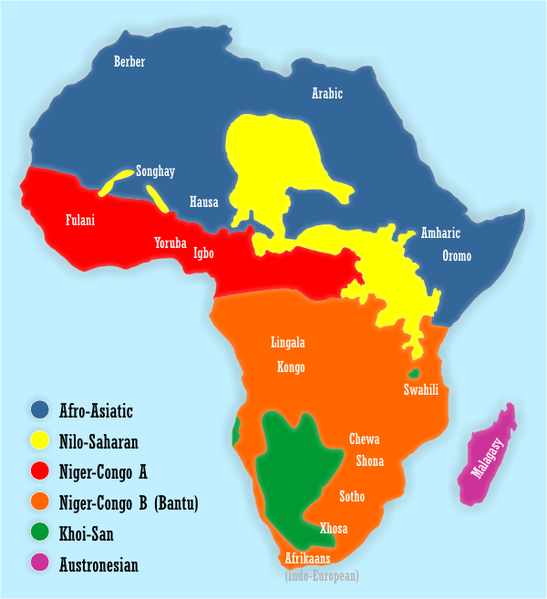

Dylan Violette (CopperViolette)
Psychology Minor and Philosophy Student who’s interested in archaeology, history, and astronomy.
Current Research Interests: The Archaic Era in North America; Long-Distance Trading Across the Americas; Eurasian Prehistory. Current Research Focus: The Eastern Archaic and the Megalithic Builders (10,000 – 1,177 B.C.E.).

Dylan Violette and I decided to blog jointly and will start doing videos together as well. Cory has had to step away from our joint endeavors we did for years, as he has issues he needs to focus on, and my friend Dylan is willing to step in and help me continue making thoughtful videos together.
Our Joint Academia Articles:

While hallucinogens are associated with shamanism, it is alcohol that is associated with paganism.
The Atheist-Humanist-Leftist Revolutionaries Shows in the prehistory series:
Show two: Pre-animism 300,000 years old and animism 100,000 years old: related to “Anarchism and Socialism”
Show tree: Totemism 50,000 years old: related to “Anarchism and Socialism”
Show four: Shamanism 30,000 years old: related to “Anarchism and Socialism”
Show five: Paganism 12,000 years old: related to “Anarchism and Socialism”
Show six: Emergence of hierarchy, sexism, slavery, and the new male god dominance: Paganism 7,000-5,000 years old: related to “Anarchism and Socialism” (Capitalism) (World War 0) Elite and their slaves!
Prehistory: related to “Anarchism and Socialism” the division of labor, power, rights, and recourses: VIDEO
Pre-animism 300,000 years old and animism 100,000 years old: related to “Anarchism and Socialism”: VIDEO
Totemism 50,000 years old: related to “Anarchism and Socialism”: VIDEO
Shamanism 30,000 years old: related to “Anarchism and Socialism”: VIDEO
Paganism 12,000 years old: related to “Anarchism and Socialism” (Pre-Capitalism): VIDEO
Paganism 7,000-5,000 years old: related to “Anarchism and Socialism” (Capitalism) (World War 0) Elite and their slaves: VIEDO
Paganism 5,000 years old: progressed organized religion and the state: related to “Anarchism and Socialism” (Kings and the Rise of the State): VIEDO
Paganism 4,000 years old: related to “Anarchism and Socialism” (First Moralistic gods, then the Origin time of Monotheism): VIEDO
I do not hate simply because I challenge and expose myths or lies any more than others being thought of as loving simply because of the protection and hiding from challenge their favored myths or lies.
The truth is best championed in the sunlight of challenge.
An archaeologist once said to me “Damien religion and culture are very different”
My response, So are you saying that was always that way, such as would you say Native Americans’ cultures are separate from their religions? And do you think it always was the way you believe?
I had said that religion was a cultural product. That is still how I see it and there are other archaeologists that think close to me as well. Gods too are the myths of cultures that did not understand science or the world around them, seeing magic/supernatural everywhere.
I personally think there is a goddess and not enough evidence to support a male god at Çatalhöyük but if there was both a male and female god and goddess then I know the kind of gods they were like Proto-Indo-European mythology.
This series idea was addressed in, Anarchist Teaching as Free Public Education or Free Education in the Public: VIDEO
Our 12 video series: Organized Oppression: Mesopotamian State Force and the Politics of power (9,000-4,000 years ago), is adapted from: The Complete and Concise History of the Sumerians and Early Bronze Age Mesopotamia (7000-2000 BC): https://www.youtube.com/watch?v=szFjxmY7jQA by “History with Cy“
Show #1: Mesopotamian State Force and the Politics of Power (Samarra, Halaf, Ubaid)
Show #2: Mesopotamian State Force and the Politics of Power
Show #3: Mesopotamian State Force and the Politics of Power (Uruk and the First Cities)
Show #4: Mesopotamian State Force and the Politics of Power (First Kings)
Show #5: Mesopotamian State Force and the Politics of Power (Early Dynastic Period)
Show #6: Mesopotamian State Force and the Politics of Power
Show #7: Mesopotamian State Force and the Politics of Power (Sargon and Akkadian Rule)
Show #9: Mesopotamian State Force and the Politics of Power (Gudea of Lagash and Utu-hegal)
Show #12: Mesopotamian State Force and the Politics of Power (Aftermath and Legacy of Sumer)

The “Atheist-Humanist-Leftist Revolutionaries”
Cory Johnston ☭ Ⓐ Atheist Leftist @Skepticallefty & I (Damien Marie AtHope) @AthopeMarie (my YouTube & related blog) are working jointly in atheist, antitheist, antireligionist, antifascist, anarchist, socialist, and humanist endeavors in our videos together, generally, every other Saturday.
Why Does Power Bring Responsibility?
Think, how often is it the powerless that start wars, oppress others, or commit genocide? So, I guess the question is to us all, to ask, how can power not carry responsibility in a humanity concept? I know I see the deep ethical responsibility that if there is power their must be a humanistic responsibility of ethical and empathic stewardship of that power. Will I be brave enough to be kind? Will I possess enough courage to be compassionate? Will my valor reach its height of empathy? I as everyone, earns our justified respect by our actions, that are good, ethical, just, protecting, and kind. Do I have enough self-respect to put my love for humanity’s flushing, over being brought down by some of its bad actors? May we all be the ones doing good actions in the world, to help human flourishing.
I create the world I want to live in, striving for flourishing. Which is not a place but a positive potential involvement and promotion; a life of humanist goal precision. To master oneself, also means mastering positive prosocial behaviors needed for human flourishing. I may have lost a god myth as an atheist, but I am happy to tell you, my friend, it is exactly because of that, leaving the mental terrorizer, god belief, that I truly regained my connected ethical as well as kind humanity.
Cory and I will talk about prehistory and theism, addressing the relevance to atheism, anarchism, and socialism.
At the same time as the rise of the male god, 7,000 years ago, there was also the very time there was the rise of violence, war, and clans to kingdoms, then empires, then states. It is all connected back to 7,000 years ago, and it moved across the world.
Cory Johnston: https://damienmarieathope.com/2021/04/cory-johnston-mind-of-a-skeptical-leftist/?v=32aec8db952d
The Mind of a Skeptical Leftist (YouTube)
Cory Johnston: Mind of a Skeptical Leftist @Skepticallefty
The Mind of a Skeptical Leftist By Cory Johnston: “Promoting critical thinking, social justice, and left-wing politics by covering current events and talking to a variety of people. Cory Johnston has been thoughtfully talking to people and attempting to promote critical thinking, social justice, and left-wing politics.” http://anchor.fm/skepticalleft
Cory needs our support. We rise by helping each other.
Cory Johnston ☭ Ⓐ @Skepticallefty Evidence-based atheist leftist (he/him) Producer, host, and co-host of 4 podcasts @skeptarchy @skpoliticspod and @AthopeMarie
Damien Marie AtHope (“At Hope”) Axiological Atheist, Anti-theist, Anti-religionist, Secular Humanist. Rationalist, Writer, Artist, Poet, Philosopher, Advocate, Activist, Psychology, and Armchair Archaeology/Anthropology/Historian.
Damien is interested in: Freedom, Liberty, Justice, Equality, Ethics, Humanism, Science, Atheism, Antiteism, Antireligionism, Ignosticism, Left-Libertarianism, Anarchism, Socialism, Mutualism, Axiology, Metaphysics, LGBTQI, Philosophy, Advocacy, Activism, Mental Health, Psychology, Archaeology, Social Work, Sexual Rights, Marriage Rights, Woman’s Rights, Gender Rights, Child Rights, Secular Rights, Race Equality, Ageism/Disability Equality, Etc. And a far-leftist, “Anarcho-Humanist.”
I am not a good fit in the atheist movement that is mostly pro-capitalist, I am anti-capitalist. Mostly pro-skeptic, I am a rationalist not valuing skepticism. Mostly pro-agnostic, I am anti-agnostic. Mostly limited to anti-Abrahamic religions, I am an anti-religionist.
Why did Deities FIRST Emerge, and When?
Well, it attaches to my interest in the transition from hunting to herding as for my speculations are that “Hunting Cult” Shamanism (Cosmic Hunt) (hunter and animal spirit focus) becomes “Herding Cult” Paganism (new deity/anthropomorphic divine status spirit being addition focus) in the Middle East 12,000 to 11,000 years ago beginning at and after Kortik Tepe (12,400 to 11,250 years ago) in Turkey on into Tas Tepeler culture sites (around 12,000–9000 years ago: Such as Gobekli Tepe, Karahan Tepe, Sayburc, and Nevali Cori) in Turkey as well as Upper Mesopotamia in general. As domesticated animals (11,000 to 10,000 years ago: Sheep, Goats, and Cows?) are seen before domesticated grains (10,500 to 9,000 years ago? From some of the earliest grain domestication in “Nevali Cori” that dates between 10,400 to 10,100 years ago to “Catal Hoyuk” with cultivated domestic wheat at roughly 9,000 years ago) in the Middle East and are associated with evolving culture. I get it was close to gathering, and both influenced culture, but seeming religion/ritual “especially presented in art” favored animal representations, not grains highlighted in the agricultural revolution. Agriculture influenced paganism (Nevali Cori “origin?” and Catal Hoyuk “evolved?”) is, to me, a further evolution after “Herding Cult” paganism. I try to ground my beliefs/speculations in reason, not wild opinions.
John Hoopes on Facebook asked me: “Did myths about deities emerge from stories about ancestral lineage founders, real heroes and heroines, anthropomorphic interpretations of natural phenomena, dream imagery, a combination of these, or something else?”
My response: Thanks for your question, John. I think hunters in the sky Orion/Big Dipper-related themes in the Cosmic Hunt mythology likely were attached to different groups themselves in a way that could have been deities emerging from stories about ancestral lineage founders’/sky hunters. I think it is likely that the anthropomorphic interpretations of natural phenomena as deities were related but more fully developed in agricultural shifts in early paganism than the move from hunting cult to herding cult that seems to me to relate to human control of animals like Master of Animals, which I see as an evolution of the hunter cult theme where hunters dominate the animal hunted.
Around 10,000 years ago, ideas went into Africa. Around 10,000 to 9,000 years ago, these ideas from the Middle East were in Siberia then moved to China and to the Americas by around 9,000 years ago. Religious ideas also left the Middle East from 9,000 to 8,000 years ago to Europe. Around 8,000 years ago, new ideas got to Ukraine but didn’t spread far. From 8,000 to 7,000 years ago, ideas again entered Africa with evolved beliefs from the Middle East. By 7,000 years ago, evolved deities from the Middle East moved again to Europe and Ukraine. And 7,000 years ago, the Siberian sun god of the sky, with a warrior culture, armed forts, and pre-kurgans, moved from Siberia to Ukraine and then returned to the Middle East around 6,000 years ago, influencing the Sumerian religious ideas. 6,000 to 5,000 years ago, these new Siberian influenced ideas from the Middle East were also in Africa. Then new evolved ideas moved back out of from Ukraine to the East by 5,500 to 5,000 years ago to Siberia, then China, and the Americas. Ideas from Ukraine went into Europe as well. Then, 5,000 to 4,000 years ago, the new ideas, now somewhat evolved again, from Siberia headed back to Europe, and so did ideas from the Middle East. ETC. This is just a rough outline to grasp some of the details, as I feel I understand them. There is a bit more, but this gives a good idea of how complicated it was.
I think the person, snakes, and two birds seen at Körtik Tepe is the oldest known Neolithic archaeological site in Turkey, more than 12,000 years old, were likely related to the Orion constellation as a shamanic figure holding a snake, referencing the use of the Milky Way to communicate with the gods and ancestors, as well as soul travel via the Milky Way. The big snake to me would reference the Milky Way itself and the two birds, either the star Venus and the moon, or some aspect of the sun, and the moon, but the sun aspect was likely not the noon sun by itself, as I see that as gaining prominence at a later date. And I think the other figures, also related to the Orion constellation, either as a deity or a deity of the stars, put Orion there. I assume, as seen at Tell Fekheriye, Syria, 11,000 to 9,000 years old, involving two standing figures on “step stools of power” that by 11,000 years ago were at least two sky deities, such as something similar to both a sky father and a sky mother deity, at this time, related to the stars, or planets (also seen as stars or star-like). But we must remember that planets were seen as star-related in mythology.
High Gods and a Divine Couple (universal mommy and daddy)?
I think high gods started with a divine couple, a sky god (sky father) “Day sky, often the Sun” and a sky goddess (sky mother) “Night sky, often the Noon” around 11,000 years ago or older, associated with pre-pastoralism animal management, early herding, and proto-pastoralism, of big-horned goats, big-horned sheep, both domesticated around 11,000 years ago, and cattle domesticated around 10,000 years ago or a little older, especially so with cattle, the last three. Then, as farming and agriculture grew and the domestication of grains emerged a little after 10,000 to 9,000 years ago, and along came a new Earth goddess (Earth Mother), who then commonly took the place of the older sky goddess (sky mother) as the wife or consort to the sky god (sky father). This younger divine couple, a sky god (sky father) and Earth goddess (Earth Mother), becomes the norm the world over. Spread largely with the spread of farming and agriculture to me.
The myths of (Sky Father) and Earth Mothers in general are found throughout the world, and I think started in the Middle East, with their origins around 11,000 years ago or older. Though totem couple artifacts are seen in Siberia’s Lake Baikal area with the Ancient North Eurasians Mal’ta–Buret’ culture (24,000 years ago) and seem to trace back to at least Russia, above the area between north of the Black Sea and the Caucasus mountains at the Kostenki site 25,000 years ago, a time when Kostenki is related to the eastern Gravettian culture, because the Kostenki site started with Aurignacian culture. I think the couple theme, though it seems to have evidence dating back to at least 25,000 years ago in portable totem pole-like figurines, was not considered deities until they evolved in the Middle East, due to different lifestyles creating a motivation for different thinking, a transition from hunting and gathering to herding and farming.


Damien Marie AtHope (Said as “At” “Hope”)/(Autodidact Polymath but not good at math):
Axiological Atheist, Anti-theist, Anti-religionist, Secular Humanist, Rationalist, Writer, Artist, Jeweler, Poet, “autodidact” Philosopher, schooled in Psychology, and “autodidact” Armchair Archaeology/Anthropology/Pre-Historian (Knowledgeable in the range of: 1 million to 5,000/4,000 years ago). I am an anarchist socialist politically. Reasons for or Types of Atheism
My Website, My Blog, & Short-writing or Quotes, My YouTube, Twitter: @AthopeMarie, and My Email: damien.marie.athope@gmail.com